
The Most Underrated North Carolina Native That Brings In Pollinator Counts Almost Nobody Else Is Planting
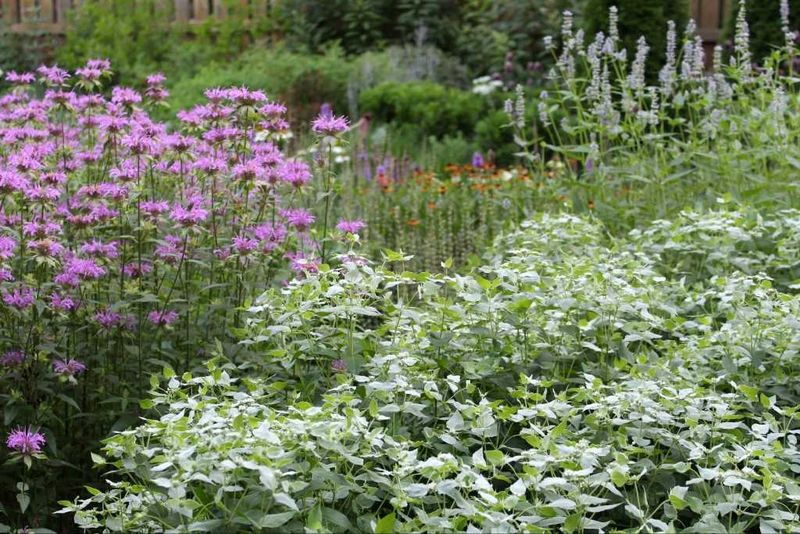
Tucked into sunny borders and meadow edges across North Carolina, one native perennial quietly pulls in a wider crowd of bees, wasps, and flies than many gardeners ever see on a single plant. That plant is clustered mountain mint, Pycnanthemum muticum, and comparative trials and Extension garden observations suggest it is a standout for flower visitation.
Whether you garden in the Coastal Plain, Piedmont, or Mountains, understanding what the evidence actually shows, and how to grow this plant responsibly, can help you decide whether it belongs in your yard.
Clustered mountain mint is a documented pollinator standout
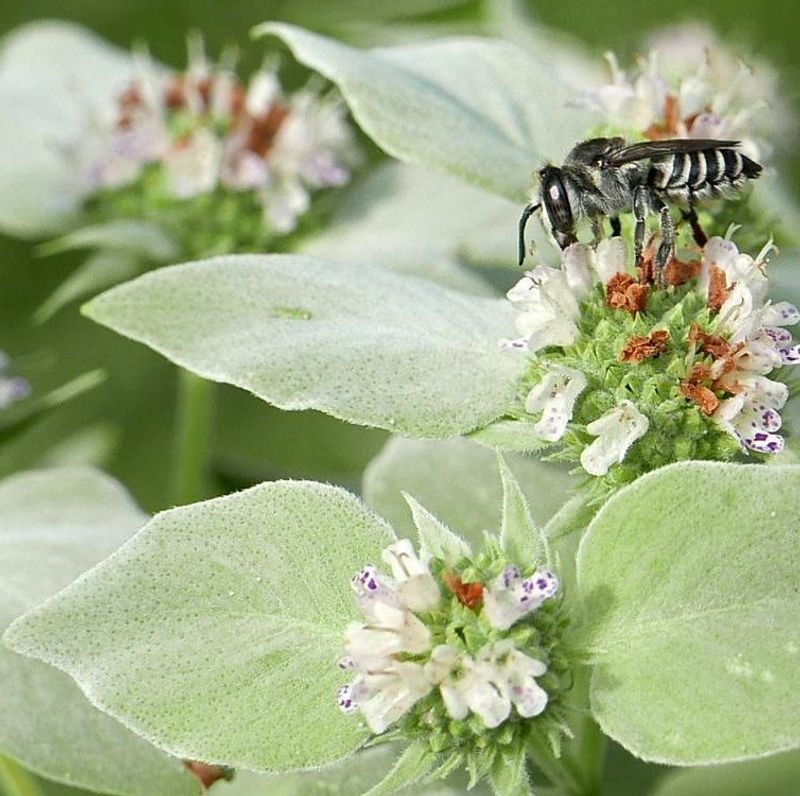
A three-year Penn State trial that compared 86 native plant species and cultivars gave clustered mountain mint, Pycnanthemum muticum, a striking result: the Bees, Bugs, and Blooms pollinator trial recorded 4,286 total pollinator visits on this species over three seasons, compared with 923 visits for second-ranked stiff goldenrod. The same trial noted that P. muticum flowered for roughly 15 weeks during the 2014 season, giving flower visitors an unusually long window to find it.
Those numbers come from a Pennsylvania research station, not from a statewide North Carolina comparison. They tell us that under those specific trial conditions, this plant performed far above the other tested species, and that kind of margin is worth paying attention to even when the geography differs.
Closer to home, the Lee County Cooperative Extension Pollinator Haven Garden in North Carolina offered a complementary piece of evidence. NC Cooperative Extension staff observed that mountain mint attracted more different insect species than any of the garden’s other 40-plus flowering plants, and that clustered mountain mint stood out as the favorite among five mountain-mint species grown there.
This is observational evidence from a real North Carolina garden, not a controlled statewide experiment, but it adds meaningful local weight to the Pennsylvania findings.
Taken together, these results make a reasonable case for calling P. muticum a standout native for flower visitation under documented conditions. They do not prove that it will outperform every other plant in every North Carolina yard, or that it is rare in cultivation.
What they do say is that if your site fits this plant’s needs, the flower-visitor activity you might see could be genuinely impressive.
Its dense flower clusters offer many accessible feeding points
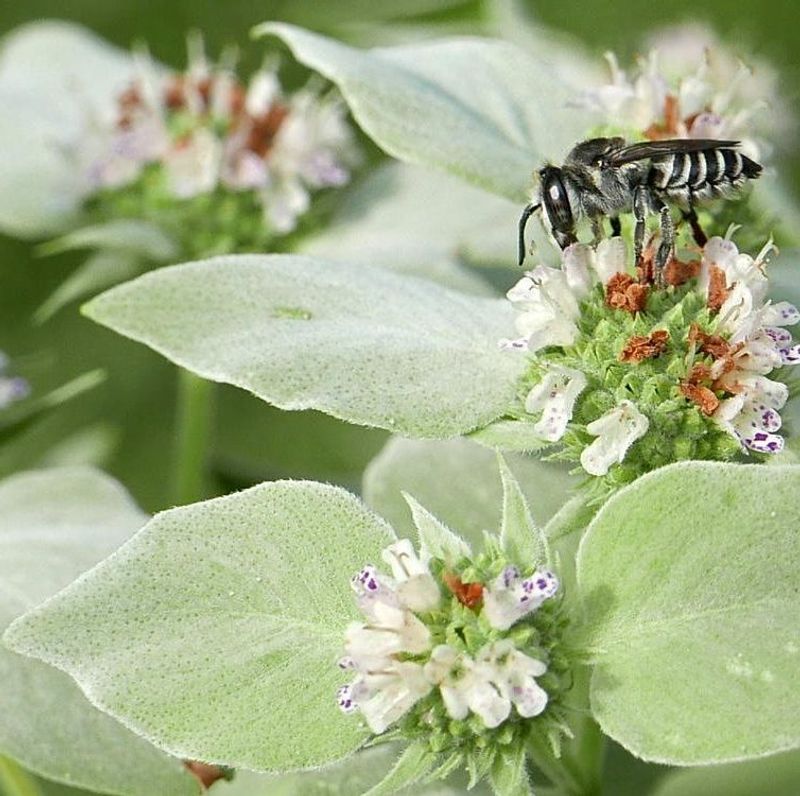
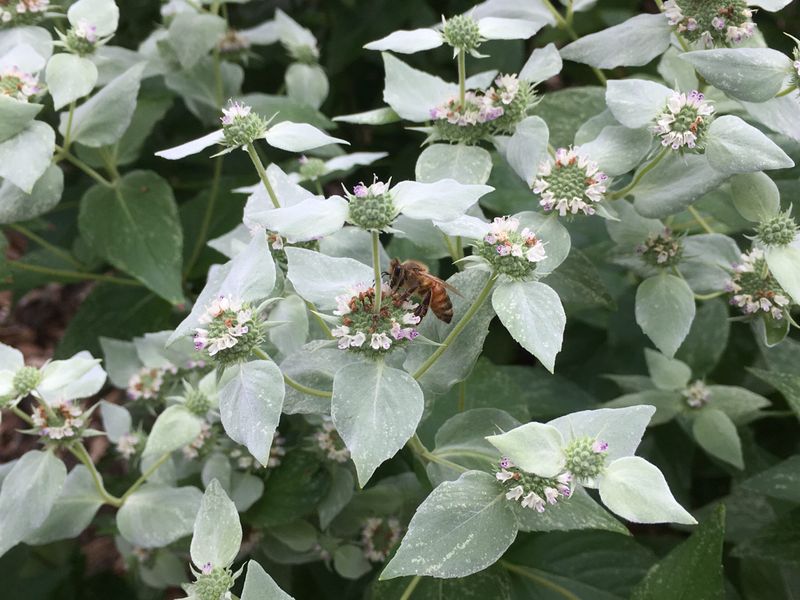
Part of what makes clustered mountain mint so effective for flower visitors comes down to architecture. The plant produces dense terminal clusters packed with many small, two-lipped flowers, and that structure creates a concentrated landing zone with a high number of individual floral units per stem.
A bee or wasp that lands on one cluster can work dozens of small flowers without relocating, which makes the plant energetically efficient for foragers and visually active for anyone watching.
NC Cooperative Extension’s Lee County garden observations described the floral display as a magnet for an unusually broad range of insects. The visitor list goes well beyond honeybees and bumble bees.
The Penn State trial recorded bees, wasps, syrphid flies, and tachinid flies across its study plots, and specifically noted that small-flowered species like P. muticum were especially attractive to tachinid flies, a group of beneficial parasitoid flies that rarely get attention in pollinator discussions.
A 2024 study adds a richness dimension to this picture. Researchers studying urban-grown mountain mints in the Richmond, Virginia, region recorded 85 visitor taxa on P. muticum and 43 on P. tenuifolium.
That is a count of distinct visitor types, which is a different measurement from the total visit counts reported in the Penn State study. The Virginia work was conducted in an urban setting outside North Carolina, so it does not predict exactly what a Piedmont or Coastal Plain garden will attract.
What both studies point to is a plant that draws a genuinely diverse set of flower visitors, not just a few common species. For gardeners who want to support a broader range of native bees, parasitoid flies, and other beneficial insects, that breadth is arguably as valuable as raw visit counts.
Match the species to the North Carolina site
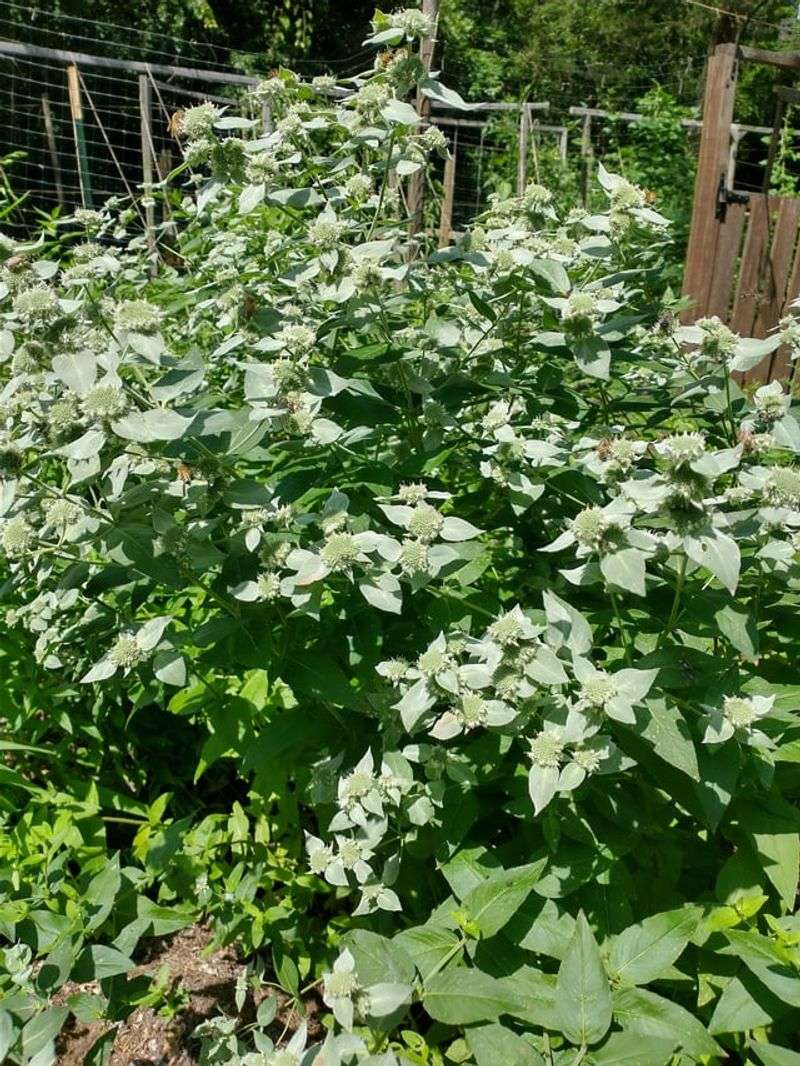
NC State Extension identifies the Pycnanthemum genus as native across the Coastal Plain, Piedmont, and Mountains of North Carolina, and describes dense flower clusters that attract many pollinators from July through September. That statewide native status is encouraging, but it covers the genus as a whole, not every species equally.
P. muticum has its own specific range, moisture preferences, and growth habits that need to match your actual site before you commit to planting it.
Full sun gives this plant its best flowering performance. Partial shade is tolerated, but expect fewer blooms and potentially less flower-visitor activity in shadier spots.
NC State’s plant profile for P. muticum describes tolerance for moist to occasionally dry, well-drained soils across clay, loam, and sand, which means it can work in a range of North Carolina soil types as long as drainage is adequate and the site does not stay wet for extended periods.
Bloom timing generally falls in summer and can extend toward early fall, but the exact window shifts depending on species, site conditions, weather in a given year, and how the plant is managed. A plant in its first season may bloom later or less heavily than one that has been established for two or three years.
Plan for summer activity as the core window and treat early-fall bloom as a possible bonus rather than a certainty.
NC State’s native plants guidance recommends matching species to local ecoregion and site conditions, and using locally sourced or regional-provenance material when possible. A plant that thrives in the Piedmont clay of Wake County may behave differently in the sandy Coastal Plain soils of Onslow County or the cooler, moister mountain soils of Buncombe County.
Check with a local native plant nursery or your county’s Cooperative Extension office to confirm that P. muticum is a good ecological fit before planting.
Give this vigorous perennial room to expand
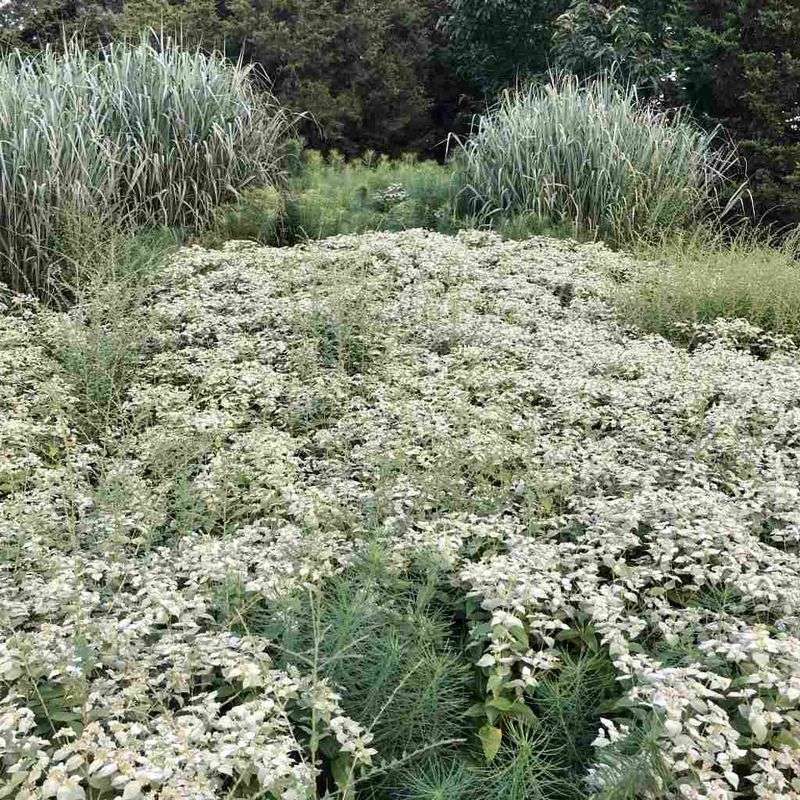
Clustered mountain mint grows to roughly 3 to 4 feet tall and spreads 2 to 3 feet wide under favorable conditions, and those dimensions can increase over time because the plant spreads by shallow rhizomes. NC State’s profile for P. muticum describes it as vigorous but not invasive, and recommends using a spade in spring to prune roots if the plant begins moving beyond its allotted space.
That is routine management, not a crisis response, and it should not discourage planting in appropriate spots.
The key is choosing the right location from the start. A sunny border with some lateral room, a meadow edge, a rain garden, or a naturalized section of the yard are all practical placements where the plant can establish and spread modestly without causing problems.
Penn State Extension’s overview of mountain mint also highlights open, sunny situations as ideal, consistent with the plant’s preference for good light and air circulation.
Where P. muticum becomes a poor fit is directly against a narrow walkway, tucked into a small formal bed with tight neighbors, or anywhere the gardener has no interest in periodic division. In those spots, the spreading habit becomes a maintenance headache rather than a manageable feature.
Moving the plant to a more generous location before it fills in is far easier than trying to contain it after the fact.
Dividing established clumps every few years serves double duty: it keeps the plant within bounds and produces new starts that can fill in other areas of the garden or be shared with neighbors. The shallow rhizome system makes division straightforward with a sharp spade.
Vigorous growth and manageable spread are not the same thing as low-maintenance, so plan to spend a few minutes each spring assessing whether the clump needs a trim at its edges.
Verify which mountain mint you are buying
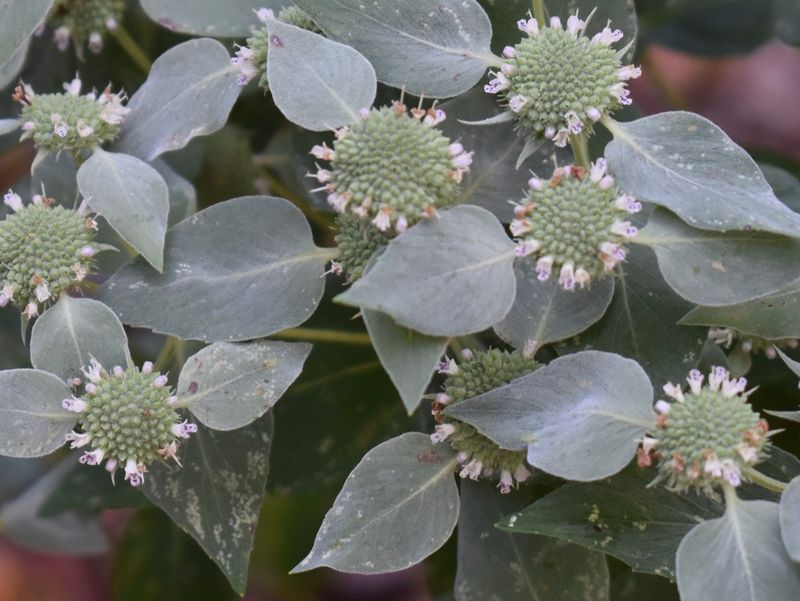
Before purchasing any plant labeled “mountain mint,” check the scientific name on the tag. NC State’s profile confirms that P. muticum belongs to the mint family but is not the same as culinary mint in the genus Mentha.
The two groups share a family but differ significantly in growth habit, ecological role, and spreading behavior. Knowing the genus name, Pycnanthemum, and the species name, muticum, is the only reliable way to make sure you are getting the plant discussed in the pollinator trials.
NC State’s genus-level page lists several Pycnanthemum species native to North Carolina, including P. muticum, P. tenuifolium, P. virginianum, P. incanum, and P. flexuosum. These species do not have identical ranges, heights, moisture tolerances, or spreading habits, and a plant sold simply as “mountain mint” at a garden center could be any of them.
Each has its own strengths, and none of them performs identically to the others in pollinator trials or garden observations.
For a more compact site or one with occasional dry spells, narrowleaf mountain mint, P. tenuifolium, is worth considering. NC State describes P. tenuifolium as generally clumping, usually around 2 feet tall though capable of growing taller, and tolerant of occasional dry or wet conditions.
That tolerance is not the same as broad drought suitability, so match it to the actual site conditions rather than assuming it will thrive in persistently dry spots.
NC State’s native plants guidance recommends buying nursery-propagated material from reputable native-plant sources and verifying regional fit before purchasing. Never collect plants from wild populations, especially for less common Pycnanthemum species.
A reputable nursery will know the species, the provenance, and whether the plant is suited to your part of North Carolina.
Run a pollinator count that readers can compare honestly

Watching pollinators on a blooming plant is genuinely enjoyable, and doing it with a standardized method turns casual observation into data that can be compared across gardens and years. The Great Southeast Pollinator Census uses a straightforward protocol: choose one blooming plant, observe it for 15 minutes, and tally visitors in eight broad categories – carpenter bees, bumble bees, honey bees, small bees, wasps, flies, butterflies and moths, and other insects.
Check the census website for the current year’s schedule and participation instructions before setting your observation date.
Mountain mint’s dense clusters and long bloom window make it a practical choice for a census plant. NC State lists mountain mint as one of the plants expected to be in bloom during the late-summer census window, which aligns well with P. muticum’s typical July-through-September flowering period.
Confirming that your specific plant is actively blooming on the day you count is more important than any general timing estimate.
A single count number is only part of the story. Weather, time of day, flower abundance, plant maturity, surrounding habitat quality, pesticide exposure history, and your own skill at identifying visitor categories all influence what you record.
Penn State researchers specifically noted year-to-year variation in their trial caused by plant development, weather, and flowering conditions, and their results came from a research station with controlled conditions. Expect similar variation in a home garden.
Record the conditions alongside the count: temperature, cloud cover, approximate time, wind speed, and whether the plant is in full sun or partial shade that day. A lower count on a cool, overcast morning tells a different story than a low count on a warm, sunny afternoon.
Over multiple seasons, those annotated records become far more useful than a single impressive number from one lucky day.
Build a diverse habitat around the mountain mint
A plant that draws impressive flower-visitor counts is a valuable piece of habitat, but it is only one piece. Milkweeds, for example, serve a function that mountain mint cannot replace: they provide the caterpillar host habitat that monarch butterflies require to complete their life cycle.
Woody natives and other herbaceous species supply additional caterpillar food, nesting resources, seed heads for overwintering birds, shelter from weather, and bloom periods that extend before and after mountain mint’s summer window.
Mountain mint fits best as part of a layered, regionally appropriate planting rather than a single-species solution. NC State’s native plants chapter emphasizes matching plants to local habitat and maintaining regional plant diversity, which means pairing P. muticum with species that fill the ecological roles it does not cover.
A yard that combines mountain mint, native milkweeds, early-blooming spring ephemerals, fall-blooming goldenrods, and a few native shrubs or small trees offers flower visitors and wildlife something across all four seasons.
Source your plants responsibly. Buy nursery-propagated material from reputable native-plant nurseries or native plant society sales, and verify that the species and provenance are appropriate for your ecoregion.
Never collect plants or seeds from wild populations, particularly for less common Pycnanthemum species that may be locally limited.
Pesticide use near blooming plants deserves careful thought. EPA pollinator-protection guidance and North Carolina Department of Agriculture guidance for landscapers both stress that pesticides can harm bees and other beneficial insects through direct contact, residues on foliage, drift, and contaminated nectar or pollen.
Use integrated pest management, treat only when a pest threshold is genuinely reached, avoid treating blooming plants or nearby flowering weeds, minimize drift, and always follow the product label. If treatment becomes unavoidable, apply when bees are least active, but recognize that some native bees forage early in the morning, so “spray at dawn” is not a universally safe rule.
The label controls.
Decide whether clustered mountain mint fits your yard
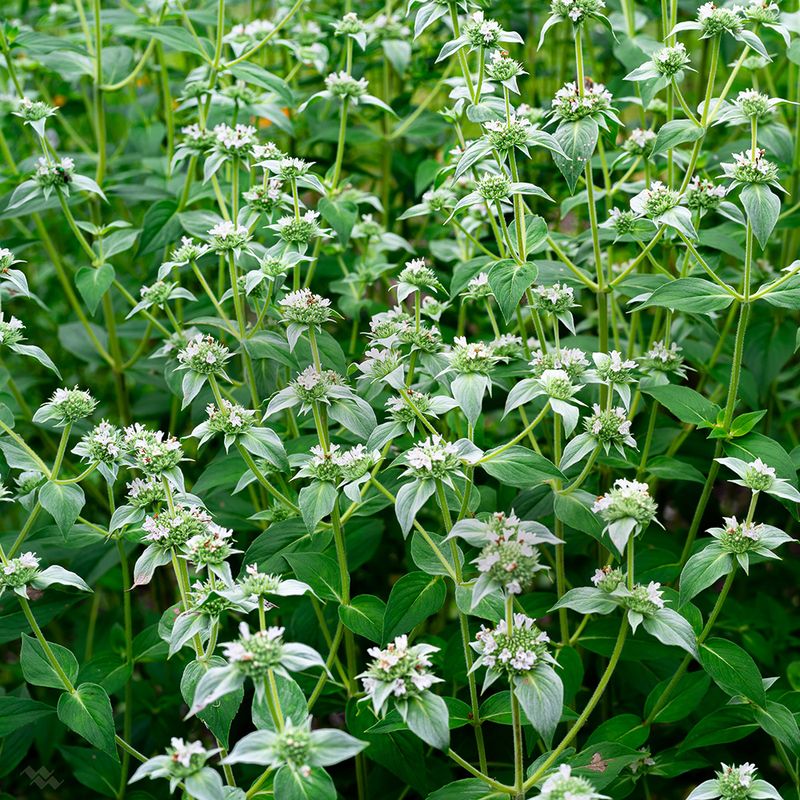
Gardeners seeking a native perennial with unusually strong documented flower visitation have good reason to consider P. muticum, provided the site conditions line up. The Penn State trial’s results and the NC Extension garden observations both point to a plant capable of drawing a wide range and high number of flower visitors under the right conditions.
That is a meaningful signal, even with the geographic and methodological limits acknowledged.
The practical checklist is straightforward. Verify the scientific name before buying, confirm that P. muticum’s light, soil, moisture, and ecoregion requirements fit your site, give the plant a location with room to spread, manage the rhizomes with a spring spade when needed, and observe it with a standardized pollinator count to see what actually shows up in your yard.
Plant it alongside other native species that supply what mountain mint cannot: host plants, nesting habitat, early and late bloom, and structural diversity.
NC State’s native plant guidance frames the goal well: a yard that supports pollinators and wildlife over time is built from a community of appropriate natives, not a single impressive species. Clustered mountain mint earns a place in that community when the site fits, and on a warm summer afternoon with the blooms fully open, it has a way of making the argument for itself.