
What To Do In The First Few Seconds When A Coyote Shows Up In Your North Carolina Backyard
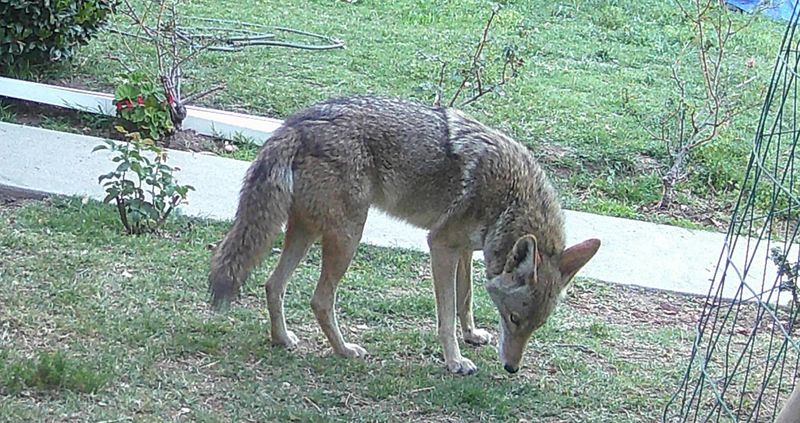
A flash of gray-brown fur near the fence line can make your heart jump. Coyotes now share many North Carolina neighborhoods, and most of them just want to pass through.
What you do in the first few seconds can keep kids, pets, and the coyote safer. Here are the right moves, the common mistakes, and when to call for help.
Make space for children and pets first
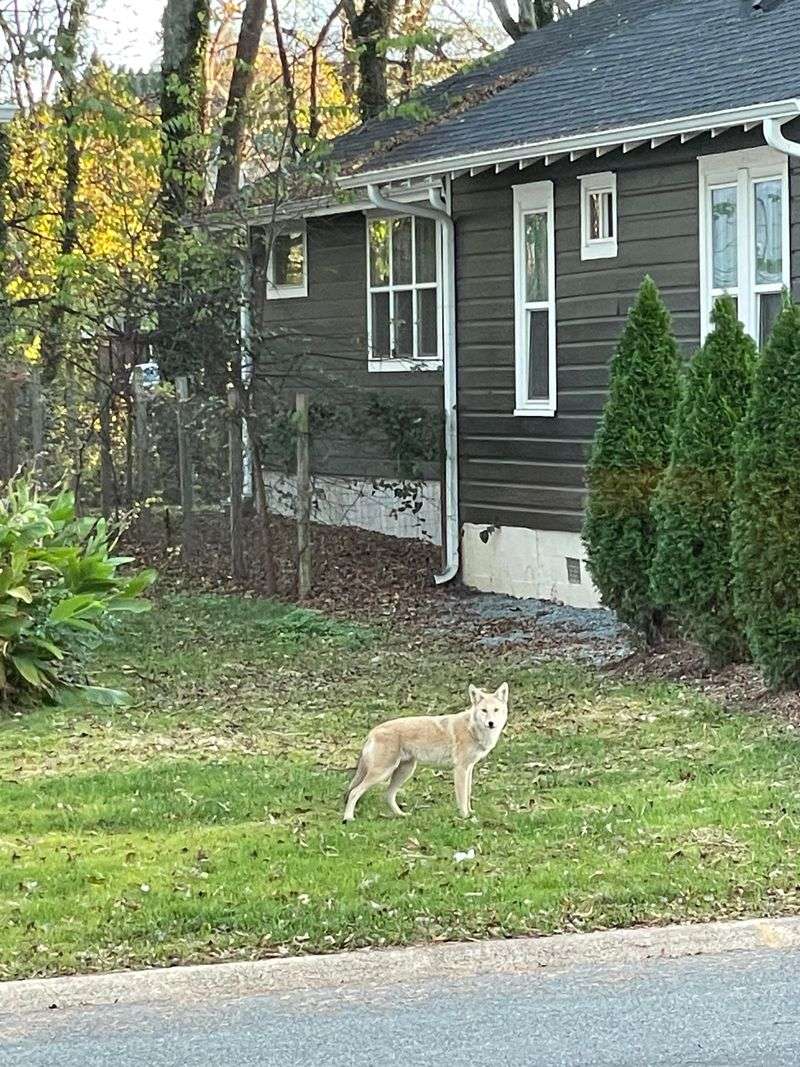
Start with a slow breath. Your first job is not to deal with the coyote, it is to create distance between the animal and the people and pets you care about.
Most coyotes that wander into a yard are only passing through, so a calm reaction fits the moment better than panic.
Call children and pets to you in a steady voice and walk them indoors. If the back door is too close to the coyote, a closed garage, a screened porch with a latch, or a gated fenced area can work as a secure barrier.
Pick the option that does not take you closer to the animal.
Small children can be scooped up and carried. Dogs on a leash should be shortened to your side, and a dog that is off leash should be called inside right away.
Cats and small dogs are the pets most likely to be seen as prey, so they deserve the quickest move to safety.
If you are already outside, walk, do not sprint, toward the nearest safe spot. Keep your eyes on the coyote and avoid stepping into the space between it and its way out of your yard.
A coyote that has an open path to leave is much more likely to use it.
Once everyone is inside, you can watch from a window. NC Wildlife Resources Commission guidance stresses that coyotes are well adapted to suburban neighborhoods, so seeing one does not mean something is wrong.
Separation comes first. Everything else can wait until the yard is clear.
Why running, approaching, or feeding are the wrong moves
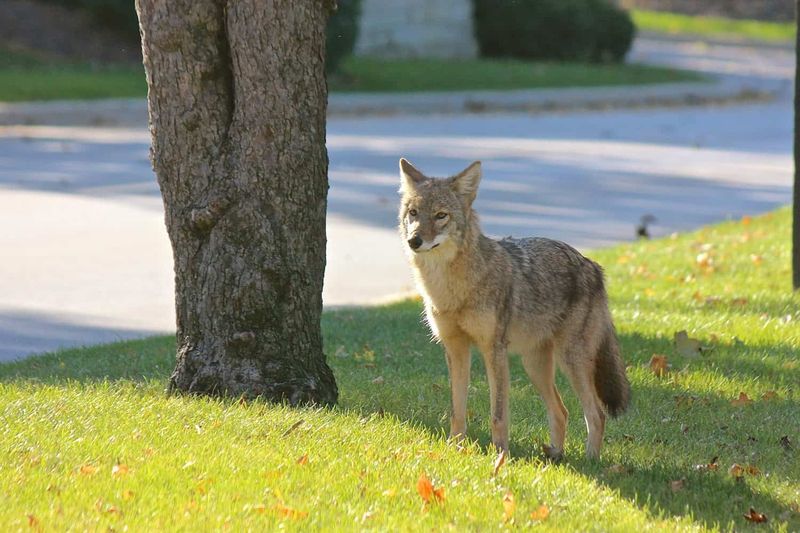
Plenty of people have an instinct to bolt, step forward, or toss out a snack. Each of those reactions can turn a quiet sighting into a tense one.
Think of them as the three moves to skip.
Running is the first. A fleeing person can look like something to chase, and NCWRC specifically says not to run from a coyote.
Walk away at a steady pace instead and keep the animal in view.
Approaching is the second. Walking up for a better look, a photo, or a staredown closes the gap that keeps everyone comfortable.
Cornering a coyote against a fence or wall is just as unwise, because an animal with no exit may act defensively.
Feeding and petting are the third. Tossing food teaches a coyote that yards and people mean meals, and NCWRC says not to feed or pet coyotes.
Relocating one is not an answer either, since the agency notes it is ineffective and illegal in North Carolina.
Keep this in proportion. A coyote crossing your lawn is not proof of danger.
NCWRC’s coyote management plan describes the statistical probability of an attack as low, while still advising distance, close supervision of children, and reporting an extremely aggressive or sick animal. Human attacks are uncommon, not impossible, so a respectful distance is the sensible default.
Picture the coyote as a neighbor you do not know well. You would not chase it down the street or hand it dinner.
You would give it room and let it go on its way.
When and how should you haze a coyote?
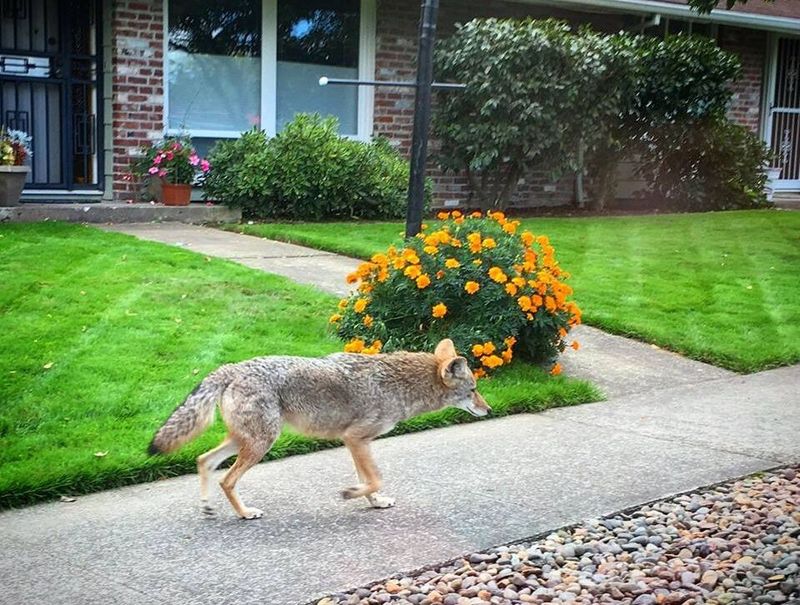
Hazing means making a coyote feel unwelcome so it moves along. It is an option, not a rule, and you do not need to head outside to haze every coyote you see.
Use it only when you can stay at a safe distance, you are not approaching the animal, and the coyote has a clear path to leave.
NCWRC’s guidance gives simple tools. Stand tall, make loud noise, wave your arms, or throw a small object in the coyote’s direction.
The goal is to startle it, not to hit it or chase it.
The escape route matters. The National Park Service’s coyote guidance says to leave the animal a way out.
If the only exit is past you, step aside or stay inside instead.
Hazing is not a guarantee. USDA’s National Wildlife Research Center described a controlled study with captive coyotes in which approaches decreased after repeated hazing.
It also noted that past experiences with people affected responses and that controlled studies have been limited. In plain terms, it may work, it may not, and a lasting change in behavior is not promised.
If the coyote does not react, or if it seems to be defending a particular spot, stop. Go inside and consider calling animal control if the behavior stays aggressive.
A den or pups change the safest response
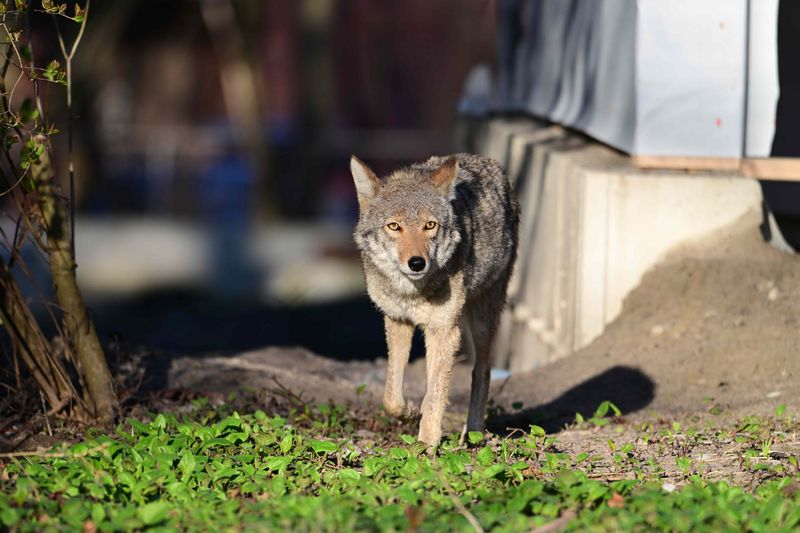
Some coyotes stay put for a reason. According to NCWRC, coyotes mate around February and March and give birth around April and May, and the agency says they may protect dens or pups.
Its page points to February through June as a time when this can happen.
That does not mean every coyote you spot in those months is guarding young. Most are simply crossing through.
The clue is behavior: a coyote that seems intent on defending one specific spot, such as a brush pile, a drainage culvert, or the space under a shed, is telling you something.
In that case, persistent hazing is the wrong tool. NCWRC notes that hazing may not work when a coyote is defending its den, and it recommends calmly leaving the area.
Turn away, walk back the way you came, and keep your pets and children with you.
Afterward, give the spot room. Keep dogs leashed and away from that corner of the yard, and avoid trimming brush or poking around the site for a while.
If a den appears to be right beside your house, call your local animal control or wildlife office for advice rather than trying to deal with it yourself.
The pup season is short. With a little patience and extra distance, most families and coyotes get through it without trouble.
Daylight alone does not mean rabies
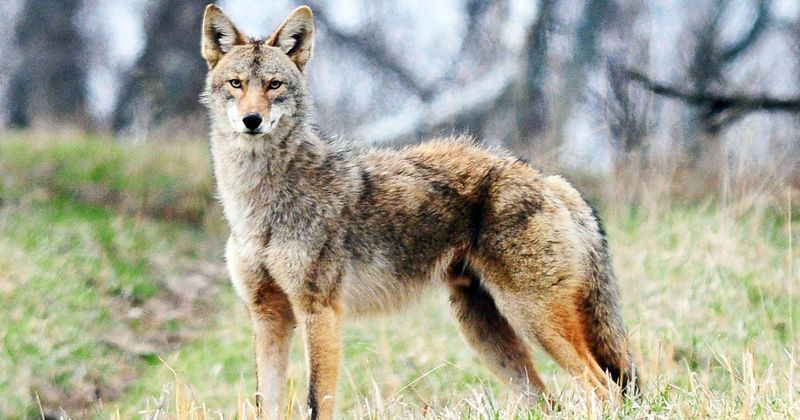
Seeing a coyote at noon can feel alarming, but daylight by itself says very little. Coyotes are flexible animals that sometimes move around in the day, especially when they are hungry or raising young.
A daytime sighting is not a sign of rabies.
NCWRC explains on its rabies page that unusual behavior or illness can have several causes and that few signs are uniquely diagnostic of rabies. Nobody can diagnose it by looking across the yard.
If an animal looks sick or acts strangely, such as stumbling, seeming confused, or showing no normal wariness, give it a wide berth and report your concern as appropriate.
Now the question of who to call. Contact local animal control if a coyote acts aggressively without an apparent reason, or if it does not respond to appropriate hazing.
Those are the cases NCWRC points to.
Set realistic expectations, though. Animal control may respond when wildlife poses an immediate threat, but the agency says it does not remove coyotes simply for being in an area.
A calm coyote trotting through is not a reason for removal.
When you call, describe what you saw in plain terms: the time, the location, and exactly what the animal did. Specific details help the responder decide how to help, and they keep the focus on behavior instead of guesses about disease.
A bite or scratch needs prompt follow-up

Bites and scratches from coyotes are rare, but if one happens, act quickly. Move away from the animal first, then deal with the wound.
CDC guidance says to wash the wound immediately with soap and water for 15 minutes. That is a long time, so set a timer and keep the water running.
Then seek prompt medical or public-health advice about possible rabies exposure, even if the injury looks small.
Do not try to work out on your own whether rabies is a concern. Only health professionals can judge that, and they can tell you what comes next.
This article does not offer any treatment beyond that guidance.
NCWRC’s rabies guidance adds a second step: contact your local health department and animal control. Tell them where the contact happened, what the animal looked like, and which direction it went.
The CDC’s advice on when to seek care backs up the same basic idea of getting professional input quickly.
The same steps apply if a pet is hurt. Keep other people away from the animal and call your veterinarian along with the agencies above.
Afterward, make the yard less inviting
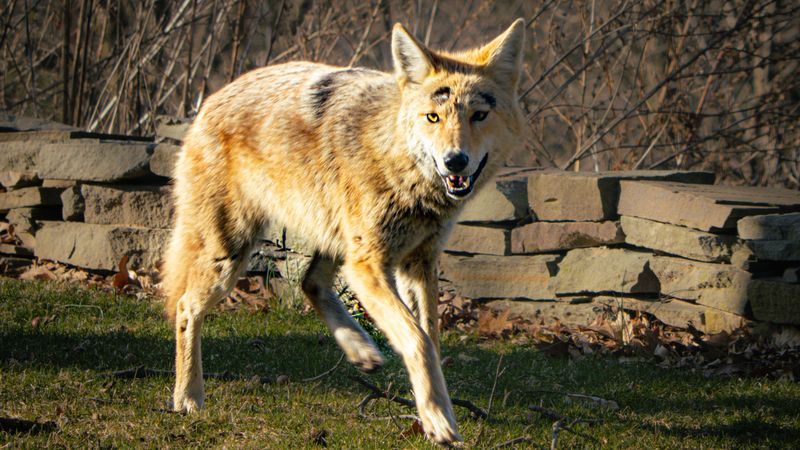
Once the coyote has gone, turn to the yard. The aim is to remove easy reasons for a coyote to linger.
No single change guarantees it will stay away, but several together can reduce visits.
Start with food. NCWRC advises removing outdoor pet food, unsecured garbage, and fallen fruit.
Bring bowls in after meals, use trash cans with tight lids, and pick up apples, pears, or persimmons that drop from your trees. Bird feeders that spill seed can also draw rodents, which in turn draw coyotes.
Next, think about your pets. NCWRC recommends keeping them supervised, indoors, leashed, or inside secure fencing.
The risks differ by size. Small pets such as cats and little dogs may be viewed as prey, while large dogs may be seen as competition or a threat.
Either way, an unattended pet in the yard at dawn or dusk is the situation to avoid.
Walk the property for hiding spots too. Dense brush piles, gaps under decks, and open crawl spaces can look like shelter.
Closing them off helps, though you should check first that nothing is already living there.
Talk with neighbors as well. A yard that is tidy while the one next door leaves out a bowl of kibble will not get the full benefit.
Remember the first-seconds sequence
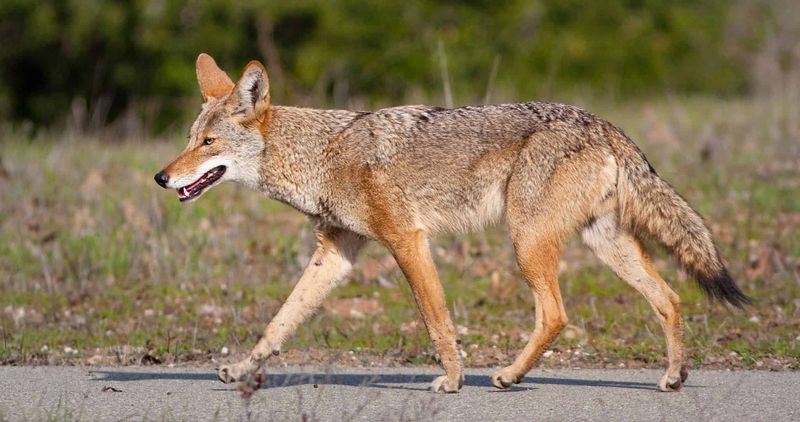
Keep the order simple. Create space for kids and pets, walk instead of run, and never approach or feed the animal.
Haze only when you are at a safe distance and the coyote has room to leave, and walk away calmly if it seems to be defending a den or young. The NCWRC coyote page is a good reference to keep handy.
A coyote that sees you stay steady and give it room usually has no reason to stay. Your calm is the most useful tool you have.