
What Your Spider Plant Actually Wants From You This Fall – And The Habits That Are Quietly Hurting It
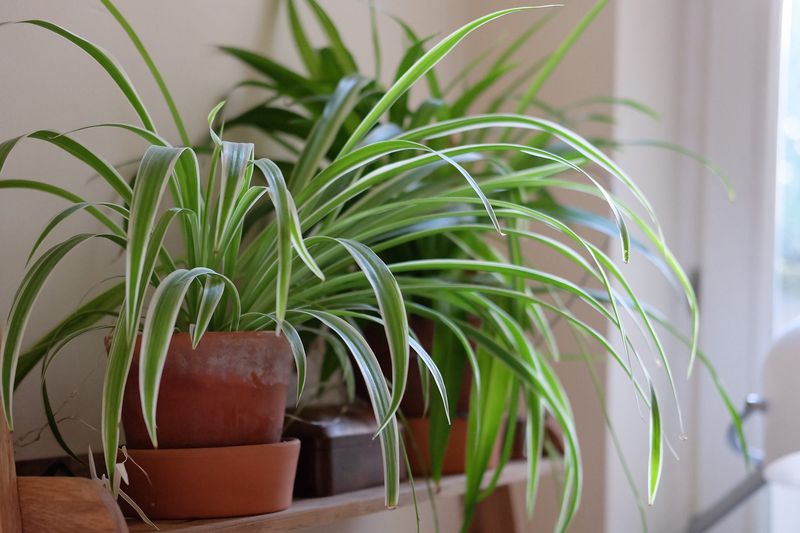
Your spider plant looks a little different now that the days are getting shorter, and you may be wondering if you did something wrong. Brown tips and slower growth can look scary, but they often have simple explanations.
Fall care is mostly about small changes, like how you water and where the pot sits. Here is what your plant wants, and which well-meant habits are worth rethinking.
Fall calls for adjustment, not a reset
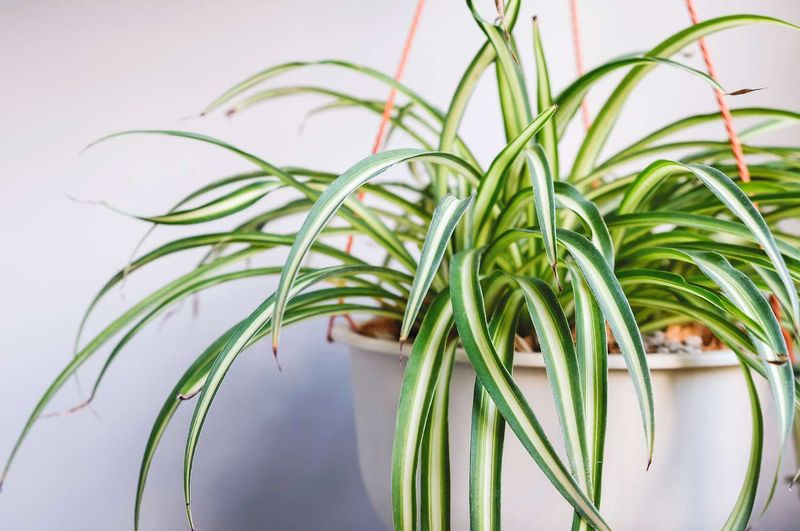
Spotting a few changes on your spider plant in October does not mean you have failed it. As days shorten and indoor light dims, the plant usually grows more slowly, so it uses water more slowly too.
That is a normal shift, and it rarely calls for a big overhaul of your routine.
The core approach is simple: watch the plant and feel the pot, then change something only when the conditions call for it. Colorado State Extension guidance points to bright, indirect light, checking the soil before you water, and keeping the plant away from cold windows in winter.
Nothing in that list requires new gear or a new schedule.
Think of fall as a time to adjust a few dials rather than rebuild the whole system. If your plant was happy in September, most of what you were doing still works.
You may simply water a bit less often, and you might slide the pot a little if the sun has moved.
Two things deserve some patience before you react: brown leaf tips and slower growth. Each one can come from several different causes, so a reflexive fix can miss the real issue.
The Royal Horticultural Society growing guide also stresses matching care to the conditions your plant is actually in. The next sections walk through how to read those signals calmly, one at a time.
Water by checking the pot, not the calendar
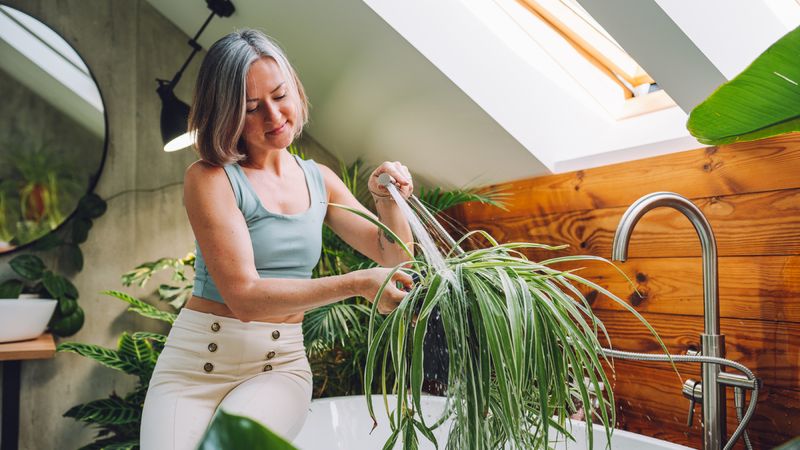
Picture two spider plants, one in a sunny south window and one on a dim bookshelf. They will not dry out at the same speed, and neither will match last summer.
That is why a fixed number of days between waterings does not work well in fall.
Instead, push a finger into the mix before you water. When it is time, wet the soil thoroughly and let the extra water drain out of the pot, then empty the saucer.
Colorado State Extension notes that spider plants prefer soil that is not left soggy, and that they may need water less often in fall and winter when growth slows.
Sources do differ on how moist the mix should stay. The RHS suggests aiming for lightly moist compost, while UF/IFAS says to let the top inch dry briefly.
Both agree on the useful part: check first, and do not leave the roots sitting in wet soil for long stretches.
So if your pot now takes ten days to dry instead of six, that is useful information, not a problem. Stretch the gap to match.
A pot that feels heavy and damp deserves another day or two, and one that feels light and dry is ready.
Where should the plant spend its fall?
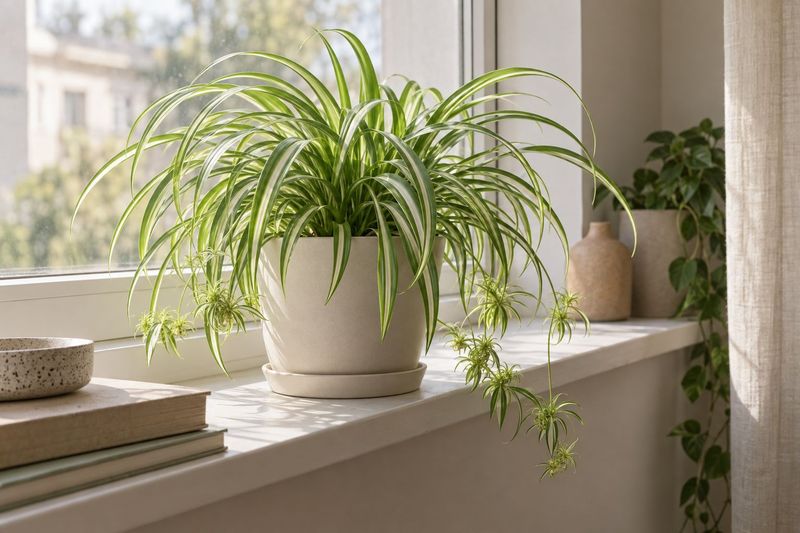
Bright, indirect light is the sweet spot. According to the RHS, low light can slow growth and fade variegation, while strong direct sun can scorch or yellow the leaves.
A spot near a window with a sheer curtain, or a few feet back from a brighter one, often works well.
Fall can change what a window gives you. The sun sits lower, so a shelf that was shaded in July might get a hard beam in October, and a bright corner may turn dim.
Look at your plant’s spot at different times of day before you move anything.
Temperature matters too. Colorado State Extension advises moving the plant away from cold windows in winter, and NC State Extension says to keep it above 45 degrees F.
That is one source’s guidance, not a target for every home, so use it as a floor and not a goal.
Hot, dry air is the other side of the coin. A pot parked next to a heat vent or a fireplace gets blasts of dry air, and dry air is one of the documented contributors to brown tips.
A spot away from both drafts and vents is usually a good pick.
Brown tips are a symptom, not a diagnosis
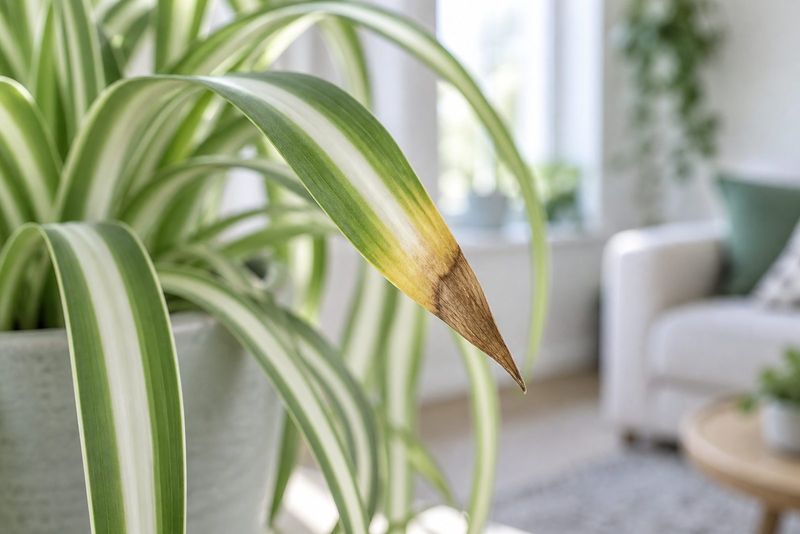
Brown tips on a spider plant make many owners reach for the watering can. That instinct is understandable, but a brown tip is only a sign that something is off, not a label for what.
The Iowa State Extension lists several possible contributors: inconsistent watering, too much fertilizer or a buildup of soluble salts, dry indoor air, strong sunlight, and chemicals in the water. The RHS describes a similar mix of causes.
These can overlap, which is why one clue rarely proves one answer.
Before changing anything, run through a quick check. Does the soil swing between bone dry and soaked?
Has the plant been fed often? Is it near a heater or in a sunny beam?
Is there a white crust on the soil surface or pot rim? Each answer points toward a possible cause, not a verdict.
Trimming the brown ends is fine if they bother you. Cut along the natural shape of the leaf with clean scissors.
Just remember that trimming is cosmetic. It will not fix whatever caused the browning, so new tips may brown again until the underlying condition changes.
Also keep perspective. A few brown tips on an otherwise green, growing plant are common and not an emergency.
Which well-meant fixes should you stop reaching for?
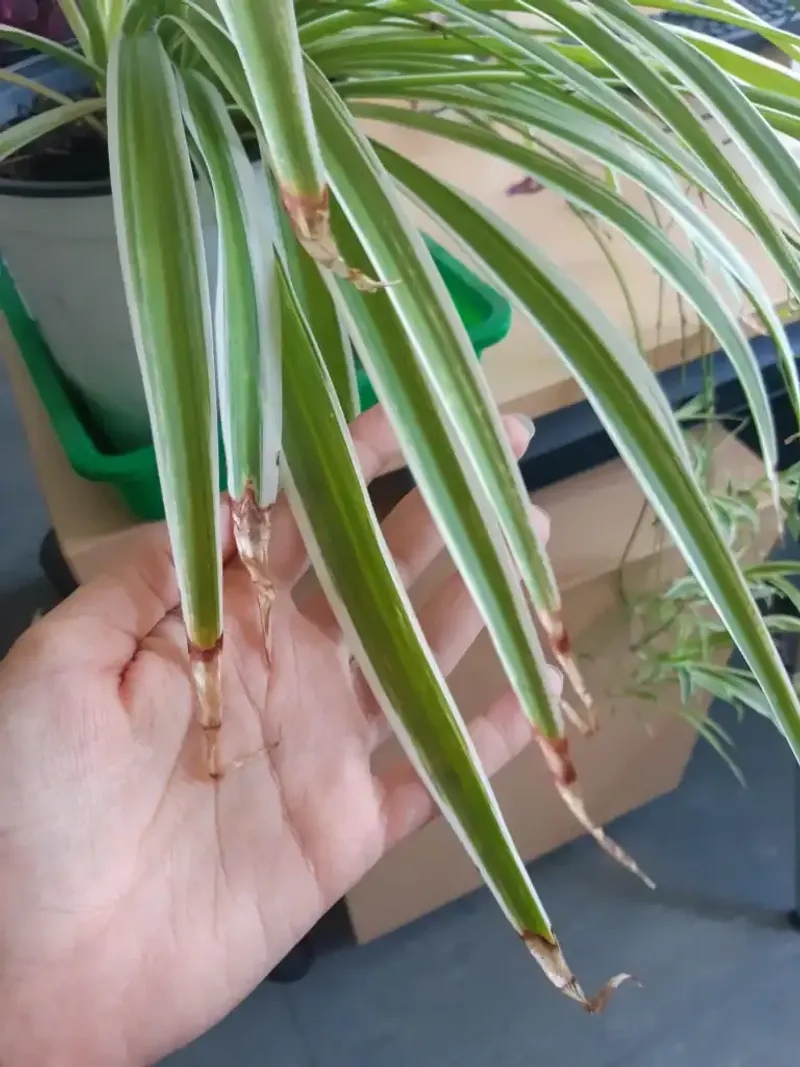
Loving a plant can lead to overcorrecting. Three common habits deserve a pause: adding more water, adding more fertilizer, and misting every day.
Fertilizer first. Colorado State Extension names excess fertilizer as one potential cause of browning, so feeding a plant with brown tips can make things worse.
With slower fall growth, the plant needs less, not more.
Misting feels helpful, but Iowa State Extension says its effect on humidity is brief. If your air is very dry, a humidifier or a grouping of plants raises humidity near the leaves more reliably.
Then there is the water itself. Some sensitive plants react to fluoride or other chemicals, as the University of Missouri Extension and Iowa State describe.
That does not make tap water bad for every plant. If tips keep browning after you have sorted out watering, light, and feeding, try rainwater or distilled water for a while as a test.
Treat the result as a clue. If new growth stays green, water quality may have played a part.
If not, the cause is likely elsewhere, and your tap water is off the hook. UF/IFAS also suggests this kind of water swap as a reasonable experiment.
Slower growth doesn’t automatically mean trouble
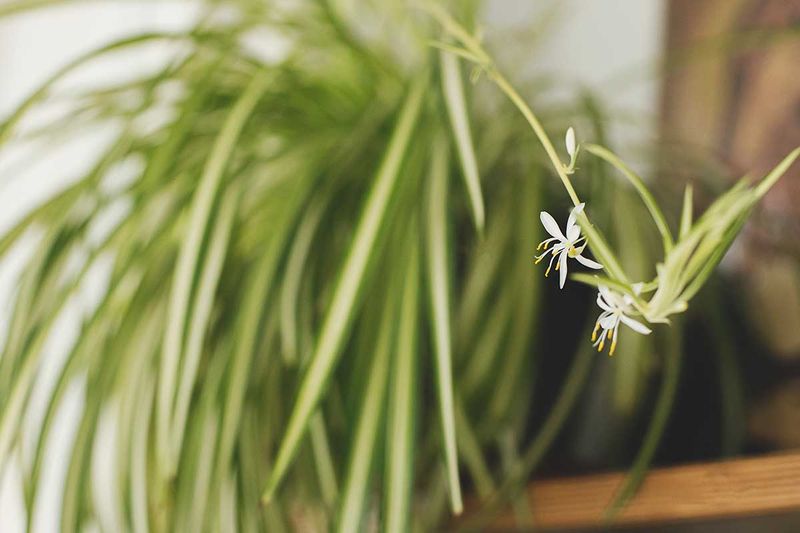
A spider plant that looks quiet in November is often just responding to the light. The RHS notes that low light slows growth, so less new foliage in fall is expected in many homes.
Slower does not mean stopped, though. Shorter days can actually nudge mature plants to flower and then produce plantlets, as K-State Research and Extension describes.
So if you spot a thin stem with tiny white flowers, or new babies appearing, that is a normal sign of a settled plant.
What if growth stays poor for a long time? Look for other causes before you grab a bigger pot.
Check the light, the watering pattern, and the roots. Roots that fill the pot can be one reason, and you might see them circling at the drainage holes or pushing up from the soil.
That is a clue, not a calendar task. Colorado State Extension does not tie repotting to fall, and a plant with room left in its pot is usually fine as it is.
Disturbing roots during a slow season only makes sense when the plant shows a reason.
Keep the fall routine simple
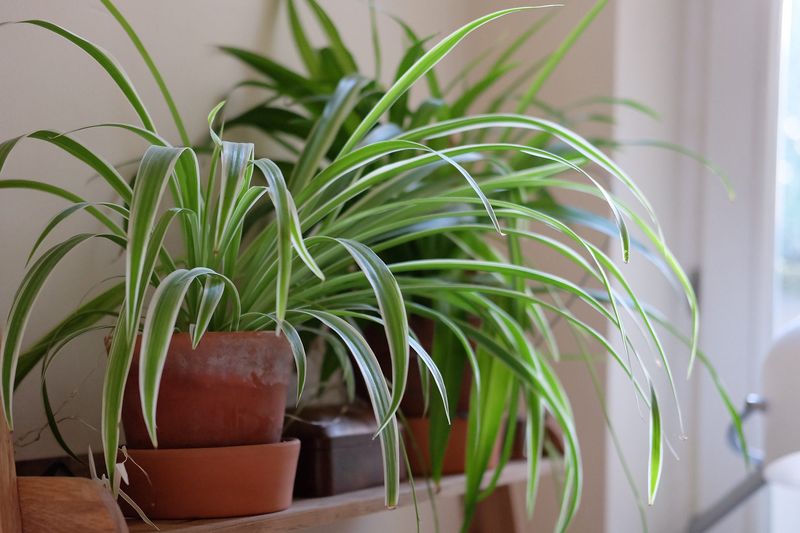
Check the soil before every watering, and let the pot’s drying speed set the pace. Keep the plant in bright, indirect light, away from cold glass, drafts, and heat vents.
When tips turn brown, look at the conditions first, as Iowa State Extension suggests, since several causes can look alike. That is the whole plan.
A slower-looking plant does not need a reset. Your spider plant is mostly asking you to notice it, and you already do.