
When Should North Carolina Gardeners Actually Bring Their Hummingbird Feeders Inside For Winter
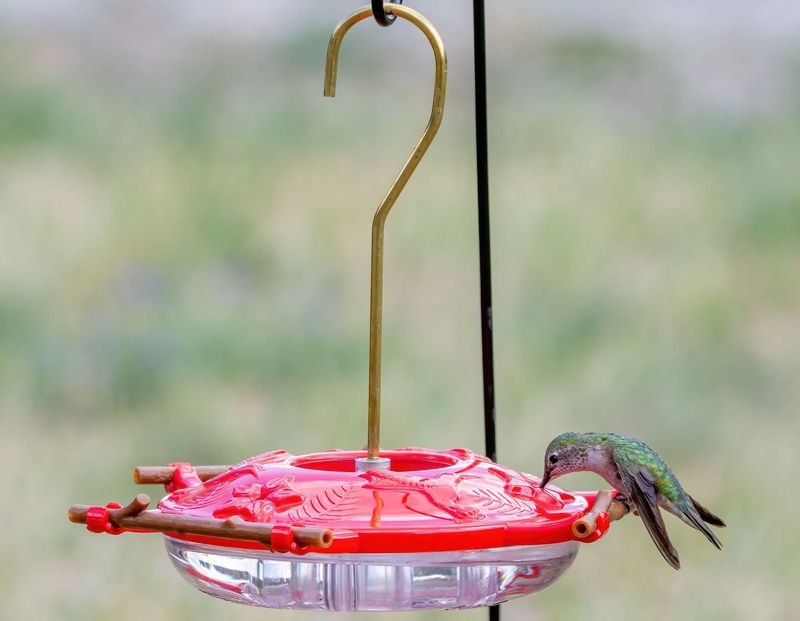
A hummingbird feeder is easy to hang in spring, but deciding when to stop is harder. Take it down too soon and you may miss a late visitor at your window.
Leave it up and you might wonder if you are doing the birds a favor or a disservice. North Carolina yards have a few surprises in store each fall, and your own sightings are the best guide.
Most Ruby-throats leave by mid-October, but some stay later
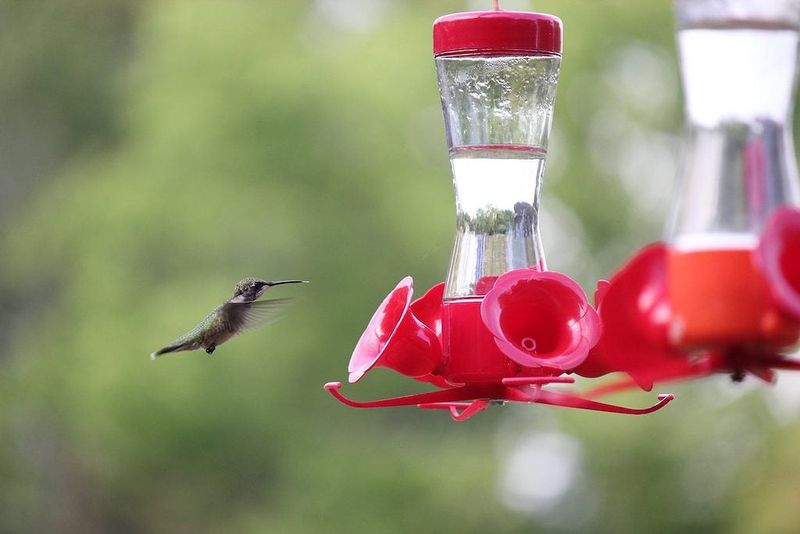
Fall in North Carolina follows a pattern, though not a perfect one. NC State Extension says most hummingbirds leave the state by mid-October.
That is a handy marker for planning, but it is a general pattern and not a promise for every bird, yard, or year.
Some Ruby-throated Hummingbirds hang around longer. The Carolina Bird Club notes that females and young birds can remain into late October or early November.
These stragglers are possible, not guaranteed. Plenty of yards will see their last hummingbird well before that.
A fixed statewide takedown date does not hold up for a few reasons. A gardener in the mountains may see birds head south earlier than one on the Coastal Plain.
Weather, food supply, and the individual bird all play a part. One warm October can keep a young hummingbird around while the next year’s first cold snap clears everyone out.
Think of mid-October as the time to start paying closer attention rather than the day to grab a step stool. Glance at the feeder each morning and jot down the last day you see a bird.
If you spot a tiny visitor on October 28, that tells you more about your yard than any calendar printed on a feeder box. Those notes become the foundation for the simple rule in the next section.
Let your last sighting—not the calendar—set the takedown date
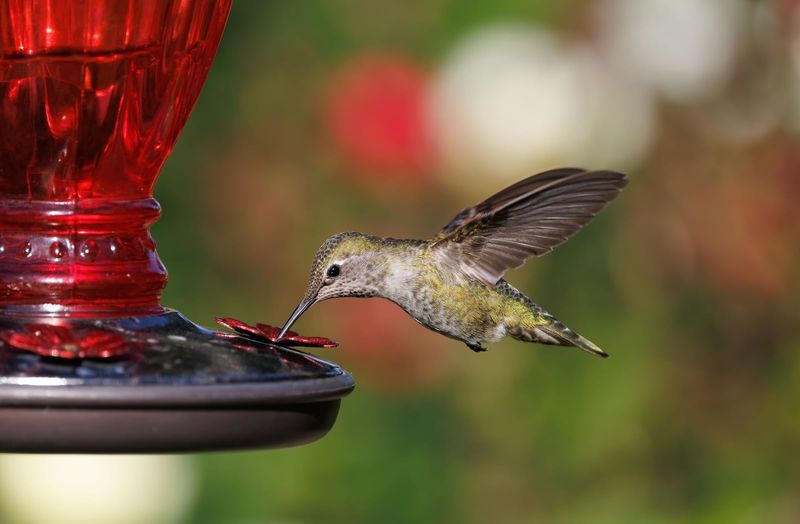
Here is the rule you can use in your own yard. Leave the feeder up for about two weeks after the last hummingbird you see.
A North Carolina Cooperative Extension source gives this same timing for the last fall or winter sighting.
The extra two weeks gives a late migrant or an unexpected visitor a chance to find the feeder. Audubon also suggests leaving feeders up after hummingbirds seem to disappear, since late migrants or out-of-range birds may still show up.
Treat two weeks as practical guidance, not a biological deadline. A bird could still turn up later, and that is fine.
Putting this into practice takes very little effort. Keep a note on your phone or a calendar by the kitchen window and mark each day you see a hummingbird.
Once you have gone about two weeks with no visitors, you can clean the feeder and store it for the season.
This approach keeps the decision tied to what you actually observe. If a hummingbird visits on November 3, your clock restarts.
If your last sighting was in September, you can take the feeder down in late September or early October without worry.
Winter hummingbirds are possible, but rare
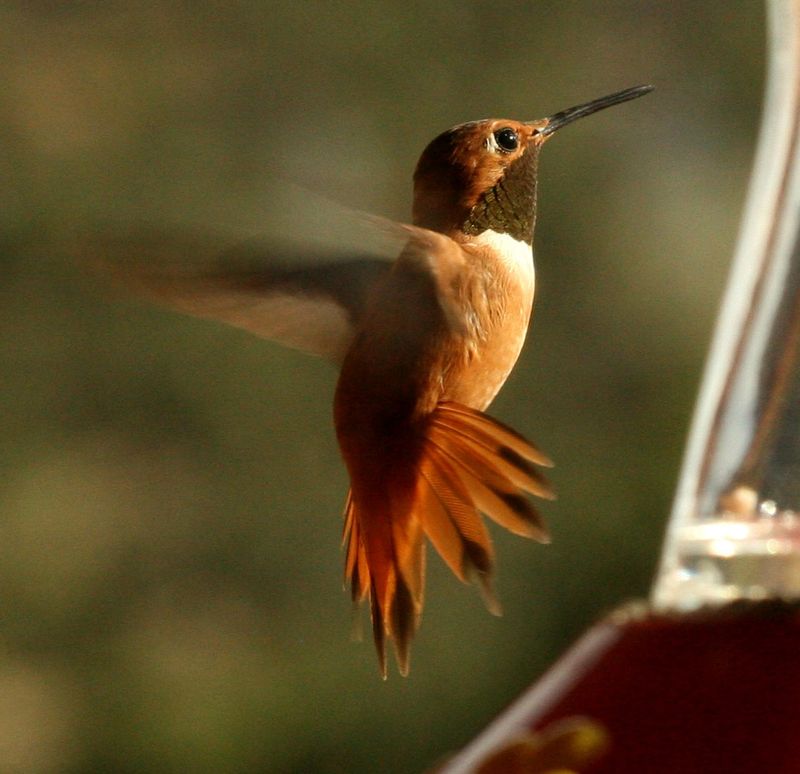
Now and then, a hummingbird shows up well after the usual season ends. The Carolina Bird Club describes Rufous Hummingbirds as winter vagrants in North Carolina, while noting repeated winter records in the Charlotte region.
Other western species have also turned up in the colder months.
Records from a region do not mean your yard will get a visitor. Most North Carolina homeowners will never see a hummingbird in December or January.
A winter bird is a rare event, and it is not something to expect or plan around.
Some gardeners choose to keep a feeder available anyway, just in case. That is a personal choice, and it comes with a bit of upkeep, covered later in this article.
If you would rather not tend a feeder in the cold, taking it down after the waiting period is perfectly reasonable.
If a late hummingbird does appear, resist the urge to name the species right away. The Carolina Bird Club points out that identification can be hard, especially for females and young birds.
A late bird could easily be a Ruby-throat. Take clear photos, note the colors, and share them with a local bird club if you want a reliable answer.
Leaving a feeder up does not stop migration
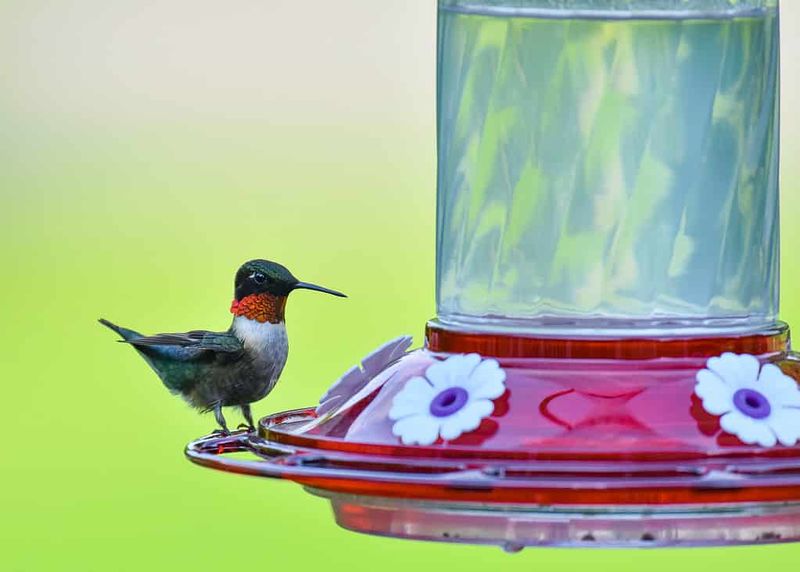
Plenty of people worry that a full feeder will talk hummingbirds out of leaving. It does not work that way.
Audubon and the Cornell Lab of Ornithology both explain that feeding does not prevent normal migration.
Birds head south because of cues like shorter days and changing seasons, not because the feeder runs dry. A Ruby-throat that is ready to go will go, whether your feeder is full or empty.
The Carolina Bird Club takes the same position.
That means you can drop one common reason for pulling the feeder early. There is no need to rush the takedown in September out of concern that you are holding birds back.
Your feeder can stay up while you watch for the last visitor.
None of this promises a winter guest. Leaving the feeder up simply keeps the option open for any late bird passing through.
If no one stops by, you have lost nothing but a little sugar water, and you can take the feeder down once your waiting period ends.
Keep winter nectar fresh and prevent it from freezing
If you keep offering nectar into the cold months, the recipe stays simple. NC State Extension recommends four parts water to one part plain white sugar.
Skip the honey and skip the red food coloring. Neither is recommended.
Cleanliness matters as much as the mix. Nectar left too long can spoil, so clean the feeder regularly and refill with fresh nectar.
Sources differ on how often to do this in winter. NC State advises weekly cleaning, while the Carolina Bird Club gives a roughly two-week winter interval.
Pick one that suits your routine and stick with it.
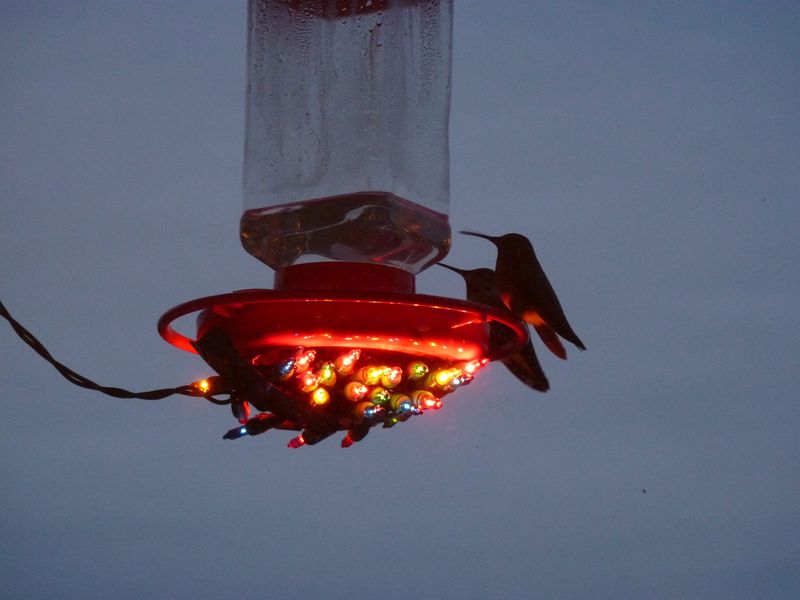
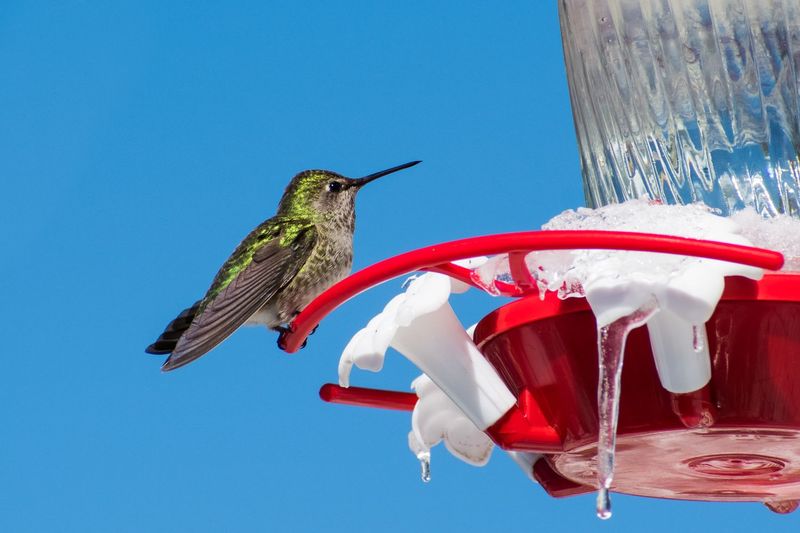
Cold weather brings a different problem. The practical worry is frozen nectar that a bird cannot drink.
Audubon says cold nectar does not appear to cold-stun hummingbirds, so the goal is simply keeping the liquid from turning to ice, especially where nights regularly drop below freezing.
On a freezing night, you can bring the feeder indoors temporarily, as the Carolina Bird Club suggests. Hang it back outside at first light, after the nectar is thawed and the sun is up.
A second feeder makes the swap easier, since you can hang a fresh one while the other warms inside. This is a nightly routine and not the same as taking the feeder down for the season.
Take the feeder down after the waiting period—or maintain it for a visitor
The plan comes down to a few steps. Watch for hummingbirds, note the last one you see, and wait about two weeks.
After that, take the feeder down, wash it well, and store it until spring, as North Carolina Cooperative Extension suggests.
If you want to stay ready for a rare winter visitor, you can keep the feeder going. Follow the NC State nectar recipe, clean it regularly, and keep the nectar from freezing.
Bringing it indoors overnight during a freeze, as the Carolina Bird Club describes, is a short-term step, not seasonal storage.
Not every yard needs a feeder all winter, and that is fine. The hummingbirds that matter most have already passed through by then.