
When Should You Stop Feeding a Christmas Cactus in North Carolina?
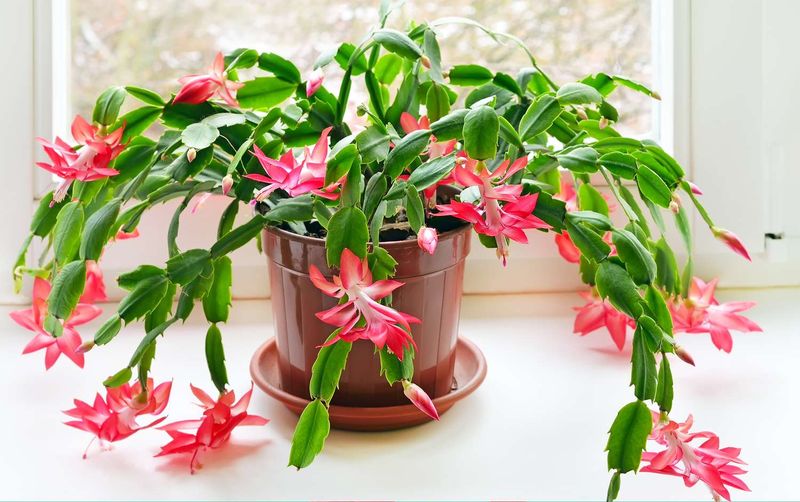
Many North Carolina homeowners reach November with a Christmas cactus that has leaves but no buds, and they wonder if fertilizer is the problem. Feeding does matter, but the timing question is bigger than one month.
Light, night temperatures, and the kind of holiday cactus you own play a major role too. Here is how to sort out what to feed, when to stop, and what to do right now.
When to taper or stop feeding
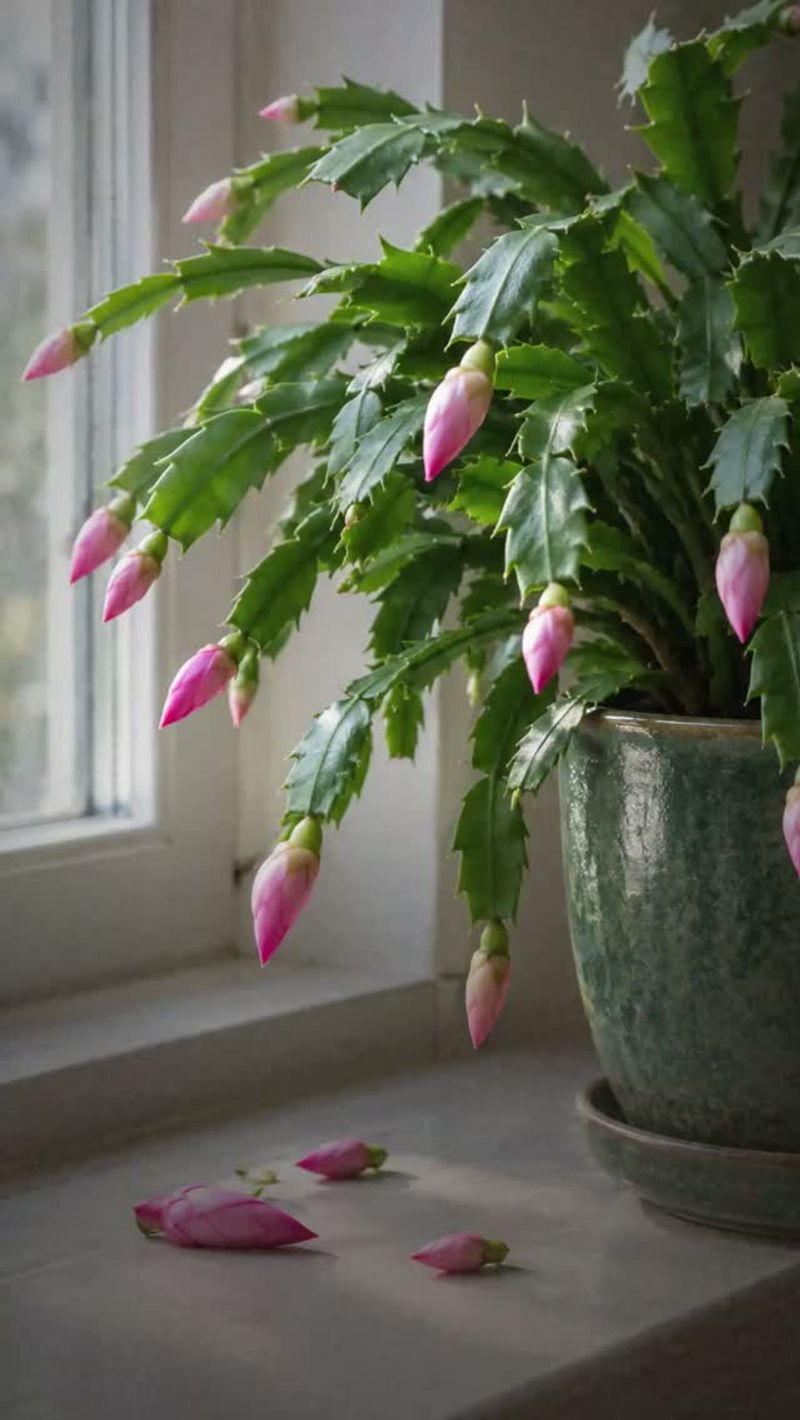
Late summer or early fall is the usual time to ease off, and November is later than most guidance suggests. Clemson Extension recommends feeding monthly at half strength from new growth in late winter or early spring through summer, then stopping fertilizer in late summer.
NC State’s Christmas cactus profile recommends monthly fertilizer during the growing season. Its broader guidance says to reduce watering around mid-September as buds develop.
That mid-September mark is a care cue, not a promise that every plant starts forming buds on the same day.
Put those two sources together and a simple pattern appears. Feed while the plant is actively growing, then taper or stop by early fall as the bud-setting season approaches.
There is no single calendar date that fits every home, because indoor light, room temperature, and the plant’s growth stage all differ from one house to the next.
So where does November fit? If you are still feeding your cactus at that point, pausing is sensible, since a plant in winter is not pushing much new growth and does not need routine feeding.
Just do not expect that pause to act as a bloom switch. Buds that are going to form are often already shaped by the weeks of light and temperature that came before, and stopping fertilizer in November cannot be counted on to change that.
Also check the pot for slow-release fertilizer pellets mixed in at planting. Those keep releasing nutrients on their own, so your own feeding schedule is only part of the picture.
Fertilizer does not act as a leaf-or-flower switch
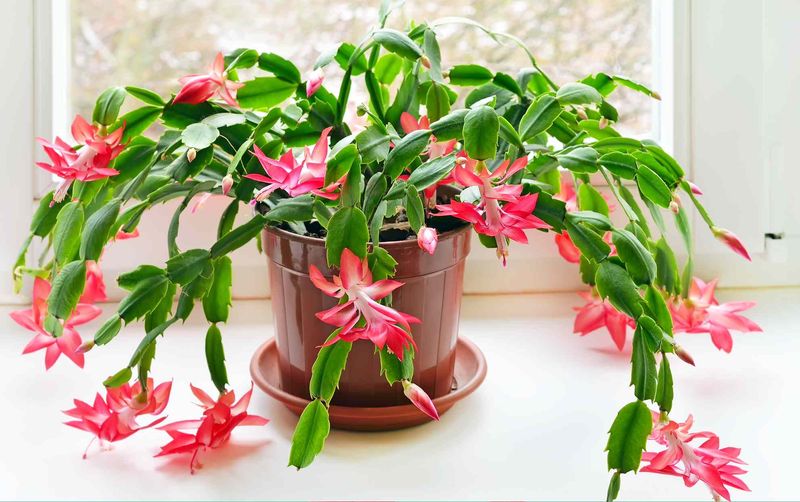
Think of fertilizer as fuel for growth, not a switch that sends the plant toward leaves or flowers. A plant that is well fed during spring and summer builds the healthy segments that later carry buds.
Flowering itself is steered more directly by seasonal light and temperature, which the next section covers.
A study on container-grown Christmas cactus, published in the Journal of Plant Nutrition, found that added nitrogen boosted both foliage growth and flowering. High nitrogen, though, delayed flowering.
That is a caution against heavy feeding, not proof that a late feeding trades buds for leaves on a houseplant.
The takeaway for a home grower is to be steady and moderate. Use a complete houseplant fertilizer and follow the label during active growth.
Clemson suggests half-strength feeding about monthly while the plant is growing.
If your plant is bud-free, resist the urge to blame one last feeding. Look instead at how much you fed through summer, whether the plant got long nights, and whether it is the type you think it is.
A more helpful clue is the plant’s look: very lush, dark green growth with few buds may hint at generous feeding, but it could also just be a cultivar that blooms later.
Light and cool nights support bud formation
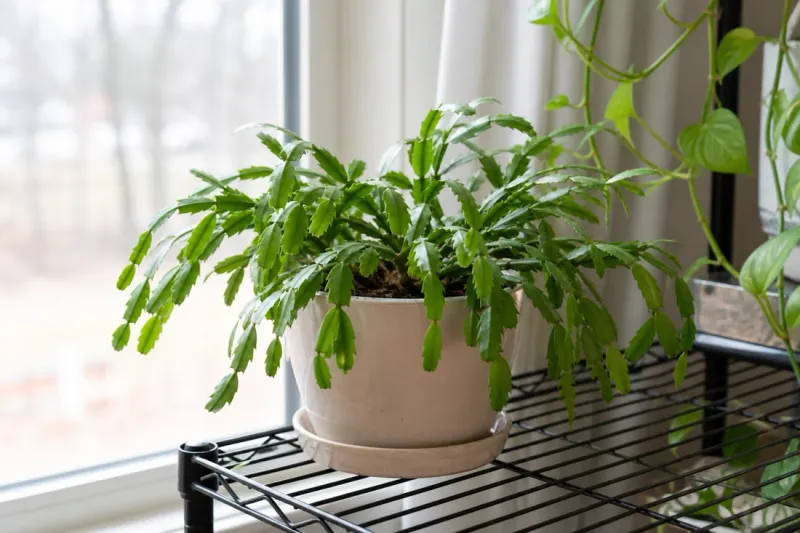
Bright days, cool nights, and long stretches of darkness are the cues you can actually manage. NC State points to nights of about 55 to 65 degrees F and at least 13 hours of darkness.
Clemson describes 14-hour nights for at least six weeks, and Illinois Extension gives at least 12 hours for five to six weeks.
Because the sources differ a little, treat about 12 to 14 hours of uninterrupted darkness as a practical range rather than an exact rule. The word that matters is uninterrupted.
A lamp, a hallway nightlight, or a TV glowing in the room can break up the dark period.
A spare bedroom or an unheated but not freezing room often works well. Keep the plant away from drafty windows, and bring it in if nights threaten to drop near freezing.
Plant identity matters too. Many plants sold as Christmas cactus are really Thanksgiving cactus or hybrids.
Clemson notes that Thanksgiving cactus typically blooms about a month before Christmas cactus, while true Christmas cactus often blooms from December into February.
That means a plant that flowers in mid-November is not necessarily ahead of schedule, and one that waits until January is not necessarily behind. No feeding change can guarantee blooms on December 25.
What to do if November arrives without buds
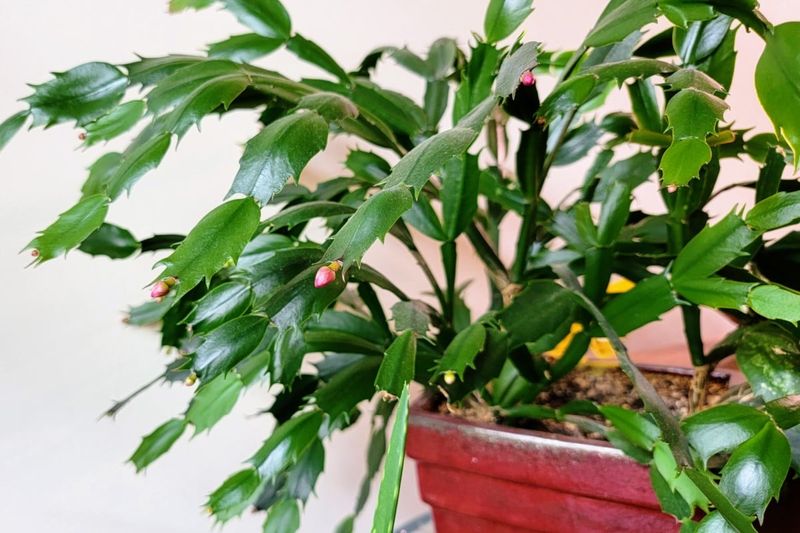
A bud-free plant in November is not automatically a lost cause. Some cultivars bloom later, and buds can be small enough to hide at the tips.
Look closely at the ends of the segments before you decide anything.
Skip routine winter fertilizer to try to force flowers. NC State’s Pender County office says winter feeding is unnecessary, and the nitrogen research found that high nitrogen delayed flowering.
A bloom-booster product is not a proven fix either, since nothing shows a high-phosphorus formula reliably adds blooms on household plants.
Instead, check the basics. Is the plant getting bright daytime light?
Do nights stay cool, near the 55 to 65 degree range NC State describes? Is the room truly dark for about 12 to 14 hours, with no lamps or screens interrupting?
Do not try drought to push the plant into bloom. UMass Extension reports that research does not support water stress as a flowering treatment, and stress during flower induction can reduce bud set.
Treat any adjustment as support for the plant, not a rescue. If buds do not show this year, you will have useful notes for next fall.
Keep developing buds away from avoidable stress
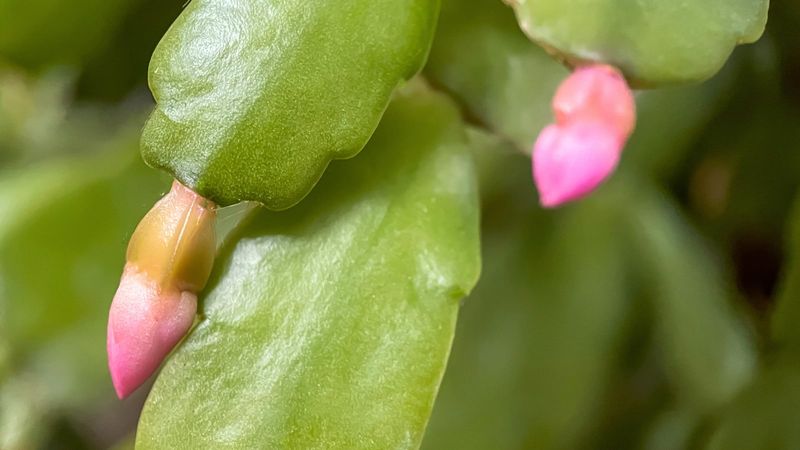
Once buds appear, your job shifts from encouraging them to not rattling them. Both Clemson and Illinois Extension point to extremes as trouble during bud formation and bloom.
These steps lower the risks tied to bud drop, though no routine can promise every bud will open.
Start with water. Aim for potting mix that is lightly moist, not soggy and not bone-dry for long stretches.
Check by touching the top inch of mix, and water when it begins to feel dry.
Empty the saucer after watering so roots are not sitting in a puddle. A pot with drainage holes helps a lot here.
Next, think about where the plant sits. A spot beside a heating vent, a cold window, or a door that opens to a chilly porch can swing temperatures fast.
Choose a steady place with bright light and avoid drafts.
Resist moving the plant around once buds are showing. A sudden change in light or temperature, such as moving it from a dim room to a sunny one, is the kind of shift to avoid.
If you must relocate it, do so gently and keep conditions close to what it had.
Finally, skip the fertilizer during this stretch. The plant is busy with buds, and extra feeding adds risk without clear benefit.
Resume feeding when active growth returns
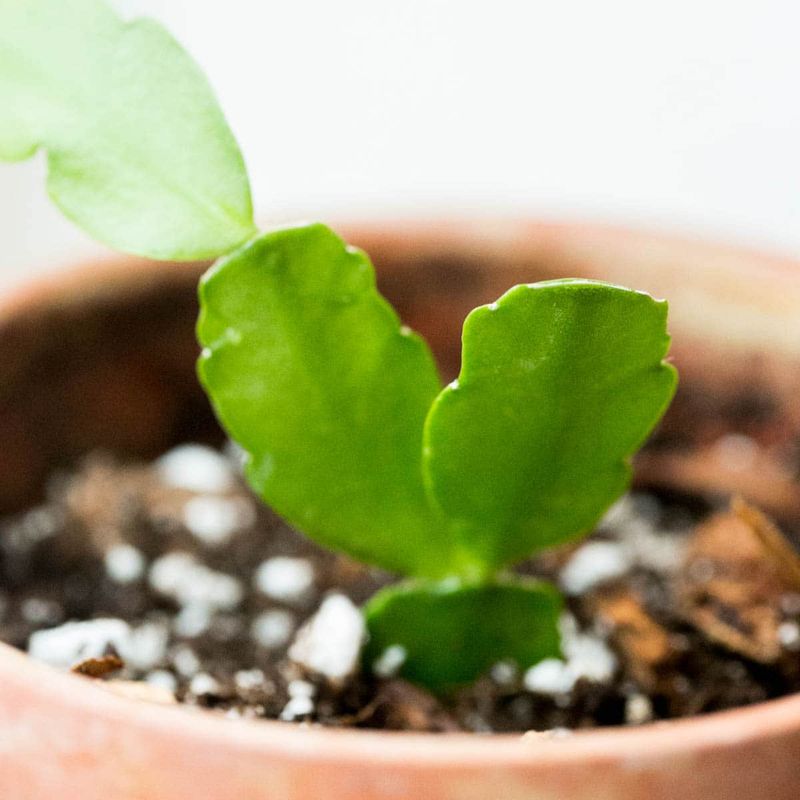
Watch for fresh, light green segments in spring, because that is your cue to start feeding again. NC State’s Pender County guidance says winter feeding is unnecessary and recommends feeding from spring through fall during active growth.
The yearly rhythm is simple. Feed through active growth, taper or stop by early fall, then focus on light, cool nights, and steady care.
The NC State profile backs monthly feeding during the growing season. No bloom date is guaranteed, so keep a few notes on what you did.
A holiday cactus rewards patience more than clever tricks.