
When to Feed Wisteria, and When Fertilizer Won’t Fix a Lack of Flowers
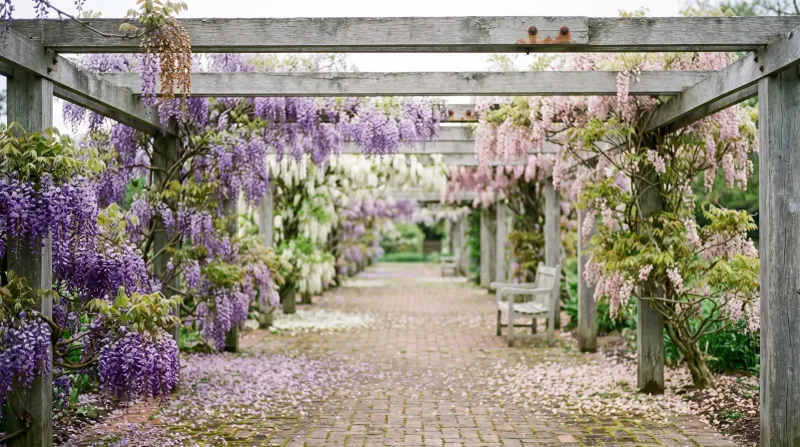
Your wisteria is climbing fast, covering the fence with leaves, but the purple blooms never show up. It is easy to think the vine is hungry and needs a boost.
Often the opposite is true, and extra food can make the problem worse. Here is how to tell whether fertilizer matters for your vine and what else to check first.
A vigorous wisteria usually does not need fertilizer
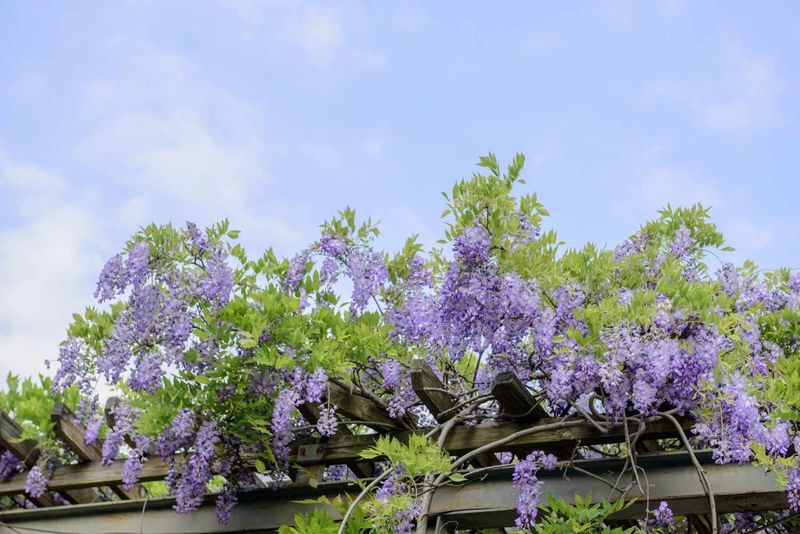
Picture a wisteria that is sending out long, leafy shoots every summer. That kind of growth tells you the vine is getting what it needs.
A nonflowering plant is not always a hungry plant, and more food rarely solves the puzzle.
Extension experts say much the same thing. UC IPM guidance on wisteria notes that fertilizer is generally not needed.
Utah State University Extension adds that Japanese wisteria usually does not need additional nitrogen, and that mineral fertilizer makes sense only when a soil test confirms a deficiency.
That does not mean fertilizer is never useful. A vine with pale leaves, weak growth, or poor soil may truly be short on something.
The point is to skip routine feeding and look first.
Start with what you can see today. Is the growth strong and the leaves deep green?
Has anyone fertilized the vine, or the lawn right beside it? Then get a soil test so you are working from facts instead of guesses.
If the test shows a need, you can feed with a clear purpose. If it does not, you have saved money and avoided pushing even more leaves.
Why excess nitrogen can mean more leaves and fewer flowers
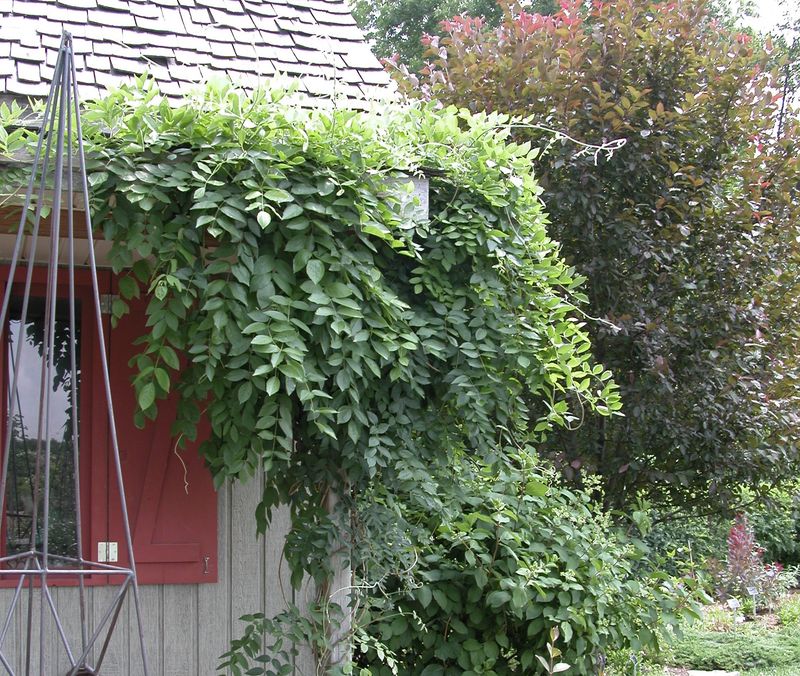
Nitrogen is the nutrient that drives green growth. Give a plant too much, and it may put its energy into leaves and stems instead of flowers.
Missouri Extension points to excess nitrogen as a reason some vines grow vigorously but bloom poorly.
Here is a spot many gardeners miss. You may never have fed the wisteria, yet it could still be getting extra nitrogen.
University of Maryland Extension notes that lawn fertilizer can be a source of excess nitrogen for nearby plants. A vine growing along a lawn edge may be sharing every spring feeding.
Before you blame nitrogen, keep the picture balanced. A leafy wisteria does not automatically have a nitrogen problem, and nitrogen is not always off limits.
Young age, shade, and pruning can also produce a lot of leaves with no flowers.
A simple check is to think back over the last few seasons. Did you use a lawn feed, a general garden fertilizer, or a high-nitrogen product near the roots?
If so, hold off on anything more and let a soil test tell you where things stand.
Let a soil test guide nutrient choices
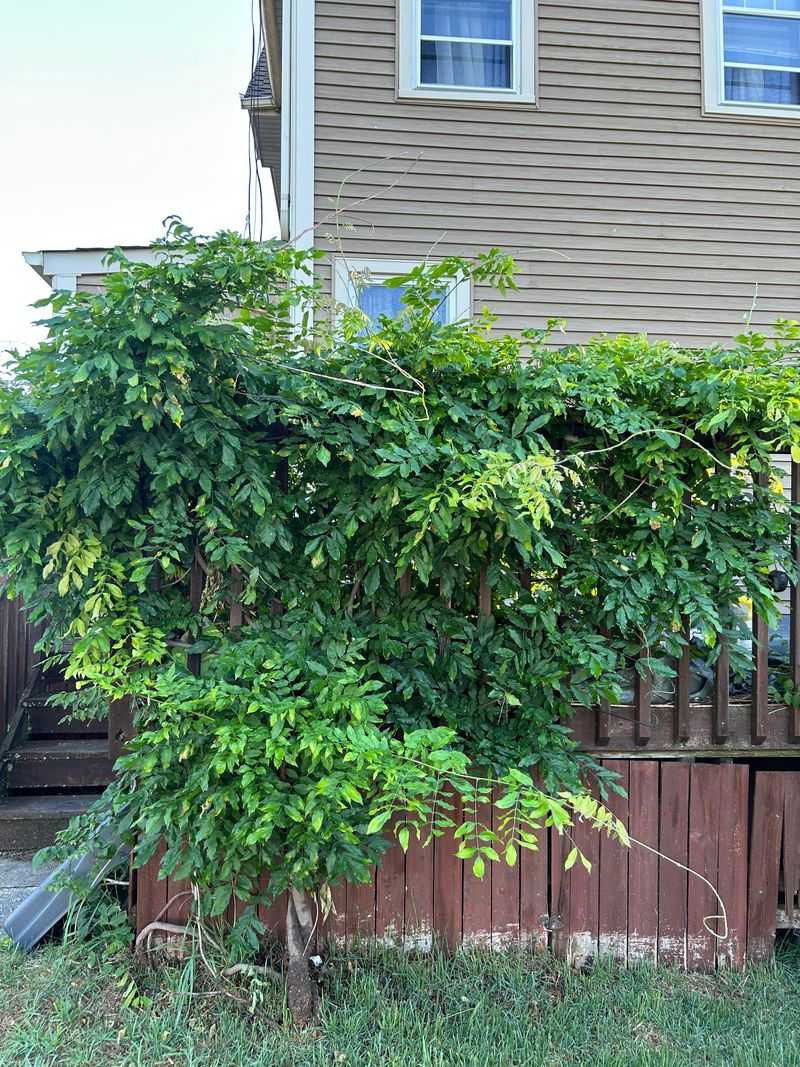
A soil test takes the guesswork out of feeding. It shows what your soil already has and what it may be missing.
Follow the recommendations for your own soil and location rather than a one-size-fits-all dose.
You have probably seen bloom booster products loaded with phosphorus. Phosphorus can help when soil is short on it, but it is not a reliable route to more flowers.
Utah State University says phosphorus may help if the soil is deficient, while noting that many Utah soils already contain enough.
North Dakota State University Extension makes a similar point in its look at the myth of high-phosphorus fertilizers. Extra phosphorus can also build up and wash away in runoff, which is a water-quality concern, as described in a Washington State University guide to soils and fertilizers.
You may notice that advice varies. Missouri Extension lists early-spring superphosphate as something that may help induce flowering, while other sources say fertilizer is generally unnecessary.
The easiest way to settle it is to let your own soil-test results decide.
If the test shows enough phosphorus, skip the bloom booster and put your effort elsewhere. If it shows a shortage, follow the lab’s advice for your soil.
For Japanese wisteria, USU places needed mineral feeding in early spring
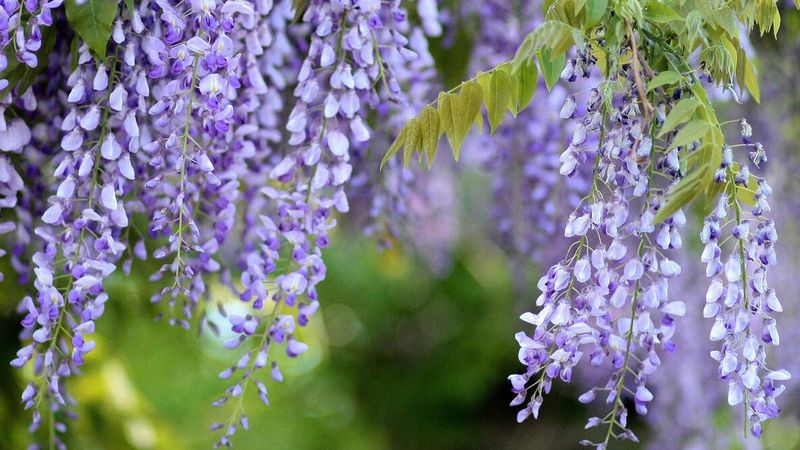
If your soil test says fertilizer is needed, timing comes next. Utah State University’s guidance for Japanese wisteria places mineral fertilizer application in early spring when a deficiency has been confirmed.
Notice the conditions in that sentence. It applies to Japanese wisteria, it applies only when fertilizer is needed, and it comes from Utah guidance.
It is not a universal calendar for every wisteria in every part of the country.
It is also not a bloom-triggering schedule. Feeding in early spring does not promise flowers, and no one can say how soon a vine might respond, if at all.
The goal is simply to correct a shortage at a sensible time.
Your own timing may differ. Climate, species, cultivar, and soil all play a part, so follow the soil-test recommendation and check with your local extension office.
A warm Georgia yard and a cold Minnesota one do not wake up on the same date.
If your test shows no need, early spring is just another time to leave the fertilizer in the shed.
Age, light, and frost can matter more than fertilizer
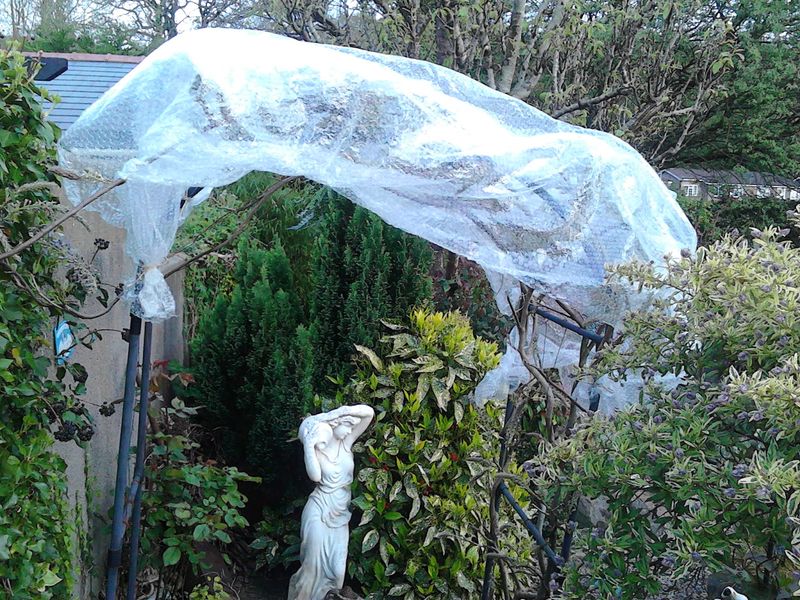
Suppose you have ruled out unnecessary feeding and the vine still will not bloom. Several other causes are worth checking, and none of them can be fixed quickly with fertilizer.
These are possible explanations, not a diagnosis.
Age comes first. The Royal Horticultural Society reports that seed-grown wisteria can take up to 20 years to flower.
Missouri Extension gives a typical range of 7 to 15 years for some wisterias. If your vine began as a seed or a very young plant, patience may be the real answer.
Light is next. Wisteria generally flowers best with plenty of sun, so look at how many hours of direct light reach the vine.
A neighboring tree that has grown taller may have changed things over the years.
Frost is the third suspect. A late cold snap can damage buds that were already swelling, leaving you with leaves but no flowers that year.
University of Maryland Extension discusses frost among the reasons trees and shrubs fail to flower.
You can check light and frost history today. Age is the one that takes time, and no feeding schedule will speed it up.
Protect next year’s buds with water and careful pruning
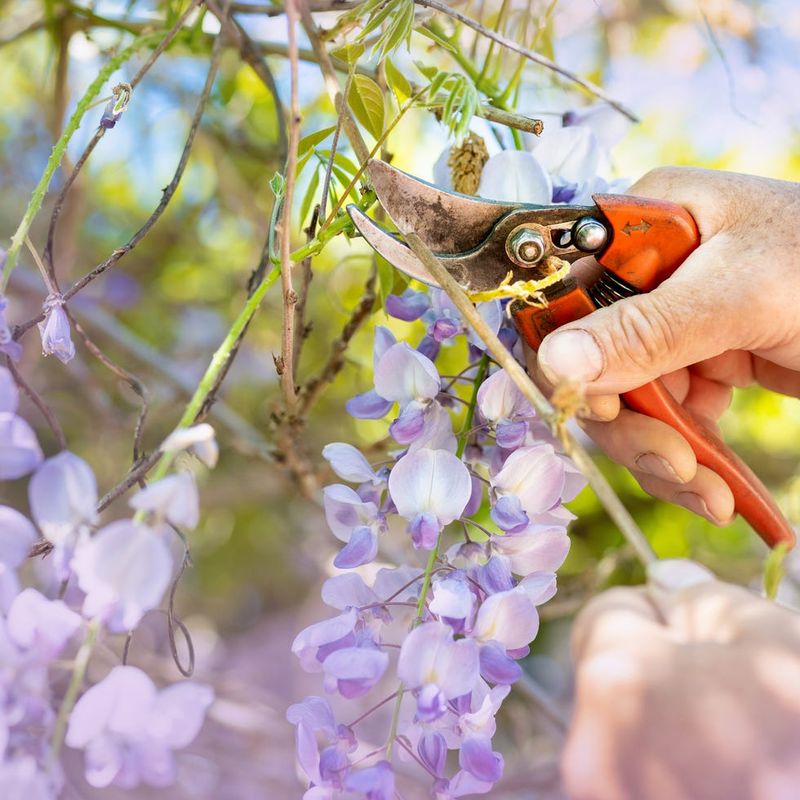
Two everyday habits matter more than most feeding plans: watering and pruning. Both are things you can adjust right now.
Wisteria sets next year’s flower buds in summer. The RHS identifies July through September as a time when dry soil can cause buds to abort.
During hot, dry spells, give the vine a deep soaking so the soil does not stay parched.
Pruning is the other piece. Wisteria flowers on older growth, so cutting at the wrong time can remove the very wood that would have carried blooms.
Utah State University explains that flowering happens on older growth, which is why a heavy trim at the wrong moment can cost you flowers.
There is no single pruning calendar that fits every yard. Species, climate, and the way your vine is trained all matter.
For a starting point, see Oregon State University’s wisteria pruning advice, then compare it with guidance from your own local extension office.
You may come across root pruning or deliberately stressing the vine as a flowering trick. It is not an easy or low-risk first step, so treat it with caution rather than as a quick rescue.
Feed to correct a proven need, not to force a bloom
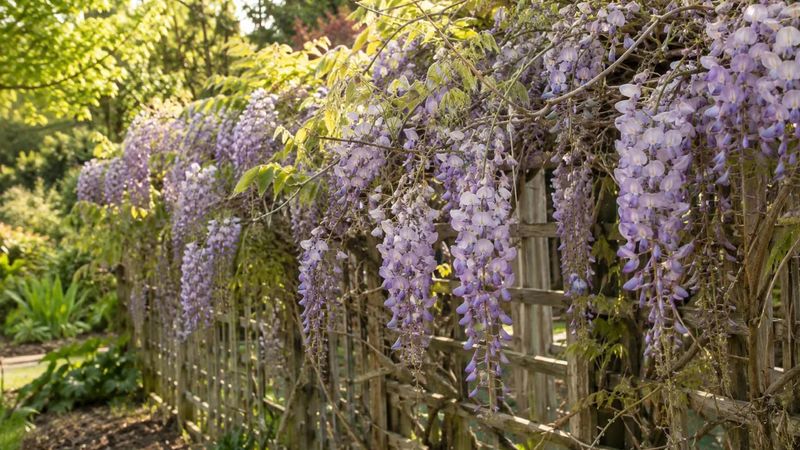
Here is a simple rule to keep in your pocket. A healthy, vigorous wisteria can stay unfed unless a soil test shows a need, as both UC IPM and Utah State University suggest.
If flowers are still missing, look at light, water, pruning, frost, and age alongside nutrients.
This approach saves money and avoids pushing extra leaves, though it cannot predict when your vine will bloom. A wisteria rewards patience more than a fertilizer bag.