
Moss in the Shady Corner of Your Lawn Is a Clue to Site Conditions Worth Checking
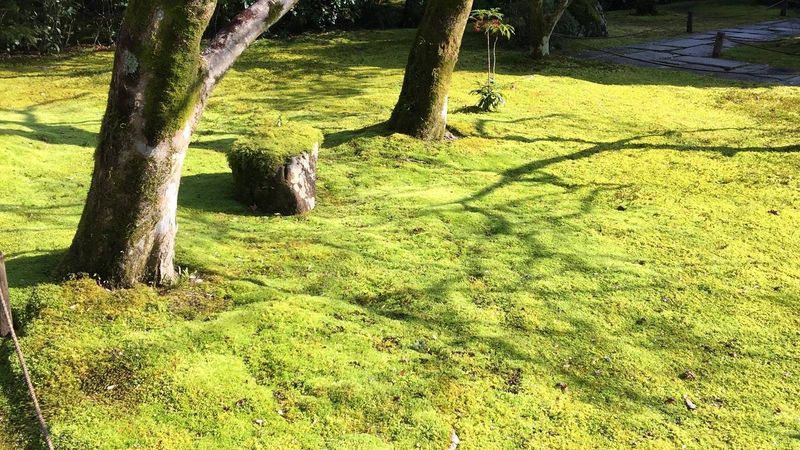
Moss creeping across the shady corner of your lawn can feel like a sign you did something wrong. You did not.
Moss is a clue that the spot favors moss over grass, and a few simple checks can show you why. Once you know what is going on, you can save money and skip the guessing game with sprays and bags of lime.
Moss is a clue, not a soil test
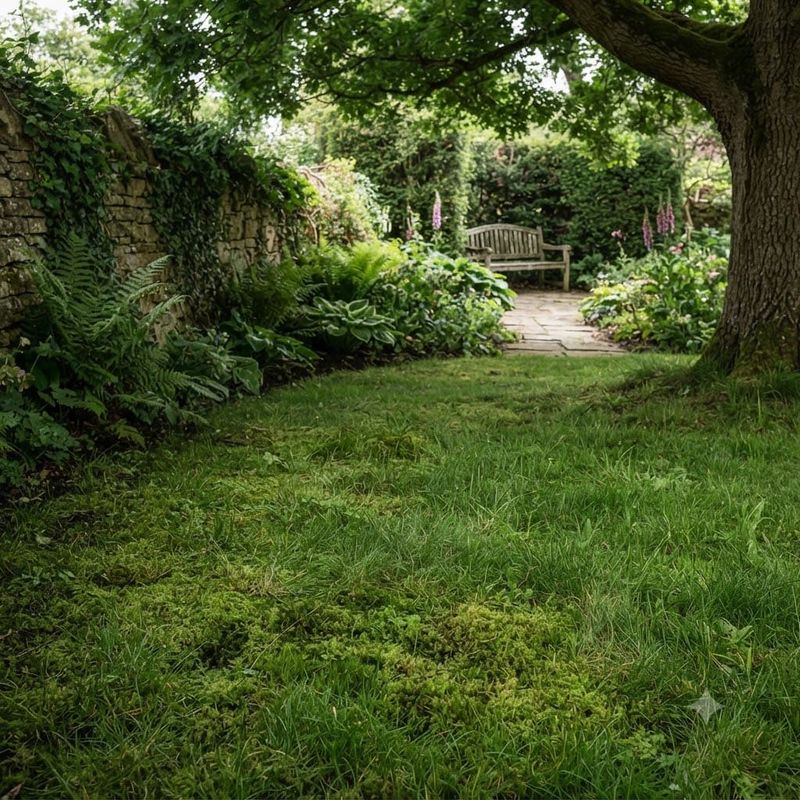
Moss tends to show up where grass is already thin and the conditions work in moss’s favor. That is a useful hint, but it is not a lab report.
Seeing moss does not tell you that your soil is missing one particular thing or needs one particular treatment.
Several things can tip a spot toward moss. University of Maryland Extension guidance lists shade, excess moisture or poor drainage, compaction, low fertility, and sometimes acidic soil as conditions that can favor moss or weaken turf.
Any one of these can be at work, and often several overlap. A compacted patch under a tree, for example, may drain slowly and also get very little sun.
It also helps to know that moss is not usually what kills your grass. Moss moves into bare or struggling areas after the turf has already lost ground.
That is why Oregon State University Extension points to improving the conditions and lawn practices that let moss outcompete grass, rather than focusing only on the moss itself.
So think of moss as a nudge to investigate. In the sections ahead, you will check the light, look at moisture and drainage, send in a soil test, and think about whether the ground is packed down.
After that, you can decide whether to help grass grow, remove the moss, or let moss or another groundcover have the spot.
Is there enough light for grass?
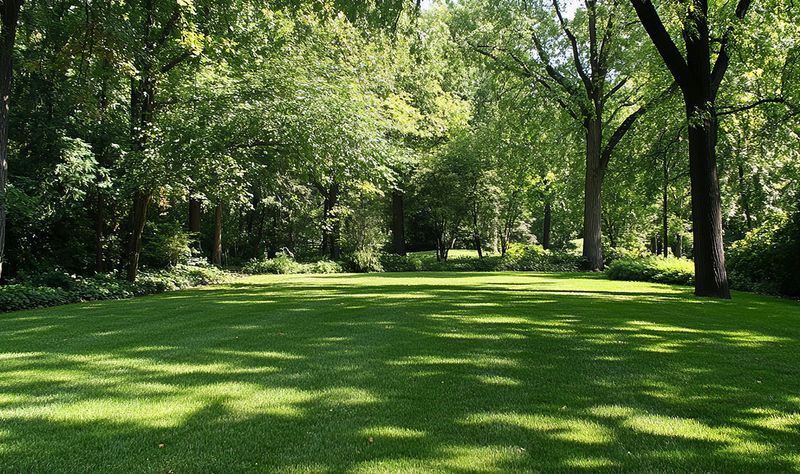
Spend one sunny day watching the spot. Note when the sun hits it, and for how many hours.
Check again in summer when trees are fully leafed out, since a patch that looks bright in early spring can be dim by June.
Most lawn grasses need a good amount of direct light to stay thick. OSU Extension says turfgrass is unlikely to grow well with fewer than four hours of direct sun a day.
That is regional guidance for Oregon, not a universal line for every grass type or climate, so treat it as a rough yardstick. Some shade-tolerant grasses do better than others, and your local extension office can tell you what works near you.
If the spot is deeply shaded, no amount of seed, fertilizer, or moss killer is likely to give you a lush lawn. Repeated reseeding there can turn into a yearly cycle of spending money on grass that fades.
Shade also pairs with other issues, such as damp soil and tree roots, so light is only one piece of the picture.
When light is the main limit, you have good options. You can keep the moss, which already thrives there, or plant a groundcover suited to shade, as University of Maryland Extension suggests.
Either path costs less effort than fighting the site.
Where does the water go?
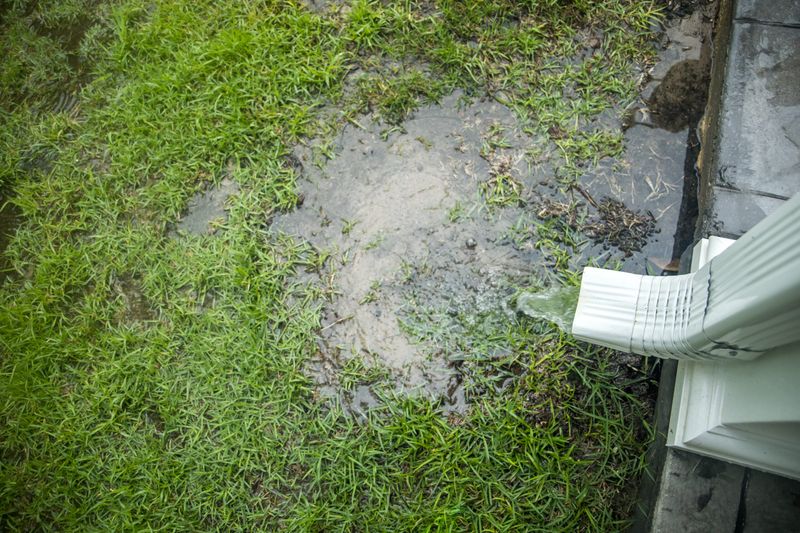
Walk out to the patch a day or two after rain and press your shoe into the ground. Does water squish up around your sole?
Do puddles linger? A spot that stays soggy is one where moss often does better than grass.
Next, look at your own habits. A sprinkler that hits the shady corner every morning may be giving it more water than it needs, and shaded soil dries slowly.
Cutting back on unnecessary watering is a free first step, and University of Maryland Extension includes reducing irrigation and fixing drainage among its advice for struggling lawns.
Look at the lay of the land too. Does the patch sit lower than the rest of the yard?
Does a downspout or a sloped driveway send runoff there? Redirecting a downspout is often a cheap fix that makes a big difference.
Regrading low areas may be worth considering, but only where tree roots are not in the way. Piling soil or digging near roots can hurt the tree, so skip this one if big roots run through the spot.
Fixing the water problem first, before reaching for a moss product, gives you a better shot at lasting results.
Test the soil before reaching for lime
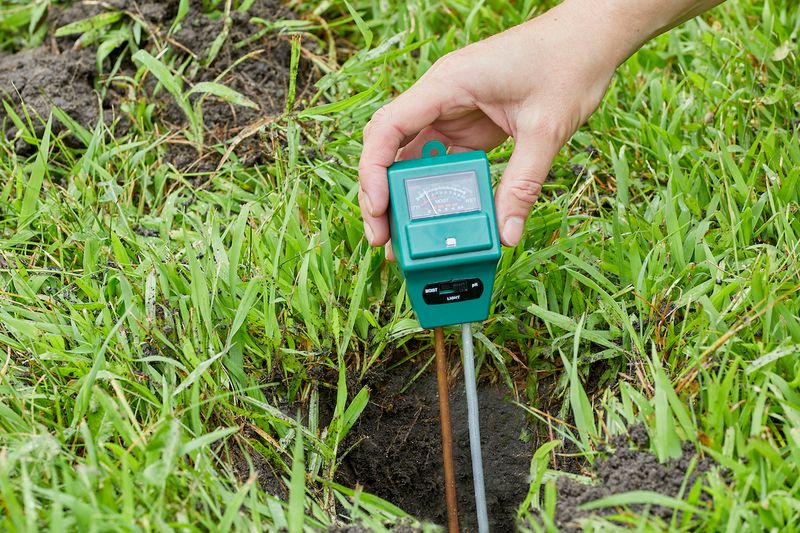
Plenty of advice online says moss means acidic soil and lime is the cure. That is a guess, and it can send you down the wrong road.
Moss is linked with acidic soil in some lawns, but it also grows because of shade, wetness, and other factors, so moss alone cannot tell you your pH.
A laboratory soil test gives you real numbers. University of Maryland Extension recommends basing lawn amendments on a lab test and notes that moss is not a reliable way to judge soil.
Many state extension offices offer low-cost testing, and the report usually explains what to add, if anything.
Collect a few small samples from the problem patch and from a healthy part of the lawn. Mix each set, let it dry, and send it in following the lab’s directions.
Comparing the two results can be eye-opening.
If the report says your soil is too acidic, lime may help your grass. If it says the pH is fine, adding lime is wasted money.
The right pH range also depends on grass type, as UMD’s guidance on established lawns explains. Lime is not a moss killer either; it only helps when the test shows a real need.
The same rule holds for fertilizer. Fix a limitation the test actually shows, rather than treating moss as proof that one exists.
When would aeration help?
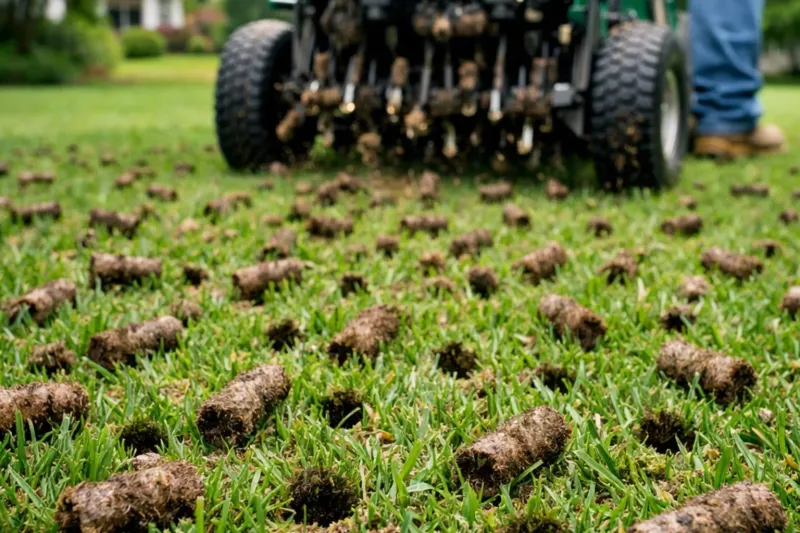
Soil that has been packed down by foot traffic, play, or equipment can make life hard for grass roots. Water and air have trouble moving through it.
Compaction is one possibility to check, not an automatic answer for every moss patch.
A simple clue is where the patch sits. If moss appears along a well-worn path, near a play area, or where the mower always turns, compaction is plausible.
If the spot is a quiet corner no one walks on, it may be less likely, though shade and wetness can still be at work.
Core aeration pulls out small plugs of soil and leaves channels for air and water to reach roots. It is the kind of aeration that fits this job, because it actually removes soil rather than just poking holes.
Timing matters, and it depends on your grass and local growing season. University of Maryland Extension recommends fall for cool-season turf and mid-to-late spring for warm-season turf.
That is extension guidance for Maryland, so check what your own state’s extension office suggests.
Aeration will not fix deep shade or a drainage problem by itself. It works best as one step among others, once you have good reason to think the ground is packed.
Choose a groundcover the site can support

After checking light, water, soil, and compaction, ask what you want from this spot. If you just want the moss gone, University of Maryland Extension says it can be pulled up with a rake.
Raking is cheap and chemical free.
Just know that raking alone will not bring back grass if the shade, wetness, or other limits stay the same. OSU Extension cautions that long-term control depends on changing the conditions that let moss beat turf.
If you fix something real, such as a soggy downspout or packed ground, grass has a better chance.
Some spots are simply better suited to something other than lawn. UMD’s page on moss in lawns notes that moss can serve as a fine groundcover where it already grows.
A shade-loving groundcover is another route, and a local nursery or extension office can suggest options for your area.
If you do use a moss-control product, follow the label closely, since products and directions vary.
Moss is not a prescription, only a hint. Let it point you toward what the spot can really do.