
What It Really Means When Little Gray Juncos Start Hopping Under Your North Carolina Feeder
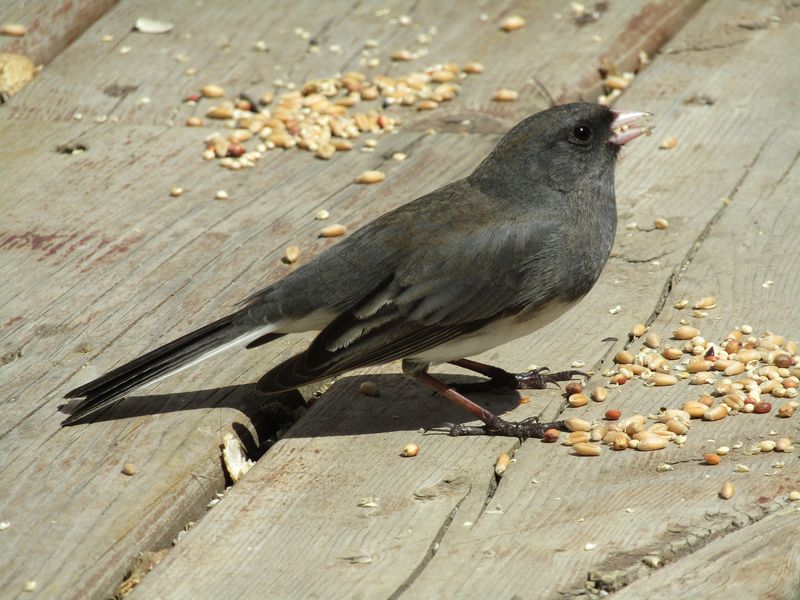
A flock of small gray birds suddenly shows up beneath your feeder, hopping around like they have been there all along. They may be dark-eyed juncos, a bird many people call a snowbird.
Their arrival tells you something about the season, but not as much as folklore claims. Here is what the sighting can and cannot tell you about your yard.
Those little gray birds may be juncos—and their timing matters
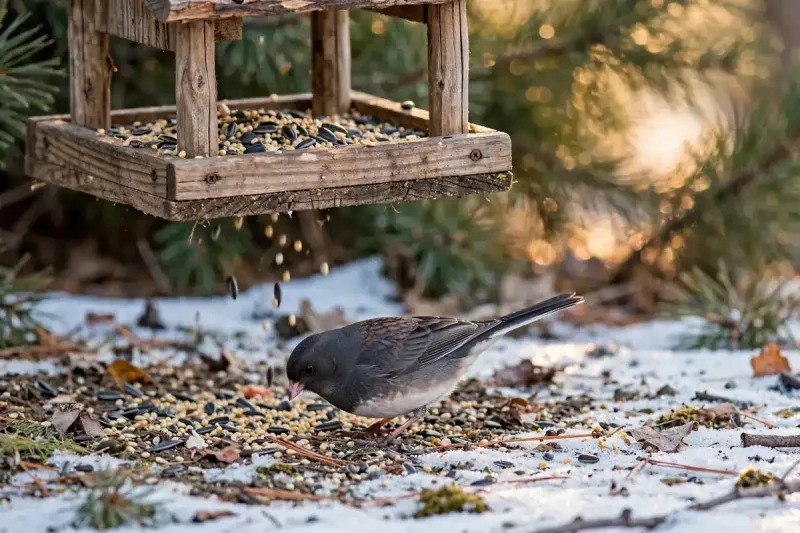
Little gray birds hopping under a feeder could be dark-eyed juncos, but a short description is not enough to be sure. Several small brownish or grayish birds visit North Carolina yards in cold months, including sparrows.
A good look at the bird helps: juncos are typically slate gray above with a white belly and a pale bill, and they flash white outer tail feathers when they fly.
If they are juncos, the timing fits. NC State Extension says juncos begin arriving in North Carolina in October and November.
The Carolina Bird Club describes them as widespread winter residents, so many yards from the Piedmont to the coast may host them for the colder months.
Treat October and November as a typical window, not a fixed date. Some birds show up earlier or later, and what you see depends on where you live and which birds happen to pass through your neighborhood.
Here is the part that surprises people. Junco arrival is a seasonal cue, much like falling leaves, and it is not a forecast.
Seeing them does not mean snow is coming, a cold snap is near, or the winter will be harsh. They simply follow a yearly pattern that plays out in mild winters and rough ones alike.
So when the gray flock appears, enjoy it as a sign that the season has turned. A photo and a quick check against a field guide or a bird identification app can confirm who your visitors really are.
Cornell’s life history notes are a handy place to compare behavior and appearance.
Not every North Carolina junco is a long-distance snowbird
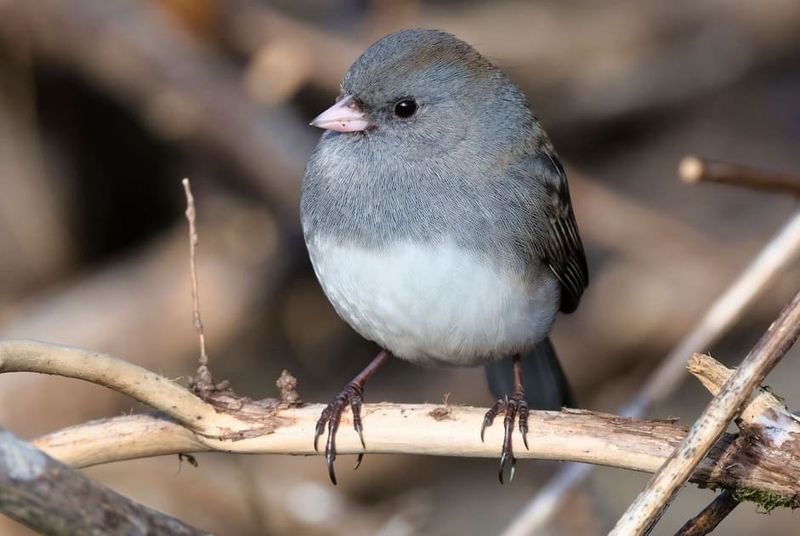
Snowbird is a catchy nickname, but it can give the wrong picture. Not every junco you see in North Carolina has flown down from Canada.
Cornell’s range information describes the species as ranging from resident to medium-distance migrant, and some Appalachian populations do not migrate at all.
North Carolina has its own piece of that story. The Carolina Bird Club reports that Carolina juncos breed mostly above 3,000 feet in the state.
In winter, those birds move vertically within the mountains, shifting to lower elevations instead of making the long trip many other migrants take.
That means juncos are not missing from North Carolina in summer. If you hike or camp in the high country of the Blue Ridge, you may meet them on the nesting grounds while the Piedmont and coast have none in July.
For most yards away from the high mountains, the winter-visitor pattern still fits well. Birds that show up in your Raleigh, Charlotte, or Wilmington neighborhood in the colder months are usually part of that seasonal arrival.
If you live in the mountains, pay attention to the details. A junco at a Boone or Asheville feeder in July is likely a local breeder, and one in January might be a neighbor that dropped down the slope.
Hopping beneath the feeder fits how juncos forage
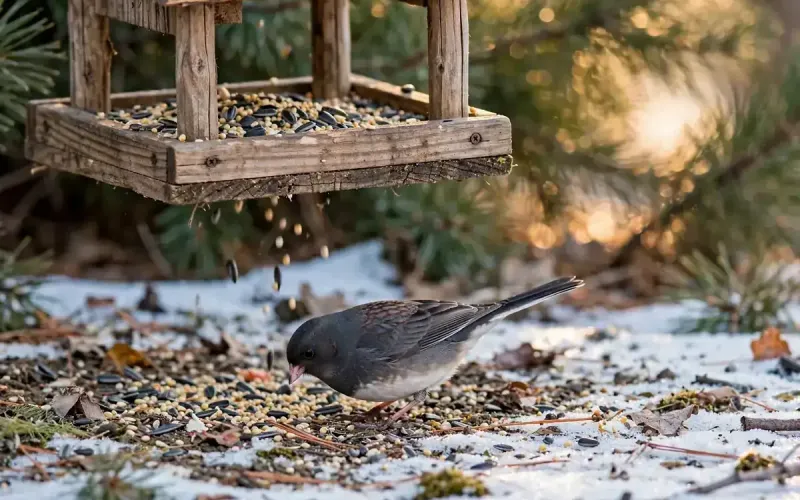
Juncos are ground-foragers. They hop along the soil, scratch at leaf litter with quick little movements, and pick up whatever edible bits they uncover.
Their winter diet leans heavily on seeds, which is why you often see them working the ground instead of perching on a feeder.
That habit helps explain the scene under your feeder. Seeds that drop from above land right where juncos like to look, and the cleared patch of ground is easy to work across.
Cornell’s life history account describes this hop-and-scratch style of foraging and the seed-heavy winter diet.
Watch their movements for a few minutes. You may notice a bird hop forward, kick backward with both feet, then pause to peck.
Flocks also tend to move in loose groups, with birds flitting up into shrubs when something startles them.
It is tempting to conclude the feeder is what brought them. That is a leap.
A bird feeding under your feeder is behaving the way juncos behave everywhere, and it does not show that feeder seed is their only meal or that they would struggle without it.
Think of the ground beneath the feeder as one stop on a larger route. The birds may arrive, scratch for a while, and move on to other spots in your yard or the neighbor’s before the day ends.
A yard can offer more than feeder seed
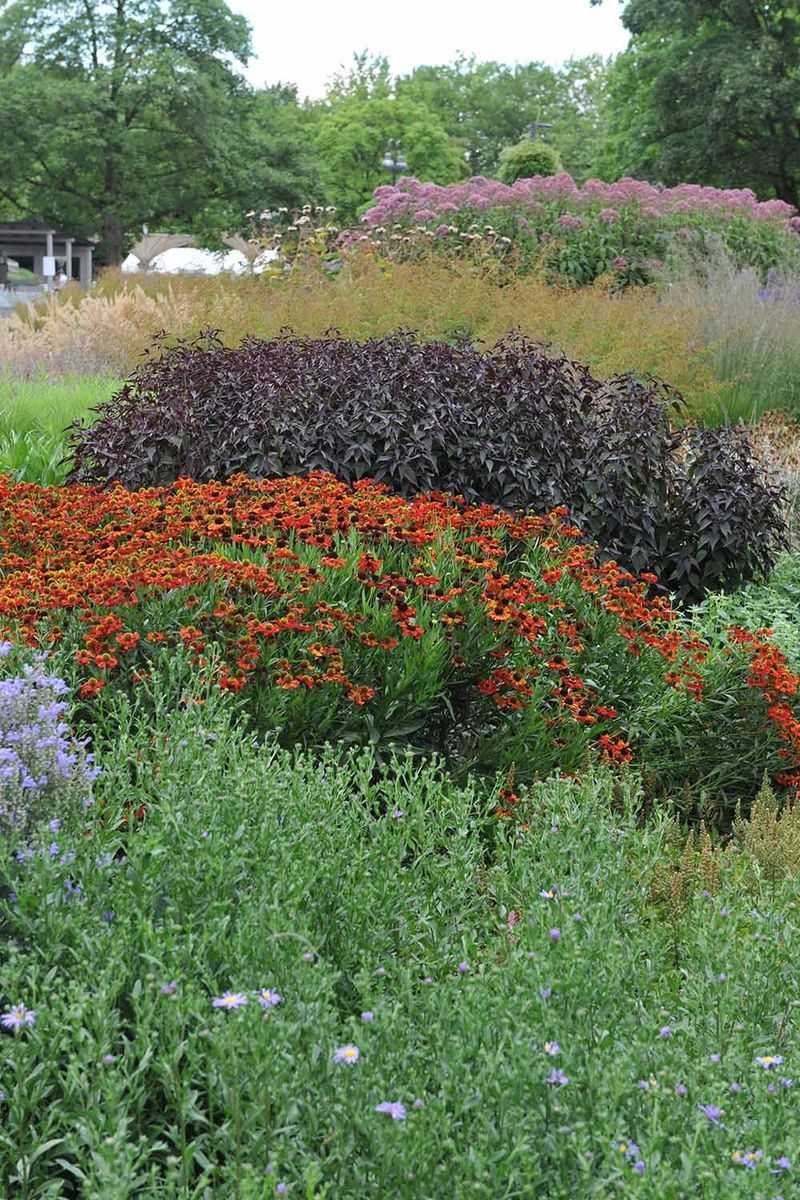
When juncos turn up in your yard, a few things may be pulling them in at once: food, open ground, leaf litter, and nearby cover. A feeder can be one part of that mix, but it is rarely the entire reason.
Natural food counts for a lot. Cornell’s species account notes that juncos use gardens and other open habitats in winter, and that seeds make up much of what they eat in the colder months.
Your own plants can supply some of it. NC State Extension’s backyard bird guidance says winter juncos eat fruits and seeds that persist on plants or on the ground, and it recommends leaving some areas unmowed or less manicured so seed-producing plants can grow.
Look around your property with fresh eyes. A weedy corner, a flower bed left standing through winter, a hedge along the fence, or a pile of fallen leaves under a tree may each be doing quiet work for visiting birds.
A sighting, then, is a clue about your yard as a whole. It does not prove the birds depend on a feeder, and it does not mean you owe them a meal.
Offer food and cover only if you choose
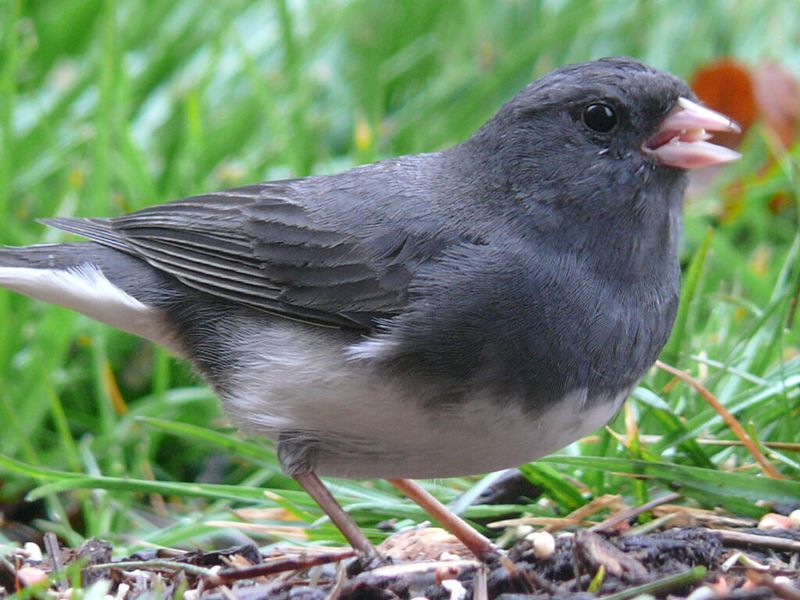
Feeding juncos is a choice, not a duty. If you would like to, NC State Extension recommends white millet for juncos, spread beneath shrubs, under feeders, or in brushy areas.
Offer modest amounts you expect the birds to eat, and do not let seed pile up and linger on the ground.
Cover matters too. Extension suggests native evergreens near feeding and watering spots, including pines, American holly, yaupon, wax myrtle, and eastern redcedar.
These give birds a place to duck when a hawk or cat appears, and they often help the yard look good in winter.
If you are planting, fall is a fine time in North Carolina, and choosing natives like yaupon or wax myrtle over non-native evergreens keeps your yard useful to local wildlife. Place them where birds can reach shelter quickly but where cats cannot easily hide.
You can also do less. NC State Extension’s backyard habitat guidance encourages leaving some areas unmowed or less manicured so seed-producing plants can grow.
Skipping the last tidy-up of a back corner costs nothing.
Pick whichever option suits your yard and your time: millet, evergreen cover, a wilder patch, or simply watching. Any one of them is plenty.
Keep feeding areas cleaner and nearby glass safer
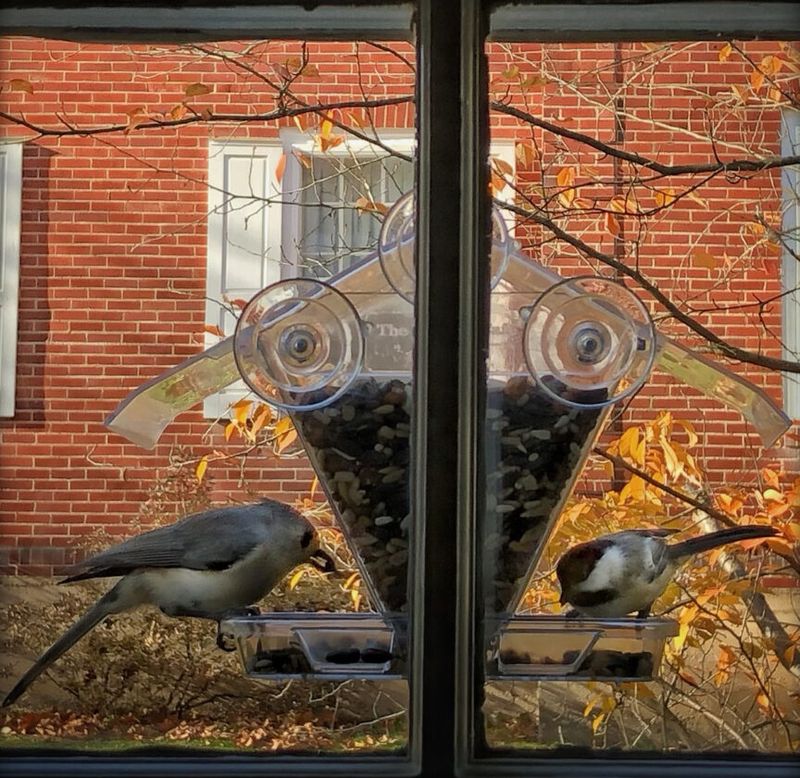
If you feed birds, cleaning is part of the job. NC State Extension recommends cleaning feeders every two to three weeks.
CDC guidance is a little different: clean at least monthly, and more often if the feeder is dirty.
CDC describes soaking a feeder for at least 10 minutes in a solution of 9 parts water to 1 part bleach, rinsing thoroughly, and letting it dry. It also advises washing your hands after handling feeders and keeping pets away from feeder areas.
If you find a sick or dead bird, do not touch it. CDC advises taking down feeders and baths for two weeks.
Do not investigate or handle the bird.
Windows deserve attention too. U.S.
Fish & Wildlife Service guidance says visible patterns on the outside of the glass can help reduce collisions. The patterns need to be spaced across the glass, so a few decals will not be enough.
Inside glass reflects less of a pattern than outside glass, so apply markings on the outer surface. Check the windows nearest your feeder first, since birds startled from the feeding area may fly straight toward them.
Treat the sighting as a cue to notice your yard
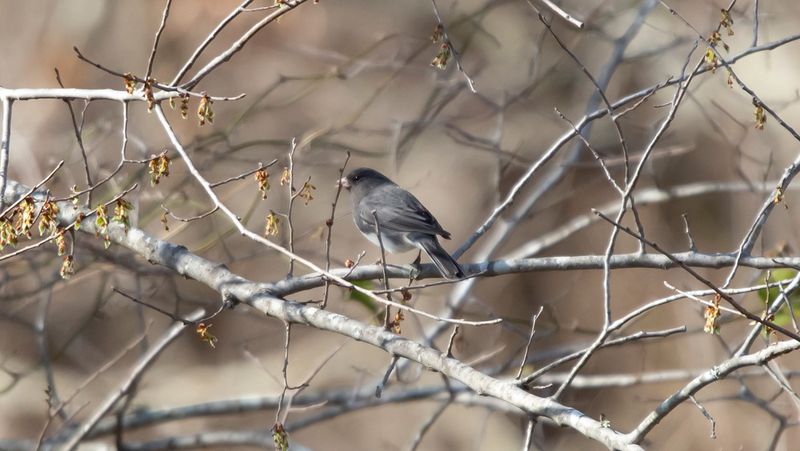
If your gray visitors are juncos, enjoy them as a sign that the season has shifted, not as a weather forecast or a request for food. They may be scratching up seeds that your yard already provides.
Cornell’s species account backs that up.
One easy step is to leave a corner a little wilder this winter, as NC State Extension suggests for winter wildlife. Then simply watch who comes.