
White Clover in Your Lawn: A Study Estimated Roughly 250 Pounds of Nitrogen Fixed Per Acre Per Year, but Grass Gets Only a Fraction
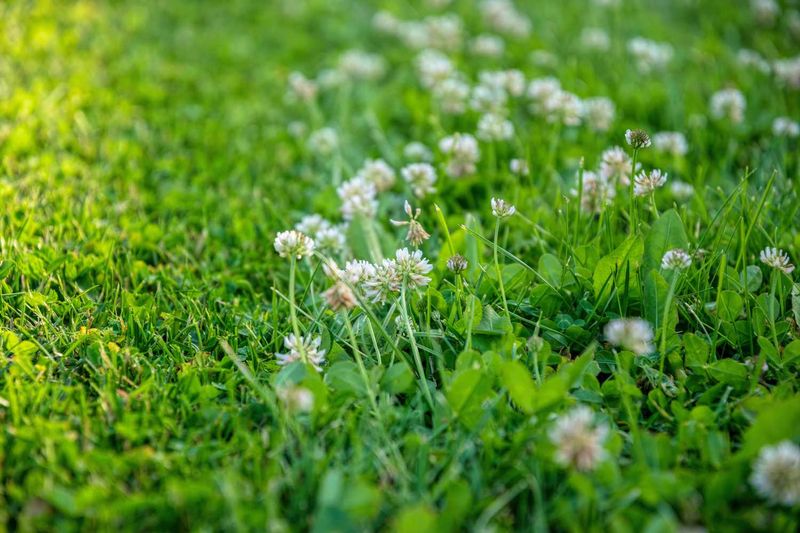
That little three-leaf plant you keep spraying might be quietly working for your lawn. White clover can pull nitrogen out of the air, and nitrogen is the nutrient most lawns crave.
The big numbers floating around online sound amazing, but they leave out some important details. Here is what the science really says, and how to decide whether clover deserves a spot in your yard.
The 250-pound figure belongs to an acre, not your yard
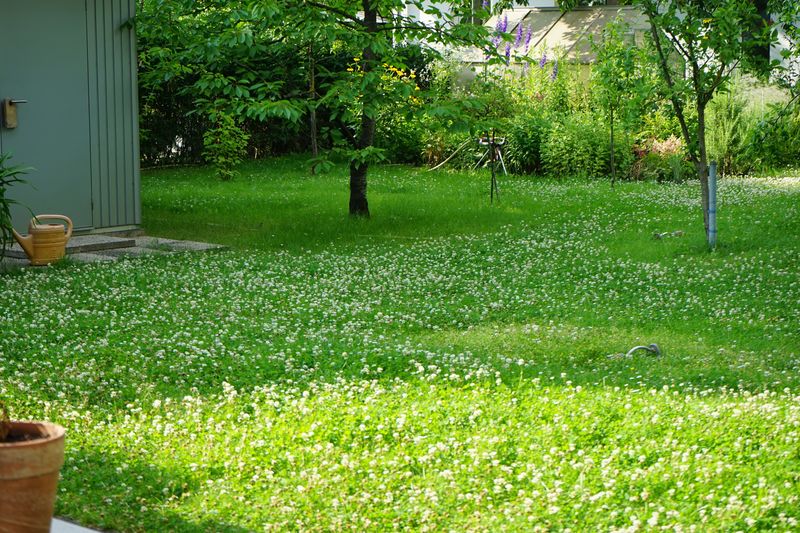
Let’s start with the number that grabbed your attention. In a turf-mixture study of white clover and grasses, researchers estimated that clover fixed 24.6 to 33.8 grams of nitrogen per square meter per year.
Convert that to pounds per acre and you get roughly 219 to 302 pounds per acre per year. That is where the “about 250 pounds” idea comes from.
An acre is a big piece of land, around 43,560 square feet, so the figure is not a amount for one backyard.
There is a second catch. This is gross fixation, meaning the total nitrogen the clover pulled from the air.
It is not the amount that ended up in the grass blades, and it is not a fertilizer equivalent you can subtract from your shopping list.
The work also happened in irrigated experimental plots with specific turf species and clover mixtures. Your lawn has its own soil, grass type, shade, and clover share, so your results will differ.
Think of the number as proof that clover is a capable nitrogen fixer under good conditions, not as a promise for your yard.
Clover fixes nitrogen with help from bacteria
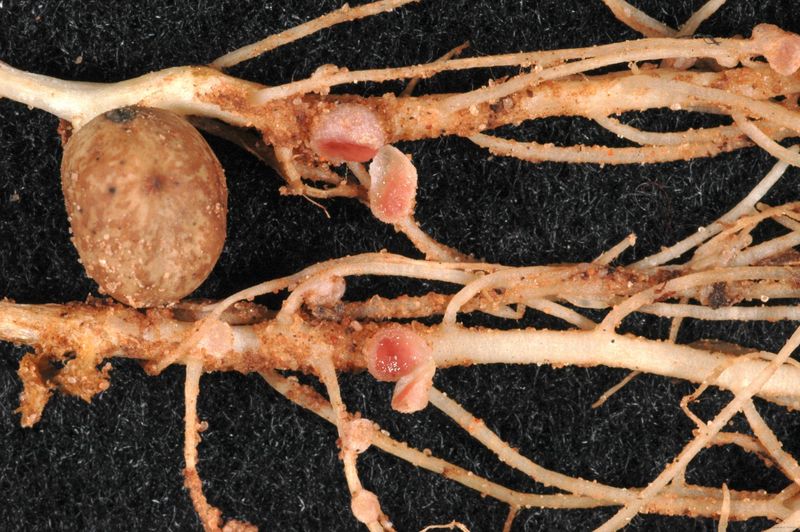
Clover does not make nitrogen from nothing. It teams up with Rhizobium bacteria that live in small nodules on its roots.
The air around us is mostly nitrogen gas, which plants cannot use as is, and these bacteria convert it into a form the clover can use.
In return, the clover gives the bacteria sugars made by photosynthesis. It is a trade that works well for both sides, and University of Georgia Extension’s white clover guide describes this partnership as the source of the plant’s nitrogen.
Here is the key point. Being able to fix nitrogen is one thing, and sharing it with neighboring grass is another.
Most of what the clover fixes goes into its own leaves, stems, and roots first.
So having clover in the lawn does not mean every bit of that nitrogen is instantly sitting there for the grass to grab. The grass has to wait for it to be released, which is the next piece of the puzzle.
A quick clue you can check yourself: gently dig up a clover plant and look for tiny bumps on the roots. Those nodules are where the bacteria do their work.
Grass receives only a fraction, often over time
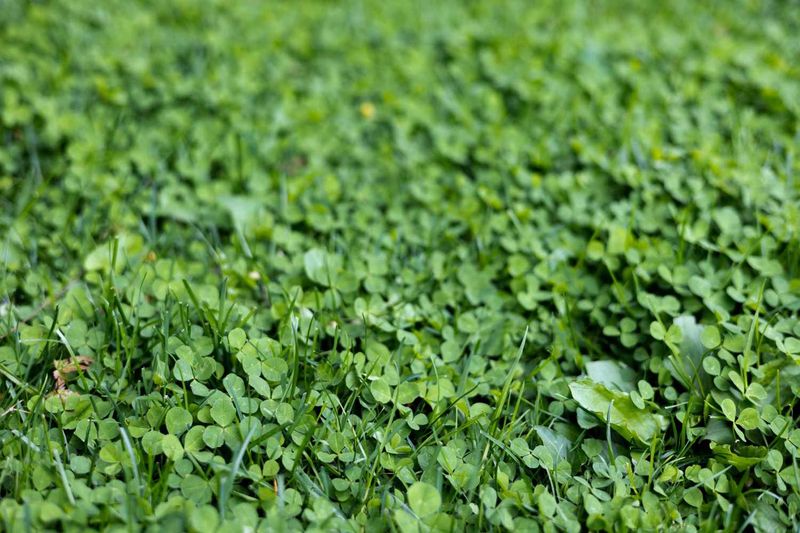
Back to that turf study. Of all the nitrogen the clover fixed, only 4.2 to 13.7 percent was reported as transferred to the associated grasses, according to the same turf-mixture research.
That is a small slice of the total.
So how does the grass get any? Much of it moves indirectly.
As clover leaves and roots die and break down, the nitrogen inside them is released into the soil, where grass can take it up. Extension guidance describes this gradual path too.
A separate study gives a picture of the pace. In research on clover decomposition in a southeastern bermudagrass lawn, more than half the nitrogen in applied clover litter became available for mineralization over 10 to 73 days, depending on the season.
That range tells you the release is gradual and changes with the weather. It was measured under those experimental conditions, so do not read it as a timetable for your lawn.
A practical example: if you mow and leave clippings on the lawn, clover bits can break down in place and slowly feed the soil. Do not expect a green-up overnight.
Clover can reduce nitrogen needs, but it does not erase them
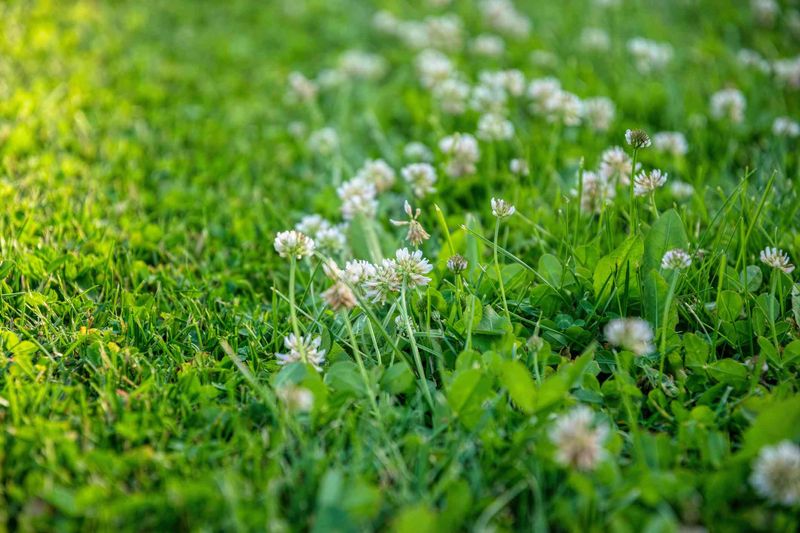
Does a clover mix actually look better? In the cited turf trial, plots that contained clover scored better for color than pure grass plots when no fertilizer was applied.
You can read the details in the turf characteristics study.
A Purdue project looked at a similar idea with a cool-season grass and microclover blend. The Purdue lawn study found the mixture could deliver reasonable turf quality with minimal supplemental nitrogen.
Notice the careful wording, though. Supplemental nitrogen still changed both yield and appearance in that work, so fertilizer was not irrelevant.
These results come from specific trials with specific grasses, clover shares, and growing conditions. They show clover can lighten the fertilizer load, not that every lawn can quit feeding.
If your lawn is thin and yellowish, a pinch of clover will not necessarily fix it. If it is already healthy and has a decent clover share, you may find it needs less help than a pure grass lawn would.
Watch color and growth through the season to judge.
Herbicides helped change clover’s place in the lawn
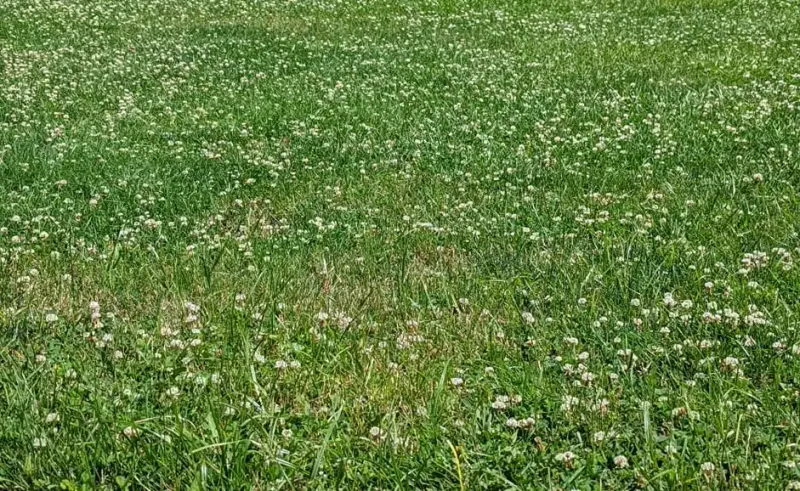
Clover was not always the enemy. According to University of Illinois Extension, white clover was common in lawns before broadleaf herbicides became widespread in the 1950s.
Those products were designed to knock out broadleaf weeds like dandelions, but clover is a broadleaf too. It was often damaged or killed along with the targets.
Over time, a lawn with no clover became the look many people expected. Herbicides helped make clover less welcome in conventional lawns, simply because the sprays removed it and a pure grass look became the norm.
That is as far as the evidence goes. Nothing in these sources shows companies set out on purpose to rebrand clover as a weed so they could sell products, so there is no need to assume a plot.
What you can say is that expectations changed. Your grandparents may have thought nothing of clover mixed into the turf, while a neighbor today might see it as a flaw.
Your own lawn can follow whichever standard suits you.
A soil test is a better fertilizer guide than clover alone
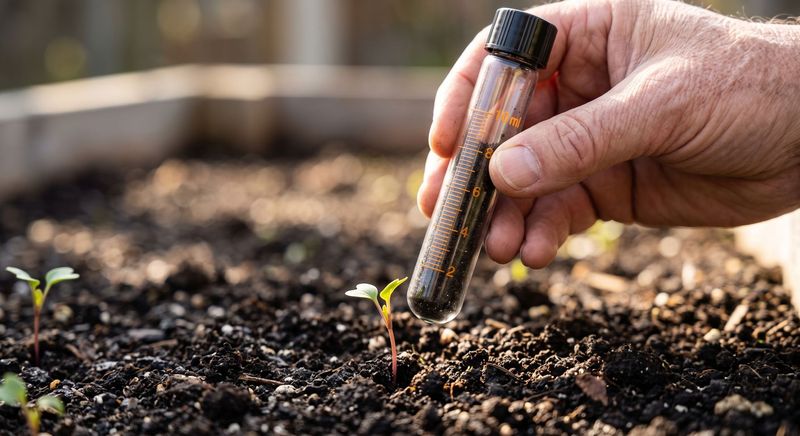
If you already have a lawn, the smartest first step is not guessing. A soil test shows what nutrients your soil has and what it lacks.
Penn State Extension recommends soil testing to establish lawn nutrient needs.
Pair the results with what you see. Is the grass pale, thin, or slow?
Is it dense and dark green? Those clues matter more than whether a few clover plants have shown up.
That means two mistakes are worth avoiding. Do not apply one blanket nitrogen rate every year out of habit, and do not stop fertilizing just because clover is present.
Let the test and the lawn’s condition decide.
If you want to keep your clover, check your weed products first. Many lawn herbicides are labeled to control clover and other broadleaf plants, and Illinois Extension notes that many of them will also kill microclover.
When you do need to treat another lawn problem, read and follow the pesticide label closely, and spot treat where you can so your clover patches are left alone.
Does clover fit the lawn you want?
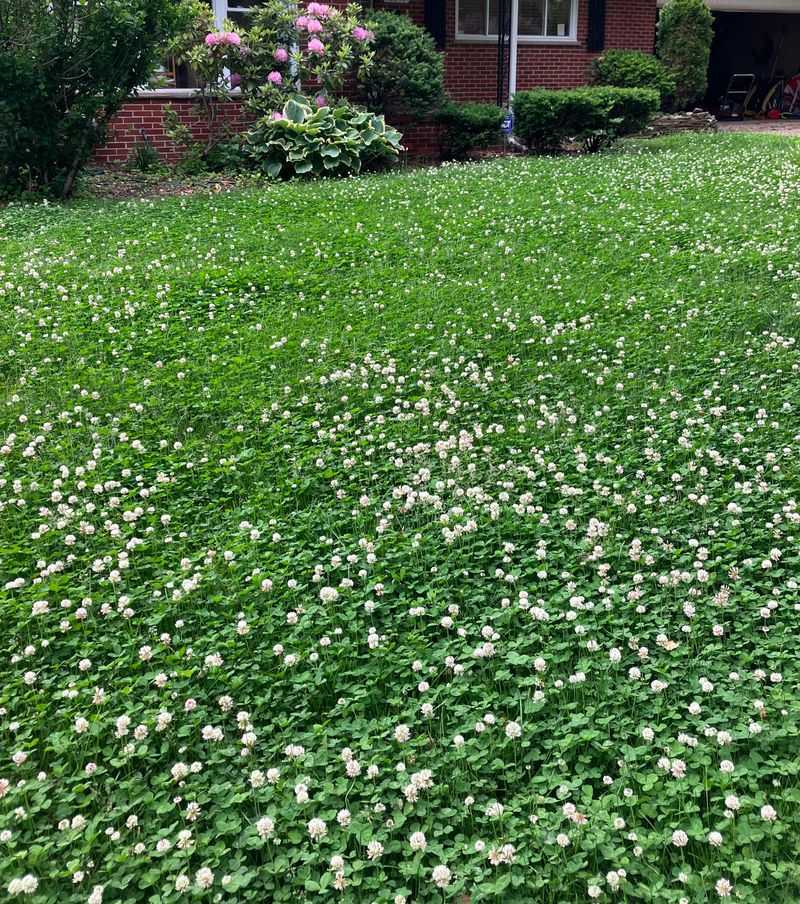
Nitrogen is only part of the decision. Clover can form clumps, and that can make a lawn look less uniform than a pure grass stand.
If you love a clean, carpet-like look, that matters.
It also helps to know which clover you mean. Microclover has smaller leaves and a less aggressive growth habit than white clover.
But Illinois Extension notes it can struggle in high heat, drought, or shade, may need reseeding, and can die back aboveground in winter.
The two are not interchangeable in every way, so do not assume one behaves just like the other.
Then there are the flowers. Clover blooms feed bees, which many gardeners love.
If stings worry you, University of Minnesota Extension says serious risk from bee-lawn species is generally low.
It does suggest keeping flowering habitat away from gathering areas when someone has a bee-venom allergy. Mowing before a party and placing seating on a clover-free patch are easy ways to put that into practice.
Keep the clover if it works for your lawn—not for the slogan
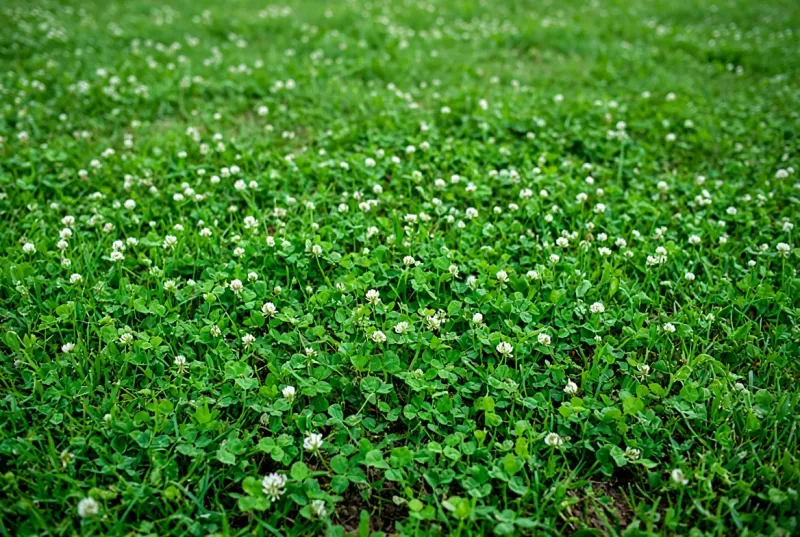
Clover can add nitrogen and may trim your fertilizer needs. But the roughly 250 pounds per acre per year from that turf study is a gross fixation estimate, not 250 pounds delivered to your yard’s grass.
Let your goals and a soil test guide the call.
Either way, it is a lawn choice, not a loyalty test. A weed is only a plant you decided you did not want.