
Why a Wolf Spider in Your Basement May Catch Some Insects but Is Not a Reliable Roach Fix
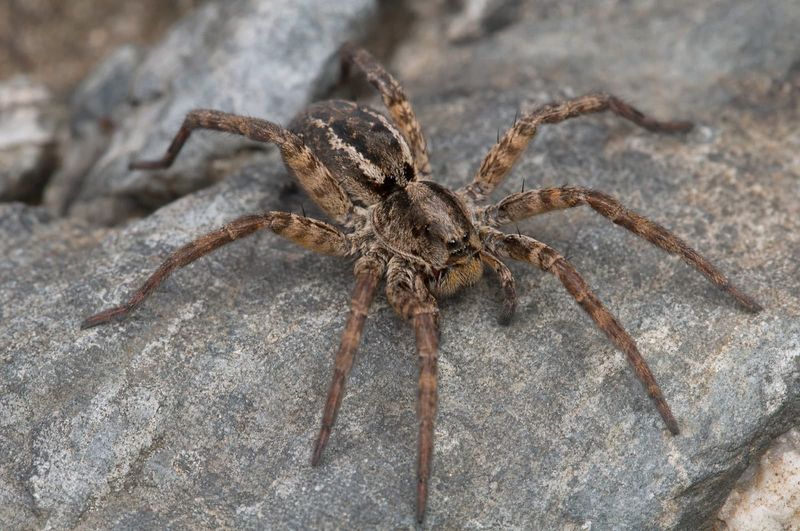
You flip on the basement light and spot a big, fast spider near the wall. Your first thought might be to grab a shoe, but this eight-legged visitor is a hunter that goes after small creatures on the move.
Does that make it a helper if you also have cockroaches? Here is what is known, what is not, and what to do next.
A wolf spider may catch insects, but it is not a roach-control plan
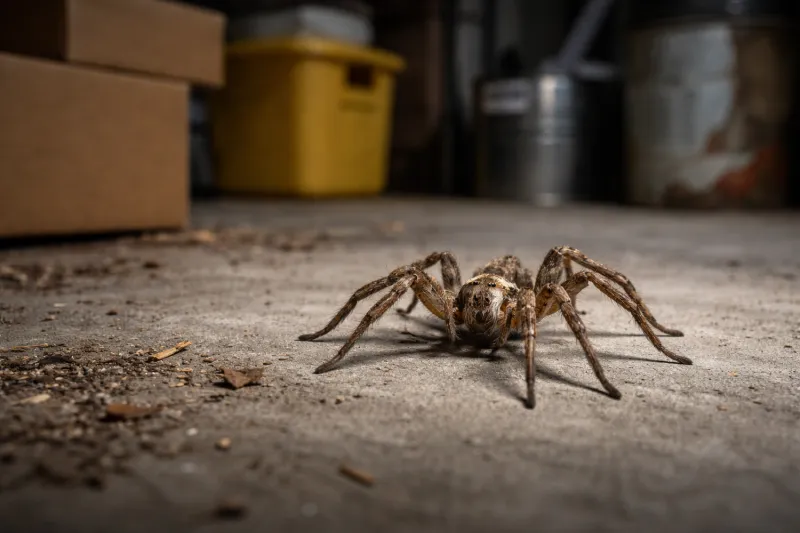
Short answer: a wolf spider is a predator, and it may catch some insects that wander past. That is a long way from controlling a cockroach problem.
If you have roaches in the basement, a spider is not a plan.
Wolf spiders are roaming hunters. Missouri Department of Conservation describes them as eating insects and other small animals, and says most North American species are not dangerous to people.
Nothing in that description says a single spider can wipe out a roach population.
You may have seen a bold claim that a basement wolf spider eats hundreds of roaches before you notice. That number is unsupported.
No source reviewed for this article measured how many cockroaches a spider catches inside a home, so any figure would be a guess.
It helps to separate two ideas. An incidental meal is a bonus that might happen when a roach crosses a spider’s path.
Dependable pest management is a set of steps that work whether or not a spider is around.
For roaches, those steps are well known. UC Statewide Integrated Pest Management Program guidance focuses on identifying the roach and tackling food, water, hiding places, and entry points directly.
Predators are not the centerpiece of that advice.
So you can relax a little about the spider and still take the roaches seriously. The two questions deserve separate answers, and the rest of this article walks through both.
Wolf spiders hunt on foot and use more than vibration
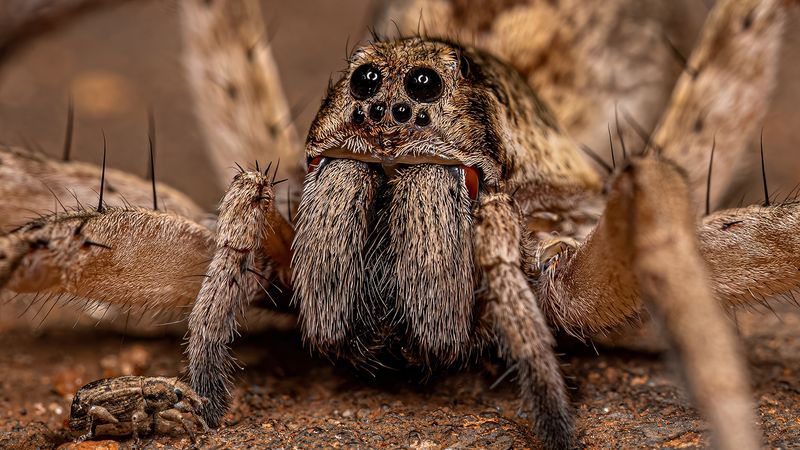
Picture a cat more than a fisherman. Wolf spiders do not usually build a capture web to trap meals.
According to Missouri conservation staff, they hunt on foot, and an Illinois Department of Natural Resources fact sheet notes they may chase prey or wait for it to come close.
Vibration gets a lot of attention, and it may be one clue a spider picks up. But it is not the whole story.
University of Michigan BioKIDS points out that wolf spiders have good vision, which helps them spot movement.
Researchers have even tested the question. A study in Animal Behaviour looked at visual and vibratory cues separately and together in one wolf spider species.
That kind of result is a useful clue, not a rule for every spider. Wolf spiders are a big family, and the senses that matter most can differ by species and by situation.
In a basement, this means you cannot assume a spider is tuned to roach footsteps through the floor. It may be reacting to something it sees, something it feels, or both.
A meadow study cannot count a basement spider’s roaches
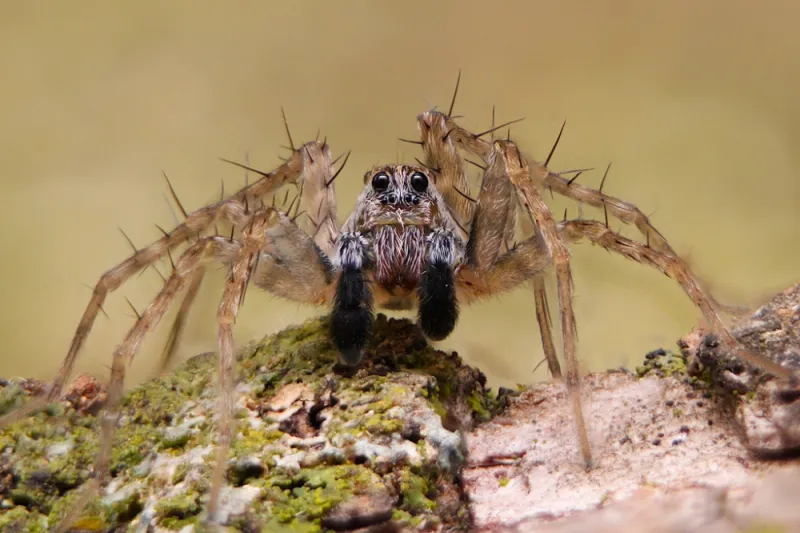
Where would a number like hundreds even come from? Not from the research reviewed here.
One well-known field study looked at wolf spiders in a European meadow, and its results point in a different direction.
In that work, published in the Journal of Applied Entomology, researchers reported low observed feeding frequency. The diet was dominated by small insects, and cockroaches were not the story.
Just as important is where the study took place. It was outdoors in a meadow, not in a house.
It did not measure household feeding, and it cannot tell you how many roaches one basement spider catches.
There is another reason for caution. Wolf spiders are a large family, and Missouri Department of Conservation notes many species with different sizes and habits.
Results from one species in one habitat do not simply carry over to another.
A practical way to think about it: a spider in the grass and a spider by your furnace live in very different worlds. Food, hiding spots, and prey all change.
So the honest answer is that nobody can give you a household consumption rate. Treat any exact figure you see online with healthy doubt.
An indoor fall sighting does not reveal why the spider came in
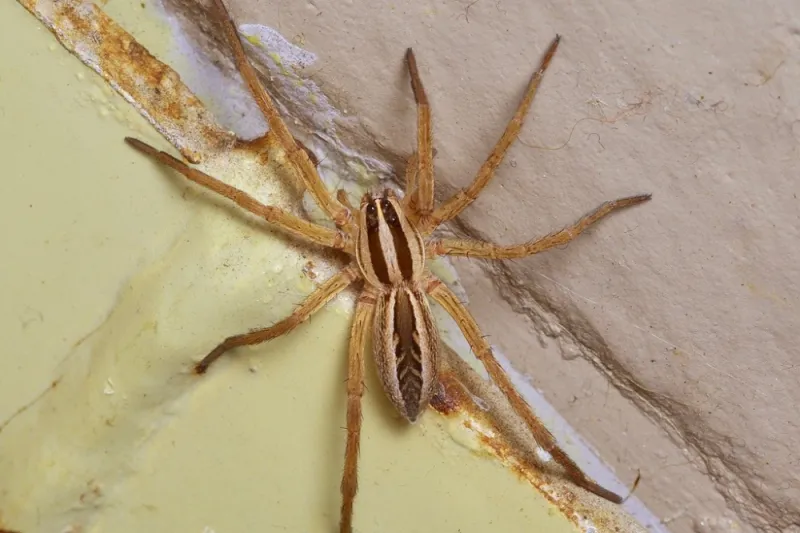
Spotting a spider in October feels like a message. Usually it is just timing.
Colorado State University Extension notes that some spiders wander indoors in early fall, and that wolf spiders occasionally enter homes.
Habitat can play a part too. The same source points out that wolf spiders turn up indoors more often where development has disturbed their surroundings, such as new construction near a field or yard.
What none of this tells you is the spider’s motive. Nothing shows that wolf spiders head into basements in fall to hunt cockroaches.
A spider could be wandering, escaping cooler nights, or simply lost.
Here is a useful clue to check. Look at where you found it.
A spider near a door gap or window well probably wandered in, while one near a spot with many roach sightings is a reason to inspect for pests, not proof that the spider came for them.
Every indoor sighting can have its own explanation. Leave the mystery unsolved and focus on what you can control.
Leaving it alone is a choice, not a proven pest-control strategy
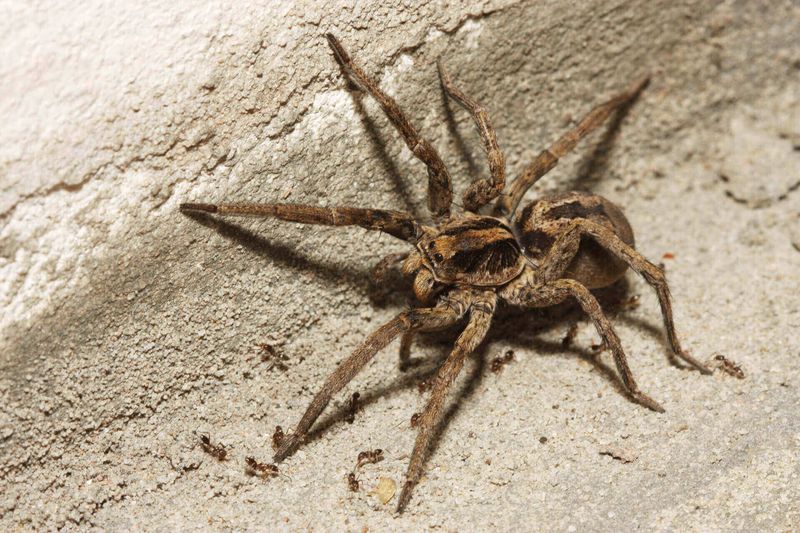
Plenty of people decide to live and let live, and that is a fair call. If a spider does not bother you, leaving it be costs nothing.
Just be clear about what you are choosing.
The upside is small and unmeasured. A wolf spider may eat some insects, and Missouri Department of Conservation lists insects among its prey.
But a meadow study found low feeding frequency, so there is no reason to expect a big payoff.
On safety, wolf spiders generally avoid people. Colorado State University Extension describes large species as normally shy and not dangerous, though they can bite.
That last part matters. A bite is possible if a spider is mishandled or trapped against skin, so do not pick one up, and keep it away from bare feet and bedding.
If you do leave it, treat it like a quiet roommate, not a pest controller. Any roach problem still needs its own plan, covered next.
Address cockroaches with an integrated control plan
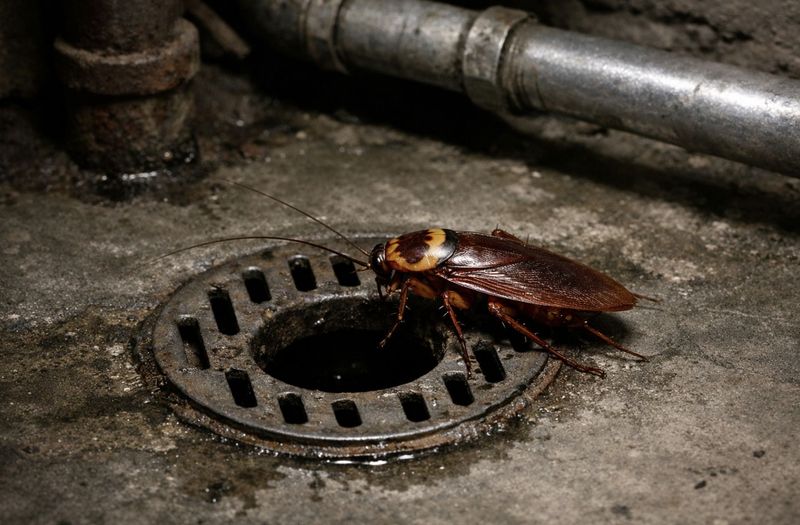
If roaches are the real worry, start by figuring out which kind you have. Different species like different spots, and that shapes where you look and what you do.
Your local extension office can help with identification.
Next, take away what roaches need. UC Statewide Integrated Pest Management Program recommends reducing food, water, and hiding places, and sealing the routes they use to get in.
Here are some everyday examples:
Store pantry food and pet kibble in sealed containers. Fix dripping pipes and wipe up damp spots near a basement sink or water heater.
Clear cardboard stacks and clutter, and caulk cracks around pipes and baseboards.
Cleanup alone may not finish the job, so an integrated approach adds other tools. The same guidance cautions that pesticides alone will not solve the problem.
When insecticides are used, baits are generally preferred over sprays.
The U.S. Environmental Protection Agency also offers pest control resources aimed at housing managers, which renters and landlords may find handy.
If the problem keeps growing, a licensed pest professional can help. Either way, the plan rests on your actions, not on a spider.
Use a container if you want the spider out
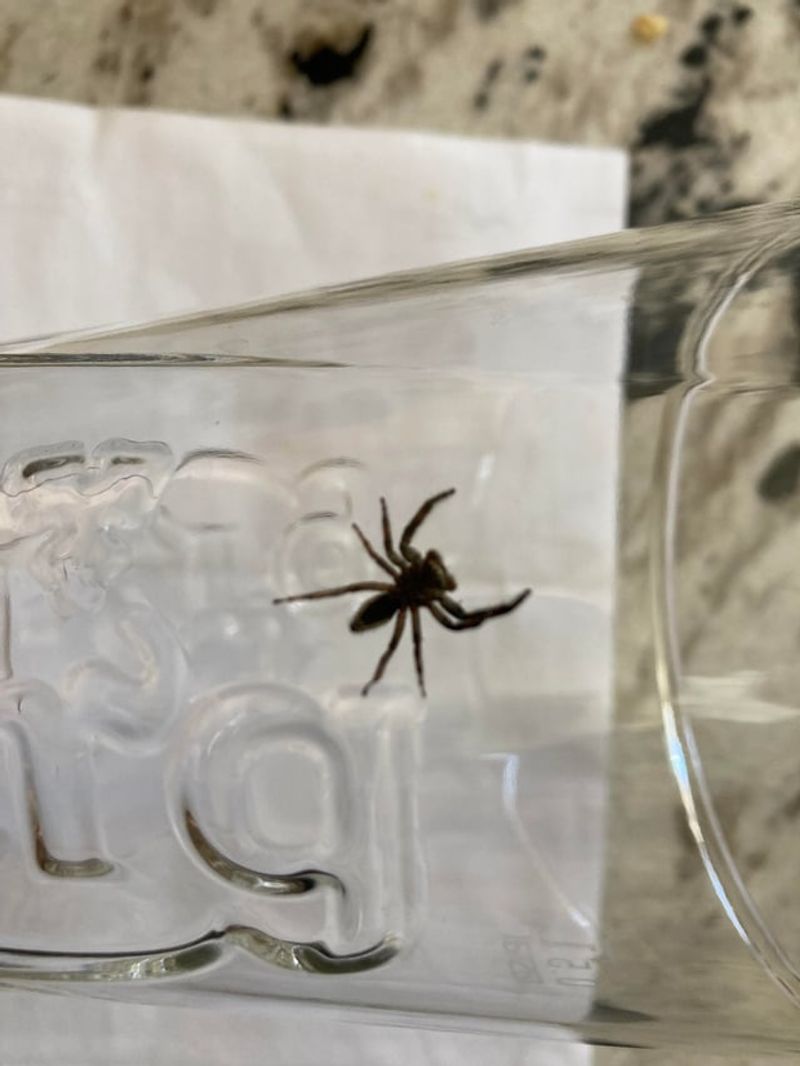
Not everyone wants to share a basement with a spider, and that is perfectly reasonable. You do not need to squash it.
A container gives you a low-contact way to move it outside.
Use a clear cup or jar and a sturdy piece of paper or card. Place the container over the spider, slide the card underneath, and carry it outdoors.
Release it near a wall, woodpile, or garden edge, away from your door.
Skip direct handling. Penn State Extension says wolf spiders may bite if mishandled or trapped against skin.
Wearing shoes and staying calm also helps.
Wolf spiders are one of several predatory spiders, as University of Maryland Extension explains. That does not mean you should bring one inside on purpose, and you should never release spiders in your home as a roach treatment.
Sometimes the best plan is a quick scoop, a steady hand, and a good roach-proofing routine. A spider outside is a spider doing its own thing, and your basement is free to get a fresh start.