
Why North Carolina Gardeners Should Never Rush To Tear Down A Joro Spider’s Web In Their Yard
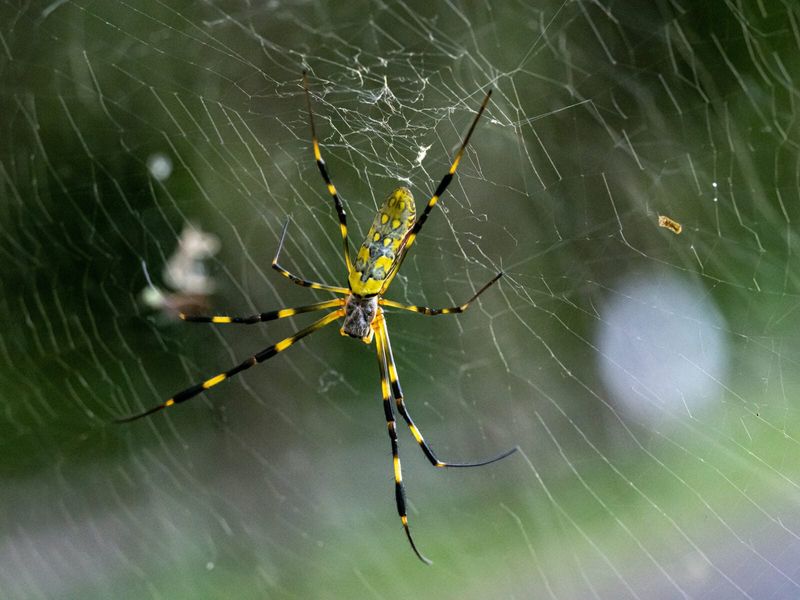
Spotting a massive golden web stretched between your backyard trees can stop you cold, especially when the spider at the center is the size of your palm. Joro spiders have been spreading across North Carolina, and the instinct to grab a broom and clear the whole thing away is completely understandable.
Before you swing, though, it is worth taking a breath and asking whether that web actually needs to come down at all. The answer depends on where the web sits, what spider built it, and what kind of yard steward you want to be.
That Giant Golden Web May Not Be a Problem to Solve
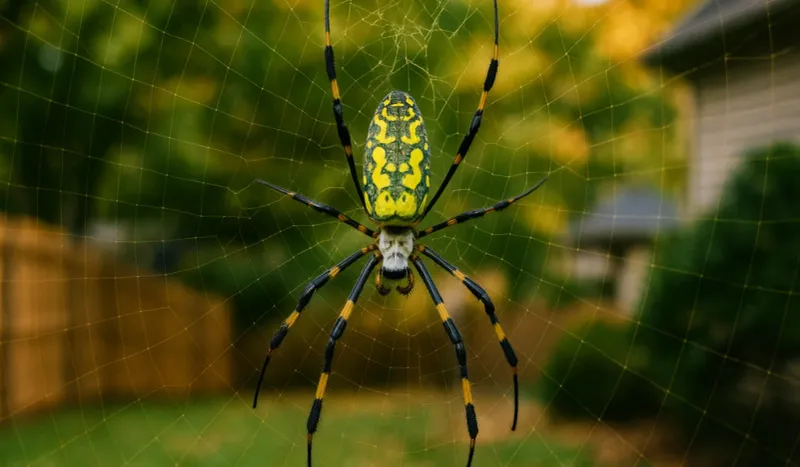
Walking out to your garden one morning and finding a web that spans the gap between a fence post and a shrub is startling. The silk is thick, yellowish, and surprisingly strong, and the spider hanging at the center is bigger than most North Carolinians expect to see.
That reaction is normal, but alarm alone is not a good reason to destroy the web.
A Joro spider web tucked into a quiet shrub border, a woodland edge, or an unused corner of the yard is, in most cases, not a household problem. University of Georgia extension guidance on managing Joro spiders draws a clear line between webs in peripheral yard areas where human contact is unlikely and webs that actually block access or create a conflict.
If nobody walks through that corner, the web is not an obstacle.
Leaving it alone is a practical stewardship choice, not a declaration that Joro spiders are good for your garden. Researchers are still working out what these introduced spiders actually do to North Carolina ecosystems, and that question has not been settled.
Tolerating a web in a low-traffic zone simply means you are not spending effort on a problem that may not exist yet.
The governing principle here is proportion. NC State Extension Forestry notes that Joro spiders are large, introduced orb-weavers that can be observed or left alone when they are not interfering with household use.
Matching your response to the actual situation, rather than reacting to the spider’s size, is what separates measured yard management from reflexive destruction.
Identify the Spider Before You Decide Its Fate
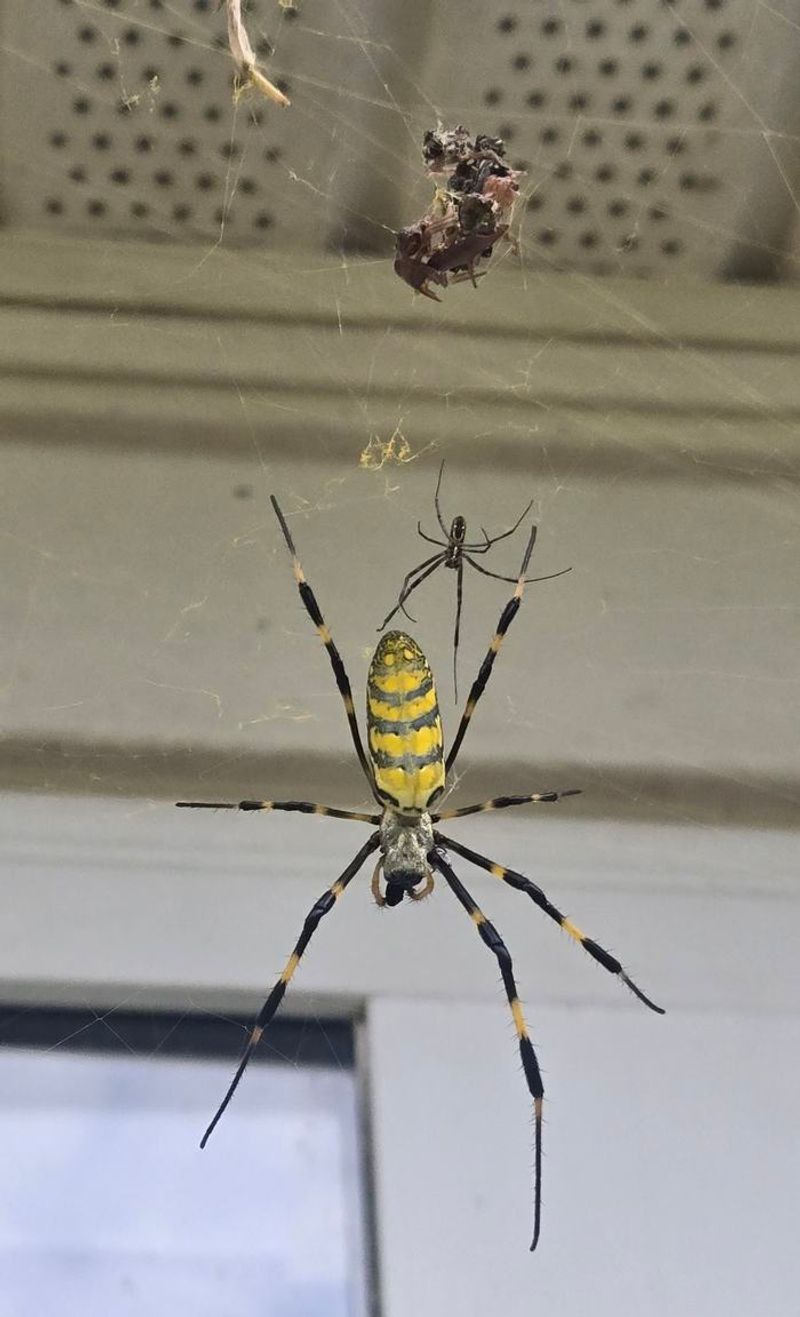
Reaching for a stick before you know what species you are dealing with is the most common mistake North Carolina gardeners make with large orb-weavers. Not every enormous yellow-and-black spider in a golden web is a Joro.
Destroying a native spider because it looked alarming is exactly the outcome a careful steward wants to avoid.
The mature female Joro spider, Trichonephila clavata, is the individual most people encounter. She is large, typically showing a yellow abdomen with blue-green or dark bands, red markings on the underside, and black legs often marked with yellow.
NC State Extension Forestry’s Joro spider overview points out that males are much smaller and brownish, so a giant colorful spider is almost always the female. The web itself tends to be elevated, golden or yellowish in color, and notably strong, sometimes spanning ten feet or more between trees and structures.
Those features are useful starting points, but they are not a definitive checklist on their own. NC State’s Plant Disease and Insect Clinic specifically warns that golden silk spiders, writing spiders, orchard spiders, and basilica orb-weavers are regularly mistaken for Joro spiders in North Carolina.
Each of these species is native, and several share the yellow-and-black coloring and the large web that triggers alarm.
The safest step when you are unsure is to photograph the spider and submit the image before touching anything. Joro Watch accepts reports and can help confirm an identification, and iNaturalist and EDDMapS serve the same purpose.
A confirmed ID gives you accurate information to act on. Destroying a writing spider because it resembled a Joro is a loss for the yard, and it does nothing to address an actual Joro population.
A Jorō Spider Usually Poses Little Risk to People
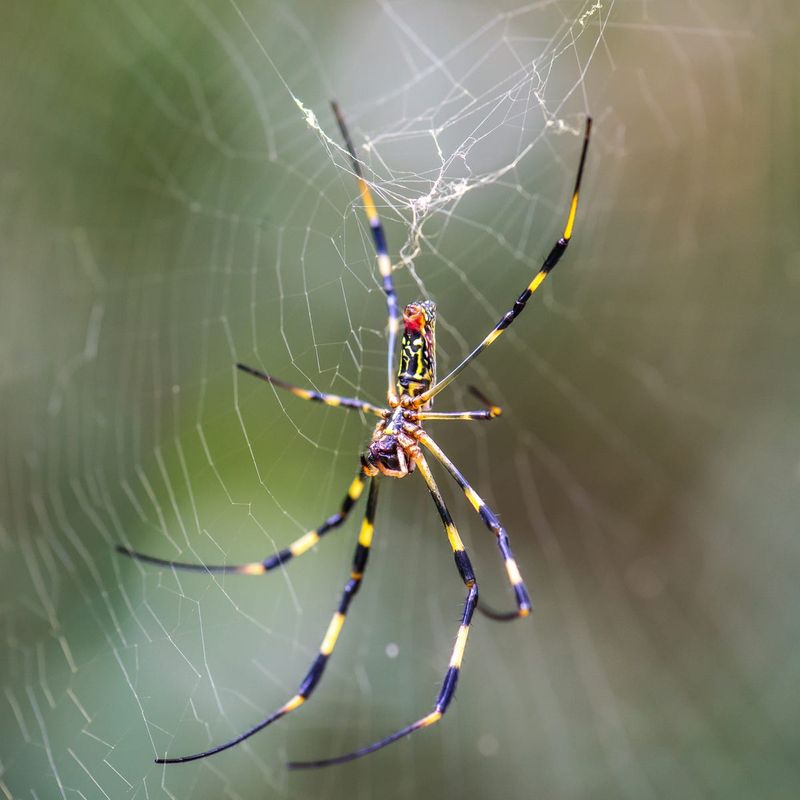
Fear of being bitten is one of the main reasons gardeners reach for a broom the moment they see a large spider. With Joro spiders, that fear is understandable but out of proportion to the actual risk under ordinary yard conditions.
University of Georgia extension guidance describes Joro spiders as timid and reluctant to bite. Bites are uncommon, and when they do occur, they typically cause localized pain and redness comparable to a minor sting.
That places them well outside the category of medically significant spiders. The Joro spider’s first response to disturbance is usually to drop from the web or stay still, not to pursue or attack.
Penn State Extension’s Joro spider resource reinforces this picture, noting that the spider is not considered a meaningful medical threat to people under normal circumstances. That said, no spider should be handled unnecessarily.
Keeping a respectful distance during identification or removal protects both you and the spider from a stressful encounter that neither party wants.
Low human-health risk and unresolved ecological risk are two separate questions, and conflating them leads to bad decisions in both directions. Knowing that a Joro spider is unlikely to harm you is useful information for managing your anxiety, but it does not tell you whether the spider is affecting native insects or other spiders in your yard.
Those questions are still being studied. The practical takeaway is simple: stay calm, do not handle the spider, and let your removal decision rest on the web’s location rather than on fear of being bitten.
What Leaving the Web Alone Does—and Does Not—Mean
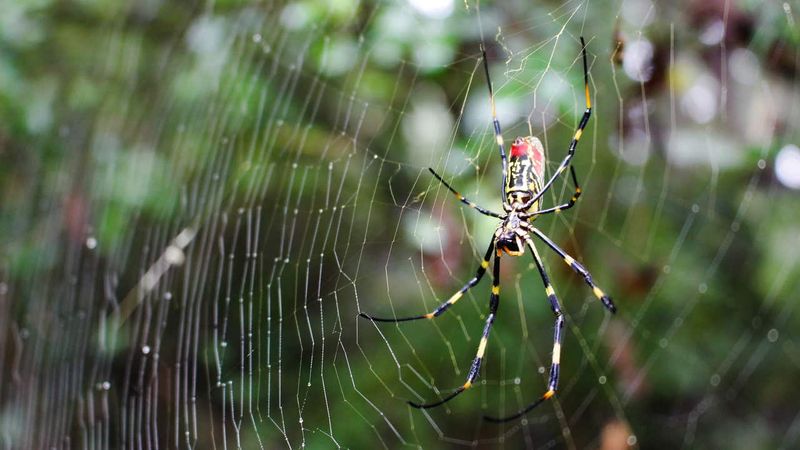
Choosing not to disturb a web in a peripheral part of your yard is a reasonable, low-effort response when nobody is going to walk through that space. It avoids unnecessary disruption, keeps the yard’s other insect life from being affected by pesticides or physical disturbance, and costs you nothing.
That is the extent of the case for leaving it alone.
What that choice does not mean is equally important to say plainly. UGA extension guidance frames tolerance as a practical option for low-conflict locations, not as an endorsement of the spider’s ecological role.
Early observations noted that Joro spiders occasionally capture pest insects including brown marmorated stink bugs, but there is no evidence that a backyard Joro population delivers reliable or meaningful pest control. Counting on them to protect your vegetable garden is not a position the research supports.
The ecological picture is genuinely unsettled. A peer-reviewed analysis in Biological Invasions describes Joro spiders as introduced and spreading while cautioning that the direction and magnitude of their effects on North American ecosystems remain uncertain.
Calling them beneficial or harmless to the ecosystem goes beyond what researchers have been able to confirm.
More recent work has added a cautionary note. A 2025 study tracking Joro population growth in Atlanta-area forests found a concurrent decline in native orb-weaving spiders, though the authors were careful to state that the correlation does not prove Joro spiders caused the decline.
Separately, a diet-overlap study using DNA metabarcoding found that Joro spiders and several native orb-weavers can consume overlapping prey, with researchers noting that more work is needed before concluding that Joro spiders displace native species. Tolerating a peripheral web is a proportionate yard decision, not a verdict on what these spiders mean for North Carolina wildlife.
Remove the Web When Your Yard Creates a Real Conflict
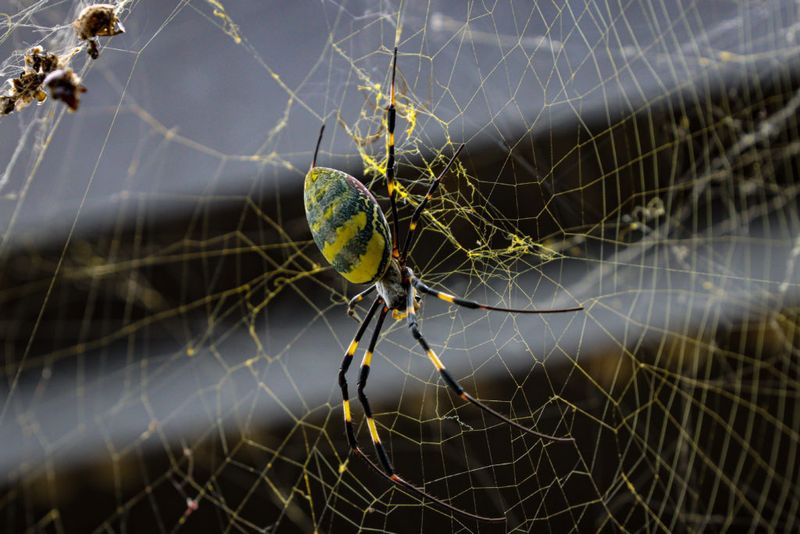
A web in a quiet corner and a web across your back door are two completely different situations. The spider does not know the difference, but you do, and that distinction is the basis for a sensible removal decision.
High-traffic locations are the clearest trigger for intervention. Doorways, walkways, porches, and decks bring people into regular close contact with the web, which creates the conditions most likely to produce an unpleasant surprise or an accidental collision.
UGA extension guidance specifically identifies these as legitimate removal sites, as opposed to peripheral yard areas where human contact is unlikely. A web that blocks a path your family uses every day is not a wildlife sighting to observe quietly; it is an obstacle to address.
Pollinator gardens and beehives require separate attention. UGA CAES extension publication guidance on Joro spiders recommends against allowing Joro webs to remain in those locations because the webs can capture beneficial pollinators, including bees visiting flowering plants.
This does not establish that Joro spiders are broadly damaging to pollinator populations across the yard, but a web positioned to intercept bees flying in and out of a hive or hovering over a flower border is a targeted problem worth addressing.
The key word throughout is targeted. Removing a web that blocks your porch does not require treating the rest of the yard.
Addressing a web near a beehive does not mean eliminating every Joro on the property. Matching the response to the specific conflict keeps your yard’s other insect life, including beneficial spiders, native bees, and other pollinators, from getting caught in a reaction that was meant for one web in one location.
Use Distance and Targeted Removal Instead of Panic
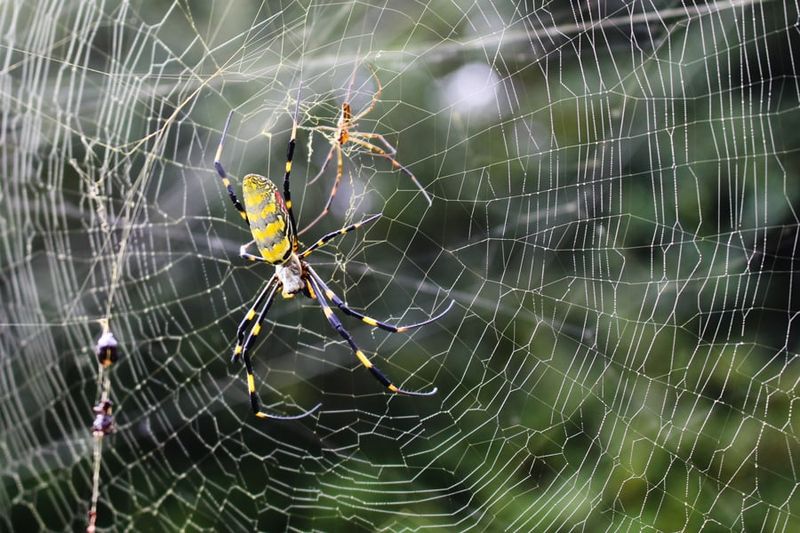
Once you have confirmed that a web needs to come down, the method matters almost as much as the decision. A calm, deliberate approach keeps you safe and avoids turning a simple removal into a chaotic situation involving a startled spider at close range.
For accessible webs at head height or below, a broom, rake, or long stick works well. UGA extension guidance on Joro spider management recommends working from a safe distance and warns that handling high webs increases the chance of the spider or debris falling onto the person doing the removal.
For webs above roughly ten feet, extension guidance suggests leaving them alone rather than creating a risky situation on a ladder or with a long pole overhead. A spider falling on you from that height is far more alarming than the web was in the first place.
Web-only removal is worth doing when it clears a walkway or doorway, but gardeners should know upfront that it may be temporary. The spider can rebuild the web quickly, sometimes within a day or two.
Destroying only the silk without addressing the spider is often a short-term fix. When elimination of a specific spider is necessary, removing the spider together with the web is more effective than leaving the spider in place after clearing the silk.
Relocating the spider to another part of the yard is not a reliably lasting solution either. A moved spider may return or may simply establish a new web in another inconvenient spot.
If the goal is to eliminate a specific conflict, targeted removal of the spider and web together addresses the problem more directly than relocation. None of this requires treating the rest of the yard or disturbing spiders and webs that are not causing any problem.
Protect the Rest of the Yard by Skipping Broad Sprays

Grabbing a can of spray and treating the whole yard feels decisive, but it creates far more damage than the spider web it was meant to solve. Broad-area spraying and fogging are disproportionate responses to a single large spider, and the harm they cause extends well beyond the target.
UGA extension guidance warns that pyrethroid treatments applied broadly can kill pollinators, beneficial insects, and other spiders, including the native orb-weavers that you may be trying to protect by correctly identifying your spider in the first place. Applications made near flowering plants or active beehives are especially risky because foraging bees come into direct contact with treated surfaces.
The insects you want in your yard are collateral damage when the spray goes on indiscriminately.
Chemical treatment is not off the table in every situation, but it should be the last option considered rather than the first. If a chemical approach is chosen, it must be limited to a specific target, follow the product label precisely, and avoid applications near active bees or blooming plants.
That level of care is the minimum required to avoid causing more harm than the spider ever would have.
Physical removal, selective tolerance, and accurate identification do the same job without the non-target risk. A broom handles a doorway web.
Leaving a shrub-border web alone handles a low-conflict situation. Neither approach puts your native bees, ground beetles, or beneficial spiders at risk.
Broad spraying solves a problem that physical management already addresses, while adding consequences that are genuinely difficult to reverse once the spray has been applied.
The Best North Carolina Response Is Deliberate, Not Automatic
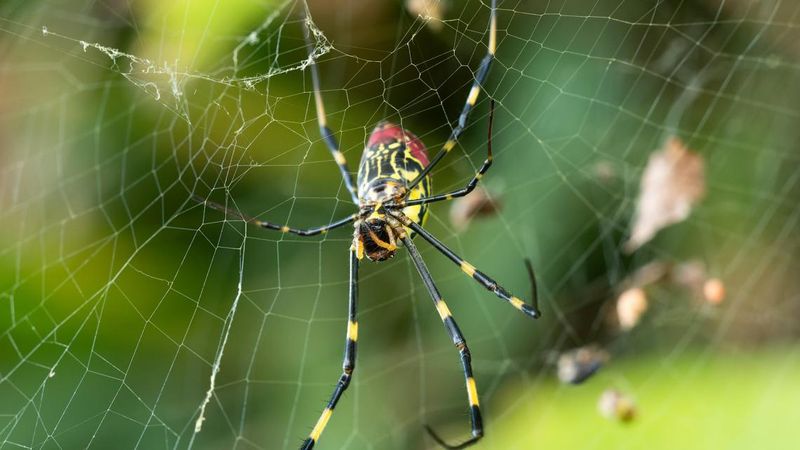
Every Joro spider encounter in a North Carolina yard calls for the same short sequence: identify the spider before acting, check where the web sits, and let that location drive the decision. A confirmed Joro in a quiet shrub border or along a woodland edge can stay.
A web across a doorway, a deck railing, or a beehive flight path warrants targeted removal using a long-handled tool from a safe distance.
NC State Extension Forestry and UGA extension guidance both support this measured approach. Skipping identification risks destroying a native writing spider or golden silk spider that was never a problem.
Skipping broad sprays protects the pollinators and beneficial insects that your yard actually depends on. And remembering that NC State’s Plant Disease and Insect Clinic has documented repeated misidentification of native lookalikes keeps that stewardship instinct pointed in the right direction.
This balanced response does not require declaring Joro spiders ecologically harmless, because that question remains open. What it does require is slowing down long enough to look before you sweep.
A yard managed with that kind of deliberate attention is one where the right things get protected and the actual problems get addressed.