
Why North Carolina Gardeners Trim New Perennial Stems in Their First Winter and Leave Older Stubs for Native Bees
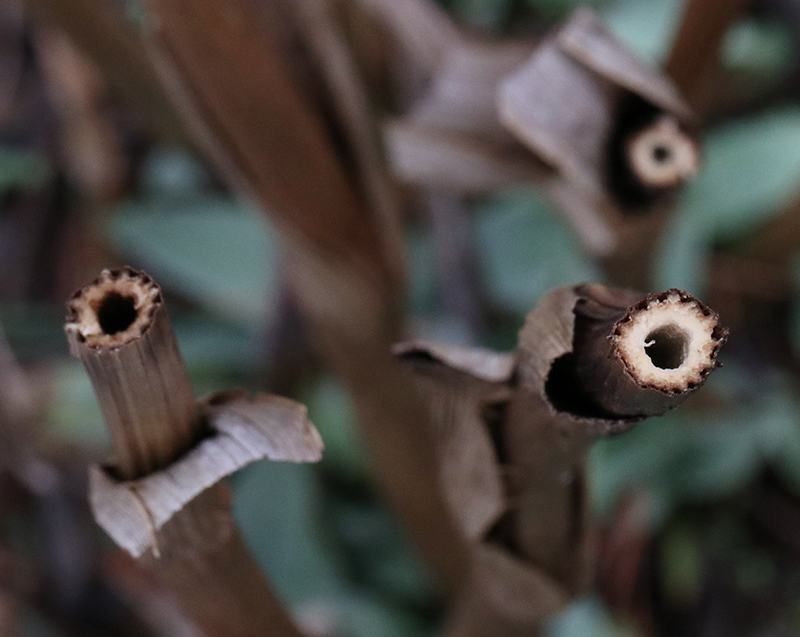
Those dry stalks in your flower bed may be doing more than looking messy. Some small bees and wasps use plant stems to nest or ride out winter.
A new North Carolina study shows the timing of your cleanup matters a lot. Here is how to protect that habitat without leaving every stem alone.
What the North Carolina study found
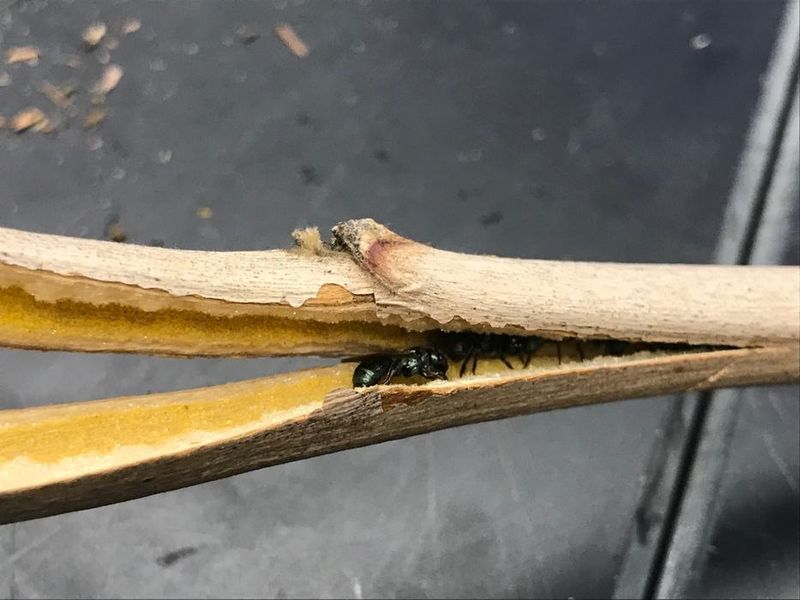
The popular advice to leave stems standing all winter gets complicated when you look at North Carolina data. In a 2026 study in Insect Conservation and Diversity, researchers sampled 2,879 stems from 20 gardens across 10 counties and four North Carolina ecoregions.
Only 45 of those stems, about 1.5%, held living insects or identifiable remains. Those finds represented at least 12 species of bees and wasps.
So most stems were empty, and that is a useful reality check. Nobody should picture every dry stalk as a crowded bee nursery.
The numbers show stems can be real habitat, but only a small share of them were occupied at the time of sampling.
The timing finding matters even more. Stems that stayed intact through their first winter had no occupants in the sampled gardens.
The exceptions were stems that had already been cut or damaged during the growing season, which insects could use sooner.
Put plainly, a fresh, unbroken stem is not yet a nest. It becomes a possible nesting or overwintering spot after it is cut, broken, or weathered.
The study counted occupied stems. It did not measure whether yards with more stems end up with more bees or better pollination, so no one can honestly promise bigger pollinator numbers next spring.
That leaves a more careful message for tidy and relaxed gardeners alike. Suitable stems have potential value, and how and when you cut them decides whether that value ever shows up.
How a cut stem can become habitat
Many people say hollow stems when they talk about bee habitat, but that shorthand misses part of the story. Some plants have naturally hollow stems.
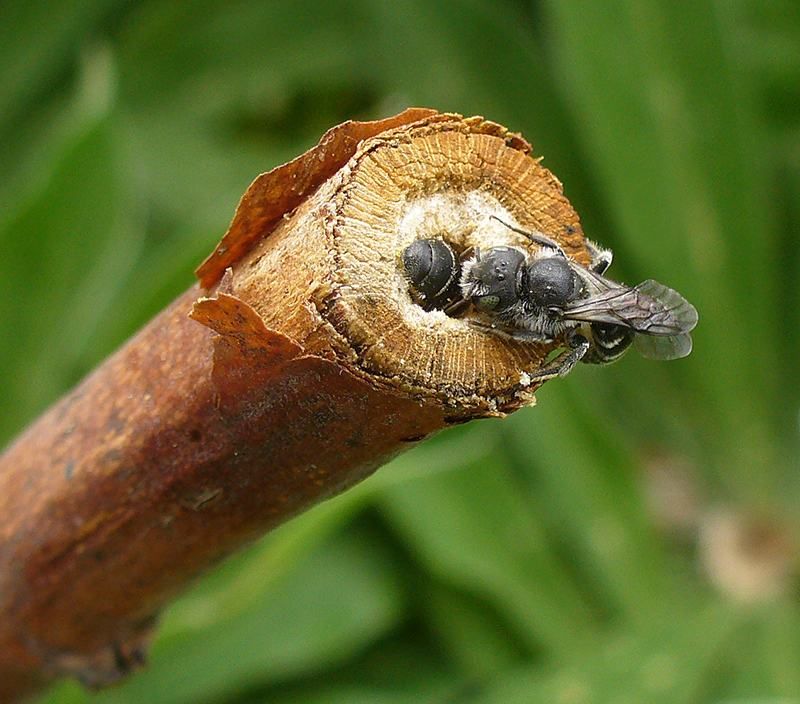
Others have soft, spongy centers called pith, and certain small bees tunnel into that pith to make a nest.
According to NC State Extension guidance on first-winter stem trimming, some small carpenter bees and other species excavate pith in stems that have been cut or damaged. Most bees do not damage healthy, living stems, so you do not need to worry that they will harm your plants.
The key is the cut end. An open end gives a bee a doorway into a stem that was sealed before.
That is why a stem can go from unusable to useful once it is trimmed, broken, or worn down by weather.
Bees are not the only tenants. Solitary wasps, which rarely bother people, may also use stems, and the North Carolina study found both bees and wasps among the occupants.
This life cycle explains the first-winter cut. A fresh, intact stem is not a finished nest, so trimming it at the right time creates the opening that later seasons can use.
It does not mean every untouched stalk already holds eggs or sleeping bees.
When to trim this year’s intact stems
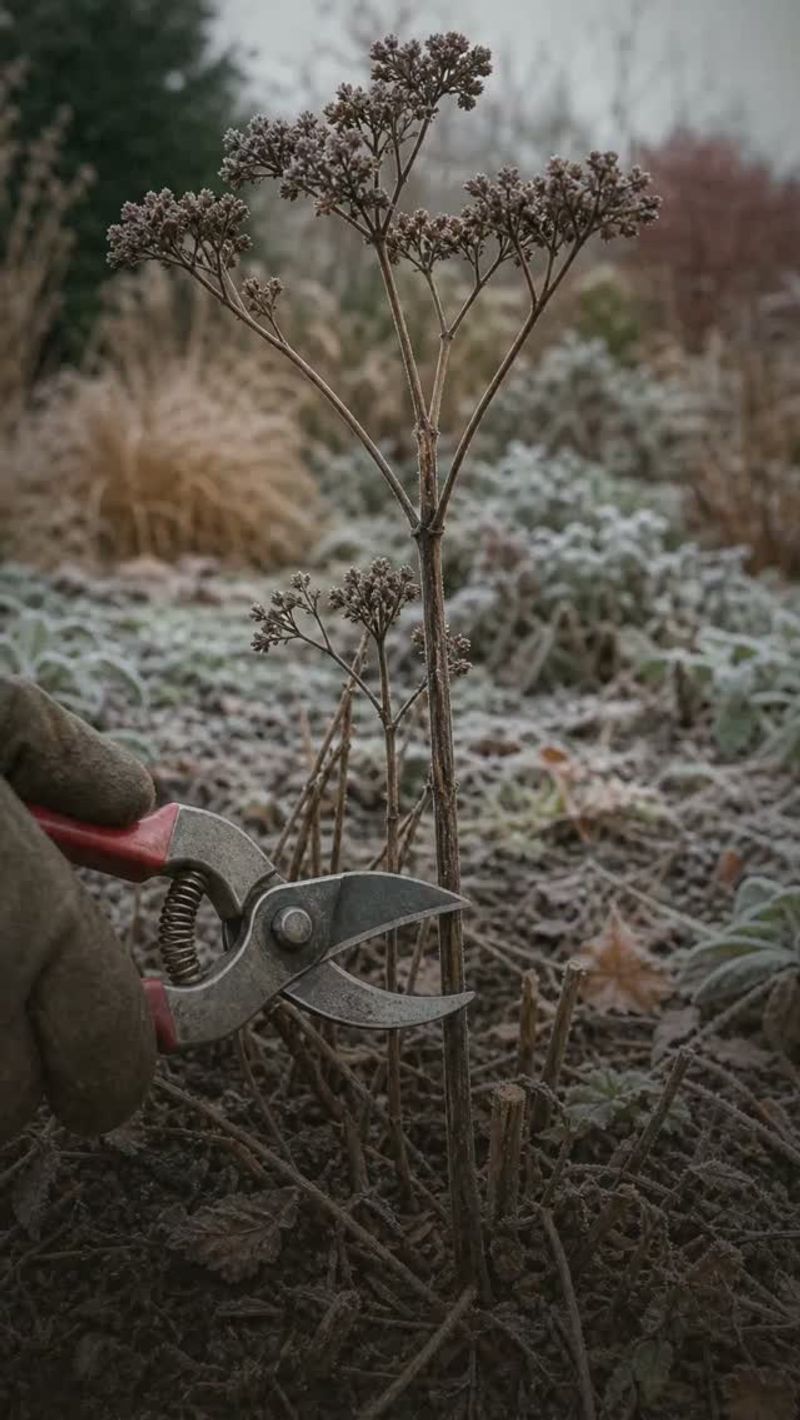
Here is the first-winter routine for stems that stayed whole all growing season. NC State’s study-based guidance says to trim after the first fall frost and before the last spring frost.
Leave about 12 to 24 inches of stem standing.
That window is set by the weather, not the calendar. A gardener in the mountains will see frost much earlier than one on the coast.
Watch for your own first hard frost and your own last one instead of marking a single date for the whole state.
The height matters too. A stub of 12 to 24 inches gives bees a sturdy upright stem with a fresh cut end they can use.
It also keeps the bed looking cleaner than a full winter of tall, floppy stalks, which many tidy gardeners will appreciate.
This instruction is for stems that stayed intact during the growing season. If you cut, deadheaded, or broke a stem earlier in the year, it follows a different rule, covered in the next section.
A simple way to plan: after the first frost browns your coneflowers, asters, and similar perennials, pick a mild day. Cut the new growth to knee height or a bit taller, and finish before spring warmth returns.
Leave older stubs undisturbed
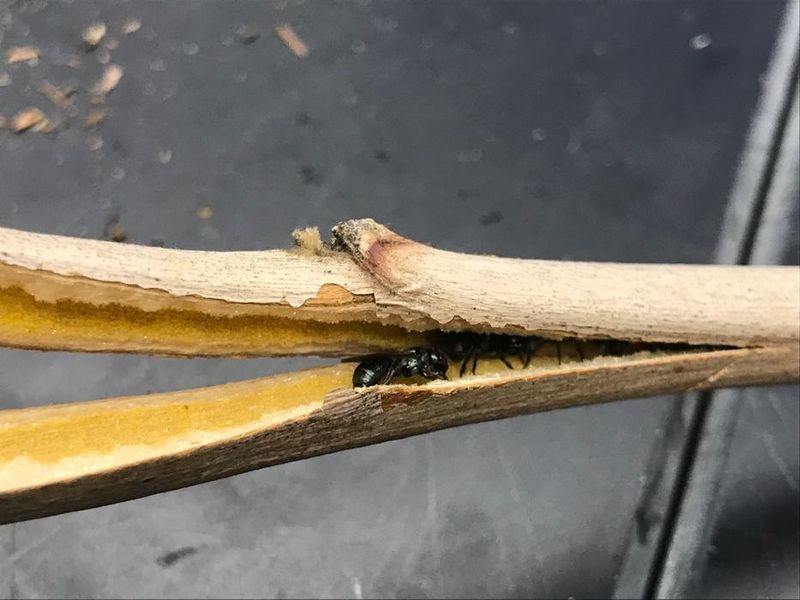
Once a stem has been cut to a stub, the job changes from cutting to protecting. Those stubs can host insects in later seasons.
The study notes older stems may be occupied in spring, summer, fall, or their second winter.
That means the first cut is a one-time step for each stem. In the next winter, leave last year’s stubs alone and cut only the newest growth that has never been cut or damaged.
Over time your bed ends up with a mix of fresh stems and older stubs.
Think of it as a simple progression. Year one: trim the intact new stems to 12 to 24 inches.
Year two and beyond: skip those stubs, and trim only the new stalks that grew since.
Some stems need extra care. If a stem was cut, deadheaded, or damaged during the growing season, do not assume it is empty just because it is a first-winter stem.
The study found exceptions among stems already cut during the growing season, and NC State’s guidance supports leaving those alone.
A handy clue is a ragged or open top on a stem. If you remember snapping off a spent bloom in July, mark that stalk in your mind and let it stand.
Stems help only part of the bee community
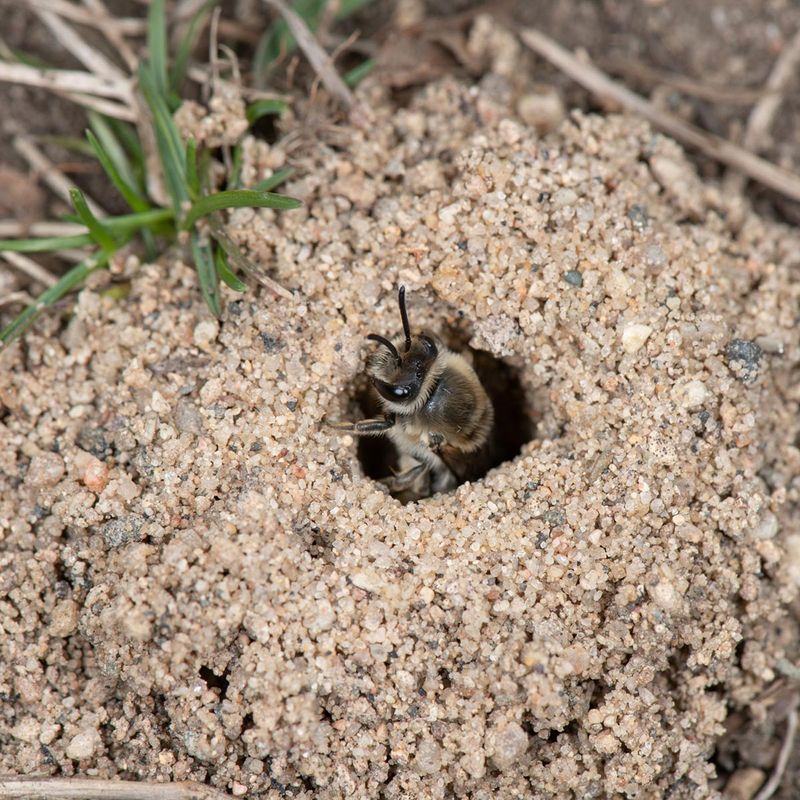
Native bees are a big and varied group, and stems serve just some of them. NC State estimates that about 75% of North Carolina bee species nest in soil.
Stem and wood nesters are a smaller subset.
So a yard full of standing stubs will not meet the needs of every bee. Ground nesters want patches of bare or lightly covered, well-drained soil, and they may not care about your stems at all.
Treat stems as one useful resource in a yard that also offers other kinds of nesting space and plenty of flowers.
There is a second limit to keep in mind. The stem study checked which stems were occupied.
It did not compare bee population growth or pollination between tidy and untidy yards.
That is why it would be a stretch to say that a messier bed means more pollinators next spring. What can be said is that well-timed stems can offer nesting or overwintering space to some species.
If you want to help more of your local bees, think in layers. Keep a few sunny bare spots, plant a succession of NC-native blooms, and let stubs stand where they are safe to leave.
Balance wildlife value with plant health
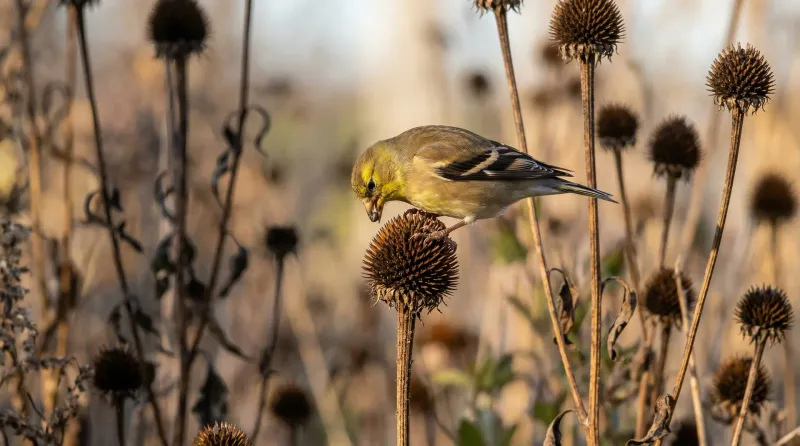
Wildlife value and plant health sometimes pull in different directions, and a few simple choices can balance them. If you like watching goldfinches work over coneflower and black-eyed Susan seedheads, you can leave those heads up for a while.
Then trim the intact stems inside the first-winter window described by NC State Extension.
That approach lets birds eat first and leaves you with stems at a useful height afterward. You do not have to choose between feeding birds and offering stem habitat.
Disease is the narrow exception. If a plant has a clear infection, such as stems covered in mildew or blight, removing the sick stems can protect the rest of your bed.
University of Maryland Extension advises disposing of diseased plant material rather than composting it.
Keep that exception small. It applies to stems that are actually diseased, not to healthy stalks you simply find untidy, and it is not a reason to disturb stubs that may already be occupied.
When you are unsure, look closely at the plant. Healthy stems with no spots, rot, or mold can follow the regular routine, while only the clearly sick ones need to go in the trash.
Use a simple, selective winter routine
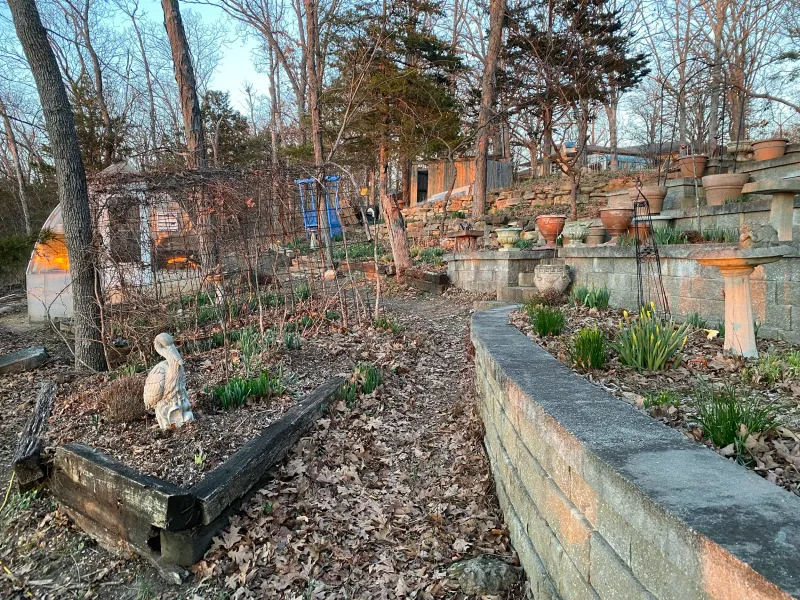
A good winter cleanup comes down to three habits. Trim intact new stems in their first winter to about 12 to 24 inches, leave those older stubs alone in later years, and skip stems that were already cut or damaged during the growing season.
The NC State guidance and the North Carolina study back that plan as a way to keep potential habitat for some native bees and other insects.
A neat bed and a helpful one can be the same bed. The stubs are just quiet rooms that someone small might move into.