
Wrinkled, Soft Christmas Cactus Leaves? How To Check Before You Water
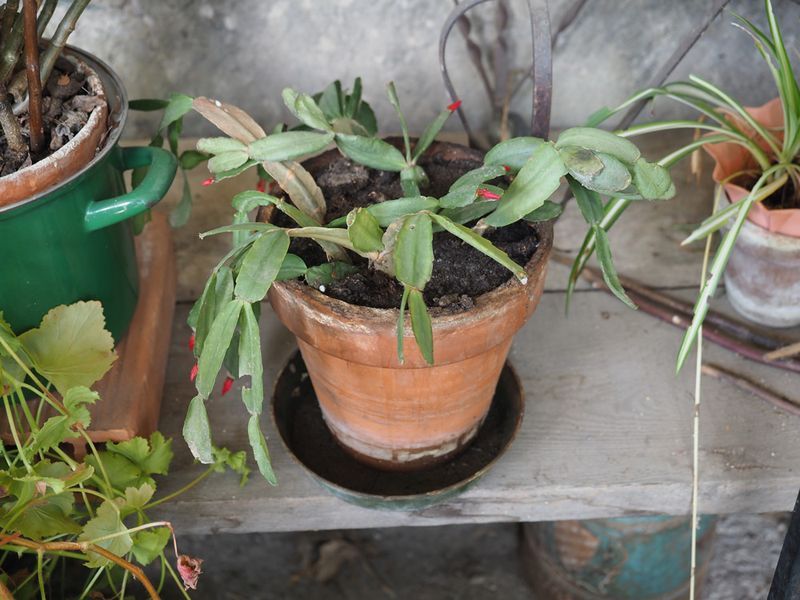
Soft, wrinkled segments on your Christmas cactus can make your stomach drop. Many people grab the watering can right away, but that move is not always the right one.
The plant is asking for help, and a few quick checks can tell you what kind of help it needs. Here is how to look at the mix, the pot, and the roots before you decide what to do.
Wrinkles signal stress, not a watering diagnosis
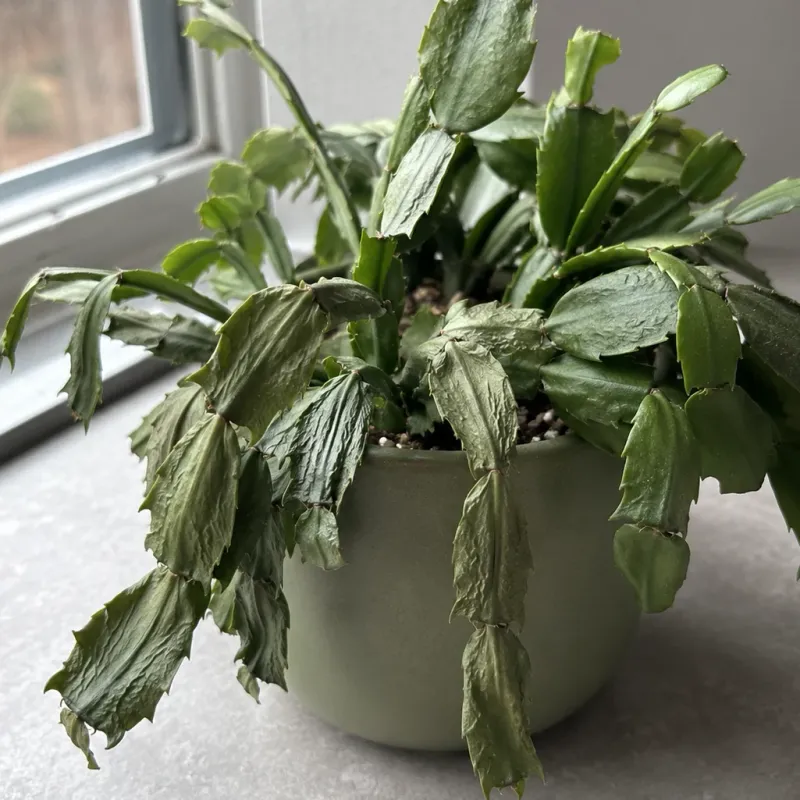
Picture this: you walk past your holiday cactus and notice the segments look floppy and creased, like a raisin in the making. Your first thought is probably that you forgot to water it.
That is a reasonable guess, but it is only one of several possibilities.
Soft, wrinkled segments are a sign of stress. They do not prove the plant is thirsty.
A cactus can wilt because the mix is too dry, but it can also wilt because its roots are damaged and can no longer pull water up into the plant. University of Minnesota Extension notes that holiday cacti need moisture but also well-aerated, freely draining conditions, and that soggy mix over a long time can lead to root rot.
That is why adding water on a guess can backfire. If the roots are already struggling in wet mix, more water makes the problem worse.
University of New Hampshire Extension points out that wilting in a plant with wet soil is a warning sign worth taking seriously.
Try not to panic or blame yourself. Plenty of careful gardeners end up here.
The next step is simple: check the potting mix and make sure the pot can drain before any water goes in. The sections ahead walk you through what to do with each result, so you can choose a response that fits what the plant is actually telling you.
Start with the mix, not the watering can
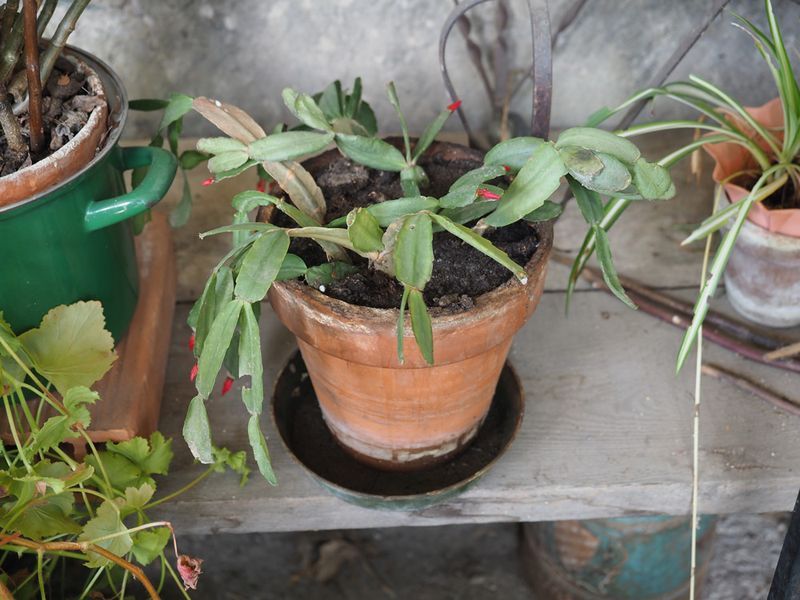
Before you pour anything, put a finger into the mix. Push it in about an inch or two and notice what you feel.
Is it dry and crumbly, cool and damp, or truly wet and heavy? That one check sorts most wrinkled plants into the right path.
Next, lift the pot and look underneath. Water needs a way out, so confirm there are open drainage holes and that nothing is blocking them.
Empty any saucer or decorative outer pot where water might be collecting, because a root zone sitting in a puddle gets very little air.
You may wonder how often you should be doing this. There is no universal calendar.
University of Wisconsin-Madison Extension explains that holiday cacti can handle frequent watering in a very well-drained mix, while a heavier mix should dry out somewhat between drinks. Pot size, light, and room temperature all change how fast the mix dries.
That is also why a fixed weekly schedule tends to fail. University of New Hampshire Extension stresses checking the plant and its mix rather than watering by the calendar.
So your result tells you where to go next. Dry mix points toward careful rewatering.
Wet mix on a limp plant means the water can stay in the jug for now, and it is time to look at drainage and roots.
Dry mix calls for steady rewatering
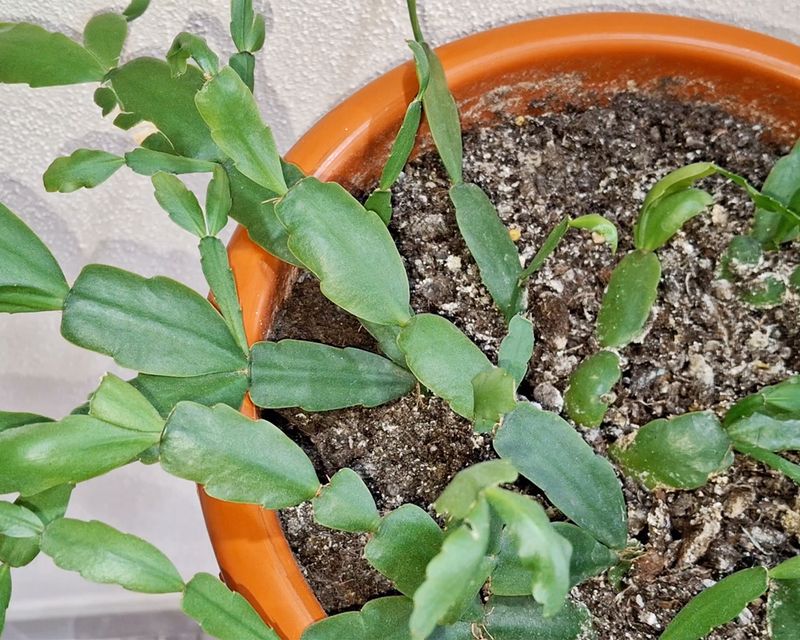
If the mix is dry, the wrinkles may well be a thirst signal. Water the mix thoroughly enough that it is evenly moist, then let the extra drain out completely.
Tip out the saucer afterward, since a pot standing in water defeats the whole point of good drainage.
Resist the urge to make up for lost time with one giant soaking. After a long dry spell, roots can be weakened, and some may have died.
UConn Home and Garden Education Center explains that extended dryness can leave roots unable to take up a sudden excess of water. For an underwatered, wilting plant, it recommends smaller, more frequent watering instead.
In practice, that means giving a bit of water, letting it drain, and checking again as the mix dries. You are rebuilding a steady moisture pattern, not forcing a rescue in a single afternoon.
There is no magic number of days here, because your mix, pot, and light will set the pace.
Be realistic about the outcome, too. The same UConn guidance cautions that some plants will not regrow roots they have lost.
Some segments may stay soft for a while, and a few may drop. Look for the plant to firm up gradually and for new growth to appear over the following weeks.
Wisconsin Extension notes that these plants do not want to dry out completely in a fast-draining mix, so steady, modest moisture suits them.
What if the soil is wet but the plant still wilts?
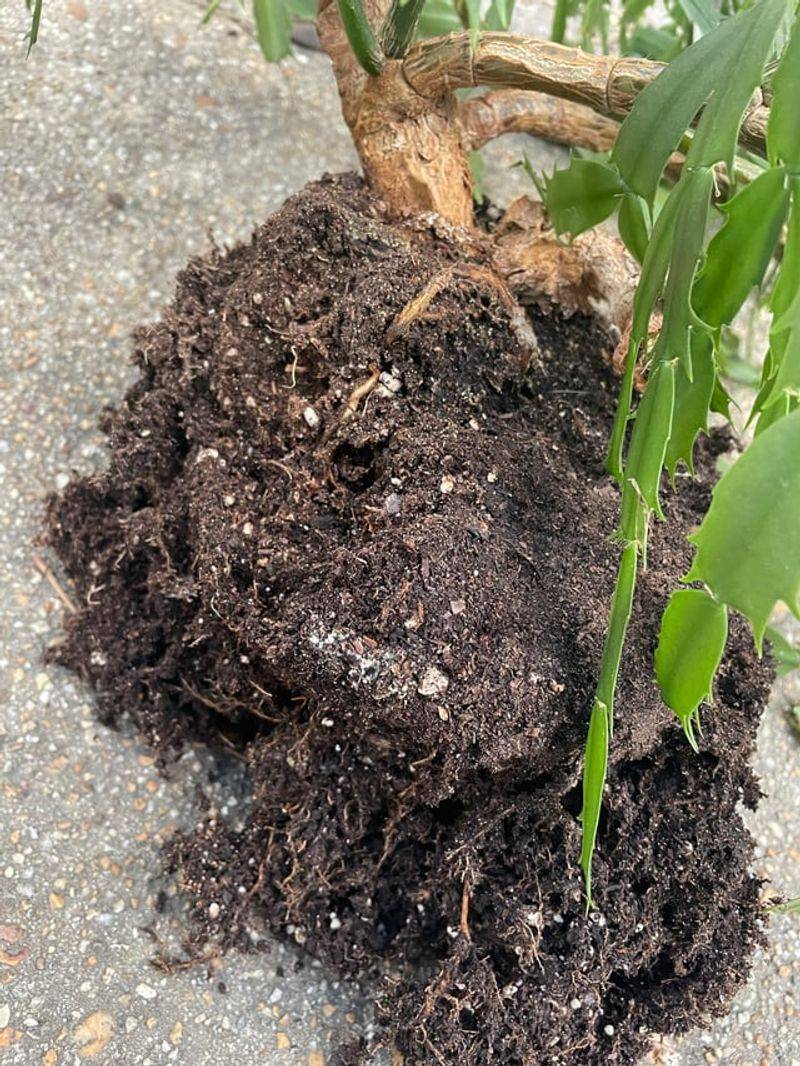
A limp plant in wet mix is the confusing one. It seems backwards, but it is a classic clue.
When roots are damaged by soggy conditions, they cannot move water into the segments, so the plant wilts even though water is all around it. Adding more will not help.
Start with the easy checks. Make sure the drainage holes are open, and pour out any water sitting in a saucer or cachepot.
Then give the plant time in a bright spot, out of harsh direct sun, and let the mix dry down some. University of New Hampshire Extension treats wilting in wet soil as a signal to suspect root trouble.
If the plant stays stressed, or the mix stays wet unusually long, it is time to look at the roots. Slide the plant out of the pot and take a careful look.
Wisconsin Extension advises inspecting the root system on a persistently stressed plant. Healthy roots tend to look firm, while dead or diseased ones may be dark, soft, or mushy.
If inspection supports it, trim off the dead or diseased roots with clean scissors and repot into fresh, well-drained mix in a pot with drainage holes. Keep in mind that appearance alone is not a diagnosis, so treat what you see as a clue.
Be honest with yourself about the odds. Wisconsin Extension notes that severely damaged plants can be difficult to save.
University of Minnesota Extension links prolonged sogginess to root rot, which is why catching it early matters. Rooting a healthy segment or two is a good backup plan.
Holiday cactus needs drainage, not desert treatment
Despite the name, your holiday cactus is not a desert plant. In nature, these plants are rainforest epiphytes, which means they grow on tree branches and in crevices, with roots that get plenty of air and rain that runs right through.
That background explains the care they like best.
University of Wisconsin-Madison Extension describes this balance well. A very well-drained mix can handle more frequent watering, while a heavier mix should dry somewhat between waterings.
Think of it as a sliding scale rather than a rule.
Here is a practical example. Two identical plants in the same room can need different care if one sits in a chunky, airy mix and the other in dense, peaty soil.
The airy pot may be ready for water far sooner, and the dense pot may stay damp for days. Watching your own mix matters more than copying a neighbor’s routine.
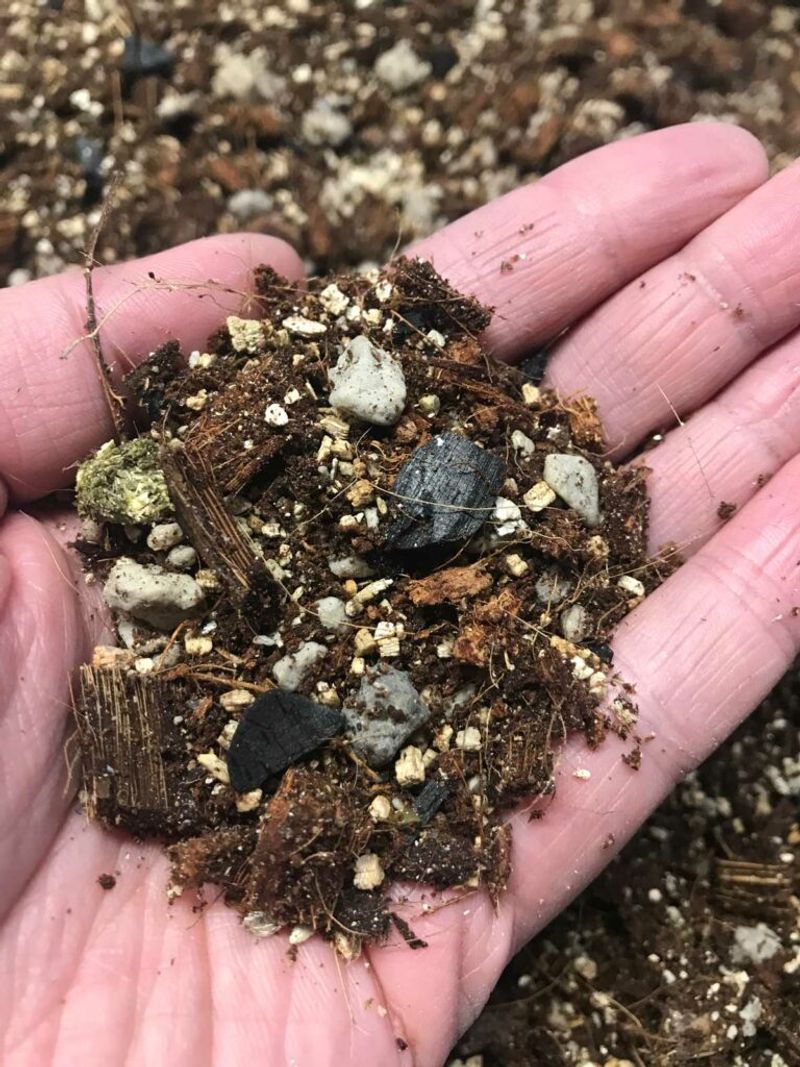
The goal is a root zone that is moist but never swampy, with air moving through it. University of Minnesota Extension recommends a well-aerated, freely draining potting mix for this reason.
If your plant lives in dense soil that stays wet, repotting into a lighter mix when you next refresh the plant can make future care much easier. A pot with drainage holes, and a habit of emptying saucers, finishes the job.
Bloom season has cues, not a deadline
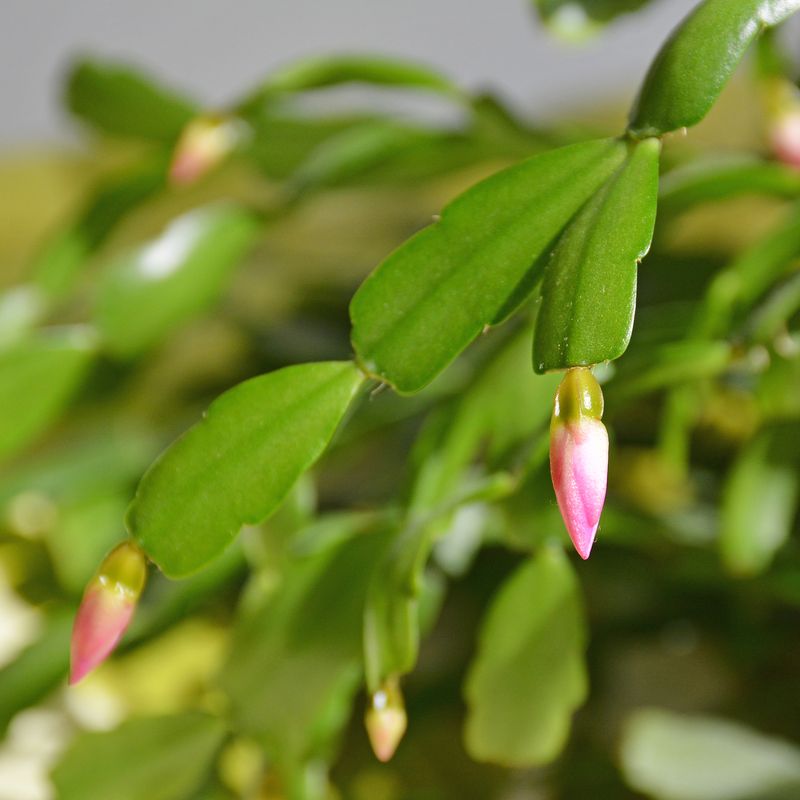
Healthy roots give your plant its best shot at flowering, but they do not set a bloom date. Even a plant that bounces back nicely may flower earlier, later, or lighter than you hoped.
Day length, temperature, plant health, and cultivar all play a part.
Light matters more than many people expect. Flower buds respond to longer nights and cooler temperatures in fall, and artificial light at night can interfere.
A plant sitting beside a lamp that runs every evening may skip buds even when it looks lush. UMass Amherst Extension also says research has not supported withholding water to trigger buds, and that water stress during flower induction can reduce bud set.
So letting the plant shrivel is not a bloom trick.
Names add to the confusion. People often say Christmas cactus for several kinds of holiday cactus.
University of Illinois Extension gives typical ranges of late November to December for Thanksgiving cactus, late December to March for Christmas cactus, and March to May for Easter cactus. Your plant may simply be on its own schedule.
Here is the quick recap. Check the mix and drainage first.
If the mix is dry, water it and let the extra escape. If the mix is wet and the plant is limp, hold the water and look at the roots.
A wrinkled segment is a question, and the pot is where the answer usually lives.