
Wrinkled Christmas Cactus Segments? Check Soil and Drainage Before You Water
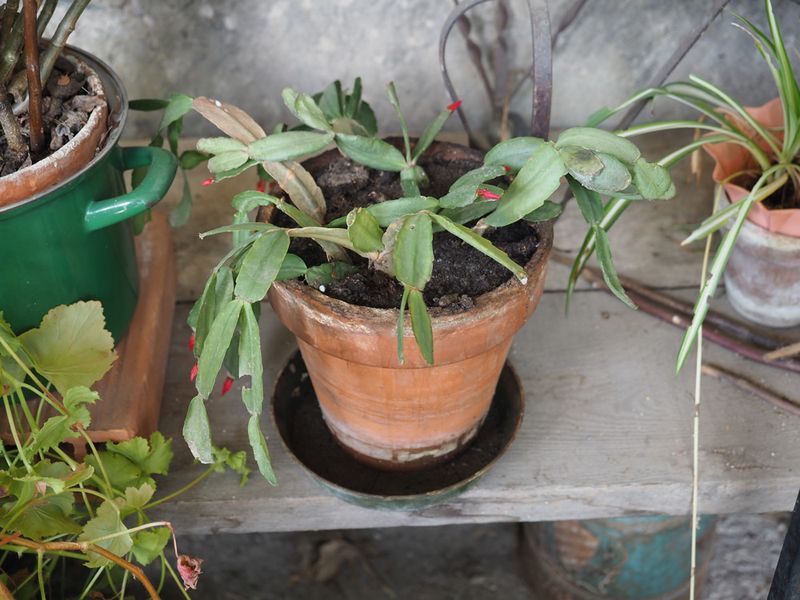
Limp, wrinkled segments on your Christmas cactus can look like a clear cry for water. But the same droopy look can show up for several different reasons, and a quick drink might make things worse.
Fall is the time when your plant is getting ready to set buds, so a few simple checks now can help. Here is how to figure out what your plant is really telling you.
Wrinkled segments can signal more than thirst
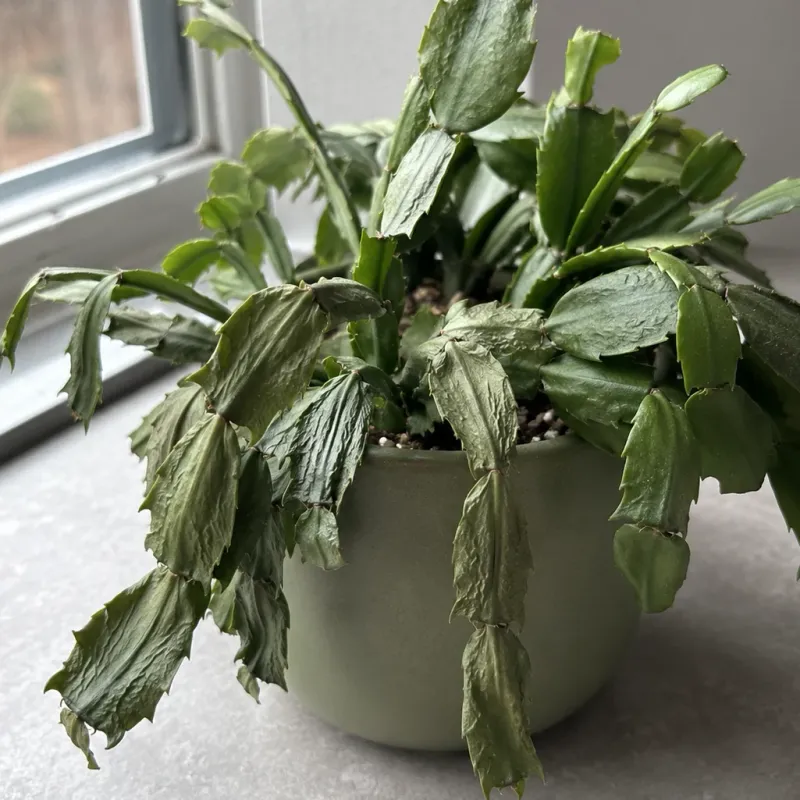
Soft, shriveled segments feel like an easy call. The plant looks dry, so you reach for the watering can.
Hold off for a moment, because wrinkling is a symptom that has more than one possible cause.
The first cause is the one you expected: the potting mix may simply be dry. When the mix has dried out too far, the plant can lose moisture from its fleshy segments and start to look crumpled.
The second cause is almost the opposite. When soil stays wet for too long, roots can become damaged and stop taking up water.
As the Royal Horticultural Society’s growing guide points out, overwatering and root deterioration can look a lot like underwatering. The plant is surrounded by moisture but still looks parched.
The third cause has nothing to do with the pot. Too much heat or strong direct sun can also make segments shrivel and go limp.
A plant parked next to a hot, sunny window or a heating vent may be struggling with its surroundings, not its water supply.
Because these three problems look alike, the plant’s appearance alone will not tell you which one you have. That is good news in a way, since you can sort it out with a few quick checks.
Start with the potting mix and drainage, then look at where the plant sits, and only move on to the roots if the problem sticks around.
Going through the checks in order keeps you from adding water to a plant that already has too much. It also gives you the best chance of getting the plant back on track before bud season, though no plant can be promised a particular outcome.
Check the potting mix and drainage first
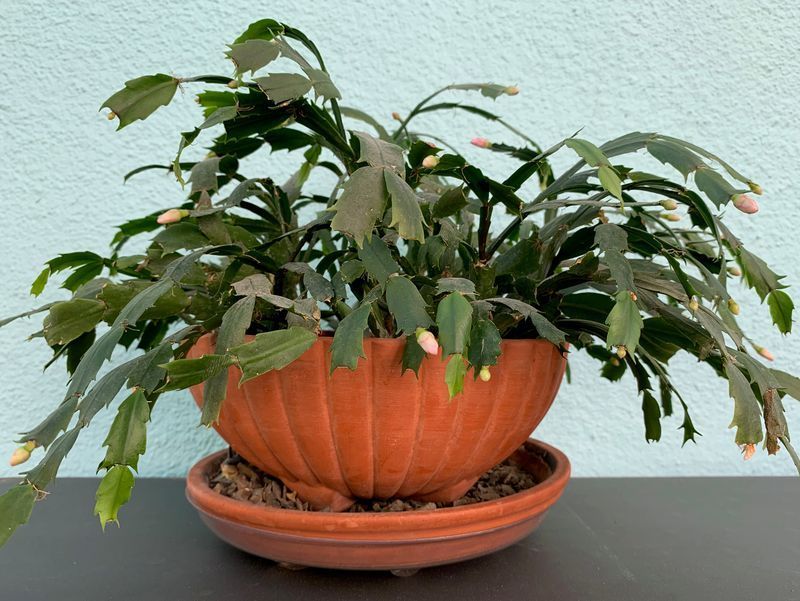
Before you water anything, put a finger into the potting mix up to the first knuckle. Notice whether it feels dry, slightly damp, or soggy.
You can also lift the pot, since a dry pot feels much lighter than a wet one.
Next, look at the drainage. Make sure the pot has holes in the bottom and that water can run out freely.
Check the saucer or decorative outer pot too, because standing water there keeps the mix wet from below.
If the mix is dry, water thoroughly. Soak the soil until water runs out the bottom, then let the pot drain completely.
Empty the saucer or cachepot afterward so the roots are not sitting in a puddle.
If the mix is still wet, do not add water. Tip out any standing water, confirm the drainage holes are not blocked, and let the mix dry down before you check again.
Pouring more water onto soggy soil can add to root trouble.
You may wonder how often all this should happen. There is no set weekly schedule that fits every plant.
As UNH Extension explains, how fast the mix dries depends on the pot, the soil, the light, and the room temperature. A plant in a small clay pot near a bright window will dry faster than one in a big plastic pot in a cool room.
So let the soil guide you instead of the calendar. Checking by touch every few days takes only seconds and tells you far more than a reminder on your phone.
Persistent wetness can point to root trouble
Picture a plant that has been watered faithfully and still looks wilted. That is a puzzle many gardeners run into.
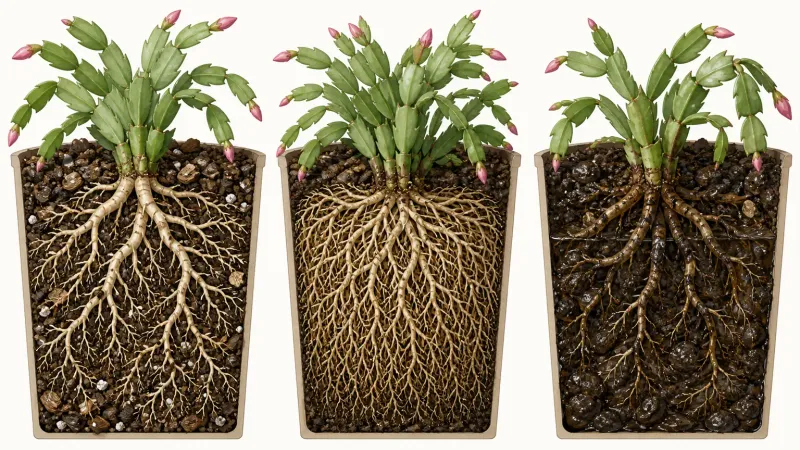
Roots that have been sitting in wet conditions for too long can be damaged and may not absorb enough moisture, so the plant shows drought-like symptoms even though the soil is wet. University of Maryland Extension, answering a gardener’s question, describes this very pattern.
Limp segments alone do not mean the roots are damaged. Many plants with wrinkled stems simply need a good drink or a move out of hot sun.
Root inspection is a follow-up step, not something to do to every plant that looks a little droopy.
Consider it when one of two things happens. The first is that the mix stays wet for an unusually long time, much longer than it used to.
The second is that the segments keep shriveling even after you have watered suitably and fixed the drainage.
If that is your situation, slide the plant out of its pot and look. Healthy roots are usually firm and light in color.
Roots that are dark, mushy, or smell sour suggest trouble, and you can trim them away and repot into fresh, well-draining mix in a pot with drainage holes.
Go gently, since the plant is already stressed. Afterward, water sparingly at first and let the mix guide the next drink.
Recovery is possible but never certain, so patience helps more than fussing.
Choose bright, filtered light over harsh sun
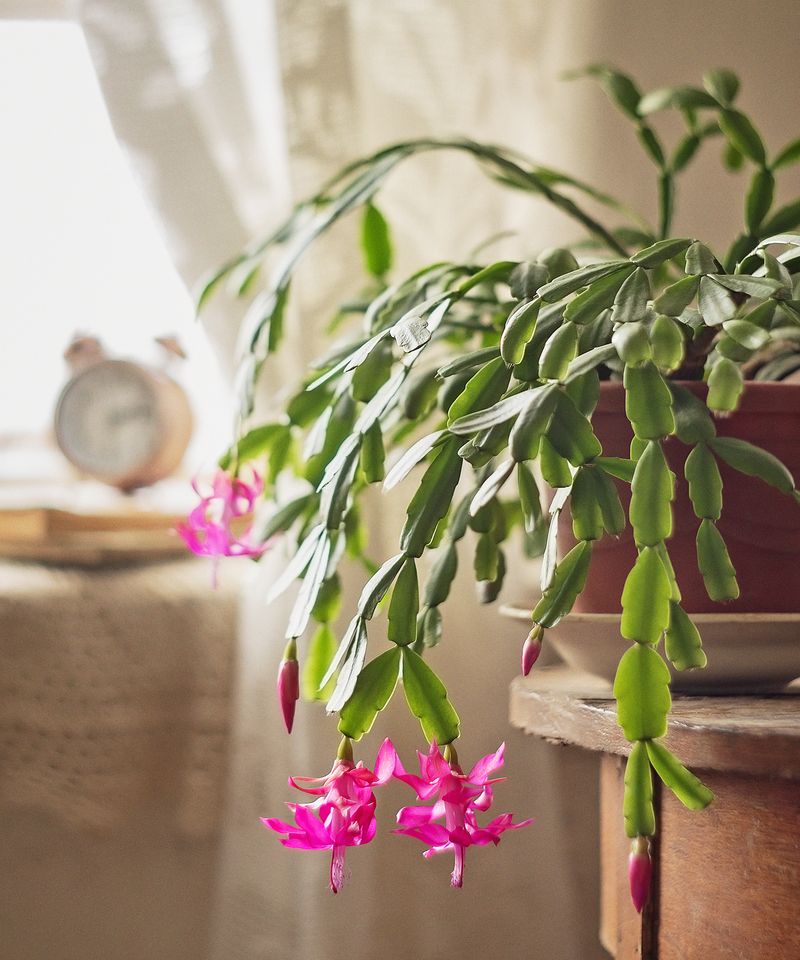
Despite the name, a Christmas cactus is not a desert plant. Holiday cacti are rainforest natives that grow in the branches of trees, where the light is bright but filtered through leaves.
In your home, that translates to bright, indirect light.
Strong direct sun is a different story. According to University of Minnesota Extension, prolonged strong sun can scorch or stress the stems.
Excessive heat can add to the problem, so a spot above a radiator or against a hot south-facing pane deserves a second look.
This check is separate from the soil check. Soil can be perfectly moist and a plant can still wrinkle if it is baking.
Notice whether segments look bleached, reddish, or crisp on the side facing the window, since that points to light and heat as the culprit.
If that sounds like your plant, move it a few feet back from the glass or hang a sheer curtain to soften the rays. An east-facing window or a spot with bright, indirect light often works well.
A little morning sun is usually gentler than hot afternoon rays.
Do not overcorrect by tucking the plant into a dim corner. Deep shade is not what a holiday cactus wants, and too little light can leave it weak.
Aim for a bright room where the sun does not beat directly on the stems for hours.
Support fall bud formation without forcing it
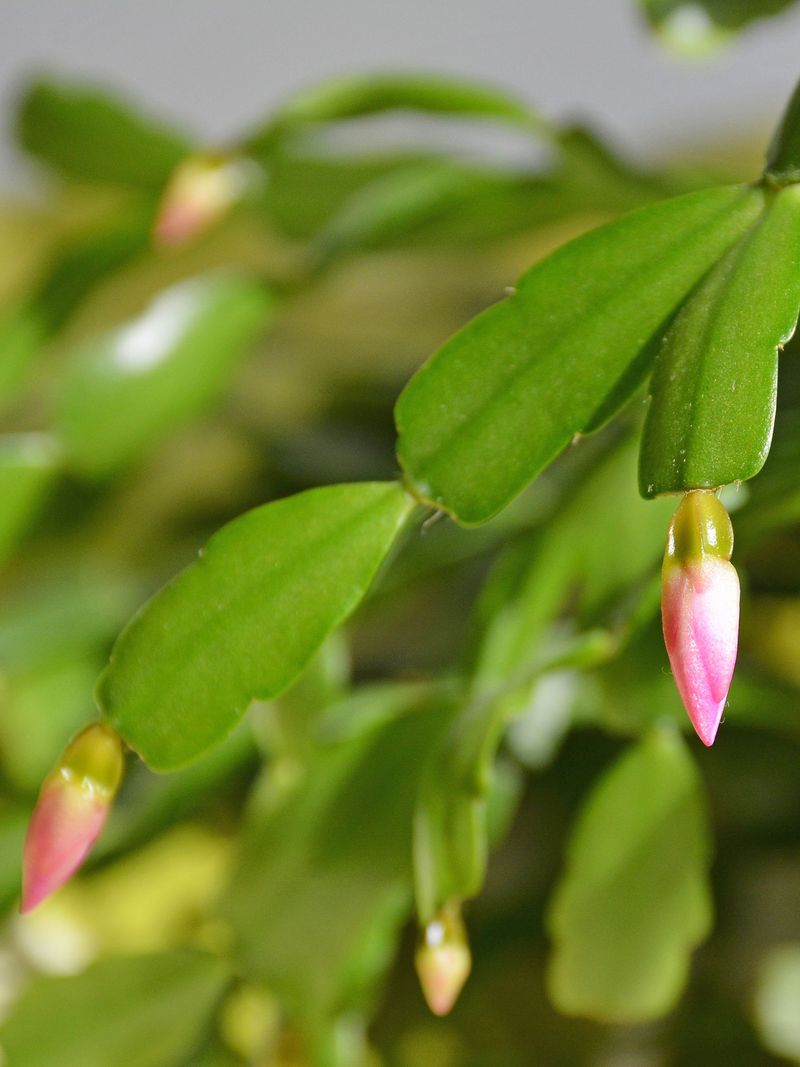
Once your plant is steady again, fall is the time to give it a nudge toward flowering. Think of this as support, not a guarantee.
Bloom depends on the plant’s health, its variety, and conditions in your home.
Day length and temperature are the main cues. According to University of Minnesota Extension, short days and cooler nights encourage flowering.
Give the plant bright light by day and a cooler spot at night, such as a room that cools down after dark.
Warmth and light at the wrong time can get in the way. Warm conditions can interfere with bud set, and so can artificial light at night.
A cactus beside a lamp that stays on every evening may hold back, so try keeping its nighttime hours dark.
Watering shifts a little in this season. UNH Extension guidance suggests somewhat less water during bud initiation, but the plant should never be left bone-dry.
Keep checking the mix, and water when the top has dried instead of letting it go completely parched.
Remember that holiday cacti are not all the same. Thanksgiving, Christmas, and Easter cacti bloom at different times, and the cues above apply most directly to the fall-to-winter types.
Your plant may flower before or after December 25, and that is normal.
If you want to know which one you own, look at the segment edges. Pointed, claw-like edges often suggest a Thanksgiving cactus, while rounded edges lean toward a Christmas cactus.
Keep conditions steady once buds appear
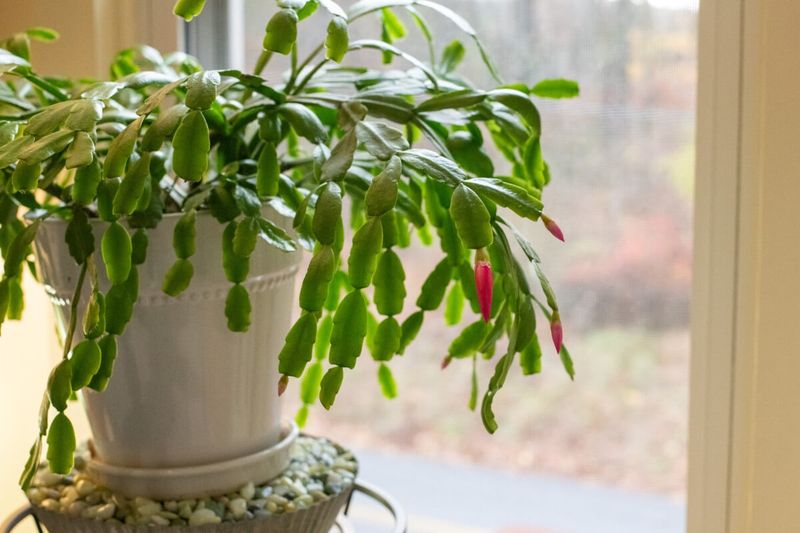
When you spot those first tiny buds, it is time to go back to regular watering. Keep checking the mix with your finger and water when it has dried, rather than following a fixed day of the week.
The UNH Extension advice is to resume regular watering at this stage.
Now the goal is steadiness. Sudden changes in location, temperature, or humidity may contribute to bud drop, so resist the urge to rearrange the plant.
A draft from a door or a blast of heat from a vent can be enough to cause trouble.
Moving it can’t be avoided sometimes, but if you do, keep conditions as close to the old spot as you can. This will not promise that every bud stays, yet it removes some common stress.
As Iowa State University Extension notes, bloom timing varies with day length, temperature, cultivar, and indoor conditions. Fixing wrinkled stems does not lock in flowers by a certain holiday.
So read the plant and the soil, not the date. A cactus that flowers in its own time is still a success.