
Yellow Pothos Leaves After the Heat Comes On: Is It Humidity, Water, or Something Else?
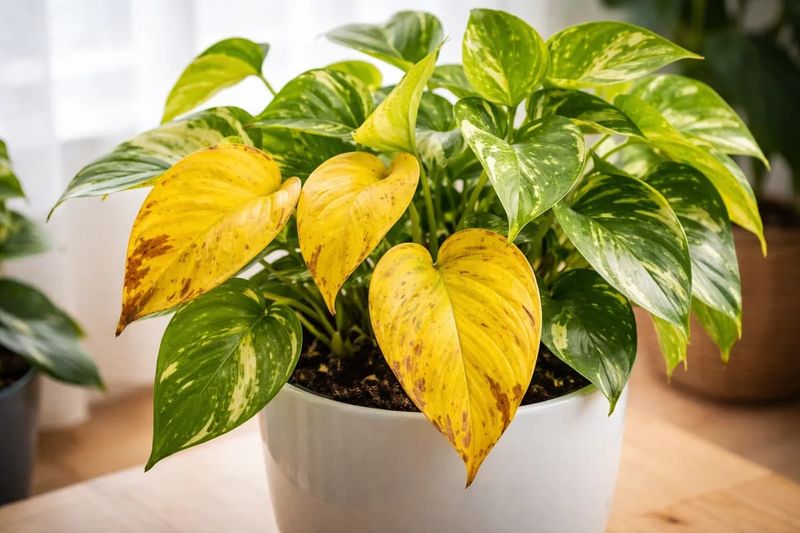
You flip on the heat, and a few weeks later your pothos starts showing yellow leaves. It is easy to panic and blame either too much water or dry air.
The truth is that yellow leaves have several possible causes, and humidity is only one of them. A few quick checks can tell you what your plant is really dealing with, and most cost nothing.
Yellow leaves do not prove your pothos needs humidity
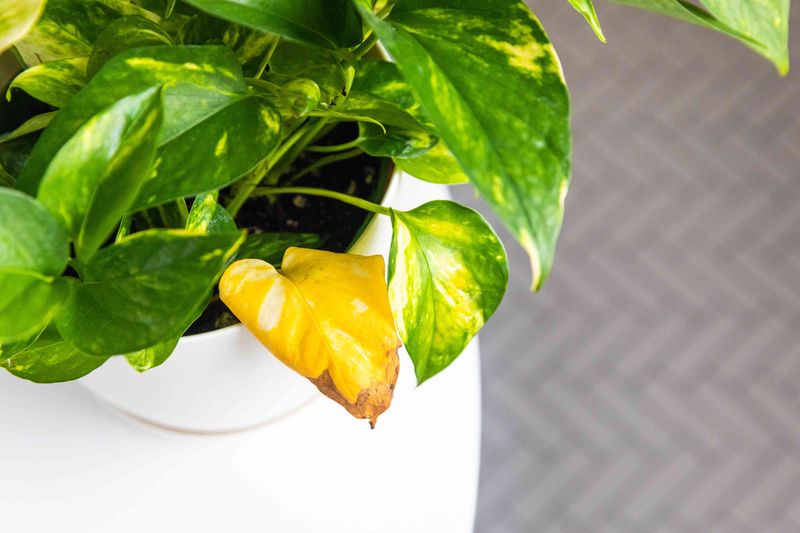
Winter heating often goes hand in hand with drier indoor air, so it makes sense to suspect humidity when your pothos starts yellowing. But a yellow leaf cannot tell you that on its own.
The same symptom shows up when soil stays too wet, when it gets too dry, when light is weak, and when older leaves simply age out.
Pothos is a forgiving plant, and the advice about its humidity needs is not consistent. University of Wisconsin Extension says it does best with high humidity but survives a wide range of conditions.
Illinois Extension describes it as suited to low humidity. So higher humidity may help, but that is very different from saying dry air is causing your yellow leaves.
That is why the smartest move is to check conditions before changing anything. Look at the potting mix, the drainage, the light, the leaf age, and where the plant sits in relation to heat vents.
Yellowing can also show up when soil gets too dry, which is one reason a blanket rule like skip the water and raise humidity can backfire, as noted in University of Florida IFAS guidance.
Take a breath. One or two yellow leaves do not mean you have harmed your plant, and pothos tends to bounce back once its conditions are sorted out.
The next sections walk through each check in the order that is easiest to do.
Check the potting mix before changing your watering
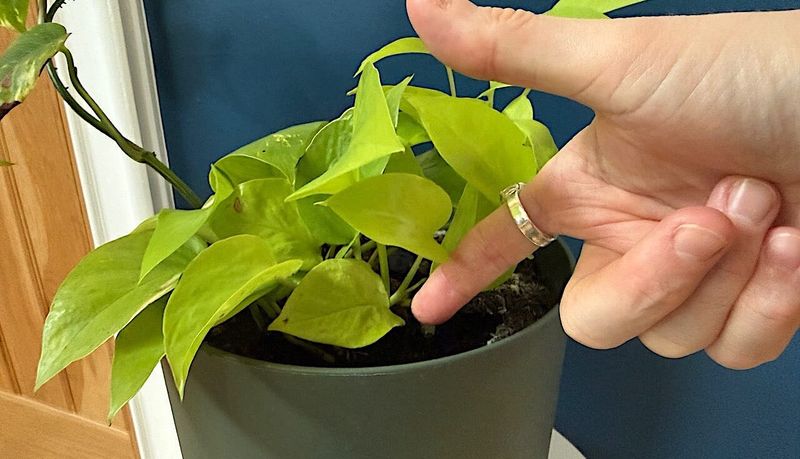
Start with your finger. Push it into the soil up to the first knuckle, which is roughly one to two inches, the depth Illinois Extension suggests checking for many houseplants.
If it feels soggy, the plant is likely staying wetter than it likes. If it is bone dry and pulling away from the pot edge, thirst could be the issue.
Pothos should dry out somewhat between waterings, and the mix should not stay constantly damp, according to Penn State Extension. In winter, light levels drop and growth often slows, so the plant uses less water.
A summer routine of watering every Sunday can leave the soil wet far too long once the days get short.
Drainage matters just as much as timing. Make sure the pot has holes, and empty any water sitting in the saucer or decorative outer pot.
Persistent wetness can lead to root rot and yellowing, and the Ask Extension answer on yellow pothos leaves points to watering as something to review.
Dry soil is not harmless either. IFAS guidance notes that a too-dry mix can also cause yellowing.
So do not cut back or add water until you have felt the soil. If it is wet, wait.
If it is dry through the pot, water thoroughly and let the excess drain away.
Winter light and leaf age offer other clues
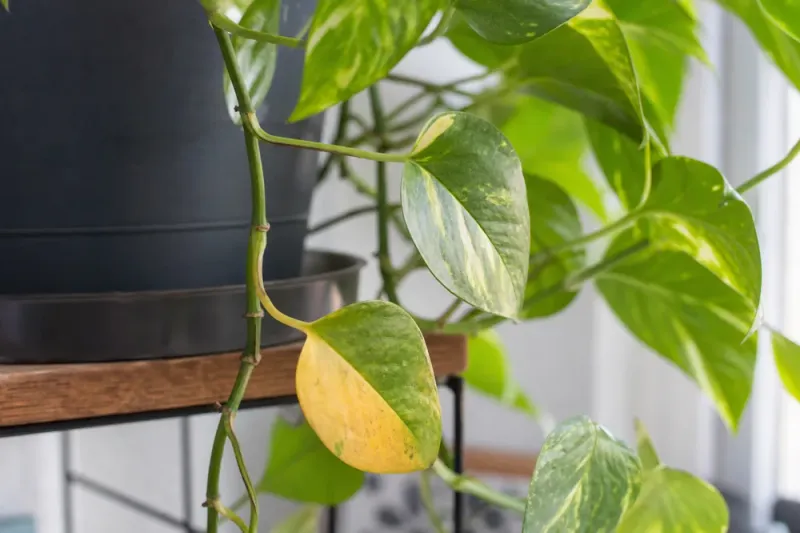
Count the yellow leaves and note where they are. A few older leaves near the base of a vine turning yellow and dropping is normal aging, and the Wisconsin Extension pothos profile treats it as part of the plant’s life.
No action needed beyond pinching them off.
Broader yellowing is a different story. If many leaves are fading, or the newer growth near the vine tips is yellow, something about the plant’s conditions deserves a closer look.
The Ask Extension answer on yellow pothos leaves points toward checking growing conditions and, only if you see evidence, pests. A few yellow leaves alone are not a sign of bugs or disease.
Light is a big piece of the puzzle in winter. Pothos prefers filtered or bright indirect light, and low light can dull leaf color.
Direct sun is too harsh, so a spot near a bright window with a sheer curtain often works well. If your plant sits far from the glass, shifting it a few feet closer may help.
One more tip: store listings use the word pothos loosely. Illinois Extension separates devil’s ivy from silver pothos and gives different watering advice for each.
Confirm what you actually own before following plant-specific care tips.
Could the heat vent be stressing the foliage?
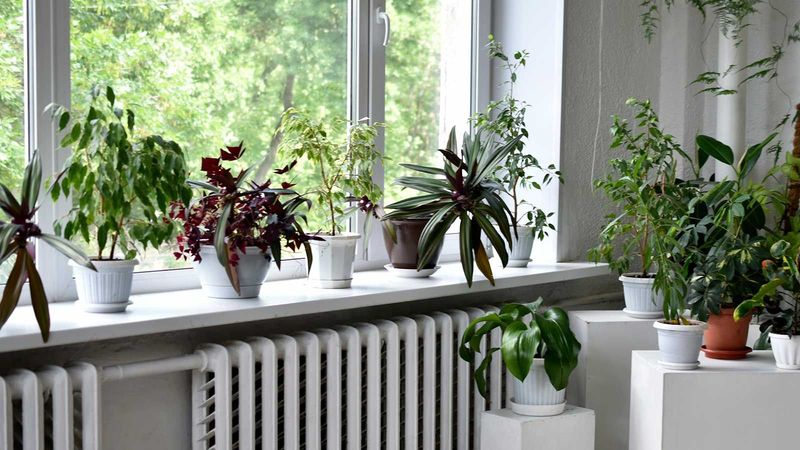
Take a walk around your plant’s spot. Is it sitting right above a floor vent, next to a radiator, or beside a door that opens to cold air?
Pothos can take a lot, but sudden temperature swings and direct hot air do not do foliage any favors.
Illinois Extension houseplant care guidance warns that blasts of hot air and abrupt temperature changes can stress leaves. The same advice applies to cold drafts from leaky windows.
If your pothos is in the direct path of either, moving it a few feet is an easy test.
A vent may not be the cause of your yellow leaves, so avoid jumping to that conclusion. Treat it as one more item on the checklist.
Winter care advice from Illinois Extension on overwintering houseplants also touches on keeping plants away from heating sources.
Keep in mind that dodging a draft is a separate step from adding humidity. Moving the plant out of a hot airstream changes the temperature it feels, not the moisture level of the room.
After the move, watch new growth over the next few weeks rather than expecting yellow leaves to turn green again.
Measure the room before treating it as dry
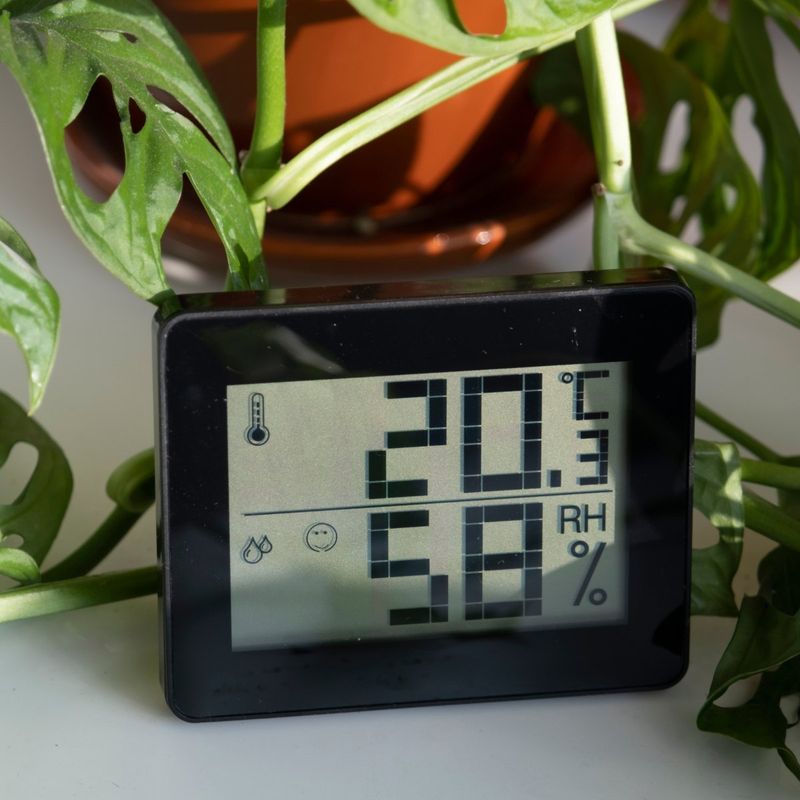
Heating season does not guarantee dry air, and a yellow leaf does not either. Some homes stay fairly comfortable all winter, while others get very dry.
A small digital hygrometer, often just a few dollars, tells you which one you have.
Place it near the plant and check it at different times of day. Because advice on pothos is mixed, a reading will help you decide how much to worry.
Wisconsin Extension says pothos does best with high humidity but tolerates a wide range, while Illinois Extension calls it suited to low humidity.
No single pothos humidity number is a household requirement. Targets you may find online often come from commercial growing guides, such as the University of Florida IFAS production guidelines, which are meant for growers, not living rooms.
For general context, the EPA’s indoor air quality guide gives 30 to 50 percent as an ideal range for homes. That is general indoor-air guidance for people and buildings, not a pothos prescription.
If your reading falls in that range, humidity probably is not your main suspect.
Grouping plants is a low-cost first humidity step
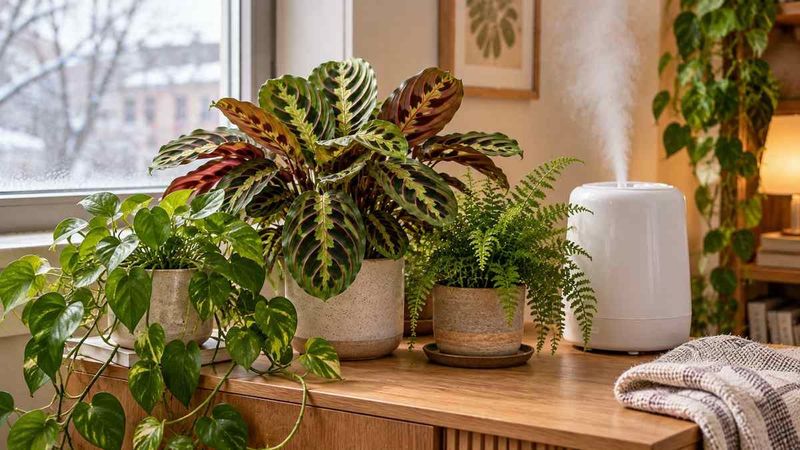
If you have checked the soil, light, and vent, and your hygrometer shows the air really is dry, you can try a modest fix. Grouping plants together is the cheapest place to start.
Plants release moisture through their leaves, so a cluster can create a slightly more humid pocket than a lone pot.
Illinois Extension lists grouping plants and using a humidifier as options for dry air. Keep expectations realistic.
Neither is guaranteed to reverse yellowing, because humidity may not have been the cause.
If you choose a humidifier, keep it clean and watch your readings. The EPA’s guidance on home humidifiers advises cleaning them regularly and not pushing indoor humidity above 50 percent.
Skip the shortcuts that sound better than they work. Misting gives only a brief bump in humidity, and the Ask Extension response says regular misting is not effective and may raise disease risk on wet foliage.
Pebble trays are not a proven cure either, since extension advice on them is not conclusive.
Use the soil and the room to choose your next move
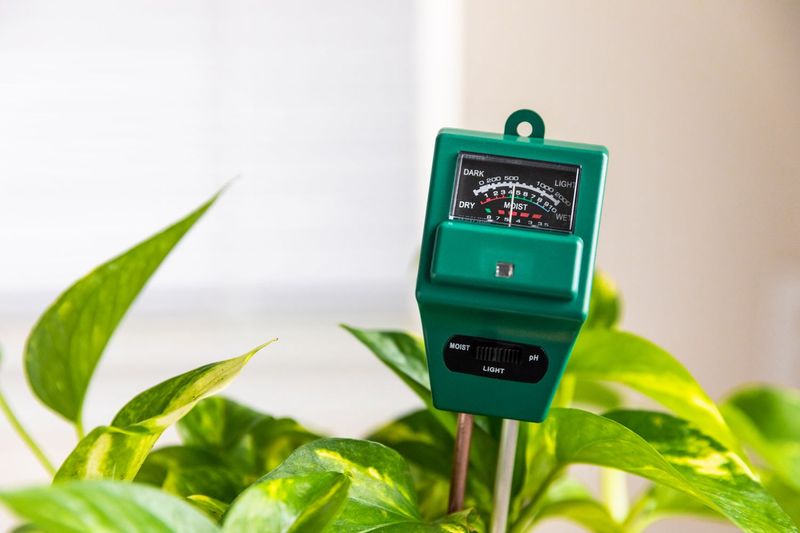
Work through the checks in order. Feel the soil and confirm the pot drains, as Penn State Extension suggests.
Then look at light and leaf age, move the plant out of any direct heat blast per Illinois Extension, and read your hygrometer before adding humidity.
A few older yellow leaves are normal, as the Wisconsin Extension profile notes, while widespread yellowing deserves a closer look. Your pothos is tougher than it seems, and the soil usually tells the story before the air does.