
Your African Violet Will Bloom Fuller Than Ever This Winter Once You Make These Simple Changes
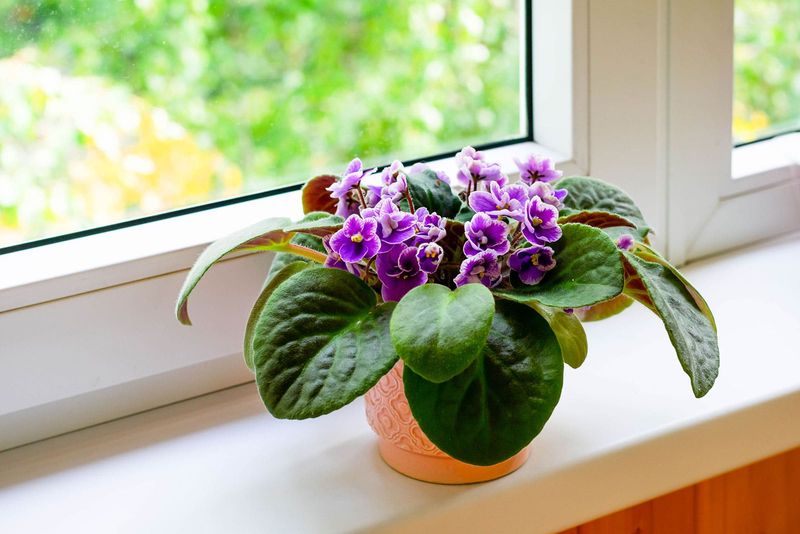
If your African violet has nothing but green leaves right now, you are not alone, and you have not ruined it. Winter brings short days, dry air, and chilly windows, and all of that quietly tells your plant to stop making flowers.
The good news is that a few small, cheap changes can flip that switch back on. Here are eight simple fixes that can turn a bare plant into a windowsill full of purple, pink, or white blooms.
1. Move It Closer to Bright, Indirect Light
Picture a sunflower trying to grow in a closet. That is roughly what an African violet feels like in a dim winter corner.
Low light is the number one reason these plants stop blooming, and winter days make the problem worse.
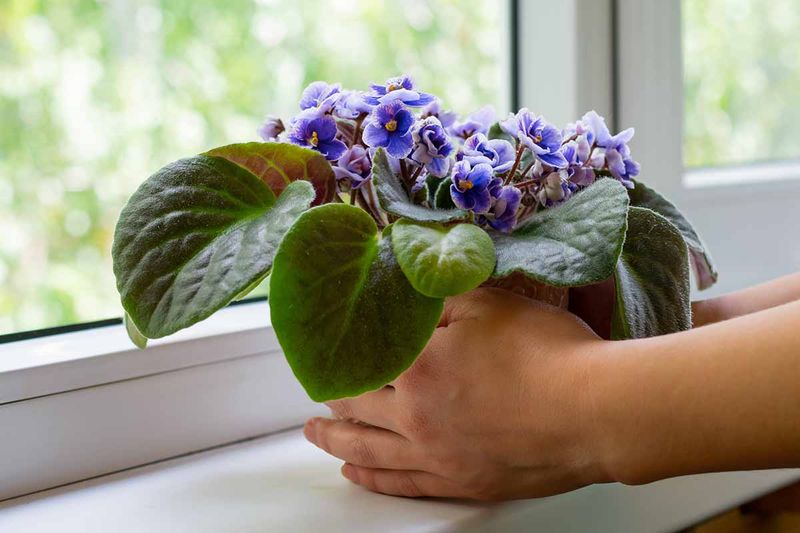
An east or north-facing window gives the gentle, steady light violets love. Because winter sun is weaker, even a south or west window can work well from November through February.
Just watch it closely once spring sunshine gets stronger, since harsh rays can scorch the fuzzy leaves.
A good test is your hand’s shadow. If it looks soft and blurry at midday, the light is about right for flowers.
If you can barely see a shadow at all, your violet needs a brighter spot.
2. Add a Grow Light and Respect the Dark
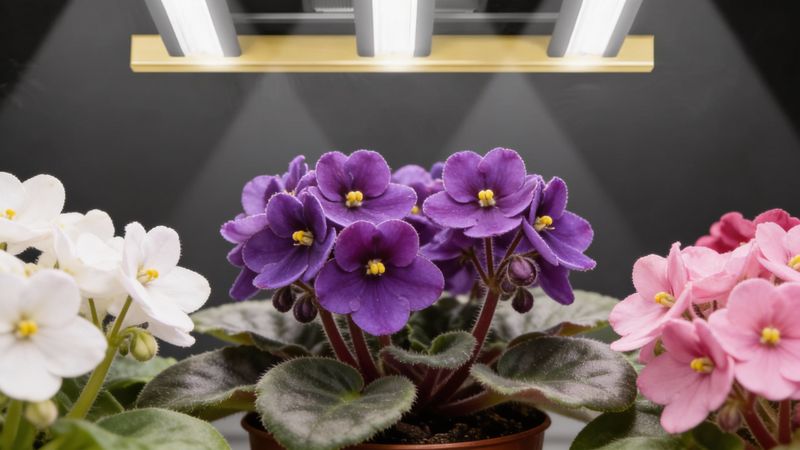
Here is a secret that serious violet growers swear by. Many of the show-stopping plants at African Violet Society of America shows are grown entirely under lights, not windows.
If your home is shady, a simple LED or fluorescent grow light can fill the gap. Aim for 10 to 16 hours of light a day, with the bulb about 8 to 12 inches above the leaves.
A cheap outlet timer makes this almost effortless.
Darkness matters too. Your violet needs 8 to 12 hours of uninterrupted night to trigger flower buds, so don’t leave the light running around the clock.
Think of it as giving your plant a proper bedtime.
3. Switch to Bottom Watering With Lukewarm Water
Overwatering kills more African violets than anything else, and winter makes it sneakier. Cooler rooms mean soil dries much slower, so roots can sit wet for days and start to rot.
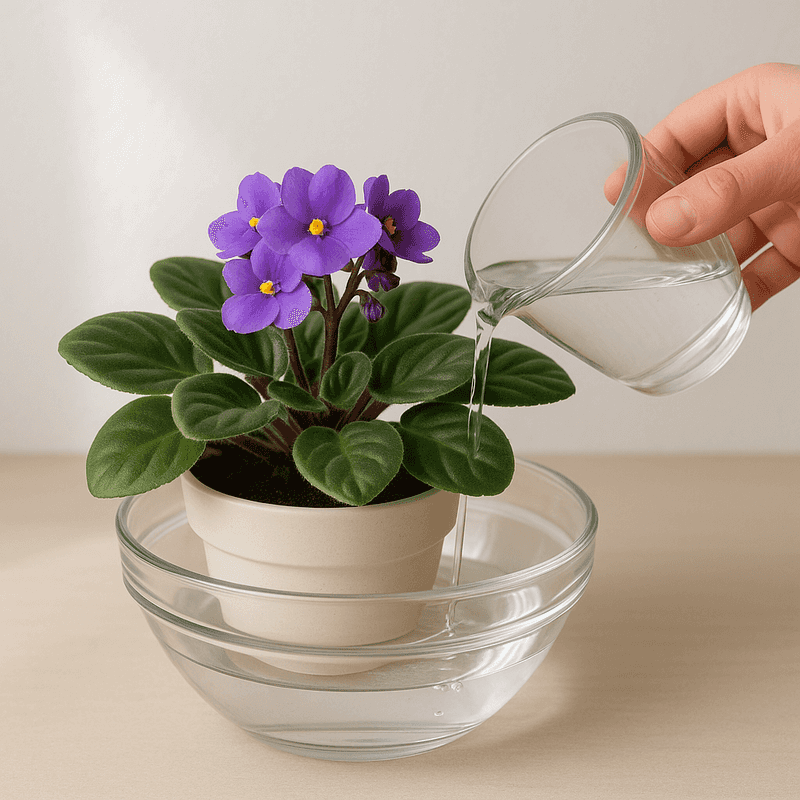
Wait until the top of the soil feels dry to your fingertip. Then set the pot in a saucer with one to two inches of water for 15 to 30 minutes.
The plant drinks what it needs, and you pour off the rest.
Temperature counts as well. Cold tap water can shock the roots and leave pale, ring-shaped spots on the leaves, so use room-temperature water every time.
Bonus: watering from below keeps drops off those fuzzy leaves.
4. Keep It Away From Drafts and Heat Vents
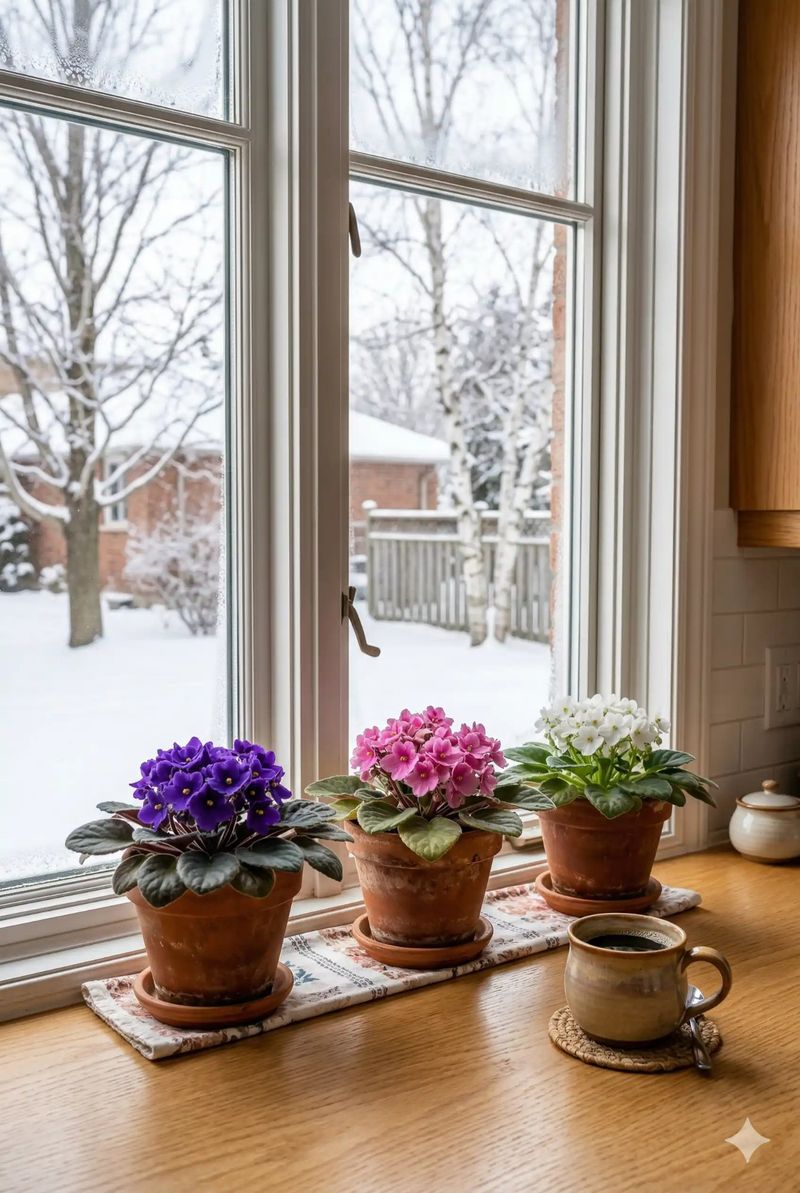
Ever had buds form and then shrivel before they open? Blame the furnace, or maybe the drafty window right next to the plant.
African violets like it steady, around 65 to 75 degrees during the day and not much cooler than the mid-60s at night. Blasts of hot, dry air from a vent dry out buds fast and leave leaf edges crispy.
Cold glass can damage leaves that touch it, so keep foliage a few inches back.
Walk around your home and feel for chilly spots near doors and windows. Moving the plant just a few feet can make a surprising difference.
5. Boost Humidity With a Pebble Tray
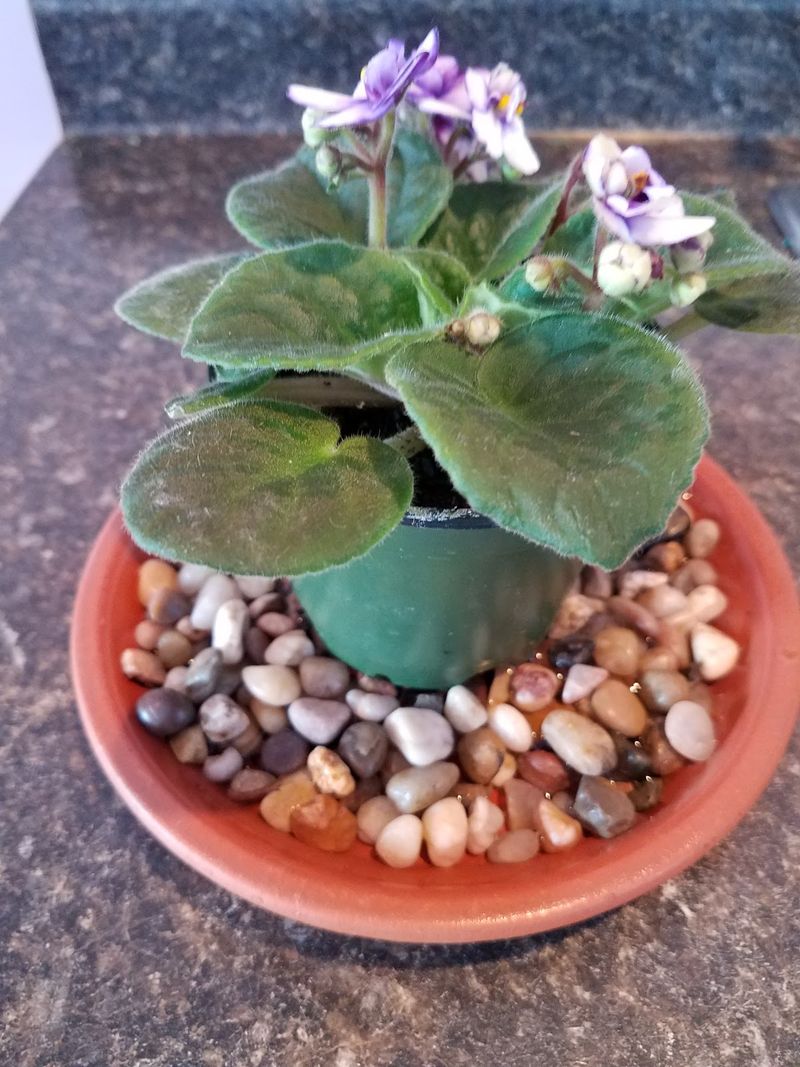
Winter indoor air can be as dry as a desert, often dipping below 30 percent humidity once the heat kicks on. African violets come from humid forests in Tanzania and Kenya, so dry air leaves them stressed and stingy with flowers.
A pebble tray is the easiest fix. Fill a shallow tray with pebbles, add water just below the top of the stones, and set the pot on top.
The water slowly evaporates around the leaves without soaking the roots.
Skip the spray bottle, though. Misting leaves can cause permanent spots.
A small humidifier in the room works great if you have several plants.
6. Choose a Snug, Shallow Pot
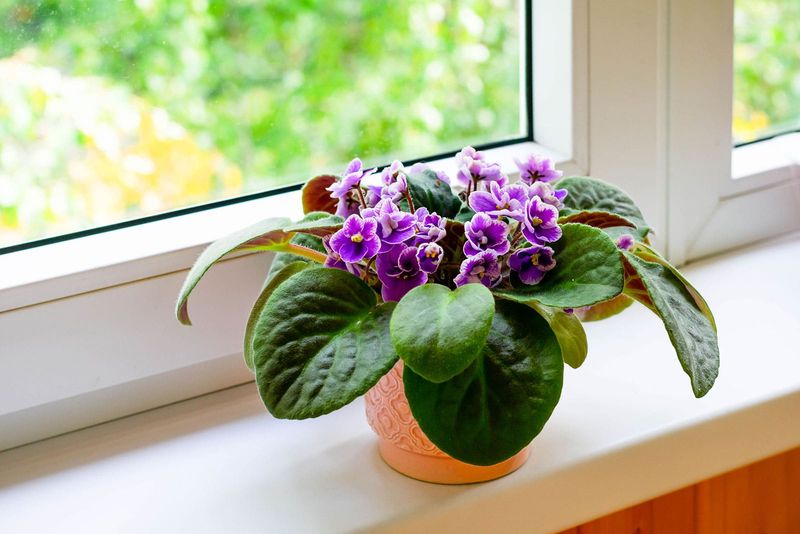
Bigger is not better here. A roomy pot actually tells your violet to spend its energy growing roots and leaves instead of flowers.
These plants bloom best when slightly root-bound. Pick a shallow pot no deeper than about four inches, roughly one-third the width of the leaf spread.
Fill it with a light, airy African violet mix, usually a blend of peat, perlite, and vermiculite, so water drains quickly.
Repot every year or two with fresh mix, even if you keep the same pot size. Old soil packs down and loses air, which roots hate.
7. Feed With a Bloom-Friendly Fertilizer
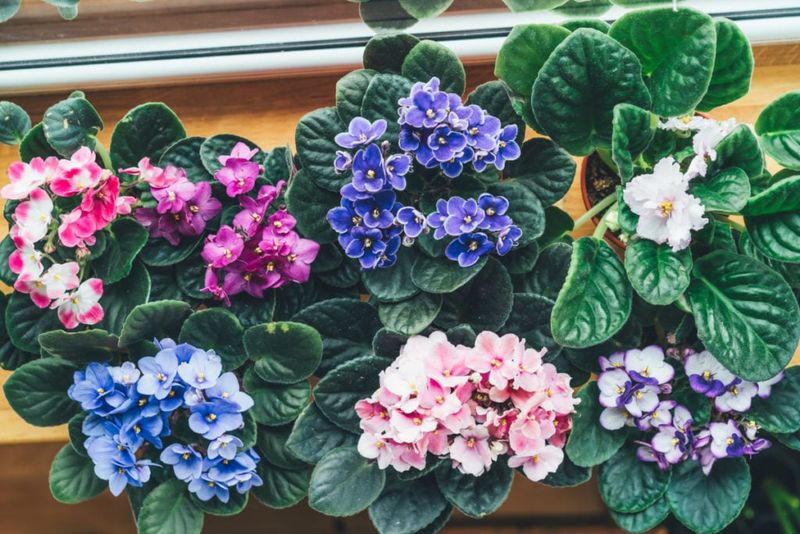
A violet in a tiny pot depends completely on you for food. Once the nutrients in the soil run out, flowers are the first thing to go.
Use a balanced fertilizer made for African violets, or one a bit higher in phosphorus, every two to four weeks. Many growers prefer a weak, diluted dose with every watering instead.
Follow the label so you don’t overdo it.
Steer clear of high-nitrogen plant foods. They push out lush, pretty leaves but very few blooms.
8. Groom Spent Blooms and Rotate Weekly
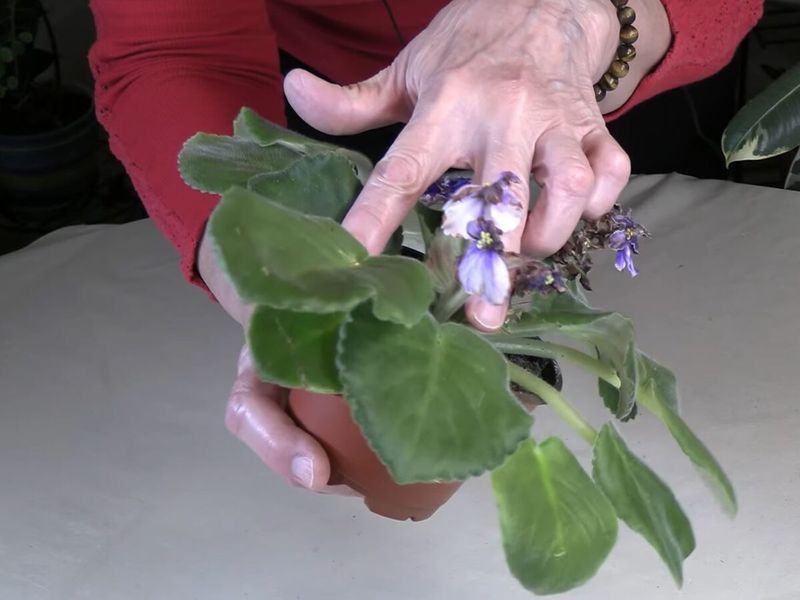
Five minutes a week is all this habit takes, and your violet will thank you with more flowers. Pinch off faded blooms and their stems, plus any yellow or damaged outer leaves.
Old flowers and leaves still pull energy from the plant. Removing them sends that energy toward new buds and keeps fungus problems away.
While you’re there, give the pot a quarter turn. Plants lean toward light, so regular turning keeps the leaves flat and even and can help buds form all the way around.
Small effort, big winter payoff.