
Your Fig Tree’s Work Isn’t Done After The Last Fruit – Here’s What It Needs Before Winter
The last ripe fig is gone, and it feels like the job is finished. But what you do in the next few weeks can help your tree get through winter with less damage.
Some fall chores, like feeding and heavy pruning, can backfire. Here is how to sort the helpful steps from the risky ones for your own tree.
Next Year’s Figs Depend on Which Wood Survives
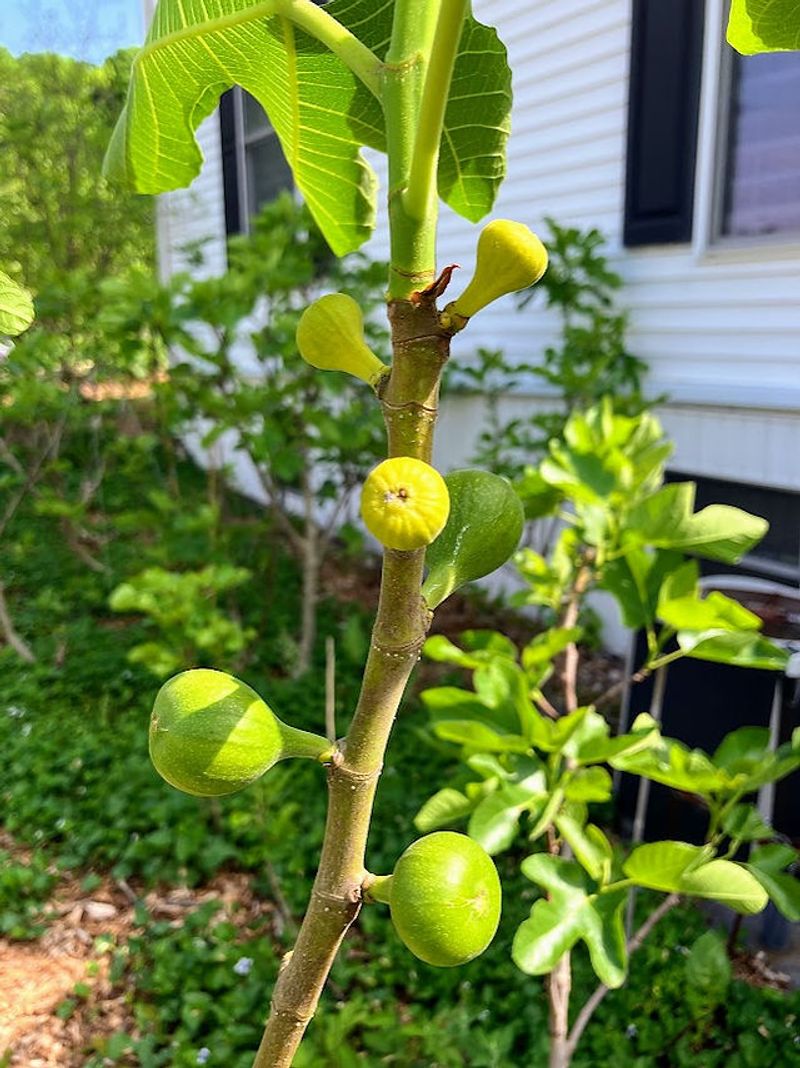
Fig trees can bear two kinds of crops, and they grow on different wood. The main crop generally forms on the current season’s growth.
A breba crop, which ripens early in summer, forms on the previous year’s wood, and not every cultivar makes one.
That difference matters when winter hits. If cold kills the tips of last year’s branches, you may lose brebas but still get a main crop from new shoots.
Penn State Extension’s winterizing guide explains this split, and Oregon State’s home orchard pruning publication points to the same wood-versus-crop pattern.
Severe injury is a bigger problem. A fig that freezes to the ground may sprout again from the roots, but University of Maryland Extension says those root shoots rarely mature fruit that same season.
So regrowth is good news for the tree, but it is not a promise of a normal harvest.
This is why post-harvest care helps but does not decide next year’s crop. Your cultivar, the weather, your site, and which crop you care about most all play a part.
Start by asking three questions: Is my tree in the ground or a pot? Does my cultivar make brebas?
How cold do my winters really get? Your answers shape every step that follows.
Should You Fertilize or Water After Harvest?
Skip the fall feeding. Extra fertilizer or extra irrigation can push out soft new shoots right when cold is on the way.
UF/IFAS warns that late-summer growth flushes can be killed by temperatures just below freezing, and too much fertilizer can also lead to leafy growth with low yield.
That does not mean you should cut off all water. A tree in a real drought still needs a drink, and dry spells can hurt fruit quality during the growing season, as University of Georgia Extension notes.
The goal is to water for the tree’s health, not to coax new growth.
In many climates, easing off is the sensible move. UC IPM advises reducing water in late summer and fall.
A simple check works well: push a finger a few inches into the soil. If it is damp, wait.
If it is bone dry during an unusually dry fall, water slowly and then stop.
Container figs are a special case, because pots dry out faster than ground soil and hold less buffer. Check them by feel or weight rather than by calendar.
Soil type, rainfall, and pot size all change the answer, so no single schedule fits every yard.
Remove Diseased Fig Debris Before Winter
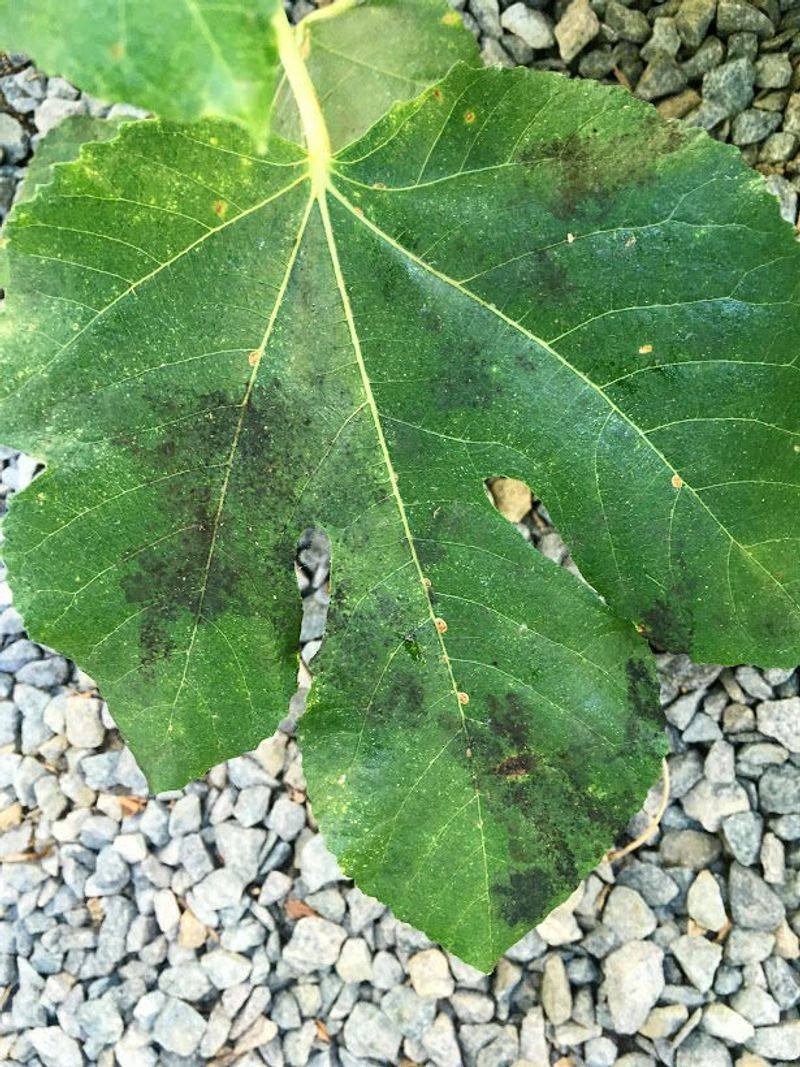
Walk around your tree with a bag and a sharp eye. Look for leaves with small rusty-brown spots, shriveled or moldy fruit still hanging on, and shoots that look sick or dead.
Then check the ground, where fallen leaves and fruit can pile up.
Fig rust is a good example. University of Georgia Extension advises gathering and removing infected fig-rust leaves in the fall.
Bag them and throw them out rather than leaving them to sit under the canopy.
UC IPM recommends removing diseased shoots, leaves, and fruit as well. Clean your pruners between cuts if you are removing visibly diseased wood.
Keep expectations realistic. Cleanup can reduce the amount of disease waiting around next season, but it will not wipe it out, since spores can blow in from elsewhere.
Think of it as a small chore that lowers the odds of trouble. It is separate from pruning for shape and from winter wrapping, so you can do it now without changing any bigger plans.
Pruning Is a Local Decision, Not a Fall Rule
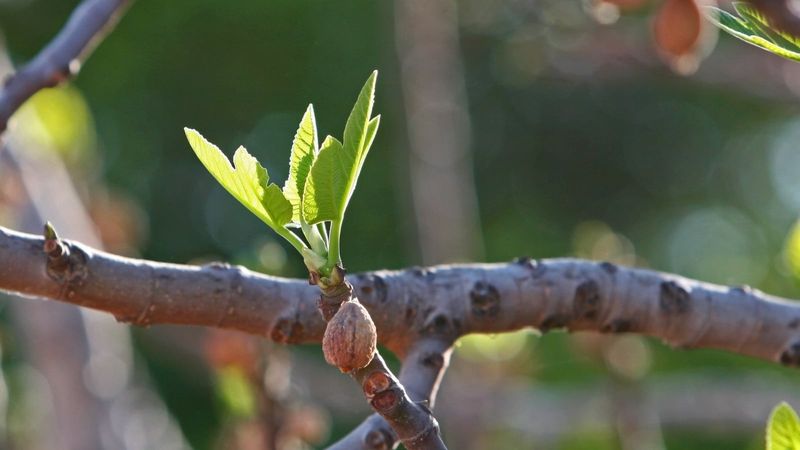
Many gardeners grab the shears the day harvest ends. Hold off and check your region first.
Advice really does differ from place to place.
UF/IFAS says pruning after harvest can allow flower buds to start, but late-maturing cultivars may lose yield, and heavy winter pruning can remove the next crop. In contrast, Oregon State Extension recommends dormant-season pruning in January or February, and UC IPM describes late-winter pruning for bush-form figs in colder areas.
The reason to be careful is wood. Brebas grow on last year’s branches, so cutting older wood can remove them.
If your cultivar does not make brebas, or you only care about the main crop, you have more freedom, since that crop forms on new growth. Oregon State’s pruning publication is helpful for seeing how fruiting wood differs.
Separate two goals. Pruning for size or shape, such as removing crossing branches, is different from keeping old wood for brebas.
In the fall, limit yourself to dead, damaged, or diseased pieces.
Save bigger cuts until you know your cultivar and have checked with your local extension office. There is no nationwide date that works for everyone.
In-Ground Figs May Need Root and Branch Protection
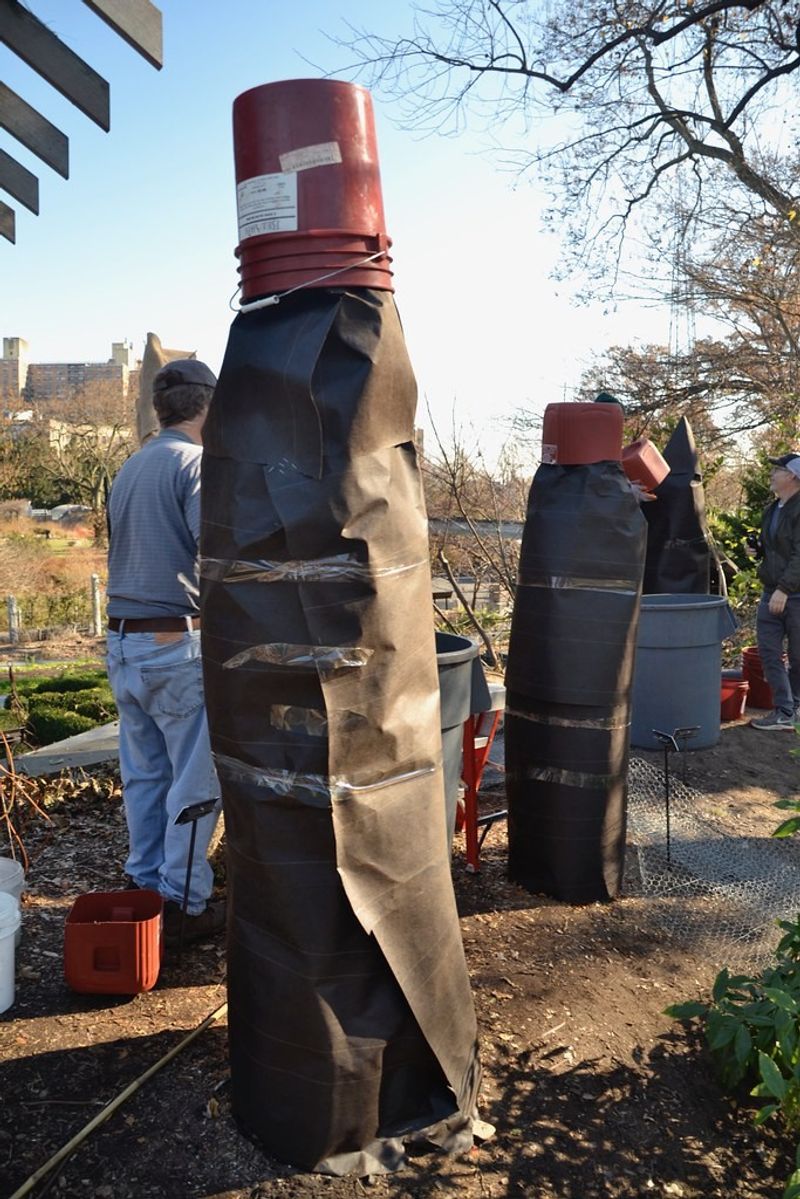
If you garden where winters are harsh, a ground-planted fig may need help. Where to start depends on your site.
A tree on an exposed, windy slope faces more risk than one tucked against a south-facing wall.
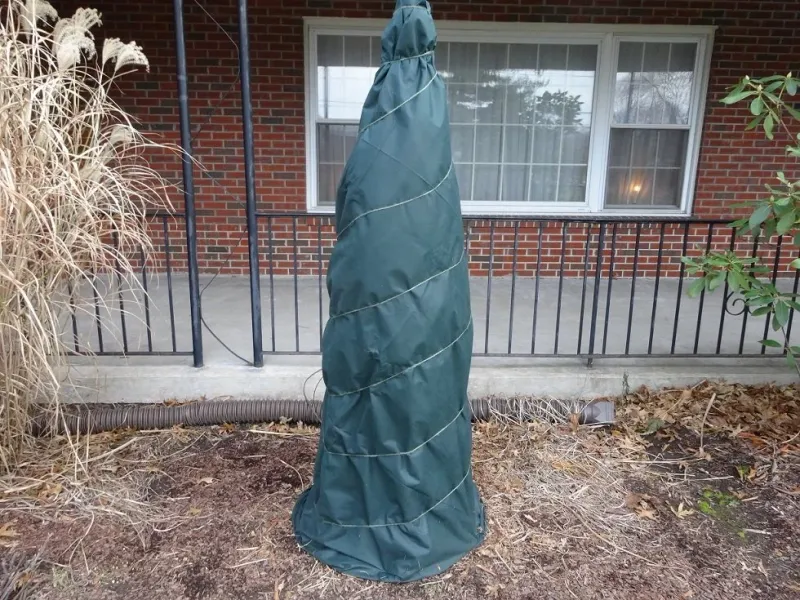
Protection can mean two things: insulating the root zone and sheltering the branches. Penn State Extension describes mulch and breathable wrapping options.
How much you need depends on exposure and how cold your area really gets, so a mild-winter gardener may do far less than a northern one.
Materials matter. Non-breathable wrapping, such as plastic, can trap moisture against the stems.
Choose breathable coverings, and keep them loose enough that the wood can dry out.
Mulch and wrap have another downside. University of Maryland Extension notes that insulating material can shelter voles, which may damage stems.
If you see vole trails in your yard, consider keeping mulch a little back from the trunk and checking it during winter.
Also remember that a hardiness zone label is not a guarantee. Roots, wood, and buds can each respond differently to cold.
Watch your own tree’s winter record, and adjust the plan each year.
Protect Container Figs When Local Winters Put Their Roots at Risk
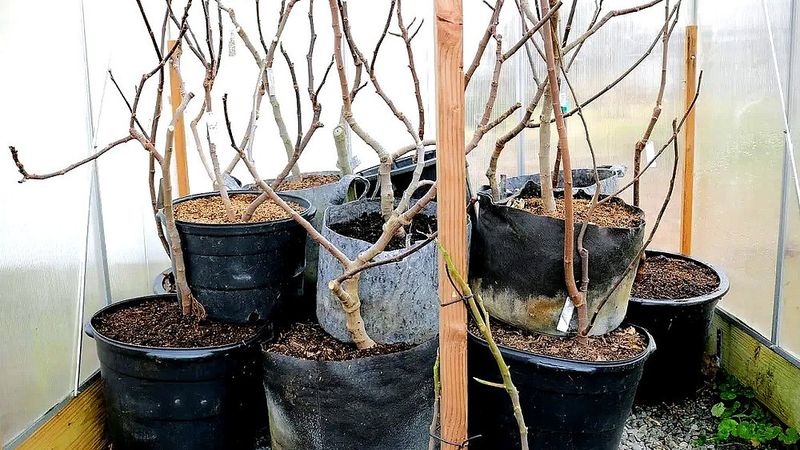
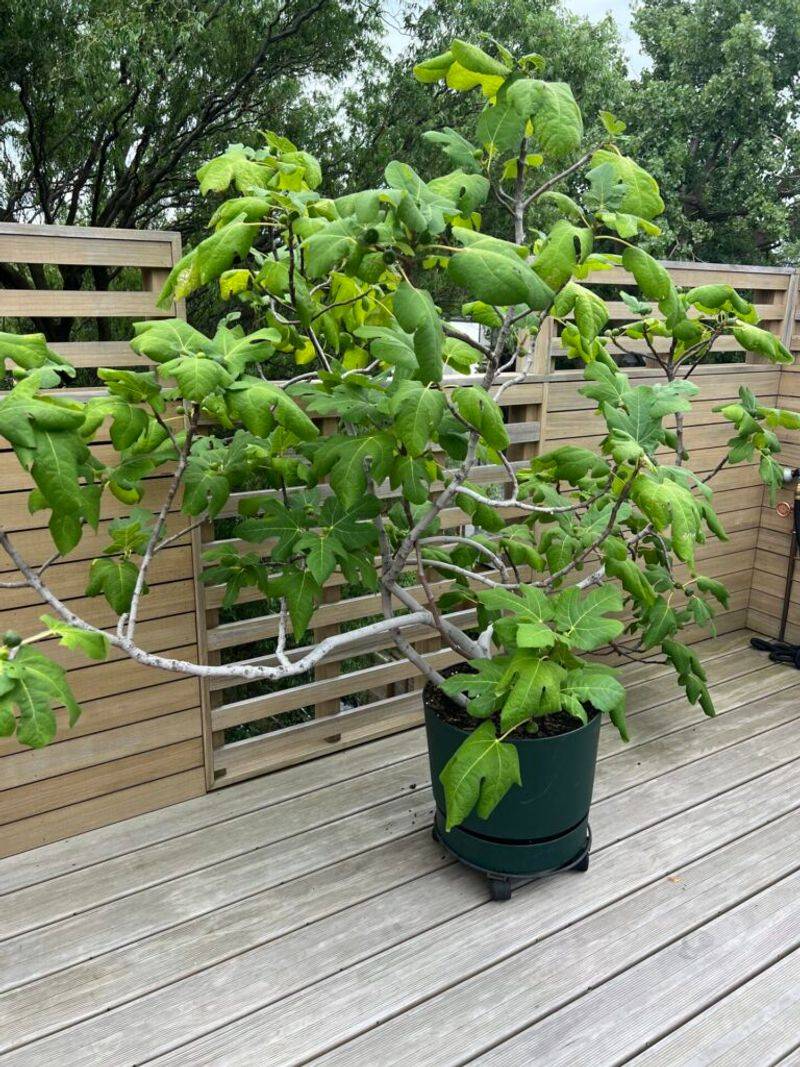
A fig in a pot lives differently from one in the ground. Its roots sit in a small container surrounded by cold air, so they are more exposed than roots buried in soil.
That is why container growers need their own plan.
Where local winters put the roots at risk, extension guidance suggests moving the dormant plant to a protected, cool spot. University of Maryland Extension and University of Illinois Extension describe cool storage to keep the plant dormant.
A warm living room is not the goal, since warmth can wake the tree too early.
Cool storage is not required everywhere. In a mild climate, a sheltered corner outdoors may be enough.
Follow your local extension advice.
Watering takes a light touch. University of New Hampshire Extension suggests giving just enough that the roots do not dry out, without leaving the pot wet.
Lift the pot or check the top few inches of mix every few weeks.
Storage space, pot size, and potting mix all change how fast the soil dries. A small pot in a dry basement needs more attention than a large one in a damp garage.
Adjust to what you see.
Match the Winter Plan to Your Fig
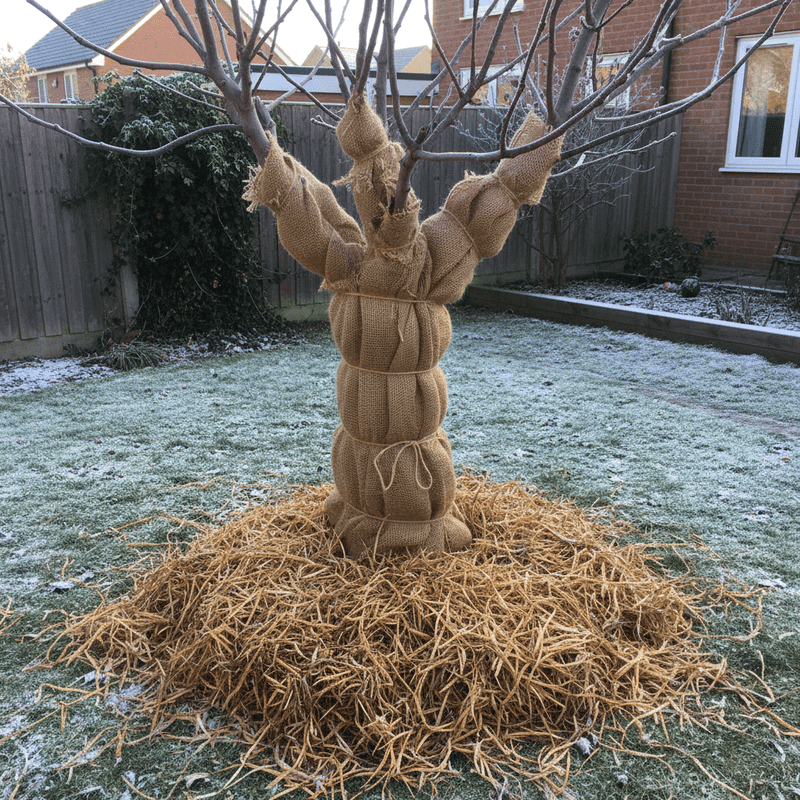
Start with the basics: is your fig in the ground or a pot, and does your cultivar rely on old wood for brebas? Skip fall feeding and extra watering meant to spur growth, clean up diseased debris, and keep big pruning cuts for when your local guidance says they fit.
For protection, Penn State and Maryland extension pages are good places to compare options.
These steps cut avoidable risk, but they cannot promise a crop or survival. A fig keeps its own schedule, and the best plan is one you adjust every winter.