
Your Lavender Is Deciding Right Now Whether It Survives Winter – 5 October Jobs And 2 Mistakes That Rot It
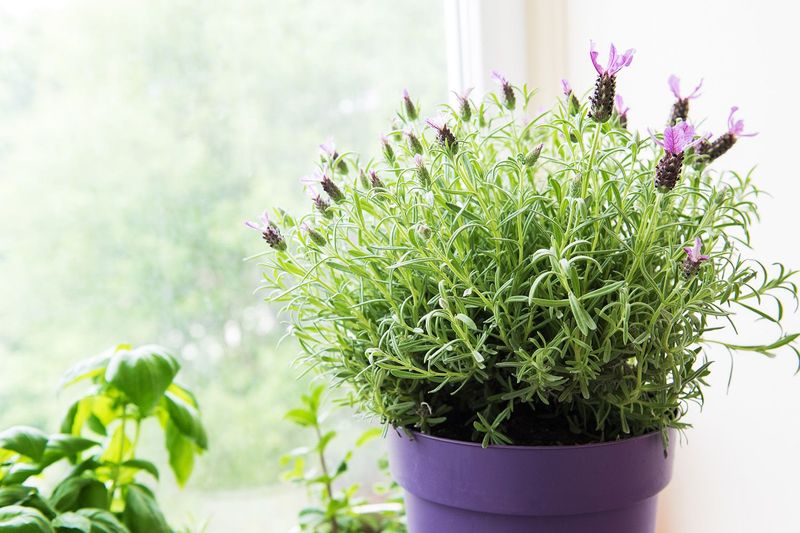
Your lavender looks fine right now, but October is when it quietly gets ready for the cold months ahead. What you do in the next few weeks can decide whether it greets spring with fresh green shoots or turns into a gray, mushy stump.
The good news is that most of the work is simple and costs almost nothing. Here are five easy jobs to do this month, plus two common mistakes that rot lavender from the roots up.
1. Cut Back on Watering
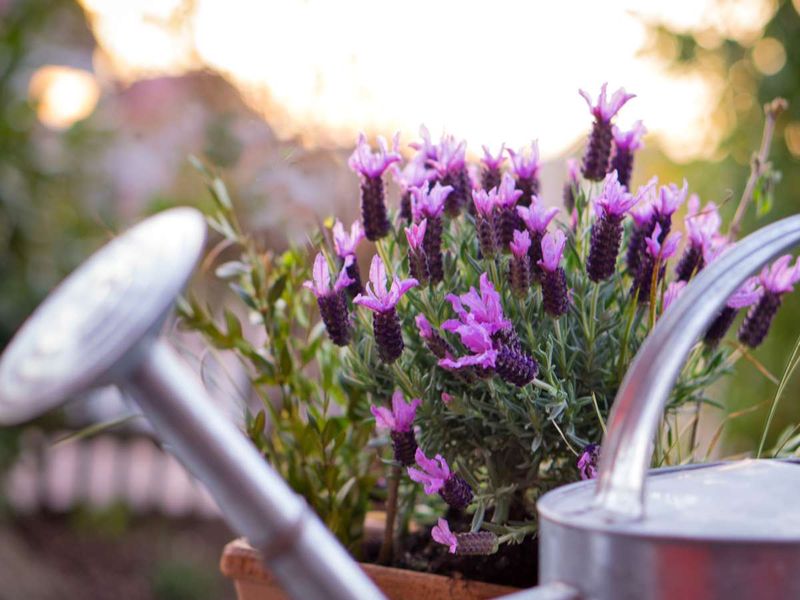
Picture a camel heading into the desert. Lavender is built a lot like that, ready to go long stretches with very little water, and fall is when it wants even less.
As the days cool, the plant slows down and gets ready to rest. Its roots stop drinking the way they did in July, so any extra water just sits in the soil.
Wet, cold soil is exactly where root rot gets started.
For lavender in the ground, let the soil dry out fully between drinks. In many US yards, fall rain alone is plenty, so you may not need the hose at all.
For potted lavender, poke a finger into the soil and only water when the top inch feels dry.
A quick tip: water in the morning, not the evening. That gives the soil surface a chance to dry before the cold night arrives.
2. Prune Lightly, and Only the Green
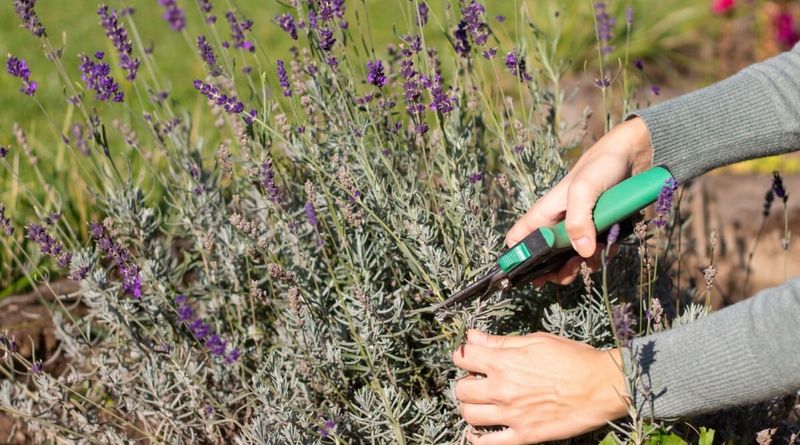
Sharp pruners and a little restraint are all you need here. Light trimming in early fall helps your lavender stay tidy and compact, but going too far can leave it open to winter damage.
Start by snipping off old flower stems. Then shape the plant gently, taking off no more than about one third of the soft green growth.
Stay out of the brown, woody base, because old wood often will not sprout new growth again.
Timing matters too. If it is late October and frost is just around the corner where you live, put the pruners away.
Fresh cuts made right before a freeze can get hurt, and many lavender growers prefer to wait until late February or March in that case.
Fun fact: lavender is in the mint family, the same group as rosemary and sage, which is why it hates soggy feet just as much as they do.
3. Mulch With Gravel, Not Bark
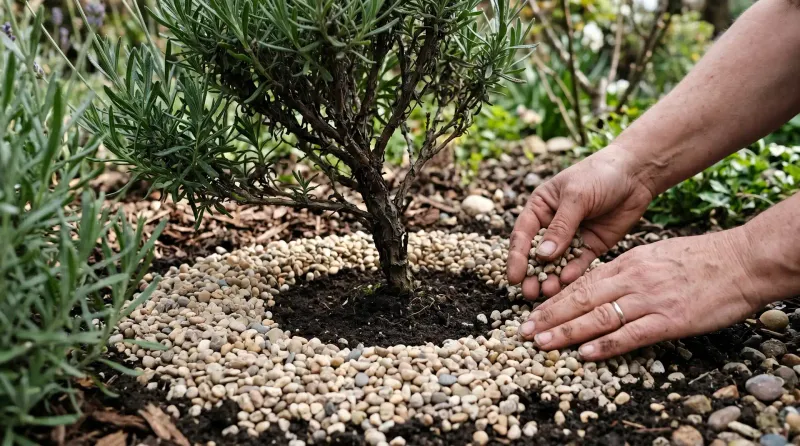
Gravel might seem like an odd blanket for a plant. For lavender, though, it is close to perfect.
In colder parts of the country, a light layer of pea gravel, small stones, or coarse sand around the base helps keep roots a bit warmer. Unlike bark, it lets water drain right through instead of holding it near the crown.
Stones also bounce sunlight back up, which lavender loves.
Keep the layer thin, about an inch is enough. Leave a little gap so the stones are not packed tight against the stems.
If you live where winters are mild, you can often skip mulch completely.
4. Block Harsh Winter Winds
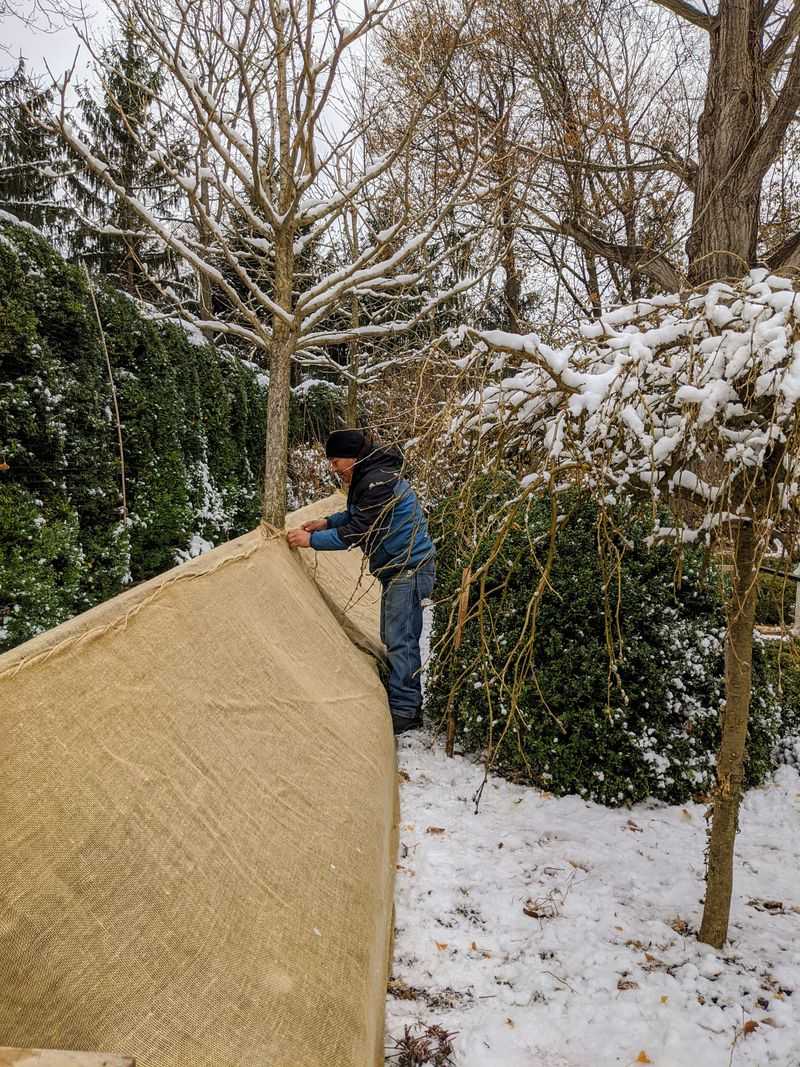
Ever stood outside on a January day when the wind cuts right through your coat? Lavender feels something similar.
Cold, dry gusts can pull moisture from the leaves and leave them brown and crispy by spring.
If your plants sit in an open, exposed spot, a simple windbreak can help. Push a few stakes into the ground on the windy side and staple burlap between them.
Keep the screen a few inches away from the plant so air can still move around it.
The goal is to soften the wind, not wrap the plant up. Lavender still needs light and fresh air all winter.
Plants tucked near a fence, wall, or hedge often need no extra help at all.
5. Bring Tender Potted Lavender Inside
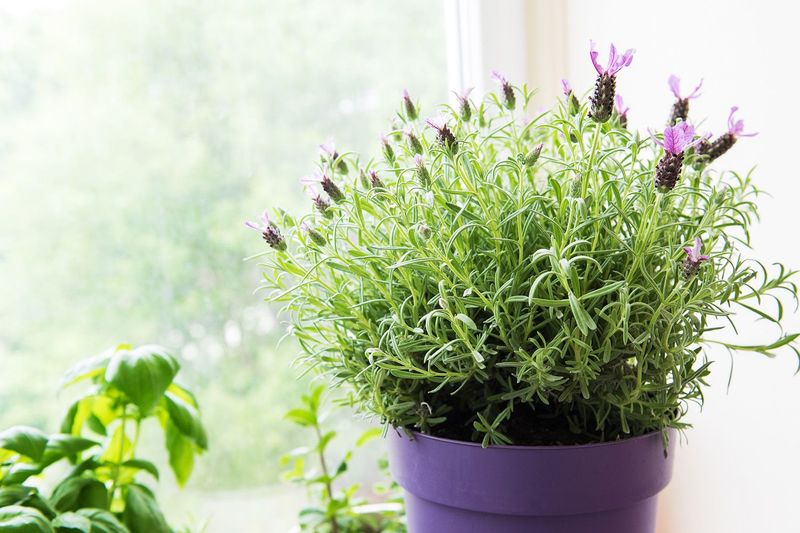
French and Spanish lavender are the sun-lovers of the family. They are gorgeous, but most of them cannot handle a hard freeze the way English lavender can.
If yours are in pots, move them before your first hard frost. Pick a spot that is bright, cool, and safe from freezing, like an unheated sunroom, a chilly bright window, or an attached garage with good light.
A warm, stuffy living room is usually too much for them.
Set the pot on pot feet or a few small blocks so it never sits in a puddle. Water less indoors, letting the top of the soil dry before you water again.
A little airflow from a cracked door or small fan helps keep mold away.
Hardy English types in pots can often stay outside, but tucking the container against the house gives the roots extra protection.
6. Mistake One: Soggy Soil and Overwatering
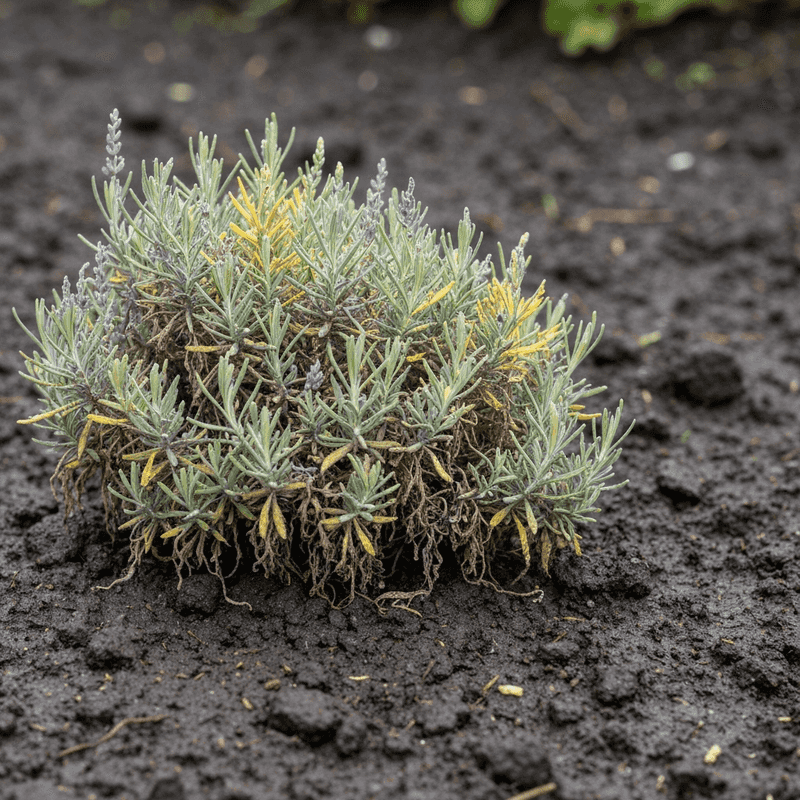
Here is the hard truth: cold rarely kills lavender. Wet roots do.
More lavender dies in winter from soggy soil than from freezing temperatures.
When water collects around the base, the roots cannot breathe. Soon root rot and crown rot can set in.
Watch for yellow leaves, drooping stems, soil that stays mushy, or a sour, rotten smell near the base.
The fix starts with less water, but drainage matters just as much. If water puddles where your lavender grows, you may need to move it to a raised bed, a slope, or a mound of gritty soil next spring.
For pots, make sure the drainage hole is open and never leave a saucer full of water underneath.
Catch the signs early and a plant may still pull through.
7. Mistake Two: Smothering It With Mulch or Covers
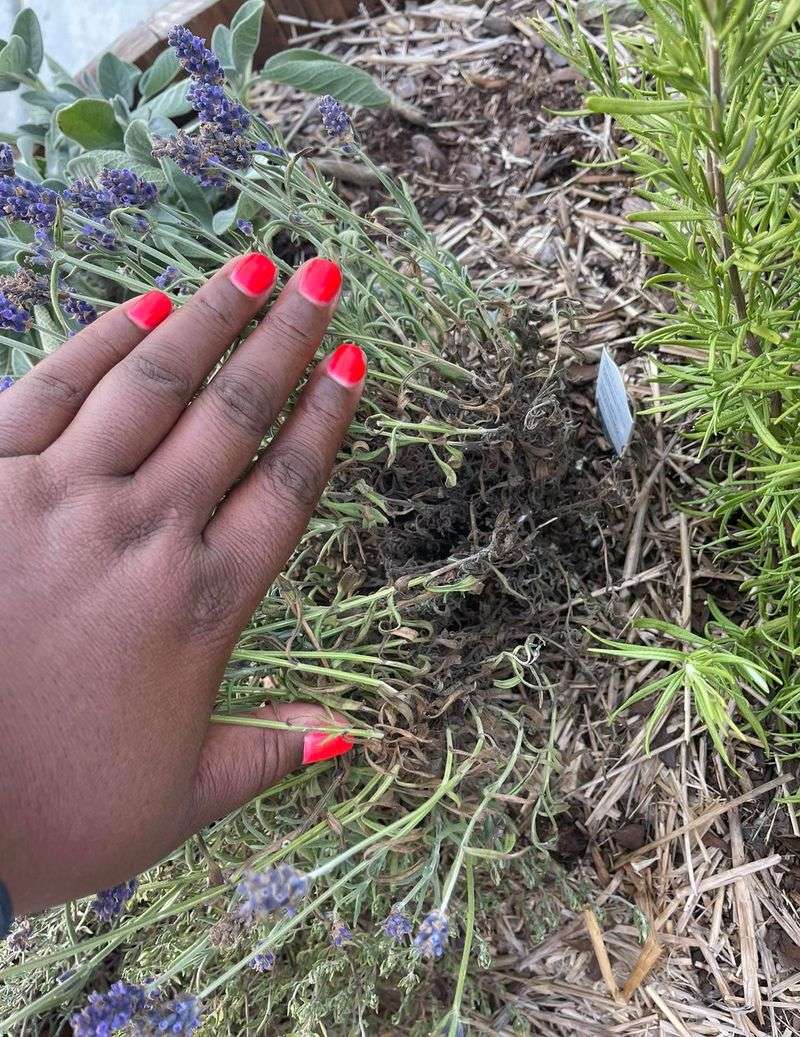
Kind intentions cause this one. You want to keep your lavender cozy, so you pile on wood chips, compost, or a heap of fallen leaves.
Sadly, those materials hold moisture right against the stems, and that trapped dampness is a fast track to crown rot. Wet leaves are especially sneaky, since they mat down and stay soggy for weeks.
Tight plastic covers cause a similar problem. They trap condensation, so the plant basically sweats underneath.
If you must cover lavender during a sudden cold snap, use breathable frost cloth and remove it once temps climb again. Rake leaves away from the base, keep organic mulch a few inches back, and let your lavender breathe.
Come spring, those silvery stems will thank you with fresh growth.