
Your North Carolina Geraniums Come Back Next Spring Without Growing All Winter, And Here’s How
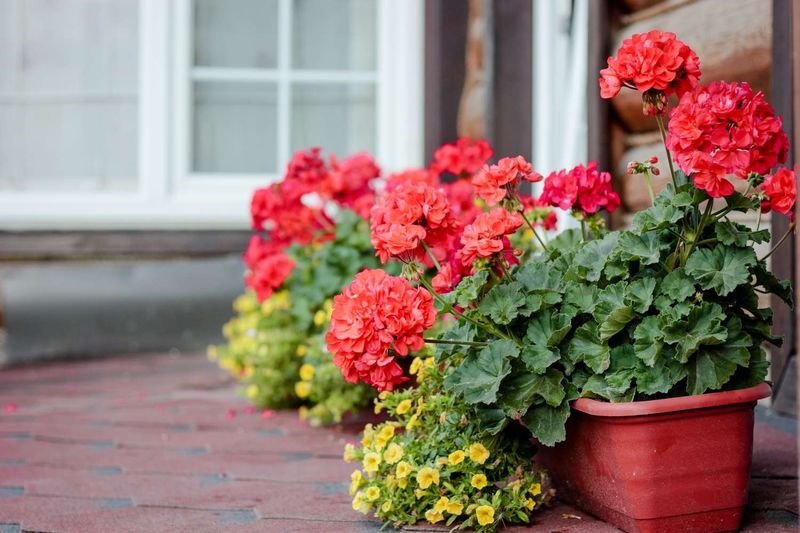
Those big, colorful geraniums on your porch or patio usually die at the first hard frost. Many North Carolina gardeners buy new ones every spring, but there is a lower-effort way to try saving them.
You pull the plants, store them bare-root in a cool, dark spot, and wake them up in spring. It does not work every time, but it can save you money and a lot of indoor babysitting.
First, Make Sure Your “Geranium” Is a Pelargonium
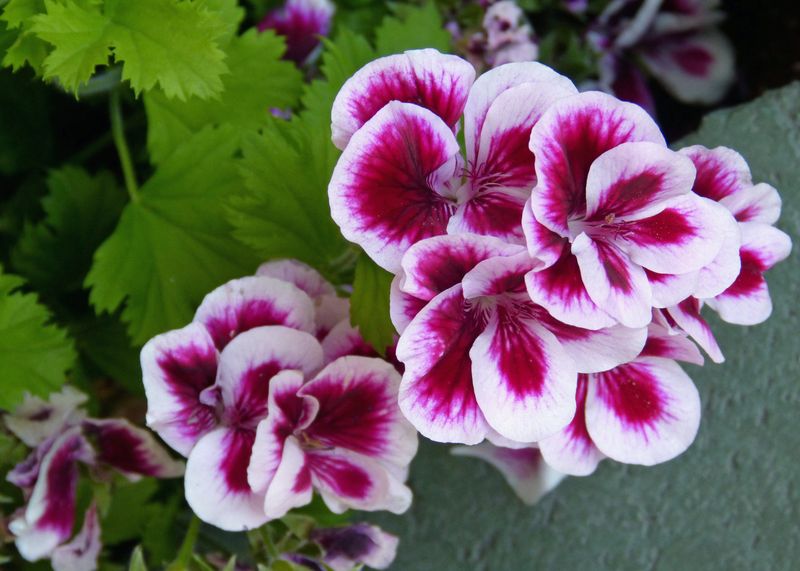
Garden stores use the word geranium for two different groups of plants. The familiar bedding or container plant with round, scalloped leaves and big flower clusters is botanically a Pelargonium.
According to NC State Extension, these plants can be overwintered indoors or in a cool greenhouse, which tells you they are not built to handle a North Carolina freeze outdoors.
True Geraniums, often called hardy geraniums or cranesbills, are a different genus. Many of them are perennials that stay in the ground through winter, as Iowa State Extension explains when it separates them from the annual garden type.
Digging up a hardy cranesbill and hanging it in a garage would be a mistake, because it does not need that treatment.
Check the plant tag if you still have it. Look for the name Pelargonium or phrases like zonal, ivy, or regal geranium.
If the label is long gone, think about how the plant has behaved. A plant you bought as a summer bloomer for pots and that has never come back on its own is almost certainly the tender kind.
Only the tender Pelargoniums are covered in the steps that follow. If you are unsure which one you own, leave it in the ground and see whether it returns, or take a photo to your local Extension office for help.
Use Local Frost Conditions and Choose a Healthy Plant
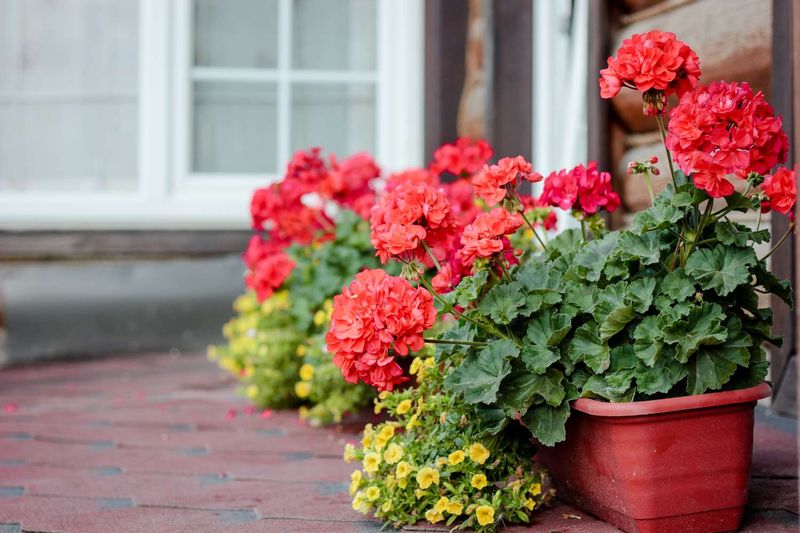
Timing matters here. You want to lift tender Pelargoniums before frost threatens, not after cold has already damaged them, because the first hard frost kills outdoor bedding geraniums.
A plant that has been bitten by frost is a poor candidate for storage.
North Carolina is too varied for a single calendar date. A mountain yard, a Piedmont suburb, and a spot on the coast can see frost weeks apart, and elevation changes things even within a county.
NC State explains that frost probabilities come from historical records, so they describe past patterns rather than predict this fall. Watch your local forecast and plan to dig plants a few days before a cold night is expected.
Before you lift anything, give each plant a close look. Pick only healthy ones.
Illinois Extension and Purdue Extension both stress starting with sound plants.
Check stems and leaf undersides for pests, and look for suspicious spots, discoloration, wilting, shriveling, or soft, rotting tissue. If a plant shows these signs, discard it.
Bringing a problem into a garage or house can spread it to plants you care about.
Lift, Clean, and Store the Plant Bare-Root
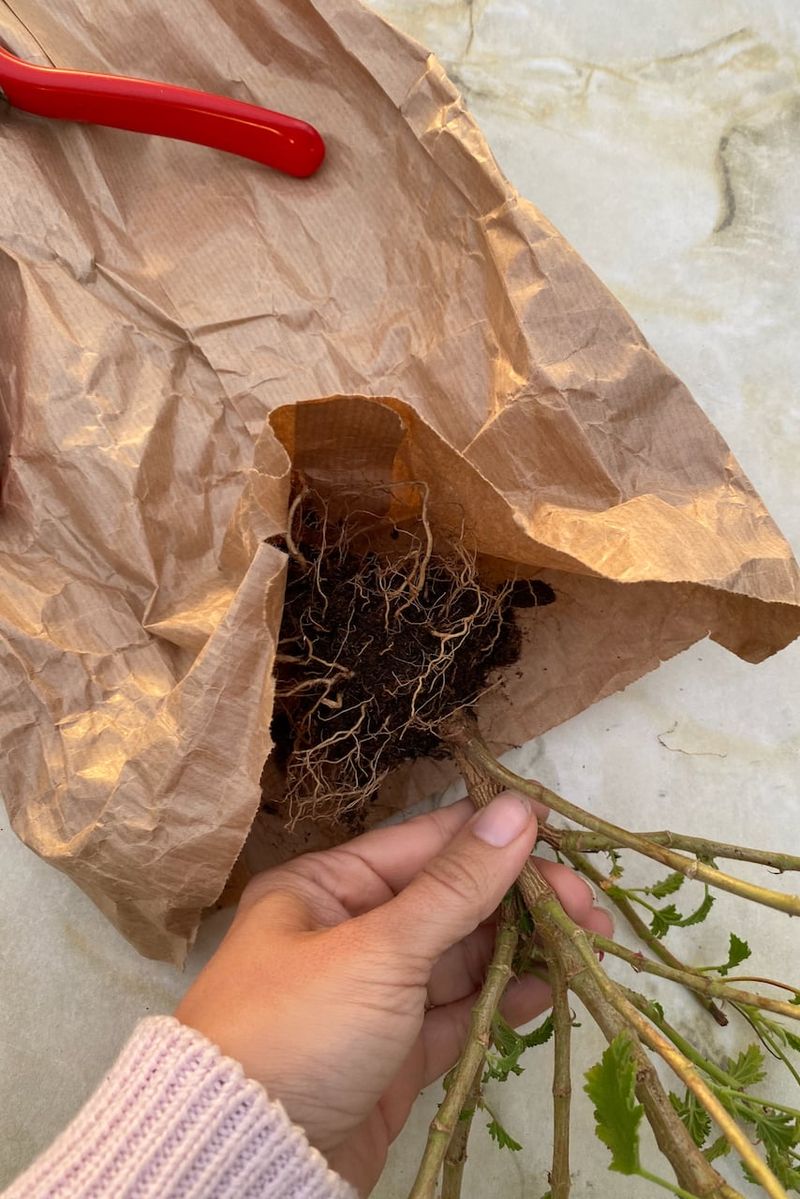
Once your forecast says cold is coming, dig up the healthy plants. Loosen the soil around each one, lift it out, and shake as much soil from the roots as you can.
The goal is a bare root system with the stems still attached.
From there, Iowa State Extension describes storing the plants in a paper bag or hanging them upside down. Pick a spot that is dark, cool, dry, and frost-free.
A basement corner, an unheated but protected room, or an insulated garage that stays above freezing can all work, depending on your home.
Temperature advice varies a little. Iowa State gives a range of about 45 to 55 degrees Fahrenheit, while Illinois Extension points to 45 to 50 degrees.
A thermometer in your storage spot will tell you whether it fits.
Aim for dormant or nearly dormant plants. Do not expect perfection.
Some leaves may drop, stem tips may die back, and a few plants may not make it. Label each bag if you have several varieties so you know what you are waking up in spring.
Keep the Plant Dry, but Do Not Treat Every Method Alike

Moisture is where published advice splits, so it helps to know which approach you are following. For the cool, dry bare-root method, NC State Extension says to keep Pelargoniums very dry and water sparingly only if they show wilting.
Iowa State also describes a cool, dry location for its bare-root plants.
Purdue Extension describes a low-humidity hanging method, which fits the same dry idea. UGA Cooperative Extension takes a different route, describing a cool, moist basement and occasional soaking of the roots.
Those are separate systems, so pick one rather than blending them.
Your storage space and the plant itself decide what makes sense. A damp basement is not the same as a dry closet.
If stems turn shriveled and rubbery, that may be a sign of too little moisture, while mold or mushy tissue points to too much.
Plan on a quick check every few weeks. Bare-root storage is lower-maintenance, but it is not a set-it-and-forget-it job.
Handle the plants gently, and toss any that have gone soft or moldy.
Prune and Pot the Plant to Restart Growth in Spring
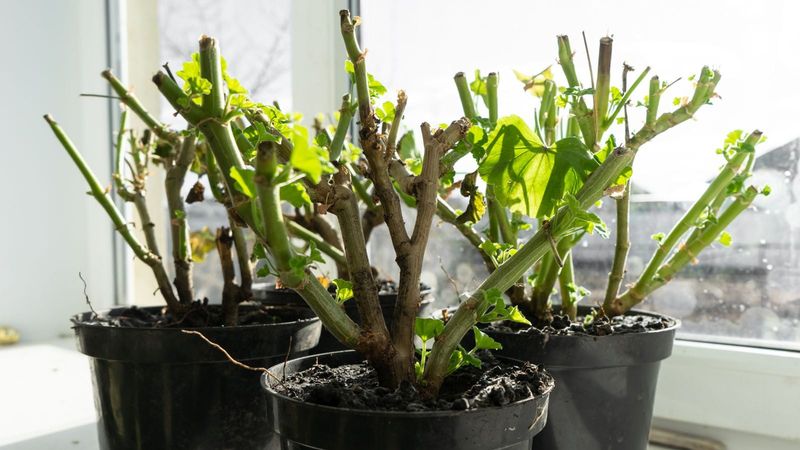
Late winter is when the waking-up work begins. Spring pruning and potting are part of this method, not optional extras.
According to Iowa State Extension, you pot the stored plants and start them growing again in spring.
Take each plant out of storage and trim away dead material, cutting back to firm, green stem tissue. Illinois Extension suggests doing this around March.
If a stem is brown, dry, or mushy all the way through, there may be nothing to save.
Plant the survivors in pots with fresh potting mix and water them well. Set them in a sunny window or under grow lights so new growth stays sturdy instead of leggy.
Expect a slow start, and give each plant a few weeks before you decide it is gone.
Outdoor timing depends on your location. Frost risk differs across the state and from year to year, and NC State notes that frost probabilities reflect past records.
Wait until your local forecast looks safe, and harden plants off gradually before moving them outside.
Without Suitable Storage, Try a Potted Plant or Cuttings
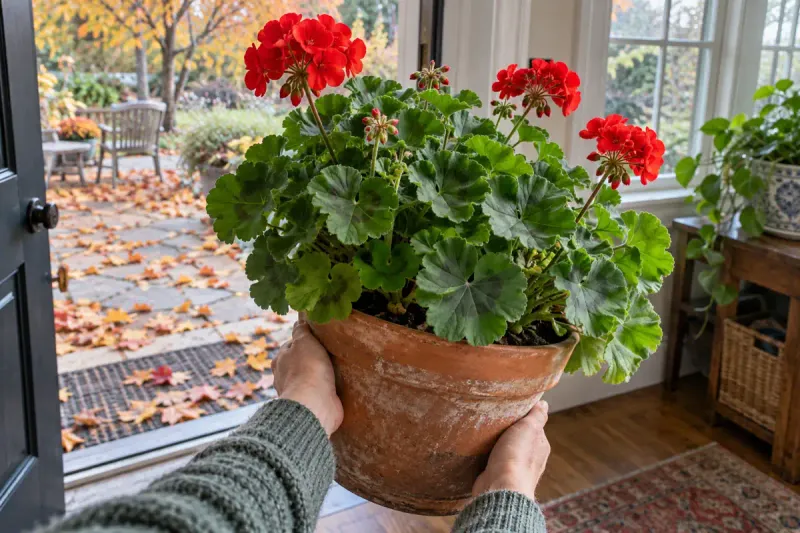
Not every home has a cool, dark, frost-free corner. If yours does not, or if you want a backup, NC State Extension lists overwintering indoors and taking cuttings as options.
Both are secondary to the bare-root method here, but they are handy fallback plans.
A potted plant is the more hands-on choice. Dig it up, pot it, and bring it inside to a bright spot.
It stays alive and active, so it needs light and some watering, which makes it closer to a houseplant than a stored dormant plant.
Cuttings take up less room. Illinois Extension covers this approach as another way to carry a favorite variety through the cold months.
Cuttings need bright light and moisture that you monitor, since they should be damp enough to root but not soggy enough to rot.
Choose healthy shoots for cuttings, just as you would choose healthy whole plants. A pot of cuttings on a windowsill can also act as insurance if your bare-root plants do not wake up in spring.
Treat Bare-Root Storage as a Lower-Care Option, Not a Guarantee
The routine is short. Confirm you have a tender Pelargonium, lift a healthy plant before local frost threatens, store it somewhere cool, dark, and frost-free, then prune and pot it in spring, as Iowa State Extension and Illinois Extension outline.
Expect less winter work than a plant growing on a windowsill, but not zero. Plan an occasional check, and remember that NC State advises sparing water only if wilting appears.
Some plants will not make it.
Even a few survivors are a nice reward for an hour of fall effort.