
Your Poinsettia Drops Its Leaves Within A Week Because Of The Ride Home, Not Your Watering
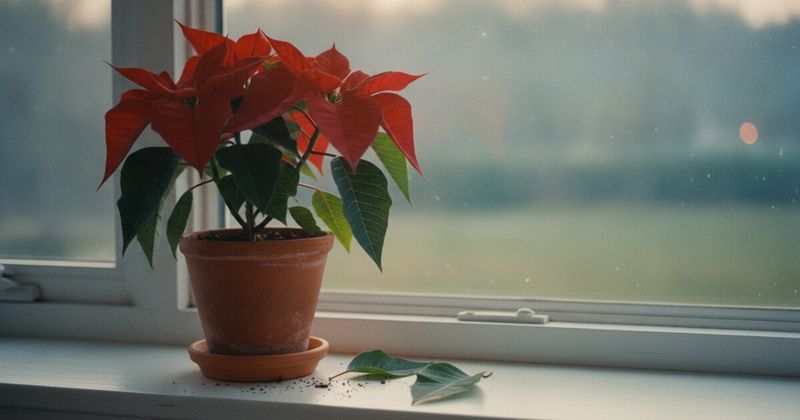
A poinsettia that looks perfect in the store can start shedding leaves soon after it comes home, and that sight makes many gardeners worry they did something wrong. Most people blame the watering can first.
But the cold trip from the store to your living room is an overlooked suspect that deserves a look too. Here is how to sort out the possible causes and give your plant a calmer start.
Cold exposure on the ride home can damage a poinsettia
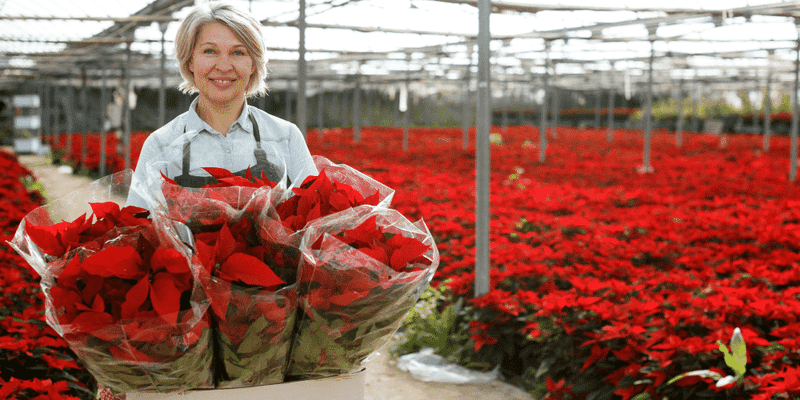
Picture the usual routine: you grab a poinsettia from a store, walk across a cold parking lot, and set it in the car. That short trip may seem harmless, but poinsettias come from warm climates and do not like the cold.
Oklahoma State Extension and NC State Extension both warn that exposure to temperatures below 50°F can cause chilling injury and leaf loss.
That 50°F figure works as a warning line, not a promise of damage. A few quick steps in cold air will not necessarily harm every plant, and the guidance does not set a firm time limit for how long is too long.
Still, it makes sense to play it safe when the weather is chilly.
Ask the store to put a plastic or paper sleeve around your plant before you carry it outside. If the store cannot, bring a large bag or box and cover it yourself.
Then keep the poinsettia in the warm part of the vehicle, such as the back seat with the heater running, and never in the trunk.
Here is the catch. Fallen leaves or bracts, the showy colored parts, do not prove the trip was the problem.
A cold ride is one possible cause, and it is easy to overlook. Other stresses can produce the same look, and the next sections walk through them.
Treat the ride home as a clue to consider, not a verdict on your plant.
Choose a bright, draft-free spot indoors
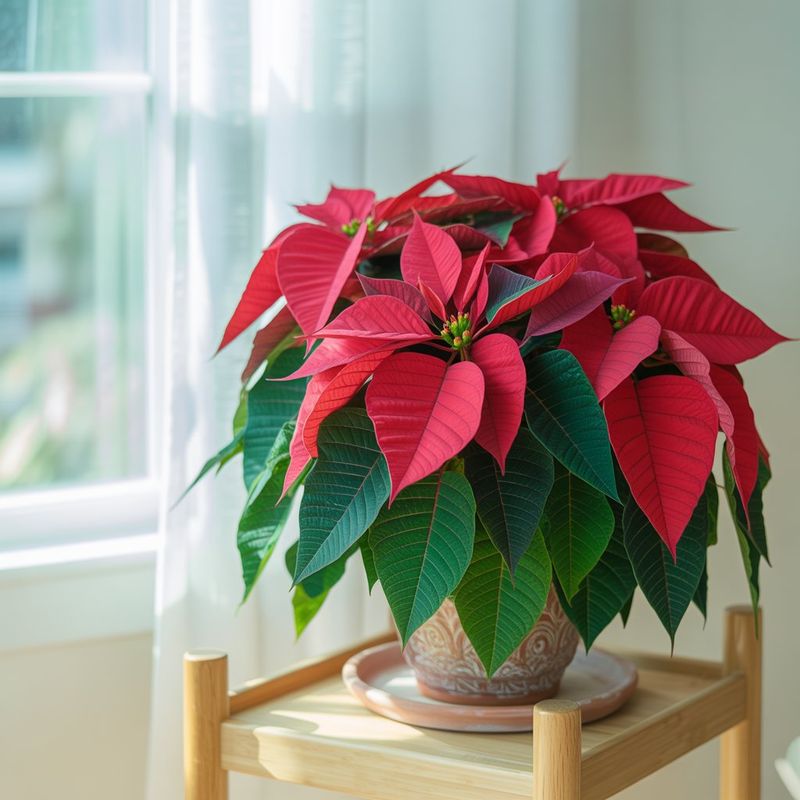
Once your poinsettia is inside, where you set it matters a lot. Give it bright light, ideally near a sunny window with some filtering, since dim corners can leave the plant weak.
Just keep the leaves from touching cold window glass, which can be much chillier than the room itself.
Drafts are the sneaky part. Watch for spots near exterior doors, leaky windows, and entryways where cold air slips in every time someone walks through.
Hot air is no friend either, so steer clear of heating vents, fireplaces, and space heaters.
As for temperature, ordinary warm indoor conditions work best. University of Minnesota Extension and University of Delaware Cooperative Extension point toward a comfortable room, and many recommendations land at roughly 60 to 70°F.
Those numbers vary a bit from source to source, so treat them as a rough range rather than a magic setting.
On the cold side, sources including Oklahoma State and NC State caution against temperatures below about 50 to 55°F. A hallway or porch-side room that dips that low at night is worth skipping.
A simple test helps: stand where the plant will sit for a minute. If you feel a breeze or a blast of warm air, pick another spot.
A steady, bright, calm corner gives the plant the best shot at holding onto its bracts, though no location can guarantee it.
Water by checking the potting mix, not the calendar
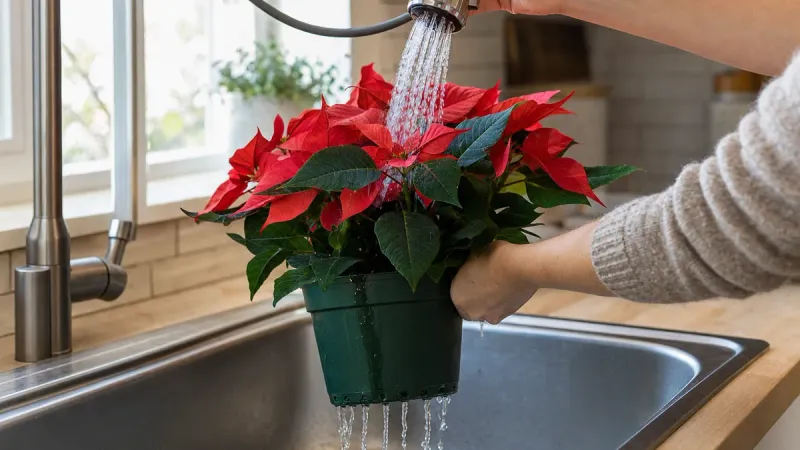
Forget the weekly watering schedule. Your poinsettia’s thirst depends on the light, the room, and the pot, so the potting mix is a better guide.
Press a finger into the surface, and water when it feels dry.
When it is time, water thoroughly until the extra runs out the bottom, then let it drain fully. This approach is backed by guidance from Mississippi State Extension, and University of Minnesota Extension gives similar advice.
Both extremes can hurt. Soil that stays soggy can stress the roots, and letting the plant dry out until it wilts can also lead to leaf loss.
So if leaves are dropping, do not reach for the watering can just because it feels like the helpful thing to do. Check the mix first, and lift the pot to feel its weight, since a heavy pot usually means moisture is still there.
Decorative foil is a common trap. It looks festive, but it can hold water around the base so the pot sits in a puddle.
Take the foil off when you water, or poke holes in the bottom so water can escape, and empty any saucer after draining. University of Delaware Cooperative Extension also stresses good drainage.
A quick routine: check, water only if dry, drain, and return the plant to its spot. Once you do this a couple of times, you will get a feel for how fast your plant uses water.
Remember that your own watering is one piece of the picture, not the whole story.
Leaf drop alone cannot identify the cause
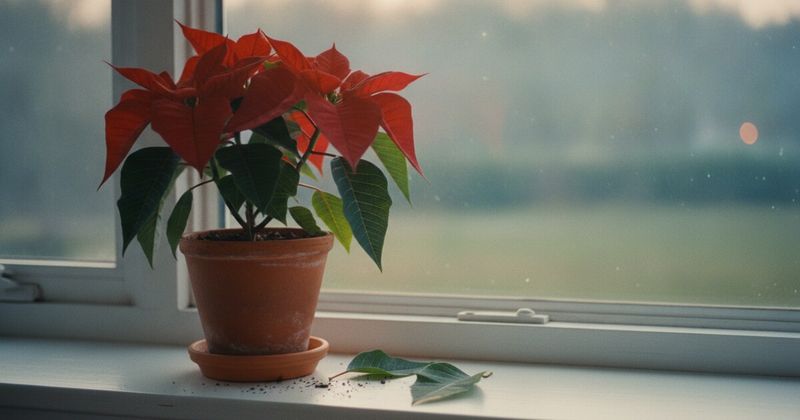
Finding leaves on the table feels like a clear sign, but a pile of fallen leaves does not tell you why they fell. Iowa State Extension lists several possible causes: overwatering, underwatering, cold drafts, heat, and rapid temperature changes.
Any of those, or a mix, could be behind what you see.
That means the cold ride home is a suspect, not a conviction. Cold injury is real, as Oklahoma State notes, but so is the damage from soggy or bone-dry soil, which Mississippi State Extension also covers.
The sources reviewed also do not say leaves drop within a week of the trip. Timing can vary, so do not assume a plant that dropped leaves right after you got home was hurt in the car.
It may have been stressed in the store, at the greenhouse, or by its spot at home.
Try playing detective by reviewing three things together. First, recall the trip: was it cold, and was the plant covered?
Second, look at its location for drafts, vents, or cold glass. Third, check the potting mix for soggy or very dry conditions and see whether water can drain.
Patterns can help. Soil that stays wet and heavy points one way, while dry, light soil and wilting points another.
If neither fits, the cause may be temperature swings. Even then, you are looking for likely contributors, not a single answer.
Steady care can help preserve the holiday display
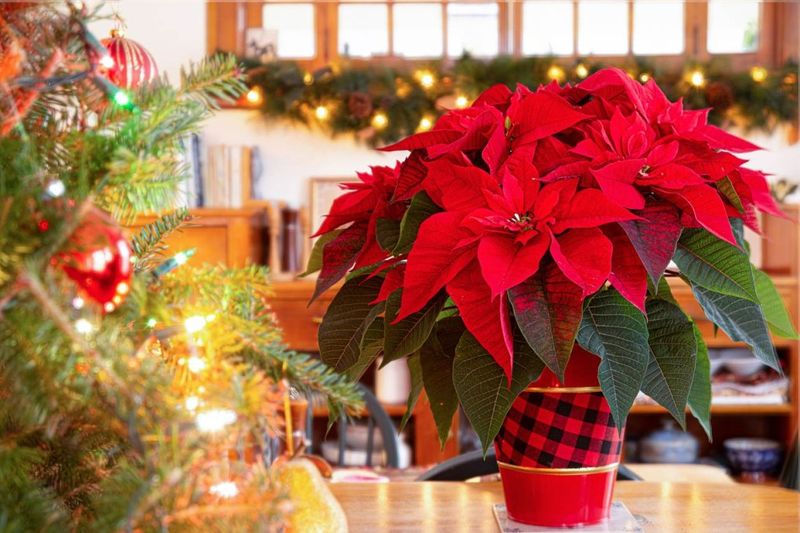
Poinsettias like steadiness. Protect the plant from cold, give it bright light, and keep moisture balanced with good drainage, and you tilt the odds toward a plant that stays handsome.
None of these steps is hard, and most cost nothing extra.
Oklahoma State Extension says a carefully chosen poinsettia can stay attractive for at least eight weeks with attentive care. That is helpful guidance, but it is not a guarantee.
Plants start with different histories, and homes differ in light, warmth, and airflow.
Think of it as stacking small advantages. A covered ride home lowers the chance of cold injury.
A bright, calm location lessens stress from drafts and heat. Checking the potting mix before you water keeps the roots from sitting in water or drying out.
Also keep in mind what you are really admiring. The bold red, white, or pink parts are bracts, which are modified leaves, while the tiny central structures are the actual flowers.
If a few green leaves drop but the bracts hold their color, the plant may still look good for the season.
Finally, stay relaxed about it. A little leaf loss does not mean you failed, and plenty of well-cared-for plants still lose some foliage.
Do what you can, check in every few days, and enjoy the color for as long as it lasts.
Check conditions before changing your routine
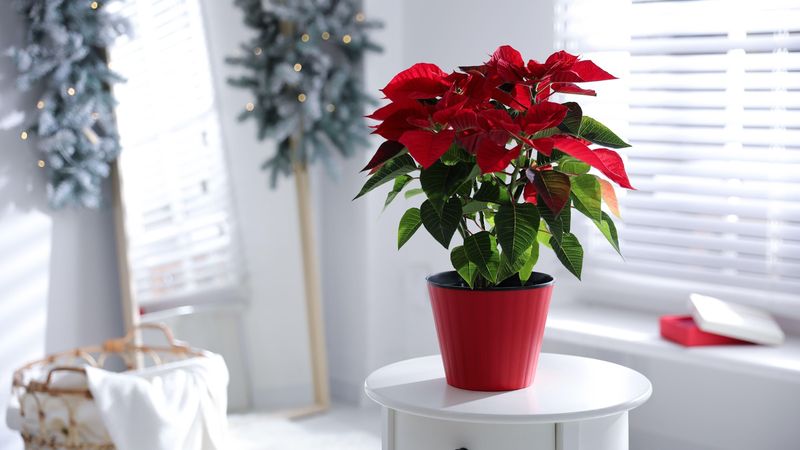
When leaves start to fall, run through a quick checklist before you change anything. First, think back on cold exposure: was the trip below 50°F, and was the plant covered?
Second, look at its location for drafts, vents, and cold glass. Third, check soil moisture and drainage before you water, as Iowa State Extension suggests when sorting out leaf loss.
Cold protection and balanced care, as Oklahoma State describes, can help. Still, no single cause is guaranteed, and no routine promises a rescue.
Sometimes the best fix is simply patience and steadiness.