
Your Saved Amaryllis Bulb This October: Keep It Growing or Restart It for a Holiday Bloom
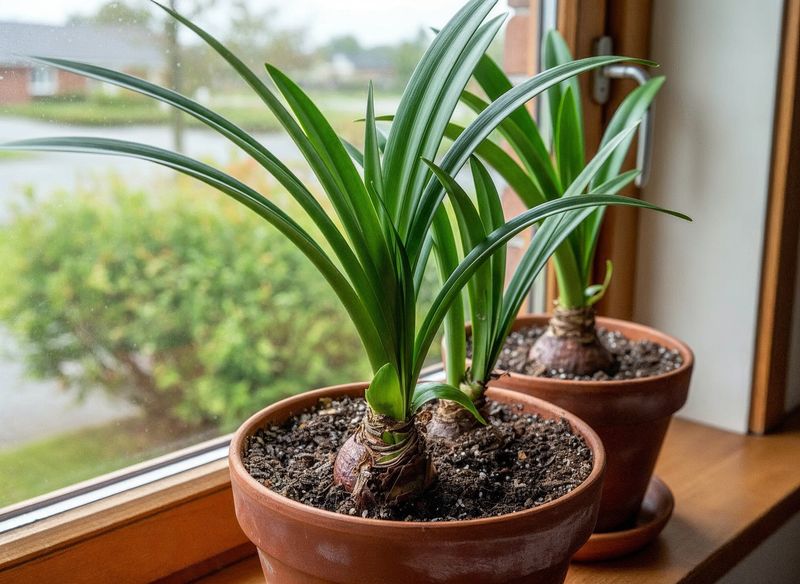
You tucked last year’s amaryllis on a shelf or a windowsill, and now the holidays are getting closer. Maybe it still has green leaves, or maybe it has been dry and quiet for months.
What your bulb looks like right now tells you more than the calendar does, and it points to an easy next step. Here is how to read your plant and pick a plan without worrying that you have done something wrong.
What stage is your bulb in this October?
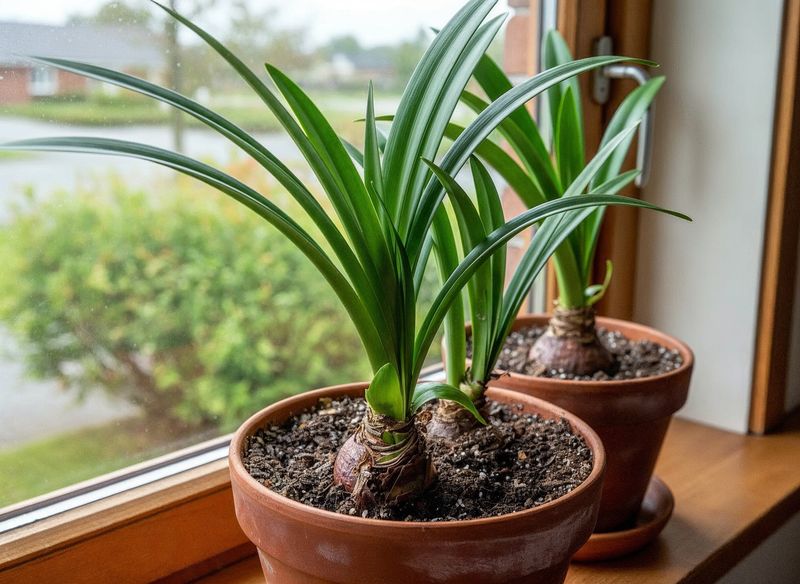
Take a look at your pot before you do anything else. If it has healthy green leaves, your bulb is still growing.
If the leaves are gone and the bulb has been sitting cool and dry for a couple of months, it may have already rested. Those are two different situations, and each one has its own next step.
Here is the candid part about timing. A leafy bulb that begins a rest period in October is unlikely to bloom reliably by Christmas.
University of Minnesota Extension guidance describes a rest of roughly 8 to 12 weeks, and the bulb then needs more time to wake up and flower. October does not decide the outcome.
The bulb’s current state does.
A bulb that has already finished its rest is in a much better spot for a holiday display. An Illinois Extension grower describes restarting a rested bulb in early to mid-October for a display around the start of December.
That is one grower’s schedule, not a rule for every bulb.
So the question to ask is simple. Is my bulb leafy and growing, or has it already rested and is ready to restart?
Once you know, the right move is easy to spot, and nothing about either stage means you have ruined your plant.
A quick check can help. Green, firm leaves mean growing.
A dry, leafless bulb that has spent weeks in a cool spot, with perhaps a tiny green tip showing, usually means rested. Either way, you still have options.
Green leaves are rebuilding the bulb
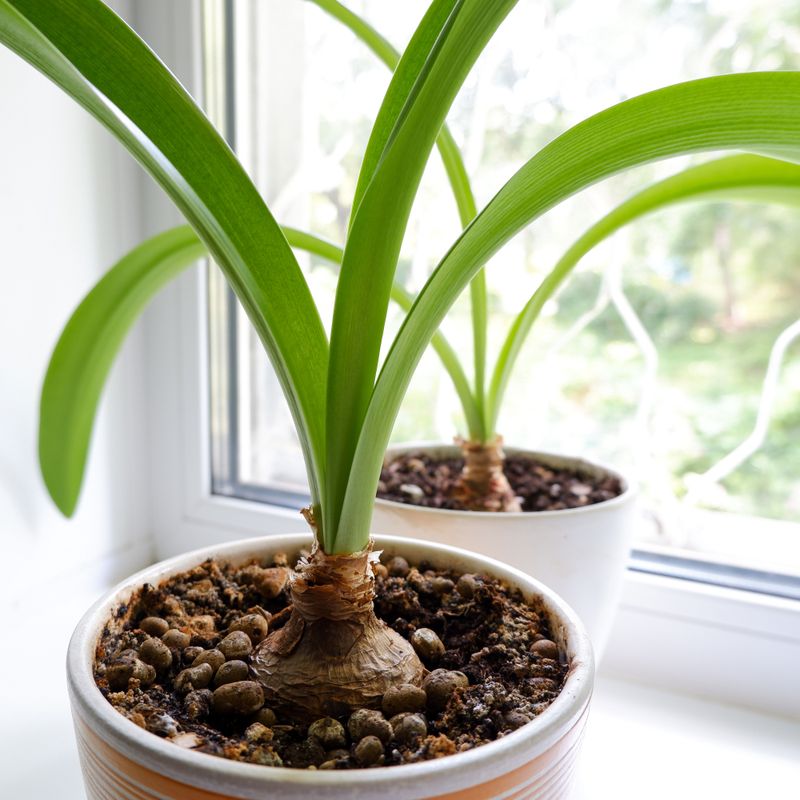
Those long green leaves are doing important work. They collect sunlight and send energy back down into the bulb, which is the fuel for next year’s flowers.
If your amaryllis is leafy right now, the best thing to do is keep it going and let the leaves do their job.
If an old flower stalk is still hanging around, cut it off near the top of the bulb, and take care not to nick the leaves. Iowa State University Extension recommends bright light, watering when the soil surface is nearly dry, and regular fertilizer while the plant is actively growing.
Skip the urge to trim leaves to tidy things up. Cutting healthy foliage takes away the bulb’s food supply, and that can cost you flowers later.
Place the pot in your sunniest window. A south-facing spot is ideal.
Turn the pot every week or so, so the leaves do not lean toward the glass.
Water, then let the top of the soil dry a bit before the next drink. Soggy soil is harder on a bulb than a slightly dry pot.
Feed with a balanced houseplant fertilizer as the label directs.
Why does this matter for blooming? A bulb that has not stored enough energy, or that has not had suitable growing conditions, may produce leaves and no flowers, as Iowa State’s amaryllis troubleshooting page explains.
A leafy plant in good light is storing up for a future bloom, even if that bloom does not land on Christmas.
If you choose a rest, let the leaves yellow first
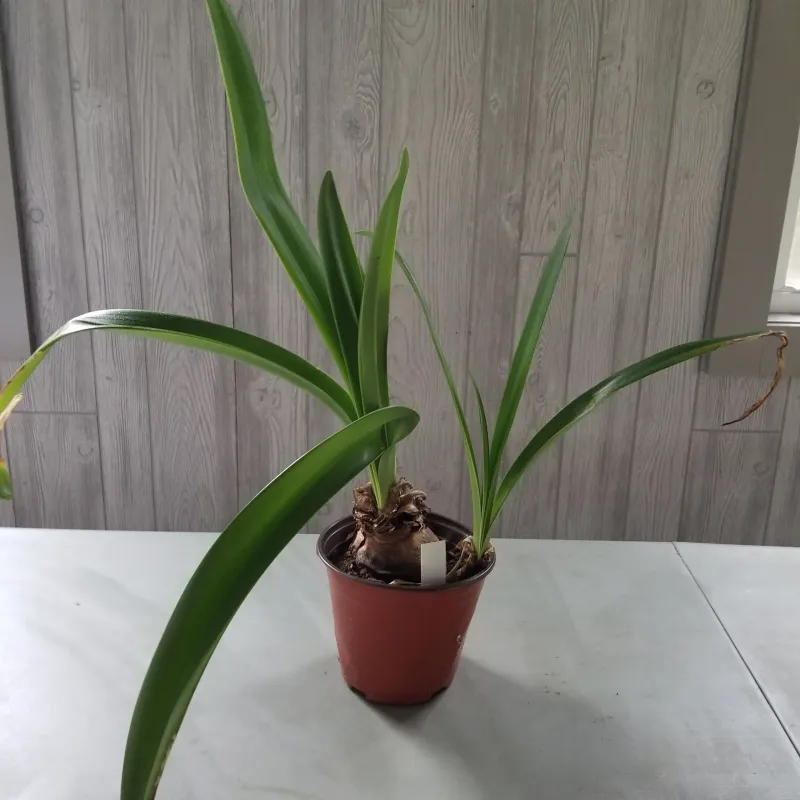
Some gardeners give their bulb a rest because it lets them steer when it flowers. It is a timing option, not a rule.
According to Illinois Extension, a bulb may rebloom if it simply keeps growing, while a rest can help control bloom timing.
If you decide to try it, start by easing off the water. Let the leaves turn yellow or brown on their own, then trim them off.
Iowa State guidance says to wait for that change rather than cutting green leaves, because the bulb is still pulling energy out of them.
Next, move the pot somewhere cool, dry, and dark, such as a basement, closet, or unheated room. The usual rest runs about 8 to 12 weeks.
Sources do not agree on one exact temperature. University of Minnesota Extension suggests around 50 to 60 degrees F, while Illinois Extension describes about 45 to 55 degrees F.
Aim for the cool range your home can reliably offer.
Peek at the bulb every week or two. If you spot a new green shoot, the rest is over.
Bring the pot into a sunny spot and start watering again.
Remember the timeline. A rest that begins in October will run into winter, so a Christmas bloom is a long shot.
If a holiday display is the goal this year, a bulb that has already rested is the better candidate, and the one in your leafy pot can simply keep growing.
A rested bulb can restart in warmth and light
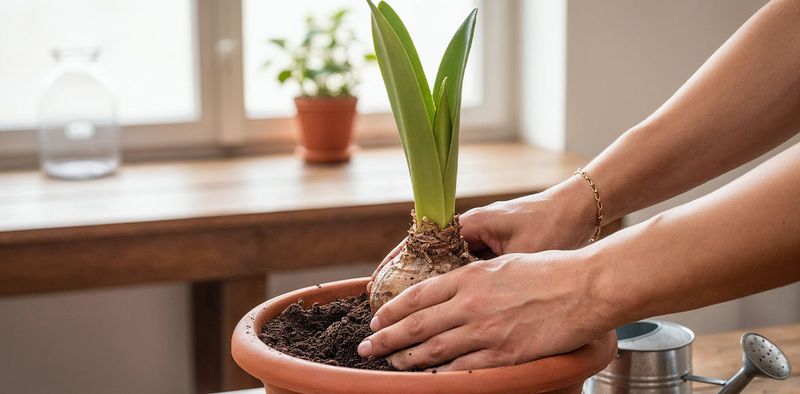
Got a bulb that has already spent its cool, dry weeks? Waking it up is the easy part.
Bring the pot into a warm, bright room and give it a good drink of water. After that, water lightly whenever the top of the soil feels dry.
A warm spot helps the bulb get moving. Many gardeners set the pot near a sunny window, and some use the top of a warm appliance area with care to keep it from overheating.
Once a green tip appears, make sure it gets plenty of light so the stalk grows sturdy instead of stretching.
Flowers usually follow in a matter of weeks. University of Minnesota Extension notes that blooms usually develop about 4 to 6 weeks after a dormant bulb is restarted, and Illinois Extension gives a similar estimate.
These are estimates, so treat them as a guide and not a promise.
That is why October can suit a holiday display. One Illinois Extension grower restarted rested bulbs in early to mid-October to have flowers around December 1.
That worked for their bulbs and their home. It is a personal schedule, not a deadline for everyone.
If your bulb woke up a little later than that, you can still enjoy it. It may simply bloom closer to New Year’s, and that is a fine reward for your patience.
Christmas bloom is a schedule, not a promise
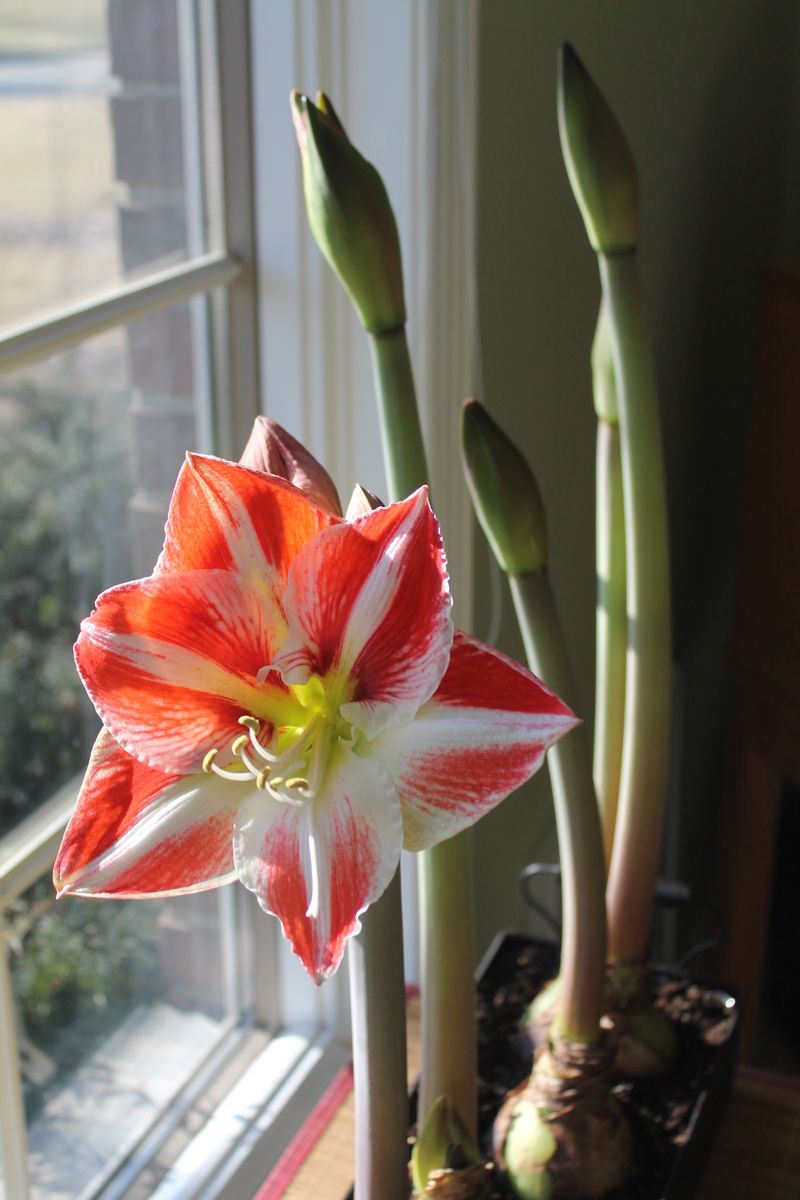
Let’s line up the numbers. When a rest is used, it runs about 8 to 12 weeks.
After the restart, flowers usually need roughly 4 to 8 weeks, with some guidance pointing to about 4 to 6 weeks. Add those together and a bulb that starts resting in October lands well past Christmas.
The Illinois holiday forcing article and University of Minnesota guidance both describe time for a rest and time for flowers. That is why an October dormancy start is a poor basis for planning a Christmas bloom.
You may have seen advice about planting amaryllis for Christmas. Iowa State’s advice to pot a new bulb in early to mid-November, for a typical 6 to 8 week wait, is written for newly purchased bulbs.
It does not show that a saved bulb starting a rest in October will flower on time.
Also keep in mind that some bulbs skip flowers for a year. If a bulb has not built enough reserves or has not had suitable growing conditions, it may send up leaves only, as Iowa State’s amaryllis overview explains.
Their troubleshooting page points to the same causes. That is a sign to keep feeding and lighting the plant, not a sign of failure.
Your practical takeaway is simple. If your bulb is leafy, keep it growing and let the leaves yellow in their own time.
If it has already rested, restart it now and enjoy the flowers whenever they arrive.
Amaryllis run on their own clock, and the best display is usually the one that is not rushed.
Keep amaryllis away from pets
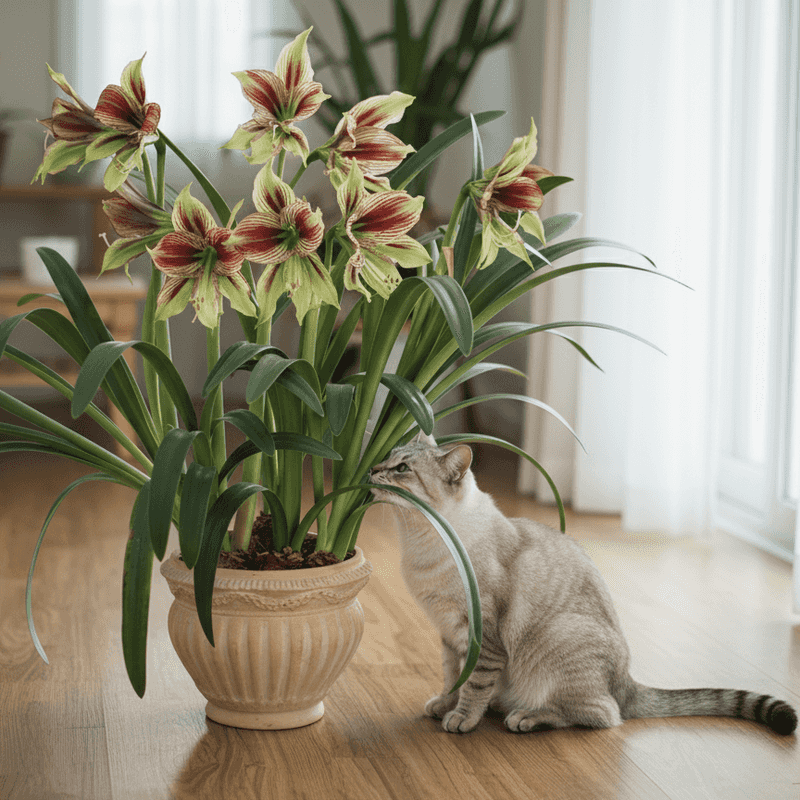
Before you set your amaryllis out for the season, think about who else lives in your home. The ASPCA lists amaryllis as toxic to dogs, cats, and horses.
Eating it can cause vomiting, diarrhea, abdominal pain, and tremors.
Keep bulbs, leaves, flowers, and any trimmings out of your pets’ reach. That includes the bulb while it rests and the leaves you remove once they yellow.
If you think a pet has eaten any part of the plant, contact your veterinarian or a poison-control service right away.