
11 Purple Flowers Hummingbirds Simply Can’t Fly Past In Your Backyard
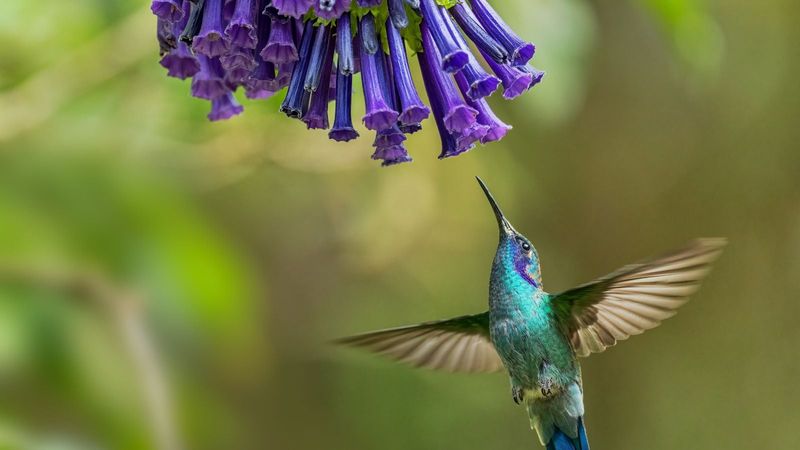
Hummingbirds have a real soft spot for the color purple, and the right blooms can turn your yard into a tiny bird highway. If you have ever watched one zip past your garden without stopping, the problem might be that you are missing the flowers they love most.
The good news is that purple nectar plants are easy to grow and many of them thrive in ordinary backyard soil. Here are eleven purple bloomers that give hummingbirds a reason to slow down and stick around.
1. Salvia (Sage)
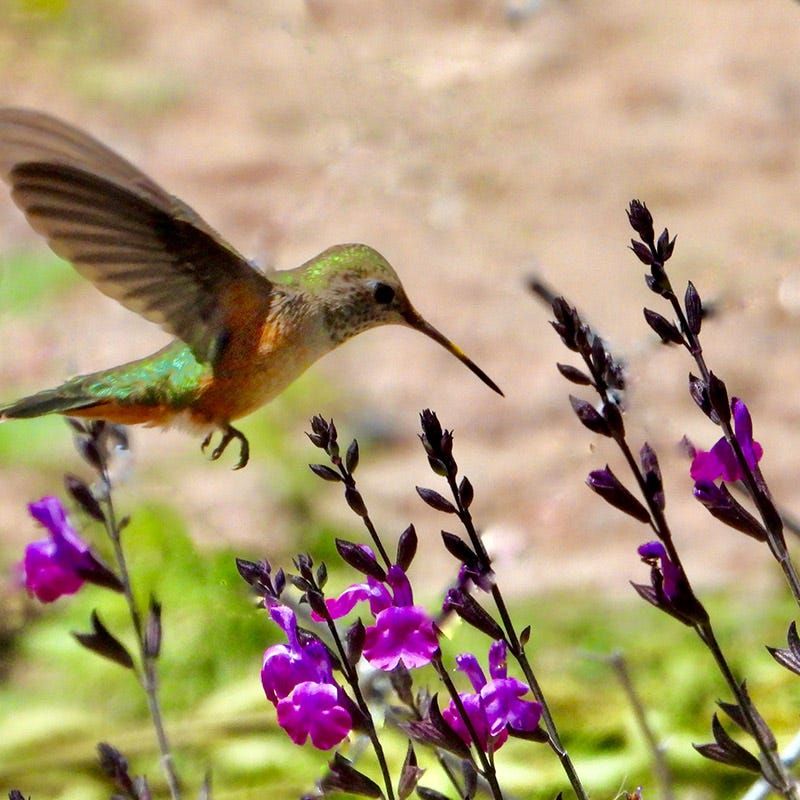
Ask any backyard birder about their favorite hummingbird plant and salvia almost always makes the list. The long, thin spikes of purple blooms hold plenty of nectar, and their tubular shape fits a hummingbird’s beak like a key in a lock.
What makes salvia so handy is its range. There are native types, tough garden hybrids, and showstoppers like ‘Rockin’ Deep Purple’ or ‘Playin’ the Blues’, so you can find one for almost any spot in your yard.
Give it full sun and soil that drains well, and it will bloom for weeks with very little fuss. If flowering slows down mid-season, snip off the spent spikes and you may get a fresh flush of color.
Salvia earns its top spot because it feeds birds longer than most and asks for so little in return.
2. Hummingbird Mint (Agastache)
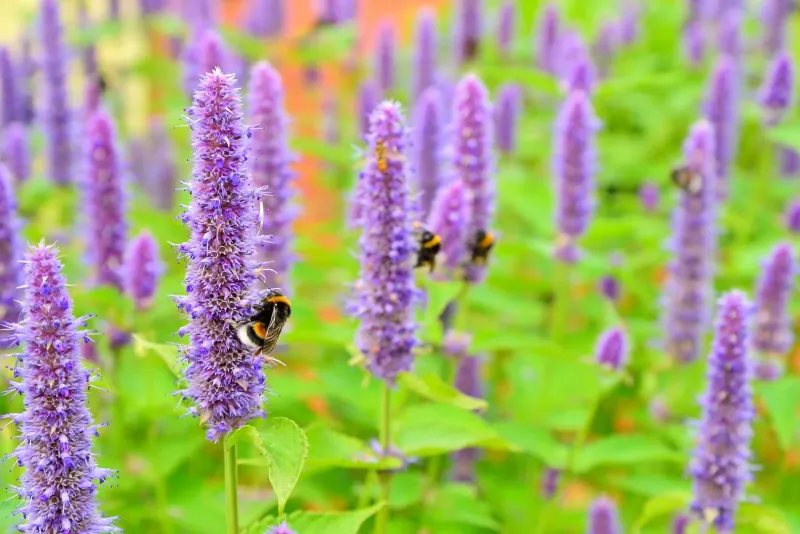
The name alone tells you what this plant is built for. Hummingbird mint sends up showy spikes packed with large purple flowers, and it keeps them coming over a long stretch of the growing season.
Bees and butterflies crowd in too, so a single clump can turn into a busy little pollinator cafe. The foliage carries a soft minty scent when you brush past it, which is a nice bonus on a warm afternoon.
Agastache loves heat and shrugs off dry spells once its roots settle in, making it a smart pick for a sunny hot spot where fussier flowers might sulk. Plant it where you can watch from a window, because the steady parade of visitors is half the fun.
Long bloom time plus drought toughness is what pushes it onto this list.
3. Bee Balm (Monarda)
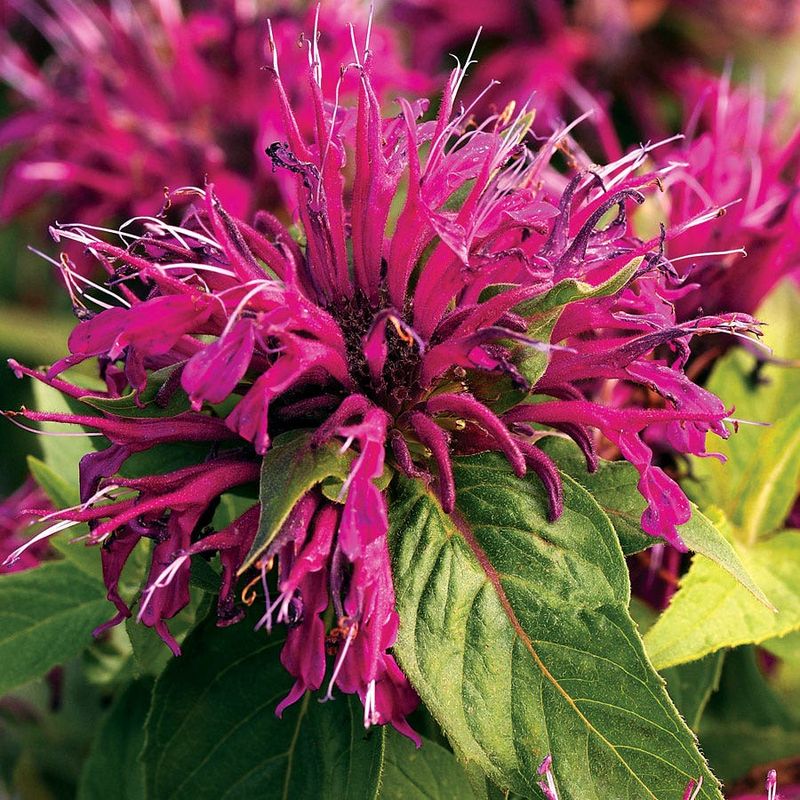
Wild and slightly shaggy, bee balm brings a burst of energy to any border. Cultivars like ‘Pardon My Purple’ and ‘Purple Rooster’ show off ragged, firework-shaped blooms that hummingbirds treat as a favorite fuel stop.
It likes moist, rich soil, so it is a great choice for a spot that stays a little damp where other flowers might struggle. Older varieties were prone to powdery mildew, but newer ones such as ‘Balmy Lilac’ have much better resistance to that chalky gray coating.
If you notice mildew creeping in, give the plants more space and airflow and water at the base rather than over the leaves. Bee balm makes the cut because it thrives in damp corners and rewards you with color that birds can spot from across the yard.
4. Beardtongue (Penstemon)
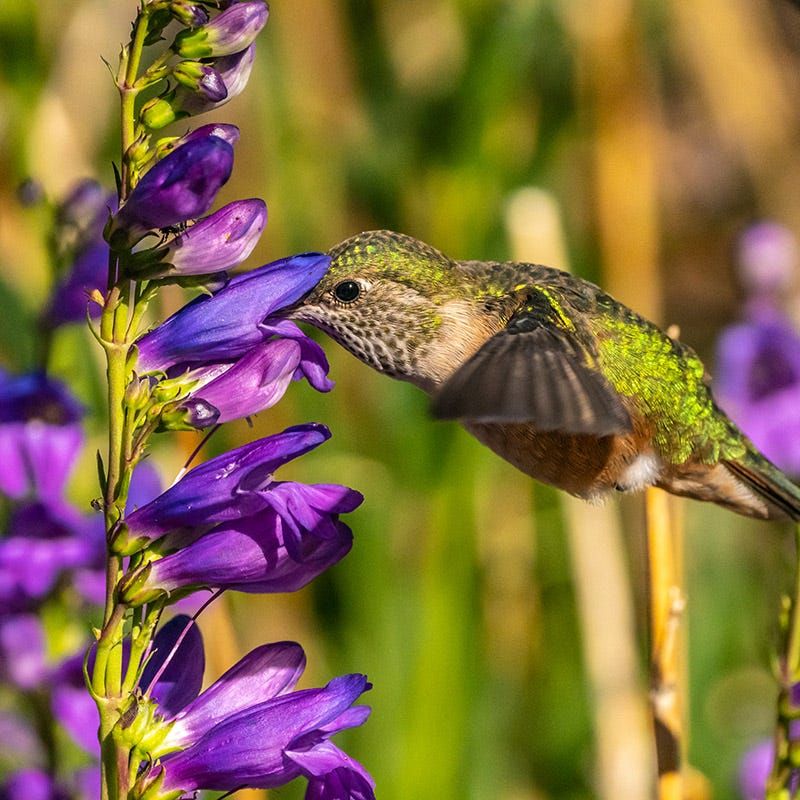
Do not let the odd name throw you off. Beardtongue delivers tall, showy spikes of large purple flowers that hummingbirds, bees, and butterflies all line up for.
Its habit is bushy and compact, which means it holds its shape without flopping over your walkway. That tidy form makes it a natural fit for perennial borders, rock gardens, and even patio containers.
Penstemon likes sun and well-drained soil, and it can handle lean conditions that would leave hungrier plants gasping. The tubular blooms are practically designed for a hummingbird’s long tongue, which is where that quirky name comes from.
Beardtongue lands on the list for being a long-blooming nectar source that stays neat and behaves itself in small spaces.
5. Columbine (Aquilegia)
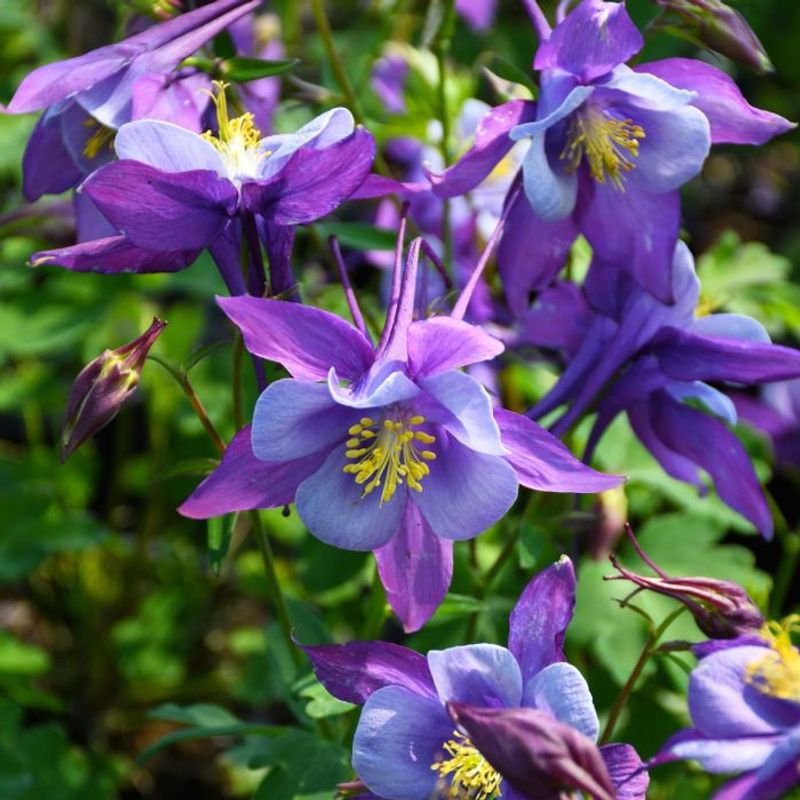
Few spring flowers look as delicate as columbine, with its nodding bell-shaped blossoms and dramatic backward spurs. Those spurs are more than decoration, because they store the nectar hummingbirds are hunting for early in the season.
Since it blooms in spring, columbine feeds birds during a lean window when many other flowers have not opened yet. That early timing makes it especially valuable to hummingbirds returning from migration.
Unlike most plants on this list, columbine actually prefers partial shade, so it fills a role sun-loving flowers cannot. The Eastern Columbine is a well-loved native variety that hummingbirds seem to adore.
Its early bloom and shade tolerance are exactly why it belongs here.
6. Petunia
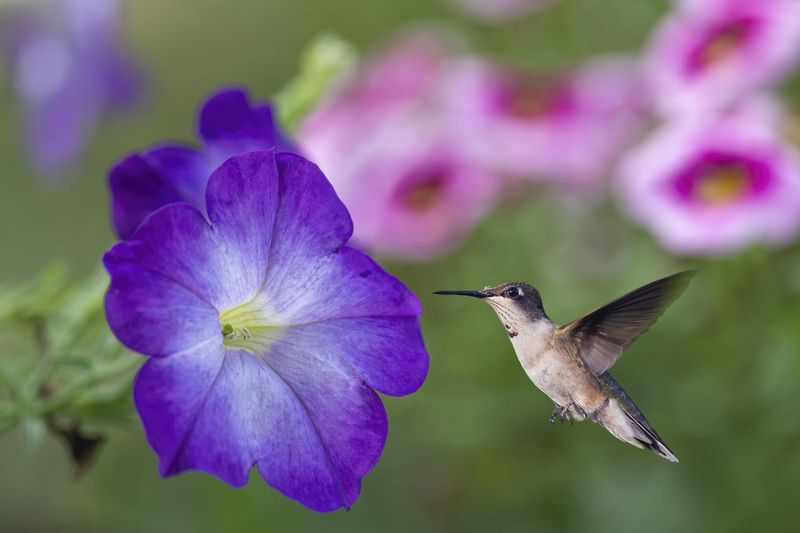
Sometimes the easiest plant is also the most rewarding, and petunias prove that point every summer. These cheerful annuals come in rich purple shades that catch a hummingbird’s eye from a distance.
They are forgiving for beginners, happy in pots, hanging baskets, or garden beds, and they bloom hard all season long. If your petunias start looking leggy or stop flowering, pinch back the stems and keep them fed, and they will bounce right back.
Because they thrive in containers, you can hang a basket of purple petunias right outside a window and enjoy a front-row seat to the action. Petunias made the list as the low-effort, high-reward option that fits any yard, even a tiny balcony.
7. Purple Coneflower (Echinacea purpurea)
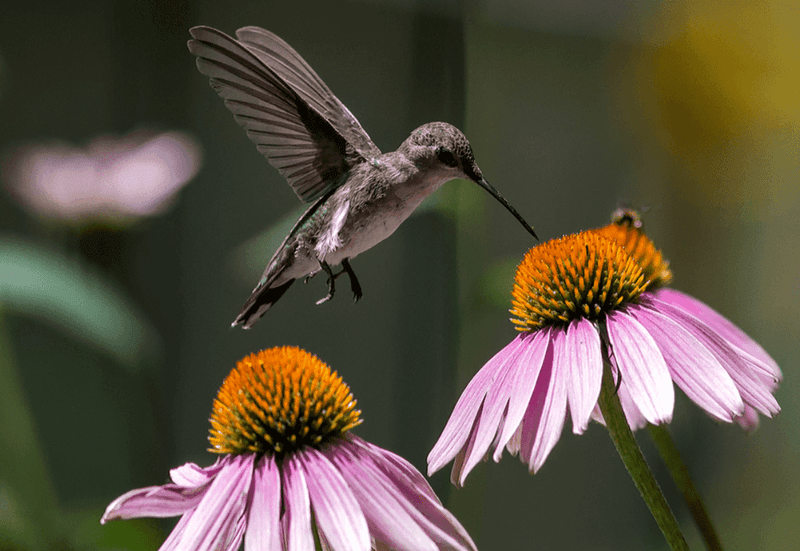
With daisy-like petals that droop around a spiky orange center, purple coneflower has a look you can spot from across the garden. Hummingbirds and a whole crowd of other pollinators treat these blooms as a reliable nectar stop through summer.
It is famously easy to grow and widely available, which makes it a smart choice if you have killed plants before and want a sure thing. Once established, it handles heat and drought like a champ.
Here is a bonus most gardeners love: leave the spent flowers standing into fall and finches will show up to eat the seeds. So one plant feeds hummingbirds early and songbirds later.
That double duty and beginner-friendly toughness earn coneflower its place on the list.
8. Blazing Star (Liatris)
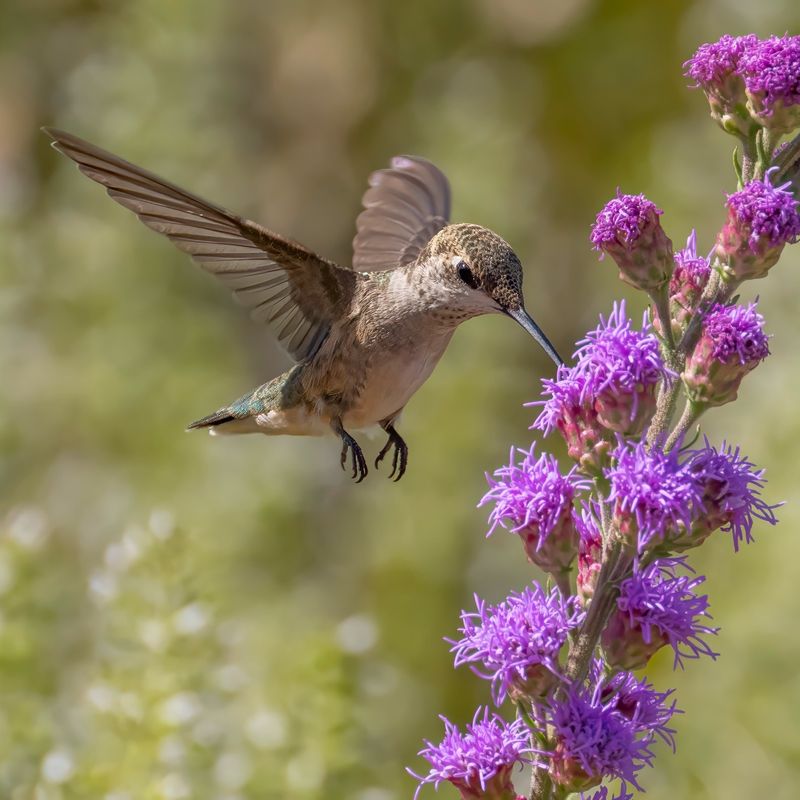
Most flower spikes bloom from the bottom up, but blazing star flips the script and opens from the top down. Those striking purple wands look almost like feathery bottle brushes, and hummingbirds find them irresistible.
Butterflies and bees join the party too, so a patch of liatris hums with activity on a sunny day. The tall, upright shape adds vertical drama to a border without taking up much ground space.
It grows from corms, tolerates poor soil, and copes well with heat and dry weather once rooted. That toughness makes it a great fit for a sunny spot you keep forgetting to water.
Blazing star stands out on this list for its unusual bloom pattern and its bold, eye-catching spikes.
9. Catmint (Nepeta)
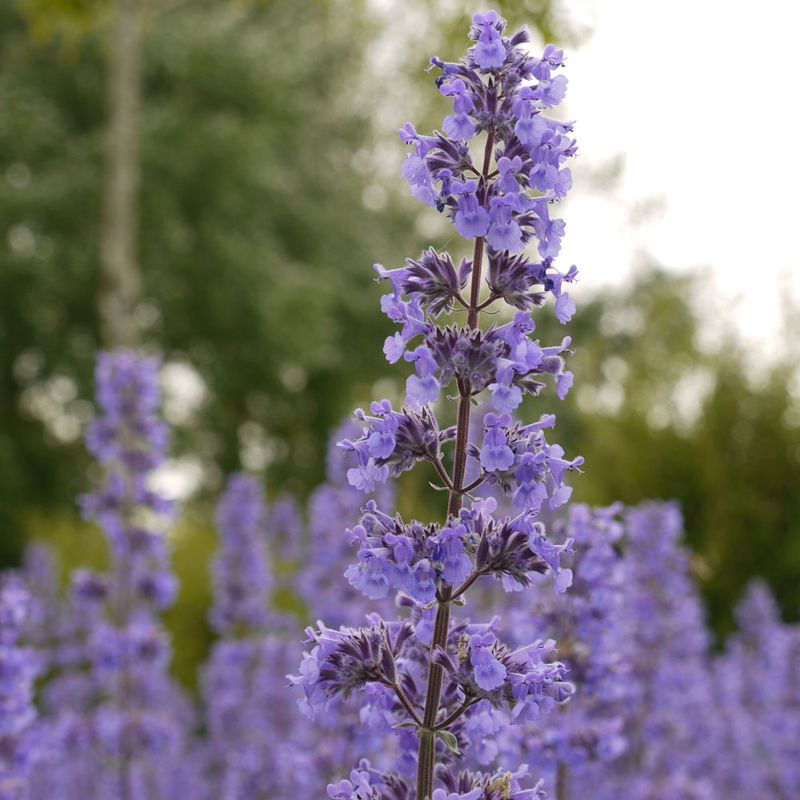
Soft, cloudlike, and covered in tiny blooms, catmint gives your garden a hazy purple-blue glow from late spring well into summer. Hummingbirds and butterflies drift through it all season, drawn by the steady supply of nectar.
It is one of the most low-maintenance plants you can grow, shrugging off heat, drought, and neglect with a shrug. If it sprawls or fades mid-summer, a quick shear back tidies it up and often triggers a second wave of flowers.
The aromatic foliage also tends to be left alone by deer and rabbits, which is a relief if wildlife likes to nibble your beds. Catmint makes the list for its marathon bloom time and its truly hands-off personality.
10. Blue Wild Indigo (Baptisia australis)
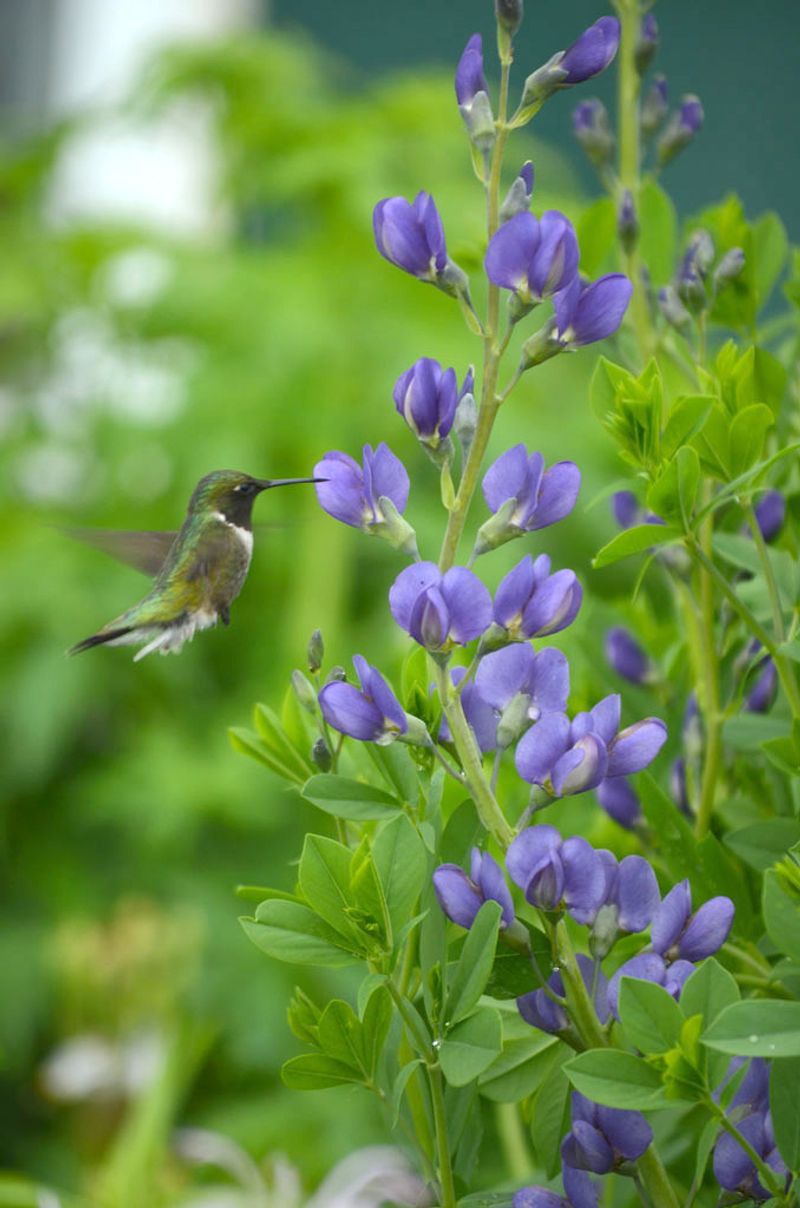
Built like a small shrub, blue wild indigo brings structure and staying power to a garden bed. It sends up neat stalks of fragrant purple flowers in late spring that carry on through summer, and hummingbirds treat it like a magnet.
Give it time, because this native perennial is a slow starter that puts down deep roots before it really takes off. Once it does, it lives for years and rarely needs dividing or fussing over.
Those deep roots also make it remarkably drought-tolerant, so an established plant handles dry spells without complaint. After the blooms fade, it forms interesting dark seed pods that rattle in the breeze.
Long-lived toughness and fragrant early color are what secure its spot here.
11. Butterfly Bush (Buddleia)
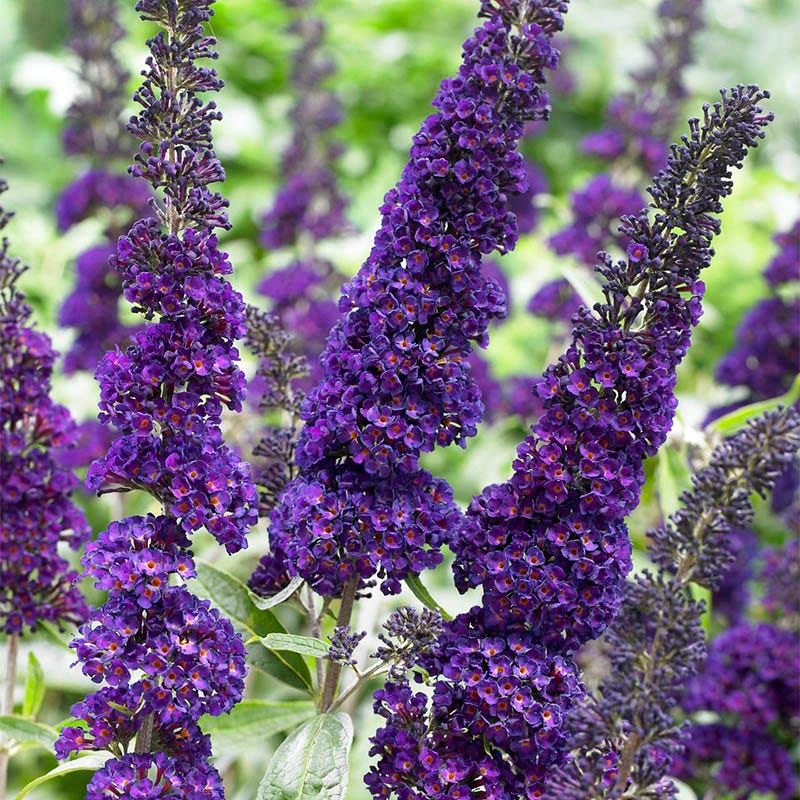
The name points to butterflies, but hummingbirds crash this party just as eagerly. Varieties like ‘Black Knight’ unfurl long, cone-shaped clusters of rich purple flowers that spill nectar for weeks on end.
A single mature bush can pull in a nonstop stream of winged visitors, turning one corner of your yard into a living show. It grows fast, blooms hard, and forgives a gardener who forgets to water now and then.
One honest note: butterfly bush can spread aggressively in some regions, so look for sterile or well-behaved cultivars and deadhead the spent blooms to keep it in check. Handled right, it is a powerhouse.
Buddleia closes out the list as the big, bold shrub that draws crowds like nothing else.