
13 Fascinating Mushrooms Popping Up In Your Yard This Fall – And Which Ones You Should Never Touch
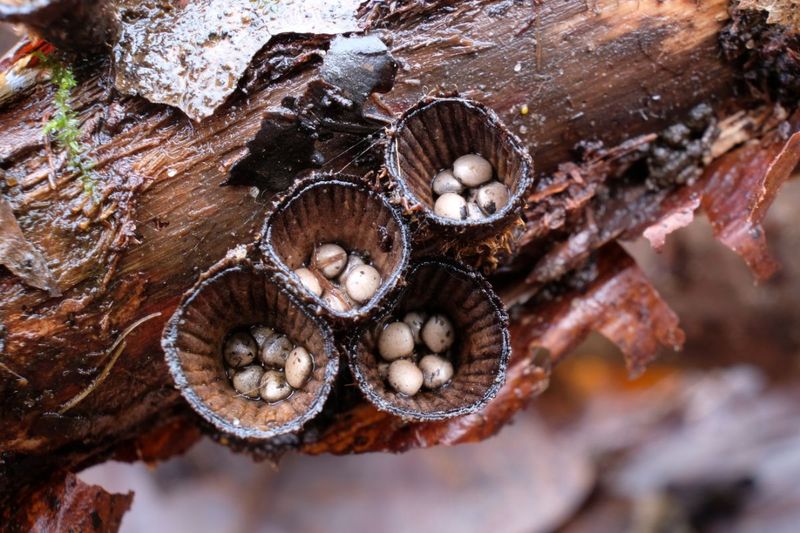
Cool nights and rainy fall days can turn your lawn, mulch beds, and old stumps into a surprise mushroom show almost overnight. Some of these fungi are harmless and even fun to spot, but a few are deadly enough to send someone to the hospital with just one bite.
Knowing which is which helps protect your kids, your pets, and your peace of mind while you finish up fall garden chores. Here are 13 mushrooms you might find this season, starting with the ones you should never touch or eat.
1. Death Cap (Amanita phalloides)
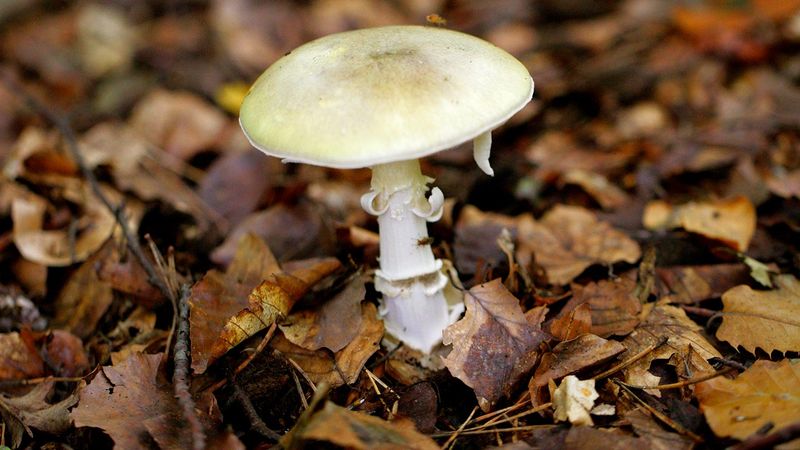
More than 90 percent of mushroom deaths worldwide trace back to one plain-looking fungus. The Death Cap has a pale green to yellowish cap, white gills, a white stem with a skirt-like ring, and a cup at its base that often hides under the soil.
You will usually find it near oak, beech, birch, chestnut, pine, or spruce, from late summer into fall. If you have mature shade trees in your yard, keep an eye on the ground beneath them after a good rain.
The scary part is how sneaky the poison is. Symptoms can wait 6 to 36 hours to show up, and people sometimes feel better for a day before the liver and kidneys begin to fail.
Eating even half of one cap can kill an adult.
If you spot these near a play area, wear gloves, pull them up whole, and bag them for the trash. Keep dogs away, since pets are just as vulnerable.
2. Destroying Angel (Amanita bisporigera)
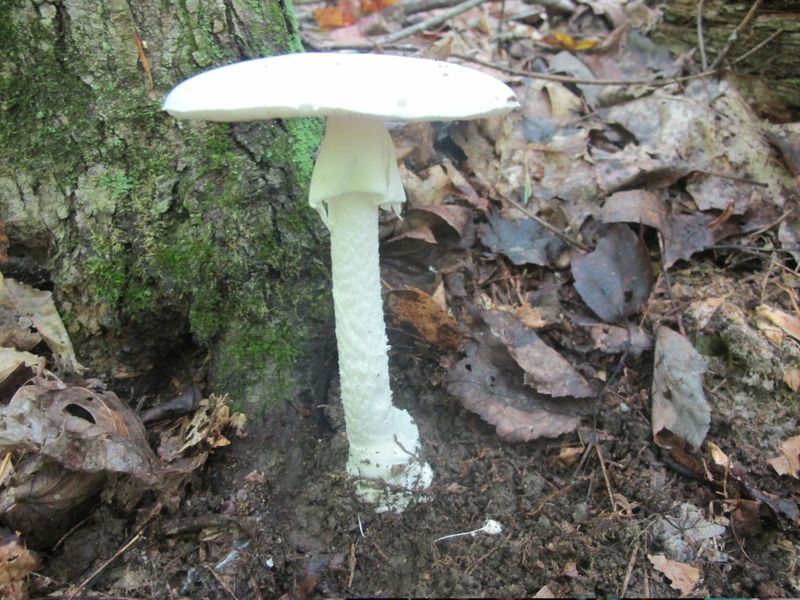
Beautiful and bright white, it looks almost too elegant to be dangerous. That is exactly what makes the Destroying Angel one of the most poisonous mushrooms in North America.
Look for an all-white cap, white gills, a ring around the stem, and a cup-shaped sac at the very bottom. That base is often buried, so a mushroom snapped off at ground level can hide its most telling clue.
It carries the same liver-wrecking amatoxins as the Death Cap. People have mistaken young ones for puffballs or store-style meadow mushrooms, which is why foragers treat any white, gilled mushroom with deep suspicion.
It grows from soil near trees from summer through fall. Teach kids a simple rule: white mushrooms in the yard are for looking, never tasting.
3. Autumn Skullcap (Galerina marginata)
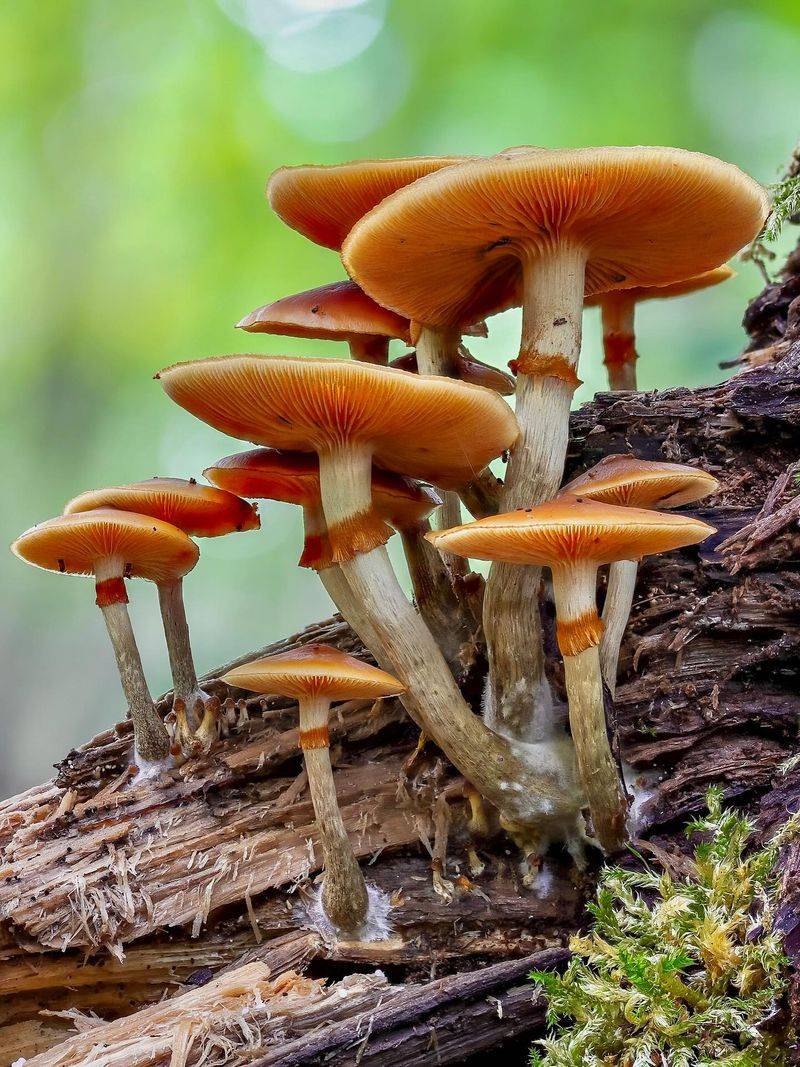
Small, brown, and easy to ignore, this one could pass for a hundred other little stump mushrooms. Don’t let its plain look fool you.
The Autumn Skullcap grows on rotting logs, old stumps, and woody debris, often in clusters during cooler weather. It has a tan to brown cap, a slender stem, and a thin ring that can fade as it ages.
Inside, it packs the same deadly amatoxins found in Death Caps. Foragers have confused it with edible honey mushrooms, which also love stumps, and the results have been tragic.
If an old tree stump in your yard sprouts tiny brown clusters every fall, assume they are dangerous. Grinding out the stump is the long-term fix if kids or pets play nearby.
4. Green-Spored Parasol (Chlorophyllum molybdites)
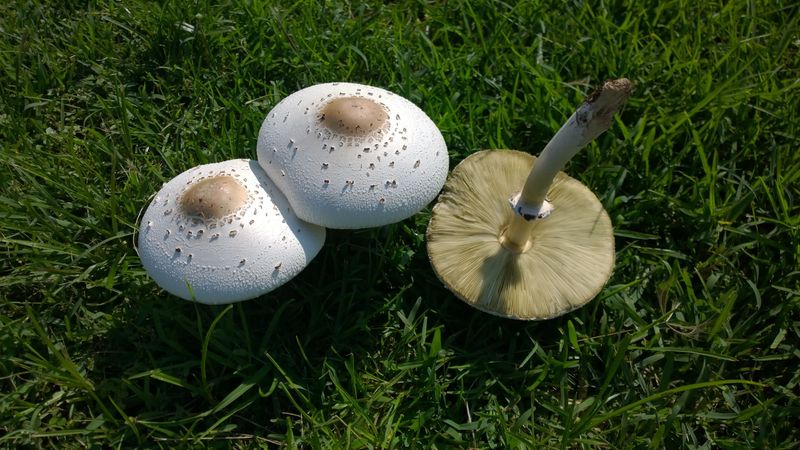
Ask a poison control center which lawn mushroom sends the most people running to the bathroom, and this one tops the list. Its nickname says it all: “the vomiter.”
The Green-Spored Parasol is big and white, with brown flecks scattered across a cap that can reach the size of a dinner plate. It often pops up in rings across sunny lawns after late summer and early fall storms.
The giveaway is under the cap. As it matures, the gills turn a dull grayish green, something almost no other big lawn mushroom does.
It is rarely deadly, but it causes violent vomiting and diarrhea that can be serious for small children and pets. Mow over or rake up any you see, and bag them so your dog cannot snack on the leftovers.
5. Jack-O’-Lantern Mushroom (Omphalotus illudens)
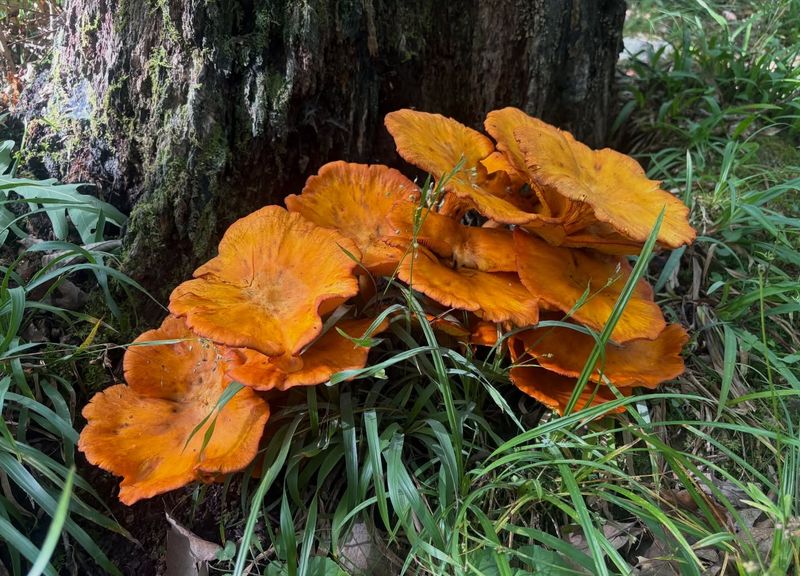
Right on cue for Halloween, a bright orange bouquet can erupt at the base of an oak stump. Fittingly, its gills can give off a faint green glow in total darkness.
Jack-O’-Lanterns grow in thick clusters on buried roots, stumps, or living oaks. Their pumpkin color and wavy caps make them a real showstopper in fall.
Touching them is perfectly safe. Eating them is another story, since they cause hours of nasty stomach cramps, vomiting, and diarrhea.
Folks sometimes confuse them with prized chanterelles. Chanterelles have blunt, forked ridges instead of sharp true gills, and they grow alone rather than in tight bunches.
Enjoy these with your eyes, maybe even a flashlight-off peek at night.
6. Fool’s Funnel (Clitocybe rivulosa)
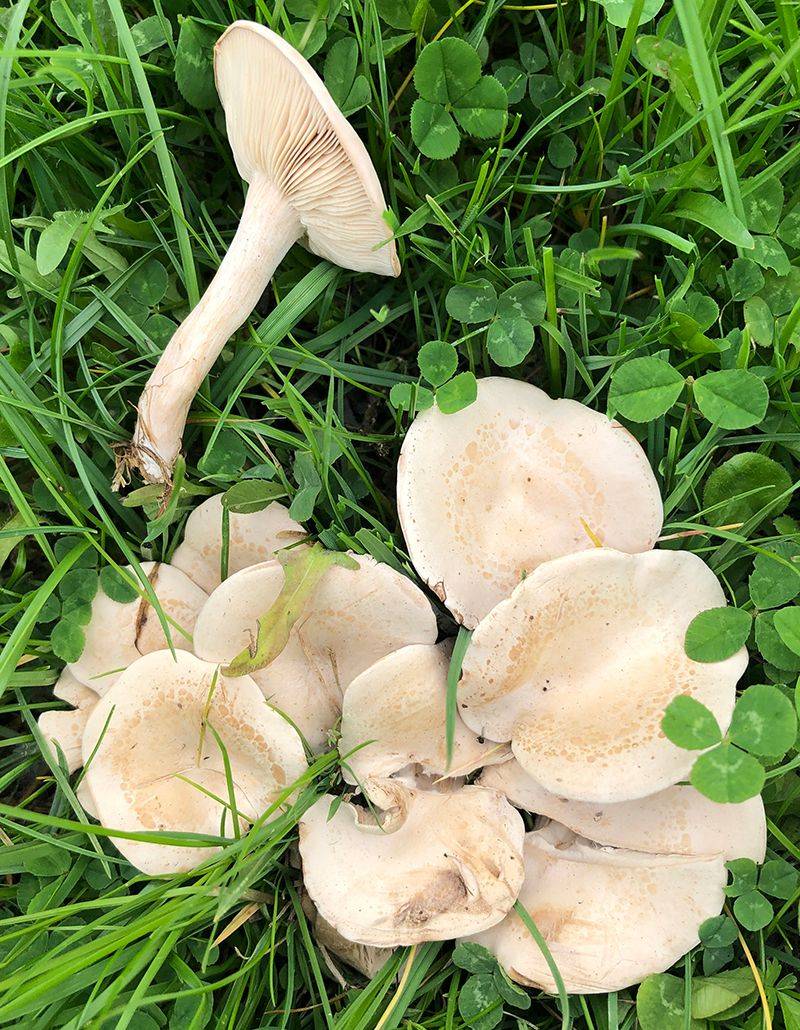
Fairy rings feel magical, with a perfect circle of little mushrooms appearing in the grass overnight. Some of those rings, though, are made by a fungus with a very fitting name.
Fool’s Funnel is small and whitish, with a cap that dips into a shallow funnel and crowded white gills underneath. It loves lawns, meadows, and grassy edges from summer into fall.
It contains muscarine, which can cause heavy sweating, drooling, blurred vision, and trouble breathing. Severe cases can be fatal, especially for small bodies.
The trouble is that it grows right alongside the edible fairy ring mushroom and looks a lot like it. That is one more reason lawn mushrooms should never end up in a salad.
7. Pholiotina rugosa
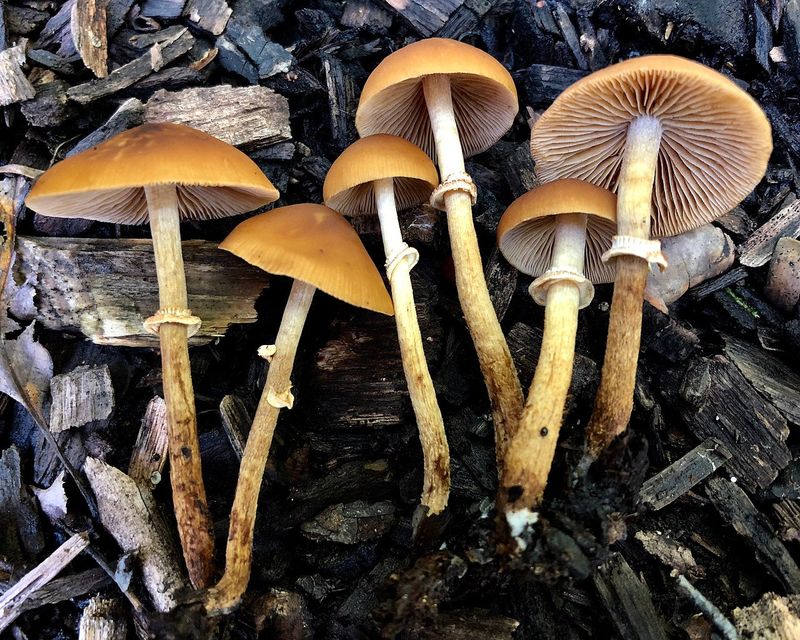
Fresh wood chip mulch around your hydrangeas or roses is a cozy home for plenty of fungi. One of the tiniest residents is also one of the deadliest.
Pholiotina rugosa, once called Conocybe filaris, is slim and delicate. It has a smooth brown, cone-shaped cap, rusty brown gills, and a fragile stem with a small ring.
Don’t let its size fool you. It carries amatoxins that attack the liver, and it has been mistaken for hallucinogenic mushrooms by curious people.
Because it hides among mulch, it is easy for toddlers and dogs to find first. A quick scan of your beds after a rainy week, followed by pulling and bagging anything small and brown, is a smart fall habit.
8. Panther Cap (Amanita pantherina)
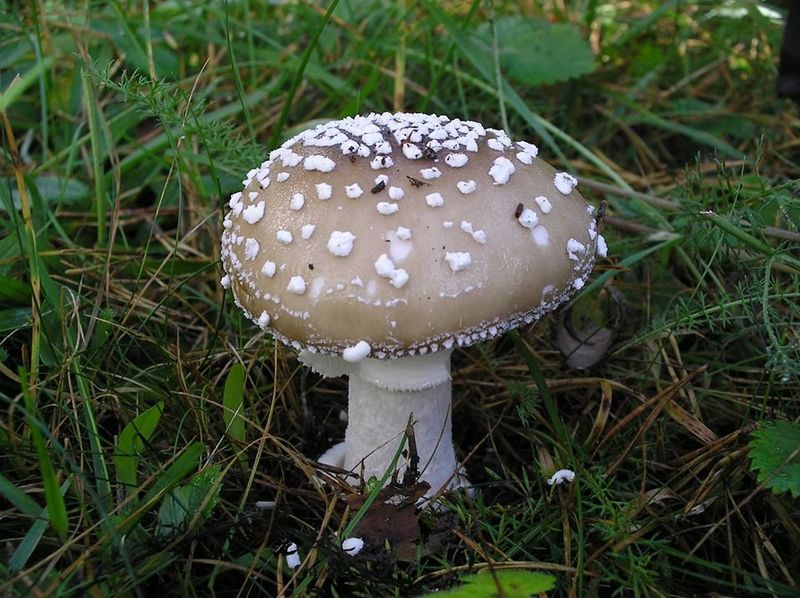
Picture the classic fairy-tale toadstool, then swap the red for chocolate brown. You’ve just imagined the Panther Cap.
Its cap ranges from tan to dark brown and is sprinkled with white, cottony spots. Underneath, you’ll see white gills, a white stem with a ring, and a rounded bulb at the base.
Panther Caps show up near trees, especially in wooded yards, as the weather cools. They are highly toxic and mainly hit the nervous system, causing confusion, agitation, and in bad cases, seizures.
If your yard borders woods, these are worth learning by sight. Their spotted look is pretty, but it is a warning sign, not an invitation.
9. False Morel (Gyromitra esculenta)
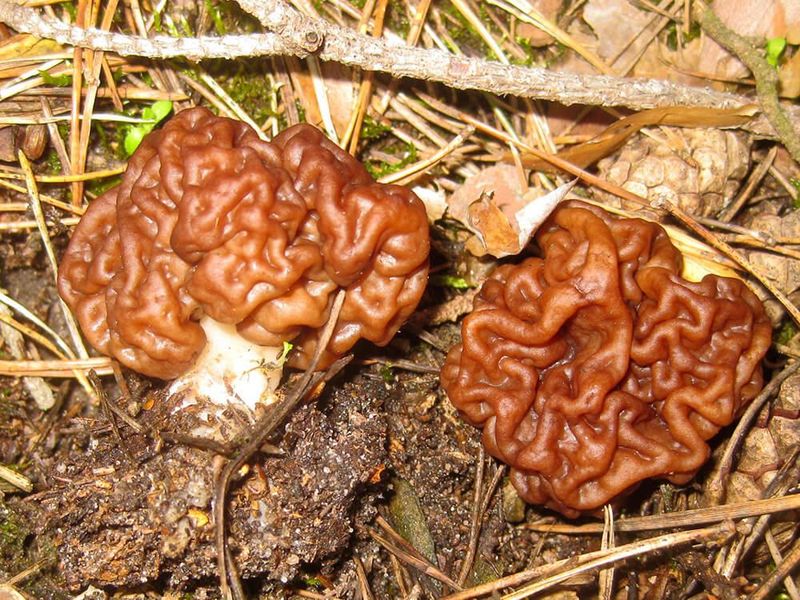
Some mushrooms look like brains, and the False Morel wears that look proudly. Its reddish-brown cap is lumpy, folded, and wrinkled rather than neatly pitted.
It mostly appears in spring, though related species can show up later in the year near trees. People get into trouble when they confuse it with true morels, a favorite edible.
The easy test is to slice it lengthwise. A true morel is completely hollow inside, while a False Morel is stuffed with cottony fibers or chambers.
The toxin, gyromitrin, can harm the liver and nervous system. Cooking lowers it but never removes it, and even the cooking fumes can make people sick.
Leave it alone.
10. Fly Agaric (Amanita muscaria)
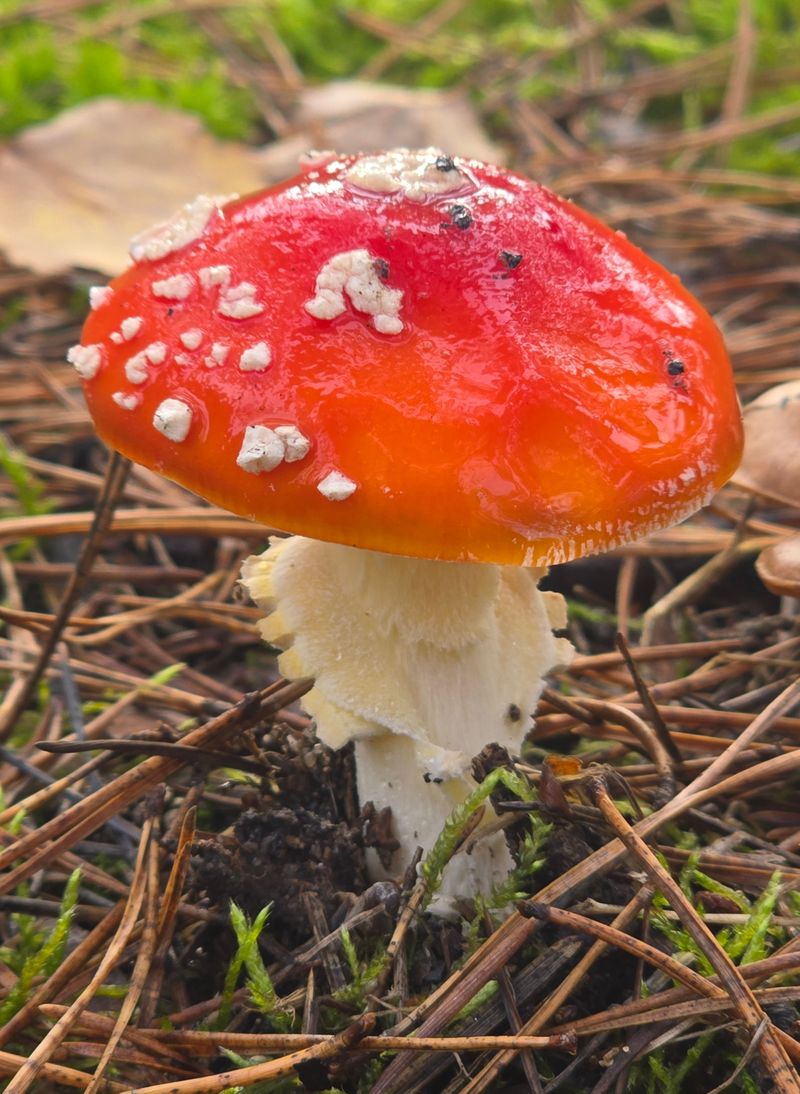
Video games, garden gnome statues, and storybooks all borrowed their mushroom from this one. The Fly Agaric is the red, white-spotted toadstool almost everyone recognizes.
Its cap shines red to orange-red with white warts, sitting on a white stem with a ring and a swollen base. It often grows near birch, pine, and spruce in fall.
Fun fact: its name comes from an old European habit of soaking it in milk to attract and kill flies.
It is poisonous, causing stomach upset along with dizziness, confusion, and odd behavior. Deaths in adults are rare, but it is still risky for kids and pets.
Snap a photo and enjoy the fairy-tale moment from a few steps back.
11. Puffballs (Calvatia and Lycoperdon)
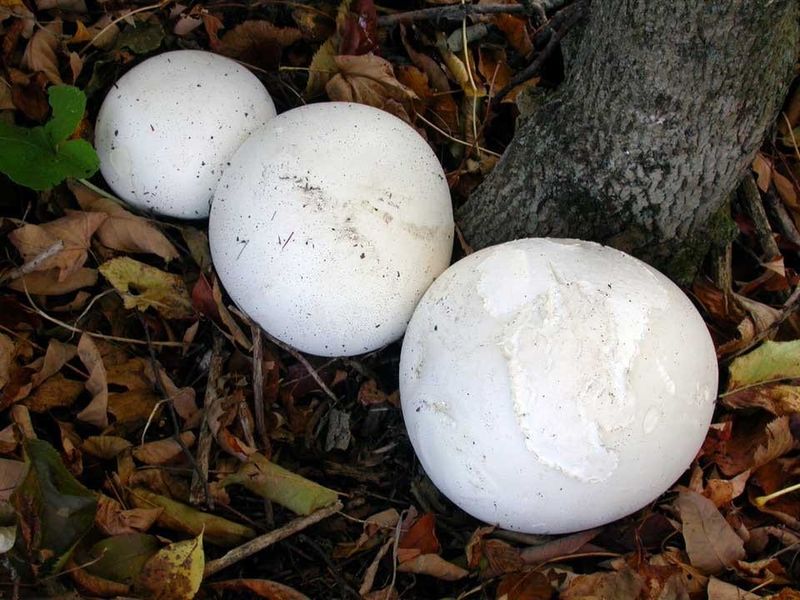
Kids love stomping on old puffballs and watching a cloud of brown “smoke” burst out. That smoke is actually millions of spores heading off to start new fungi.
Puffballs begin as smooth white balls with no cap, gills, or stem. Some stay as small as a marble, while giant puffballs can grow as big as a basketball.
Here’s the catch. A young Destroying Angel still wrapped in its egg can look like a small puffball from the outside.
Always slice one top to bottom. A true puffball is pure, solid white inside, but if you see the outline of a cap, stem, or gills, toss it right away.
Touching them is fine, so they are one of the more kid-friendly finds when an adult is supervising.
12. Bird’s Nest Fungi (Crucibulum and Cyathus)
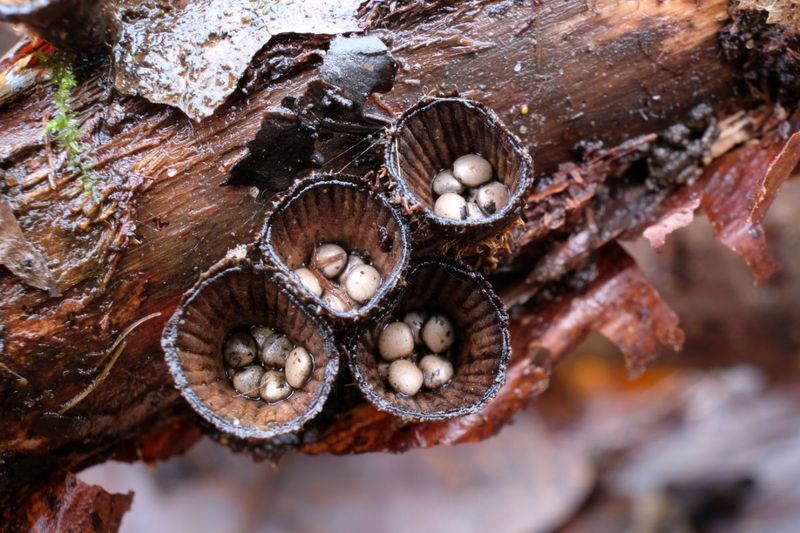
Crouch down by your mulched flower beds and you might find a whole village of nests no bigger than a fingernail. Each tiny cup holds little “eggs” that look ready to hatch.
Those eggs are actually packets of spores. When a raindrop hits the cup just right, it splashes them out up to several feet away, a clever trick for spreading.
Bird’s nest fungi are harmless to people, pets, and plants. They simply feed on decaying wood chips and help break mulch down into rich soil.
Grab a magnifying glass and turn it into a backyard science lesson. They are one of the easiest and safest fall finds to show curious kids.
13. Stinkhorns (Phallaceae family)
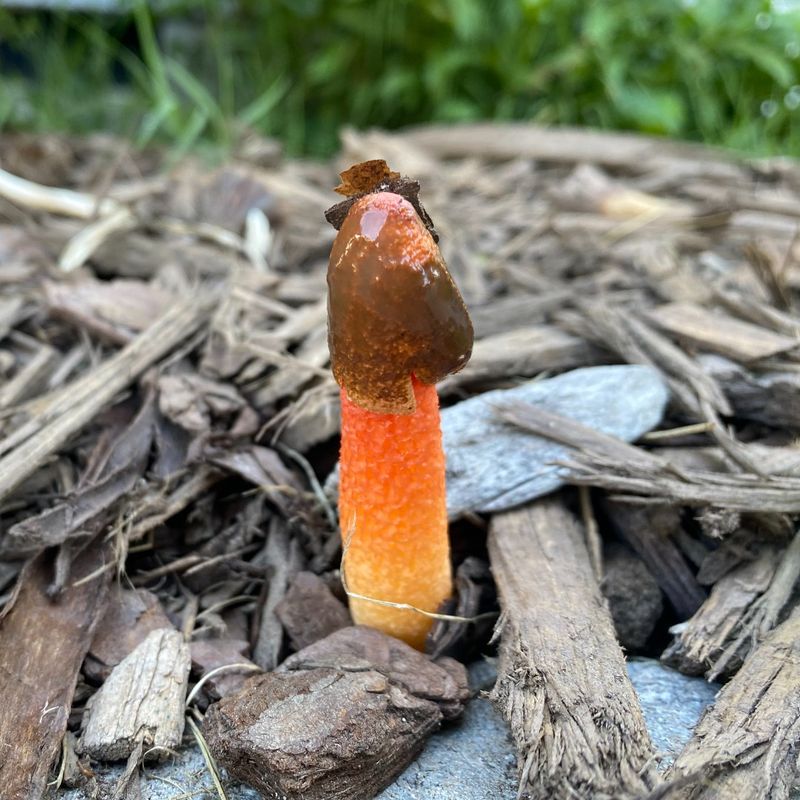
Your nose may find these before your eyes do. Stinkhorns smell like rotting meat, and flies swarm to them like it’s a picnic.
They start as soft, whitish “witch’s eggs” half buried in mulch. Within hours, an orange-red, finger-like stalk 4 to 6 inches tall pushes up, topped with dark slime.
That stinky slime holds the spores, and flies carry them off to new spots. Gross, but brilliant.
Stinkhorns won’t hurt your plants and aren’t considered dangerous to touch, though nobody wants to. Wear gloves, scoop them up egg and all, and bag them.
Raking mulch so it dries out may help reduce new ones popping up.