
What Those Fresh-Looking Holes You Notice in the Morning in Your North Carolina Lawn Really Mean This Fall
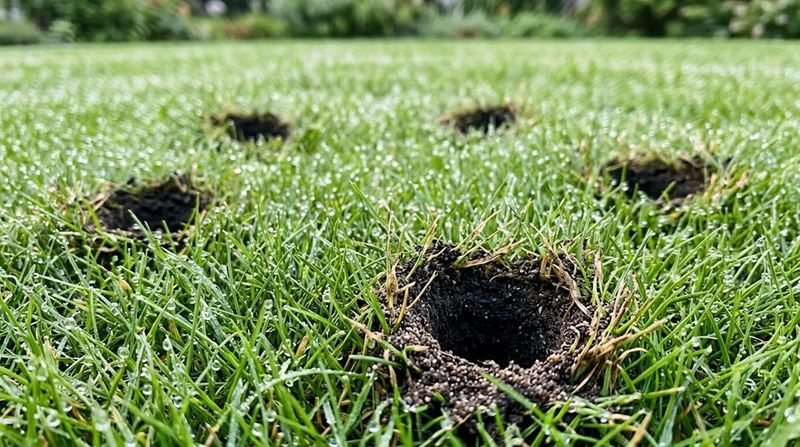
You step outside with your coffee and spot a few neat holes in the grass that were not there yesterday, or at least you did not notice them. Before you blame the first animal that comes to mind, it helps to know that several visitors leave similar marks.
Skunks, armadillos, moles, birds, and even a sunny-soil wasp can all be behind them. A little detective work can save your lawn, and the wildlife, from a lot of unnecessary trouble.
The pattern matters more than when you noticed it
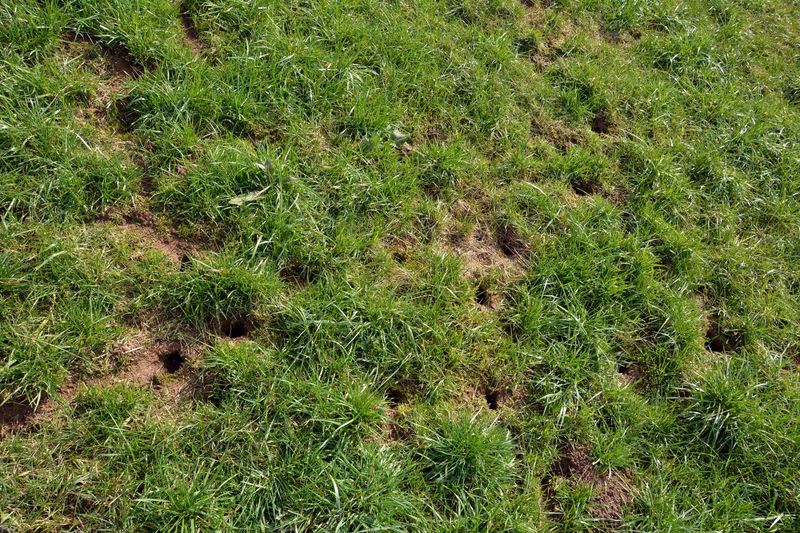
Finding a hole in the morning tells you when you spotted it, not when it formed. It could have been dug at dusk, at midnight, or three days ago and simply missed.
So treat each hole as a clue rather than a name tag for one animal.
Start with shape and depth. Is the hole shallow and cone-shaped, or a tidy round opening with soil piled beside it?
Notice whether the soil was flung out or pushed up, and whether the turf around it is flipped, torn, or untouched.
Next, look at the arrangement. Scattered divots across an open stretch of lawn suggest foraging, while a long, wandering raised line points somewhere else entirely.
A single hole in a sunny, bare patch tells a different story than a dozen scrapes near a flower bed.
Size helps, but only a little. NCWRC describes skunk damage as shallow, conical holes made while hunting grubs, yet other animals dig similar spots.
Extension offices also give slightly different size descriptions, as seen in this Henderson County pest alert, so think of any size chart as a starting point.
Finally, watch for repeat activity. Mark the spot with a flag or take a photo, then check again over several days.
New holes in the same area tell you far more than one mystery divot.
Shallow divots can point to nighttime foraging
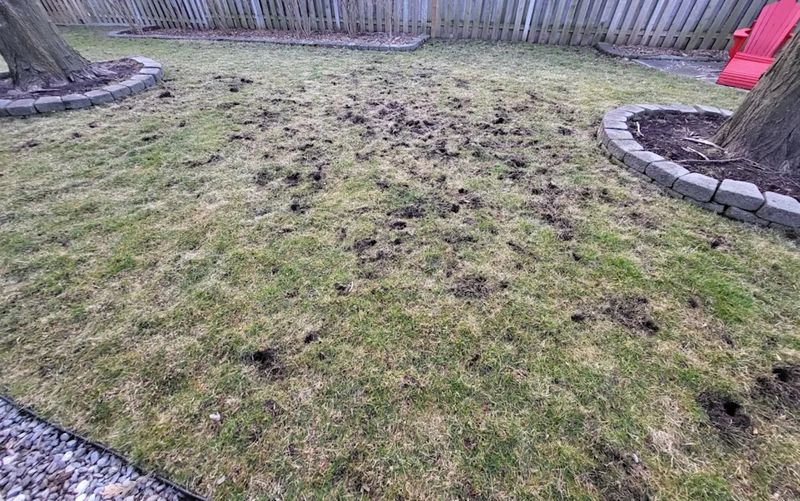
Scattered, shallow divots across the lawn often come from animals hunting for food below the surface. Skunks are a common suspect, and raccoons sometimes join in.
The difference is that raccoons tend to peel back sod like a loose carpet, while skunks leave small, cone-shaped pits.
Armadillos dig too. NCWRC says they dig shallow holes, typically 1 to 3 inches deep and 3 to 5 inches wide, while searching lawns and gardens for insects and earthworms.
Treat those numbers as a handy clue, not a test, since other animals can leave similar marks.
Many of these visitors are after grubs or other soil-dwelling food. Fall can be a busy time for that kind of feeding, though timing varies across North Carolina and digging alone does not prove grubs are present.
We will get to how to check in a later section.
Safety comes first with skunks. They can carry rabies in North Carolina, so keep your distance, keep pets and children back, and never try to handle one.
If you or a pet has direct contact, NCWRC advises seeking medical or veterinary guidance.
Please do not relocate skunks or armadillos either. It is not allowed in North Carolina, and it can harm the animal.
If damage is serious, call NCWRC or a licensed wildlife-control professional to talk through legal options.
Are there ridges instead of open holes?
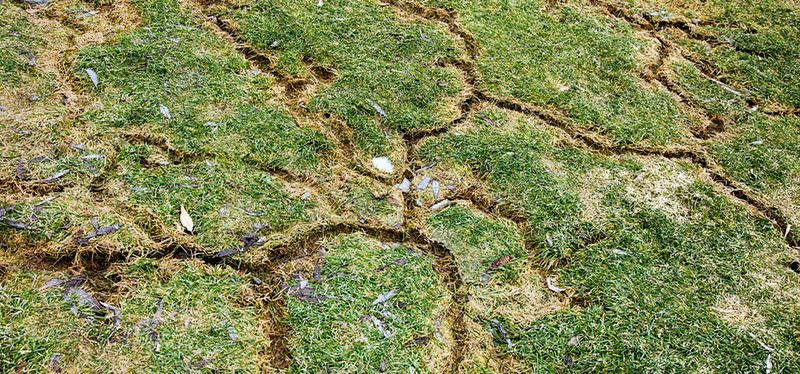
Walk the lawn and look for lines. Raised, winding ridges just under the surface, sometimes with a few soil mounds, are more suggestive of a mole than a set of open holes.
If the soil feels spongy and hollow underfoot along a curving path, that fits too.
A common myth says moles munch on grass roots. They do not.
According to the NC State Extension Gardener Handbook, moles eat insects and earthworms, including grubs.
Their tunneling can still cause trouble. Roots may be lifted or loosened, and plants can wilt where the soil has been disturbed, which is how moles earn the blame for root damage.
That said, a mole in the yard is not an emergency. Moles also help by eating soil pests, and a few ridges may flatten with a gentle foot press or a rain shower.
Consider control only when the tunneling is causing a real problem, such as a damaged lawn or garden bed.
If you do decide to act, ask your local Extension office or a licensed wildlife-control professional rather than trying a quick fix from a store shelf.
Birds can leave clues without digging a burrow
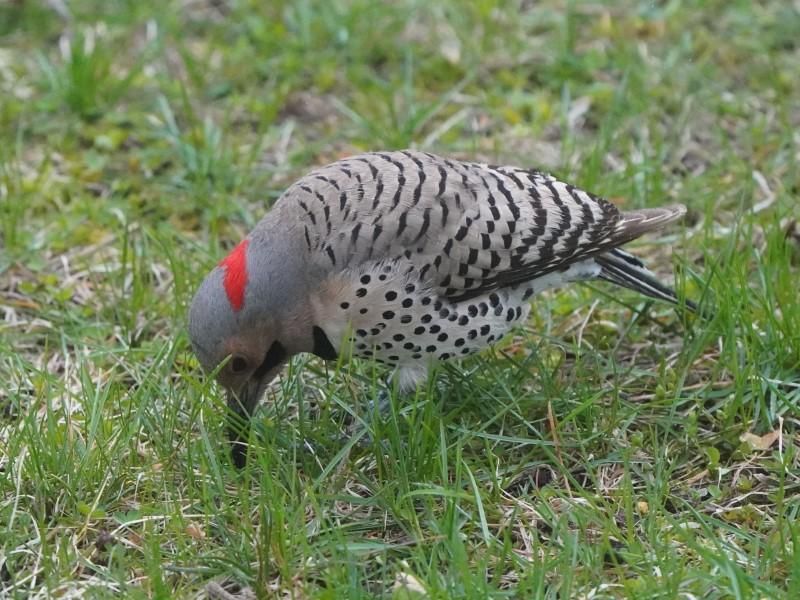
Picture a northern flicker hopping across your lawn, jabbing its beak into the turf. Birds such as flickers, crows, blue jays, starlings, and grackles may probe, scrape, or tuck food away in grass.
The marks are usually small, shallow, and scattered, not tunnels or deep burrows.
Compared with mole ridges, bird marks sit on the surface and do not run in lines. Compared with a burrow, they lack a clear, round entrance.
Sometimes you will see a patch of grass scuffed up or lifted, as described in University of Maryland Extension guidance on animals digging in lawns.
In fall, birds may forage for grubs. That is a plausible reason for pecking, but it does not prove you have a grub problem, and activity differs from one part of North Carolina to another.
Most bird species are federally protected, so never harm or disturb them. Enjoy the show from a window instead.
If birds have scraped or uprooted patches, simple repair is enough. Press loose turf back down, rake the spot, and add a little soil and seed or a small piece of sod where needed.
A neat, mounded opening may belong to a cicada killer
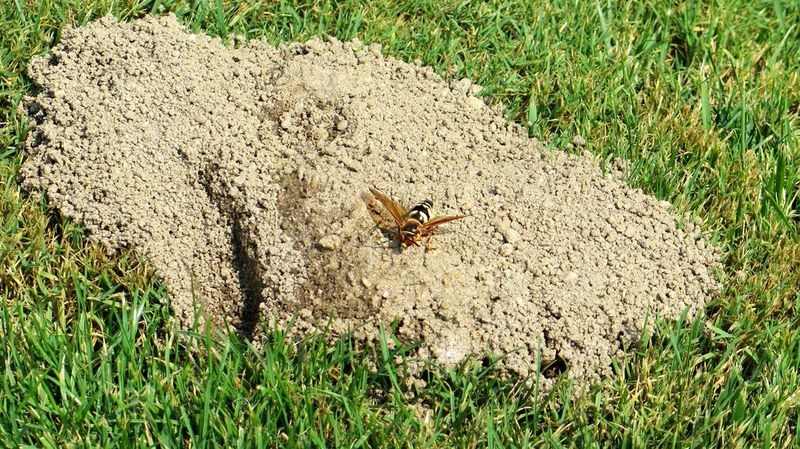
Some holes look almost tidy. A round opening about an inch across, often with a U-shaped mound of loose soil beside it, in sunny, well-drained ground, is the classic sign of a cicada killer burrow.
Adults emerge in mid-to-late summer, so a burrow you notice in fall may date from earlier activity. Check whether the soil looks weathered and whether any wasps are still around before assuming it is brand new.
According to NC State Extension, cicada killers are beneficial predators, and control is rarely necessary. Their burrows can be a nuisance in thin or sandy turf, but they are seldom a serious lawn threat.
The big wasps can look alarming. Males may dive-bomb you, but they cannot sting.
Females can sting if mishandled, and they generally do not defend nests the way social wasps do.
The simple rule is to leave the burrows alone. Do not poke, flood, or disturb them.
If a burrow sits in a high-traffic spot, thicker turf and less bare, sunny soil can make the area less inviting next year.
Check for lawn damage before treating anything
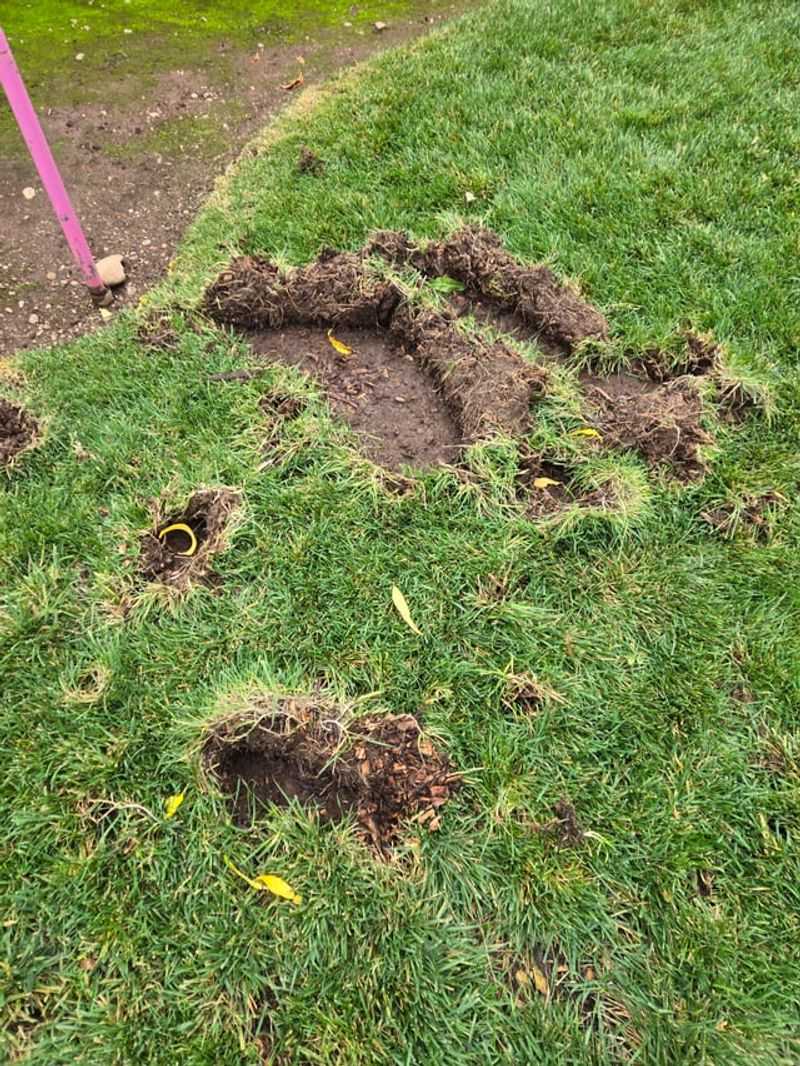
Holes alone do not prove you have grubs, so skip the blanket treatment. Instead, watch for repeat activity and then inspect the soil and turf in several places.
Cut a small flap of sod, peel it back, and look at the root zone.
NC State’s turf pest guide says localized infestations should be sampled, and products used only when treatment thresholds are exceeded or damage is considerable. That keeps you from spending money and affecting other wildlife and pollinators for no reason.
You may see a figure of five or more grubs per square foot. That is a benchmark from Franklin County Extension for justifying pesticide treatment, not a statewide rule for every lawn or grub species.
Timing also varies, with mountain areas generally later than eastern North Carolina.
If wildlife is the main worry, think proportionately. Healthy turf often tolerates some digging, and many problems fade on their own once the food source is gone.
For larger concerns, skip the trapping and relocation advice you may find online. NCWRC says skunks may not be relocated, and the same applies to armadillos.
Call NCWRC or a licensed wildlife-control professional with legal and damage questions.
Let the evidence guide your next move
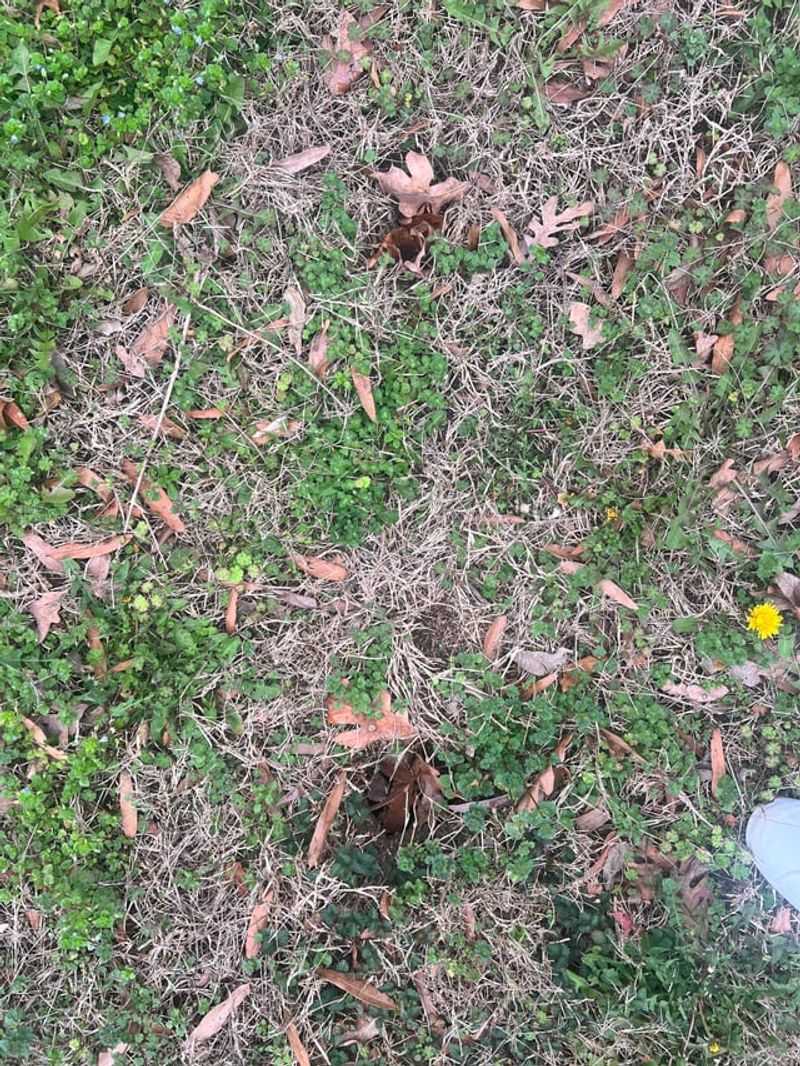
Shape, spacing, surrounding turf, and repeat visits together tell a better story than any single hole. Stay open to the possibility that you will not know exactly when the holes formed or what made them, and that is fine.
Per NC State, confirm real damage before treating, and keep your distance from any skunk, since they can carry rabies.
A lawn that feeds a few wild neighbors is usually a lawn doing its job.