
Bearded Iris Rhizomes Rot Over Winter When You Skip These 6 Quick Fall Jobs
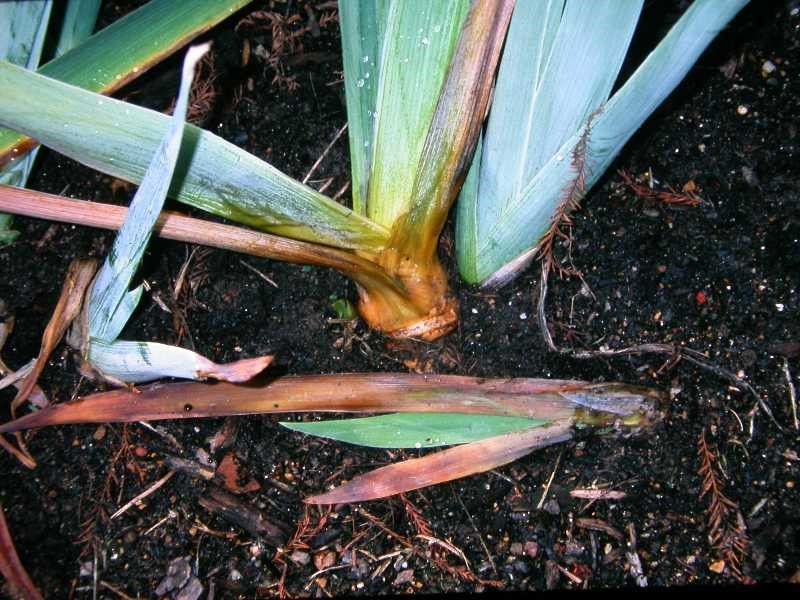
You pull back a fan of iris leaves in spring and find a squishy, smelly lump where a healthy rhizome used to be. That mess is bacterial soft rot, and it often starts quietly in fall when wet soil, old leaves, and buried rhizomes give bacteria the perfect winter hideout.
The good news is that a few quick fall chores can greatly lower the risk. Spend an afternoon on these six jobs now, and your bearded irises have a much better shot at waking up firm, healthy, and ready to bloom.
1. Clear Out Spent Stalks and Garden Debris
Picture a pile of soggy brown leaves sitting right on top of your iris clump all winter. To you it looks like a little blanket.
To rot bacteria and iris borers, it looks like a cozy hotel with free room service.
Old bloom stalks, dried-out leaves, and stray fallen tree leaves all hold moisture against the rhizomes. They also give fungal leaf spot spores and pest eggs a place to wait out the cold.
Clearing that clutter away removes a lot of trouble before it ever gets started.
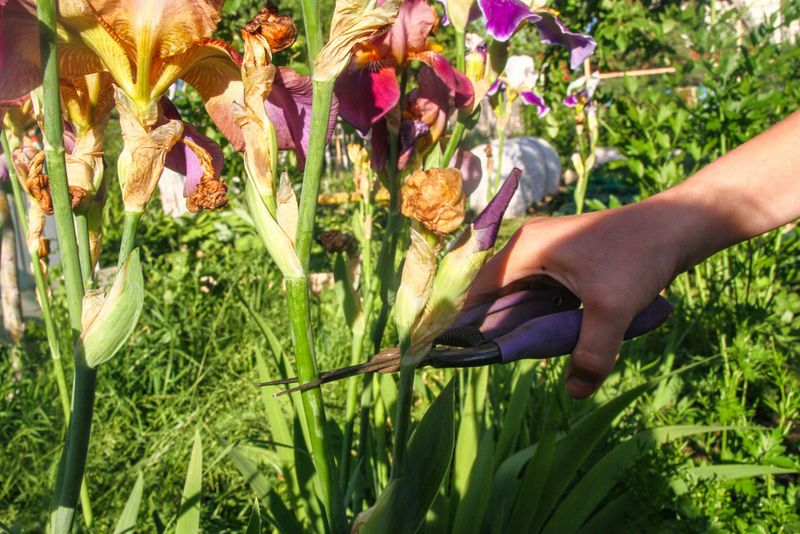
Snap or cut spent stalks down near the base, then rake out any dead foliage and debris tucked around the clump. Bag it up and toss it in the trash rather than the compost pile.
Most home compost bins never get hot enough to kill off disease spores or borer eggs.
2. Trim Leaves Into Neat Short Fans
Short haircuts are a fall tradition for iris lovers, and there is real logic behind the snip. Once the weather cools in mid to late October, those long, floppy leaves have mostly finished feeding the rhizome for the year.
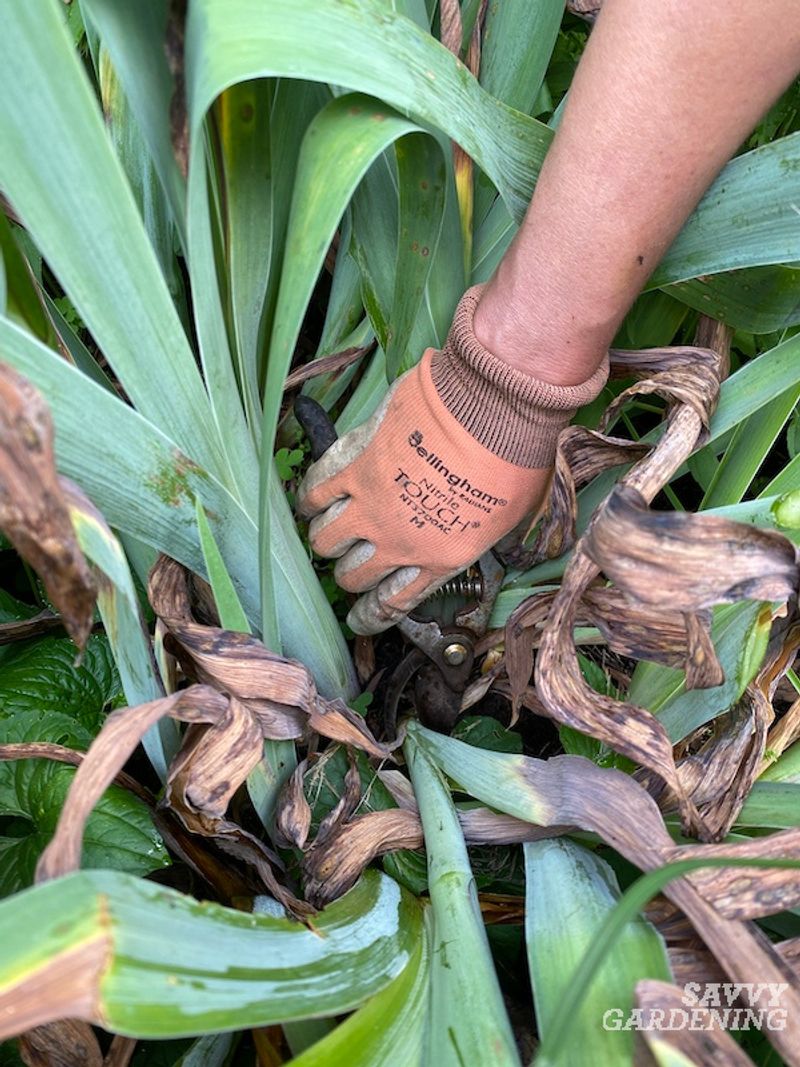
Cut each fan back to about 4 to 6 inches tall. Many growers angle the cut into a little upside-down V so rain runs off instead of sitting on the leaf tips.
Less leaf surface means fewer spots for fungal leaf spot to settle in, and fewer places for pests to hide.
Shorter fans also let sunshine and breeze reach the rhizome tops. That airflow helps the soil surface dry out between fall rains, which matters a lot when bacteria are looking for a damp place to move in.
Wipe your shears with rubbing alcohol before moving to the next clump.
3. Divide Crowded Clumps
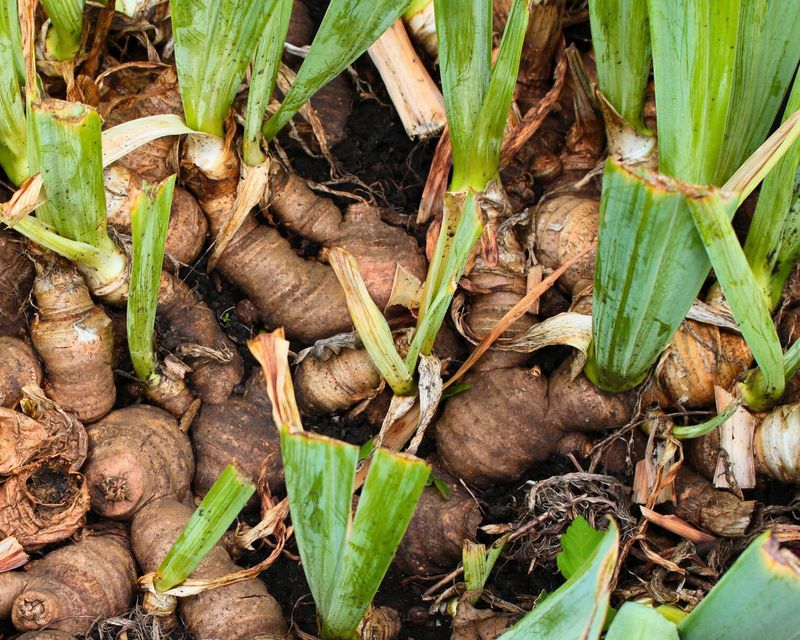
Fewer flowers than last year? A tangled knot of rhizomes piled on top of each other is often the reason, and that crowding can invite rot too.
Packed clumps trap moisture in the middle where air can’t reach. The older center rhizomes tend to go woody and weak, and weak tissue breaks down faster in wet weather.
Every 3 to 5 years, most bearded irises appreciate being lifted and split apart.
Dig the whole clump with a garden fork and shake off the soil. Keep the firm, plump younger pieces that have a healthy fan of leaves, and throw away the spent old centers.
Replant your keepers about 12 to 18 inches apart so each one has breathing room.
Early fall gives new divisions time to root before the ground freezes. In colder northern areas, aim to finish by late September.
4. Check Every Rhizome for Soft Rot
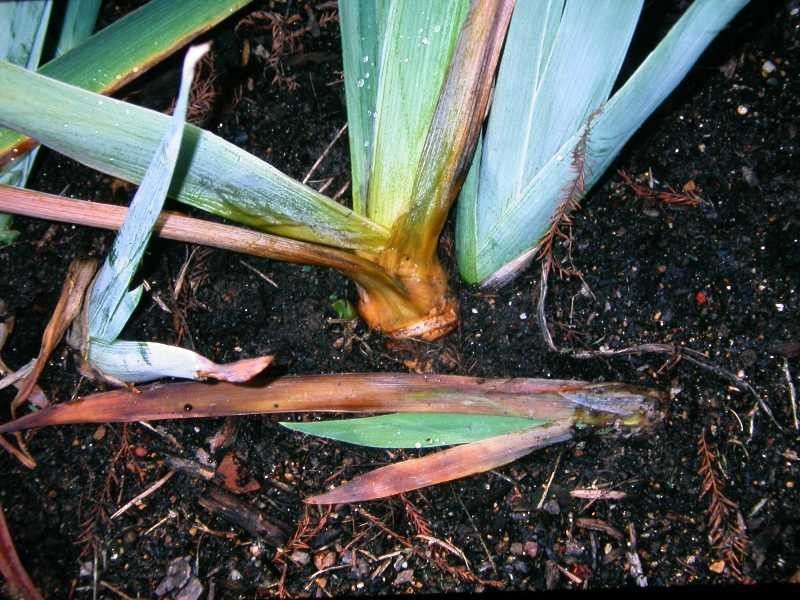
Your nose is one of the best tools here. Bacterial soft rot smells awful, a sharp, rotten odor that is hard to miss once you lean close to the clump.
Gently press the top of each rhizome with your finger. Healthy ones feel firm, like a raw potato.
Soft, mushy, or slimy spots, often paired with yellow leaves collapsing at the base, point to bacteria such as Pectobacterium at work.
Catching it early can save the plant. Scrape soil away from the sick rhizome and use a sharp, clean knife to cut out every bit of soft tissue until you reach firm, white flesh.
Dip the blade in a 10 percent bleach solution (1 part bleach to 9 parts water) between cuts so you don’t spread the bacteria.
Leave the cleaned rhizome open to sun and air for several days to dry out. A badly rotted piece is best tossed.
5. Keep Rhizome Tops Above the Soil
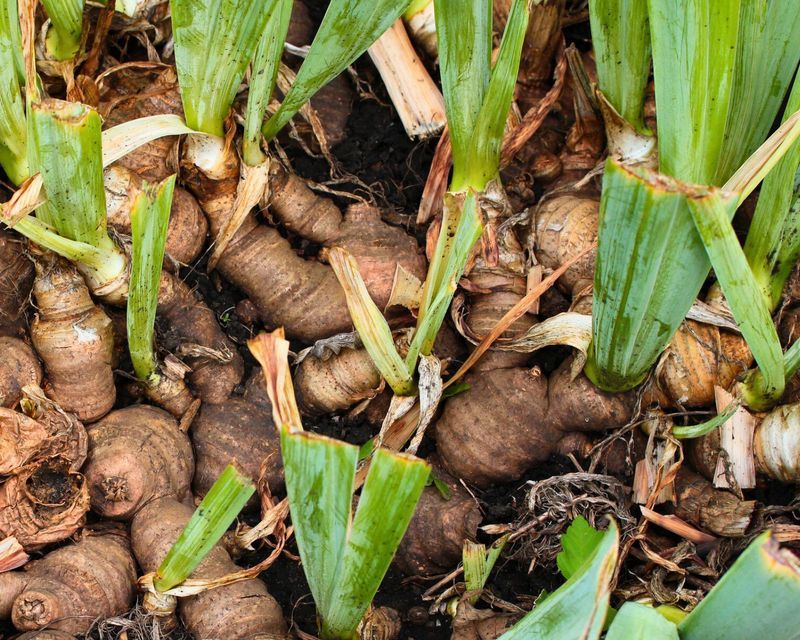
Here is a fun fact that surprises plenty of new growers: bearded irises actually like to sunbathe. Their rhizomes are meant to sit with their backs showing, a bit like ducks floating on a pond.
Planting too deep is one of the most common causes of rot. A buried rhizome stays wet and cool and can’t dry out after a rainstorm, which is exactly what rot bacteria want.
When you replant divisions, set the rhizome on a small mound of soil and spread the roots down the sides. Fill in around the roots, but leave the top of the rhizome visible at or just above ground level.
If older clumps have sunk over the years, gently brush away soil so the tops peek out again.
6. Skip the Mulch and Fall Fertilizer
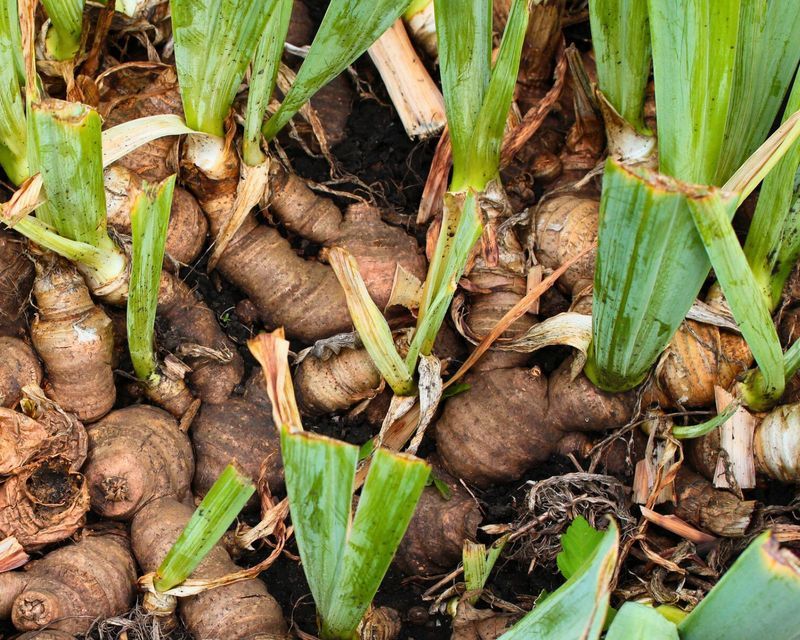
Mulch feels like a kind gift before winter. For most perennials, it is.
For bearded iris, a layer of wood chips or straw over the rhizomes can act more like a wet sponge.
Mulch holds moisture right where you least want it and slows drying after fall and winter rains. Leave the soil open around your iris clumps.
In very cold zones, a light, loose cover of evergreen boughs can be added after the ground freezes, then pulled off early in spring.
Hold off on high-nitrogen fertilizer this time of year as well. Nitrogen pushes soft, leafy growth that may be more prone to rot when cold, wet weather hits.
If your irises need feeding, a low-nitrogen product in early spring is a safer choice. A little less fussing in fall may be the kindest thing you do for them.