
13 Red Flowers Hummingbirds Can’t Stop Visiting, Even After Summer Winds Down
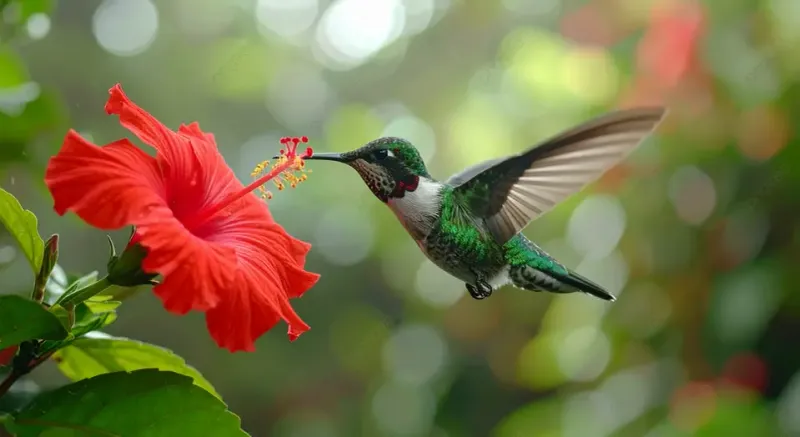
Hummingbirds do not pack up and leave the moment August ends. Many are still zipping through US yards in September and October, fueling up for long trips south.
Red, tube-shaped flowers work like bright road signs that say food is here. If your garden goes quiet after summer, the right plants can keep those tiny visitors coming back for weeks longer.
1. Red Salvia
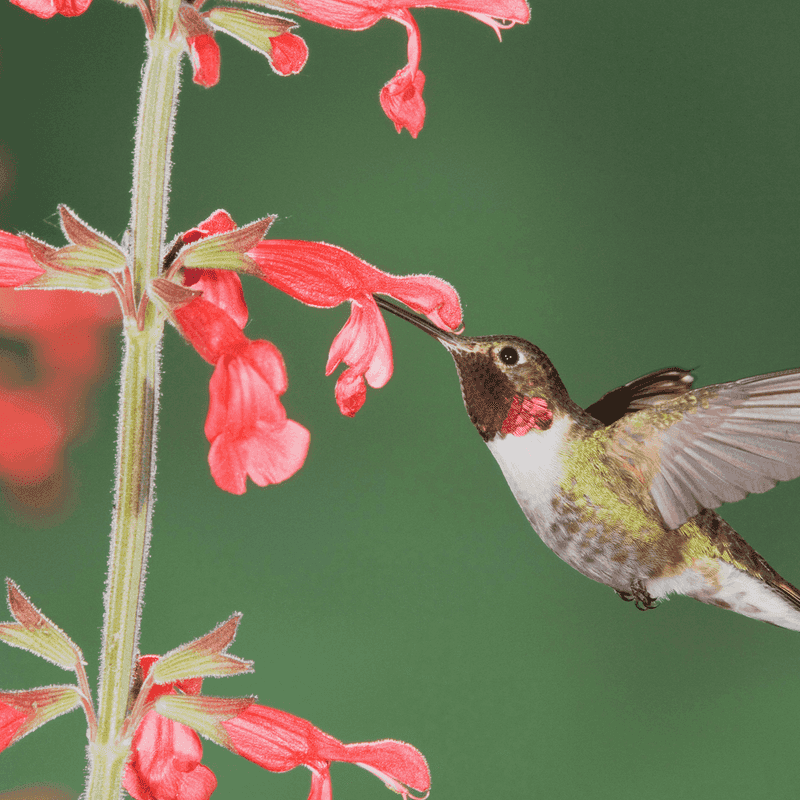
Ask ten hummingbird fans for their favorite plant, and half will say salvia before you finish the question. The red types, like pineapple sage and scarlet sage, are nectar machines with long, skinny tubes built for a hummingbird bill.
Pineapple sage is the late-season star. It often waits until September to bloom, just when many other flowers are fading, and its leaves smell like fresh fruit when you brush them.
Mexican bush sage also saves its show for fall.
Worried yours stopped blooming in July? Snip off spent flower stalks just above a pair of leaves.
New spikes usually follow within a few weeks, and the birds will notice long before you do.
2. Butterfly Bush ‘Miss Ruby’
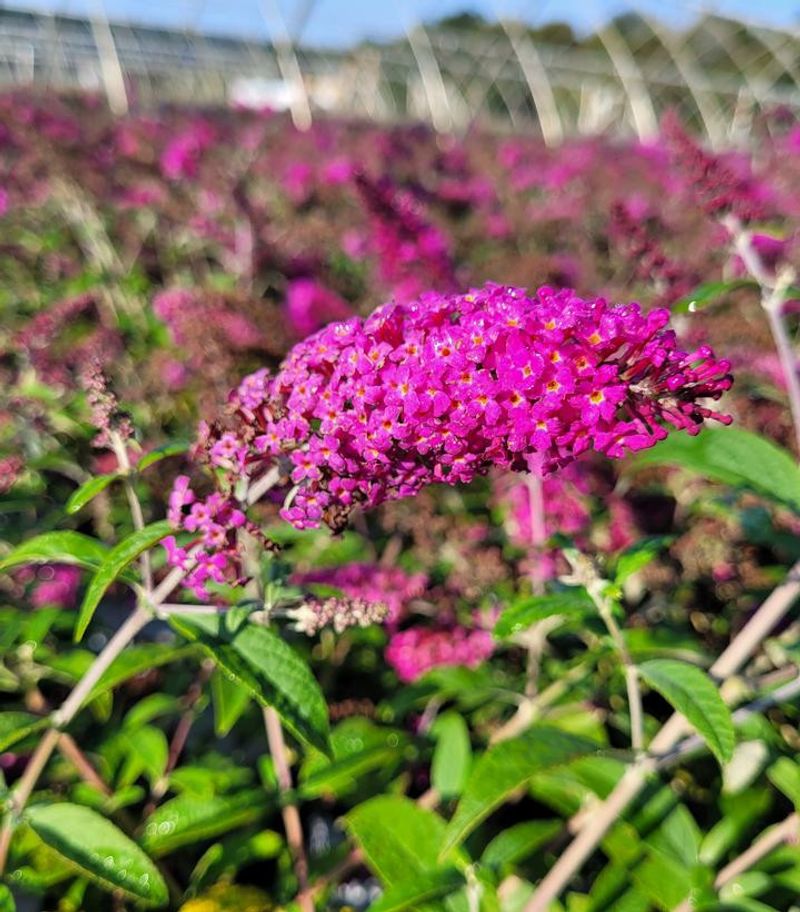
Plant it once, and it shows up for duty year after year. ‘Miss Ruby’ is a compact butterfly bush with clusters of deep pinkish-red flowers that bloom from late spring into fall.
Each cluster holds dozens of tiny tubes, so a single visit gives a hummingbird plenty to sip. The shrub stays smaller than older butterfly bushes, which makes it easier to fit near a patio or window where you can watch.
Keep it blooming by cutting off faded clusters. Newer varieties like this one are bred to set little seed, so it behaves better in the garden than the old-fashioned kinds.
3. Red Petunias
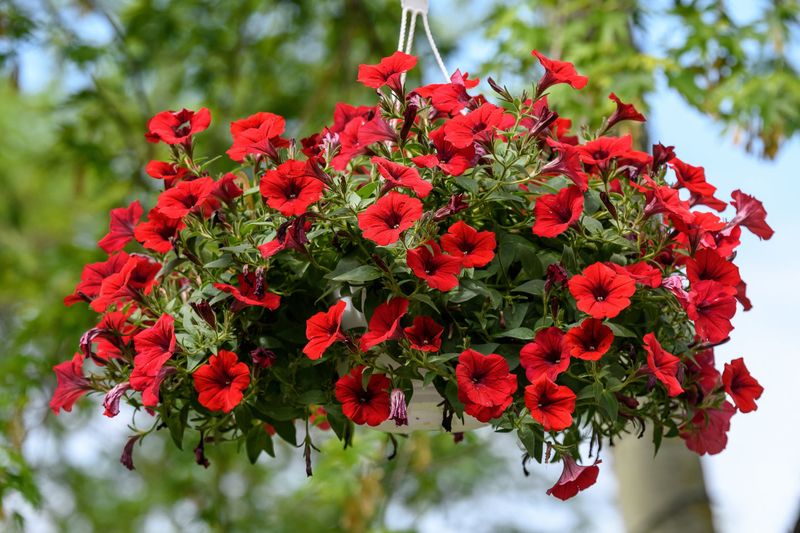
Your hanging basket might be doing more for wildlife than you think. Red petunias have open trumpet flowers that hummingbirds happily probe, especially when the baskets hang at eye level near a porch.
The common problem shows up in midsummer: long, stringy stems with flowers only at the tips. That leggy look is easy to fix.
Cut the stems back by about a third, water well, and feed with a liquid fertilizer.
Within two or three weeks, fresh growth and new blooms fill in. Those refreshed baskets can carry color and hummingbird traffic well into fall, right up to the first cold snap.
4. Red Hibiscus
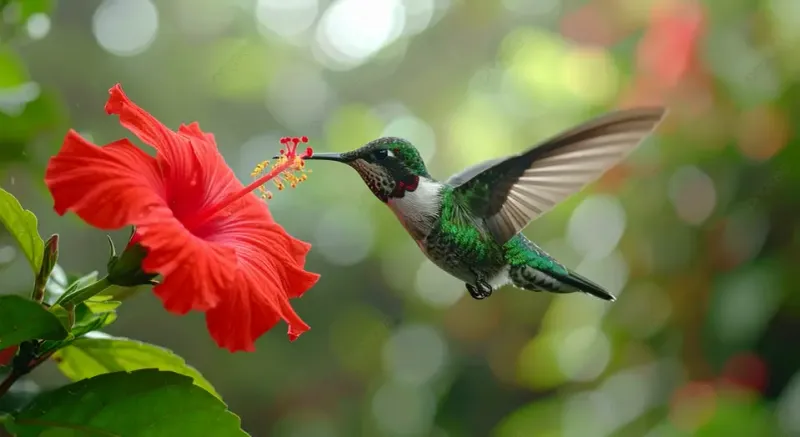
Few flowers make neighbors stop on the sidewalk like a red hibiscus the size of a dinner plate. Those bold petals and the long golden center column are hard for a hummingbird to ignore too.
Tropical hibiscus grows great in pots, and hardy hibiscus survives cold winters in the ground. Both can keep flowering from early summer until frost when they get full sun and steady water.
Dropping buds? That usually means the plant went too dry or got a sudden chill.
Water deeply when the top inch of soil feels dry, and move potted plants indoors once nights dip toward 50 degrees.
5. Red Canna Lilies
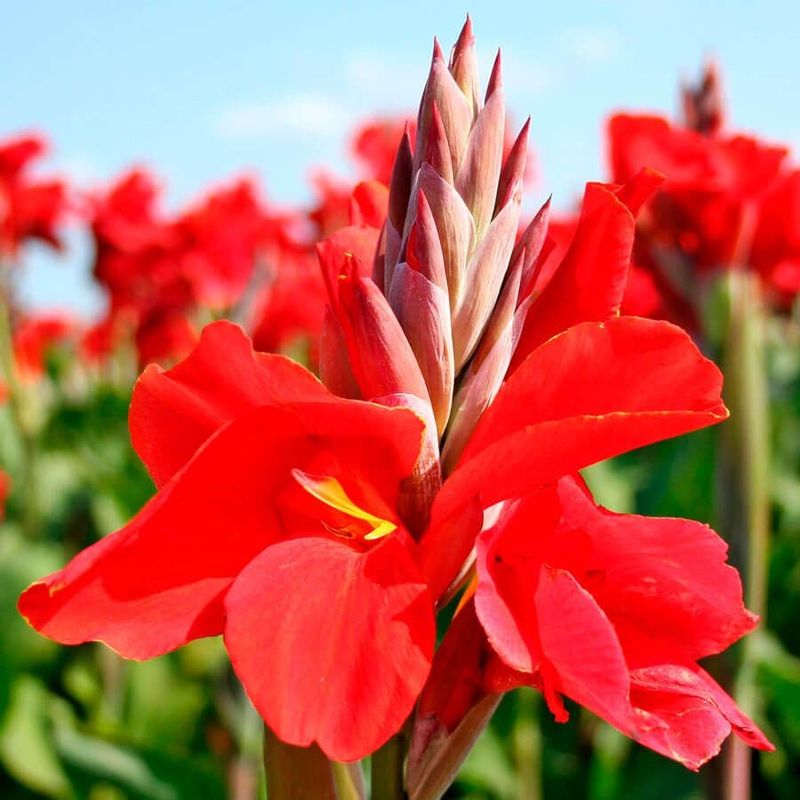
Picture a torch standing five feet tall in your flower bed. That is basically a red canna, and hummingbirds can spot one from across the yard.
Cannas grow from thick roots and love heat, which makes them a smart pick for hot spots where other flowers sulk. The big leaves add a tropical feel, while the fiery blooms keep coming through late summer.
In warmer southern zones, you can leave them in the ground over winter. Up north, dig the roots after the first frost blackens the leaves, let them dry, and store them in a cool basement until spring.
6. Coral Honeysuckle
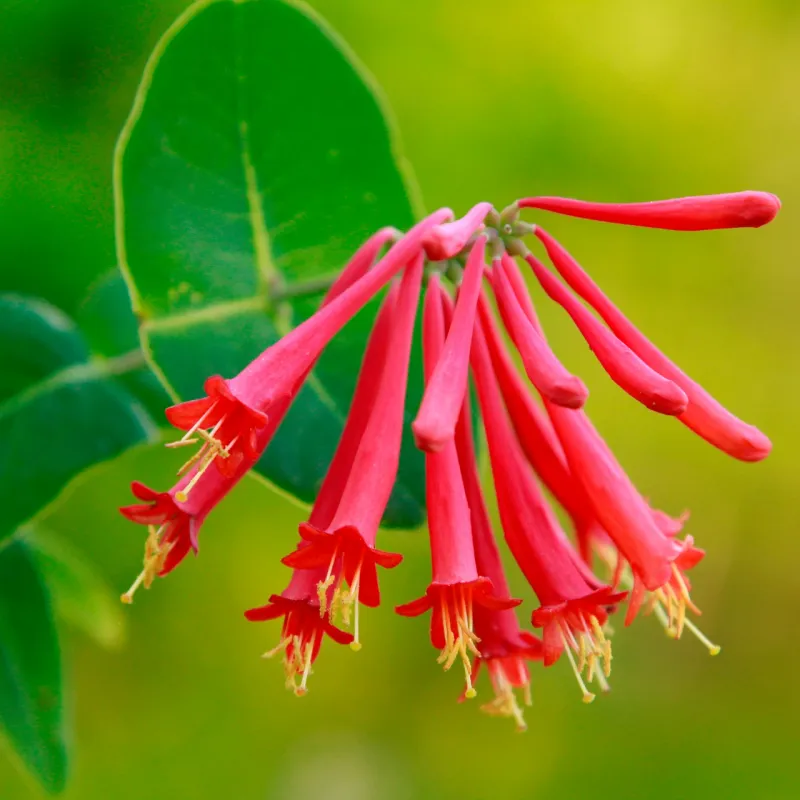
Here is a vine you can grow without guilt. Coral honeysuckle is native to the eastern US and does not run wild like the invasive Japanese type.
Its red-orange tubes hang in clusters, perfectly shaped for a hummingbird. Blooms start in spring, and the plant often pushes out a fresh flush in late summer and early fall.
Give it a fence, arbor, or mailbox post to climb. If flowering seems thin, the vine may be in too much shade, so a sunnier spot usually brings more blooms.
7. Jupiter’s Beard
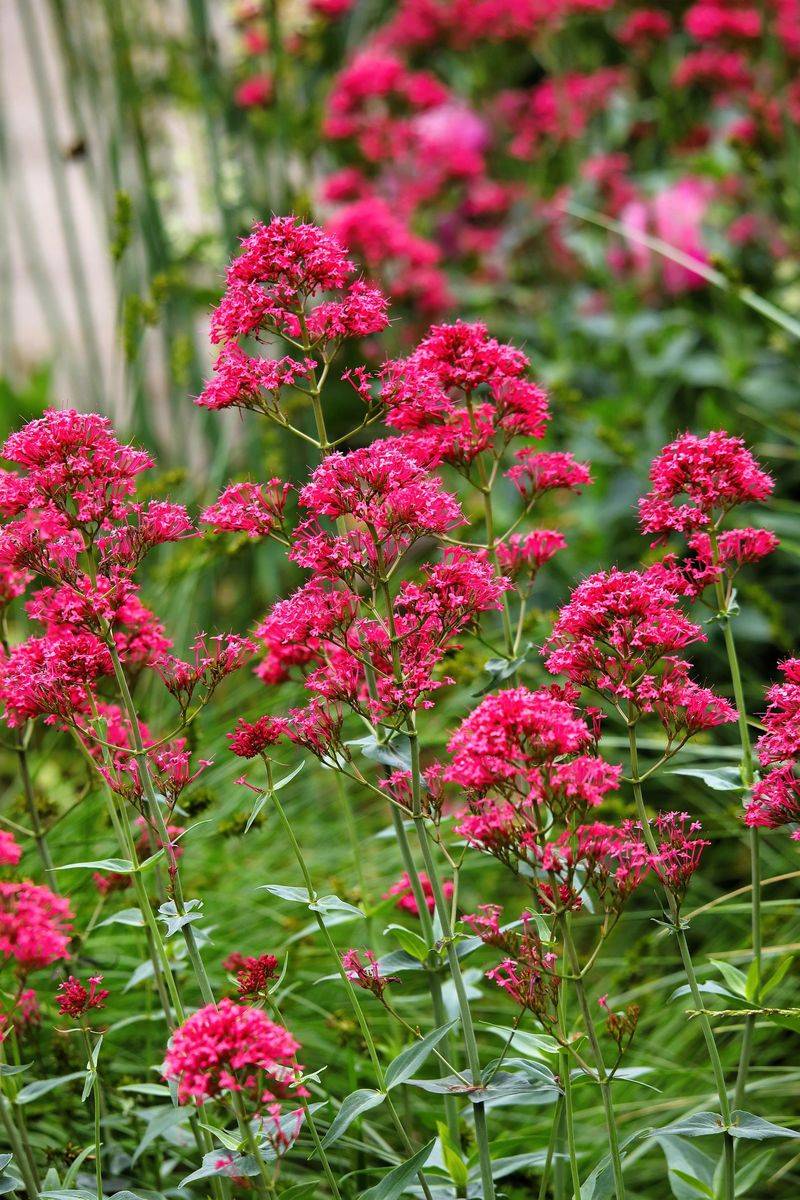
Some plants seem to thrive on neglect, and Jupiter’s beard is one of them. It pops up happily along rock walls and dry edges where fussier flowers fail.
The rounded clusters hold tiny reddish-pink blooms from summer through very late fall. Hummingbirds work the heads one flower at a time.
Deadheading is your secret tool here. Trim spent clusters and the plant keeps making more, and it also stops it from seeding all over the yard.
8. Cardinal Flower
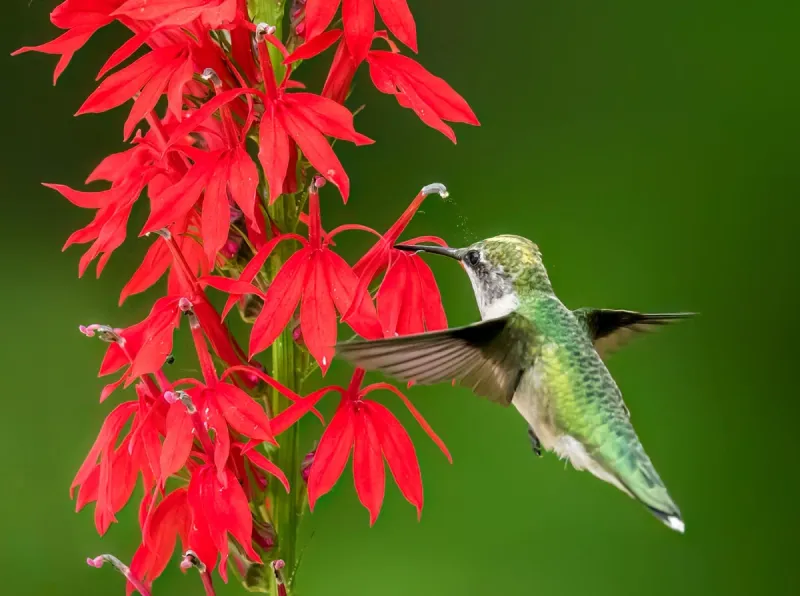
If hummingbirds had a favorite restaurant, cardinal flower might be it. Its tall spikes of scarlet blooms open from late summer into early fall, right during migration.
This native perennial grows in zones 3 through 9 and loves moist soil. It naturally lives along stream banks, so a spot near a rain garden or downspout suits it well.
Plants sometimes vanish after a few years. Letting a few seed heads ripen, or pinning a stem to the soil so it roots, helps keep a steady supply of new plants.
9. California Fuchsia
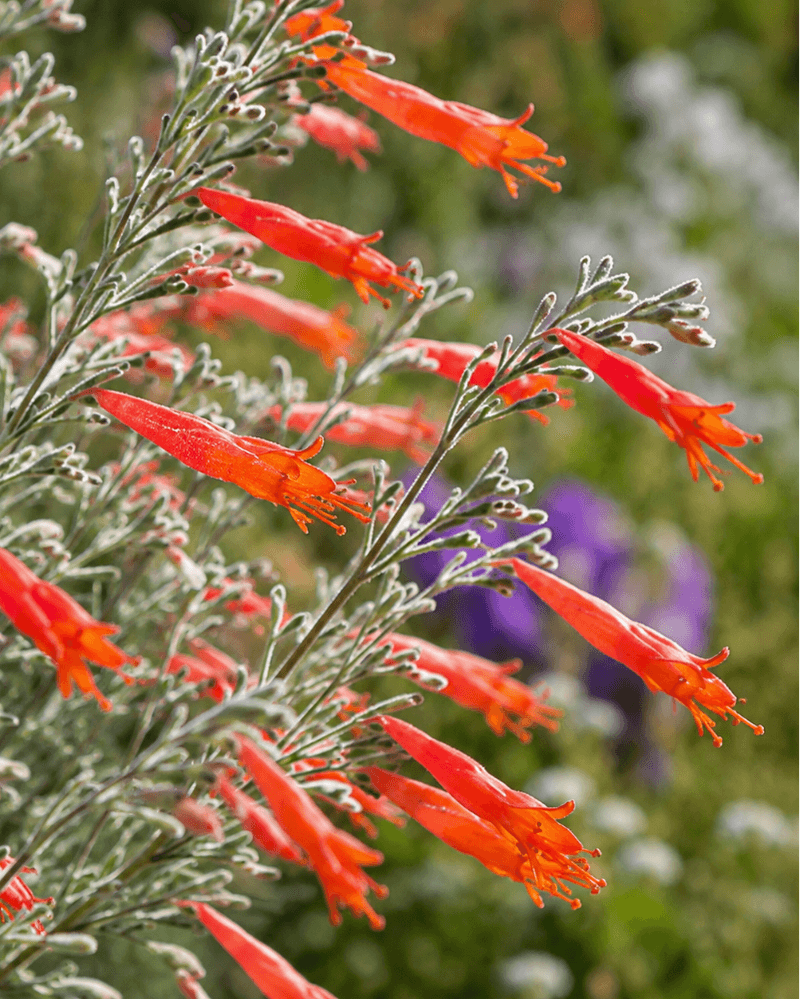
Dry yard, poor soil, blazing sun? California fuchsia shrugs at all of it.
This low, shrubby perennial covers itself in orange-red tubes from late summer through fall. In the West, it is a key fuel stop for migrating hummingbirds.
The biggest mistake is too much kindness. Rich soil and extra water make it floppy, so plant it in lean, well-drained ground and let it be.
Cut it back hard in late winter for tidy new growth.
10. Firecracker Penstemon
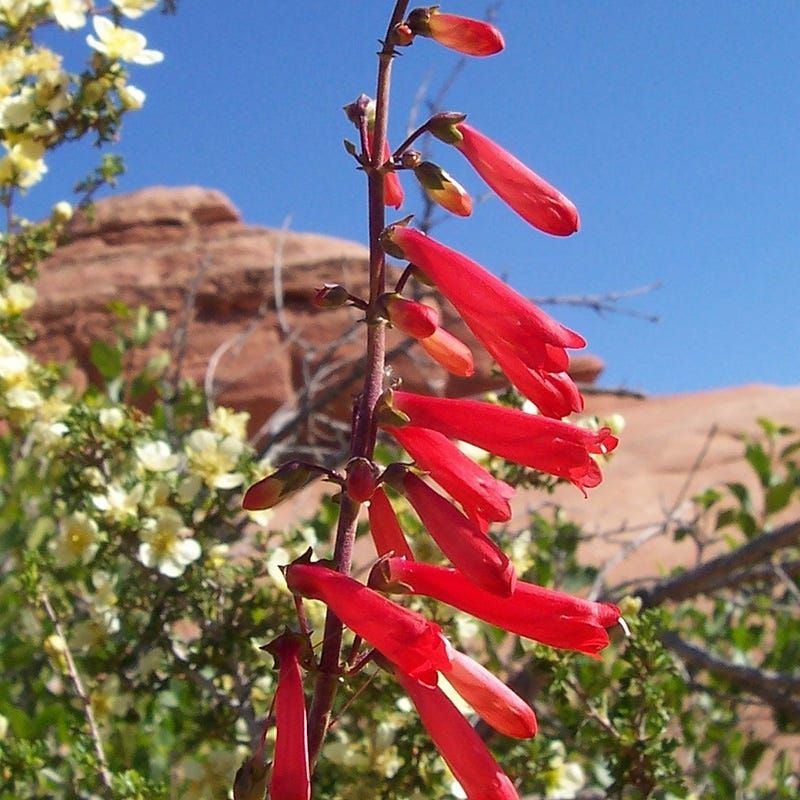
Early birds of the list deserve credit too. Firecracker penstemon blooms from late spring into early summer, feeding hummingbirds when they first arrive and building loyalty to your yard.
The flowers are narrow red tubes lined up along tall stems. Once birds learn your garden is a good stop, they tend to keep checking back all season.
This beardtongue needs sharp drainage. Soggy winter soil is its top killer, so plant it in gravelly ground or a raised spot.
Pair it with fall bloomers like salvia for nonstop nectar.
11. Red Yucca
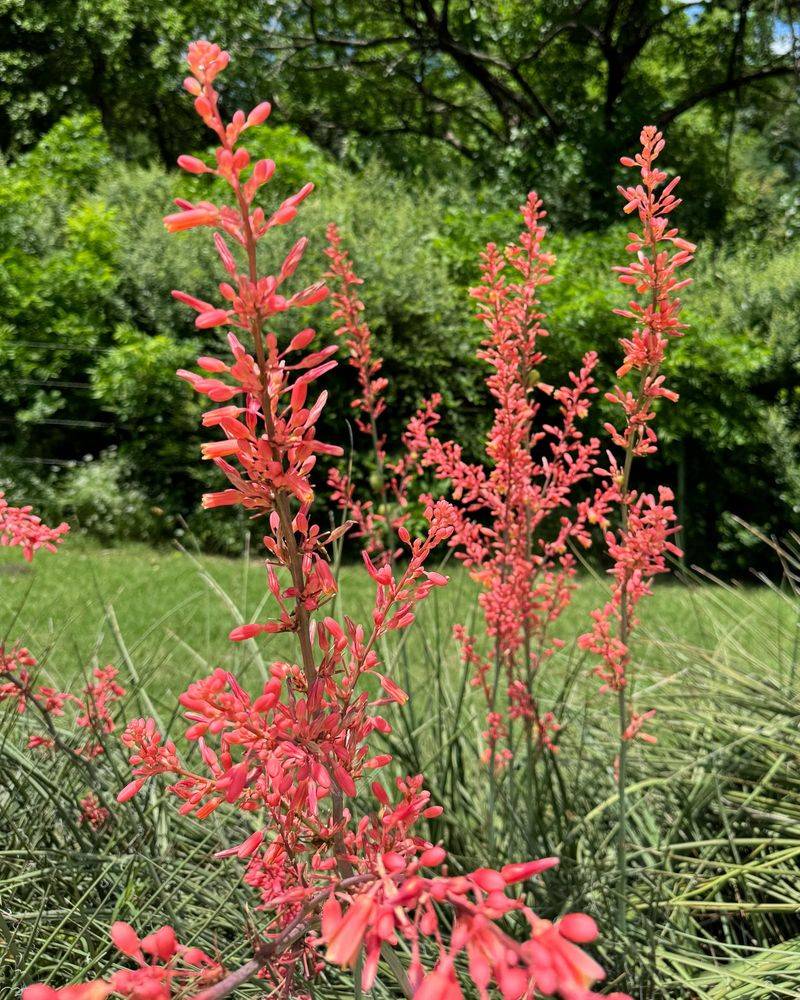
Not a true yucca at all, red yucca is actually a grassy-looking succulent without the sharp spines. Gardeners in hot, dry regions love it for good reason.
Tall, arching stalks rise from the clump and dangle coral-red bells from summer through fall. Hummingbirds visit the stalks for months.
It needs almost nothing from you. Full sun, good drainage, and removing old stalks once they dry is about the whole care list.
12. Mandevilla
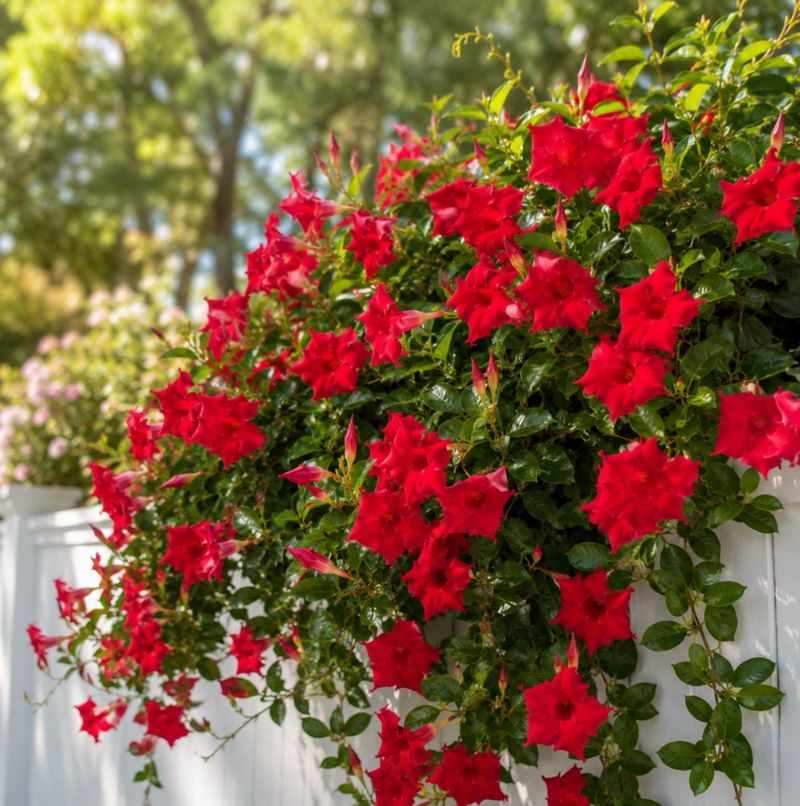
Many people buy a mandevilla just for the patio and end up with a hummingbird show. Its long red trumpets bloom nonstop in warm weather.
Grow it on a small trellis in a container so you can enjoy it up close. Feed it every couple of weeks and water when the top of the soil dries out.
Yellow leaves often mean soggy roots, so make sure the pot drains. Before nights hit 50 degrees, bring it indoors to a sunny window and try again next spring.
13. Bee Balm
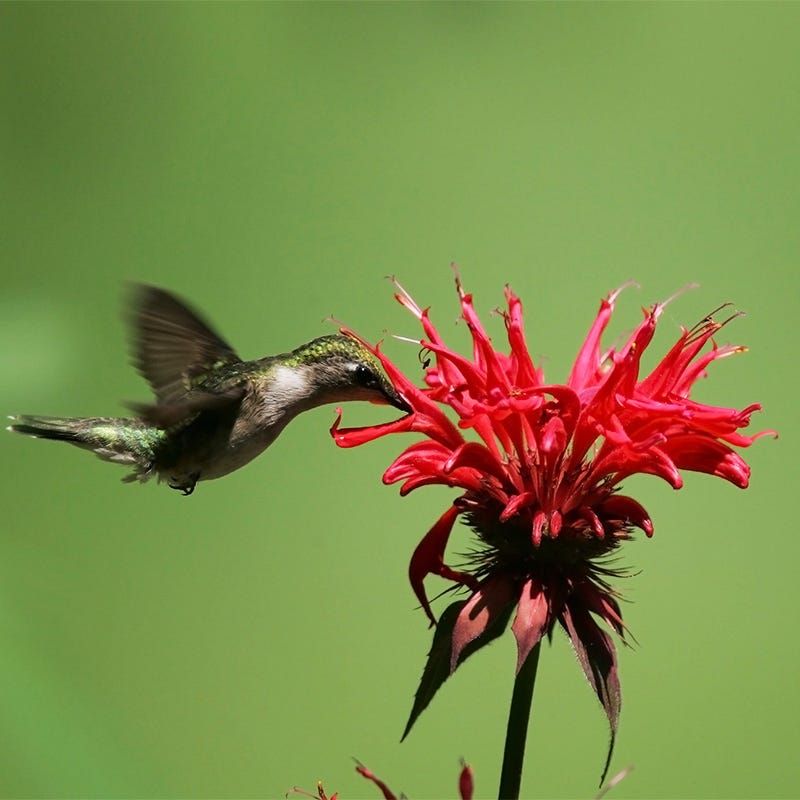
Shaggy, bright, and a little wild-looking, bee balm feeds a crowd. Hummingbirds, bees, and butterflies all share its red flowers from summer into early fall.
This native perennial spreads into nice clumps. The leaves smell minty, and the blooms keep coming if you cut off faded heads.
White powder on the leaves is common in late summer. Thinning crowded stems for better airflow may reduce it, and choosing mildew-resistant varieties like ‘Jacob Cline’ helps a lot.