
If Blue Jays Visit Your Feeder But Never Stay, Here Are 7 Things Your Yard Is Missing
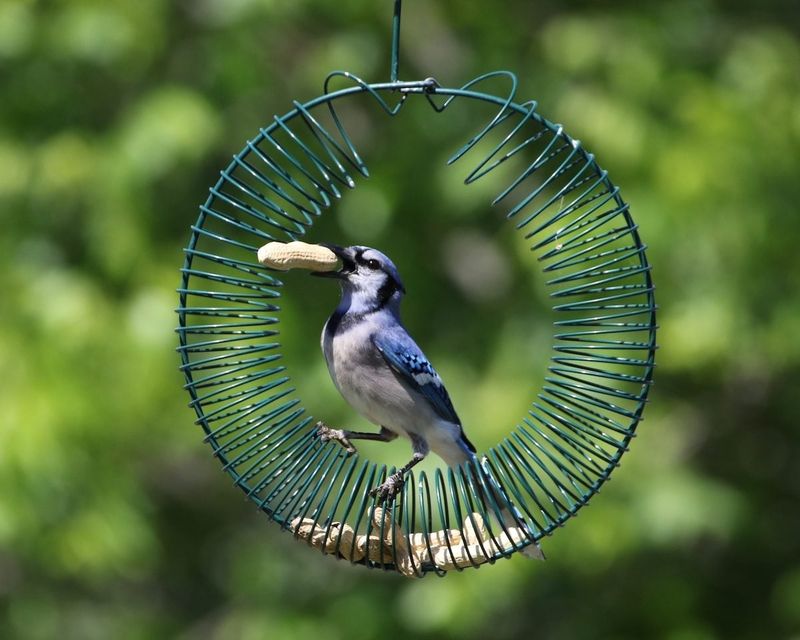
You hear that loud, bossy call, look out the window, and there he is: a bright Blue Jay snatching a peanut from your feeder. Then, just as fast, he’s gone again.
That quick grab-and-go usually means your yard offers a snack but not a home. The good news is that a few simple changes to your plants, water, and cover can turn a passing visitor into a year-round neighbor.
1. Oaks and Other Nut-Producing Trees
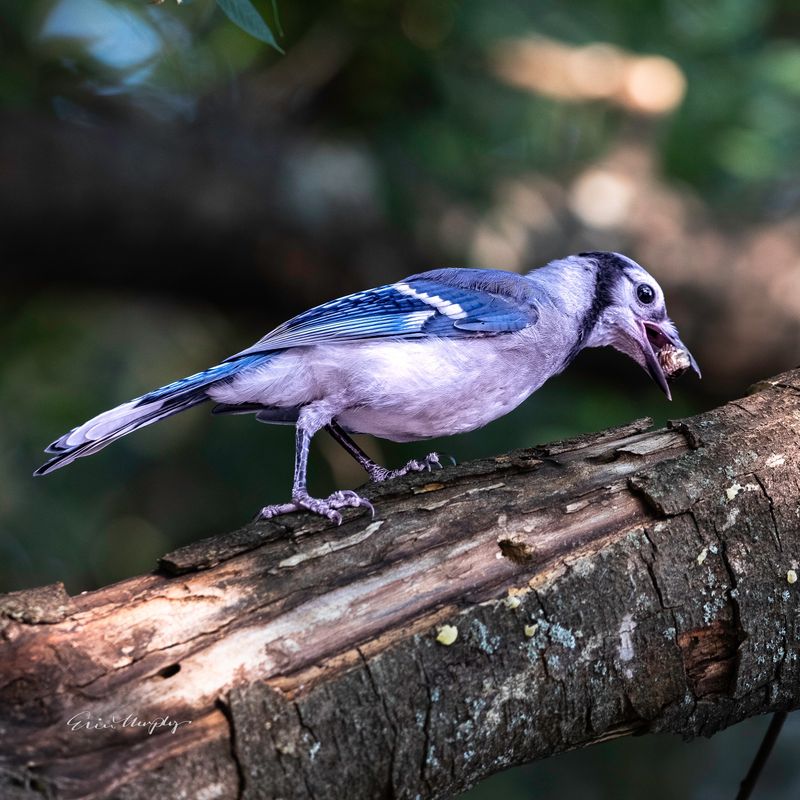
One Blue Jay can bury thousands of acorns in a single fall. Scientists even credit these birds with helping oak forests spread north after the last Ice Age, one forgotten acorn at a time.
Your feeder may offer sunflower seeds, but jays are wired to hunt for nuts they can carry off and hide. When a yard has no oaks, beeches, or hazelnuts, the birds treat it like a gas station instead of a pantry.
Planting a native oak is a long game, but it pays off for decades. For faster results, try American hazelnut, which can produce nuts within a few years and fits smaller yards.
Leaving fallen acorns under existing trees, instead of raking every one away, may also keep jays poking around longer.
2. Berry Shrubs That Feed Them All Season
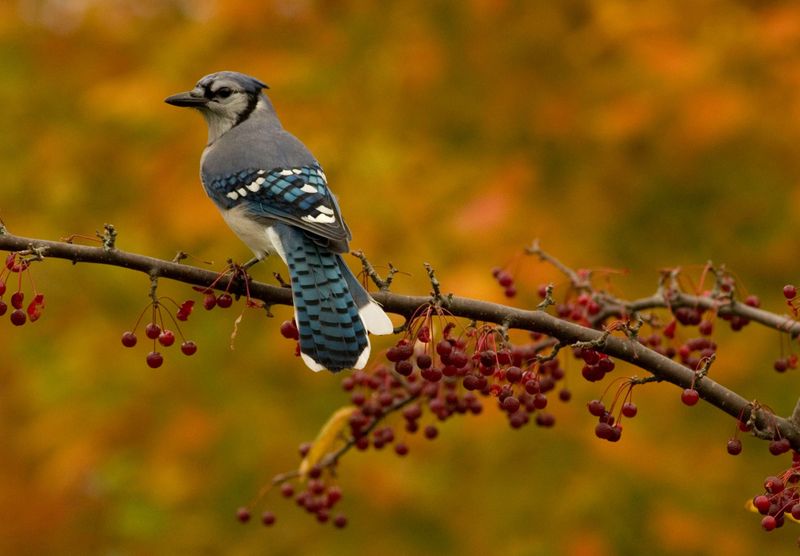
Picture your yard as a buffet with only one dish. Sooner or later, even the hungriest guest wanders off to find dessert.
Blue Jays love fruit, and a good mix of berry plants keeps something ripe from early summer into winter. Serviceberry fruits first, followed by blackberries and elderberries in midsummer.
Viburnum, sumac, and holly hang on into the cold months when food gets scarce.
You don’t need a huge space to make this work. Even two or three shrubs tucked along a fence line can give jays a reason to check back every day.
Choose native varieties for your area, since local birds already know them and they tend to need less fuss from you.
3. A Sturdy Platform or Hopper Feeder
Honestly, a lot of tiny tube feeders are built for finches, not for a bird that weighs about three ounces and lands like it owns the place. Watch a jay try to cling to a wobbly perch and you’ll see why it grabs one seed and bolts.
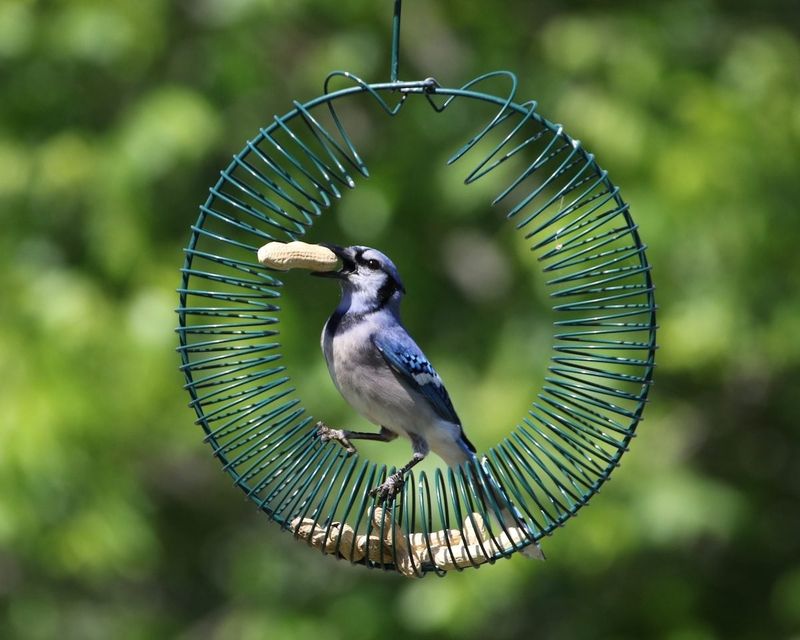
Jays feel more relaxed on a broad, stable surface. Platform trays, open hoppers, and wreath-style peanut feeders all give them room to stand, look around, and eat.
Fill them with whole peanuts in the shell, black oil sunflower seeds, or cracked corn. Setting up a second feeding station away from the small-bird feeders can also cut down on squabbles, so everyone gets a turn without the jays getting chased off or doing the chasing.
4. A Shallow, Clean Bird Bath
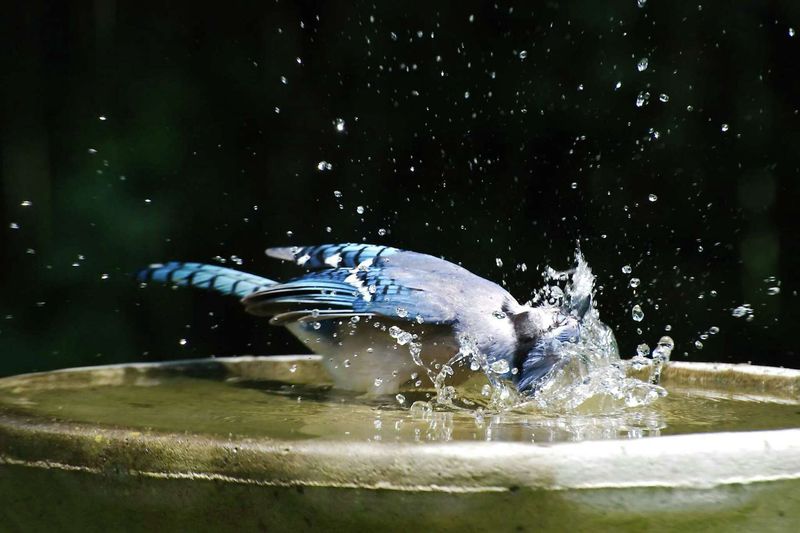
Few things in nature are as funny as a Blue Jay taking a bath. They dunk, flap, and fling water everywhere like a kid in a kiddie pool.
For that show to happen, the bath needs to be shallow, about 2 to 3 inches deep, with a rough bottom for grip. A wide basin gives these bigger birds space to splash without feeling cramped.
Moving water catches their eye from a distance, so a small dripper or solar fountain can help. Scrub the bath and change the water every few days to keep it fresh.
In winter, a heated bird bath may become the only open water around, and jays will remember where they found it.
5. Dense Trees and Shrubs for Cover
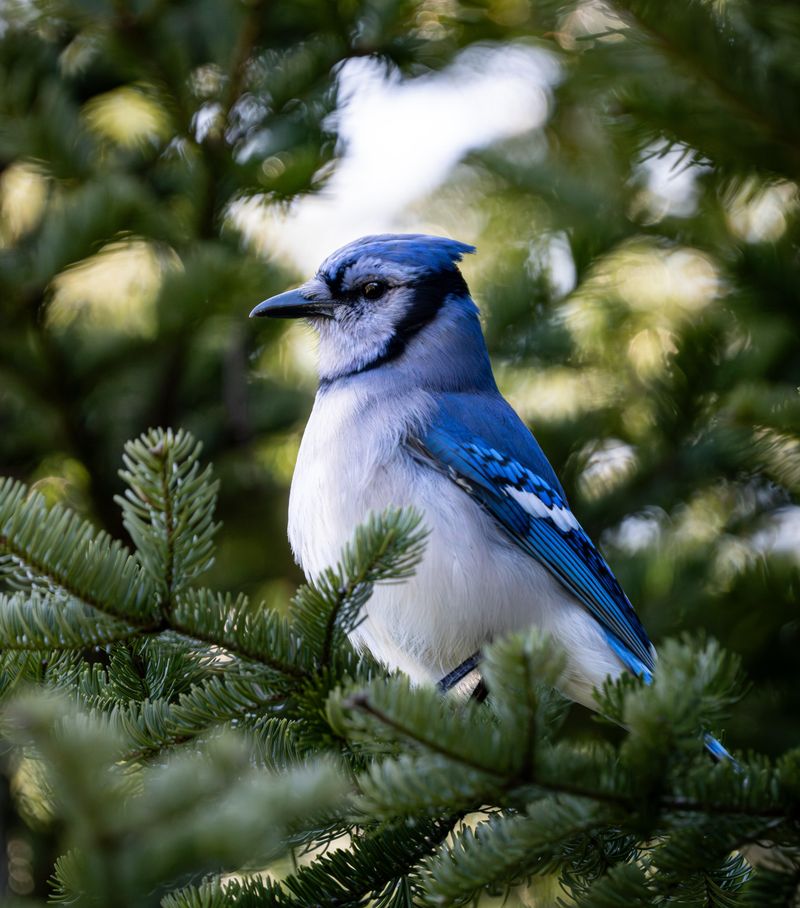
Hawks are the reason your jay keeps glancing at the sky. A bird that feels exposed will eat fast and leave, no matter how good the food is.
Thick evergreens like spruce, pine, and cedar give jays a safe spot to duck into in seconds. Tall, bushy shrubs work too, especially when they’re planted within about 10 to 15 feet of your feeders.
Mixing evergreens with leafy trees means shelter all year, not just in summer. That cover also blocks cold winds and gives the birds a quiet place to preen and rest.
A bare, wide-open lawn may look neat, but to a jay it feels like standing in a parking lot at night.
6. Mature Trees and Nesting Materials
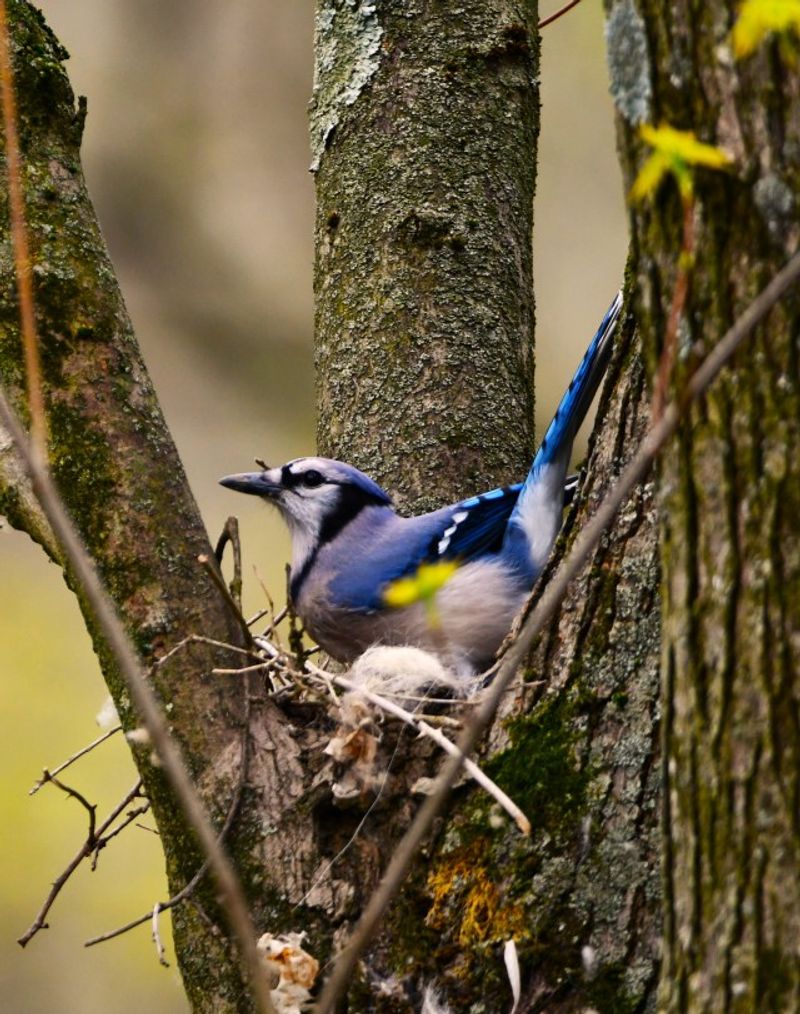
Here’s something many people don’t know: Blue Jays almost never use birdhouses. They prefer to build open, cup-shaped nests in the fork of a strong branch, usually 5 to 20 feet off the ground.
That means a yard with only young or skinny trees is missing the real estate jays want. Mature maples, oaks, and pines with sturdy crotches give them solid spots to build.
You can help by leaving a small pile of twigs, dry grass, and even some mud nearby in spring. Skip heavy pruning during nesting season too.
When a pair raises a family in your yard, they’re far more likely to stick around afterward.
7. Blue Hydrangeas and Other Native Blooms

Caterpillars might be the most important bird food you never think about. Baby jays need lots of insects to grow, and native plants support far more bugs than a plain lawn.
A mix of flowers, shrubs, and grasses builds a small ecosystem right outside your door. Some gardeners also believe jays notice the color blue, so blue hydrangeas, salvias, bellflowers, and blue flax may add a little extra pull, though the science is still loose.
If your hydrangeas are pink but you want blue, adding soil acidifier or aluminum sulfate in spring can help shift the color over time. Either way, a lively, varied garden gives jays a reason to linger long after the feeder is empty.