
16 Fertilizer Tips That Make Your Potted Geraniums Explode With Bloom (Plus 2 That Never Fail)
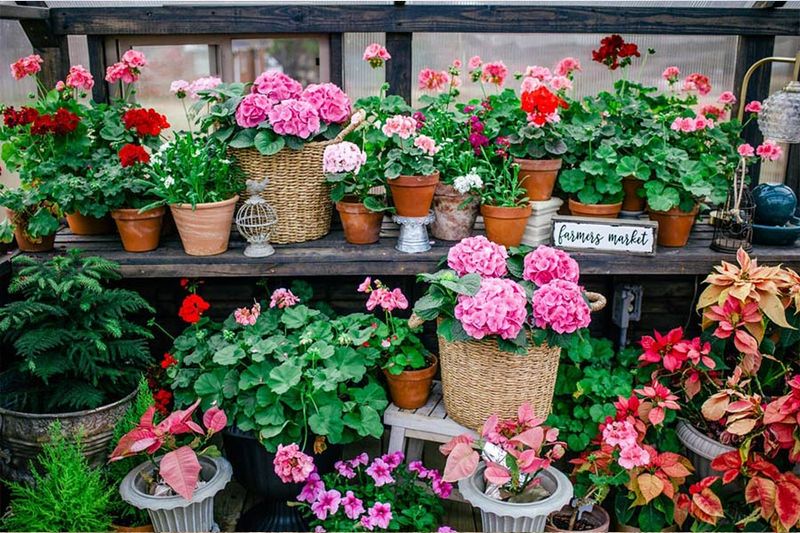
If your potted geraniums are growing plenty of green leaves but skimping on flowers, the fertilizer is usually the missing piece. Geraniums in pots are hungry plants, and the frequent watering they need washes food right out of the soil.
The good news is that a few simple feeding habits can turn a sleepy plant into a nonstop bloom machine. Here are 16 fertilizer tips to try, plus 2 that almost never let gardeners down.
1. Feed Phosphorus and Potassium for More Flowers
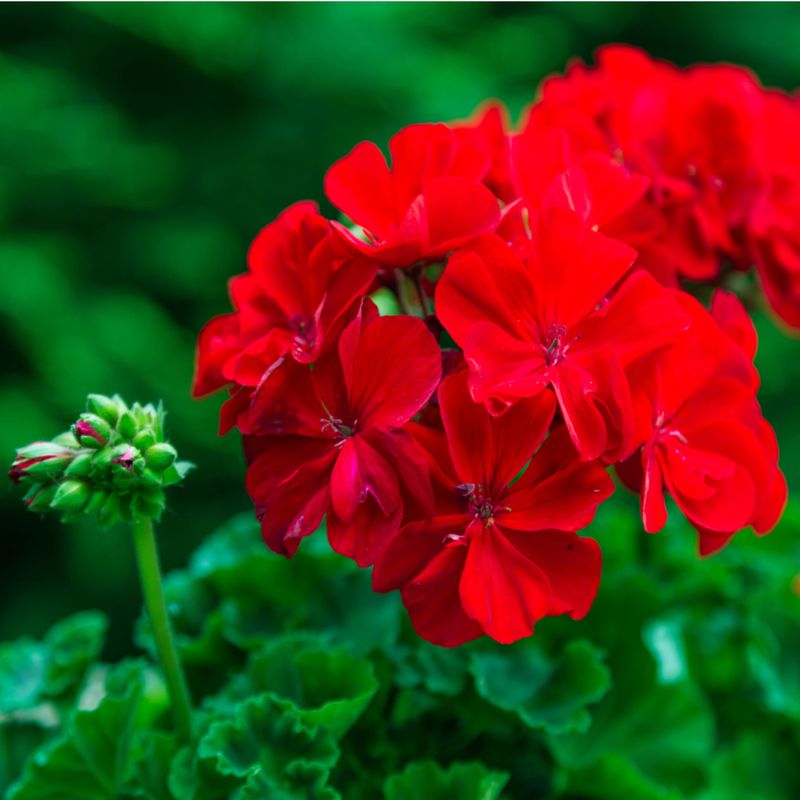
Ever wonder why your geranium looks like a leafy bush but forgets to bloom? The answer usually hides in the numbers on the fertilizer bag.
Nitrogen, the first number, builds leaves and stems. Phosphorus, the middle number, drives cell development and the actual flower buds, while potassium, the last number, keeps the whole plant healthy and balances its water use.
When you want a pot bursting with color, lean toward the middle and last numbers instead of the first. Think of phosphorus and potassium as the fuel that pushes energy into petals rather than foliage.
Learning to read that N-P-K label is the single most useful habit you can build for bloom-heavy geraniums.
2. Switch to a Bloom-Boosting Formula When Buds Appear
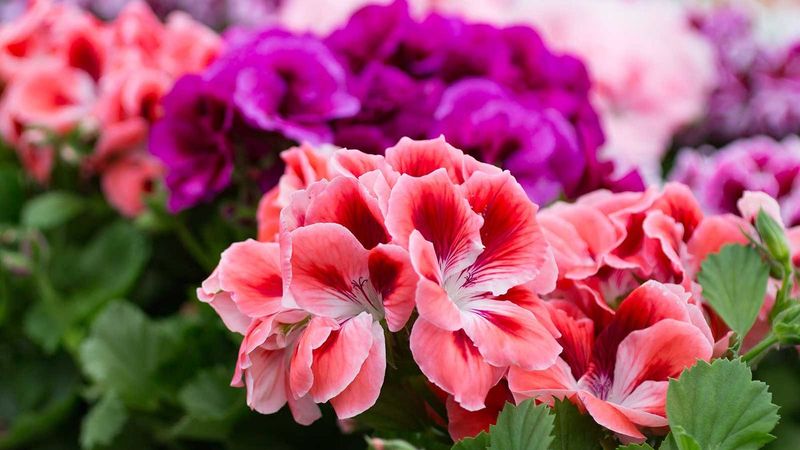
The moment you spot the first tiny buds forming, that is your cue to change the menu. A bloom-boosting fertilizer with a higher phosphorus content, like a 15-30-15 ratio, tells the plant to keep the flowers coming.
Specialty blends made for annual geraniums do this work beautifully. Products such as ALGOplus Geranium and Patio Plants Liquid Fertilizer, with its 4-6-8 balance, are formulated to encourage flower production rather than runaway leaves.
You do not have to buy the fanciest bottle on the shelf. Just look for a formula where the phosphorus and potassium numbers stand taller than the nitrogen once flowering season kicks into gear.
3. Start the Season with a Balanced Fertilizer
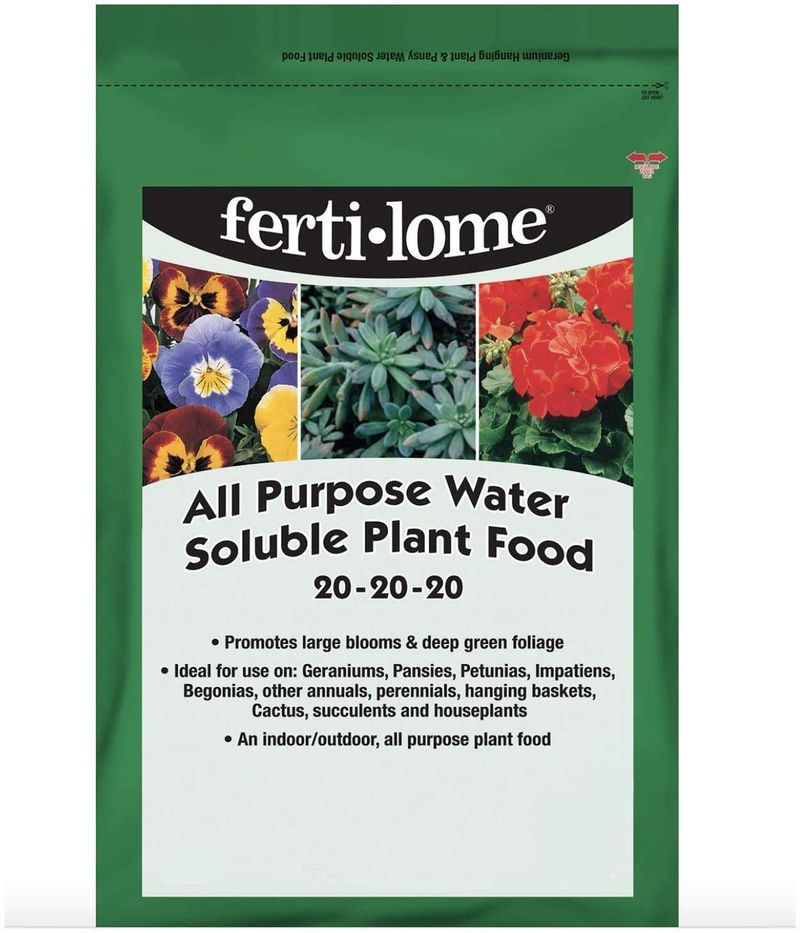
Early spring is not the time for a heavy bloom formula. When your geranium is just waking up and settling into its pot, it needs a little bit of everything to build a strong foundation.
A balanced water-soluble fertilizer with an even ratio like 10-10-10 or 20-20-20 covers all the bases. It supports roots, leaves, and the earliest flower buds at the same time.
Consider this the warm-up before the main event. Once the plant is established and buds start showing, you can graduate to the phosphorus-rich formulas that push those explosive blooms.
4. Mix Slow-Release Granules Into the Pot at Planting
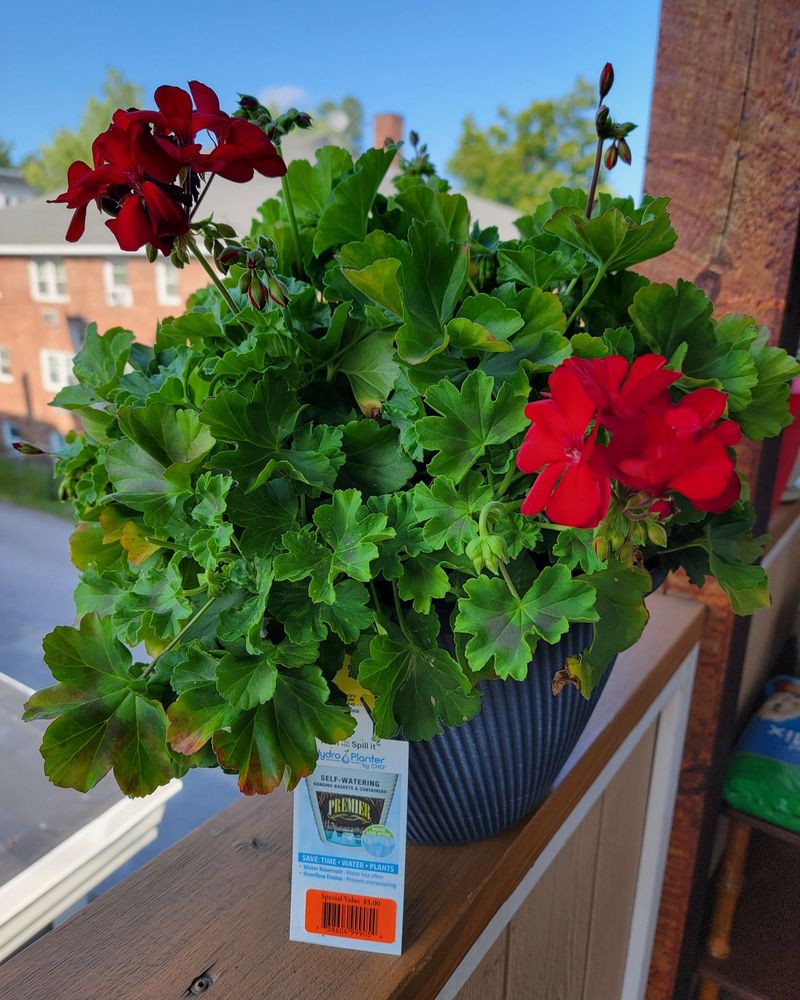
Busy gardeners, this one is for you. Stirring a slow-release granular fertilizer into your potting mix at planting time sets up a steady drip of nutrients that lasts for months.
A product like Osmocote Plus, with a 9-6-12 ratio, releases a little food every time you water. That means fewer trips with the watering can and less worry about forgetting a feeding.
Slow-release granules work quietly in the background, so they pair nicely with an occasional liquid feed during peak bloom. Set it once at the start of the season and let it carry the workload while you enjoy the flowers.
5. Use Liquid Fertilizers for Fast Results
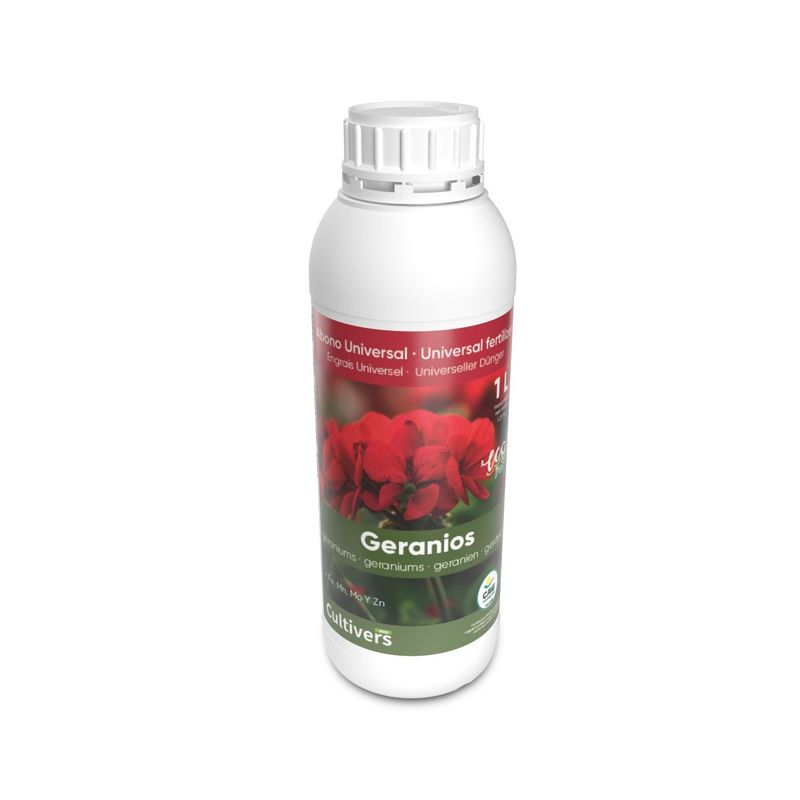
When you want to see a response in days rather than weeks, reach for a water-soluble liquid feed. Geraniums drink these in quickly through both their roots and their leaves.
Fast uptake matters for potted plants because their limited soil holds only so many nutrients at a time. A liquid feed delivers a quick boost right when the plant is actively pushing new buds.
Liquids also give you fine control over strength and timing. You can dial the dose up during heavy blooming and ease off when the plant is resting, all with the same bottle.
6. Try Organic Options Like Compost Tea and Blood Meal
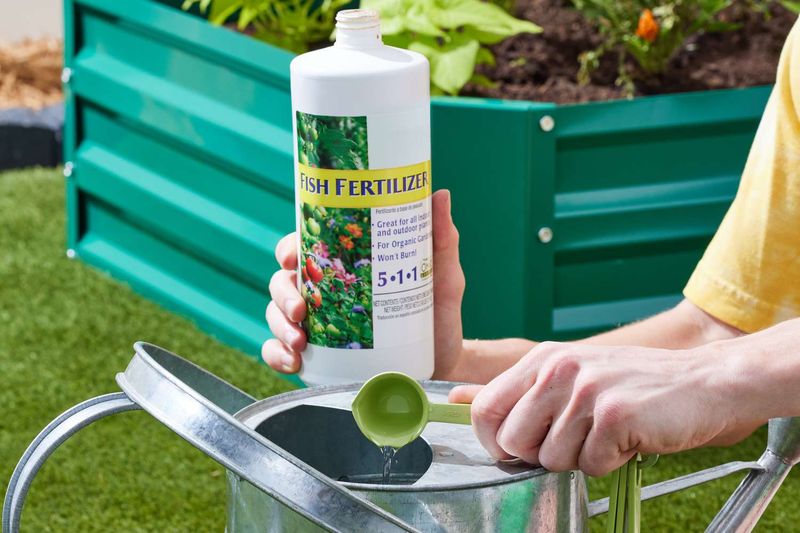
Prefer to keep things natural? Geraniums respond happily to organic feeding, and you have several easy choices.
Compost tea gives a gentle, all-around nutrient drink, while blood meal adds a nitrogen kick for greening up a pale plant. Both are common favorites among gardeners who skip synthetic bottles.
Top-dressing the pot with a layer of high-quality compost is another quiet workhorse. It slowly feeds the plant with each watering and helps the soil hold moisture longer, which container geraniums always appreciate on hot afternoons.
7. Feed Regularly Through the Growing Season
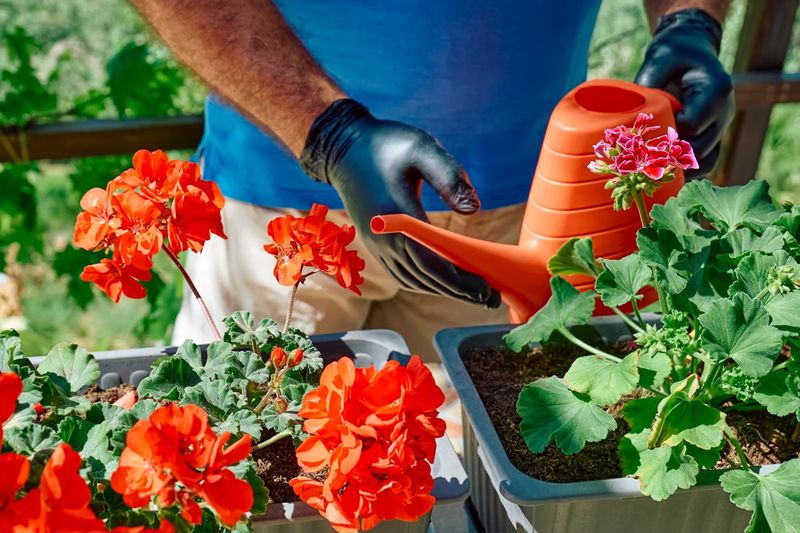
Geraniums are not once-and-done eaters. Annual varieties benefit from steady feeding roughly from May through October, right through their long flowering stretch.
Perennial geraniums are far less demanding and often need just one feeding in spring to do their thing. Knowing which type you have keeps you from over-working plants that do not want it.
For the annuals in your pots, mark a loose feeding schedule on your calendar. A consistent rhythm through the warm months is what separates a plant that blooms in bursts from one that stays covered in color.
8. Fertilize Potted Plants More Often Than Garden Beds
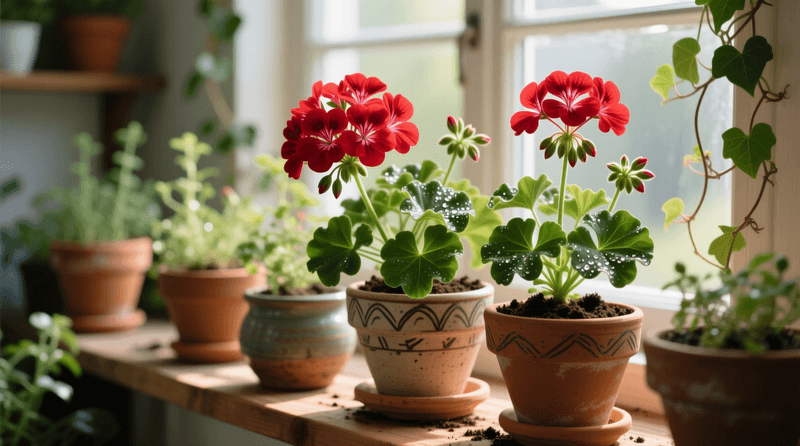
Here is the catch that trips up a lot of people who move geraniums into containers. Every time water runs out the drainage holes, it carries dissolved nutrients away with it.
Because of that constant leaching, potted geraniums need feeding more often than their cousins in the ground. A good rhythm is a liquid feed every two weeks, or every 7 to 10 days at half the labeled strength.
Feeding lightly but often beats dumping a big dose once a month. The plant gets a steady supply, and you avoid the shock that comes from long gaps followed by a heavy meal.
9. Skip Feeding During the Hottest Part of the Day

Timing your feed around the weather can save a plant from a nasty surprise. Applying fertilizer in blazing midday heat raises the risk of fertilizer burn on stressed roots and leaves.
Early morning or the cooler part of the evening is a much friendlier window. The plant is calmer, the soil is not baking, and nutrients can settle in without scorching anything.
Making this a habit costs you nothing and protects the work you have already put in. Wait for the temperature to ease, then feed with confidence.
10. Water a Dry Plant Before You Fertilize It
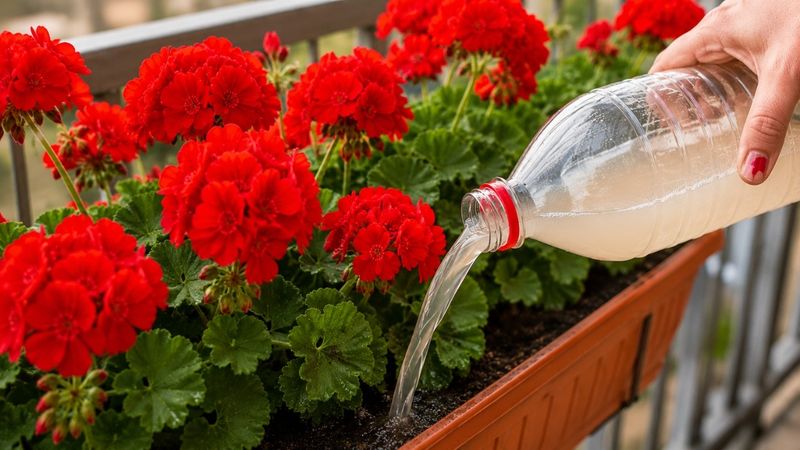
Reaching for the fertilizer when your geranium is drooping and dry is a tempting mistake. Feeding a thirsty plant sends concentrated nutrients straight into parched roots, and that can burn them.
Give the soil a good drink first and let it soak in. Moist roots are ready to absorb nutrients safely, without the risk of chemical scorching.
Think of it as prepping the plant for its meal. A quick watering step beforehand turns a risky feed into a gentle, effective one every single time.
11. Direct Fertilizer to the Soil, Not the Leaves
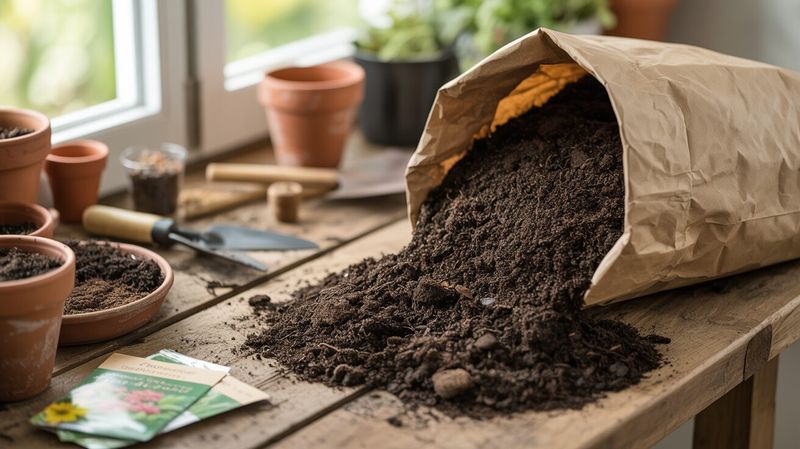
Where you pour matters just as much as what you pour. For most feedings, aim the fertilizer at the base of the plant near the roots and keep it off the flowers and foliage.
Fertilizer sitting on leaves and petals can leave spots or cause burn, especially under strong sun. The roots are where the real absorption happens anyway.
There is one exception worth knowing. Certain liquid fertilizers are designed for foliar feeding, meaning you dilute them and spray them lightly onto the leaves on purpose.
Just check the label before you go that route.
12. Water Generously After Applying Granular Fertilizer
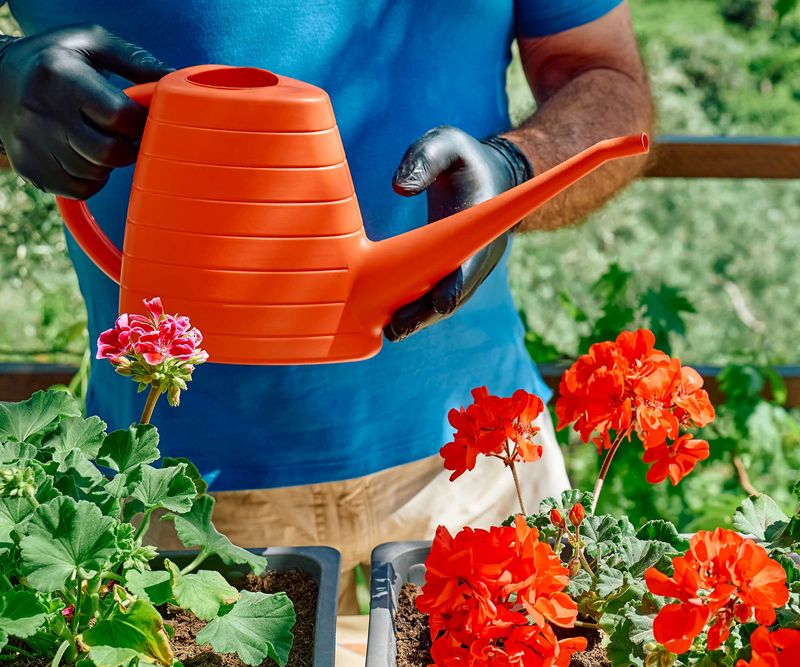
Granular fertilizers do not do much just sitting on top of dry soil. They need moisture to break down and release their nutrients into a form roots can actually use.
After scattering granules, give the pot a thorough soaking. The water dissolves the pellets and carries the food down to the root zone where it belongs.
Skipping this step can leave granules crusting on the surface, doing little for your plant. A generous drink right after application is what turns those pellets into real bloom power.
13. Stop Feeding While Overwintering
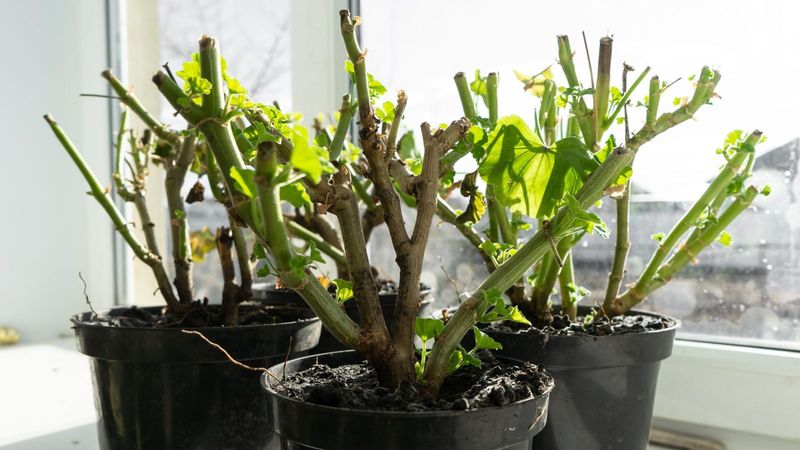
When the growing season winds down and you bring geraniums indoors for winter, their appetite fades too. Overwintering plants are resting, not growing, so pushing fertilizer on them does more harm than good.
Cut back on watering and stop feeding entirely during this dormant stretch. Let the plant coast quietly through the cold months.
Come spring, watch for fresh new growth as your signal to resume. When those bright leaves reappear, the plant is waking up and ready to eat again for another bloom-filled season.
14. Watch for the Warning Signs of Over-Fertilizing
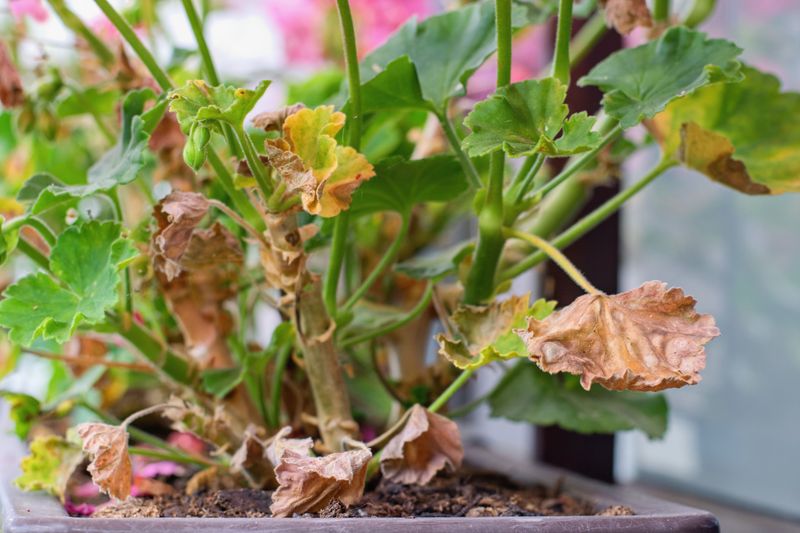
More food is not always better, and geraniums will tell you when you have gone overboard. Yellowing and wilting lower leaves, browning along leaf margins and tips, and stunted growth are all classic red flags.
Other clues include leaf drop, black or rotting roots, and a white crusty buildup of fertilizer salts on the soil surface. Too much fertilizer actually pulls moisture out of the roots, which is why the plant looks scorched even when it is not dry.
If you spot these symptoms, ease up on feeding and flush the pot with plain water to rinse out excess salts. Backing off often lets the plant recover and get back to blooming.
15. Go Easy on Nitrogen to Avoid an All-Leaves Plant
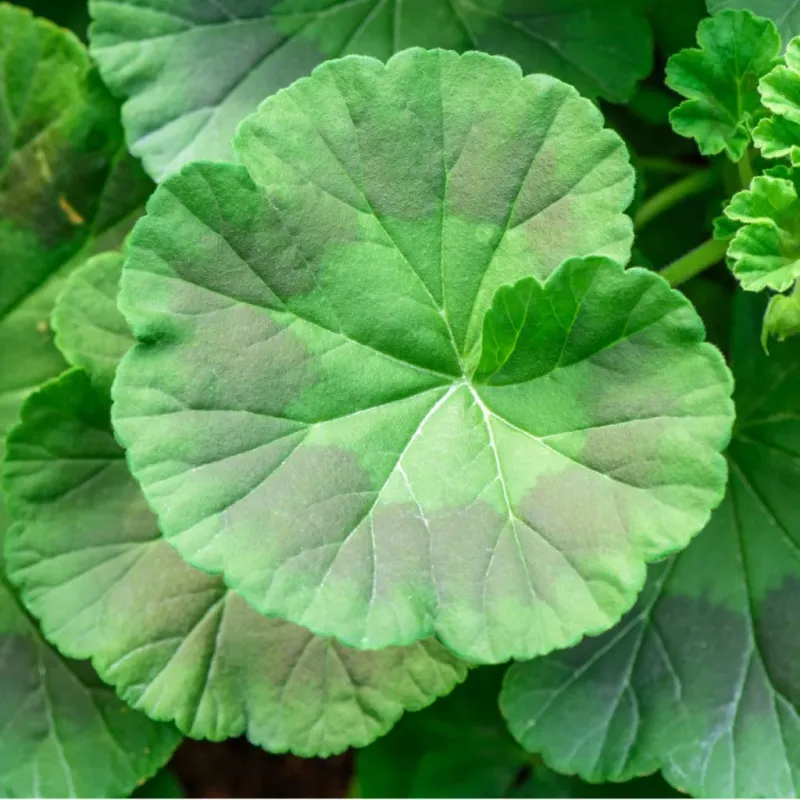
Picture a geranium that is huge, lush, and impressively green, yet stubbornly refuses to flower. That frustrating combination almost always points to too much nitrogen.
Nitrogen fuels foliage, so an excess pushes the plant to pour its energy into leaves and stems instead of blooms. You end up with a beautiful bush and hardly any color.
Keep nitrogen in check, especially once flowering season arrives, and let phosphorus take the lead. Trimming back the leafy fertilizer is often the quickest fix for a green giant that will not bloom.
16. Read the Signs of Nutrient Deficiencies
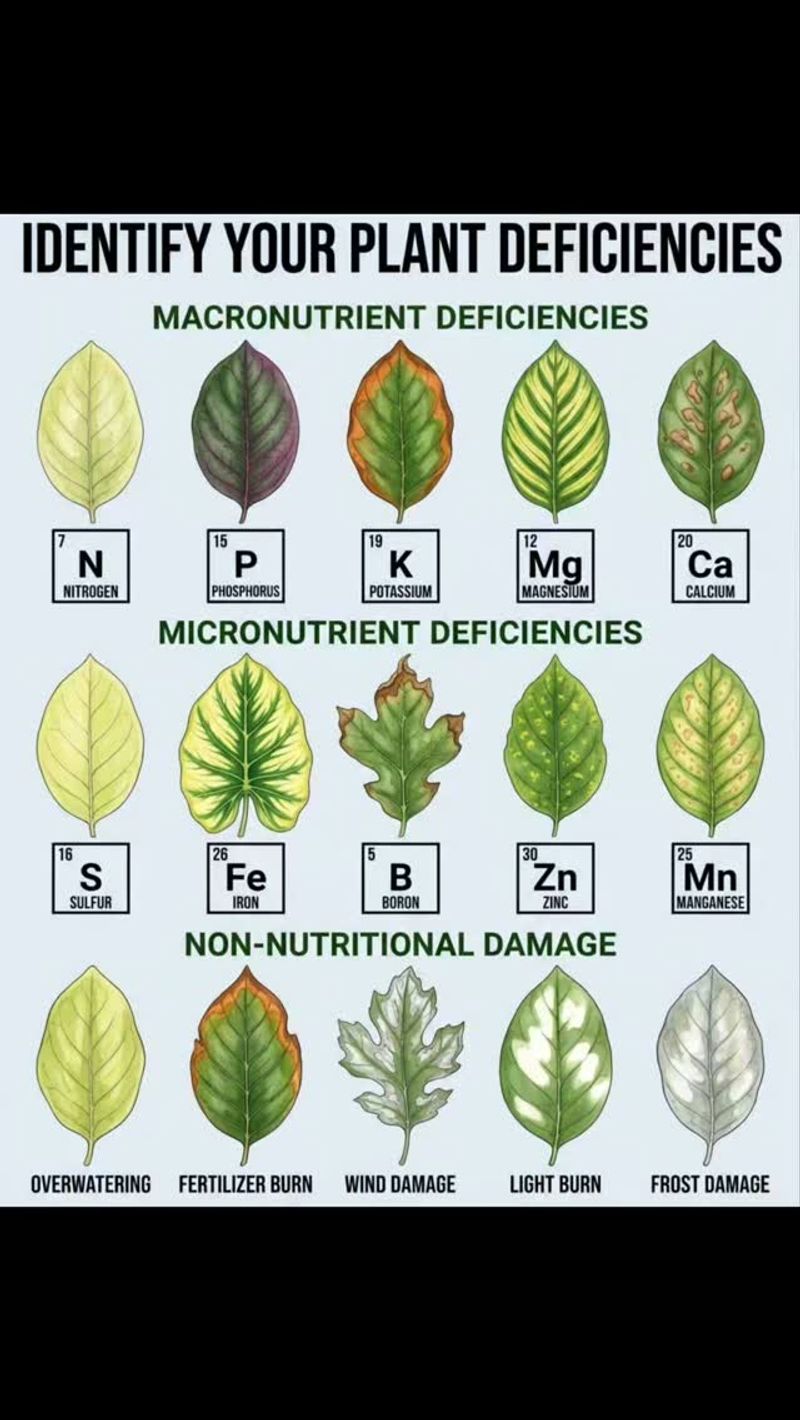
Just as too much food causes trouble, too little leaves clues on the leaves. Learning to read them helps you fix problems before they cost you flowers.
A nitrogen shortage shows up as slow growth and generally yellowing leaves. A phosphorus deficiency turns foliage dark green or reddish to purple, purples the lowest leaves, and delays or reduces flowering.
Potassium trouble reveals itself through dying lower leaves, weak stems, or yellowing and browning along the leaf edges. Matching the symptom to the missing nutrient lets you adjust your fertilizer instead of guessing, so your geranium gets exactly what it is craving.
17. Never Fail Tip: Consistent Feeding With a Bloom-Boosting Fertilizer
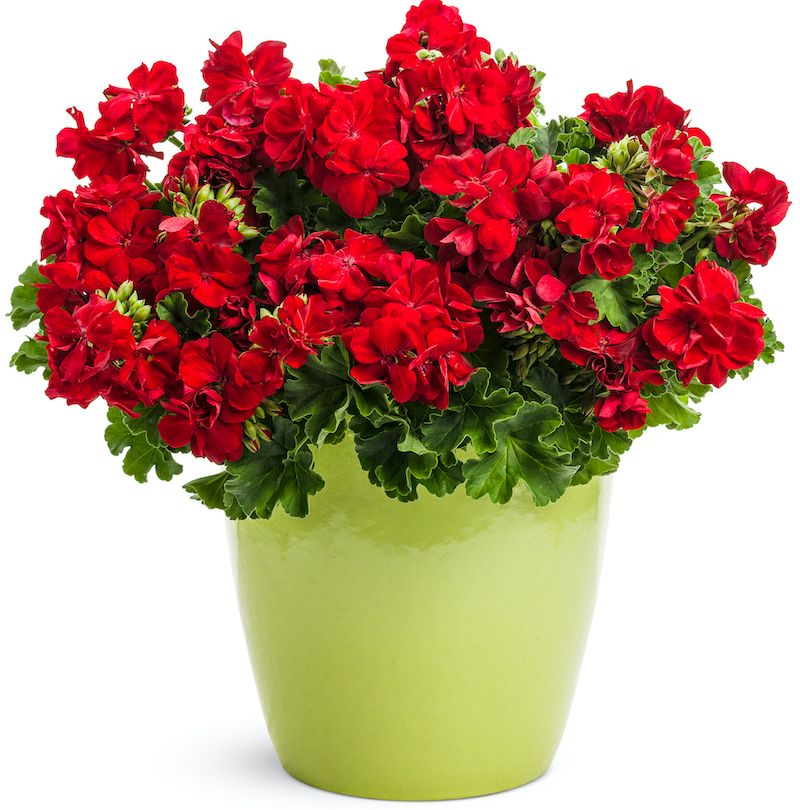
If you remember nothing else, remember this. For potted annual geraniums, steady feeding with a liquid fertilizer high in phosphorus or potassium during the growing season is the closest thing to a guaranteed bloom secret.
Start with a balanced feed early on to build the plant, then shift to the bloom-boosting formula and keep it coming on a regular schedule. Consistency is the magic word here, not intensity.
Plants that get this reliable rhythm reward you with wave after wave of flowers all season long. It is the tip experienced gardeners lean on because it simply works.
18. Never Fail Tip: Deadhead Regularly to Trigger New Blooms
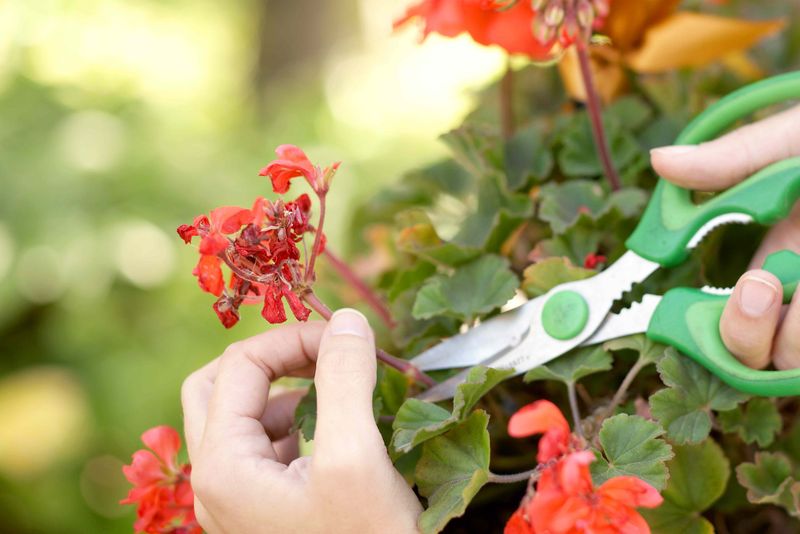
Fertilizer gets a lot of credit, but this free habit doubles its power. Pinching or snipping off faded, spent flowers, known as deadheading, tricks the plant into making more blooms instead of seeds.
When a flower is left to fade, the geranium starts pouring energy into seed production and slows down its flowering. Removing those tired blooms redirects all that energy back into fresh buds.
Pair regular deadheading with proper feeding and you have an unbeatable combination. Do a quick pass every few days, and your potted geranium stays covered in color from spring all the way into fall.