
Why Hummingbirds Suddenly Stop Coming Around – And The Surprising Details Driving Them Off
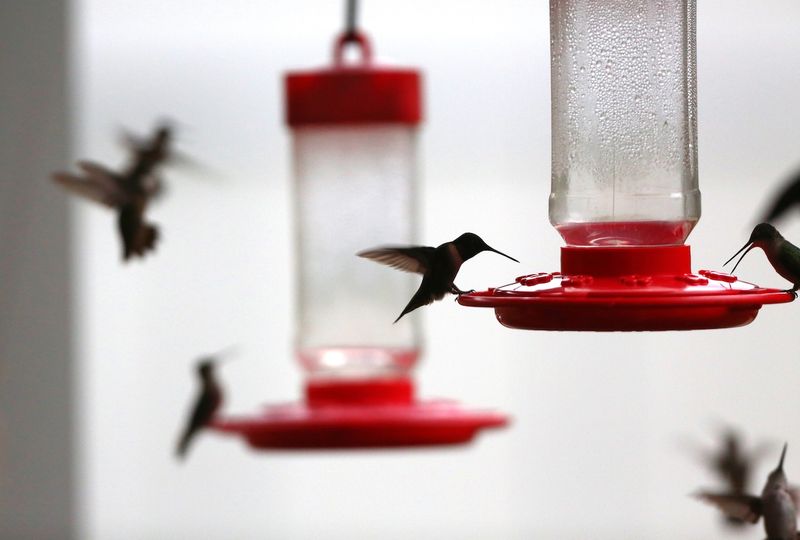
One morning your hummingbird feeder is buzzing with activity, and the next it sits untouched for days. Before you pull it down or change everything at once, take a breath – a quiet feeder rarely means you did something wrong.
Several completely normal forces can reduce visits without any fault on your part, and sorting out which one applies to your yard is easier than you might think.
A quiet feeder does not prove you drove the hummingbirds away
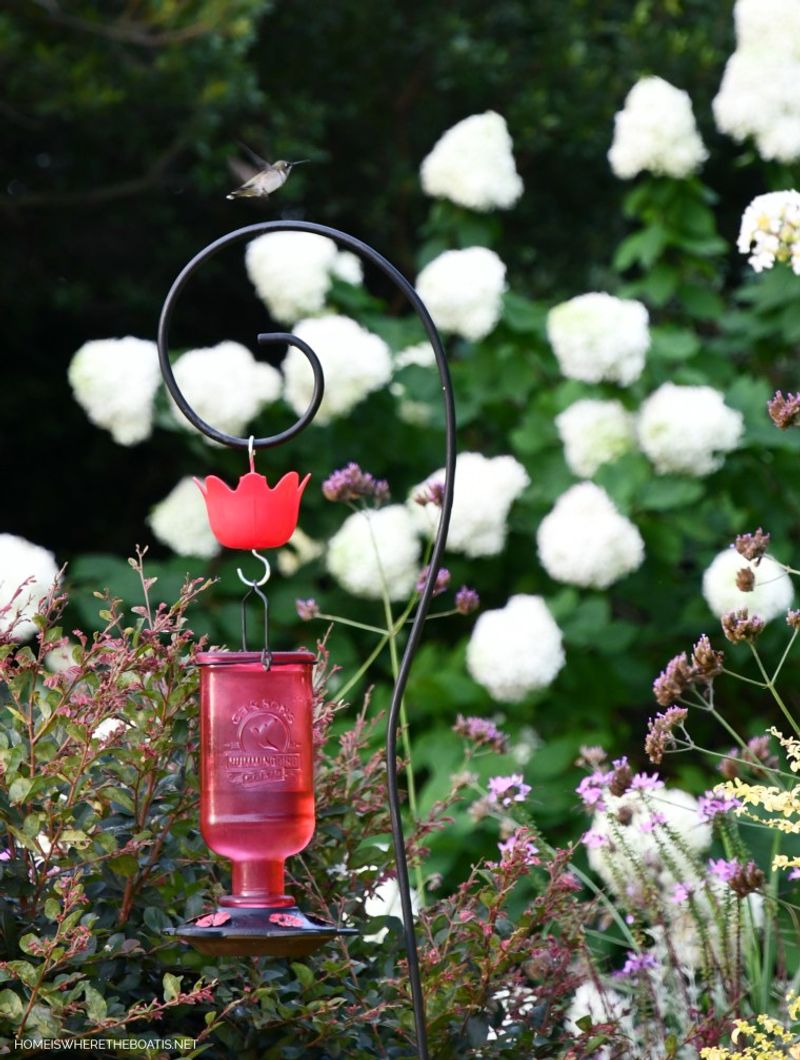
Backyard feeders go quiet for a surprising number of reasons, and most of them have nothing to do with a mistake the homeowner made. Cornell Lab of Ornithology notes that a drop in visits can reflect migration timing, territorial exclusion by a single bird, shifting natural food sources, or feeder conditions – and that distinguishing among these causes matters more than reacting to any one of them.
The pattern of absence is your first diagnostic clue. Ask yourself whether the drop happened suddenly or gradually, whether you still see one bird occasionally or none at all, and whether the timing lines up with late summer or early fall.
A feeder that was busy in June and silent in August is telling a different story than one that was active last week and empty today.
A useful framework keeps you from changing too many things at once. Start by checking the calendar and local species.
Then watch for territorial behavior near the feeder. After that, inspect the nectar and feeder hygiene.
Finally, look at nearby hazards like windows, cats, or heavy insect activity. Working through these steps in order saves time and avoids fixing something that was never broken.
One important distinction separates birds that have left the region from birds that are being blocked from one specific feeder. Migration removes birds from your yard entirely, while territorial exclusion or an unusable feeder simply redirects them to another spot nearby.
Knowing which situation you are dealing with shapes every decision that follows.
Migration can mimic a feeder problem
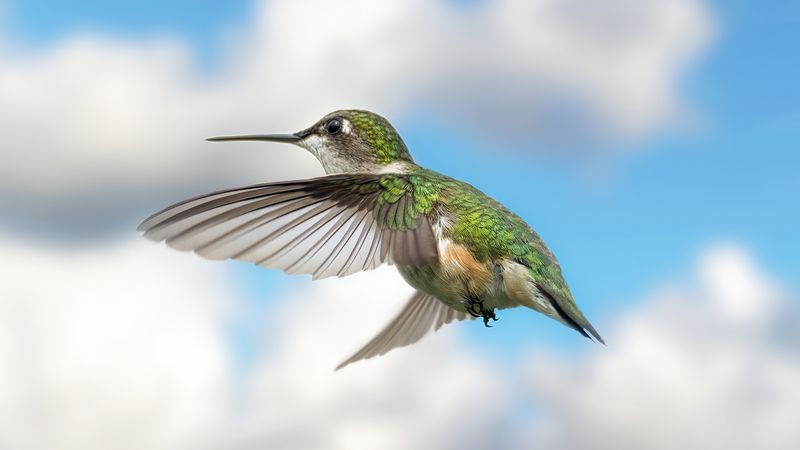
Late summer is the most common time for hummingbird numbers to drop at feeders in the eastern United States, and the calendar is almost always the explanation. Ruby-throated Hummingbirds respond to shortening day length, not feeder availability, when they prepare to head south.
Cornell Lab confirms that keeping a feeder stocked does not prevent or delay migration – the birds leave when their internal cues tell them to, regardless of what is hanging in your yard.
The timing of departure is not uniform even within a single species. Adult male Ruby-throated Hummingbirds often move south before females and young birds, so a yard that loses its males in July or early August has not necessarily lost all its hummingbirds.
Females and juveniles may still pass through for several more weeks, which is exactly why leaving the feeder up matters.
Regional differences add another layer. eBird range data shows that Anna’s Hummingbirds are year-round residents across much of the Pacific Coast and parts of the interior West, so a gardener in coastal California may see birds throughout winter while someone in Virginia watches the feeder go empty by October. Treating these two situations as the same problem leads to wrong conclusions.
Cornell recommends leaving feeders up for several weeks after the last apparent bird, because late migrants and stragglers may still be moving through. A feeder that seems pointless in late October could be a genuine resource for a bird passing through on an unusual schedule.
The small cost of fresh nectar is worth it for that possibility.
One territorial bird can make a busy yard look empty
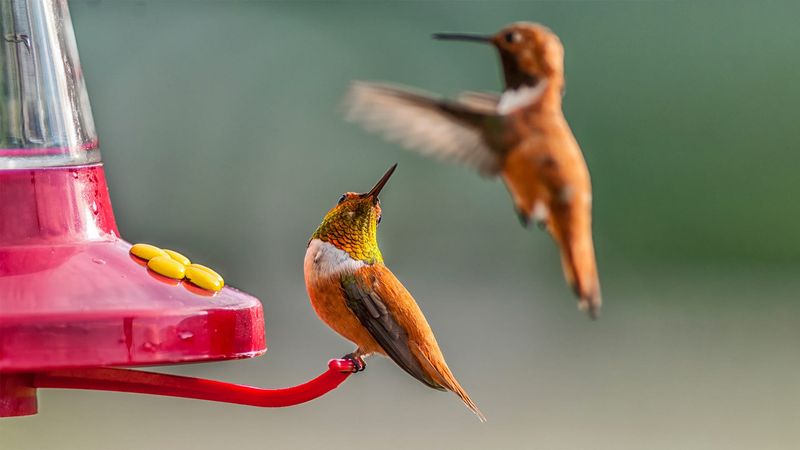
Seeing one hummingbird repeatedly at your feeder is not the same as having only one hummingbird in your yard. A dominant male can spend the better part of his day guarding a single feeder, chasing every competitor that approaches and then returning to a nearby perch to watch for the next intruder.
From a distance, that feeder looks quiet – but the birds are still around.
Cornell Lab describes this territorial exclusion clearly: one bird monopolizing a feeder can make the yard appear to have far fewer visitors than it actually does. Research on Anna’s Hummingbirds has documented that territorial defense intensifies when energy resources are concentrated in one spot, which is exactly what a single feeder creates.
The behavioral clues are recognizable once you know what to watch for. A guarding bird will return to the same perch – often a high branch or shepherd’s hook arm – within seconds of chasing another bird away.
You may hear rapid chittering or see short, aggressive pursuit flights. The feeder itself may be used only briefly before the territory holder resumes its watch.
The practical fix is straightforward: add a second or third smaller feeder and place them far enough apart that the dominant bird cannot watch both at once. Separating feeders around a corner of the house, or on opposite sides of the yard, reduces the ability of one individual to control the entire food supply.
Conflict will not disappear entirely, but other birds gain a realistic chance to feed without being immediately expelled.
Fresh nectar still matters, even when other clues get attention
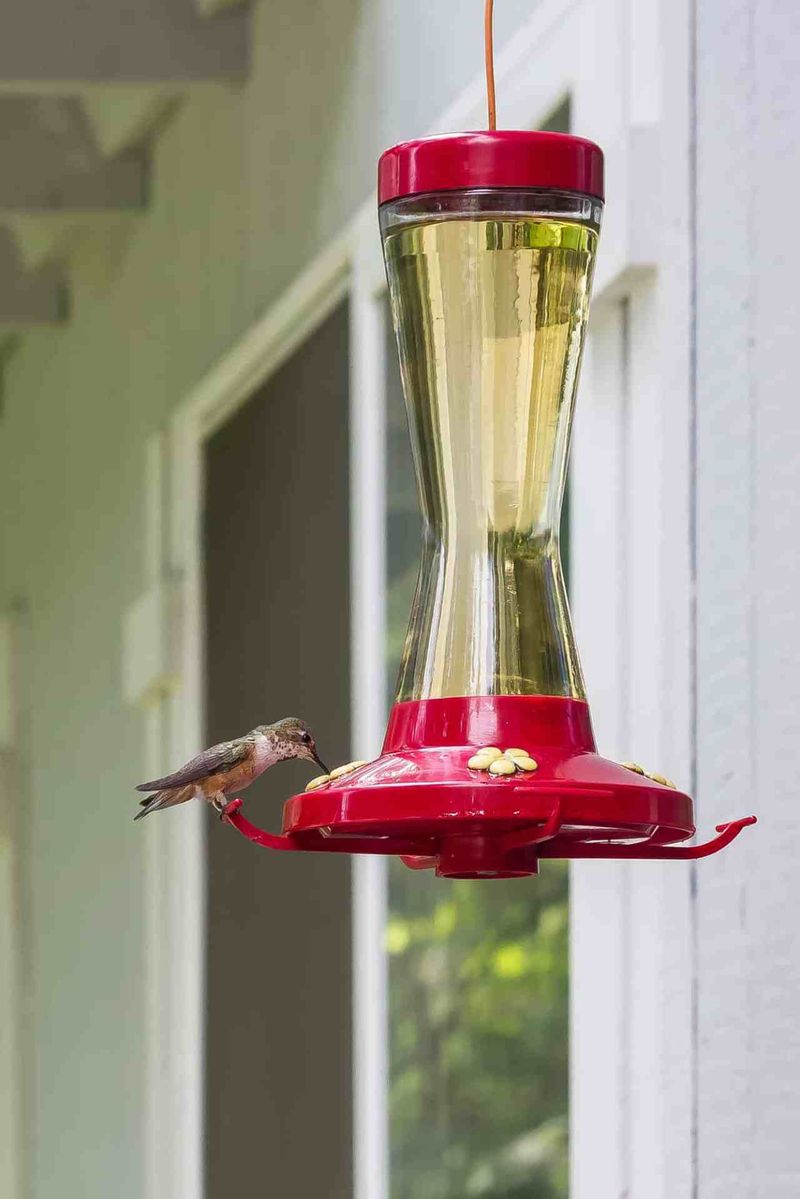
Spoiled, cloudy, or improperly prepared nectar is a real and well-documented feeder problem, and no list of other explanations should push it out of the picture. The correct preparation is simple: four parts water to one part ordinary white table sugar, stirred or heated until the sugar dissolves completely.
Cornell Lab’s feeding guidance is explicit that honey, artificial sweeteners, and red food coloring should not be used. Honey diluted in water can support bacterial and fungal growth quickly, while red dye is unnecessary and may be harmful to birds.
Heat accelerates everything that can go wrong with nectar. In warm summer weather, sugar water can begin to ferment or grow mold within a day or two.
Cornell advises changing nectar every two to three days under normal conditions and daily when temperatures are consistently high. If the nectar in your feeder looks cloudy, has visible floating particles, or smells off, discard it immediately – do not simply top it off.
Cleaning the feeder before every refill is not optional. Mold can establish itself on feeder surfaces and continue growing even after fresh nectar is added.
Rinse all parts thoroughly, and periodically scrub with a bottle brush to reach curved interiors. Avoid soap residue, which can linger and affect the nectar’s appeal.
Placing a feeder in partial shade can slow spoilage by reducing heat exposure, which makes the replacement schedule more manageable. That said, a shaded location is not a substitute for regular cleaning – it simply buys a little extra time between changes.
A feeder in full sun that is cleaned and refilled every day is still safer than a shaded one left untouched for a week.
Placement can affect feeder usability and safety
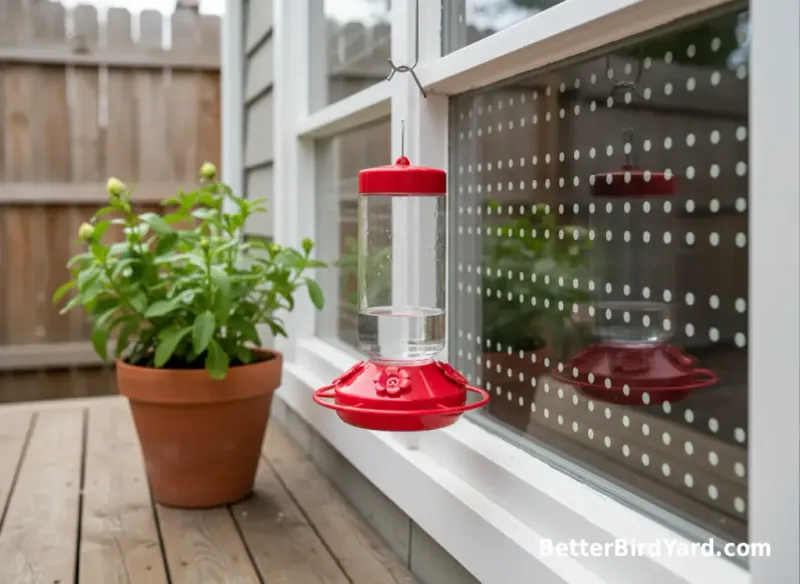
Where a feeder hangs shapes two separate things: how quickly the nectar degrades and how safe the surrounding area is for a small, fast-moving bird. A relatively shaded, wind-protected spot reduces heat buildup that speeds spoilage and limits the kind of wind-driven rocking that can cause leaks.
Neither shade nor shelter guarantees more visits on its own – placement is one factor among several, not a single lever that controls hummingbird behavior.
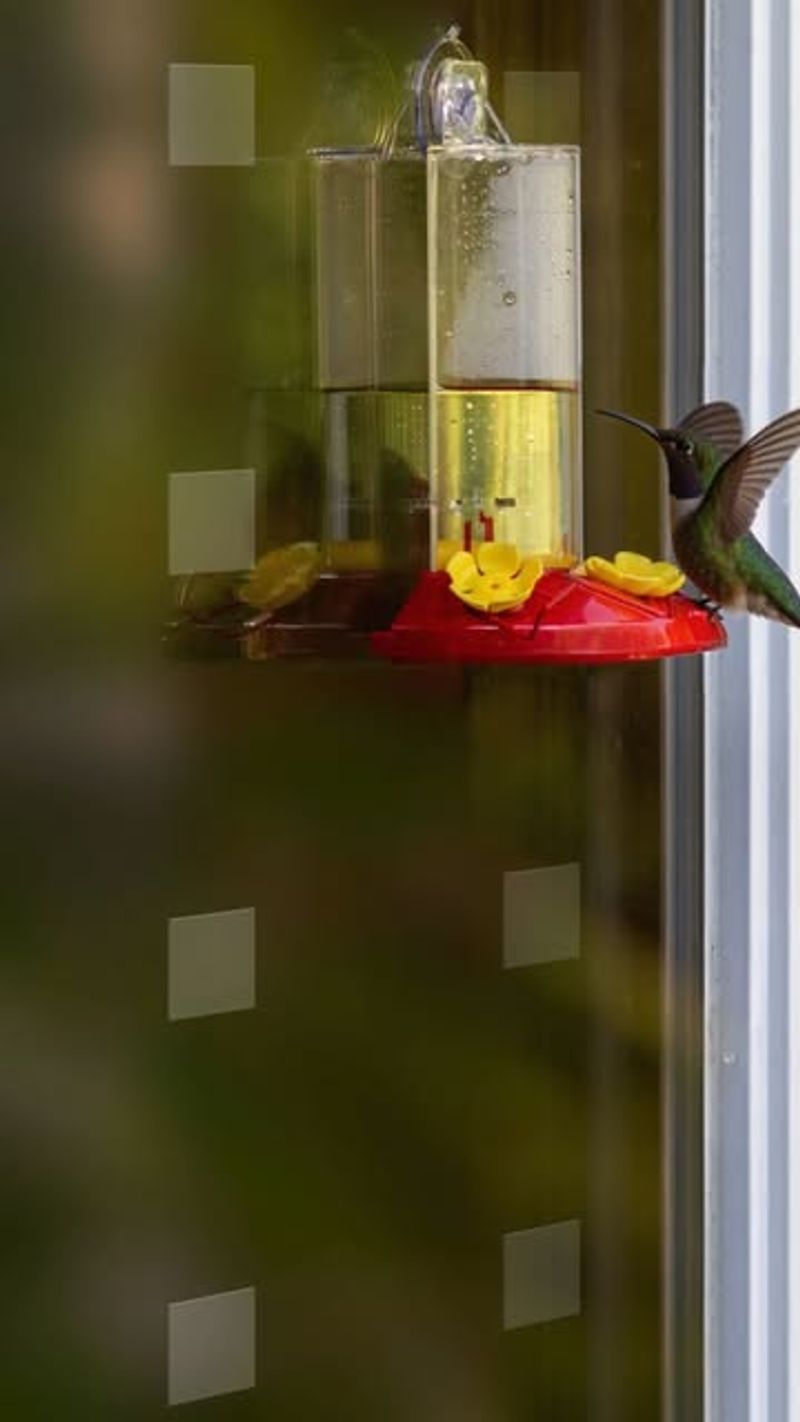
Nearby windows are a different matter and deserve specific attention. Glass that reflects sky or vegetation looks like open space to a bird in flight.
Hummingbirds, like other small birds, can strike windows at full speed with serious or fatal results. Moving a feeder a few feet is sometimes suggested as a solution, but Cornell Lab explains that older distance-based advice is not reliable on its own – the window itself needs to be treated.
The most effective approach is applying a dense pattern of exterior markings directly to the glass. Cornell cites a spacing of about two inches or less as the standard for making markings visible to birds in flight.
A single decal or two widely spaced stickers do not provide enough visual disruption. Exterior tape products, closely spaced parachute cord, or specialized window films applied on the outside of the glass can all reduce collision risk meaningfully.
If a hummingbird does strike a window and falls to the ground, place it gently in a small, dark, quiet container – a cardboard box with air holes works well – and contact a licensed wildlife rehabilitator as soon as possible. Cornell advises against offering food or water to an injured bird unless a rehabilitator specifically instructs you to do so, as well-intentioned intervention can sometimes cause additional harm.
Leaks, insects, and predators can turn access into risk
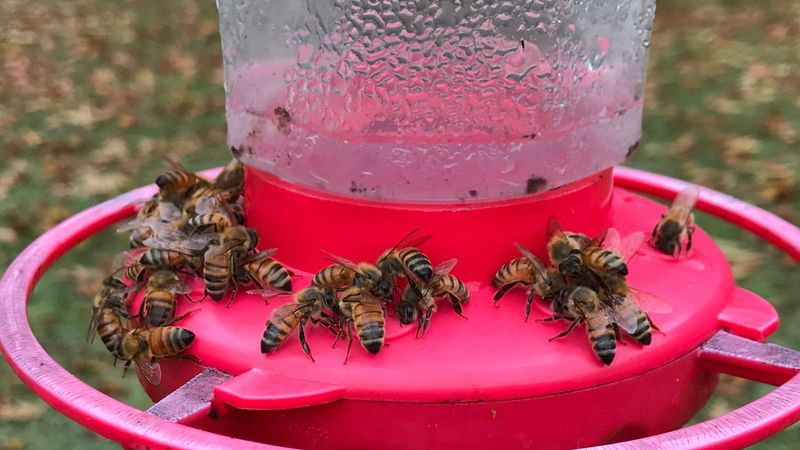
A leaking feeder does more than waste nectar – it sends a signal to every nearby ant, bee, and wasp that a sugar source is available. Once insects establish themselves at a feeder, they can obstruct the feeding ports, contaminate the area around the flower openings, and make the feeder less usable for the birds it was meant to serve.
Audubon’s pest guidance points to leaking nectar as the primary driver of insect problems, which means the fix starts with the feeder itself rather than with traps or repellents.
Tighten all feeder components before each refill and wipe away any drips on the outside of the feeder. An ant moat – a small water-filled cup positioned above the feeder – can interrupt the trail ants use to reach the nectar, and commercial bee guards over the feeding ports can reduce wasp access.
These tools help, but they work best alongside regular cleaning and leak prevention, not as replacements for it. Never apply petroleum jelly, cooking oil, or sticky substances to feeder parts, as these can soil a hummingbird’s feathers or contaminate the nectar.
Outdoor cats present a different category of risk. Cats are recognized predators of birds, and a feeder positioned near dense ground cover or a spot where a cat can crouch and wait creates an ambush opportunity.
Cornell’s attracting-hummingbirds guidance recommends keeping feeders away from locations where cats can hide and approach undetected. Keeping pet cats indoors during peak feeding hours reduces risk, as does positioning feeders higher off the ground or away from shrubs that provide cover.
Pesticides deserve a specific caution. Hummingbirds do not live on nectar alone – small insects and spiders make up a significant portion of their diet, especially during nesting.
Spraying pesticides near feeding and resting areas can reduce the insect prey hummingbirds depend on and may expose birds directly to harmful chemicals. Neither predator presence nor insect activity automatically causes hummingbirds to leave a yard permanently, but removing unnecessary risks makes the feeding area more reliably safe.
A feeder cannot replace the rest of a hummingbird habitat
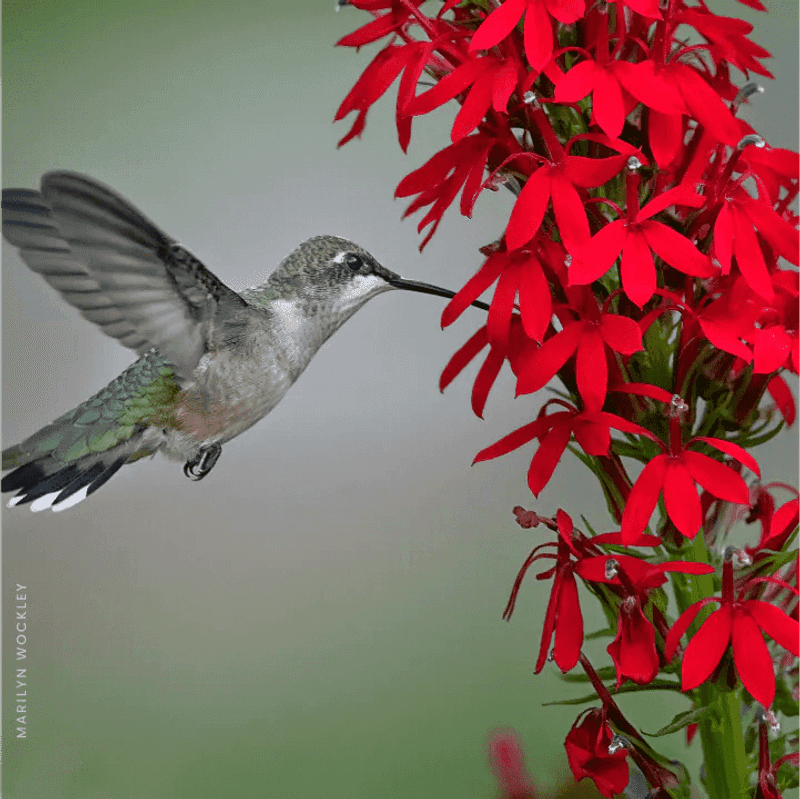
Hummingbirds are not feeder-dependent birds – they are foragers that use feeders as one stop among many. Their diet includes nectar from flowering plants and a steady supply of small arthropods such as gnats, fruit flies, and spiders, which they catch in mid-air or glean from leaves and bark.
When the balance of natural food in a yard shifts, hummingbirds shift with it, sometimes reducing feeder visits without any change in the feeder itself.
Research supports this flexibility. A published study on hummingbird foraging behavior found that birds modify their routes to avoid locations that have become less rewarding, adjusting their patterns based on the overall food landscape rather than loyalty to any single spot.
A yard that blooms heavily in June and goes quiet in August may simply offer less reason to visit in late summer, even with a full feeder hanging nearby.
Audubon’s hummingbird habitat guidance recommends planting native, nectar-producing species that bloom at different times across the season. Plants like native salvias, trumpet vine, cardinal flower, and bee balm extend the window of natural nectar availability well beyond what any single feeder can offer.
These plants also support the insect populations that hummingbirds rely on for protein.
Maintaining a yard that holds value beyond the feeder does not require a full landscape redesign. Even a few well-chosen native plants in containers or a garden border can add meaningful food sources and give hummingbirds more reason to return regularly.
The feeder becomes part of a broader habitat rather than the only reason a bird visits, which makes the yard more resilient when any one element changes.
Use the pattern of absence to choose the fix
Working through a quiet feeder systematically takes less time than it sounds. Start with the calendar – if it is late summer or fall and you live east of the Rockies, migration is the most likely explanation, and the right response is to keep the feeder clean and stocked for several more weeks rather than to change anything.
If the timing does not match migration, watch the feeder for a day or two to check for a single bird chasing others away, then inspect the nectar for cloudiness, odor, or mold, and check the feeder itself for leaks.
After the feeder and nectar pass inspection, look outward. Consider whether nearby windows could be a collision hazard and apply exterior markings if needed.
Check whether cats have access to the area around the feeder. Review whether pesticides have been used nearby recently.
Adding native flowering plants addresses the broader habitat question and gives hummingbirds more reasons to stay in the yard regardless of what the feeder offers on any given day.
Cornell Lab draws a clear distinction between a short-term fluctuation at one feeder and a persistent, broad reduction across multiple years and locations. A quiet week or two does not signal a population problem – it signals a change worth understanding.
If you discover sick or dead birds near your feeder, Utah State University Extension’s bird-feeding guidance recommends checking local wildlife authority recommendations before continuing to feed, as temporary feeder removal is sometimes advised in those situations. A yard that supports hummingbirds well most of the time will recover from a quiet spell – the birds have not forgotten where you are.