
17 Tomato Fertilizing Tips For August That Bring Slowing Plants Roaring Back
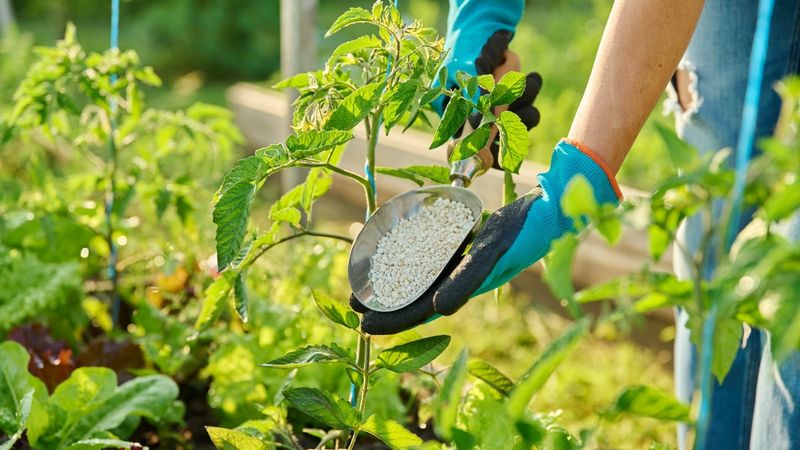
Your tomato plants looked amazing in July, and now August has them dragging their feet with yellow leaves and fewer fruits. Don’t panic, because a slowing tomato plant is almost never a lost cause.
With the right feeding and a few smart care tweaks, you can wake those plants back up and stretch your harvest well into fall. Here are 17 simple, doable tips to bring your tomatoes roaring back before the season ends.
1. Assess Your Plant’s Specific Symptoms
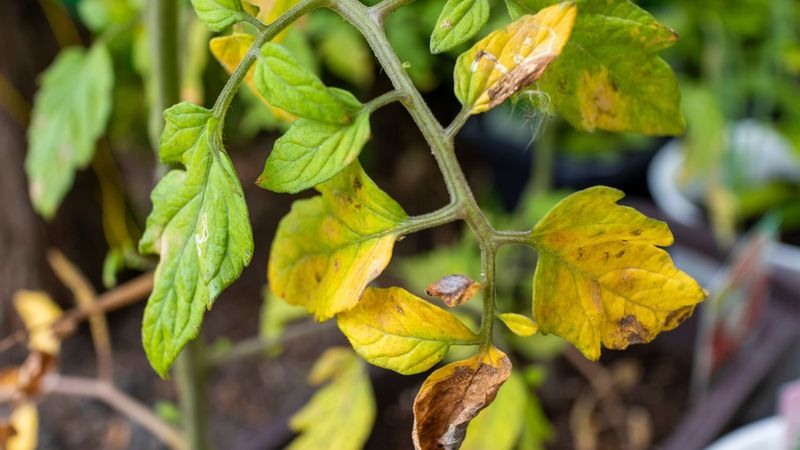
Before you grab any fertilizer, walk out to your garden and really look at what your tomato plants are telling you. Yellowing leaves, tiny fruits that won’t grow, and dropping flowers all point to different problems, and treating the wrong one wastes time.
Think of yourself as a plant detective for a minute. Yellow lower leaves often mean a nutrient issue, while dropping blossoms usually screams heat stress.
Fruits that stall out can signal thirst or a feeding gap.
Jotting down what you see on a scrap of paper helps you match the right fix to the right symptom. Every other tip on this list works better once you know exactly what your plant is struggling with.
2. Ensure Consistent Deep Watering
Splitting fruit and that dreaded black spot on the bottom of your tomatoes almost always trace back to one thing: uneven watering. When soil swings from bone dry to soaked, the plant can’t move nutrients steadily, and the fruit pays the price.
Aim to water deeply so moisture soaks several inches down, then let the top of the soil dry slightly before the next round. This trains roots to grow deep, where the soil stays cooler and damper during August heat.
Shallow daily sprinkles do the opposite, keeping roots near the hot surface and stressing the whole plant. A slow, thorough soak two or three times a week usually beats a quick splash every day.
3. Reduce Irrigation Slightly for Enhanced Flavor
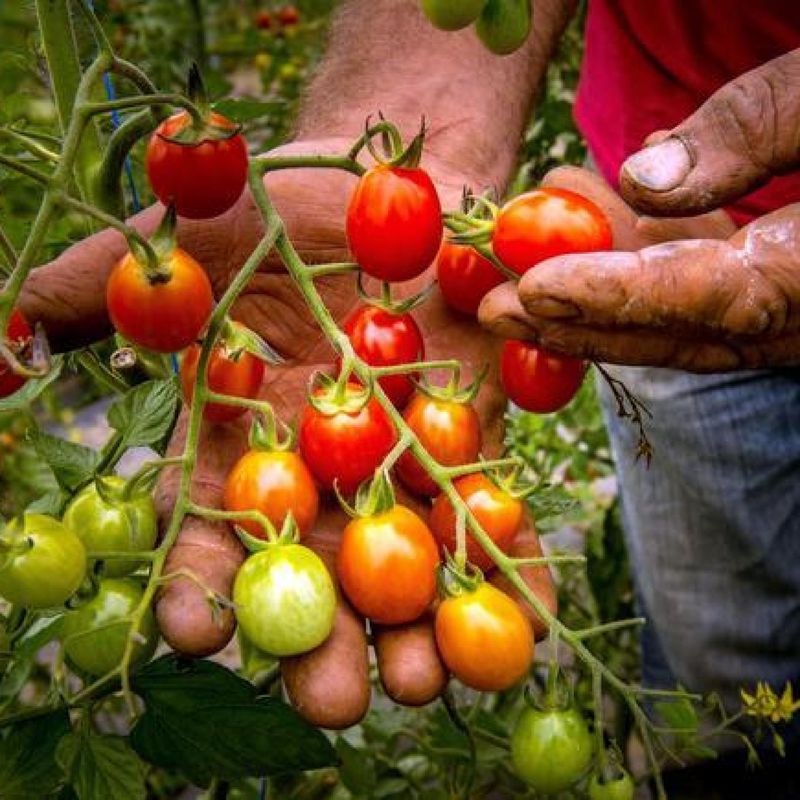
Here’s a trick chefs and market growers love: a little controlled thirst makes tomatoes taste better. As long as your plants aren’t wilting, easing back slightly on water in late summer nudges them to concentrate sugars in the ripening fruit.
The result is that deep, sweet-tart flavor that makes a homegrown tomato worth all the effort. Watery, bland store tomatoes usually got flooded right up to harvest, which dilutes everything good.
Just keep a close eye on your plants during this. If leaves start curling or drooping badly in the afternoon and don’t bounce back by evening, back off and give them a drink.
The goal is a gentle nudge, not a drought.
4. Avoid Overhead Watering to Prevent Disease
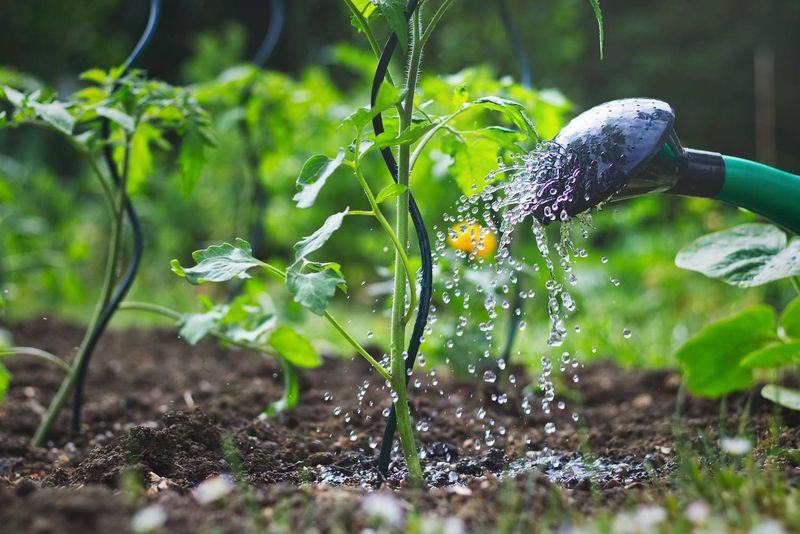
Spraying water over the top of your tomato plants feels efficient, but it’s basically rolling out a welcome mat for fungus. Wet leaves in warm August weather create the perfect breeding ground for blight, leaf spot, and other diseases that can wipe out a plant fast.
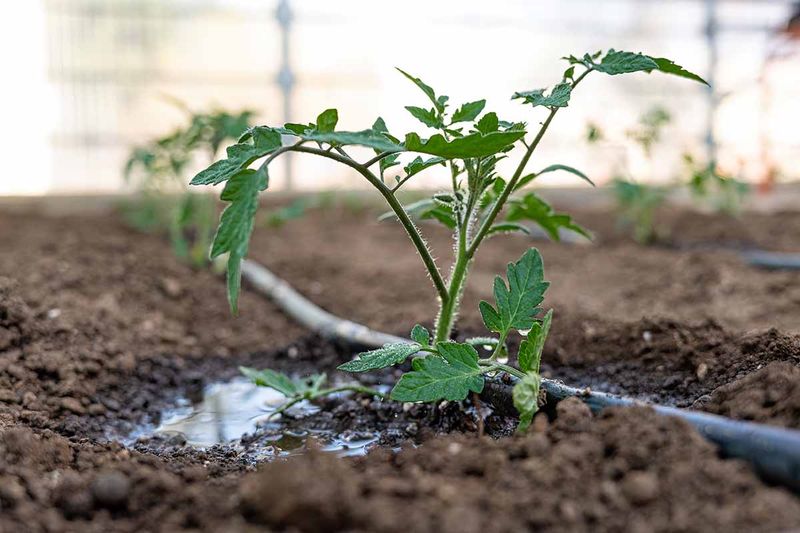
Direct your water straight to the soil at the base instead. A watering can with the rose removed, a soaker hose, or drip irrigation all keep the foliage dry while getting moisture to the roots where it counts.
If you must use a sprinkler, run it early in the morning so leaves dry quickly in the sun. Damp foliage sitting overnight is where most trouble starts.
5. Apply a Thick Layer of Mulch
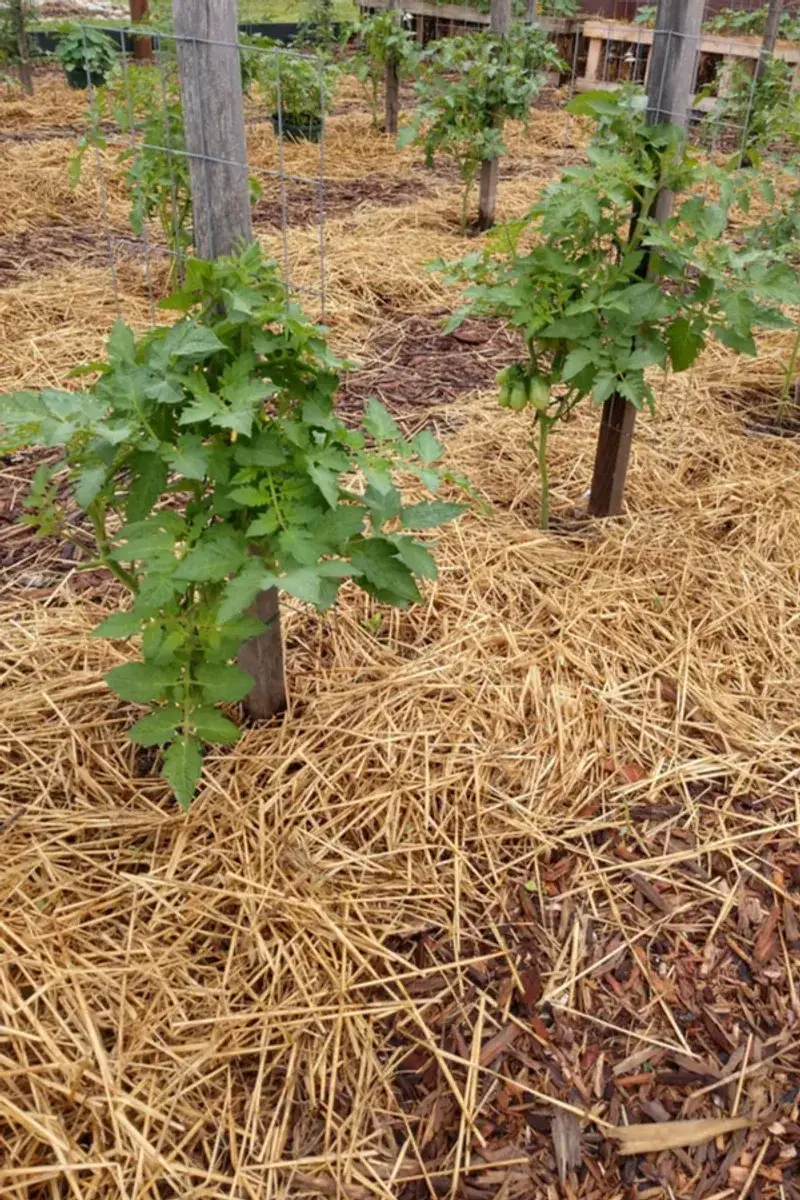
A generous blanket of mulch is one of the cheapest rescues you can give a struggling August tomato. Straw, shredded leaves, grass clippings, or wood chips laid a few inches thick lock moisture into the soil and keep the root zone cooler on scorching days.
Cooler, steadier roots mean less stress, fewer split fruits, and better nutrient uptake all around. Mulch also blocks weeds that would otherwise steal water and food from your plants.
Spread it out to the edge of the plant’s reach, but leave a small gap right around the stem so it doesn’t stay soggy. As the mulch breaks down over the weeks, it even feeds the soil a little bonus nutrition.
6. Check for Nitrogen Over-fertilization
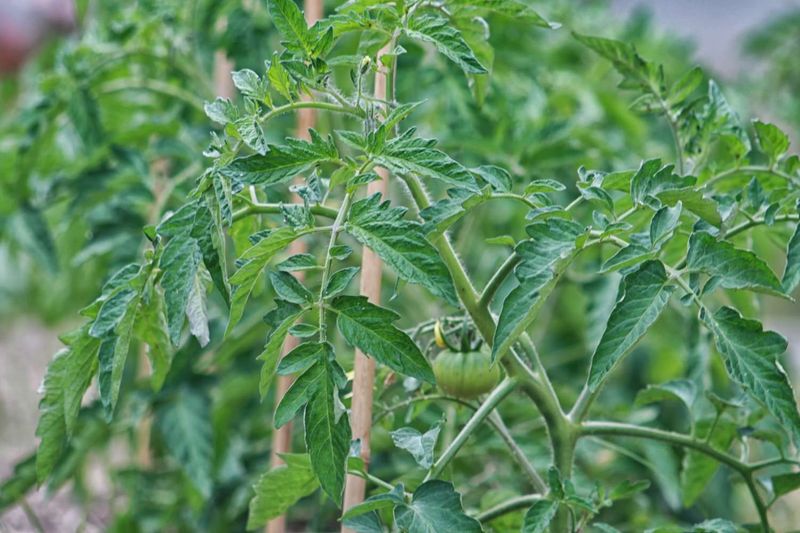
Sometimes a tomato plant looks gorgeous and still refuses to make fruit, and that lush, jungle-green foliage is the clue. Too much nitrogen tells the plant to keep pumping out leaves instead of flowers and tomatoes.
Big, leafy, dark-green growth with barely a fruit in sight usually means you overdid the high-nitrogen feed earlier in the season. All that leafy softness also tends to attract aphids and hornworms looking for a snack.
The fix is to stop feeding nitrogen for now and switch gears toward fruiting nutrients. Once the plant realizes the leaf party is over, it redirects its energy toward setting and ripening fruit.
7. Prioritize Phosphorus and Potassium
Once your tomatoes hit August, their nutritional needs completely shift toward making and ripening fruit. That’s where phosphorus and potassium become the stars of the show.
Phosphorus drives strong root growth and flower development, while potassium boosts fruit size, sugar content, and the plant’s ability to shrug off late-season disease. Both matter far more now than the nitrogen that helped build leafy growth early on.
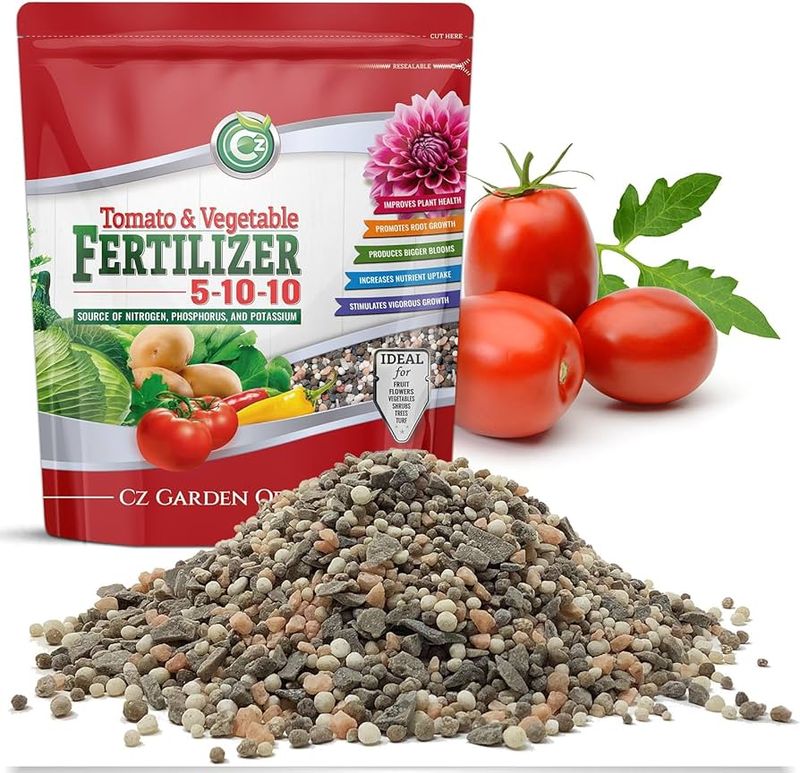
Look for a fertilizer where the middle and last numbers on the label are higher than the first. Feeding with this fruit-focused balance is often exactly what turns a stalled, all-leaves plant back into a producer loaded with tomatoes.
8. Opt for a Balanced or Low-Nitrogen Fertilizer
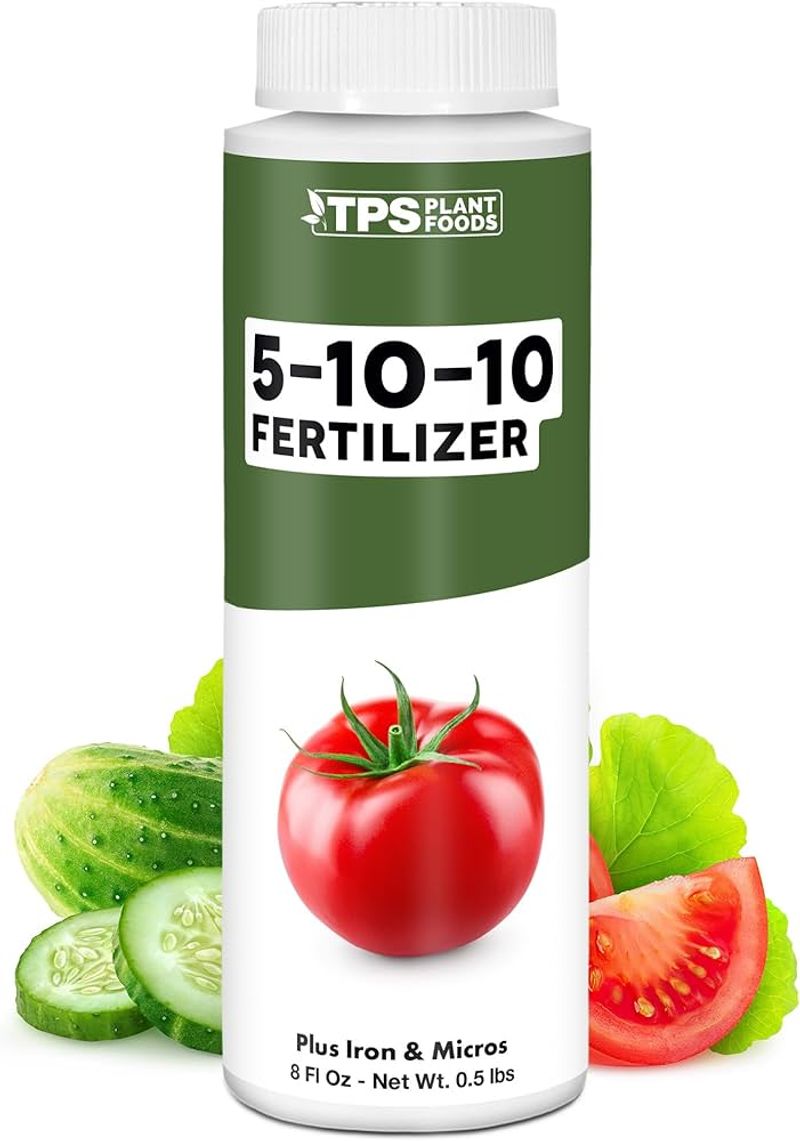
Standing in the garden aisle staring at fertilizer bags can feel overwhelming, so here’s the simple rule. Those three numbers on the label stand for nitrogen, phosphorus, and potassium, and in August you want that first number lower.
Blends like 5-10-10 or 10-20-10 give your plants plenty of fruiting power without pushing more leafy growth. If your plants look a little pale and could use a small green-up too, a balanced 8-8-8 or 10-10-10 works fine.
Reading that label is the difference between feeding fruit and feeding foliage. Match the numbers to what your plant actually needs right now, and you’ll avoid the classic mistake of overloading nitrogen late in the season.
9. Use Liquid Fertilizers for Quick Nutrient Uptake
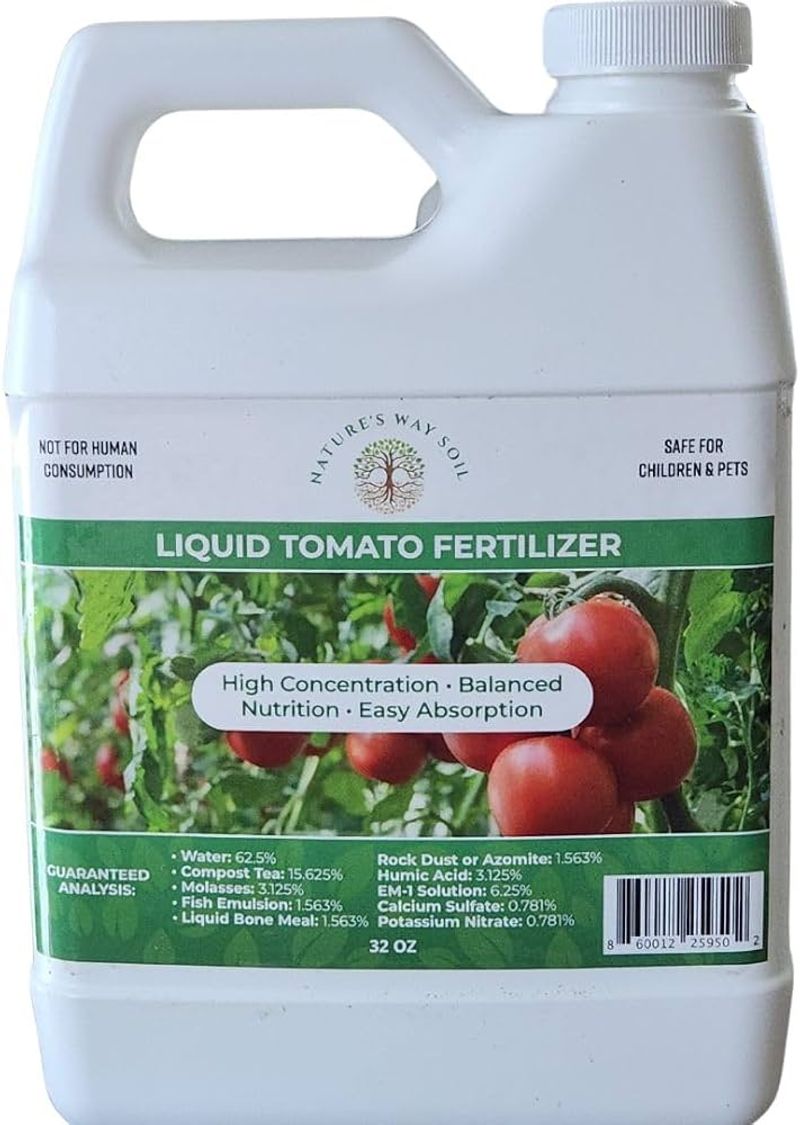
When your plants are lagging and you want results fast, liquid fertilizer is your best friend. Roots drink it up almost immediately, which is a huge advantage in hot August weather when dry soil slows down granular feeds.
Mix it to about half strength and pour it right at the base of the plant every 10 to 14 days. Half strength keeps you from burning stressed roots while still delivering a steady, gentle boost.
Think of it as a quick pick-me-up rather than a heavy meal. A slumping plant can perk up noticeably within a few days of a good liquid feeding, which makes it perfect for late-season rescues.
10. Side-Dress with Organic Amendments
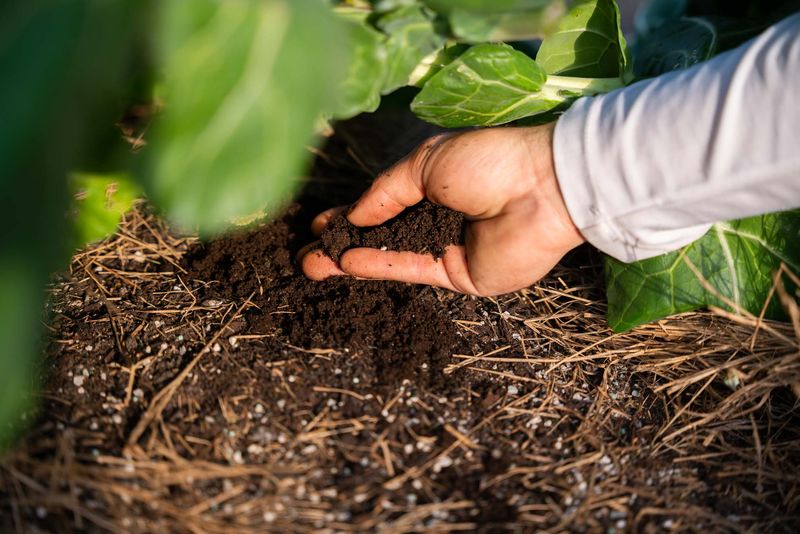
Compost and worm castings are like a slow, home-cooked meal for your tomatoes. Scattering a couple of inches of either around the base of each plant, then scratching it lightly into the soil, feeds them gradually over weeks.
Unlike a quick chemical hit, these organic amendments release nutrients steadily and won’t burn the roots even if you’re a little generous. They also improve soil structure, so it holds moisture better and drains just right.
Worm castings in particular are packed with gentle, plant-ready nutrients and beneficial microbes. Give your plants a fresh side-dressing every few weeks in late summer, and you build the kind of healthy soil that keeps producing.
11. Ensure Adequate Calcium to Prevent Blossom End Rot
Few things are more frustrating than a ripening tomato with an ugly brown, sunken patch on its bottom. That’s blossom end rot, and while it’s mostly a watering problem, low calcium can make it worse.
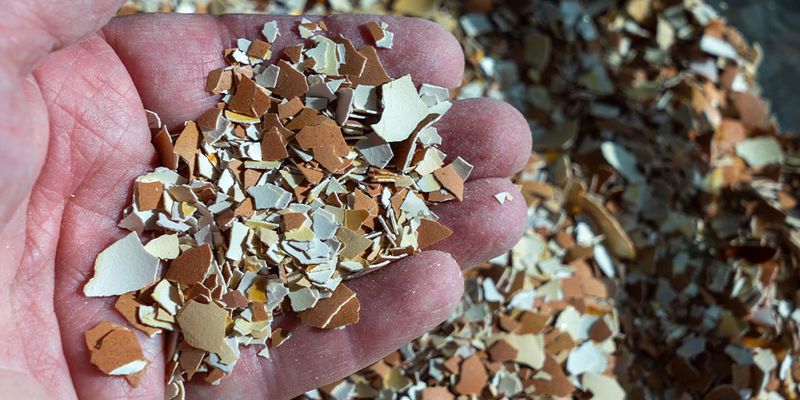
Steady watering helps the plant actually move calcium to the fruit, so start there. From the soil side, crushed eggshells worked into the ground add a slow calcium source, and grinding them into a fine powder helps the plant absorb them faster.
Some gardeners also keep a calcium spray or garden lime on hand for a quicker fix. Pair even moisture with a calcium boost, and those rotten bottoms usually stop showing up on new fruit.
12. Boost Magnesium with Epsom Salt
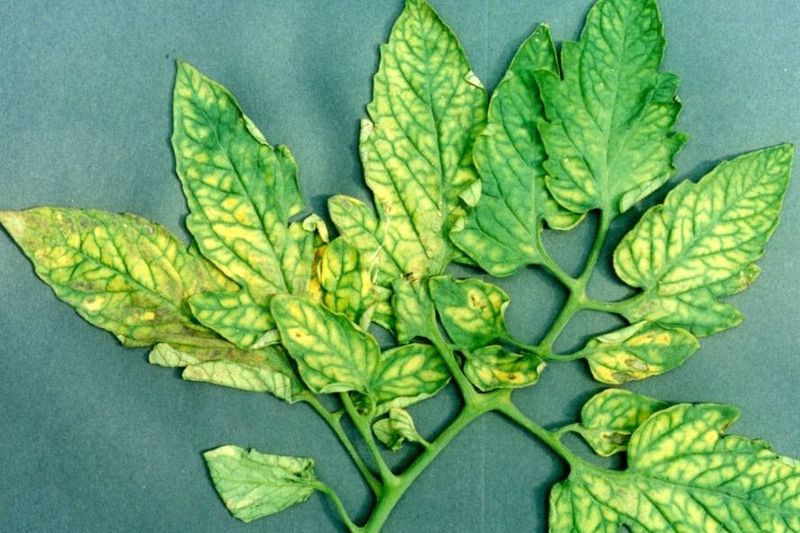
Notice your tomato leaves turning yellow between the veins while the veins themselves stay green? That telltale pattern often points to a magnesium shortage, and Epsom salt is a cheap, easy answer.
Dissolve about a tablespoon in a gallon of water and pour it around the base, or spray it lightly on the leaves for faster uptake. Magnesium plays a key role in photosynthesis, so restoring it can green up struggling foliage and help the plant make more energy for fruit.
Don’t go overboard, though, since Epsom salt only helps when magnesium is actually low. A treatment every couple of weeks is plenty when you see that yellowing-between-the-veins signal.
13. Provide Potassium with Natural Sources
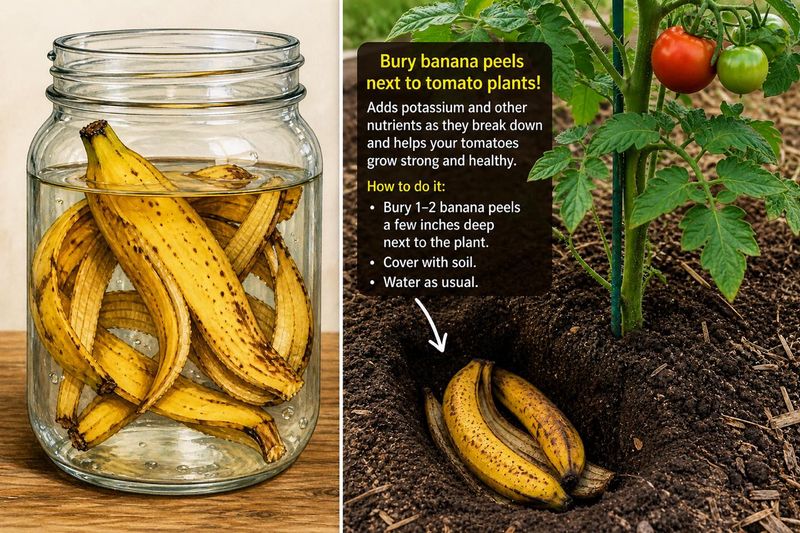
Gardeners who prefer to skip store-bought products have some handy kitchen and yard items for a potassium boost. Wood ashes from a clean fire, chopped banana peels, and kelp meal all deliver the potassium tomatoes crave during fruiting.
Potassium is what plumps up fruit, deepens flavor, and toughens plants against late-season stress. Sprinkle wood ash sparingly since it also raises soil pH, and tuck banana peels just under the surface near the roots.
Kelp meal is a favorite because it adds trace minerals along with the potassium. Working these natural sources into your soil gives your plants a steady, budget-friendly lift without a trip to the garden center.
14. Strip Lower Leaves for Airflow and Disease Prevention
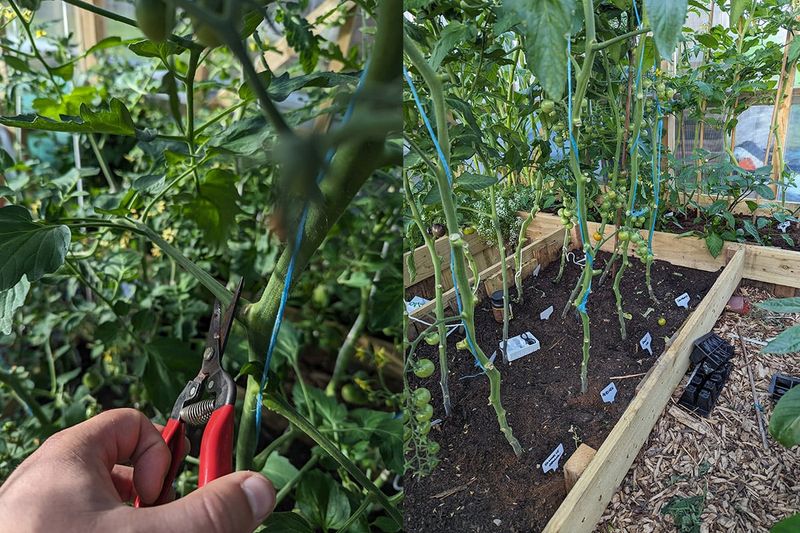
Grab your clean pruners, because trimming the lower leaves is one of the most satisfying August chores. Those bottom leaves sit closest to the soil, where they catch splashing water and become the first entry point for fungal diseases like blight and leaf mold.
Removing them opens up airflow around the plant so foliage dries faster and disease has a harder time taking hold. It’s especially helpful on tall, sprawling indeterminate varieties that tend to get crowded and shady down low.
Bonus, stripping those lower leaves lets more sunlight reach the fruit, which can speed up ripening. Just don’t strip too much at once, keep the upper canopy intact to protect fruit from sunscald.
15. Strategically Prune New Flower Trusses
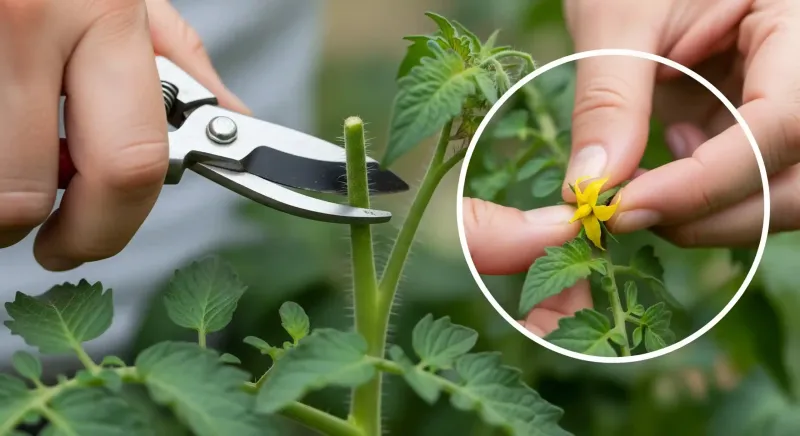
It sounds backwards to snip off flowers, but late August is the time to be ruthless about it. Any brand-new flower clusters forming now, especially on big beefsteak-type varieties, simply won’t have time to grow and ripen before the season ends.
By pinching off those late blooms, you stop the plant from wasting energy on fruit it can never finish. Instead, all that redirected energy pours into the tomatoes already on the vine.
The payoff is bigger, faster-ripening fruit from what’s already set. This little bit of tough love near the end of the season often makes the difference between a pile of green tomatoes and a basket of ripe ones.
16. Provide Afternoon Shade During Heatwaves
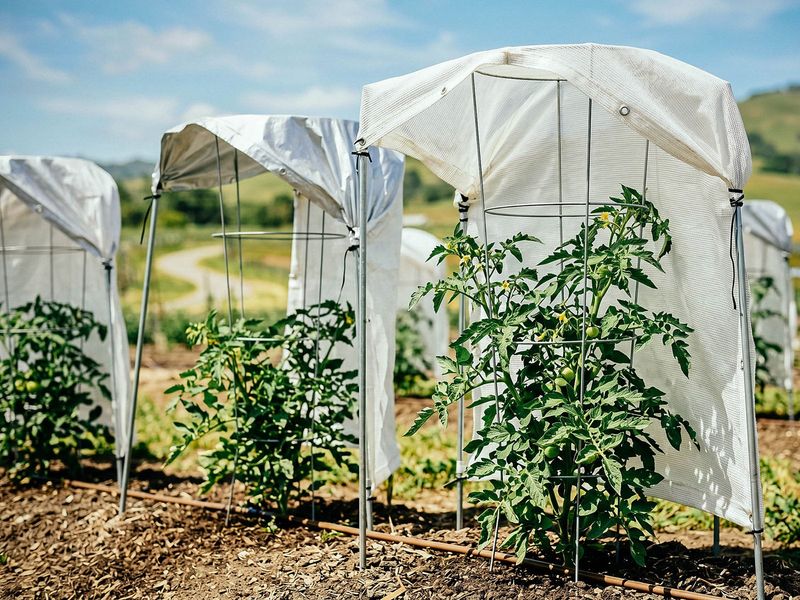
Tomatoes love sun, but there’s a point where August heat does more harm than good. When daytime temperatures climb above 86 degrees or nights stay above 76, blossoms drop and fruit set grinds to a halt.
Draping a 30 to 40 percent shade cloth over your plants during the hottest afternoon hours takes the edge off that stress. The plants still get plenty of light, just without the brutal midday scorch that causes flowers to abort.
Even an old sheet or a strategically placed umbrella can work in a pinch. Cooling things down during a heat wave keeps your plants producing flowers instead of dropping them on the ground.
17. Harvest Ripe Tomatoes Regularly
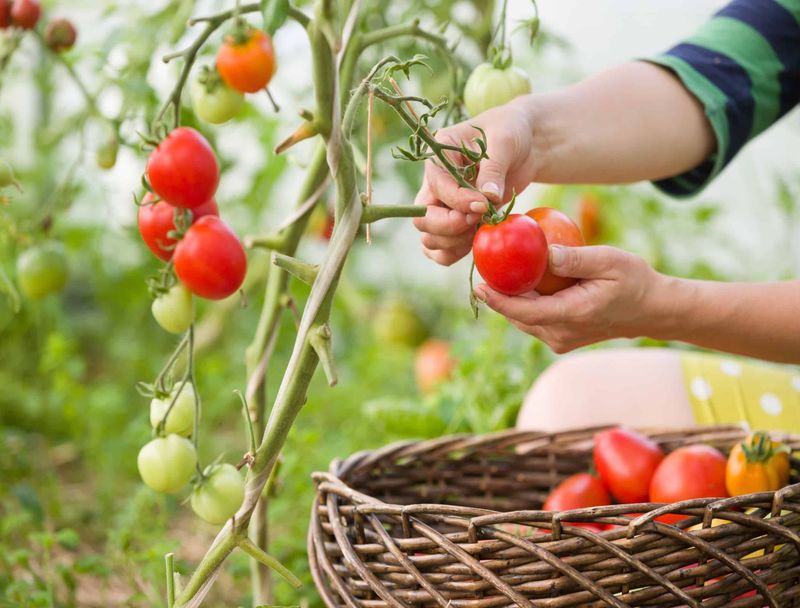
The simplest tip on this whole list might also be the most overlooked: pick your ripe tomatoes often. Every fruit you leave on the vine signals the plant to slow down, while regular harvesting tells it to keep producing more.
Frequent picking encourages the plant to set fresh flowers and fruit instead of pouring energy into a few overripe stragglers. Aim to check your plants every day or two once tomatoes start coloring up.
Grabbing them just as they turn also protects them from cracking, pests, and the birds and squirrels eyeing your garden. Keep that harvest basket busy, and your plants will keep the tomatoes coming right through the tail end of summer.