
19 Gorgeous Perennials That Keep The Color Coming When Everything Else Fades
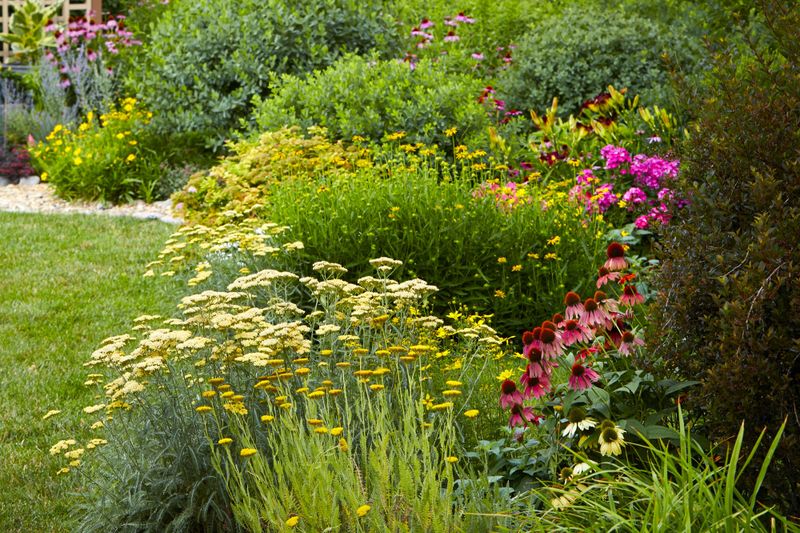
Most gardens put on a big show in spring and early summer, then fizzle out just when you want something to look at. The good news is that certain perennials refuse to quit, pumping out fresh color while the rest of your beds go quiet. These tough, dependable plants keep your yard looking alive from late summer straight through the first frost. Here are nineteen standouts that carry the color when everything else calls it a season.
1. Sedum ‘Autumn Joy’
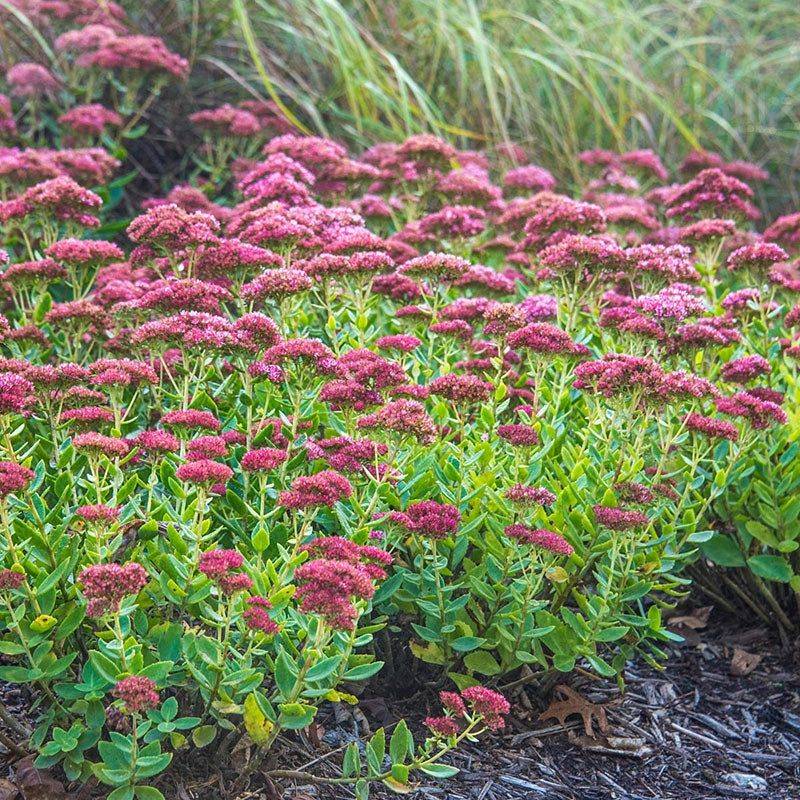
Just when the summer flowers start looking tired, this succulent quietly steals the spotlight. Its broccoli-like flower heads shift from soft pink to deep rusty red as the weeks cool down, giving you a slow-motion color show that lasts for months.
Bees and butterflies adore the flat blooms, so expect plenty of buzzing visitors well into fall. The thick, water-storing leaves shrug off drought like champs, which makes it a friendly pick for gardeners who forget to water.
Even after frost, the dried seed heads stand tall and catch the snow, adding structure to an otherwise bare winter bed. Plant it in full sun and average soil, and you can basically ignore it. Few plants give this much reward for this little effort.
2. Rudbeckia (Black-Eyed Susan)
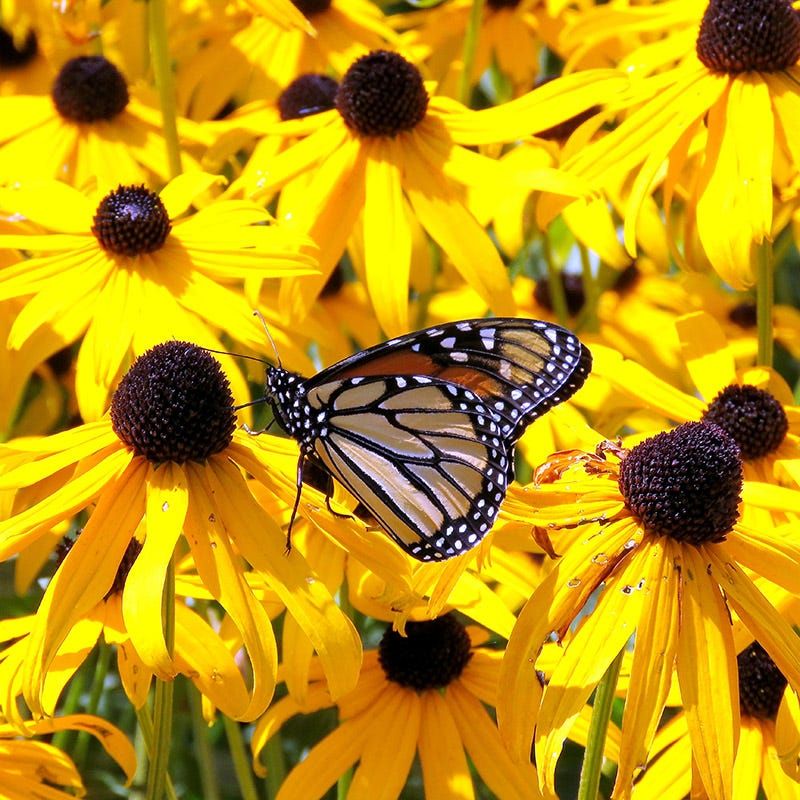
Golden petals fanning out from a dark chocolate center make Black-Eyed Susans look like little bursts of sunshine, and they keep glowing long after other flowers have packed up. From midsummer to the first hard freeze, they stay covered in cheerful blooms.
Native across much of the United States, they handle heat, poor soil, and neglect without complaint. Once established, they barely need supplemental watering, which is a relief during long dry stretches.
Leave the spent seed heads standing and goldfinches will visit all winter to snack on the seeds. That two-for-one deal of summer flowers and winter bird food makes them a backyard workhorse. Divide the clumps every few years and you will have free plants to spread around or share with neighbors.
3. Coneflower (Echinacea)
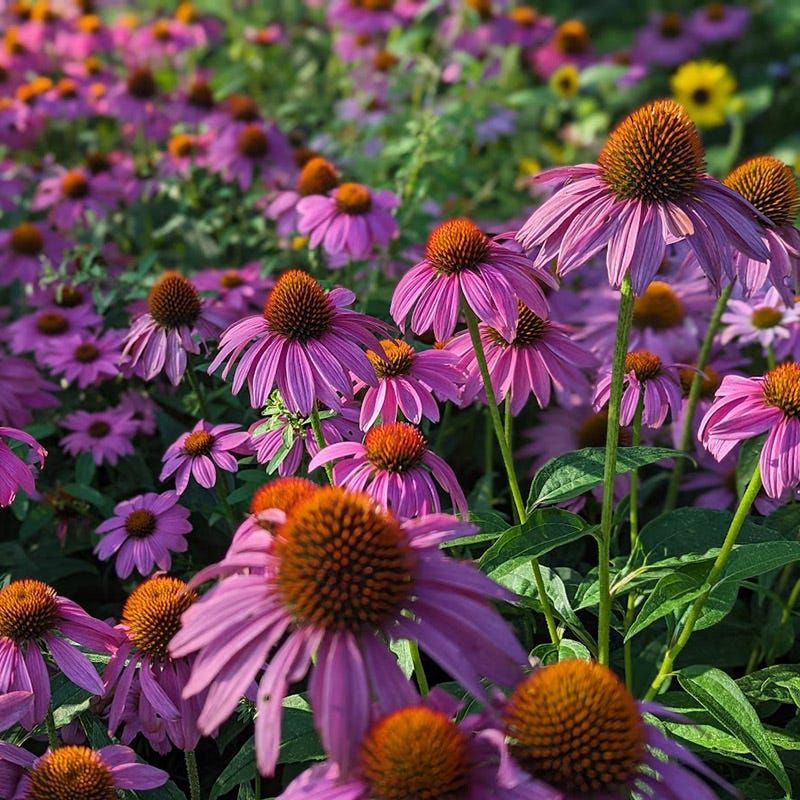
Purple, pink, orange, and now nearly every shade in between, coneflowers have exploded in variety over the past decade. What hasn’t changed is their stamina, blooming from June until frost with barely a pause.
The spiky central cone gives them their name and doubles as a landing pad for butterflies and a buffet for finches later on. They tolerate drought, clay, and the kind of summer heat that flattens fussier plants.
Did you know Native Americans used echinacea root as a traditional remedy long before it filled our flower beds? That heritage adds a nice story to a plant that already earns its keep. Give it full sun and decent drainage, and it will reward you for years with almost no fuss.
4. Russian Sage
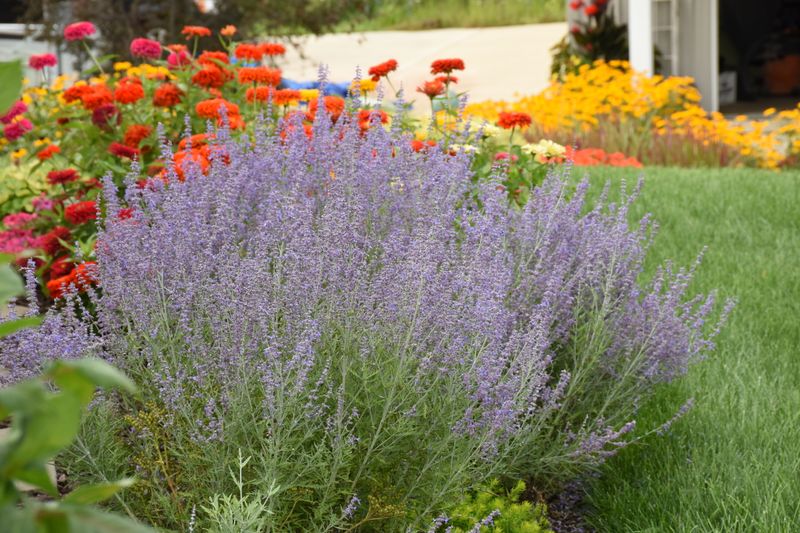
Picture a hazy cloud of silvery-blue floating above your garden and you have Russian sage in full swing. Its airy purple spikes bloom from midsummer into fall, adding a soft, dreamy quality that few other plants pull off.
The aromatic gray-green foliage smells faintly of sage when brushed, and that scent may help keep browsing deer and rabbits at bay. Blazing heat and dry soil are exactly where it thrives, so hot southwestern beds and gravelly spots suit it perfectly.
It grows into a loose, shrubby mound that pairs beautifully with yellow and pink neighbors. Cut it back hard in early spring and it bounces right back bushier than before. For a low-water plant that still delivers weeks of cool color, it is hard to beat.
5. Aster
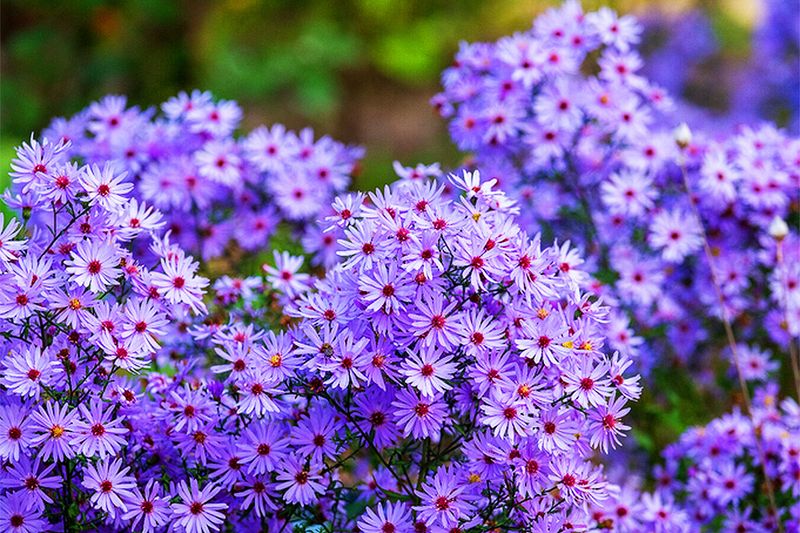
When almost everything else is winding down, asters throw a late party in shades of purple, blue, pink, and white. These daisy-like blooms peak in September and October, filling the gap right before winter closes in.
Pollinators depend on them heavily, since asters are one of the last big nectar sources of the year for migrating butterflies and hungry bees. Watching monarchs fuel up on aster blooms in fall is one of gardening’s quiet pleasures.
New England asters grow tall and bold, while smaller varieties tuck neatly into borders and containers. Pinch them back in early summer for a fuller, sturdier plant that won’t flop. They basically hand you a second spring right as the calendar says otherwise.
6. Coreopsis (Tickseed)
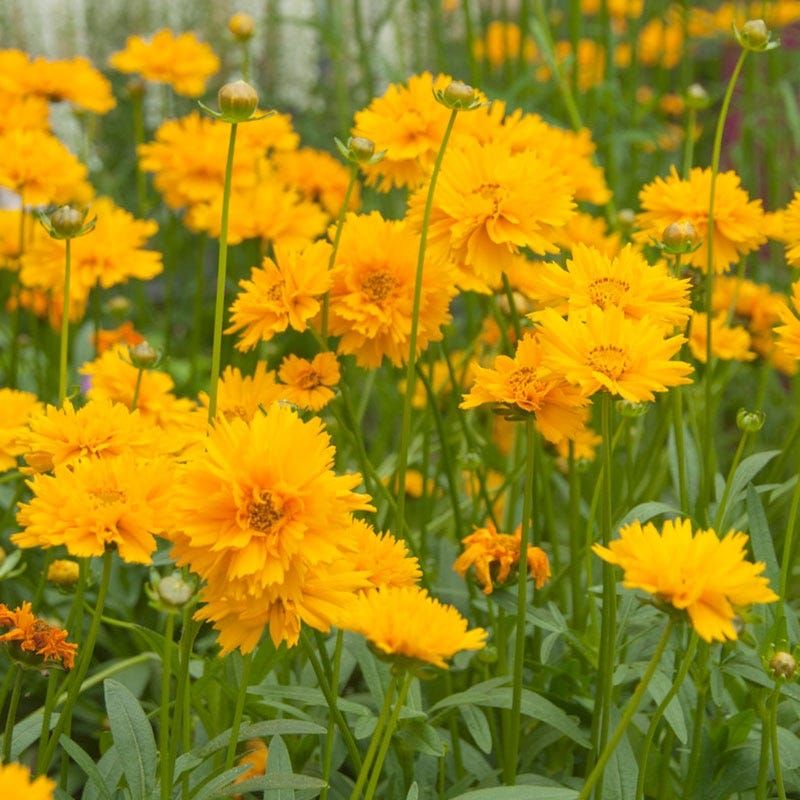
Small, sunny, and impossibly cheerful, coreopsis blankets itself in tiny golden daisies from early summer well into autumn. The sheer number of flowers on one plant is almost comical.
Deadhead it now and then, or grab a hedge shear and give it a rough haircut, and it rebounds with a fresh flush within a couple weeks. Newer varieties bring in reds, pinks, and bicolors for gardeners who want more than yellow.
Heat and drought don’t slow it down, and it laughs off poor soil that would sulk other flowers. Butterflies flit around it constantly during peak bloom. As a front-of-border filler that never seems to run out of steam, it earns its spot every single season.
7. Daylily ‘Stella de Oro’
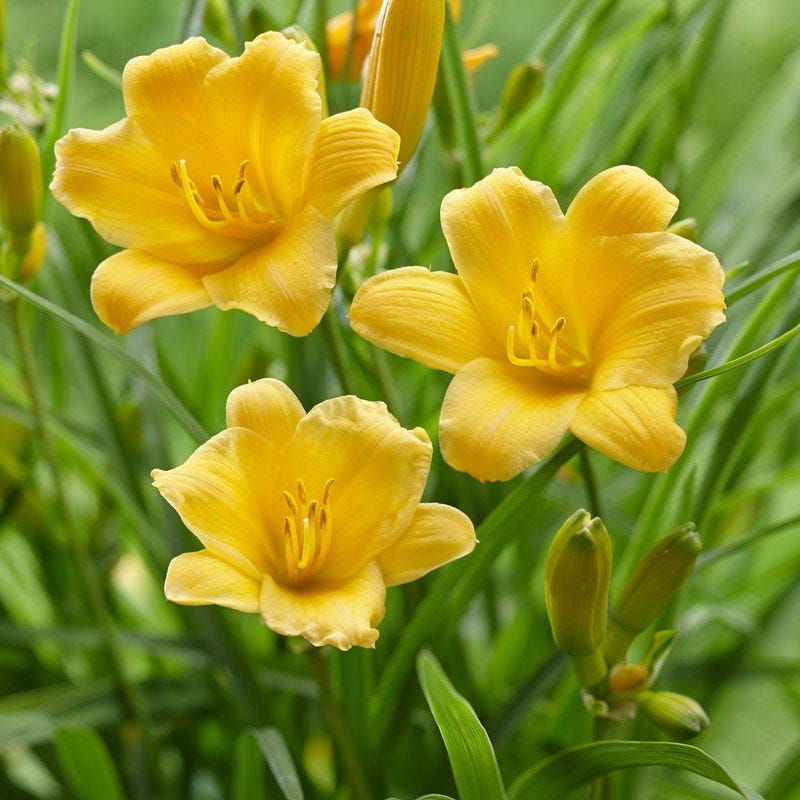
One flower on a daylily only lasts a day, hence the name, but ‘Stella de Oro’ produces so many buds that the show never seems to stop. This compact golden variety reblooms again and again from late spring through fall.
Tough as nails, it handles clay, heat, salt near roadways, and the kind of abuse that kills pickier plants. That reliability made it one of the most planted perennials in America, and for good reason.
Snap off the spent blooms to keep it tidy and encourage even more flowers. It stays low and neat, so it fits along walkways and edges without sprawling. For nonstop cheerful yellow with almost zero maintenance, this little champion delivers.
8. Salvia
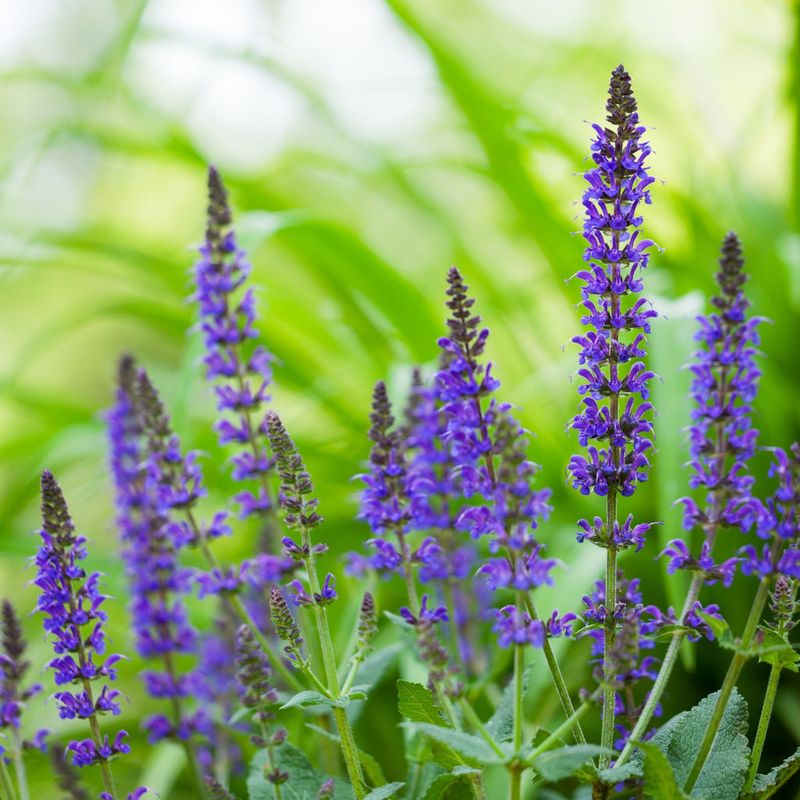
Spikes of blue, purple, red, or pink shoot up from salvia like tiny fireworks, and hummingbirds absolutely can’t resist them. Many varieties bloom in waves from spring until frost if you trim the faded stalks.
The scented foliage tends to keep deer moving along to someone else’s garden, which is a welcome bonus in browsing-heavy neighborhoods. Full sun and well-drained soil are all it really asks for.
Perennial types like ‘May Night’ return dependably year after year, forming tidy clumps that get better with age. The vertical shape adds structure among rounder, softer plants. Between the color, the pollinators, and the low upkeep, salvia is a backbone plant for a long-blooming bed.
9. Gaillardia (Blanket Flower)
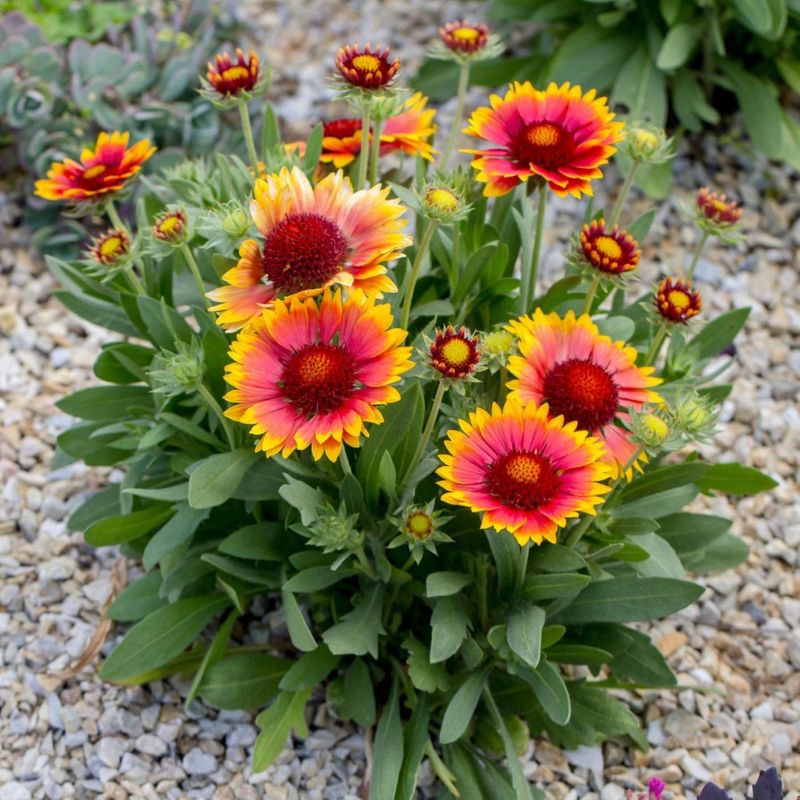
Named for the warm reds and golds of Native American blankets, gaillardia brings fiery color that seems to radiate heat. Each bloom is a swirl of red centers ringed in yellow, and the plant keeps cranking them out from early summer to frost.
It practically thrives on tough love, preferring lean, sandy, well-drained soil over rich pampering. Overwatering or heavy fertilizer actually makes it floppy and short-lived.
Coastal gardeners love it because it shrugs off salt spray and wind. Butterflies gather on the flat blooms, and leaving a few seed heads invites birds later on. If you have a hot, dry, neglected corner begging for color, this is the plant that will happily move in.
10. Japanese Anemone
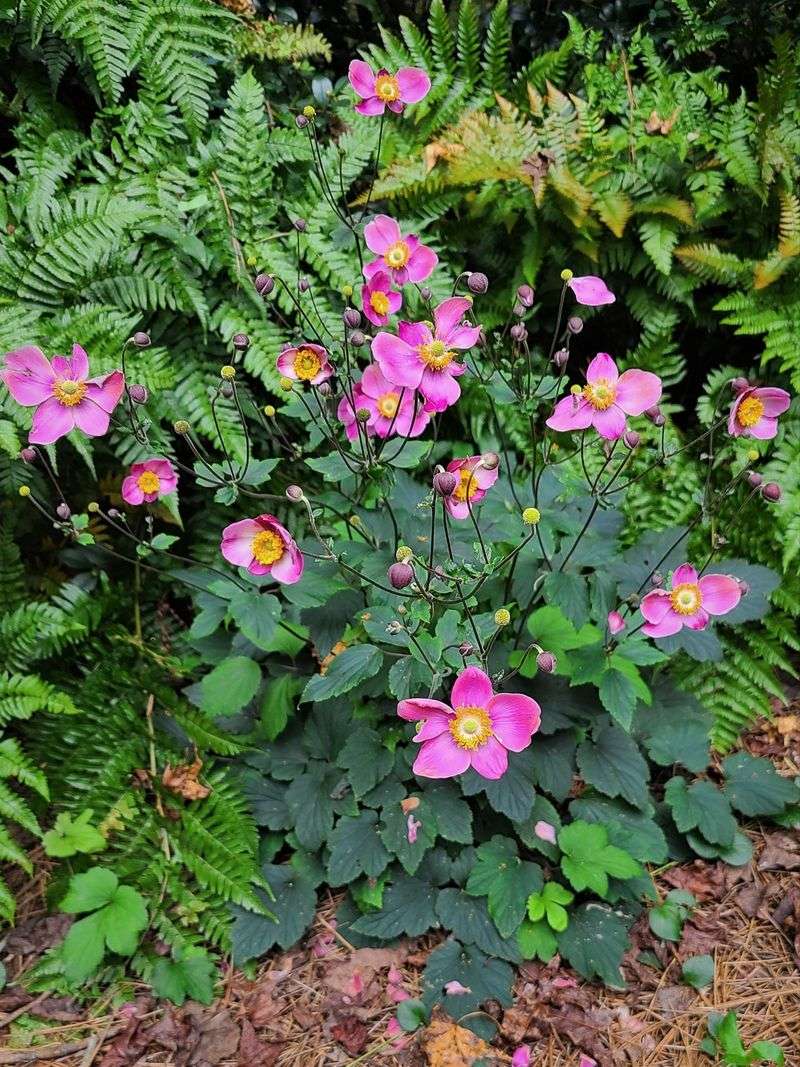
Elegant and a little old-fashioned, Japanese anemones float their pink or white cups on tall wiry stems just as fall arrives. They bring a graceful, breezy motion to the garden when most flowers are done.
Unlike many late bloomers, these actually prefer part shade and moist soil, making them a rare autumn-color option for shadier spots. That fills a gap most gardeners struggle with.
They spread slowly by underground runners, so give them room and they’ll form a lovely colony over time. The buds are as pretty as the open flowers, dangling like little pearls. For soft, romantic color under trees when everything else fades, few plants compare.
11. Yarrow (Achillea)
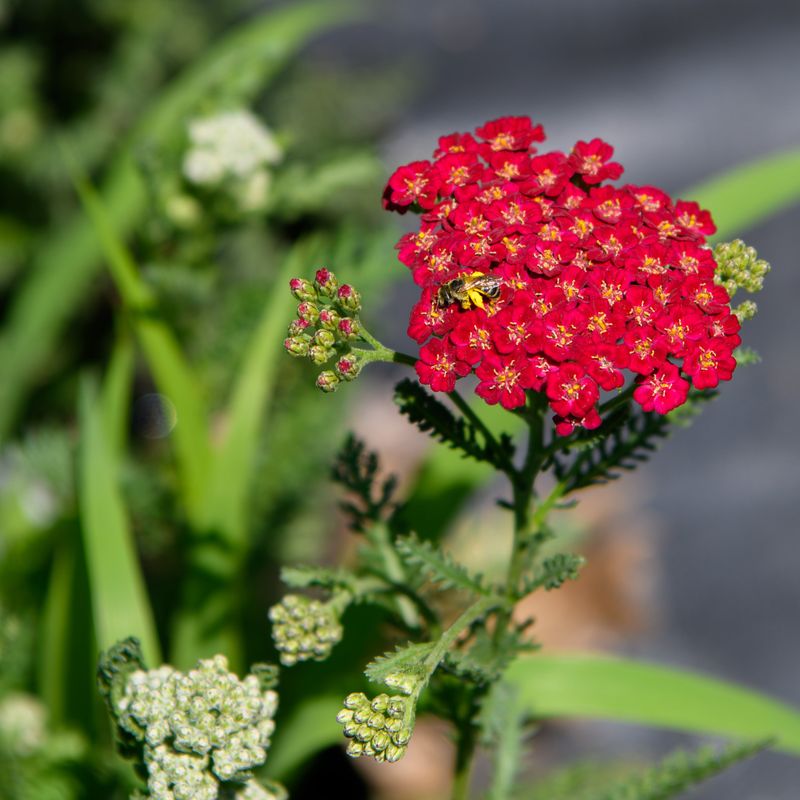
Flat-topped clusters in yellow, red, pink, or white make yarrow look like a landing strip for pollinators, and it flowers steadily all summer long. The feathery, fernlike foliage is attractive even when the blooms take a break.
Legend says the Greek hero Achilles used yarrow to treat soldiers’ wounds, which is where the botanical name comes from. That ancient toughness shows in the garden too.
Drought, heat, and poor soil don’t faze it one bit, and it makes an excellent cut flower that also dries beautifully for arrangements. Shear it back after the first flush and you’ll often get a second round. Reliable, aromatic, and endlessly useful, yarrow belongs in any low-water bed.
12. Helenium (Sneezeweed)
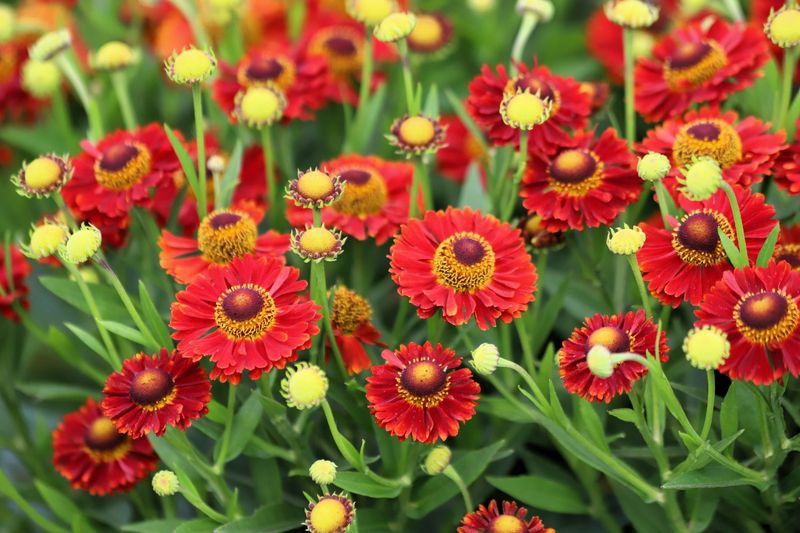
Don’t let the unfortunate common name scare you off, because helenium won’t make you sneeze at all. The old name came from dried leaves once used in snuff, not from any pollen problem.
What it will do is set the late-summer garden ablaze with warm daisy blooms in copper, orange, red, and gold. Flowering from July into October, it hits its stride exactly when the garden needs a lift.
The domed centers give the flowers a fun, dimensional look, and butterflies swarm them on sunny afternoons. It likes consistent moisture and full sun, so tuck it somewhere it won’t dry out completely. For rich autumn tones that echo turning leaves, helenium is a knockout.
13. Phlox paniculata (Garden Phlox)
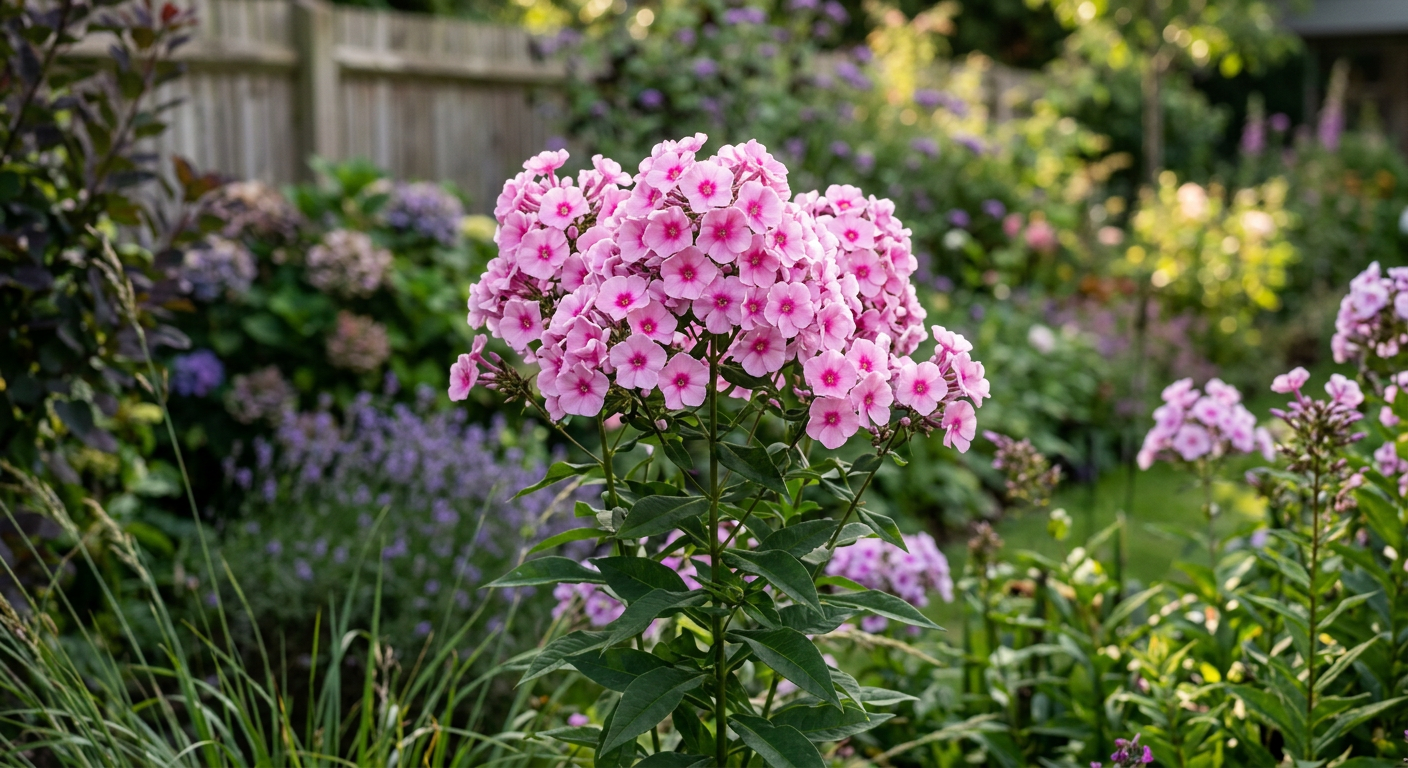
Big, fragrant flower heads in pink, purple, white, and red make garden phlox a heavy hitter in the midsummer border, and the sweet scent drifts across the yard on warm evenings. Blooms keep coming for weeks if you snip off the fading clusters.
Hummingbirds and butterflies treat it like a favorite diner, stopping by all day long. Choose mildew-resistant varieties and give the plants good air circulation to keep the foliage clean.
A cottage-garden classic, phlox has been charming American backyards for generations. Its tall, upright form adds welcome height behind shorter plants. When you want bold color plus perfume that other perennials just can’t offer, phlox delivers on both fronts.
14. Catmint (Nepeta)
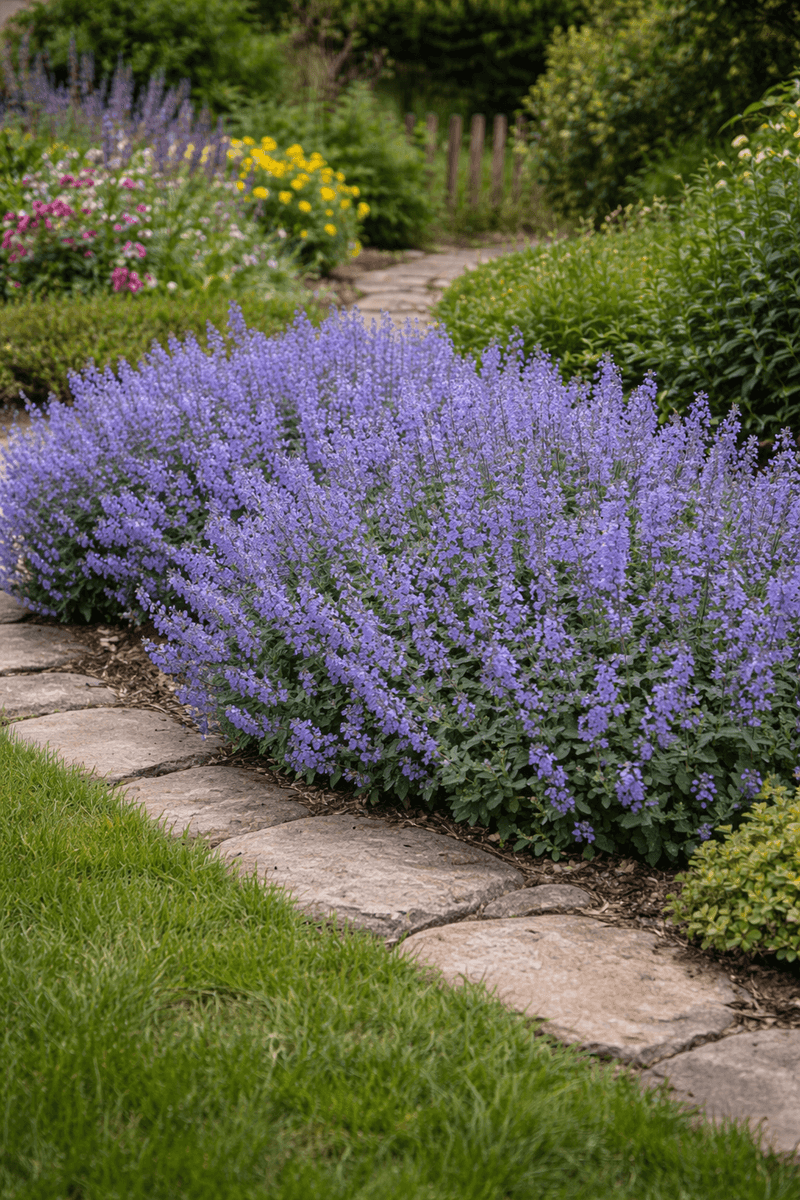
Soft mounds of lavender-blue flowers and gray-green leaves give catmint a relaxed, billowy look that softens any hard edge in the garden. It blooms from late spring and, with a mid-season trim, keeps going into fall.
The aromatic foliage tends to be ignored by deer and rabbits, while bees find it irresistible. Yes, cats sometimes enjoy it too, though it is milder than true catnip.
Drought-tolerant and unfussy, it thrives in hot sun and lean soil where fussier plants would sulk. It looks fantastic spilling over walkway edges or planted in a long ribbon along a fence. Low, long-blooming, and dependable, catmint is one of those plants you buy once and never regret.
15. Goldenrod (Solidago)
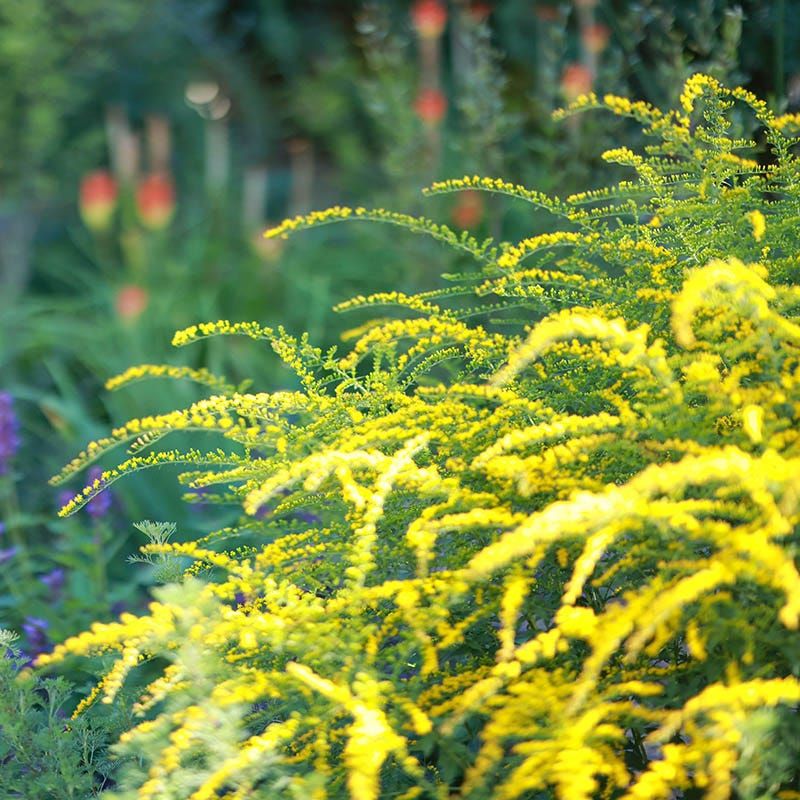
Poor goldenrod gets blamed for hay fever every fall, but ragweed is the real culprit. Its heavy pollen never floats far, so you can enjoy those brilliant golden plumes guilt-free.
Blooming in late summer and autumn, goldenrod lights up meadows and borders with arching sprays of tiny yellow flowers. Pollinators mob it during a season when nectar is getting scarce.
Garden-friendly varieties like ‘Fireworks’ stay tidier than the roadside kind and won’t take over your bed. It handles drought and poor soil with ease, asking for little in return. As a native powerhouse that feeds wildlife and glows gold, goldenrod deserves way more respect than it gets.
16. Coral Bells (Heuchera)
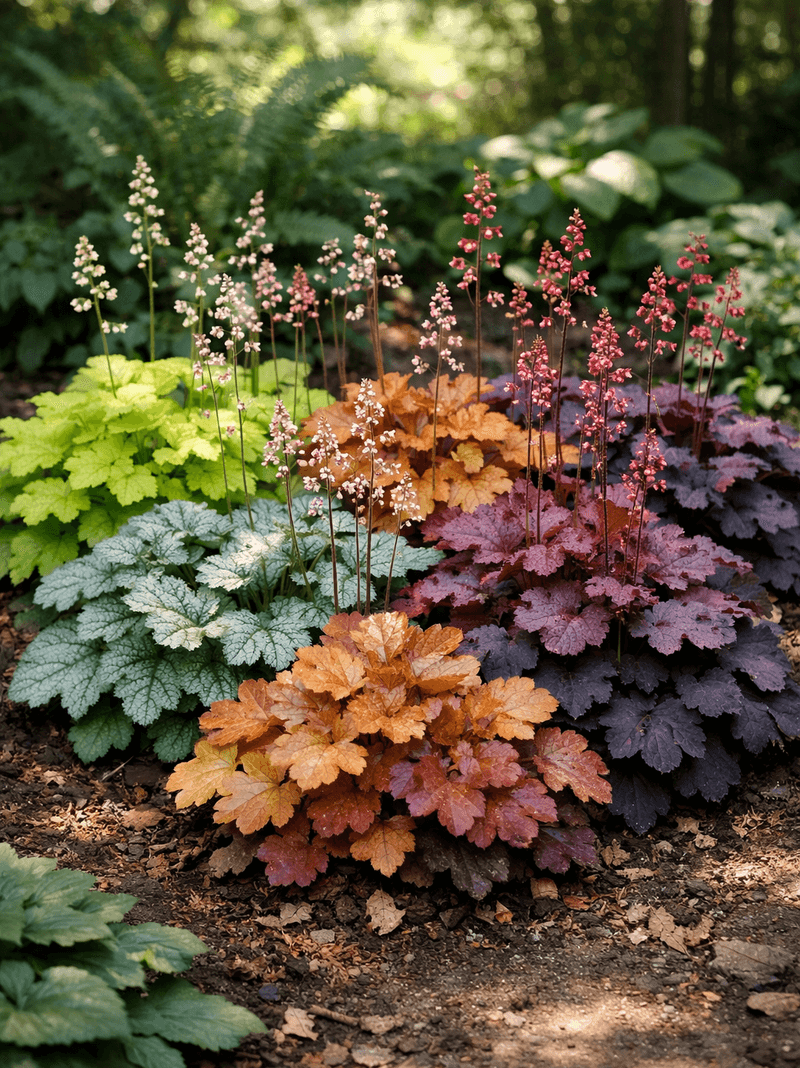
Grown mostly for their jaw-dropping foliage, coral bells come in colors that seem almost unreal, from lime and caramel to deep burgundy and near-black. That leaf color holds strong from spring through fall and even lingers into winter in mild zones.
Delicate wands of tiny bell-shaped flowers rise above the mounds in early summer, drawing in hummingbirds. But the leaves are the real long-season star here.
They prefer part shade and good drainage, making them ideal for brightening spots where sun-loving bloomers can’t grow. Mix a few varieties together and you get a living quilt of color with zero flowers required. For dependable, year-round richness in the shade, heuchera can’t be beat.
17. Toad Lily (Tricyrtis)
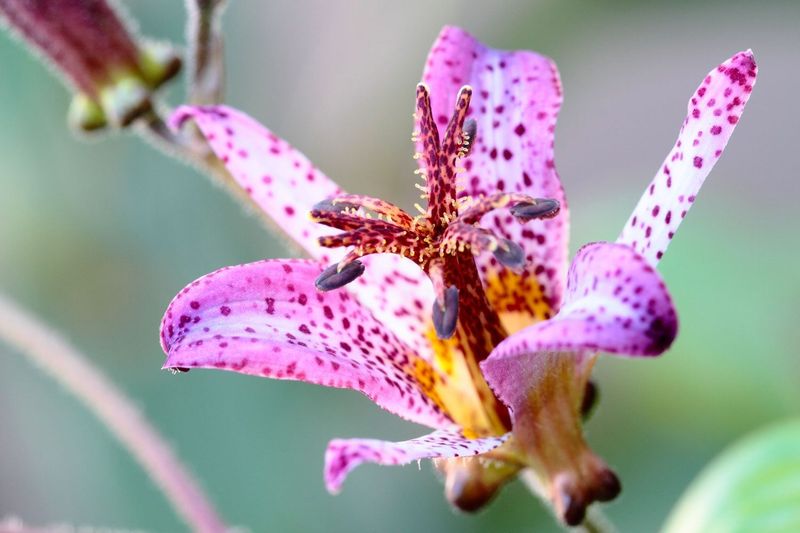
If you crave something unusual, toad lily flowers look like tiny orchids splattered with purple freckles. They open in early to mid fall, blooming along arching stems right when the shade garden seems finished for the year.
Because it flowers so late and loves moist shade, it fills a slot almost nothing else can. Get up close, since the intricate speckled blooms reward a careful look.
Woodland conditions with rich, damp soil suit it best, mimicking its native forest habitat in Asia. It spreads gently over time to form a graceful clump. For a conversation-starting burst of color in the dim corners of autumn, toad lily is a hidden gem.
18. Montauk Daisy (Nipponanthemum)
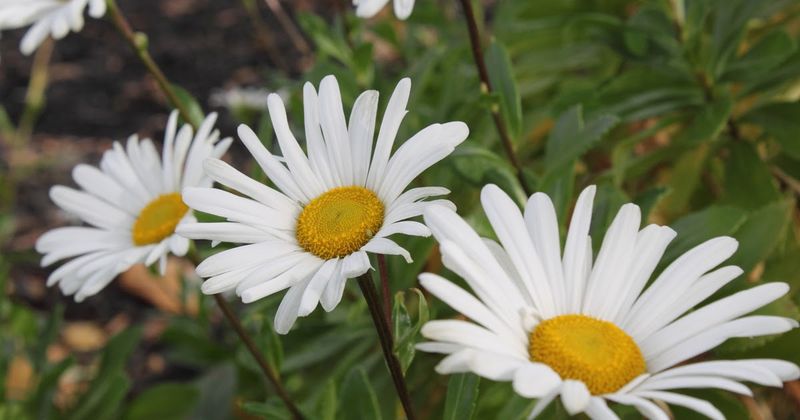
Crisp white petals around a sunny yellow eye give the Montauk daisy a clean, classic look, and it saves its show for the very end of the season. Blooming from September into November, it flowers when most gardens have surrendered.
Its thick, glossy leaves stay handsome all summer, so the plant earns its space even before the flowers arrive. Pinch it back in early summer for a compact, sturdy shape that won’t flop under the weight of its blooms.
Salt spray and seaside wind don’t bother it, which is why it thrives in coastal New England gardens. Full sun and sharp drainage keep it happy. For a bright, no-fuss finale to the growing year, this daisy times it perfectly.
19. Chrysanthemum (Hardy Garden Mum)
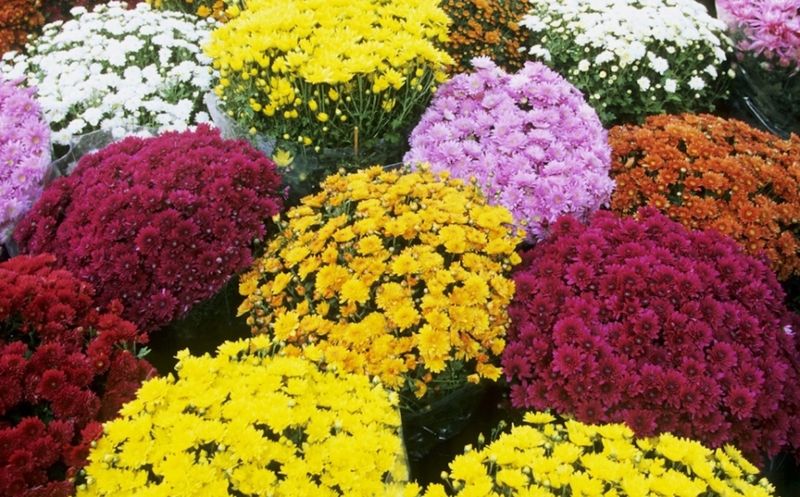
Nothing says fall quite like a mound of mums bursting with color, and the hardy garden types come back year after year instead of ending up in the trash. Reds, oranges, bronzes, purples, and whites blanket the plant right through the cooling weeks of autumn.
The trick to getting them to survive is planting in spring, not fall, so their roots settle in before winter. Pinch the growing tips a couple times in early summer for a fuller, flower-packed dome.
Full sun and well-drained soil keep them thriving, and a layer of mulch helps them overwinter. As one of the last big bloomers standing, mums close out the color parade in grand style. Plant them once and enjoy the encore for years.