
9 Flowering Shrubs That Bring Bolder Color Than Hydrangeas With Half The Fuss
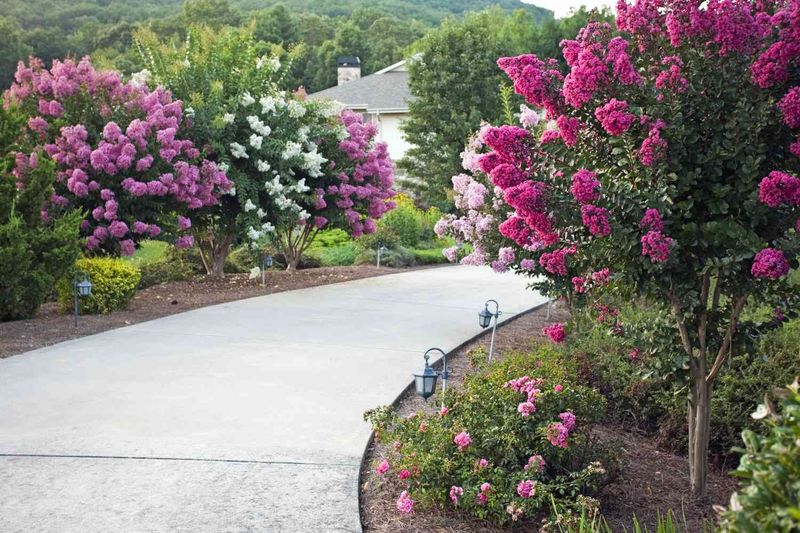
Hydrangeas get all the attention, but they can be picky about soil, water, and shade before they finally bloom. If you want big color in your backyard without babysitting a plant all season, there are shrubs that do the job with way less effort. The nine picks below light up American yards from spring through fall, and most of them shrug off heat, dry spells, and forgetful gardeners. Pick one or two that fit your zone, and you will have a splash of color your neighbors will ask about.
1. Weigela
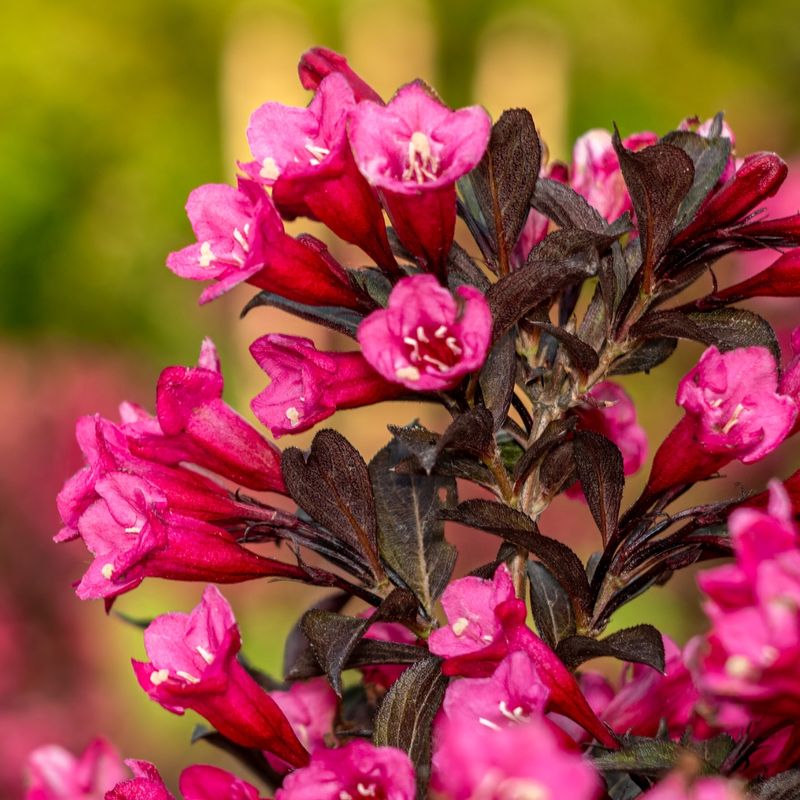
Picture a shrub so covered in trumpet-shaped blooms that hummingbirds line up to visit, and you have got weigela. In late spring it erupts in pink, red, or white flowers, and many varieties toss out a second flush later in summer.
What makes it a winner is how little it asks for. Give it full sun and average soil, and it handles heat and drought once its roots settle in. Varieties like Wine and Roses pair deep burgundy leaves with hot-pink flowers, so it looks good even between bloom cycles.
Pruning is optional and forgiving. A quick trim right after the spring show keeps it tidy, but skip a year and it will not sulk. For gardeners in zones 4 through 8, weigela delivers cottage-garden charm without the constant fussing hydrangeas demand.
2. Rose of Sharon
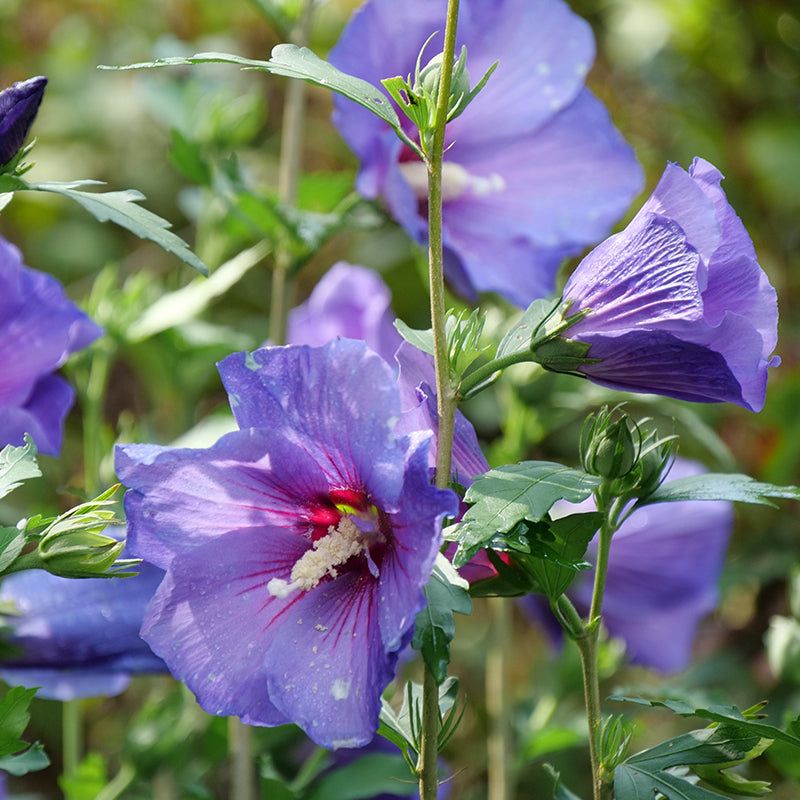
When most shrubs have called it quits for the year, rose of Sharon is just getting warmed up. From midsummer into fall it opens wide hibiscus-style blooms in violet, blue, pink, and white, filling the gap when the rest of the garden looks tired.
Toughness is its calling card. It laughs off heat, tolerates poor soil, and grows happily in cities where pollution and cramped roots would stress other plants. Hardy across zones 5 through 9, it can climb to eight feet or more, making it a fast privacy screen along a fence line.
One heads-up worth knowing: it self-seeds enthusiastically. If you would rather not pull up seedlings, look for sterile varieties like the Chiffon or Satin series that bloom their heads off without scattering babies everywhere.
3. Spirea
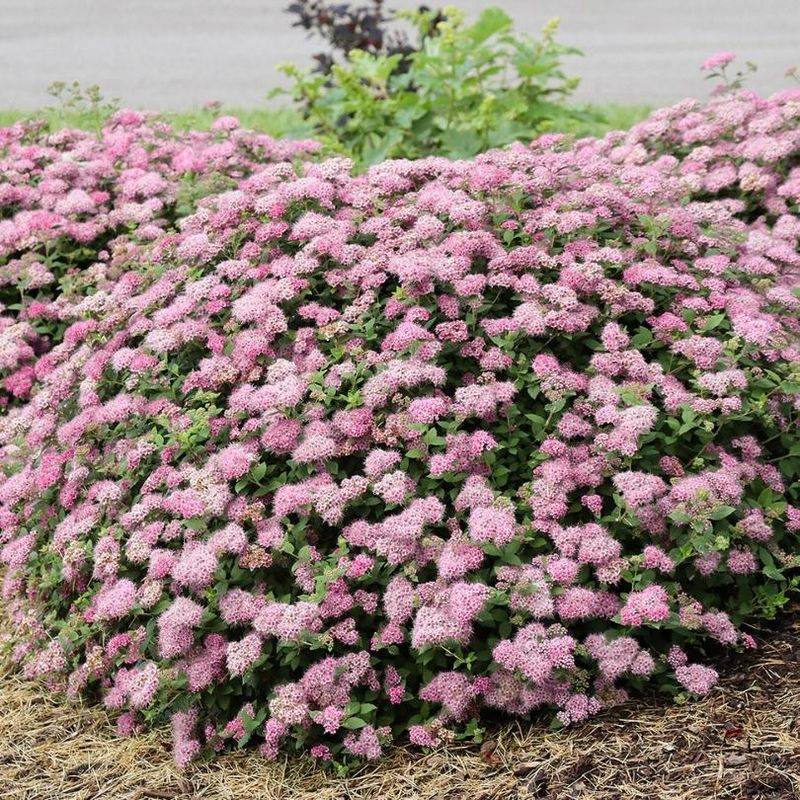
Low, mounded, and dependable, spirea is the shrub for people who swear they cannot keep anything alive. It forms tidy little cushions covered in flat clusters of pink, red, or white flowers, and some types show off fiery orange and gold foliage on top of it.
Barely any care is required. Once established it shrugs off drought, does not care much about soil quality, and rarely gets bothered by pests or disease. A single shearing after the first bloom often triggers a whole second round of flowers.
Compact varieties like Little Princess or the Double Play series stay under three feet, which makes them perfect for edging a walkway or filling a raised bed. In zones 3 through 8, spirea gives you nonstop color for the effort of, honestly, almost nothing.
4. Butterfly Bush
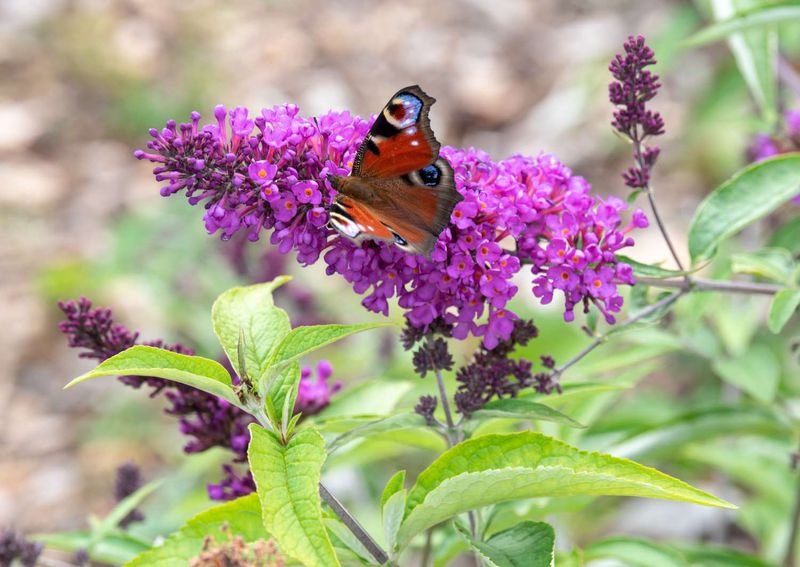
Few shrubs turn a backyard into a butterfly party quite like the butterfly bush. Long, cone-shaped flower spikes in purple, pink, or white pump out nectar from summer until frost, drawing swallowtails, monarchs, and bees in steady traffic.
It practically thrives on neglect. Poor soil, blazing sun, and dry spells are no problem, and the more you cut it back, the more it blooms. A hard prune in early spring keeps it bushy and loaded with flowers.
A quick note for responsible gardeners: the old-fashioned types can spread beyond the yard, so choose non-invasive picks like the Lo and Behold or Miss series, which stay compact and set little to no seed. Hardy in zones 5 through 9, it rewards the laziest gardener with the busiest garden on the block.
5. Potentilla
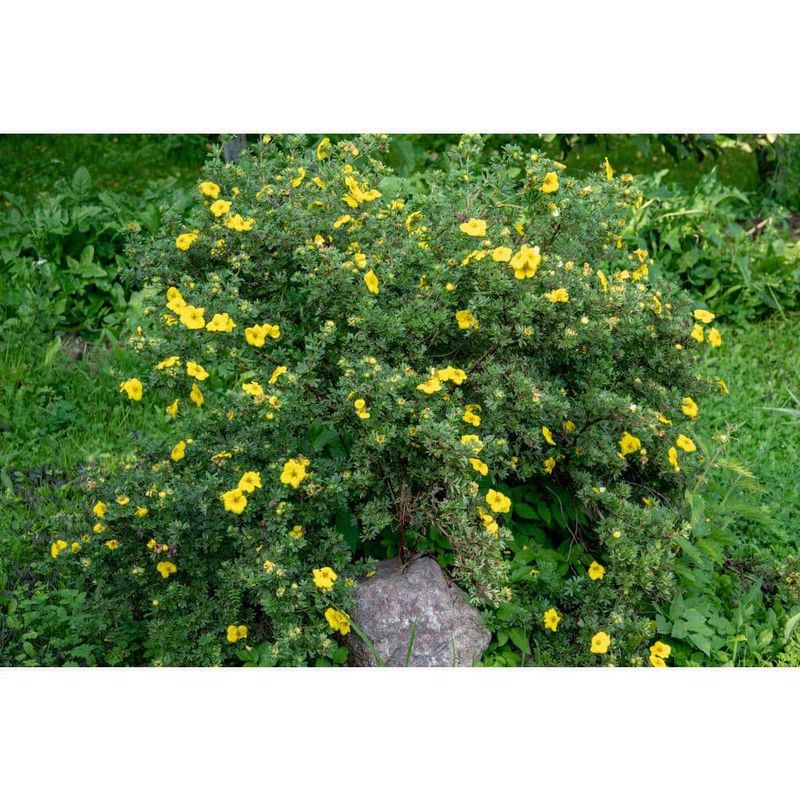
Ask any gardener in the coldest corners of the country what survives brutal winters and blooms all summer, and potentilla comes up fast. This little shrub covers itself in cheerful buttercup-shaped flowers of yellow, white, orange, or pink from June until frost.
Cold is no threat here. It sails through zone 2 winters that would kill most flowering shrubs, and it keeps blooming through summer heat without missing a beat. Poor soil, wind, and dry conditions barely register.
Its neat, rounded shape rarely tops three feet, so it works as a low hedge, a border filler, or a foundation plant that never outgrows its spot. Deer tend to leave it alone too, which is a quiet bonus in areas where the herd treats gardens like a buffet.
6. Azalea
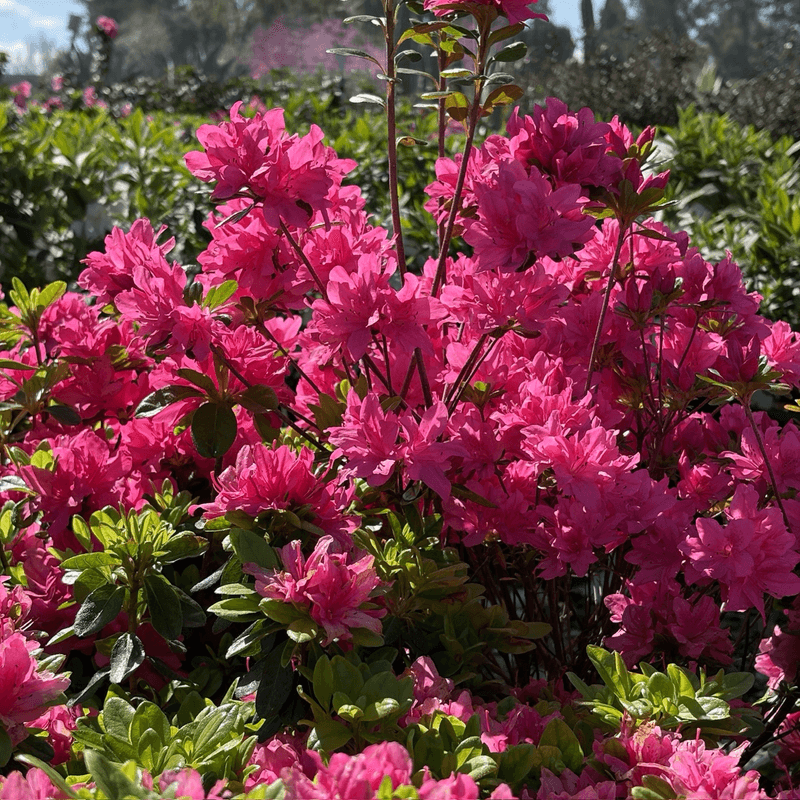
For a few weeks each spring, a mature azalea stops being a shrub and becomes a solid wall of color. Blooms in coral, magenta, red, and white pack so tightly you can barely see a leaf, and reblooming types like the Encore series come back for an encore in summer and fall.
Unlike hydrangeas, which pout in the wrong light, azaleas are happy in the dappled shade under trees where color is hard to come by. They prefer slightly acidic soil, but once planted in the right spot they mostly take care of themselves.
Here is a fun bit of history: azaleas have been prized in Japanese and Chinese gardens for over a thousand years, long before they became a Southern porch staple. In zones 6 through 9, they turn shady corners into the boldest scene in the yard.
7. Knock Out Rose
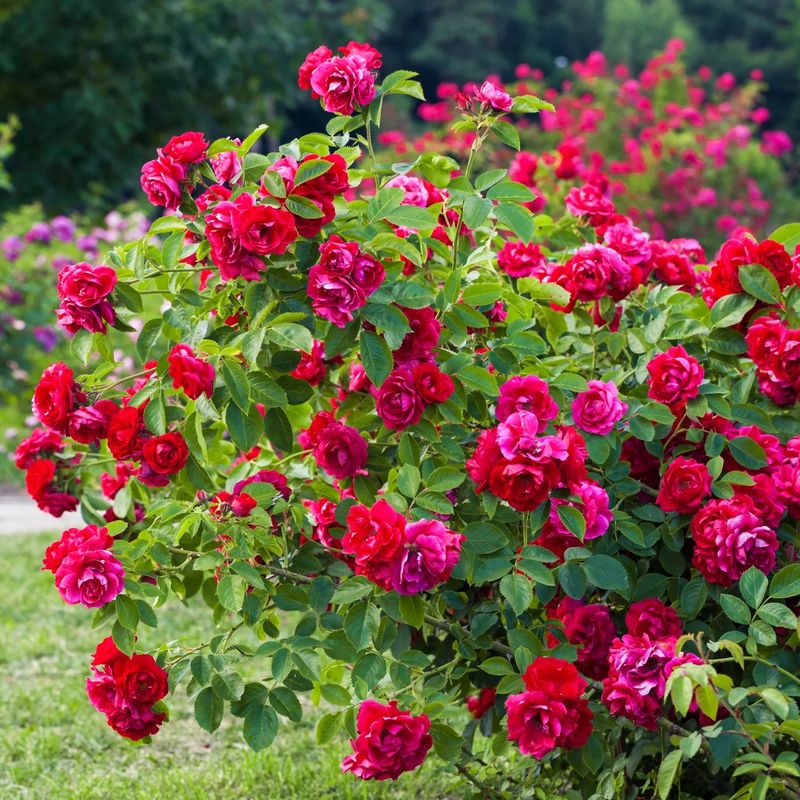
Roses have a reputation for being divas, but the Knock Out changed that story completely. Bred to bloom in waves from spring until frost, it covers itself in cherry-red, pink, or yellow flowers without asking for the spraying and pampering that traditional roses demand.
Disease resistance is its superpower. It shrugs off the black spot and mildew that plague fussier roses, and it does not need deadheading to keep flowering. Plant it in full sun, water it while it settles in, and get out of the way.
One shrub can push out hundreds of blooms in a single season, which is why you see them lining gas stations, parking lots, and municipal beds where nobody has time to baby a plant. In zones 5 through 9, it may be the most color-per-effort shrub on this entire list.
8. Forsythia
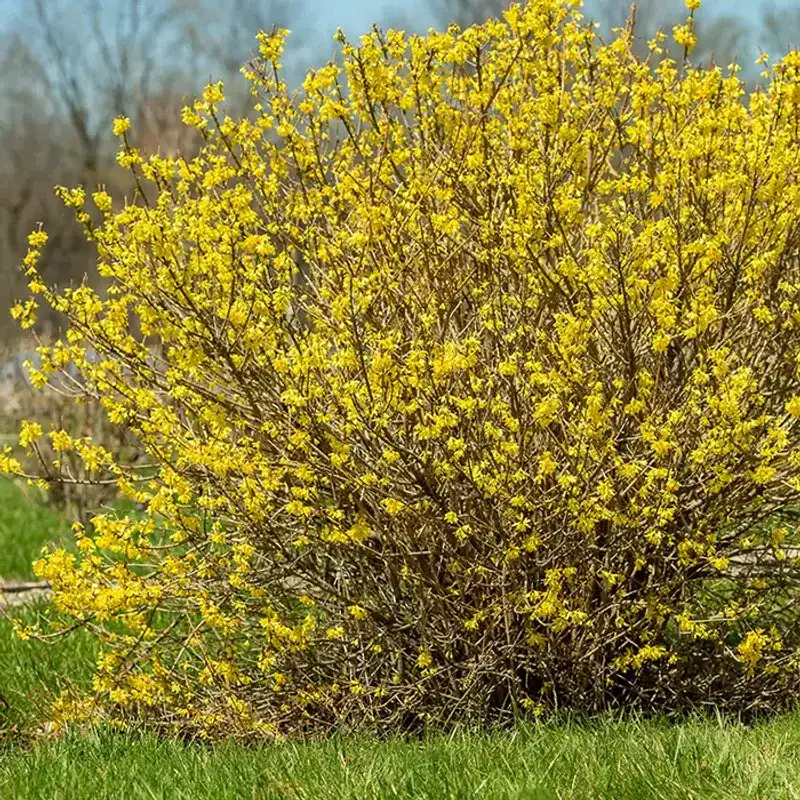
Before the last snow has fully melted, forsythia lights up the yard with electric yellow blooms on bare branches. It is often the very first shrub to flower each year, a loud announcement that spring has finally arrived.
Care is close to nonexistent. It grows in almost any soil, tolerates drought once established, and spreads through arching branches that root where they touch the ground. Give it room, because a happy forsythia can sprawl eight to ten feet wide.
Because it blooms on old wood, the only rule to remember is to prune right after flowering rather than in fall or winter. Hardy in zones 5 through 8, it hands you a jolt of gold weeks before anything else in the garden dares to wake up.
9. Ninebark
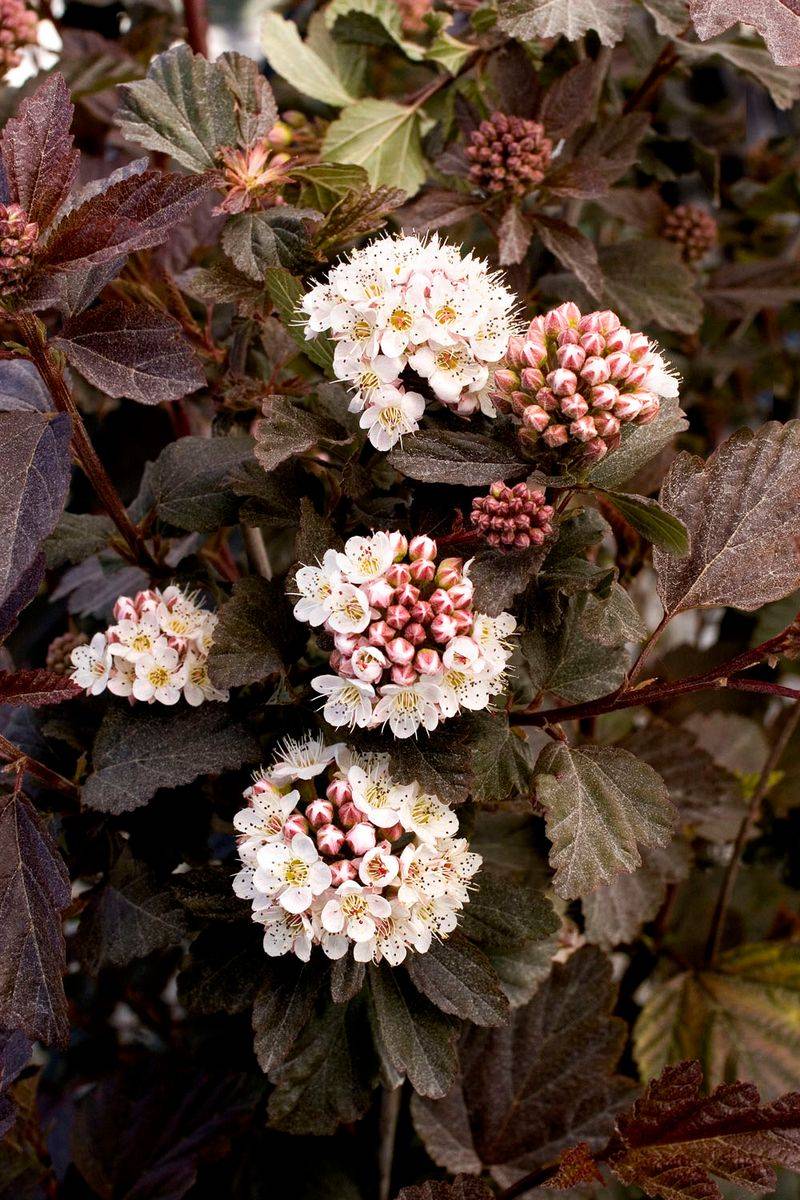
Native to North America and tough as nails, ninebark brings drama through its leaves as much as its flowers. Varieties like Diabolo and Coppertina wear deep burgundy or coppery foliage all season, then add clusters of white or pink blooms in early summer for good measure.
Being a native, it is built for local conditions. It handles clay, sand, drought, and cold down to zone 3, and it feeds native pollinators and birds without any coaxing from you. Come winter, the peeling bark that gives it its name adds texture when everything else has gone bare.
Little needs doing beyond an occasional shaping cut. If you want a shrub that carries bold color from spring leaf-out all the way through the frost, and supports your local ecosystem while it does, ninebark quietly outperforms flashier options.