
15 Reasons Your Tomato Blossoms Keep Dropping Before They Ever Set Fruit
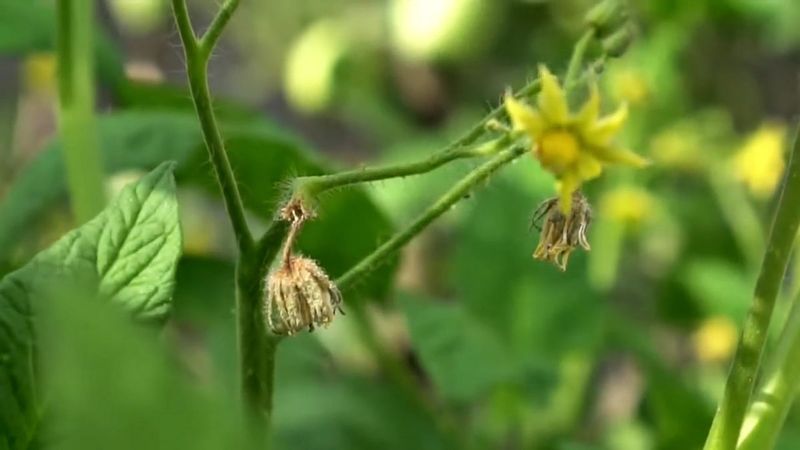
Nothing is more frustrating than watching your tomato plants burst into cheerful yellow flowers, only to find those blossoms shriveling and falling off before a single tomato forms. Blossom drop is one of the most common headaches for backyard gardeners, and it almost always has a fixable cause hiding behind it. Once you learn to read the warning signs your plants are sending, you can step in and rescue the harvest you have been waiting for. Here are 15 reasons your tomato flowers keep dropping, and what each one is quietly telling you.
1. Nighttime Temperatures That Stay Too High
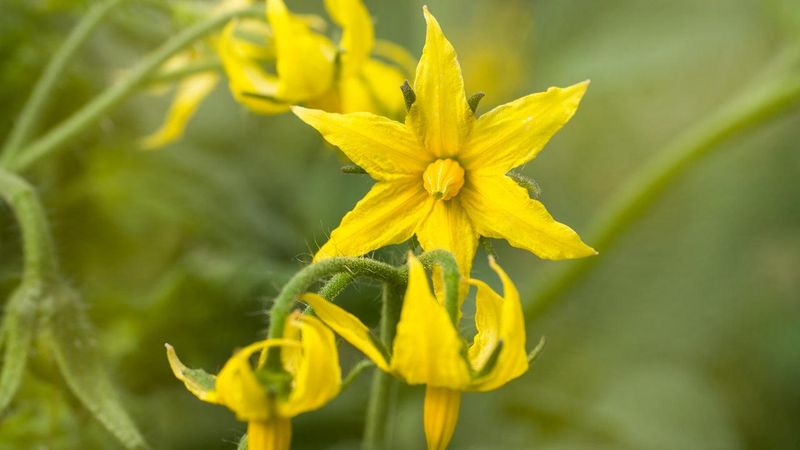
Tomatoes have a stubborn streak when it comes to warm nights. When the thermometer refuses to dip below 70 to 75 degrees after dark, the pollen inside those pretty flowers turns sticky and clumpy, and it simply cannot travel where it needs to go.
The plant senses the stress and quietly aborts the bloom rather than waste energy on fruit that will not develop. You will notice this most in the muggy stretches of a US summer, when even the evenings feel like a warm blanket you cannot kick off.
Fixing the daytime heat helps, but the night numbers are the real culprit here, which is why gardeners in the Deep South often see a mid-summer pause in fruit set. If your nights run hot, look for varieties bred for heat tolerance such as Heatmaster or Solar Fire, since they hold their blossoms far better when the air stays sticky past sunset.
2. Daytime Heat Above the Danger Line
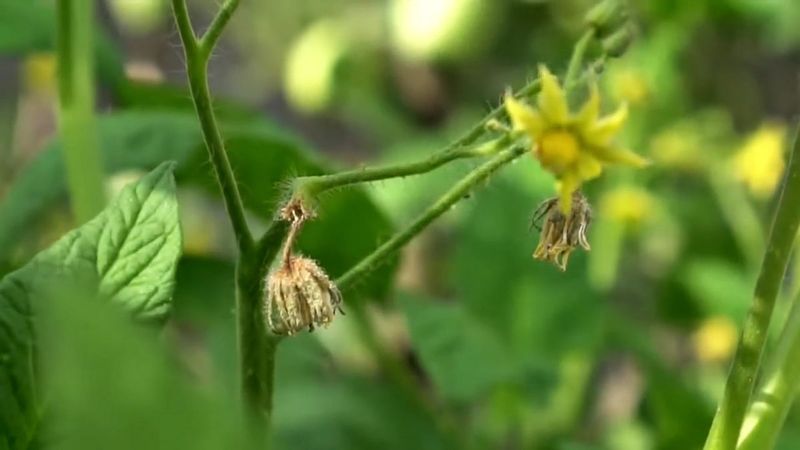
Push the daytime highs past 90 degrees and your tomato flowers start to sweat, so to speak. The pollen loses its viability in extreme heat, and the flower has no way to complete the job of setting fruit.
A single scorching afternoon rarely does damage, but several blistering days in a row will leave a whole cluster of blooms dropping to the ground. Southern and Southwestern gardeners run into this wall almost every July and August.
Light afternoon shade cloth can knock a few crucial degrees off the peak, giving your blossoms a fighting chance. Watch the leaves too, because when they curl upward into tight tubes during the hottest part of the day, your plant is waving a small flag that says the heat has crossed into blossom-dropping territory.
3. Cold Snaps That Catch You Off Guard
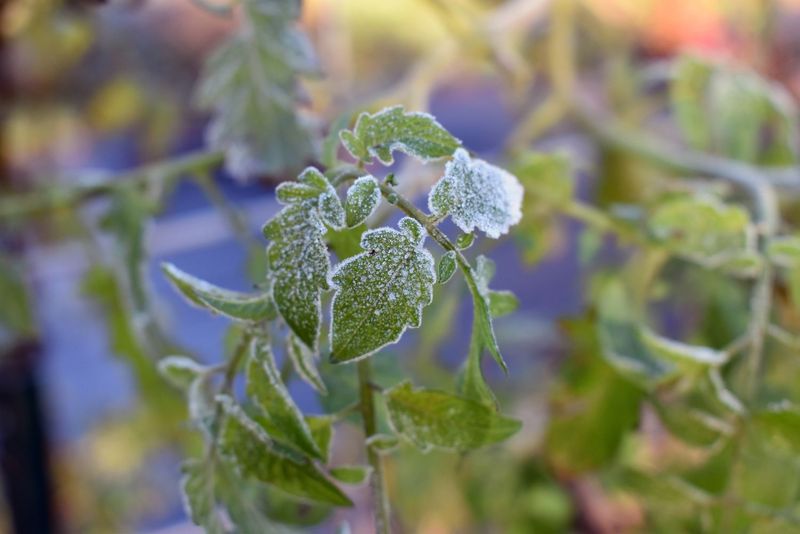
Heat gets all the blame, but chilly weather is just as guilty. When nighttime temperatures slip below 55 degrees, tomato pollen becomes sluggish and the flowers struggle to pollinate, so they let go instead.
Spring gardeners in northern zones and mountain regions know this trap well, planting early with high hopes only to watch a late cold front steal the first flush of blooms. The plant looks perfectly healthy, yet the fruit just never appears.
Row covers or old bedsheets draped over the plants on cool nights can hold enough warmth to keep the blossoms happy. Patience helps too, because once the ground and air settle into a steadier warmth, the next round of flowers usually sets without any drama.
4. Too Much Nitrogen Fertilizer
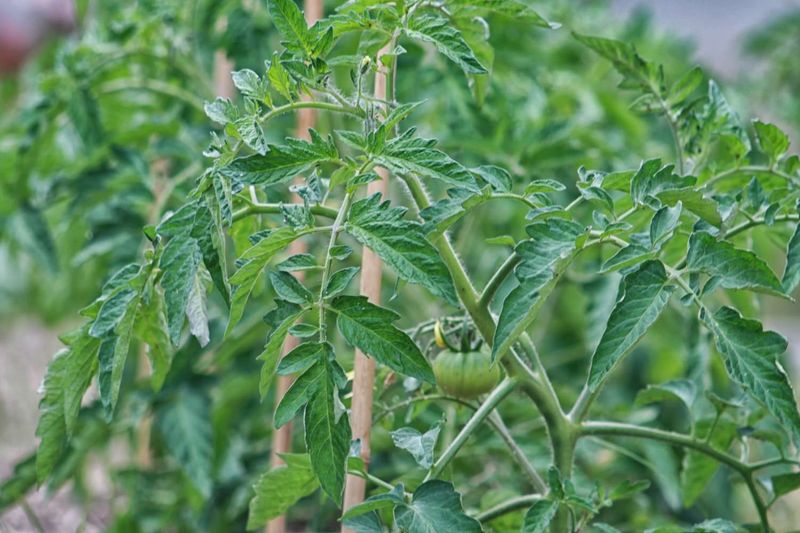
Ever seen a tomato plant that looks like it belongs in a jungle, all lush leaves and thick stems, yet somehow refuses to fruit? Overfeeding with high-nitrogen fertilizer is often the reason, because the plant pours all its energy into growing green and leafy rather than making flowers and fruit.
The blossoms that do appear tend to drop, since the plant is essentially distracted by its own vigorous foliage. Gardeners who reach for a lawn-style feed or a heavy hand with manure frequently create this leafy monster by accident.
Switching to a fertilizer with more phosphorus and potassium, the kind labeled for blooming or fruiting, gently redirects the plant’s ambitions back toward the harvest. A deep green, oversized plant with barely a tomato in sight is your leaf-level clue that the nitrogen has been flowing a little too freely.
5. Humidity That Runs Too High or Too Low
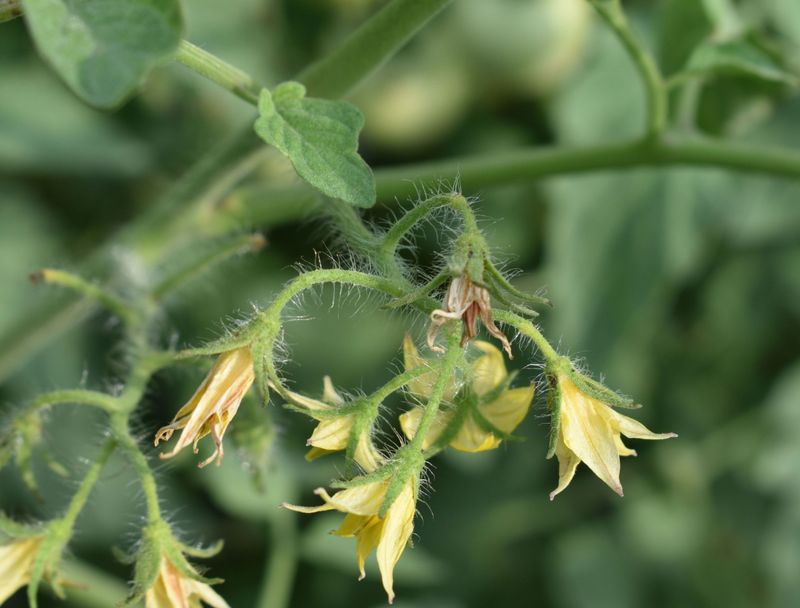
Moisture in the air plays a sneaky role in whether your flowers hold on. When humidity climbs too high, pollen grains clump together and stick inside the flower, unable to reach where they need to go.
Swing the other direction into bone-dry air, common in arid Western states, and the pollen dries out so much it cannot stick at all. Either extreme leaves you with the same disappointing result of blossoms littering the soil.
The sweet spot sits somewhere in the middle, around 40 to 70 percent relative humidity. Gardeners in dry climates can nudge conditions in the right direction with a light morning misting near the plants, while those in muggy regions benefit from good airflow and generous spacing between plants.
6. Not Enough Pollinators or Movement
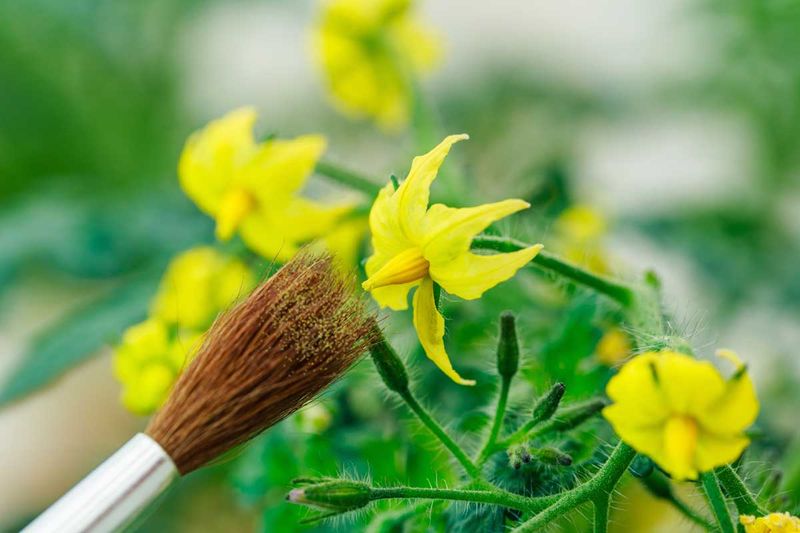
Tomatoes are mostly self-pollinating, but they still need a gentle nudge to shake the pollen loose inside each flower. Out in an open garden, wind and buzzing bees handle that job beautifully, vibrating the blooms until the pollen falls into place.
Tuck your plants into a still, sheltered corner or a covered patio, though, and that helpful movement disappears. The flowers open, wait around with no one to shake them, and eventually drop unfulfilled.
You can play the bee yourself by giving flower clusters a soft flick with your finger or gently tapping the support stake every couple of days around midday. Planting bee-friendly blooms like borage or marigolds nearby also invites the natural pollinators that do the work for you.
7. Watering That Swings From Flood to Drought
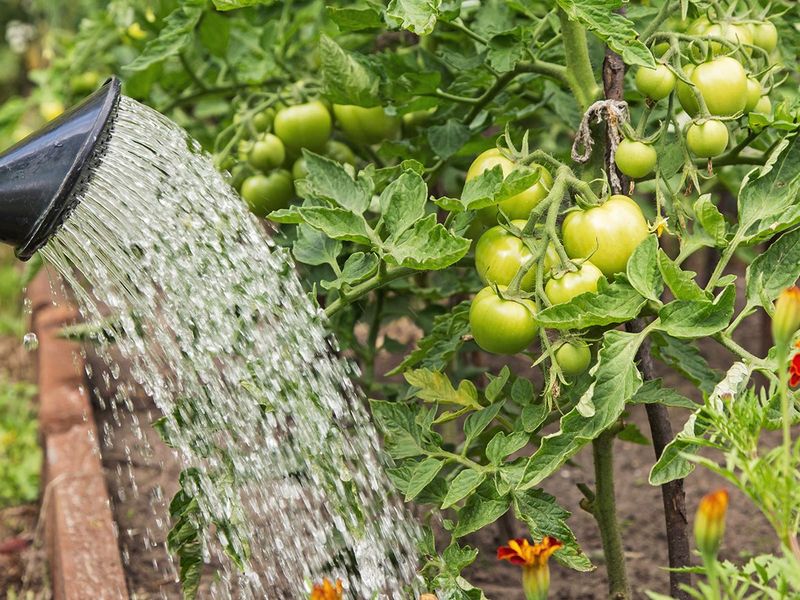
Inconsistent watering keeps tomato plants in a constant state of stress, and stressed plants shed their blossoms as a survival move. Let the soil bake dry, then drown it, then let it dry again, and the roots never settle into a steady rhythm.
The plant reads all this back-and-forth as a signal that conditions are unreliable, so it drops flowers rather than gamble on fruit it might not finish. Container growers feel this most sharply, since pots dry out fast and swing hard.
Aim for deep, even watering that keeps the root zone consistently moist but never soggy, roughly one to two inches per week depending on your weather. A two to three inch layer of mulch acts like a shock absorber, smoothing out those wild moisture swings and keeping your blooms far calmer.
8. Blossoms Overloading a Young Plant
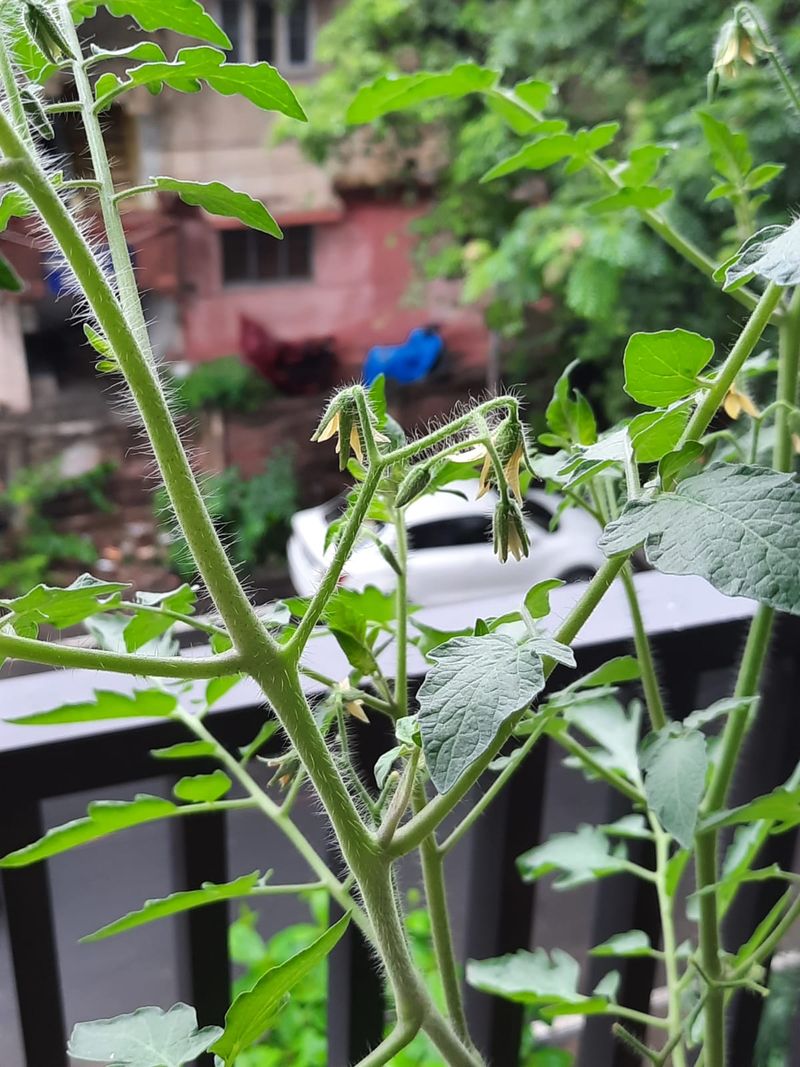
Sometimes a young, eager plant simply bites off more than it can chew. A tomato that sets a huge burst of flowers all at once while still small may drop a portion of them, because it does not yet have the root system or foliage to support every single one.
Rather than a problem, this is the plant making a smart calculation, keeping only what it can realistically feed. Indeterminate varieties in particular love to flower heavily early on.
Giving the plant time to size up usually solves the issue on its own, as later flower clusters set more reliably once the roots and stems have bulked out. A little patience during those first few weeks often rewards you with a much heavier harvest down the line.
9. The Wrong Variety for Your Climate
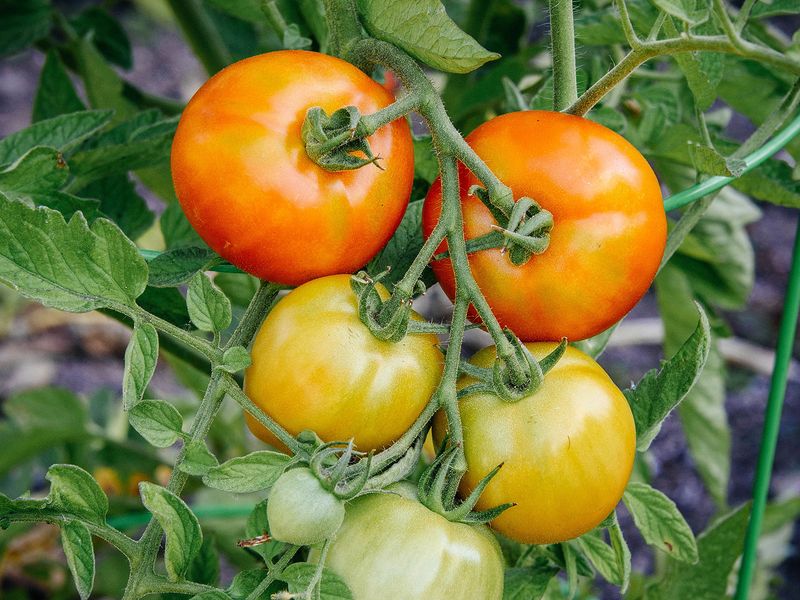
Picking a tomato that simply was not built for your backyard can doom the blossoms before you even plant it. A variety bred for cool Pacific Northwest summers will sulk and drop flowers in the sweltering heat of Texas, while a heat-lover may underperform in a short northern season.
Big beefsteak types are especially fussy, tending to drop blooms more readily than smaller-fruited cousins when conditions turn stressful. Cherry and grape tomatoes, by contrast, are famously forgiving and keep setting fruit through weather that stops the big boys cold.
Reading the label and matching a variety to your region’s realities saves a whole season of frustration. When in doubt, ask a neighbor or a local garden center which tomatoes actually thrive in your specific corner of the country.
10. Not Enough Sunlight Reaching the Blooms
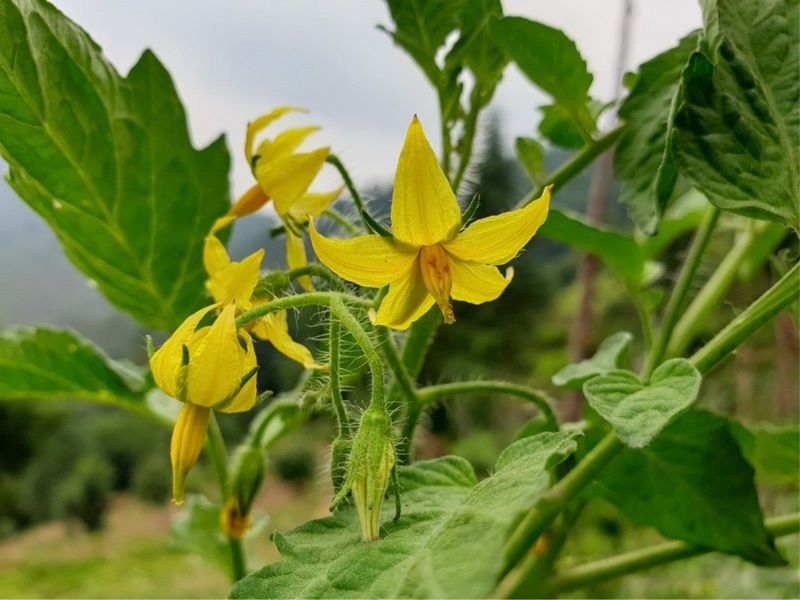
Tomatoes are sun worshippers, plain and simple, and they need at least six to eight hours of direct light to fuel healthy flower and fruit production. Plant them in a spot that only catches a few filtered hours, and the plant lacks the energy to hold onto its blossoms.
Shady conditions often sneak up on gardeners as nearby trees leaf out or a fence casts a longer shadow than expected. The plant grows tall and leggy, reaching for light, while its flowers quietly give up.
Relocating containers into a sunnier position can make an immediate difference. For in-ground plants, thinning a bit of surrounding foliage or trimming an overhanging branch may open up just enough light to turn those dropping blooms into keepers.
11. Overcrowded Plants Fighting for Resources
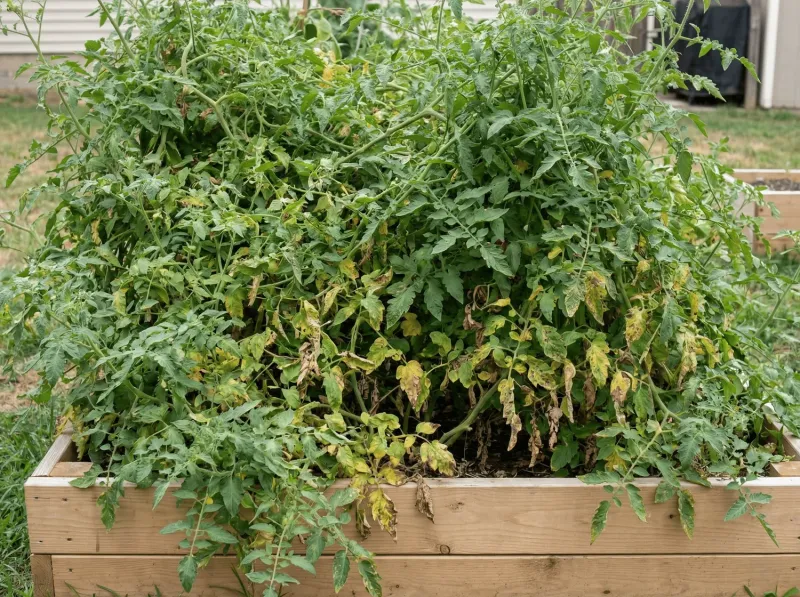
Cram too many tomato plants into a tight bed and they end up competing for the same light, water, and nutrients like siblings squabbling over the last slice of pizza. The losers in that fight respond by shedding flowers to conserve what little they can grab.
Crowding also traps humid, stagnant air around the leaves, which both hampers pollination and invites disease. Gardeners eager to maximize a small plot often plant far closer than the spacing guidelines suggest.
Most tomato varieties want two to three feet of breathing room between plants, and giving them that space pays off in stronger blossom retention. Good airflow moving freely through the patch keeps the flowers dry, the pollen loose, and the whole planting far more productive.
12. Sap-Sucking Pests Draining the Plant
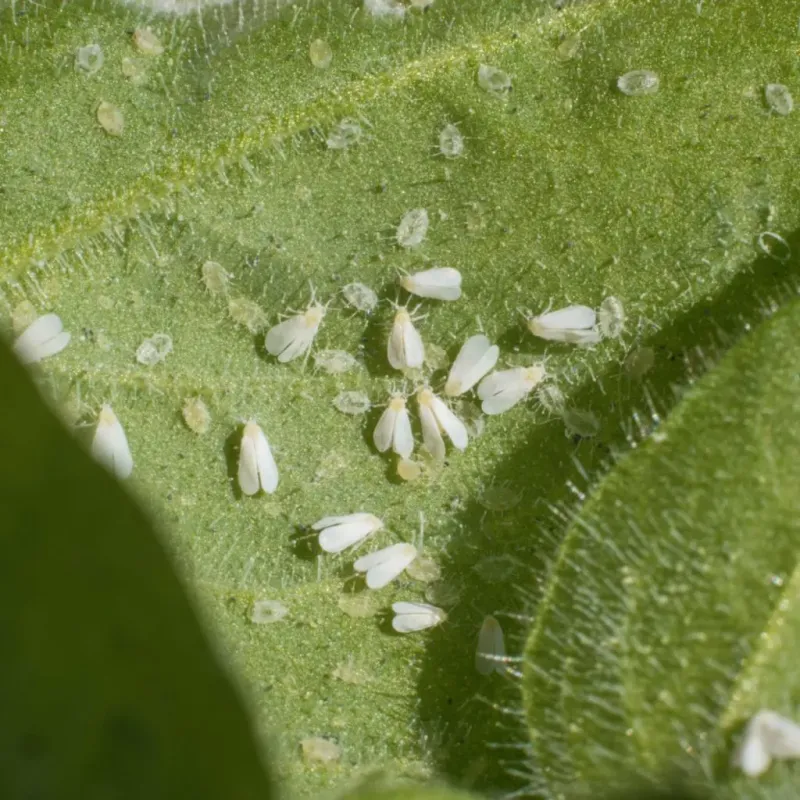
Tiny invaders like aphids, whiteflies, and spider mites can quietly bleed a tomato plant of the energy it needs to keep its flowers. As these pests pierce the stems and leaves to feed, the plant grows weaker and starts jettisoning blossoms to survive.
Their damage often shows up first on the leaves as yellow stippling, sticky residue, or fine webbing, so a quick underside inspection tells you a lot. Curling, distorted new growth is another early warning worth catching before the pests explode in number.
A strong spray of water knocks many of them off, and insecticidal soap or a homemade garlic spray may help keep populations in check without harsh chemicals. Interplanting with strongly scented basil, chives, or nasturtiums can also discourage some of these pests from settling in around your tomatoes.
13. Potassium and Nutrient Imbalances
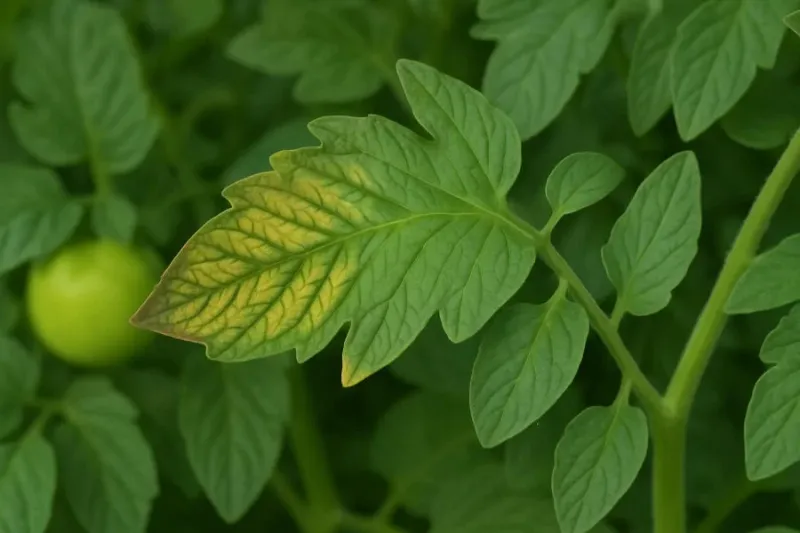
Beyond the nitrogen trap, a shortage of the right nutrients at flowering time can leave blossoms without the support they need to set. Potassium and phosphorus are the heavy lifters during fruit formation, and skimping on them leaves flowers likely to drop.
The plant may look fine overall, but the leaves tell the story, with older leaves yellowing at the edges when potassium runs low. A soil test takes the guesswork out and shows exactly what your bed is missing.
Feeding with a balanced fruiting fertilizer, or working in compost and a potassium source like kelp meal, can turn things around. Getting the nutrient mix right during the bloom window often makes the difference between a flower that drops and one that swells into a tomato.
14. Fungal Diseases Weakening the Plant
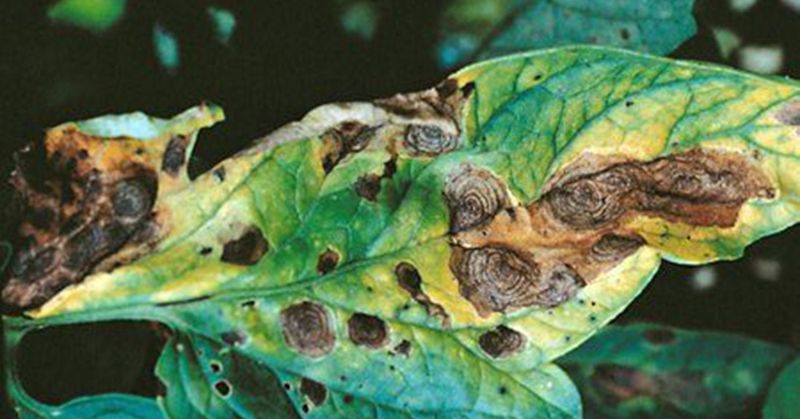
When a fungal infection takes hold, a tomato plant often sacrifices its flowers to focus on simple survival. Early blight, septoria leaf spot, and similar troubles chip away at the foliage the plant relies on to power fruit set.
The leaves usually broadcast the problem before the blossoms do, showing dark spots ringed with yellow, or lower leaves browning and dying back. Damp, crowded conditions and water splashed onto the foliage give these fungi the opening they need.
Watering at the base rather than overhead, spacing plants generously, and mulching to block soil splash all reduce the risk. Removing infected leaves the moment you spot them, and rotating where you plant tomatoes each year, keeps these diseases from robbing you of a crop.
15. Transplant Shock and Root Disturbance
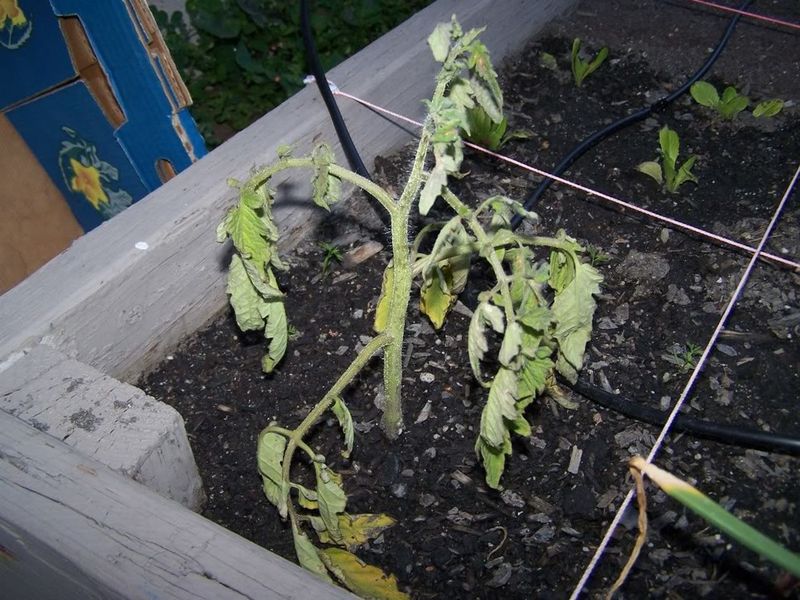
Move a tomato plant at the wrong moment and it may respond by dumping every flower it has. Transplant shock hits when roots get disturbed or the plant faces sudden new conditions, and shedding blooms is how it copes while it recovers.
Gardeners who set out plants that were already flowering, or who bump the roots while weeding, often watch a cluster of blossoms drop within days. The plant is not dying, just prioritizing root repair over fruit for the moment.
Hardening off seedlings gradually before planting eases the transition and softens the blow. Handling the root ball gently and giving new transplants a week or two to settle in usually means the very next round of flowers holds on and finally sets the fruit you have been waiting for.