
Your Curling Tomato Leaves Are A Warning Sign – Here’s What They’re Telling You In Early Summer
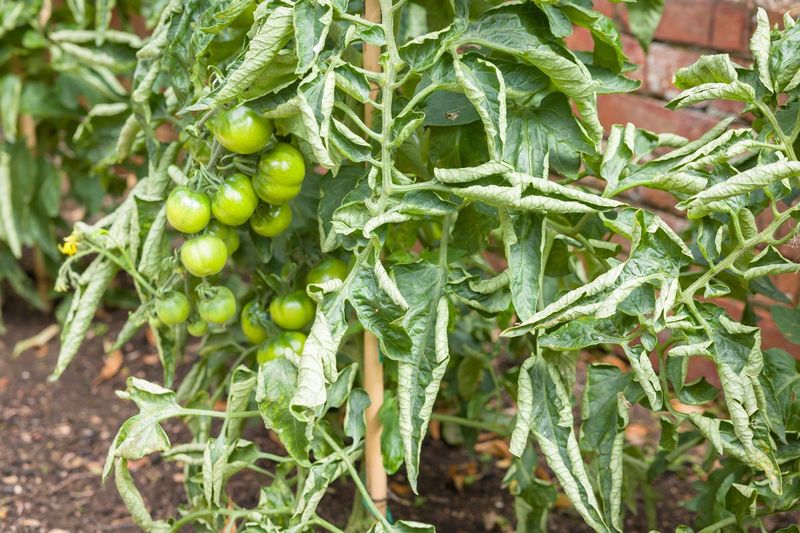
Walking out to your tomato plants and spotting leaves that have rolled up tight can send a gardener straight into worry mode. The good news is that curled leaves are usually a clue worth reading, not a disaster already in progress. Knowing what to look for on the rest of the plant makes all the difference between a quick fix and unnecessary treatments that can actually cause more harm.
Curling Is a Clue, Not a Diagnosis
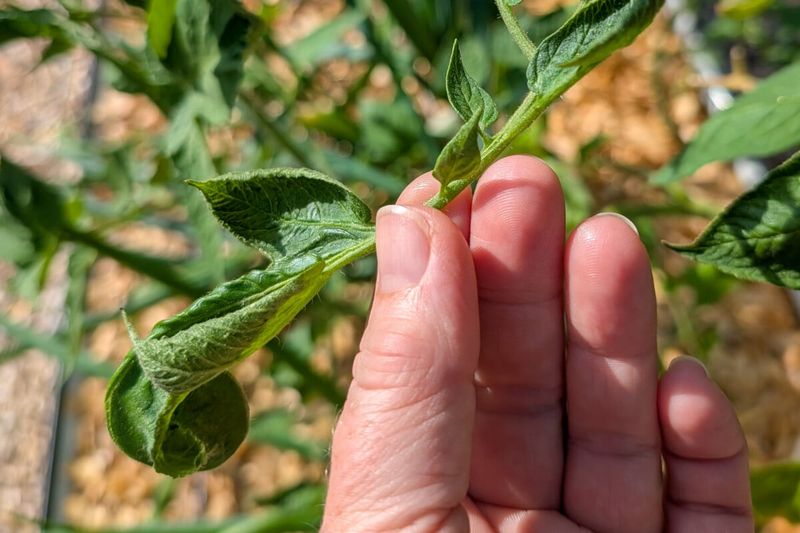
Spotted some rolled-up leaves on your tomato plant this morning? Before reaching for a spray bottle or the garden hose, take a breath and look at the whole plant. A single curled leaf cannot tell you what caused the problem, and the most common explanation is one that requires no treatment at all.
University of Minnesota Extension guidance on tomato disorders describes physiological leaf roll as a disorder that generally does not reduce tomato growth or yield. The leaves typically curl upward and then roll inward, often starting on the lower part of the plant. When you press one of those leaves between your fingers, it may feel firm or leathery rather than soft or wilted, which is a key detail worth noticing.
A plant that is still producing flowers, pushing out new growth, and holding its green color is giving you a very different message than one that is yellowing, stunted, or covered in spots. Oregon State Extension’s overview of physiological leaf roll in tomato reinforces that this pattern, while alarming to look at, is often benign when the rest of the plant appears vigorous.
The picture changes when curling comes with company. According to the UMN tomato leaf diagnostic guide, curling that appears alongside yellow mottling, stunted shoots, dead spots, sticky residue on leaves, distorted fruit, or visible insects deserves a much closer look. Curl alone on lower leaves of an otherwise thriving plant is worth monitoring. Curl paired with any of those additional signs is worth investigating before you do anything else.
Heat and Rapid Growth Can Trigger Physiological Leaf Roll
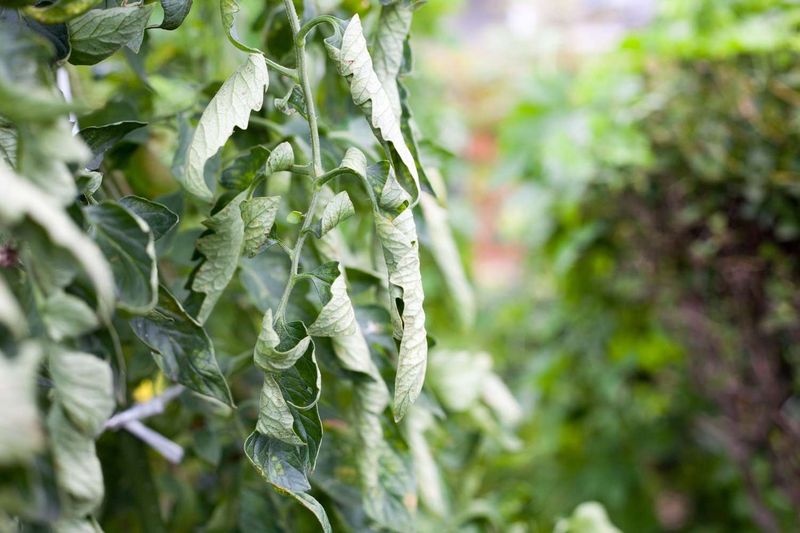
On a scorching July afternoon, tomato leaves sometimes curl as a response to the conditions around them. During heat stress, a tomato plant can reduce the surface area of its leaves and close the tiny pores called stomata, which slows moisture loss. Oregon State Extension’s heat wave garden guide identifies tomatoes as plants that commonly respond this way when temperatures climb.
Rapid vegetative growth during early summer can produce the same rolling pattern even without extreme heat. When a plant puts on a lot of new tissue quickly, the root system sometimes struggles to keep pace with water demand, and the leaves may curl as a result. The timing of early summer makes environmental stress a reasonable possibility, but timing alone cannot confirm the cause. Pests, viruses, pruning, and herbicide exposure can all happen at the same time of year.
UMN Extension’s tomato disorder resource notes that severe pruning can also trigger physiological leaf roll. If you were recently working on your plants and removed a lot of foliage, that could be contributing to what you are seeing now. The curling-as-moisture-conservation explanation applies specifically to heat-related rolling, not to every situation where leaves curl up.
One thing to hold off on during a heat wave: aggressive pruning. UMN’s hot weather gardening guidance advises waiting until a heat wave passes before pruning because removing foliage adds stress to a plant that is already working hard to manage heat. If your plant is rolling its leaves on a 95-degree day and is otherwise green and productive, observation is usually the right first move.
Check the Root Zone Before You Reach for the Hose

Leaf curl does not automatically mean your plant is thirsty. Before adding any water, push your finger or a small trowel several inches below the soil surface near the root zone. What you find down there matters far more than what the leaves look like from above.
UMN Extension’s guide to growing tomatoes recommends soaking the soil thoroughly when you do water, and notes that light, shallow watering can actually encourage roots to stay near the surface where they dry out faster. A plant with shallow roots is more vulnerable to drought stress even if you water frequently, because the water never reaches where the roots need it most.
As a general starting point, tomatoes often need roughly 1 to 2 inches of water per week, but that number shifts depending on your situation. Utah State University Extension’s tomato growing resource recommends deep, infrequent irrigation and notes that the right amount varies with soil type, rainfall, plant size, temperature, and wind. Sandy soils drain faster and may need more frequent watering. Containers dry out much quicker than in-ground beds.
A large fruiting plant in a heat wave needs more than a small transplant on a mild day.
USU’s vegetable irrigation guidance and their water recommendations for vegetables both support mulching as a practical way to slow evaporation and keep soil moisture more consistent between waterings. A 2 to 3 inch layer of straw, shredded leaves, or wood chips around the base of the plant works well, just keep it pulled back an inch or two from the main stem to avoid trapping moisture against it.
If you push into the soil and find it still damp several inches down, the curling is not coming from drought. Adding more water to already-moist soil can create separate problems including root diseases and oxygen deprivation at the root level. When the soil is moist, keep investigating rather than irrigating.
Distorted New Growth Can Point Toward Herbicide Injury
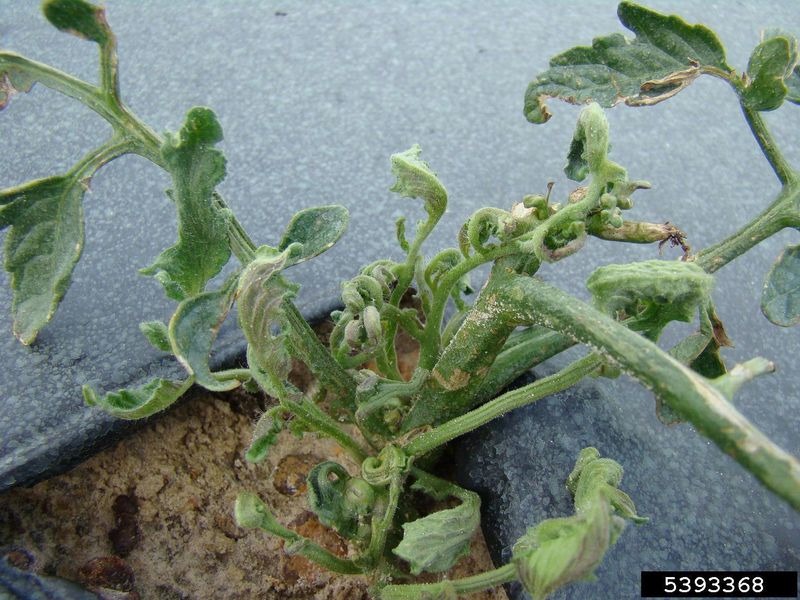
Location on the plant matters when you are trying to read a curl. Physiological leaf roll usually starts on lower, older leaves and those leaves tend to stay green and firm. When the newest growth at the top of the plant is the part that looks twisted, narrow, cupped, or curled in unusual directions, that pattern points toward a different set of causes.
Herbicide injury is one possibility worth considering when new growth is distorted. The UMN tomato leaf diagnostic guide describes herbicide-injured leaves as narrow, twisted, cupped, or curled, sometimes with veins that appear thickened and crowded together. Symptoms that are strongest on the side of the plant facing a neighbor’s lawn or a recently treated area can add to the suspicion, though they do not confirm it on their own.
UMN Extension’s tomato disorders page and USU Extension’s tomato guide both identify drift from lawn or weed treatments, residue in a sprayer that was previously used for herbicides, and clippings from lawns recently treated with broadleaf weed killers as common exposure routes. Tomatoes are sensitive to a number of common lawn herbicides, and the injury can show up even when no direct spray contact occurred.
Spraying additional chemicals to counteract suspected herbicide injury is not a productive response. The right steps are to stop any further possible exposure, write down the symptoms you observed and when they appeared, and take photos. EPA guidance on pesticide drift and the EPA dicamba compliance advisory both note that drift can damage nearby crops and may carry health and environmental consequences. If you have good reason to believe significant drift occurred from a neighbor’s property or a commercial application, your local Extension office or state pesticide regulatory agency is the right place to bring that documentation.
Inspect the Undersides of Leaves for Pests
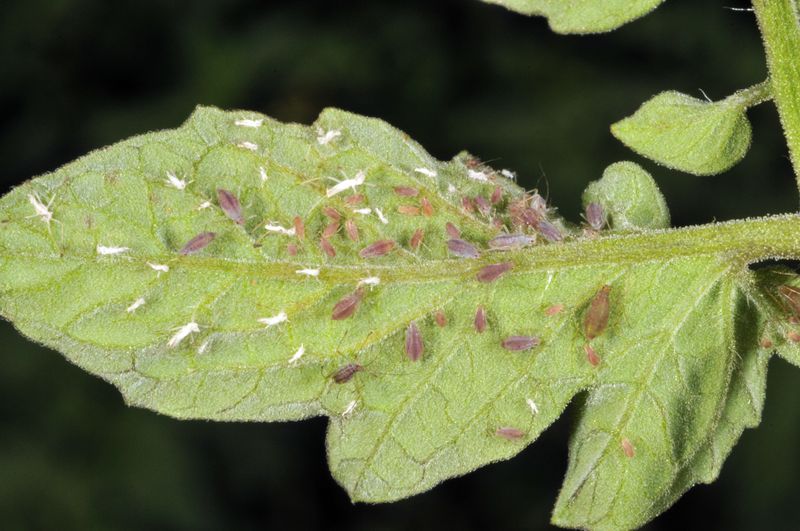
Flipping a leaf over takes about three seconds and can tell you a lot. Plenty of the insects that cause leaf curling spend most of their time on the undersides of leaves, on stems, at growing tips, and around flower clusters, where they are easy to miss at a glance.
Aphids are worth checking for first. The UMN tomato leaf diagnostic guide notes that aphids can cause curling, stunting, and wilting when populations build up. They often cluster in dense groups on leaf undersides and near new growth, and the sticky, shiny residue called honeydew that they leave behind is another clue. If you find honeydew, look more carefully because the aphids are almost certainly nearby.
Penn State Extension’s guide to tomato insect pests recommends cultural controls and handpicking where practical, and emphasizes preserving beneficial insects like ladybugs and parasitic wasps that naturally reduce aphid populations. Reaching for an insecticide before you have confirmed what pest is present can kill the beneficial insects doing free pest-control work in your garden.
Tiny white insects that flutter up when you brush a leaf are likely whiteflies. UC IPM’s whitefly resource for tomatoes explains that whitefly feeding can cause yellowing and curling. Some whitefly species can also transmit tomato viruses during feeding, though finding whiteflies on a plant does not confirm that a virus is present. UC IPM’s tomato yellow leaf curl page identifies whiteflies as the primary short-distance vector for that particular virus, which is a reason to take whitefly populations seriously in regions where the virus is known to occur.
Identify what you have, then choose a response that fits the evidence.
Mottling and Stunting Raise the Disease Question
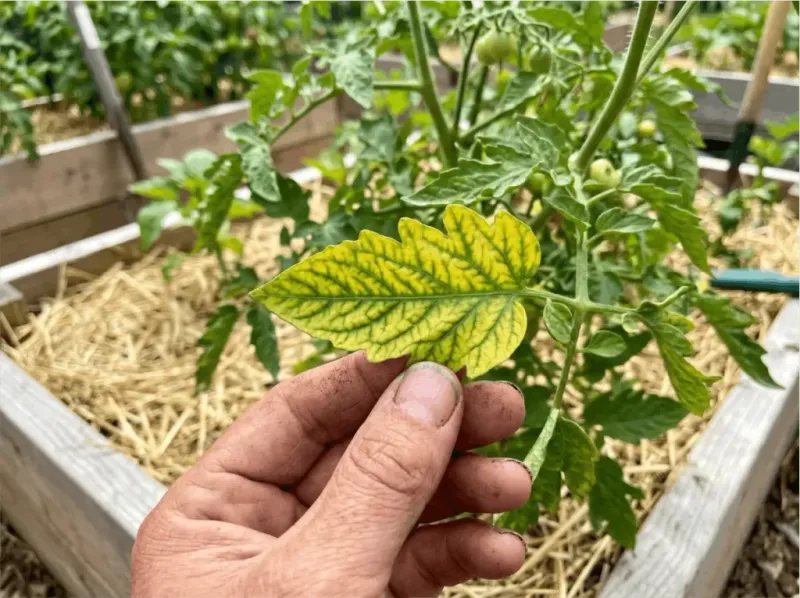
A curled leaf on its own is a mild signal. A curled leaf that comes with other changes across the plant is a more urgent one. Certain combinations of symptoms suggest that something more serious than heat or a dry spell may be going on.
Watch for these patterns together: yellow-and-green mottling on the foliage, severely distorted or crumpled new leaves, shortened spaces between leaf nodes, stunted overall growth, flower drop, reduced fruit production, necrotic or dead spots on leaves, unusual markings or rings on fruit, or a plant that appears to be declining across its whole structure. UMN Extension’s tomato virus resource and the UMN tomato leaf diagnostic guide both flag these combinations as the ones that justify greater concern and closer investigation.
A few viral diseases produce distinctive enough patterns to mention. UC IPM’s tomato yellow leaf curl overview describes small, strongly crumpled leaves that curl upward, yellowing between the veins and at the margins, shortened internodes, and significant yield loss. This virus is primarily a concern in warmer regions where its whitefly vector is established. UC IPM’s curly top page describes downward cupping, puckering, thick brittle leaves, and stunting, and notes that the disease does not spread directly from plant to plant but arrives through beet leafhopper movement.
UC IPM’s tomato pest management guidelines and the tomato spotted wilt summary describe a third virus that can produce curling, bronzing or yellowing, necrotic spots, and distorted or ringed fruit.
None of these can be confirmed by looking at the plant. UMN Extension states clearly that many viruses produce overlapping symptoms and that reliable confirmation requires plant pathology laboratory testing. There are also no general chemical treatments that cure common tomato viruses, so spraying in response to suspected viral symptoms is not a productive step. If a plant shows the full combination of symptoms described above and continues to decline, removing it and having it tested through your local Extension office is the most useful action you can take.
Use a Calm Inspection Sequence Before Treating
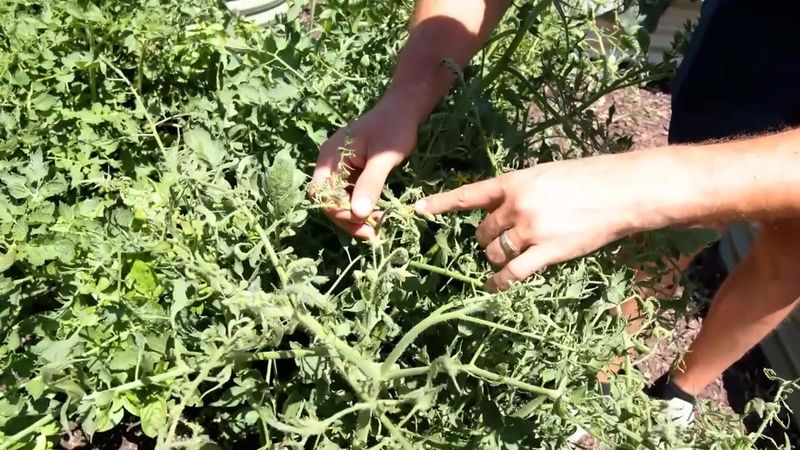
Rather than reacting to curled leaves with an immediate treatment, work through a short inspection before deciding anything. The sequence does not take long and it prevents a lot of unnecessary effort and potential harm.
Start by noting which leaves are affected. Lower, older leaves that are firm and green and rolling upward point toward physiological leaf roll. Move to the new growth at the top of the plant and look at the shape of the youngest leaves. If they are narrow, twisted, or cupped in unusual ways, that pattern deserves more attention.
Flip leaves over and check the undersides, stems, and growing tips for insects or sticky residue. Then test the soil several inches below the surface to find out whether the root zone is dry, moist, or somewhere in between. Finally, think back over recent weather, any pruning you did, and whether any chemical applications happened nearby.
UMN Extension’s tomato disorder guidance and their tomato growing guide both support this kind of measured assessment over reactive treatment. USU Extension and Penn State Extension reinforce that pest treatment should follow confirmed identification, not a hunch.
A few specific things to avoid during that inspection process: do not water repeatedly if the soil is already moist, do not strip off every rolled leaf on the plant, do not add calcium supplements as a default response to curling (calcium deficiency is not the standard explanation for leaf curl, and blossom-end rot is a separate fruit disorder), and do not apply insecticides or spray for suspected viruses without evidence. UMN Extension notes that common tomato viruses have no general chemical cure. If the plant stays vigorous, keeps fruiting, and the curling does not spread or worsen, continued monitoring is a reasonable plan. If symptoms spread, the plant declines, or you cannot identify a clear cause, your local Extension office is a good next call.
Read the Pattern Before You Treat the Plant
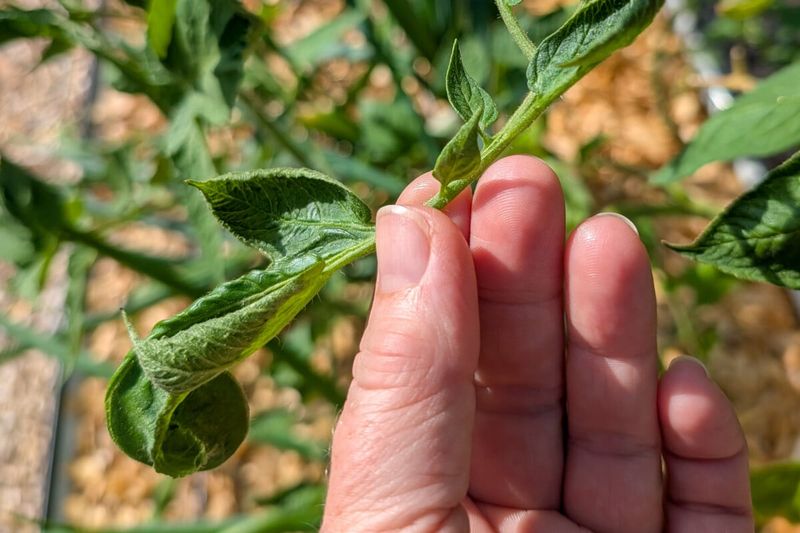
The most useful thing a curled tomato leaf can do is prompt you to look more carefully at the rest of the plant. A firm, upward-rolled lower leaf on a tomato that is otherwise green, growing, and setting fruit is often a normal response to heat, a dry spell, or a recent growth surge. That kind of curling, described by UMN Extension as generally not reducing growth or yield, calls for observation rather than action.
Curl that appears on new growth, or that comes paired with yellowing, mottling, stunted shoots, dead spots, pest activity, distorted fruit, or symptoms concentrated on one side of the plant, calls for the inspection sequence described throughout this article. Check the root zone, look for insects, review recent weather and chemical exposure, and consult a reliable diagnostic resource before treating anything.
Panic, extra water, calcium sprays, and insecticide applications are not the first response to a curled leaf. Pattern recognition is. A tomato plant that is trying to tell you something usually gives you more than one clue if you take the time to look for them.