
How And When To Feed Clematis For The Biggest, Most Colorful Flowers It’s Ever Grown
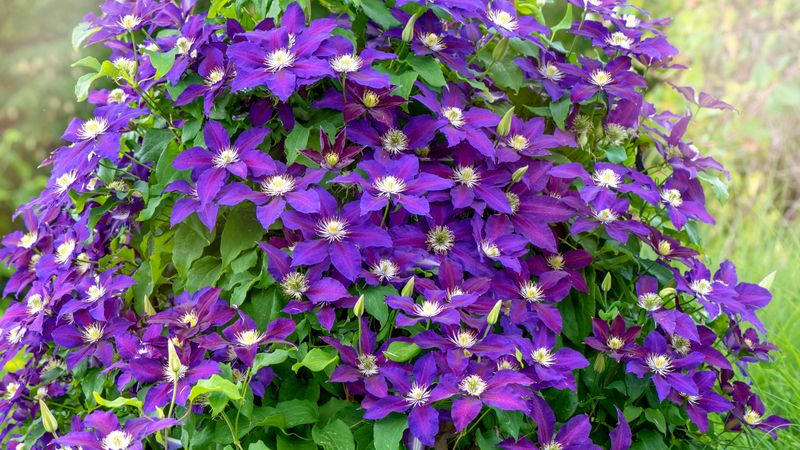
Clematis can be one of the most rewarding vines in a backyard garden, but getting those big, bold blooms takes more than just sticking a plant in the ground and hoping for the best. Many gardeners reach for fertilizer the moment flowers disappoint, when the real issue might be pruning, sunlight, or dry soil. Feeding your clematis strategically, only when and where it genuinely helps, can support stronger flowering when nutrients are actually limiting growth. Understanding what your plant truly needs is the first step toward a healthier, more floriferous vine.
A shy clematis may not need more fertilizer
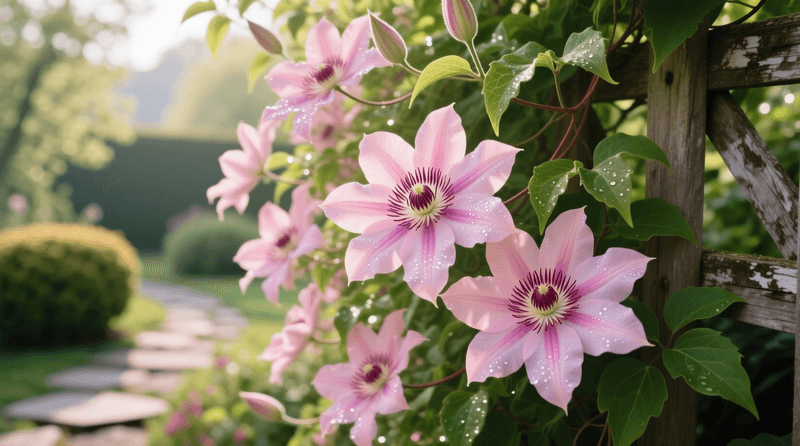
Reaching for the fertilizer bag is a natural first instinct when a clematis produces fewer flowers than expected, but the plant’s reluctance to bloom often has nothing to do with soil nutrients. Iowa State University Extension notes that flowering also depends on cultivar, plant age, sun exposure, moisture, drainage, and pruning history, meaning a single-cause diagnosis rarely holds up. Before applying anything, take a few minutes to run through the basics: How much direct sun does the plant receive each day? Has it been pruned correctly for its group?
Is the soil consistently moist but not waterlogged?
Plant age is a factor that catches many gardeners off guard. Newly planted clematis commonly take two to three years to establish a strong root system before they flower heavily, so a sparse first- or second-year display is not necessarily evidence of a nutrient shortage. Giving a young plant time and good basic care, steady water, appropriate pruning, and decent light, is more productive than loading it with fertilizer while it is still settling in.
Established clematis growing in fertile garden soil may need very little supplemental feeding at all. University of Maryland Extension recommends basing fertilizer decisions on actual soil conditions rather than routine applications, and a soil test is the most reliable way to find out whether a specific nutrient is genuinely short. Container-grown plants and clematis in poor or sandy soil are more likely to benefit from feeding, while a mature vine in rich garden ground may respond better to a spring layer of compost than to any packaged fertilizer. Starting with a clear-eyed look at the plant’s situation, rather than a guaranteed bloom formula, puts you in a much stronger position to help it thrive.
Your clematis group sets the bloom and pruning clock
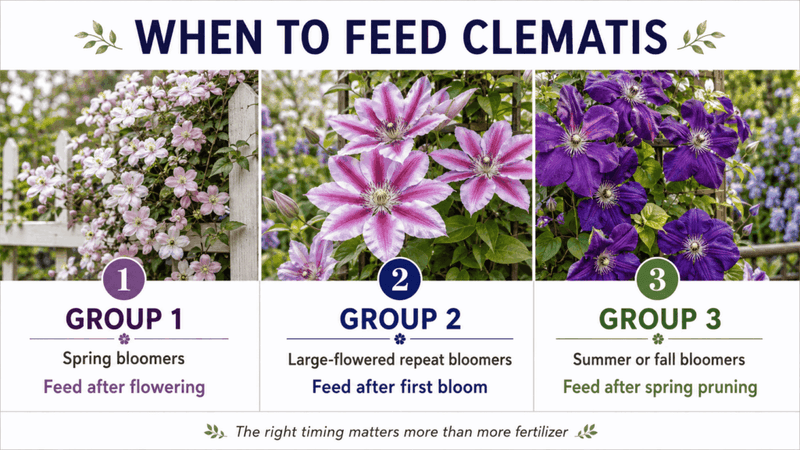
Not all clematis follow the same flowering calendar, and that difference matters enormously when you are deciding when to prune and whether a spring feed makes sense. RHS pruning guidance separates clematis into three groups based on when and where the plant produces its flowers, and mixing them up is one of the most common reasons a vine suddenly stops blooming.
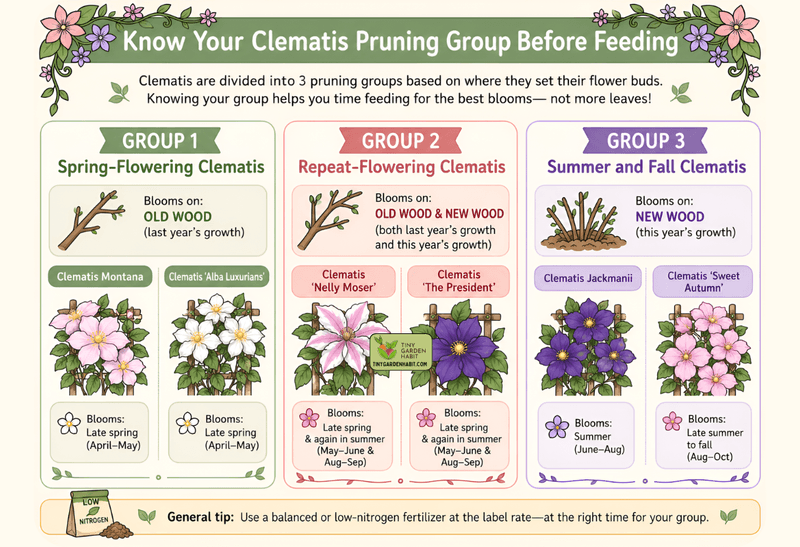
Group 1 plants flower mainly on old wood, usually in late winter or early spring. Because next season’s buds are already forming on the stems the plant carried through summer, hard pruning in autumn or early spring removes the wood that would have flowered. Light tidying after bloom is the appropriate approach, and these plants generally do not benefit from a post-pruning feed the way a freshly cut-back Group 3 does.
Group 2 clematis flower on both old and new wood, producing an early flush in late spring followed by a possible second flush later in summer. University of Illinois Extension explains that light pruning in early spring, removing only dead or weak stems, preserves the old wood needed for that first bloom wave. Because Group 2 plants rely partly on older stems, a blanket post-pruning feeding schedule can be misleading if it implies cutting back hard before feeding.
Group 3 plants flower entirely on growth produced in the current season, typically in summer or fall. They tolerate, and often benefit from, cutting back to a low framework of buds in late winter or early spring, which makes a feed timed to the flush of new growth afterward genuinely useful. Identifying which group your plant belongs to, by checking the original plant label, looking up the cultivar name, or consulting a reliable clematis reference, is the essential first move before any pruning or feeding decision. Getting the group wrong can cost you a full season of flowers regardless of how well you fertilize.
The growing situation determines how much feeding makes sense
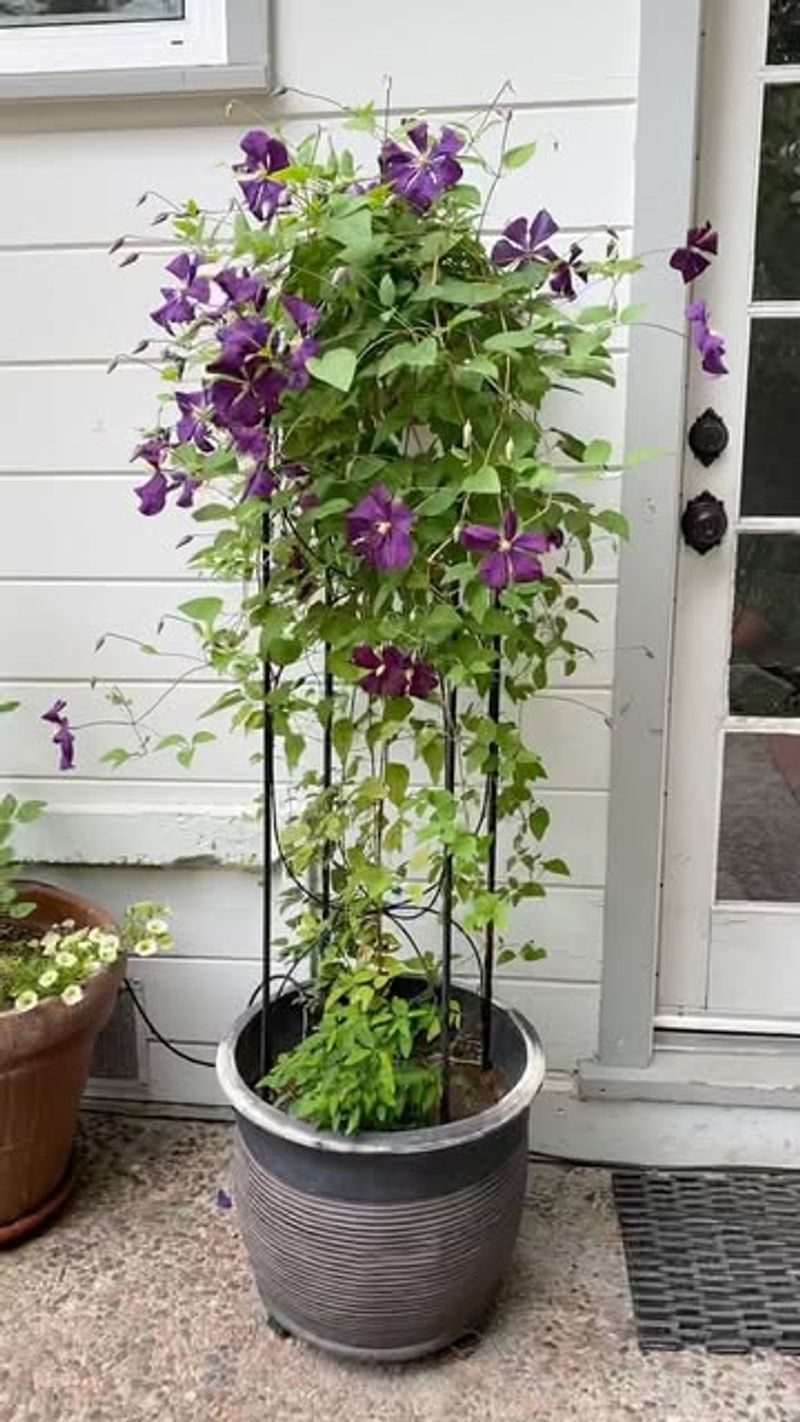
Where your clematis lives has as much influence on its fertilizer needs as anything else. An established plant growing in a fertile garden border has access to a large volume of soil, organic matter, and the slow release of nutrients from decomposing material, resources that a container plant simply cannot reach.
RHS growing guidance states plainly that clematis in fertile in-ground soil do not need regular feeding. For those plants, an annual spring layer of compost, leaf mold, or well-rotted manure spread around the root zone, kept a few inches away from direct contact with the stems, is often all the nutritional support the plant requires. That organic mulch feeds the soil biology, moderates temperature, and holds moisture, doing several jobs at once without the risk of salt injury or nutrient excess.
Container-grown clematis are a different story. Repeated watering flushes nutrients out of the potting mix faster than the plant can replace them from a restricted volume of growing medium. During active spring and summer growth, a container clematis is much more likely to run short of key nutrients, and that is where a liquid or granular fertilizer applied at the package rate earns its keep. The frequency that makes sense for a pot, perhaps every few weeks during peak growth, would be excessive for a mature in-ground plant in good soil.
The practical takeaway is to let the growing situation guide the decision rather than applying one universal schedule to every plant. Check the soil in your garden bed before adding anything packaged. If it is rich, dark, and full of organic matter, a spring compost mulch may be the only input your clematis needs all year. If you are growing in a container or in thin, sandy, or heavily leached soil, a targeted fertilizer program during active growth is a reasonable and productive step.
Choose a restrained fertilizer and apply it to the root zone
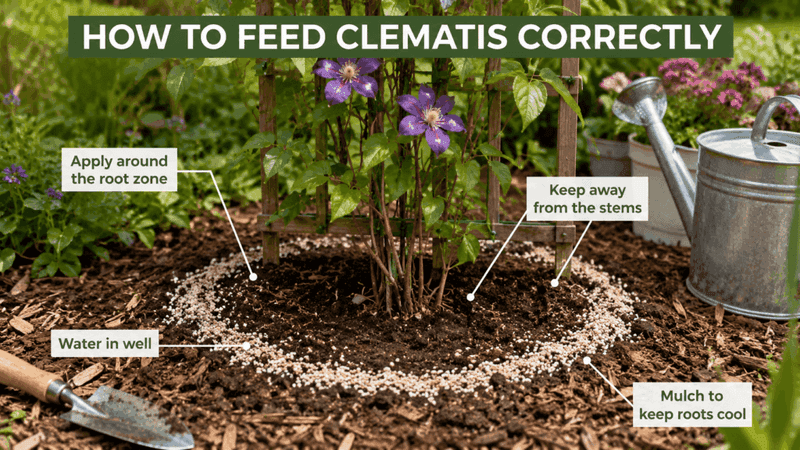
When feeding is genuinely justified, the type of fertilizer you choose and the way you apply it matter as much as the timing. A common mistake is reaching for the highest-analysis product on the shelf or a concentrated bloom booster, assuming that more nutrients will mean more flowers. That logic backfires with clematis.
Excess nitrogen, in particular, tends to push the plant toward producing lush, dark green foliage at the expense of flowers. Iowa State University Extension cautions against heavy nitrogen applications for this reason. A complete fertilizer, one that supplies nitrogen, phosphorus, and potassium together, kept on the lower end of the nitrogen range, is a more measured starting point. Some gardeners find an organic-based general-purpose fertilizer a good fit because it releases nutrients more slowly and reduces the risk of a sudden salt surge around the roots.
Phosphorus deserves a specific note. Adding a high-phosphorus bloom booster automatically, without a soil test to confirm a deficiency, is not recommended by most university extension programs. University of Maryland Extension garden fertilizer guidance points out that soils in many parts of the country already carry adequate or excess phosphorus, and adding more can interfere with the uptake of other nutrients and contribute to runoff. Let a soil test tell you whether phosphorus is actually needed before including it.
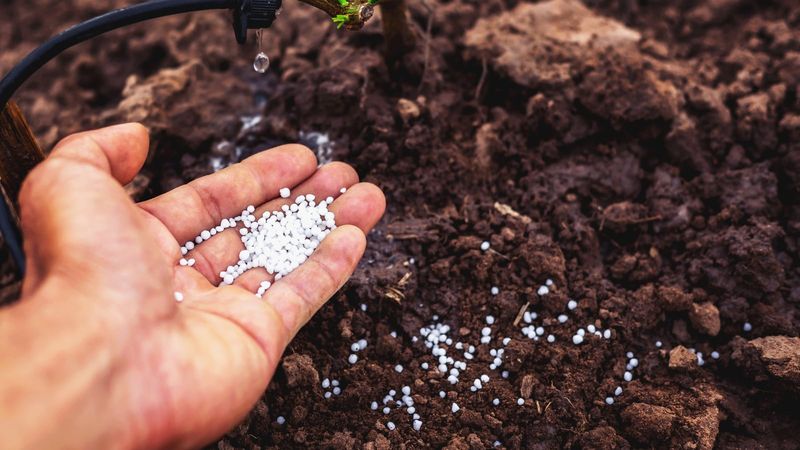
Application technique is straightforward but easy to rush. Spread granular fertilizer or apply liquid product around the root zone, not against the stems or crown of the plant. Water the fertilizer in as directed on the label, which helps move nutrients toward the roots and reduces the concentration of salts at any one point in the soil. Iowa State’s home garden fertilizing guidance emphasizes applying only to actively growing, well-watered plants, never to a plant that is wilting or drought-stressed, because roots already under stress are more vulnerable to fertilizer salt injury.
Following the product label rate is not just a formality; it is the most practical way to avoid the problems that come with overapplication.
When should each group receive a feed?
Timing a feed for clematis is not as simple as picking a month on the calendar and marking it for every plant in the yard. Climate, soil type, plant age, whether the clematis grows in a container, and the fertilizer product itself all shift the best window, and extension recommendations across the country reflect those differences rather than converging on one universal answer.
One practical framework comes from University of Illinois Extension clematis care guidance, which suggests a once-per-year balanced fertilizer application timed to the plant’s flowering group. Under that approach, Group 1 and Group 2 plants receive their feed after the first bloom period wraps up, while Group 3 plants are fed after spring pruning, when new growth is actively pushing. The same guidance advises against feeding while plants are in bud or bloom, which is a conservative practice worth following for granular or higher-strength products, though some seasonal schedules from other authorities may naturally overlap with flowering periods.
University of Massachusetts Amherst Extension takes a different approach, suggesting applications in April, June, and August with a balanced fertilizer, a schedule that spreads feeding across the active growing season rather than concentrating it at one moment. Iowa State University Extension leans toward a single spring application for established plants. These differences are not contradictions; they reflect the reality that what works in coastal Massachusetts may not translate directly to central Iowa or the Pacific Northwest.
The practical default for most home gardeners is to feed only during active growth, after the soil has been thoroughly watered, and only when the plant actually shows a need based on poor performance in good conditions or a confirmed soil test result. Starting with less and watching the plant’s response is a safer path than committing to an aggressive feeding calendar from the beginning. Adjust the timing and frequency based on what you observe, your local climate, and the specific product you are using.
Flowers still depend on light, water, roots, and pruning
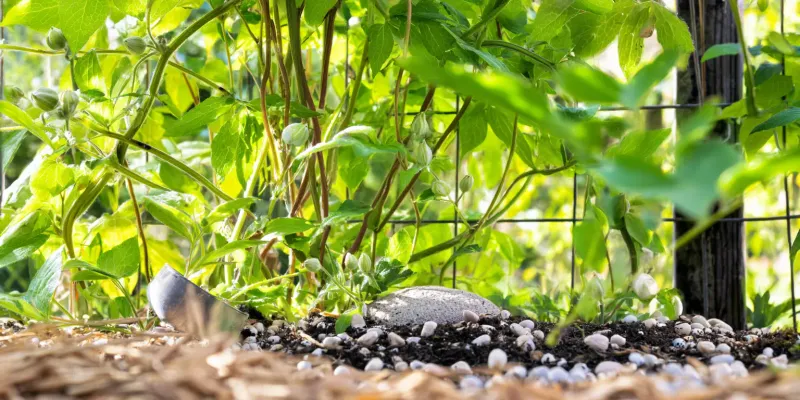
Fertilizer works only when the rest of the plant’s environment is cooperating. A clematis that lacks adequate sun, suffers from dry or waterlogged soil, or has been pruned at the wrong time will not respond to feeding the way a well-sited, well-tended plant will. Understanding those limiting factors is what separates a strategic feeder from someone who just pours nutrients onto a struggling vine and waits.
Sun is non-negotiable for good flowering. UC Statewide IPM guidance on clematis recommends several hours of direct sunlight daily for reliable bloom production. At the same time, the root zone needs to stay cool, which is why mulching the base of the plant with two to three inches of organic material is a standard recommendation. The vine can reach for sun while the roots stay protected from heat and moisture loss.
Soil moisture is equally critical. Iowa State University Extension notes that clematis prefer consistently moist, well-drained soil and struggle with both extended dry spells and poorly drained spots where water sits. During hot summer weather, deep watering and root-zone protection take priority over any fertilizer application. University of Maryland Extension is clear that fertilizing a drought-stressed plant increases the risk of root injury, so the watering task always comes first.
Pruning errors are among the most common reasons a healthy-looking clematis fails to flower, and no amount of fertilizer corrects a pruning mistake made at the wrong time. RHS winter and spring clematis guidance highlights how Group 1 plants carry next season’s buds on their current stems, making untimely hard pruning a season-ending mistake. Keeping the care system intact, sun, moisture, cool roots, correct pruning, and appropriate feeding, is what allows a clematis to use available nutrients and convert them into the flowers you are hoping to see.
Avoid the shortcuts that cost flowers
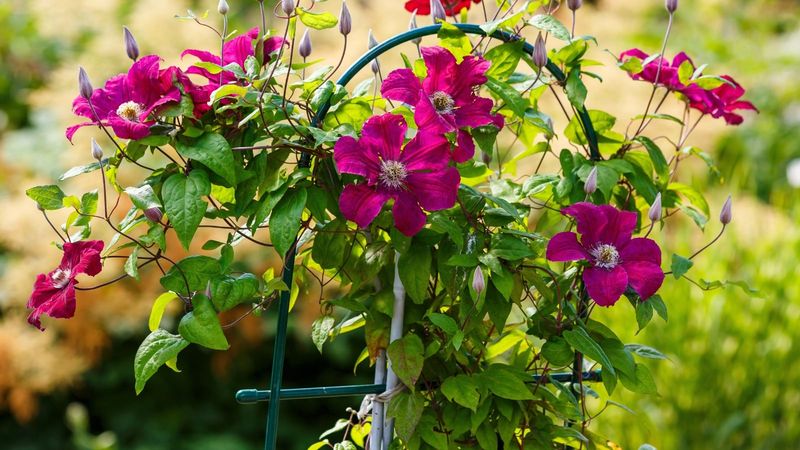
A few common shortcuts feel logical in the moment but reliably produce worse results than a more careful approach. Knowing which habits to drop is just as useful as knowing what to do.
Feeding every four to six weeks regardless of conditions is one example. That frequency can make sense for an actively growing container plant in peak season, but applied automatically to a mature in-ground clematis in fertile soil, it risks pushing excess nitrogen into a plant that does not need it. Lush, dark green growth with few flowers is a recognizable sign that nitrogen has gotten ahead of the plant’s ability to use it for blooming. Iowa State University Extension specifically flags heavy nitrogen applications as a risk to flower production.
Routine high-phosphorus bloom boosters are another shortcut worth skipping unless a soil test confirms a phosphorus deficiency. Many garden soils already carry enough phosphorus, and adding more automatically does not guarantee larger or more colorful flowers. University of Maryland Extension fertilizer guidance cautions that excess phosphorus can interfere with the uptake of other nutrients and contribute to environmental runoff, particularly when fertilizer reaches hard surfaces, storm drains, or is applied before a rainstorm.
On the environmental side, EPA guidance on nutrient pollution recommends avoiding fertilizer applications before windy or rainy weather and keeping fertilizer away from hard surfaces, drains, and waterways. Excess nitrogen and phosphorus washing off residential landscapes is a documented contributor to water quality problems. EPA sources and solutions for home landscapes reinforces that sweeping up any spilled granules and not overapplying are simple steps every gardener can take.
Finally, fertilizing a drought-stressed clematis or feeding one during a heat wave does not rescue the plant; it adds a chemical stress on top of an environmental one. The safer alternative in every case is to water deeply first, restore normal growing conditions, and then decide whether the plant actually needs feeding at all.
The biggest bloom boost starts with a careful diagnosis
Before opening a bag of fertilizer, run through a short mental checklist. Identify your clematis’s flowering and pruning group. Confirm whether it grows in a container or in garden soil, and consider how fertile that soil actually is. Check the light, the moisture, the drainage, and whether the pruning has been timed correctly for the group.
If the plant is less than three years old, factor in that it may still be establishing its root system.
A soil test, available through most state cooperative extension offices, takes the guesswork out of the nutrient question and tells you specifically what, if anything, is in short supply. University of Maryland Extension and Iowa State University Extension both point to soil testing as the most reliable starting point for any fertilizer decision. When the checklist clears and a nutrient need is confirmed, feed an actively growing, well-watered plant with a complete, relatively low-nitrogen fertilizer at the label rate, applied around the root zone and watered in.
RHS clematis growing guidance sums up the underlying principle well: strategic care, not fertilizer excess, creates the conditions for a clematis to flower at its best. A well-placed plant with the right light, steady moisture, cool roots, and correctly timed pruning will outperform an overfed vine every time.