
5 Simple Ways To Pinch Your Petunias For Bigger Blooms Right Through The End Of Summer
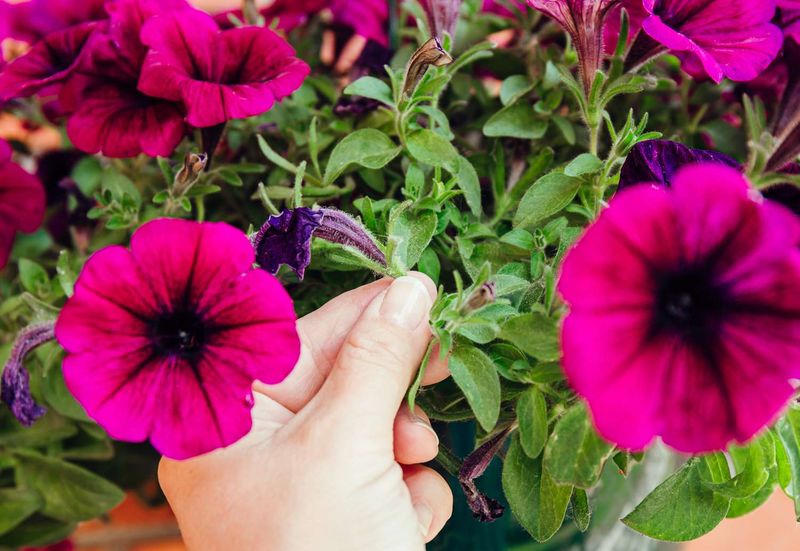
Petunias are one of the most rewarding annuals you can grow, but by midsummer many gardeners find their plants looking tall, floppy, and nearly flowerless. The good news is that a well-timed pinch or cutback can encourage new side branches and get those plants producing more buds again. This guide covers how pinching works, which plants actually benefit from it, and what else to check when pruning alone is not enough.
Flower failure is not automatically a pinching problem
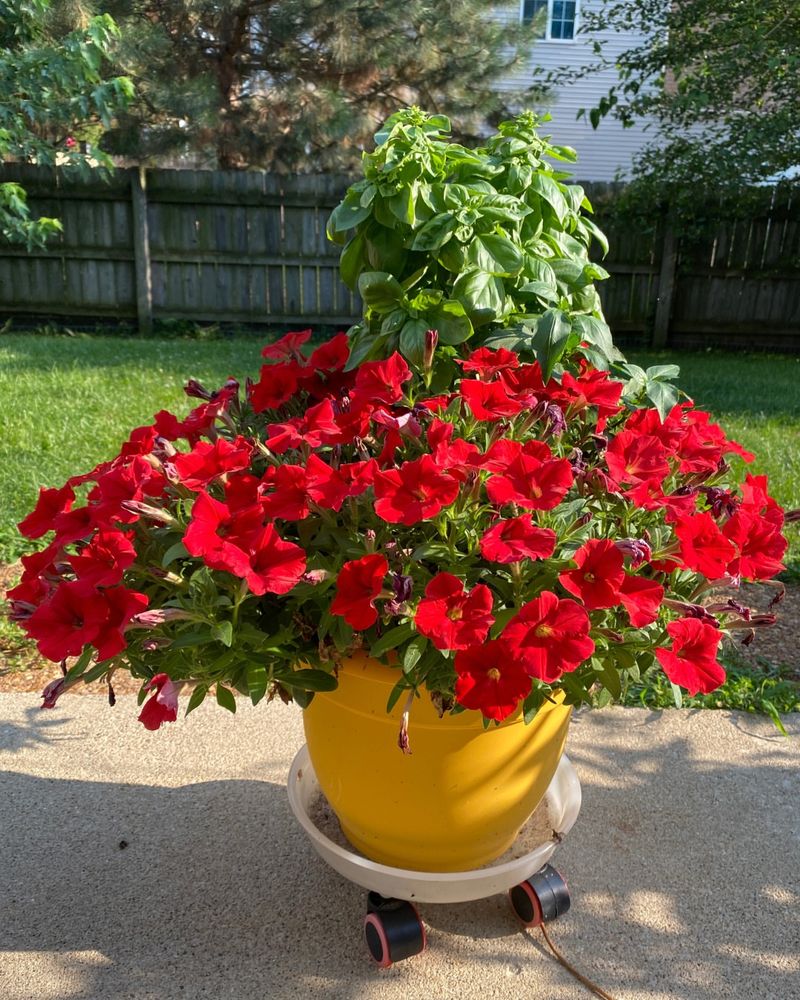
Many gardeners reach for their pruners the moment their petunias stop flowering, assuming a missed pinch is to blame. That instinct is understandable, but flower failure has several possible causes, and pruning will only help if the real problem is legginess or poor branching.
A good candidate for rejuvenation pruning is a plant that has grown tall, floppy, and sparsely branched, with long stems that carry few buds. That kind of plant is essentially putting energy into stem length rather than lateral growth, and a careful cut can redirect it. A plant that stays compact but still refuses to bloom is a different situation entirely, and cutting it back will not fix what is actually wrong.
University of Minnesota Extension guidance on growing petunias points out that petunias need at least 5 to 6 hours of good sunlight each day, and that more sun generally produces more flowers. A plant growing in too much shade may look fine but simply lack the light energy to push out buds, no matter how many times it is pruned.
Watering problems can also suppress flowering. Containers and hanging baskets can dry out quickly in summer heat, while plants sitting in soggy soil face stress from the opposite direction. Pests are another common culprit, and Colorado State University Extension notes on petunia care explain that budworm caterpillars can cause petunias to stop blooming if left unchecked.
Disease is a separate concern. Penn State Extension’s overview of petunia diseases covers problems including Botrytis blight and crown rot, which require targeted management or plant removal rather than a pruning fix. Some cultivars also naturally slow their bloom cycle in intense summer heat, and that is a trait, not a mistake.
The practical takeaway: before making any cut, look at your light, your watering routine, your plant’s overall health, and the specific cultivar you are growing. Pruning is a useful tool for a genuinely leggy plant, not a universal remedy for every flowerless petunia.
Pinching builds more flowering points, not bigger flowers
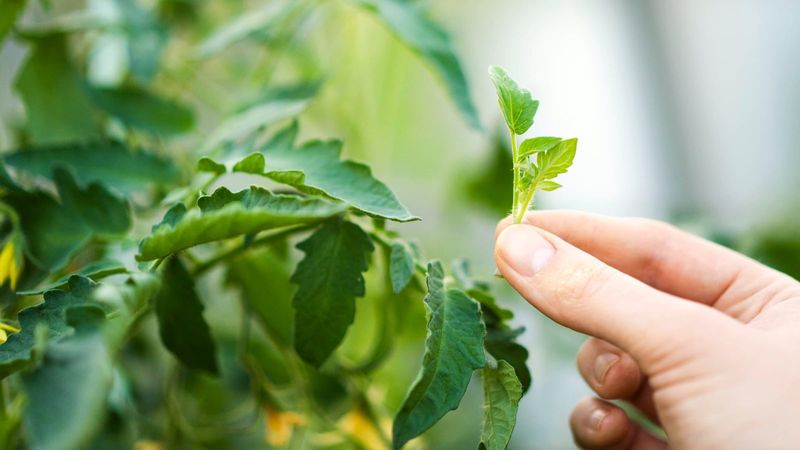
Pinching is a simple technique with a specific job: you remove the growing tip of a stem, and the plant responds by pushing out two or more lateral shoots from the nodes just below the cut. Those new shoots eventually branch again, and the result is a shorter, fuller plant with more stems heading toward the light.
More stems can mean more buds and more flowering points across the plant. University of Illinois Extension guidance on caring for annuals describes pinching as a way to encourage branching and create a fuller, more attractive plant. That is the real payoff: a wider, bushier shape with flowering distributed across many stems rather than concentrated on a few long ones.
What pinching does not do is make each individual flower larger. Flower size is primarily a cultivar characteristic. Grandiflora petunias carry large blooms because they were bred that way, not because of how they were pruned. NC State Extension’s profile of hybrid petunias confirms that bloom size varies significantly by variety and is driven largely by genetics.
Pinching can also create a temporary pause in flowering. When you remove a growing tip, you are also removing the bud that was forming there. New shoots need time to develop before they carry their own buds, so a freshly pinched plant may look quieter for a week or two. That is normal, not a sign something went wrong.
Keeping this distinction clear helps set realistic expectations. A well-pinched plant can look fuller and carry more buds than one left to grow unchecked, but the flowers themselves will be the size that cultivar produces. That is still a meaningful improvement for a plant that has stretched out and thinned over the season.
Pinch suitable young plants before they stretch
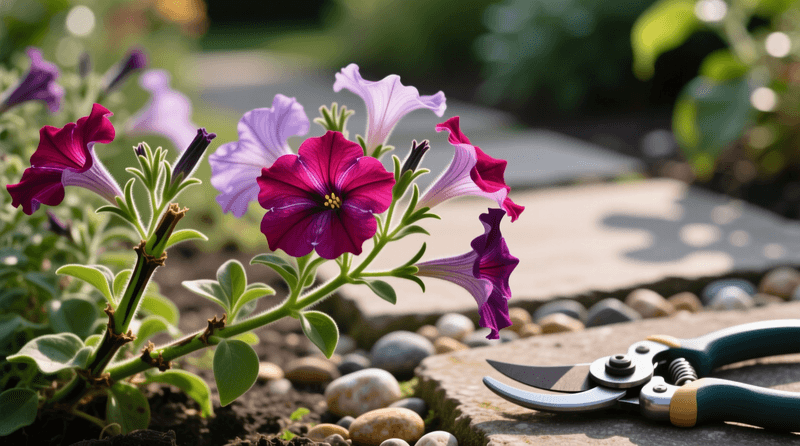
Catching petunias early gives you the best chance of shaping a full, branching plant from the start. A young plant that gets pinched before it stretches tends to develop a wider, more compact form than one left to grow freely and pruned later.
For grandiflora and multiflora petunias, University of Minnesota Extension recommends pinching when plants reach roughly 6 inches tall. At that height, the plant has enough established growth to respond well, and the pinch redirects energy into the lateral buds before the main stem gets much longer. You simply remove the soft growing tip at the top of each stem, which prompts the nodes below to push out side shoots.
Clemson Cooperative Extension offers a slightly different option for timing: Clemson’s petunia factsheet suggests removing roughly the top inch of each stem just before transplanting into the garden. Either approach works as long as the plant is healthy and the cut is made cleanly above a leaf node.
Not every petunia benefits from early pinching, and applying this step automatically to every type can actually work against you. University of Wisconsin Extension Master Gardener guidance on petunias notes that spreading and milliflora types have a naturally trailing or low-growing habit and may not need the same early intervention as upright grandiflora types. UMN specifically advises against pinching milliflora and spreading petunias at the early stage.
Compact and mounding cultivars bred to stay tidy are another category to approach carefully. Many of these varieties are developed to branch on their own without extra encouragement, so an unnecessary pinch may just slow them down. Always check the plant tag or look up the cultivar’s growth habit before deciding whether early pinching is the right move. When the tag describes the plant as spreading, trailing, mounding, or self-cleaning, it is worth skipping the pinch and watching how the plant develops on its own.
Use a moderate midsummer cut on genuinely leggy plants
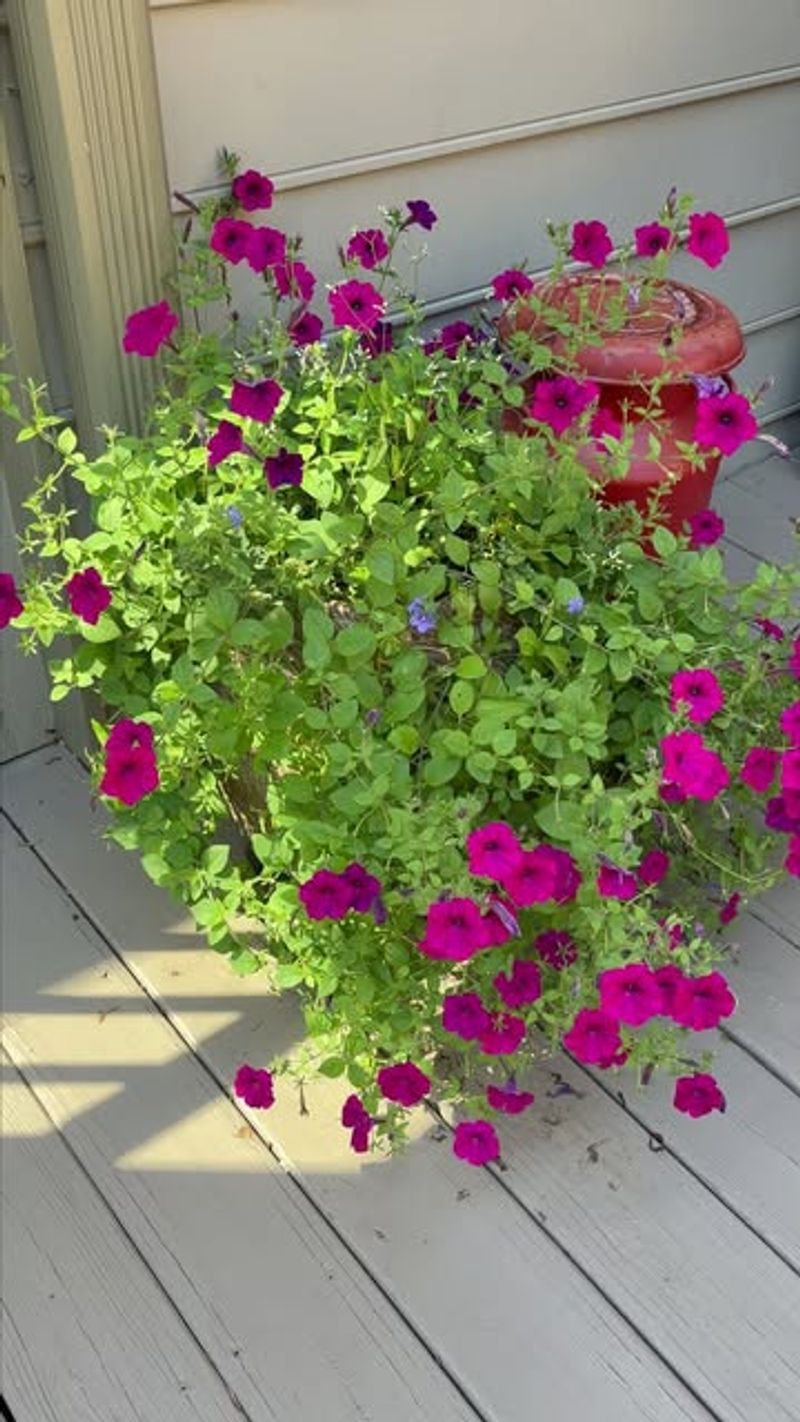
By mid to late summer, petunias that started the season full and colorful can turn into long, bare-stemmed plants with a few flowers dangling at the tips. A moderate cutback at this stage can redirect the plant’s energy into new lateral growth and bring it back toward a fuller shape.
The starting point recommended by Clemson Cooperative Extension’s petunia factsheet is to shorten each shoot to about half its current length. That is a meaningful reduction without being extreme, and it leaves plenty of healthy stem and foliage for the plant to work from. Look for a leaf node just below where you plan to cut, and make the cut just above it so the plant has a clear point from which to push out new growth.
Some very leggy or nearly flowerless plants may need a harder cut. Clemson notes that pruning down to within a few inches of the base is an option in those cases, but the guidance comes with an important condition: never remove all the leaves. Foliage is where the plant processes light and produces the energy it needs to recover. Stripping a stressed plant of every leaf while also cutting it back severely gives it very little to work with.
Penn State Extension guidance on annuals notes that continued pinching after the plant has reached its desired size can reduce flowering rather than encourage it. The goal of a midsummer cutback is to reset the plant once, support its recovery, and then let it grow and bloom rather than continuing to remove growth repeatedly.
Plan to see a short bloom pause after a substantial cut. The existing buds and flowers come off with the stems, and new shoots need a week or two to develop before they carry their own buds. University of Illinois Extension’s advice on caring for annuals confirms this is a normal part of the process. Patience through that quiet period is part of the technique.
An even cut helps encourage a balanced shape
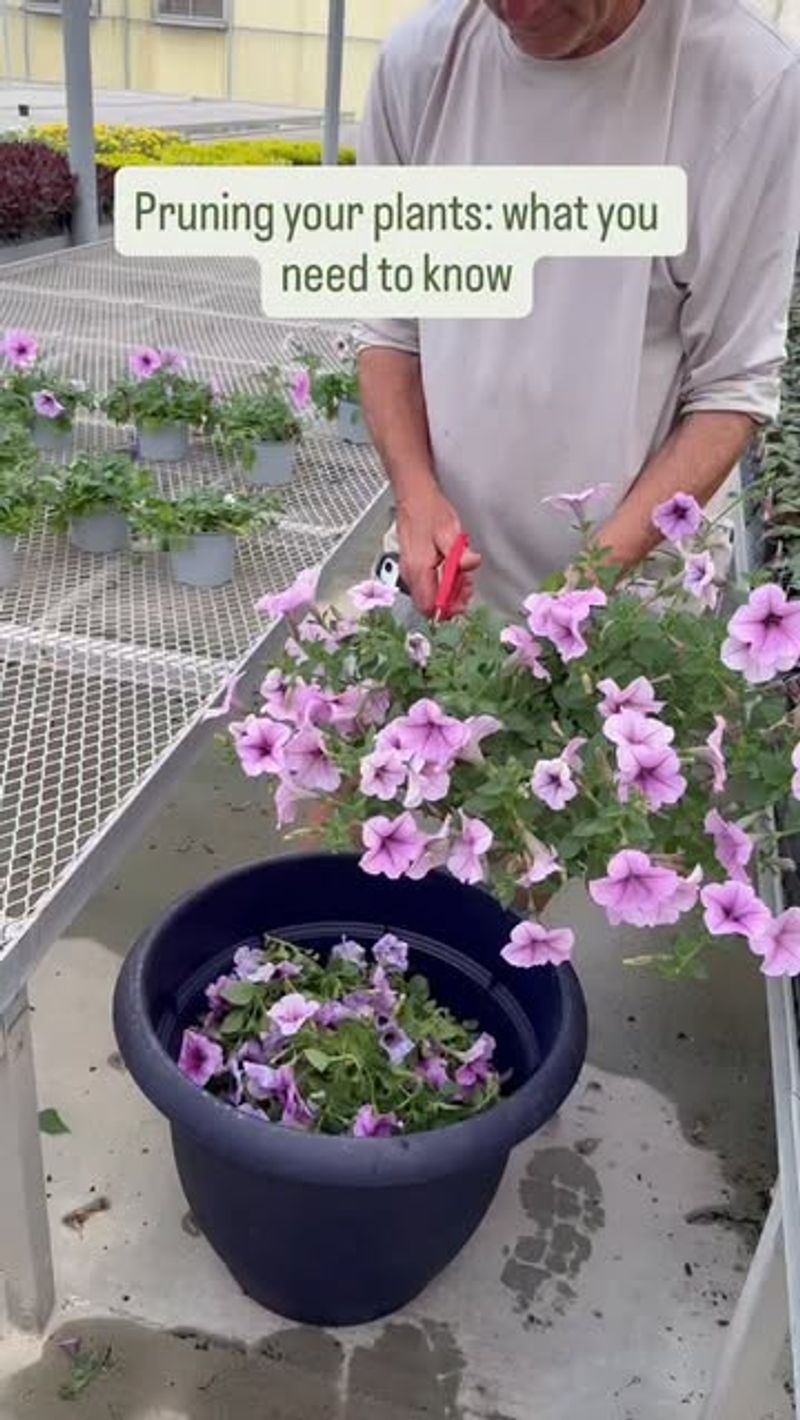
Where you cut matters almost as much as how much you cut. Removing a large portion of growth from one side of a plant while leaving the other side untouched tends to produce uneven regrowth, with one section of the plant racing ahead while the other lags behind.
Working your way evenly around the entire plant is a better approach. Penn State Extension’s guidance on pruning herbaceous plants supports making cuts distributed across the whole plant rather than concentrated in one area, noting that even pruning helps maintain a more uniform shape and flowering pattern. Practically, this means moving around the pot or bed, shortening stems by a similar amount on every side before going back for a second pass if needed.
Each cut should land just above a healthy leaf node. The nodes are the small bumps or joints along the stem where leaves attach, and they are the points from which new lateral shoots will emerge. Cutting too far above a node leaves a stub that contributes nothing and may die back anyway. Cutting cleanly just above the node gives the plant a clear signal and a ready structure for new growth.
Clemson’s petunia guidance reinforces the importance of retaining foliage during any cutback. Leave several healthy leaves on each stem you shorten, and resist the urge to strip a plant that is already showing stress. A plant with remaining foliage can photosynthesize and fuel the recovery; one cut to bare sticks under heat stress faces a much harder road.
Once the plant has filled back in and reached a shape you are happy with, stop the cutting cycle. Penn State Extension notes that ongoing pinching beyond the desired plant size tends to work against flowering rather than supporting it. An even cut supports a more balanced shape, but consistent regrowth is never guaranteed, and some plants will respond more vigorously than others depending on cultivar, health, and growing conditions.
Protect new growth with clean tools and sensible aftercare
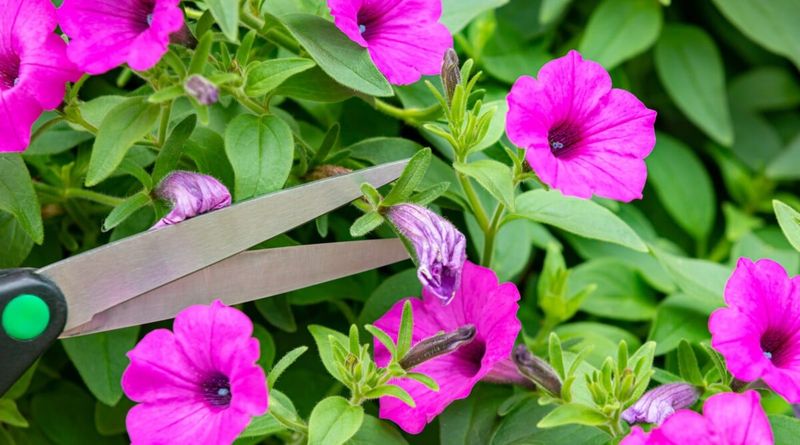
A sharp, clean pair of pruners makes a real difference when cutting back petunias. Dull blades crush stem tissue rather than slicing through it cleanly, and that kind of damage creates rough, ragged wounds that are slower to heal and more vulnerable to infection.
Cleaning your tools before you start is straightforward: wipe off any soil or plant debris, then check the blade for rust or residue. University of Minnesota Extension guidance on cleaning and disinfecting gardening tools recommends disinfecting blades especially when moving between plants that may have disease, and notes that 70% isopropyl alcohol is an effective and practical choice that is less corrosive to metal than bleach. If you are working through a group of healthy, problem-free plants in the same container or bed, a simple wipe between plants is reasonable. If you notice any signs of disease on one plant, disinfect before moving to the next.
After a substantial cutback, the plant needs support to push out new growth. Clemson Cooperative Extension advises watering well and applying a liquid fertilizer after cutting back a petunia significantly. Thorough watering helps the plant move nutrients and begin recovery; fertilizer gives it the raw material to build new shoots.
The fertilizer you choose and how often you apply it should follow the product label and your plant’s actual conditions. UMN Extension notes that container-grown petunias generally need more frequent feeding than those in the ground because nutrients leach out with regular watering. A balanced liquid fertilizer or one labeled for flowering plants is a reasonable starting point, but no single product or schedule works universally for every situation. Skip the fertilizer entirely if the plant is severely stressed, diseased, or sitting in waterlogged soil, as feeding a struggling plant in poor conditions rarely helps and can make things worse.
Use deadheading for the cultivars that benefit from it
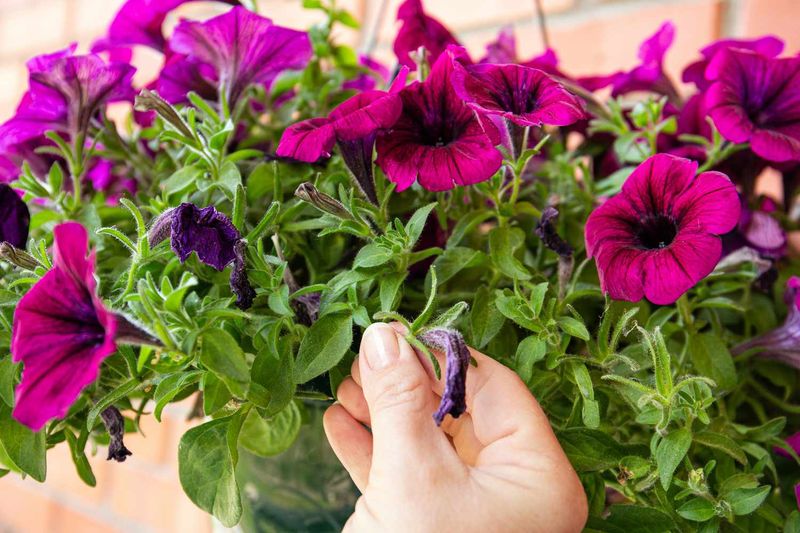
Deadheading and pinching are two different tasks that often get lumped together, and keeping them separate helps you use each one appropriately. Pinching removes the actively growing tip of a stem to stimulate lateral branching. Deadheading removes a spent flower after it has finished blooming, along with the developing seed capsule that forms beneath it when the flower is fertilized.
The reason deadheading matters for some petunias is that seed production takes energy. When a plant sets seed inside a spent flower, it is directing resources toward that seed rather than toward new buds. Removing the spent flower before the seed matures can redirect that energy back into flowering. University of Illinois Extension guidance on caring for annuals includes deadheading as a maintenance practice for keeping annuals productive and tidy through the season.
Large-flowered and double petunias tend to benefit most from regular deadheading. Their blooms are substantial, and the spent flowers can become heavy and messy as they deteriorate. Clemson’s petunia factsheet supports manual deadheading for these types to maintain appearance and encourage continued blooming.
Many smaller-flowered, spreading, milliflora, and modern compact cultivars are a different story. University of Wisconsin Extension Master Gardener guidance on petunias notes that numerous newer varieties are self-cleaning, meaning spent flowers drop on their own without forming viable seed. For these types, regular manual deadheading adds work without adding much benefit.
Check your cultivar before committing to a deadheading routine. If the plant tag describes it as self-cleaning or low maintenance, you can likely skip the task or do it only occasionally for appearance. For large-flowered types, deadheading every few days during peak season is a reasonable habit. Either way, missing a round of deadheading is not the reason a healthy petunia suddenly stops blooming, and it should not be treated as the default explanation for flower failure.
Diagnose other causes before making another cut
Careful pruning is a reasonable first step for a leggy petunia, but when the flowers still do not return after a few weeks, another round of cutting is rarely the answer. At that point, the more productive move is to work through a short checklist of the other factors that commonly suppress petunia flowering.
Sunlight is the first thing to evaluate. UMN Extension recommends at least 5 to 6 hours of good direct sunlight for petunias, with more sun generally supporting more flowers. A plant that moved into the shadow of a neighboring shrub or structure over the course of the summer may simply be too shaded to bloom well, regardless of how it was pruned.
Watering habits deserve a close look as well. Containers and hanging baskets can dry out quickly in summer heat and may need water daily in hot weather, while plants in poorly drained soil face the opposite problem. Both extremes stress the plant and can interrupt flowering.
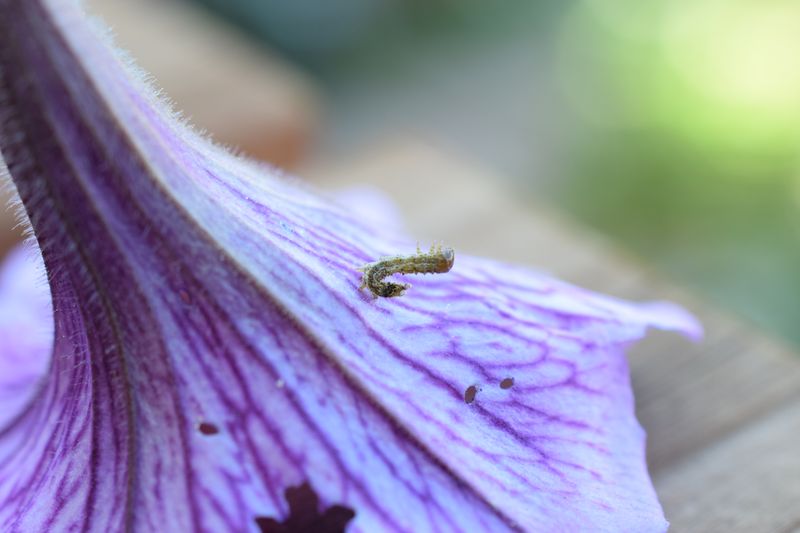
Budworm is one of the most overlooked midsummer causes of missing flowers, and it is worth checking specifically. Colorado State University Extension explains that budworm caterpillars can cause petunias to stop blooming if populations go unchecked. Look for buds that appear damaged or hollowed out, small ragged holes in foliage, and dark droppings that resemble tiny black seeds on leaves and stems. These signs point to budworm rather than a pruning problem, and the management approach is different.
Disease is another possibility that pruning cannot address. Penn State Extension’s overview of petunia diseases covers problems including Botrytis blight, crown rot, and viral infections. Plants showing yellowing, wilting, unusual spotting, or rotting at the base may have a disease that requires targeted treatment or removal rather than another cutback.
Finally, consider the cultivar itself. NC State Extension notes that petunia performance varies considerably by variety, and some types slow their bloom cycle naturally during the hottest part of summer. Late-season flowering depends on cultivar traits, local weather, and growing conditions, not pruning alone.
A smart cut can support a fuller late-season display
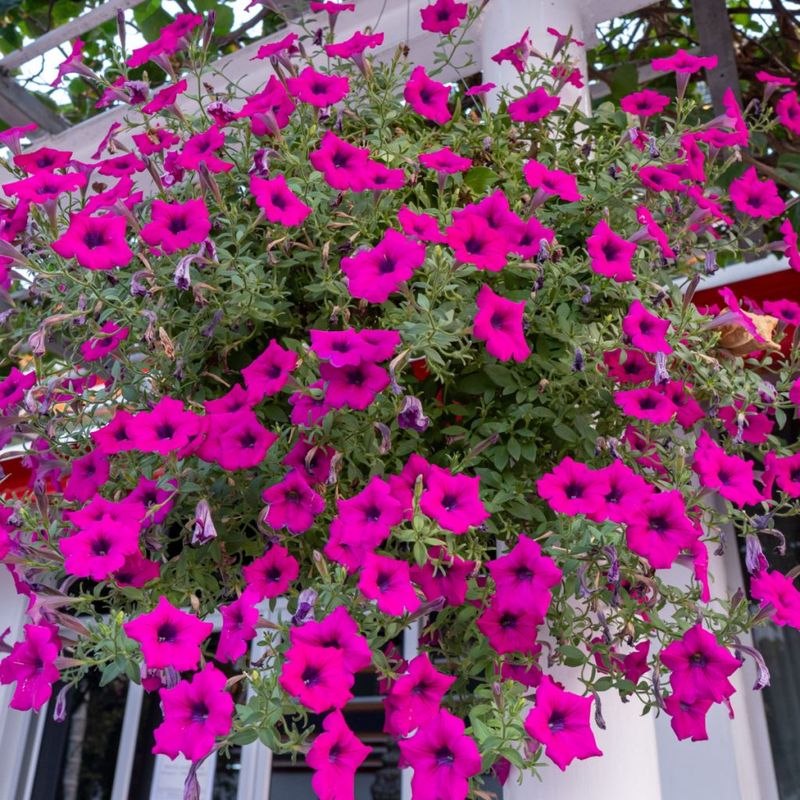
Putting this all together leads to a straightforward approach. Pinch suitable young grandiflora or multiflora petunias at around 6 inches tall to encourage branching from the start. For plants that have stretched out and thinned over the summer, a moderate, even cut that shortens stems by roughly half gives the plant a realistic path back to a fuller shape, as long as you preserve healthy foliage and make cuts just above leaf nodes.
Support the recovery with thorough watering and a label-directed liquid fertilizer suited to your plant’s conditions. Keep tools clean and disinfect between plants when disease is a concern. Reserve deadheading for large-flowered and double types that genuinely benefit from it, and skip the routine for self-cleaning cultivars. If flowers still do not return after a careful cutback, check sunlight, watering, budworm signs, and plant health before reaching for the pruners again.
NC State Extension notes that petunias can bloom from spring through fall under suitable conditions, and University of Illinois Extension confirms that consistent care through the season supports continued flowering in annuals. Whether your plants carry color into September or beyond depends on cultivar, local weather, and how well the basics of light, water, and nutrition are managed, not on any single pruning session. A well-timed, well-placed cut is a useful tool, but the plants that keep blooming into late summer are usually the ones whose whole growing environment has been tended with equal care.