
22 Reasons Your Tomato Leaves Are Curling-And The Quick Fix For Each One
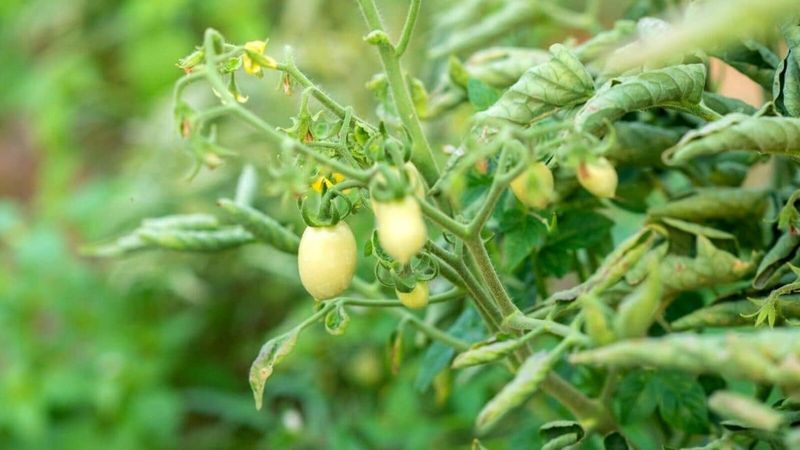
Curling tomato leaves are your plant’s way of waving a little flag that says something is off. The tricky part is that many different problems can make leaves twist, cup, or roll, so one curl does not always mean the same thing. Once you learn to read the shape and pattern of the curl, you can match it to the right fix and save your harvest. Here are 22 common reasons tomato leaves curl, plus a fast, backyard-friendly solution for each one.
1. Physiological Leaf Roll from Heat
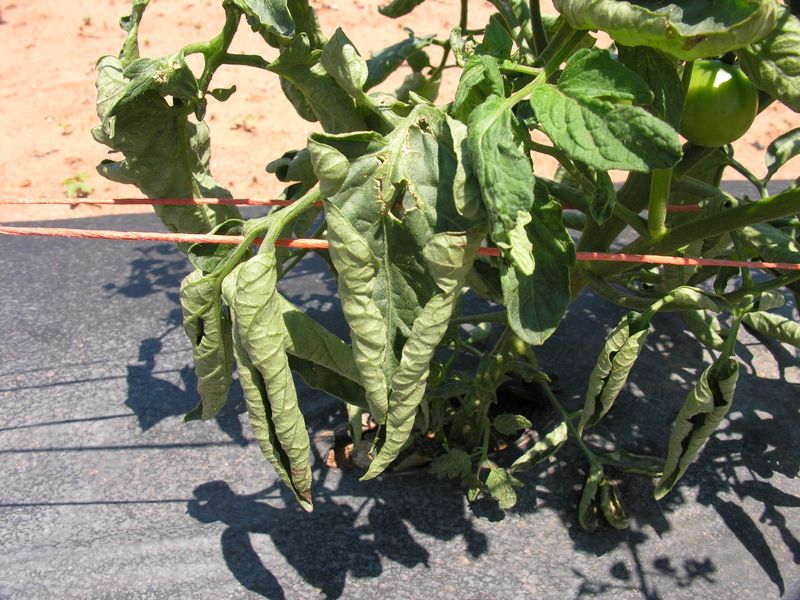
Come the hottest stretch of summer, tomato plants often roll their lower leaves upward and inward like little taco shells. Gardeners panic, but this one is usually harmless.
The plant is simply trying to shrink the surface area exposed to blazing sun so it loses less water. Foliage stays green and firm, and fruit keeps forming, which is how you know it is stress and not disease.
The quick fix is patience plus a bit of shade. Rig a length of 30 to 40 percent shade cloth on stakes during afternoon peaks, and the leaves usually relax once temperatures ease. No need to reach for sprays or fertilizer, because the plant sorts itself out as conditions cool.
2. Overwatering and Soggy Roots
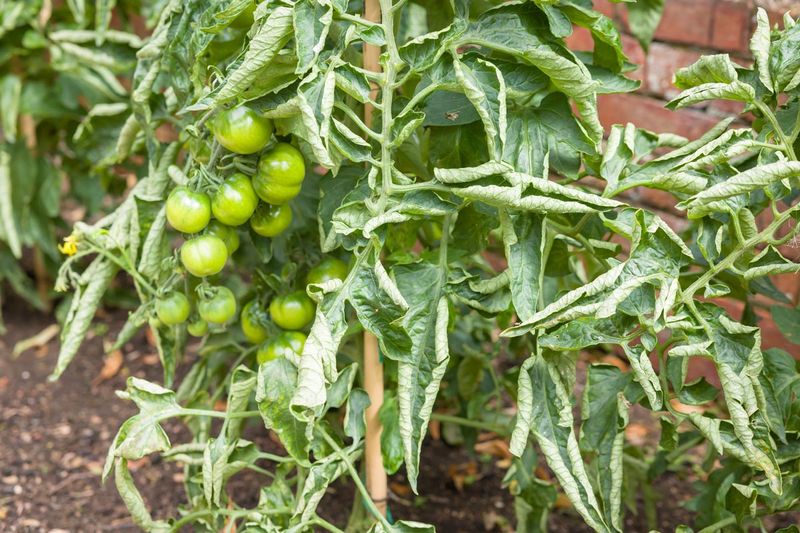
Drowning a tomato with kindness is easier than most folks think. When soil stays waterlogged, roots cannot breathe, and the leaves respond by curling and sometimes yellowing near the base.
Puddles that linger, a sour smell in the dirt, and constantly damp mulch are all clues you have gone overboard. Container growers see this fastest when a pot has no drainage holes.
Back off the hose and let the top inch or two of soil dry before watering again. Poke your finger into the bed to check moisture rather than watering on a fixed schedule. For pots, confirm the bottom drains freely and dump any saucer that traps standing water.
3. Underwatering and Thirsty Foliage
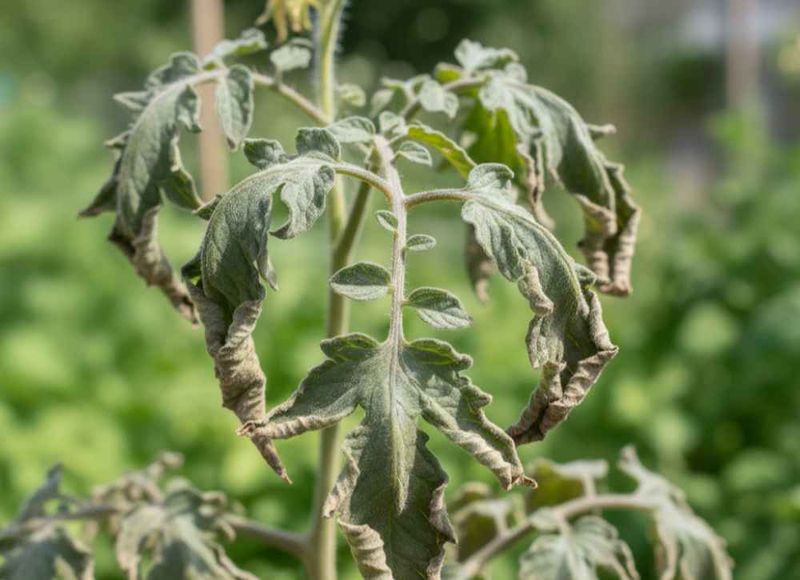
On the flip side, a tomato that is not drinking enough will curl its leaves to conserve whatever moisture remains. The edges often feel dry and papery, and the whole plant looks a little deflated by late afternoon.
Sandy soil and small containers dry out shockingly fast, especially when the wind picks up. If your plant perks back up after an evening drink, thirst was almost certainly the culprit.
Deep, consistent watering beats frequent sprinkles. Give the root zone a thorough soak two or three times a week, then add a couple inches of straw or shredded leaf mulch to hold that moisture in place. A drip line or soaker hose keeps things steady so the plant never swings between soaked and bone dry.
4. Tomato Mosaic Virus
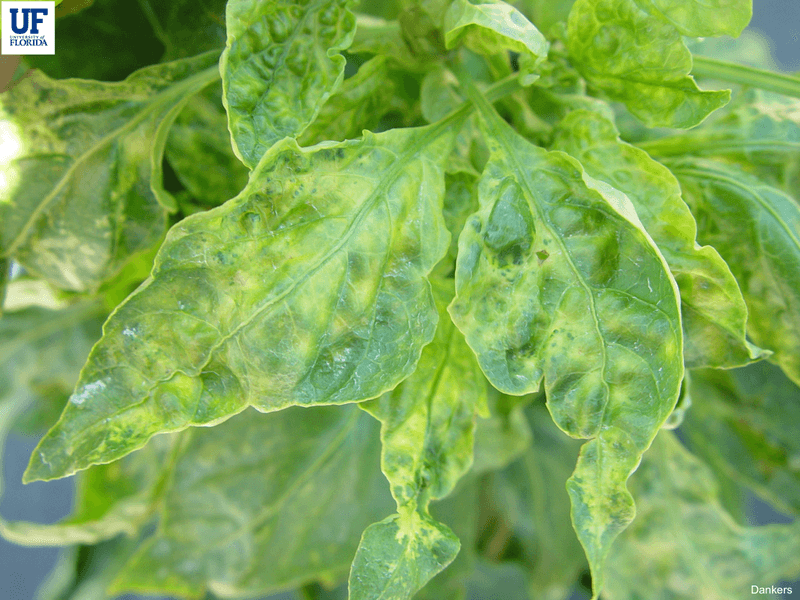
Some curls come stamped with a warning sign, and mottled leaves are exactly that. Tomato mosaic virus twists new growth while painting it with a patchy light-and-dark green pattern that almost looks marbled.
Fruit may turn out lumpy or ripen unevenly, and the plant often looks stunted overall. The virus spreads through handling, tools, and even tobacco residue on fingers, which is why smokers should wash up before touching plants.
There is no cure once a plant is infected, so removal protects the rest of the patch. Pull affected plants, bag them, and toss them in the trash rather than the compost. Wash your hands and disinfect pruners with a diluted bleach or alcohol wipe between plants to keep it from hitchhiking down the row.
5. Curly Top Virus Spread by Leafhoppers
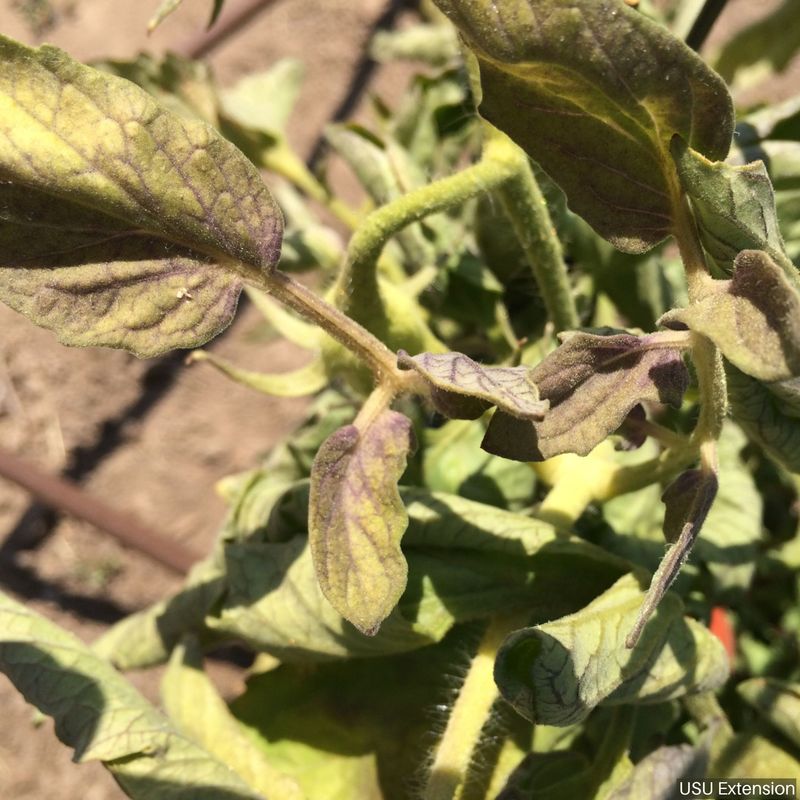
Out in the drier western states, a single beet leafhopper can drop off a nasty souvenir called curly top virus. Leaves roll upward, turn stiff and leathery, and often take on a purple tint along the veins.
Growth halts almost overnight, and the plant may stop setting fruit entirely. Because the insect feeds briefly and moves on, you rarely catch the pest in the act.
Prevention is your best tool here since infected plants will not recover. Cover young transplants with floating row cover until they establish, and grow tomatoes among taller companion plants that shade the soil, which leafhoppers dislike. Remove any plant showing the telltale stiff curl so it cannot serve as a reservoir for the bug to spread further.
6. Herbicide Drift Damage
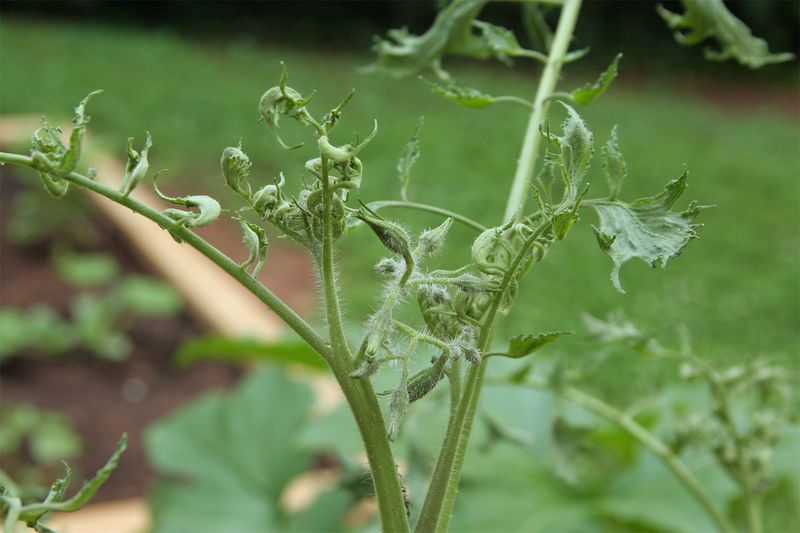
A perfectly healthy tomato can twist into a corkscrew mess almost overnight if weed killer drifts in from nearby. Lawn herbicides containing 2,4-D or dicamba are notorious for warping new growth into thin, fern-like, cupped leaves.
The damage usually shows up worst on the freshest foliage at the top of the plant. Even mowing over treated grass and letting clippings blow into the garden can trigger it.
Once exposed, keep the plant well watered and wait, since mild cases often grow out of it over a few weeks. Avoid spraying weed products on breezy days, and never use a sprayer that once held herbicide for anything else. Watch out for mulch or straw made from herbicide-treated fields, because that residue can quietly poison a whole bed.
7. Aphid Infestations
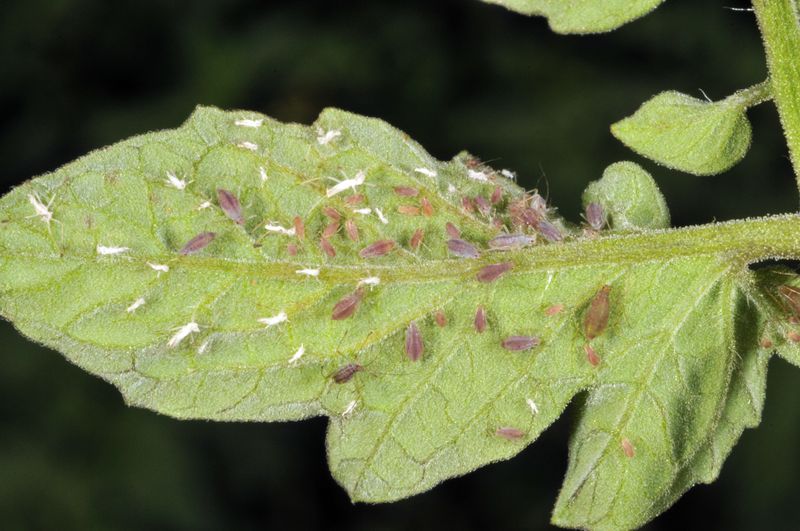
Tiny and easy to miss, aphids cluster on the undersides of leaves and suck sap until the foliage puckers and curls around them. A sticky, shiny coating called honeydew often gives their hiding spot away.
Ants marching up and down the stems are another red flag, since they farm aphids for that sweet residue. Populations explode fast in warm weather, so a small colony becomes a mob within days.
Blast them off with a strong jet of water from the hose, aiming at leaf undersides. For stubborn crowds, a spray of insecticidal soap knocks them down without harming the plant. Inviting ladybugs and lacewings into the garden gives you a free cleanup crew that keeps future flare-ups in check.
8. Whitefly Feeding
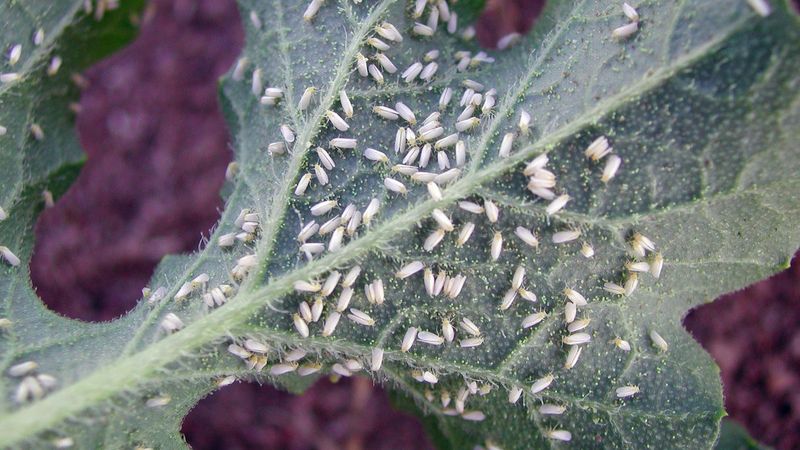
Give an infested plant a shake and a little cloud of white specks lifts off like dust. Those are whiteflies, and their constant sap-sucking leaves the foliage curled, yellowed, and coated in sticky honeydew.
They gather thickest on the youngest leaves and can pass along viruses while they feed. Warm, sheltered gardens and greenhouses are their favorite haunts.
Yellow sticky traps hung near the plants catch the adults and help you gauge how bad things are. Spray leaf undersides with insecticidal soap or neem oil in the cool of early morning, repeating every few days to catch newly hatched bugs. Clearing away weeds nearby removes the extra hideouts they love to breed in.
9. Broad Mites and Russet Mites
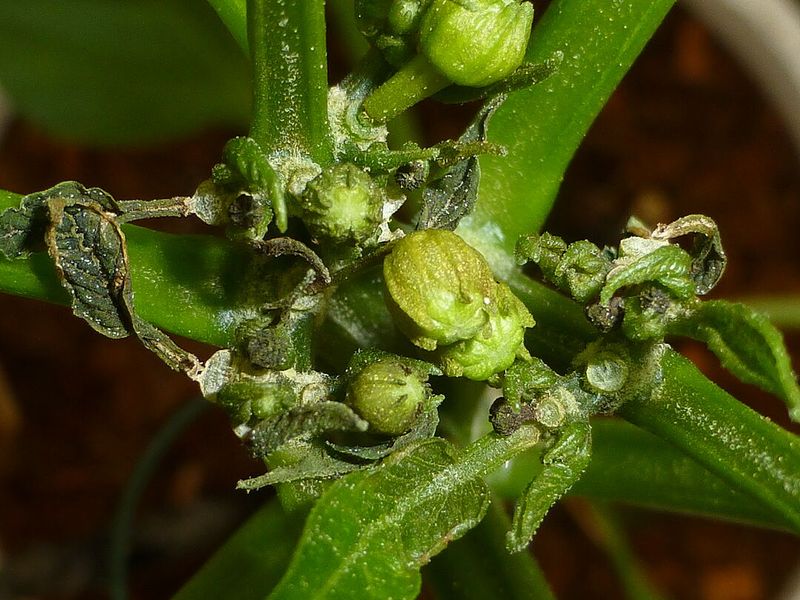
When new growth curls tight, turns bronze, and looks almost glazed, microscopic mites may be to blame. Broad and russet mites are far too small to see without a hand lens, so gardeners often chase the wrong problem for weeks.
Leaves take on a twisted, downward-cupping shape, and the tips of shoots can bronze over like they have been scorched. Damage marches upward as the mites move to fresh tissue.
Prune off the worst-affected tips and bag them right away to slow the spread. Sulfur dust or a miticide labeled for edibles can knock the population back when applied per the label. Because these pests hitch rides on clothing and tools, cleaning up between plants keeps them from touring the whole garden.
10. Too Much Nitrogen Fertilizer
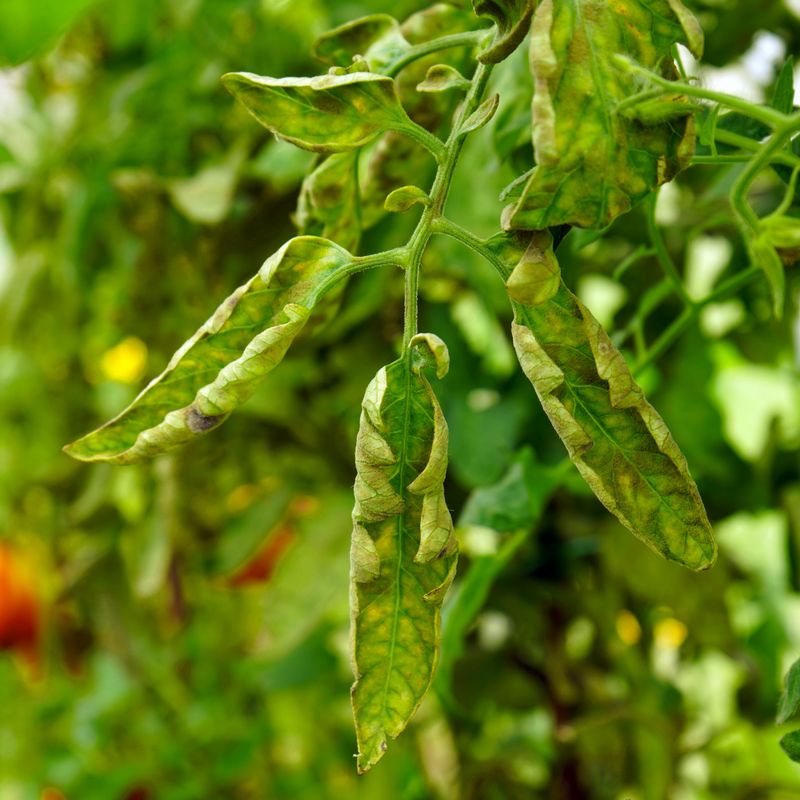
Feeding a tomato like it is a lawn backfires in a hurry. An overdose of high-nitrogen fertilizer pushes so much fast, lush growth that the leaves curl downward and the plant becomes a dark green jungle with few flowers.
You get gorgeous foliage and disappointing fruit, which is the opposite of what most growers want. Overly rich compost or too many synthetic feedings usually cause it.
Ease off the fertilizer and water deeply to help flush excess nitrogen through the soil. Switch to a balanced or slightly phosphorus-heavy blend meant for tomatoes so the plant redirects its energy toward blooms. Going forward, feed lightly and less often, because tomatoes reward restraint far more than generosity.
11. Wind and Weather Stress
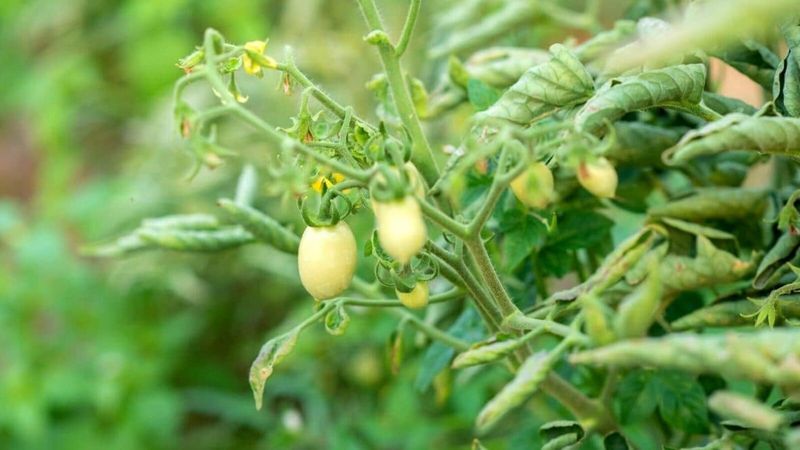
A few gusty days can leave your tomatoes looking rattled, with leaves curling and edges going crispy from the constant whipping. Wind pulls moisture out of foliage faster than the roots can replace it.
Plants in open, exposed spots or on breezy rooftops and balconies take the worst of it. Sudden cold snaps riding in on that wind only add to the tightening curl.
Set up a simple windbreak using burlap stretched between stakes or by tucking tender plants near a fence. Staking and caging keep stems from thrashing, which also cuts down on cracked stems. Once the weather settles, the plant usually shakes off the stress and pushes out fresh, flat leaves.
12. Transplant Shock
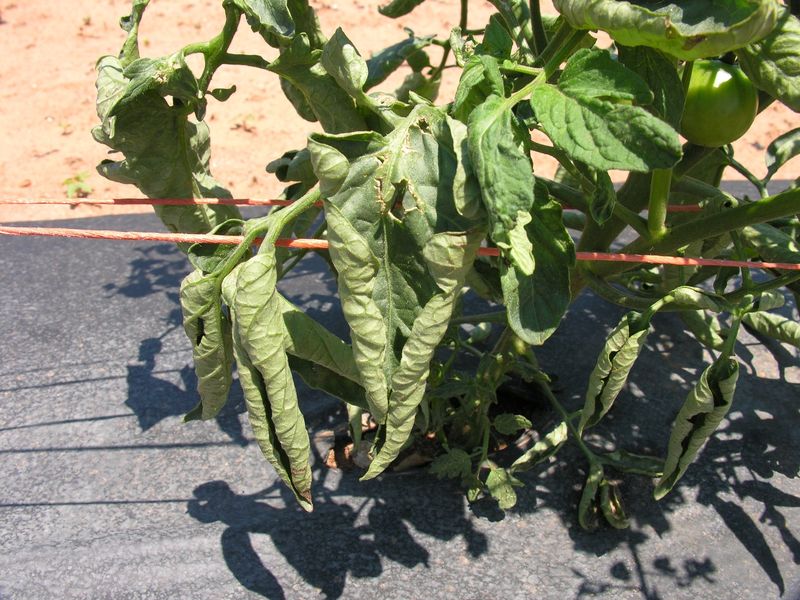
Moving day is rough on tomatoes, and freshly transplanted seedlings often curl their leaves for a week or so while they recover. The roots need time to settle into their new home and start drinking again.
Seedlings that jumped straight from a cozy windowsill into full sun feel it the most. Bent or disturbed roots during planting make the sulk last even longer.
Harden off transplants over a week by giving them gradually longer stints outdoors before planting. Set them in the ground on a cloudy day or in the evening, then water gently to settle the soil around the roots. A little shade for the first few days lets them find their footing, and the curl fades as they establish.
13. Root Damage and Cramped Roots
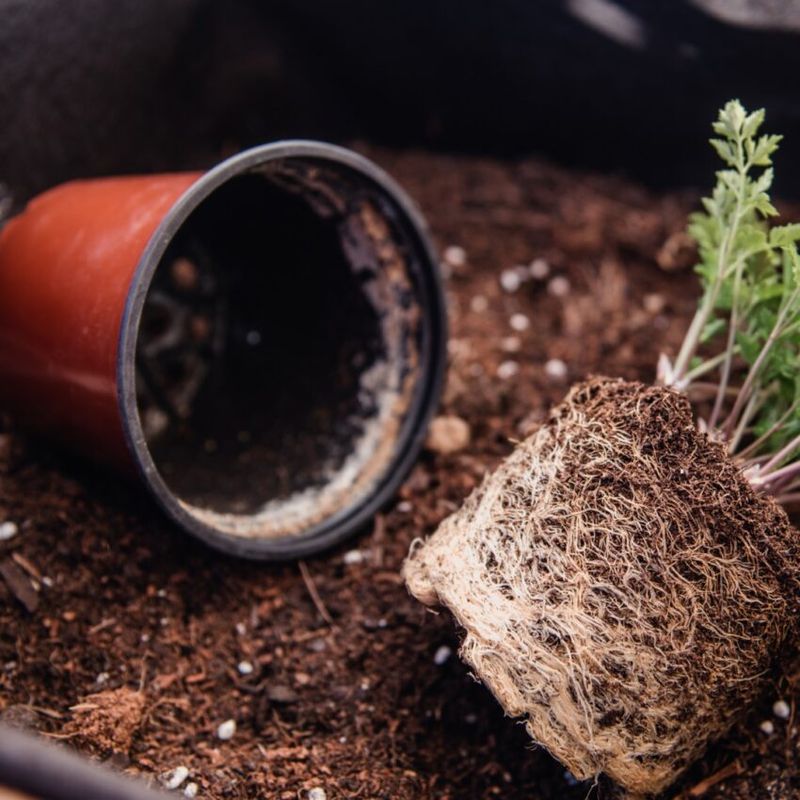
Whatever happens underground shows up in the leaves, and injured or cramped roots often trigger a stubborn curl. Chopping too close with a hoe, hilling soil roughly, or leaving a plant pot-bound all count.
Container tomatoes that outgrow their pots wind their roots into a tight coil that can no longer feed the plant properly. Growth slows and the leaves cup as the roots struggle.
Hold off on cultivating close to the stem and mulch instead to smother weeds gently. For root-bound plants, bump them up to a larger container and loosen the outer roots before replanting. Give the reset plant steady water and a light feeding, and new, flat growth usually follows within a couple of weeks.
14. Calcium Imbalance
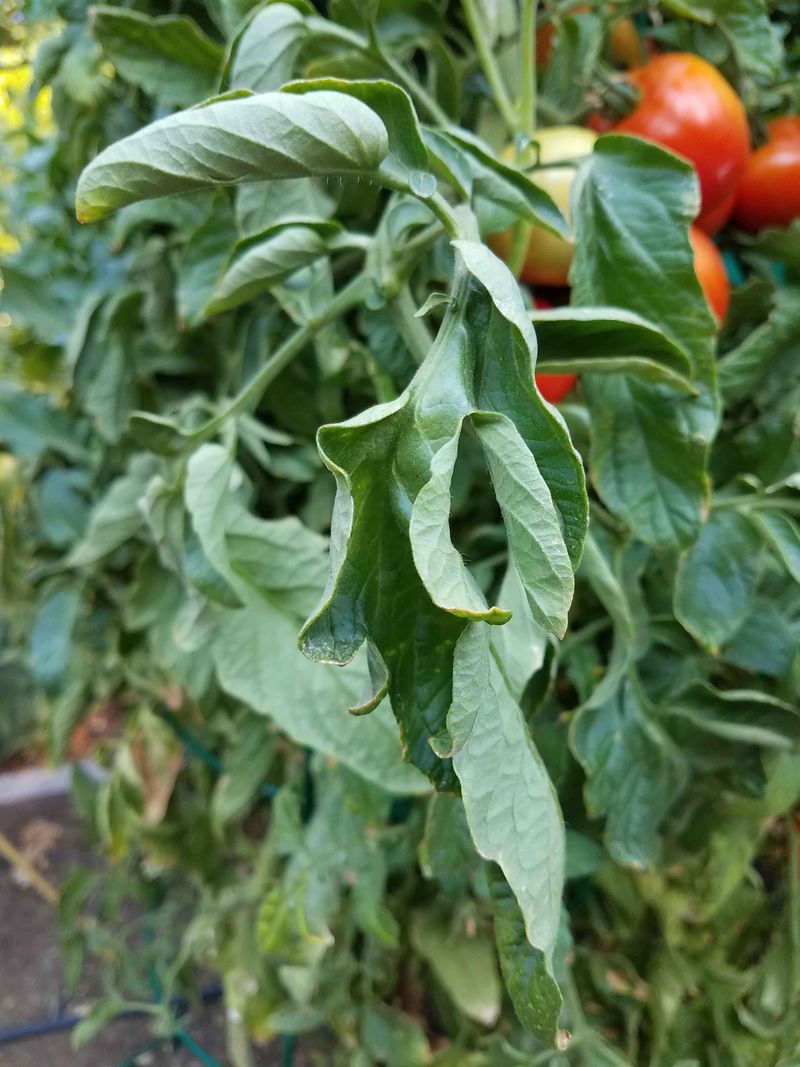
Blossom end rot gets all the attention, but a calcium hiccup can also cup and curl the newest leaves before any fruit turns black. Calcium moves slowly through a plant, so the youngest tissue suffers first when supply falls short.
Erratic watering is usually the real villain, since the mineral can only travel when moisture is steady. Leaf tips may hook or distort as growth continues.
Even out your watering routine first, because consistent moisture solves most calcium problems on its own. A soil test tells you whether you truly need to add lime or gypsum, so you are not guessing. Steady moisture plus mulch keeps the pipeline flowing and lets fresh leaves emerge flat and healthy.
15. Magnesium Deficiency
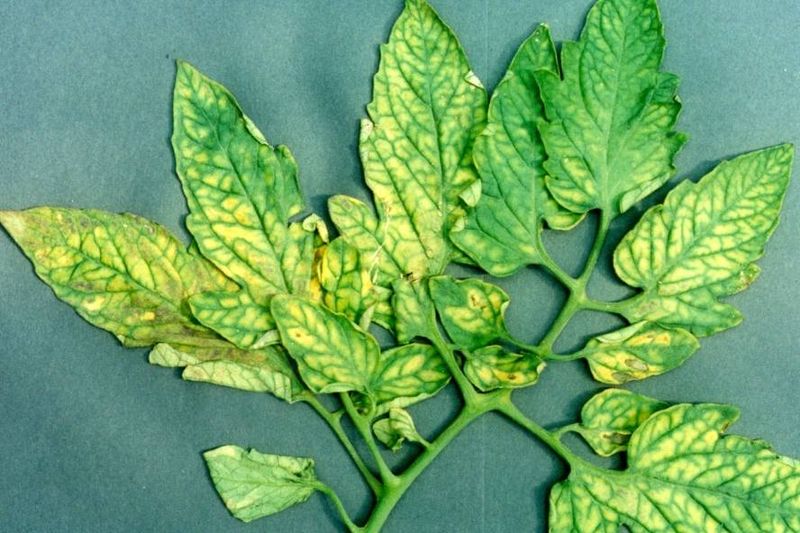
Yellowing between the veins paired with a slight curl often points a finger at low magnesium. Older, lower leaves usually show it first, keeping green veins on a fading yellow background before the edges begin to roll.
Sandy soils and heavily fertilized containers run short on magnesium fastest. The plant pulls the mineral from old leaves to feed new ones, which is why the bottom suffers.
A light Epsom salt drench, about a tablespoon per gallon of water, can green things up as a stopgap. For a lasting fix, work compost into the bed and confirm your soil pH sits near the sweet spot so nutrients stay available. Balanced feeding beats repeated Epsom treatments, so treat the salt as a bandage, not a cure.
16. Aggressive Over-Pruning
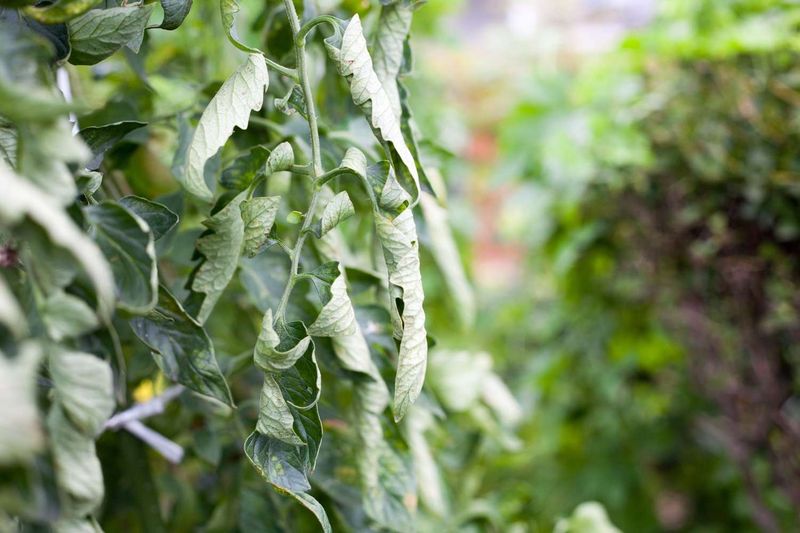
Snipping away too many suckers and leaves in one session leaves a tomato scrambling to rebalance itself. Strip off too much foliage and the remaining leaves may curl as the plant reacts to sudden exposure and lost energy factories.
Eager gardeners chasing bigger fruit often prune far more than the plant can handle at once. The stress shows up within days.
Prune in moderation, removing only a few suckers at a time and never more than a third of the foliage in a single go. Leave enough leaves to shade the fruit and keep photosynthesis humming. Space your pruning sessions out over the season so the plant always has enough green to power a comeback.
17. Compacted or Poorly Drained Soil
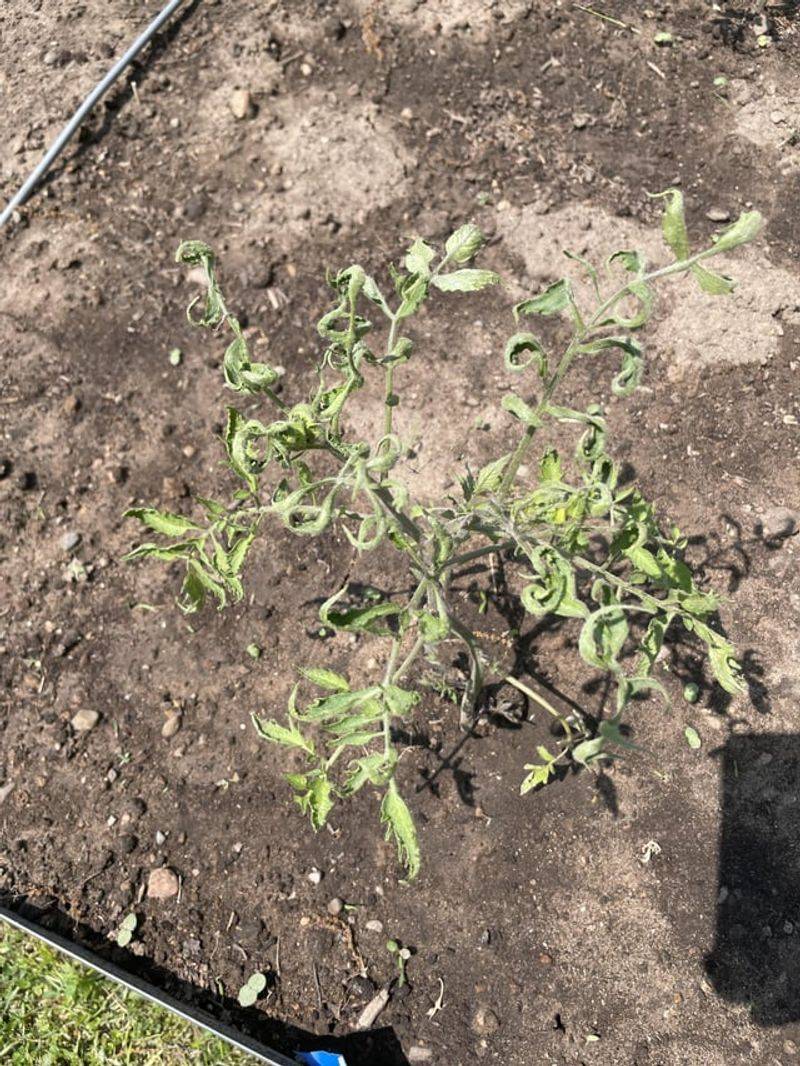
Roots stuck in hard, dense clay behave a lot like roots left in a puddle, and the leaves curl as a result. Compacted ground holds water in some spots while choking off air, leaving roots gasping and unable to feed the plant.
Heavy foot traffic and years of tilling wet soil bake beds into concrete-like layers. Water tends to sit on top rather than soak in evenly.
Loosen future beds by mixing in generous compost and avoiding work when the soil is soggy. Raised beds solve the worst cases by lifting roots above the muck entirely. For plants already in trouble, gently aerate the surrounding soil with a fork and top with organic mulch to rebuild structure over time.
18. Fusarium and Verticillium Wilt
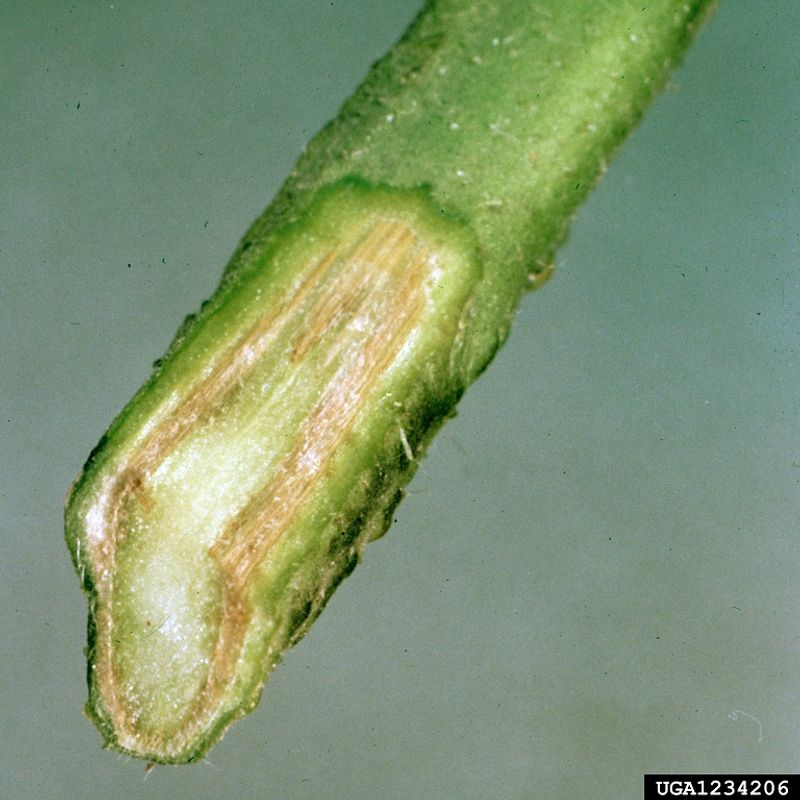
A curl that comes with wilting on just one side of the plant hints at a soilborne fungus at work. Fusarium and verticillium wilt clog the plant’s plumbing from the inside, so leaves yellow, curl, and droop even when the soil is plenty moist.
Cut a slice into a lower stem and you may spot brown streaks in the tissue, a dead giveaway. These fungi linger in soil for years, striking hardest in warm weather.
Sadly there is no rescue for an infected plant, so pull and dispose of it rather than compost it. Rotate tomatoes to a fresh spot each year and choose varieties labeled with VF resistance codes. Solarizing the bed under clear plastic during peak summer heat can knock back the fungus for future plantings.
19. Bacterial Canker
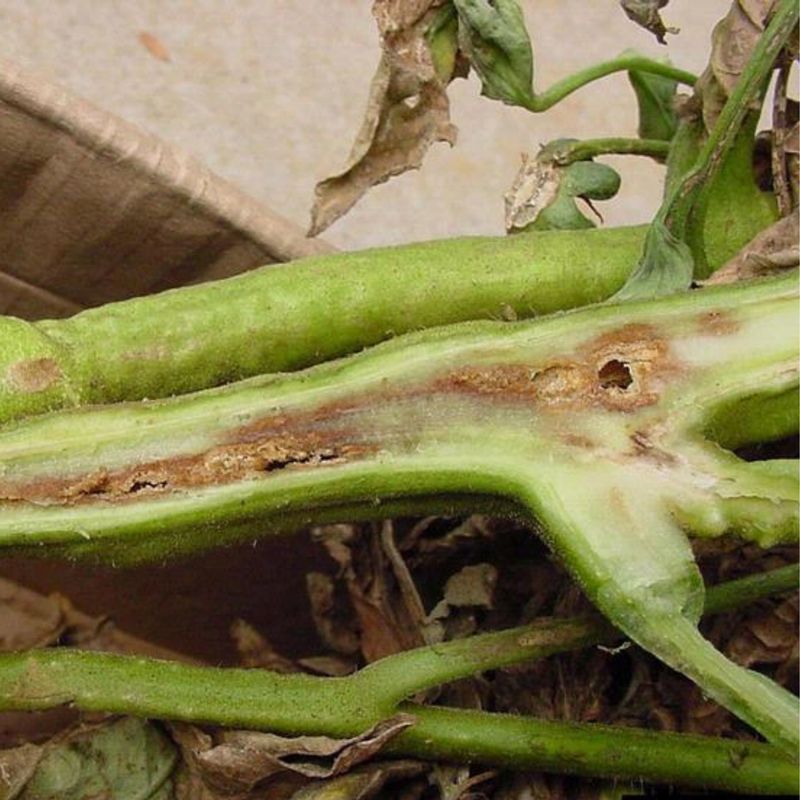
Leaves that curl and brown along their edges while the plant slowly wilts may be fighting bacterial canker. The disease often turns leaf margins crispy in a scorched-looking band while the center stays green for a while.
Infected stems can show dark streaks and cracks, and fruit sometimes develops small bird’s-eye spots. Contaminated seed and splashing water spread it through a bed fast.
Remove and destroy infected plants promptly to protect neighbors, and disinfect any tools you used on them. Water at the soil line rather than overhead so bacteria cannot splash from leaf to leaf. Starting with certified disease-free seed and rotating crops gives new plantings a clean slate.
20. Sudden Temperature Swings
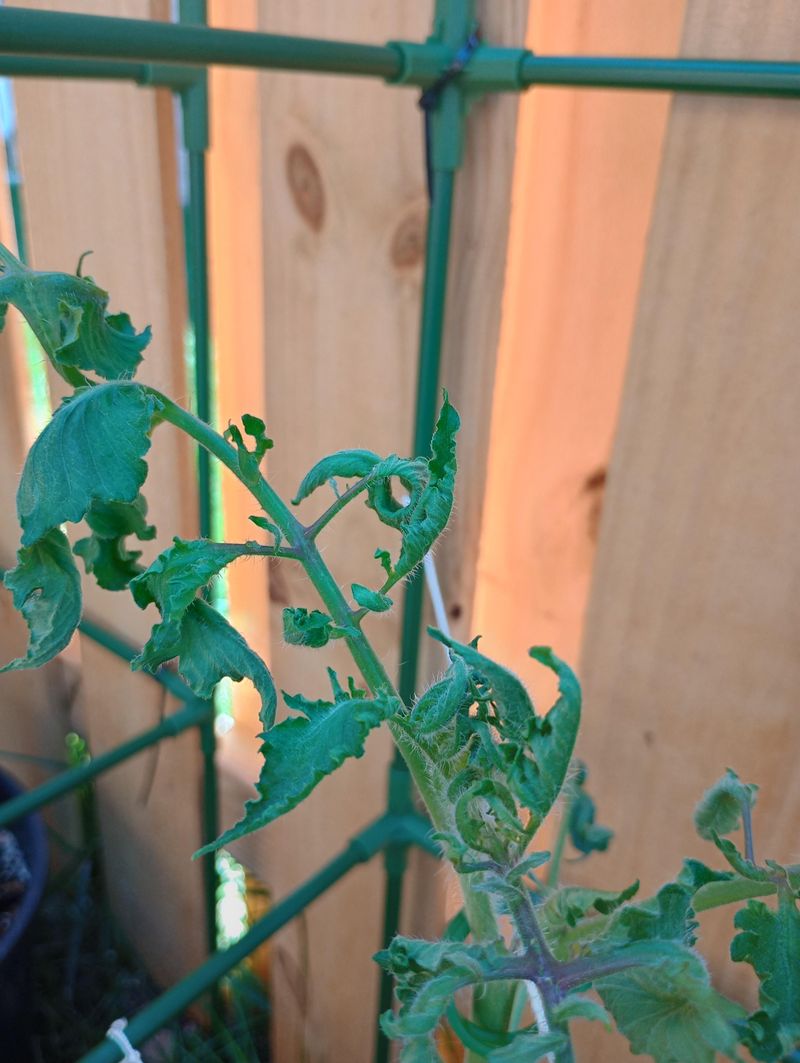
Early-season tomatoes can curl when nights turn chilly after a run of warm days. A big gap between daytime warmth and nighttime cold confuses the plant’s inner rhythm, and the leaves cup or roll while it adjusts.
Spring plantings that go out before the weather truly settles feel this most. Late cold snaps in April and May are classic triggers across much of the country.
Wait until nights consistently stay above the mid-fifties before setting tomatoes out, or protect them with cloches on cold nights. Wall-of-water tubes and lightweight row covers buffer the swing nicely. As the season warms and evens out, the plant relaxes and its leaves flatten back to normal.
21. Potassium Shortage
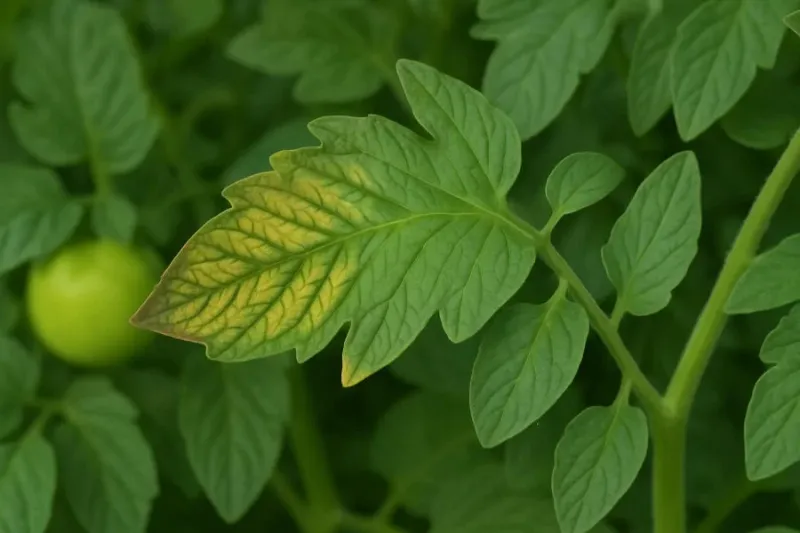
When leaf edges yellow and roll while the veins stay green, a potassium shortfall may be behind it. Older leaves usually go first, developing a scorched, curled margin as the plant robs them to feed newer growth and developing fruit.
Fruiting tomatoes are heavy potassium users, so demand spikes right when the crop needs it most. Sandy soils and container mixes run low quickly.
Feed with a tomato fertilizer that carries a solid potassium number, the last figure on the bag. Wood ash worked lightly into the soil adds potassium too, though a soil test keeps you from overdoing it. Steady, balanced feeding through the fruiting season keeps the edges smooth and the plant productive.
22. Genetics of Certain Varieties
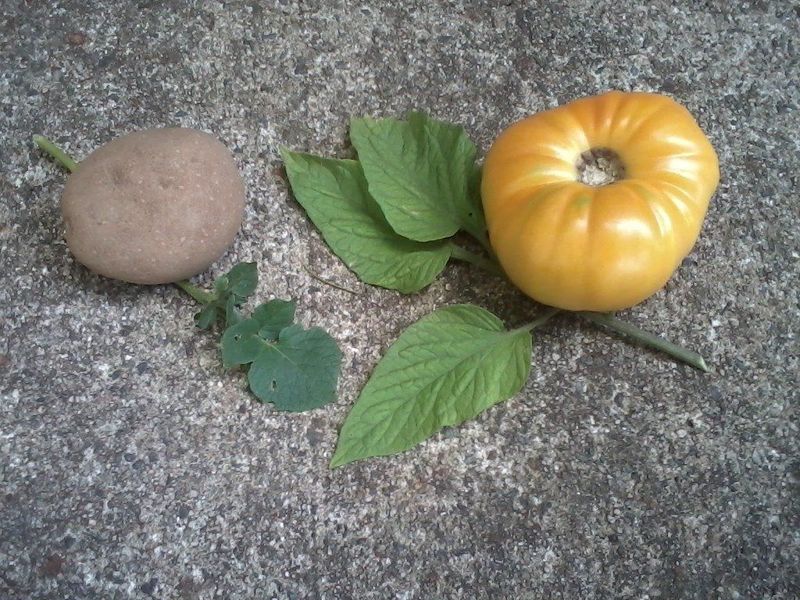
Before you troubleshoot a single thing, know that some tomatoes just grow curly leaves on purpose. Certain heirloom and indeterminate varieties, including several potato-leaf types, naturally sport rolled or ruffled foliage with zero problem attached.
The plants stay vigorous, flower well, and set fruit right on schedule despite the quirky look. If a whole plant curled from day one and seems perfectly happy, genetics is the likely answer.
No fix is needed here, and that is the good news. Learn your variety’s normal habit so you can tell an inherited trait from real trouble down the line. When the plant is thriving and only the leaf shape looks unusual, you can relax and let it do its thing.