
Grow These Petunias And Your Yard Becomes A Favorite Stop For Hummingbirds All Summer
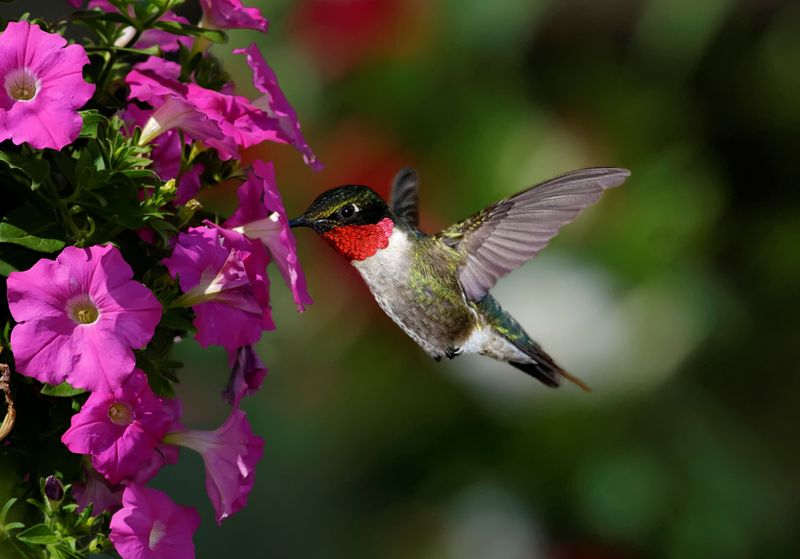
Hummingbirds zip around like tiny helicopters, and the right flowers can convince them to visit your yard again and again. Petunias are one of the easiest ways to roll out the welcome mat, since their trumpet shapes and bright colors are exactly what these little birds hunt for. Not every petunia works the same magic, though, and picking the right varieties makes a real difference. Here are seven standout petunias that can turn your backyard into a summer-long hummingbird hangout.
1. Wave Petunias
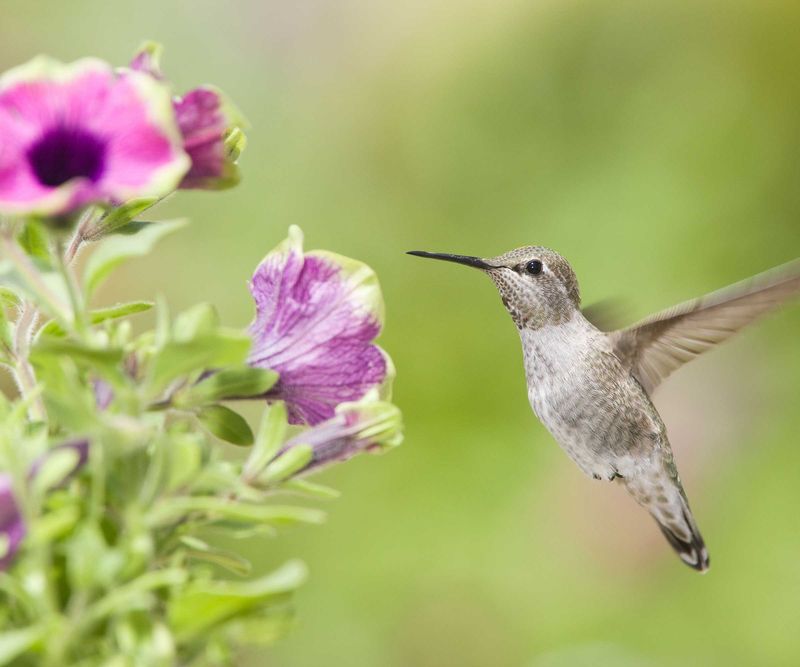
Sprawling across a hanging basket like a spilled bucket of color, Wave petunias are the overachievers of the petunia world. They spread fast and keep pumping out blooms from spring straight into fall, which means a steady supply of nectar for passing hummingbirds.
Because a single plant can cover a couple of feet, you end up with a dense carpet of trumpet-shaped flowers. That crowd of blooms acts like a billboard, catching a hummingbird’s eye from across the yard. Purple, pink, and rose shades tend to draw the most curious visitors.
They also handle heat and full sun without much fuss, so they keep going during the hottest US summer stretches when other flowers give up. Plant them in window boxes or elevated baskets and you give hummingbirds an easy hover-and-sip station at just the right height.
Fun fact: Wave petunias were a breeding breakthrough in the 1990s, and their spreading habit changed how people fill baskets and beds. If you want maximum bloom coverage with minimal pruning, this is the variety to start with.
2. Supertunia Vista Bubblegum
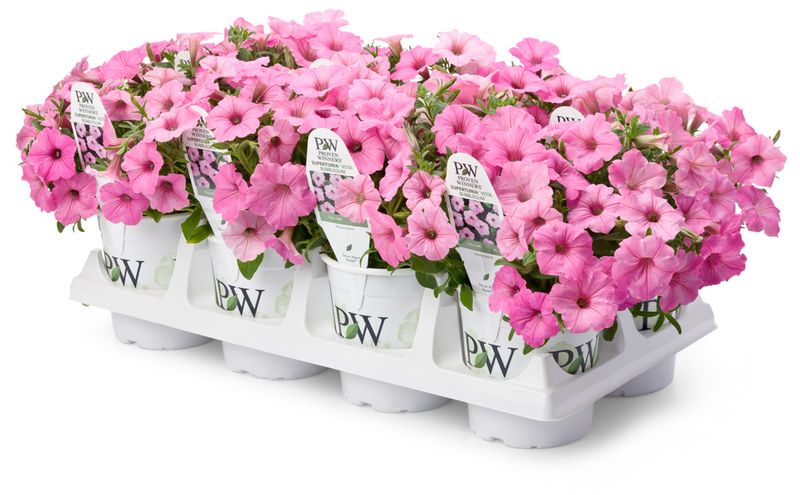
Picture a wall of soft pink that never seems to quit, and you have Supertunia Vista Bubblegum. This variety earned a loyal fan base because it blooms hard from the moment you plant it until frost, with no deadheading required.
Vigor is the real selling point here. A few plants can fill a large container or spill over a raised bed, creating a mounded pile of nectar-rich flowers that hummingbirds can work through one after another.
The gentle bubblegum color reads as a friendly signal to pollinators, and the sheer volume of blooms keeps a hummingbird coming back for more. Since it recovers quickly from rain or wind, your display stays full-looking through unpredictable summer weather across much of the country.
Gardeners in the South and Midwest often mention how it shrugs off humidity while still looking fresh. Give it regular feeding and plenty of sun, and it rewards you with one of the longest bloom windows of any petunia on this list.
3. Night Sky Petunia
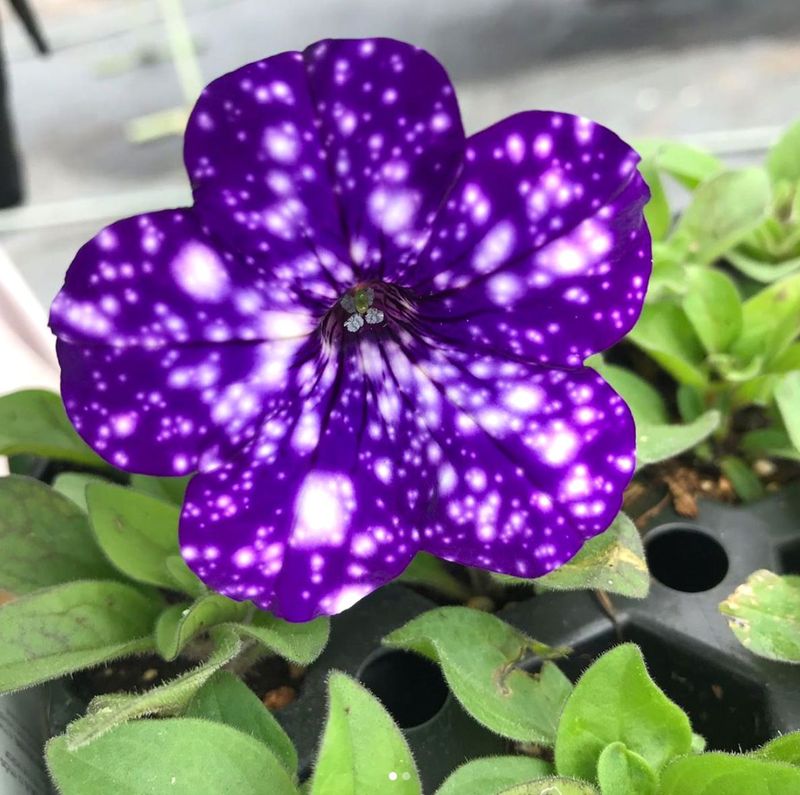
Star-speckled and impossible to ignore, Night Sky petunias look like someone dabbed the Milky Way onto each purple flower. The white splashes shift with temperature swings, so no two plants ever look quite the same.
Beyond the wow factor, that deep purple base is a shade hummingbirds notice easily against green foliage. The dramatic contrast helps the blooms stand out in a mixed container, drawing birds in for a closer look.
What sets this one apart from the workhorse spreaders is pure personality. It gives your patio a conversation-piece plant while still offering the trumpet shape hummingbirds love to probe for nectar.
For the best speckling, plant it where it gets cool nights and warm days, which many US regions deliver in early summer and again in early fall. Pair it with solid-colored petunias so the starry pattern really pops and your feathered guests have plenty of options to sample.
4. Red Trailing Petunias
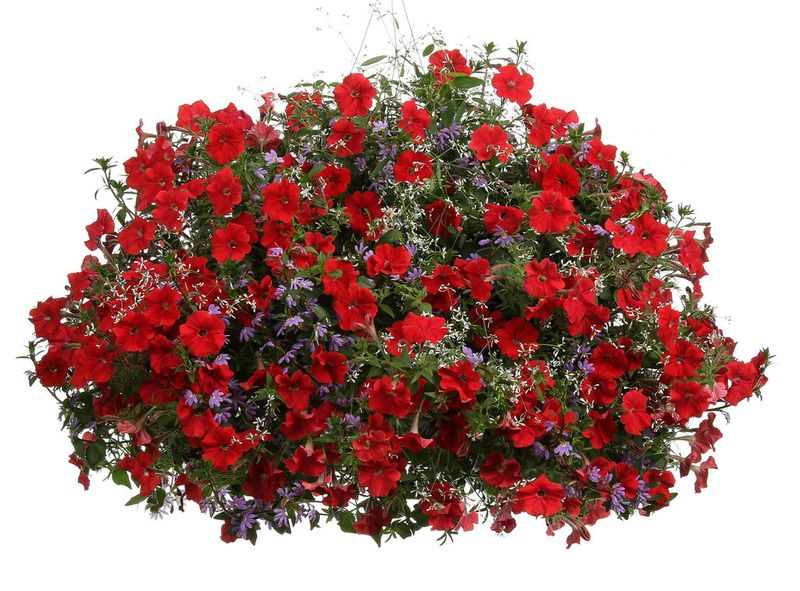
Red is basically a magnet word in the hummingbird dictionary, and trailing red petunias play right into it. These birds are wired to associate bright red with a good meal, so a cascade of scarlet blooms tends to get investigated fast.
The trailing habit is the clever part. As stems tumble down from baskets or railings, the flowers hang at open air level, making it simple for a hummingbird to hover and feed without brushing against leaves.
Set a basket of red trailers near a window and you may get a front-row seat to the action all summer. They pair beautifully with a nectar feeder placed nearby, doubling the reasons for birds to stick around your yard.
Bold, showy, and a little theatrical, red trailing petunias are the extroverts of this group. If your goal is to guarantee visitors, starting with red is one of the smartest moves you can make.
5. Grandiflora Petunias
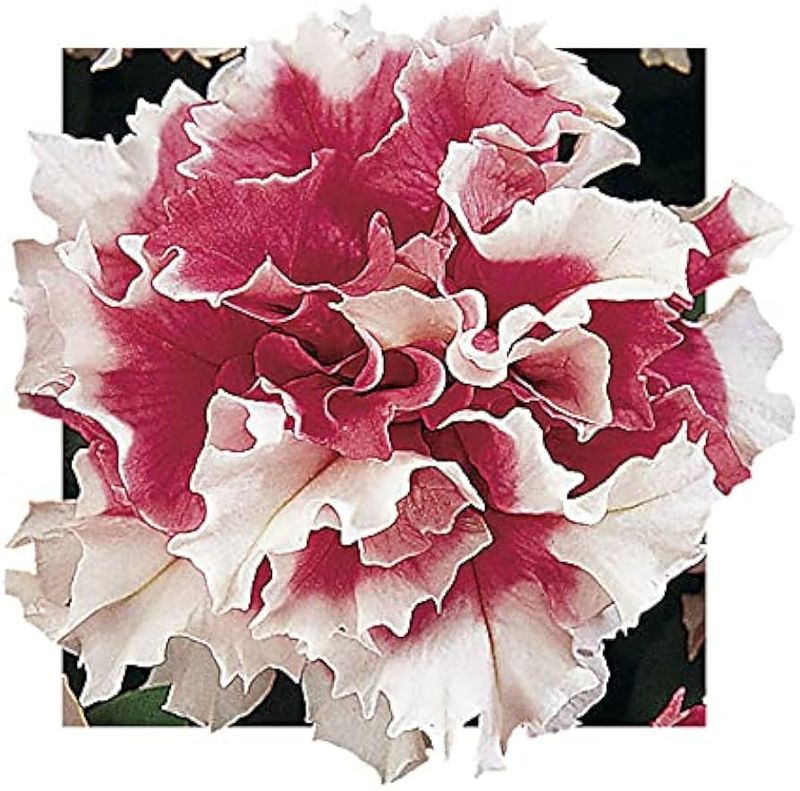
Big, ruffled, and generous with their blooms, Grandiflora petunias produce some of the largest flowers in the whole family. Each blossom can stretch several inches wide, giving hummingbirds a roomy landing pad and a deep throat to dip into.
Size is exactly why they belong on this list. Where smaller-flowered types offer many little sips, Grandifloras offer fewer but far larger nectar cups, which can be a satisfying stop for a hungry bird.
They do best with a bit of shelter from pounding rain, since those oversized petals can flop when soaked. Tuck them into a protected bed or a covered porch container and they will show off for weeks.
Available in a rainbow of solids and stripes, they let you match your color scheme while still catering to the birds. Choose reds, pinks, and purples if drawing hummingbirds is the main mission, and enjoy the extra-showy display up close.
6. Petunia Multiflora Mix
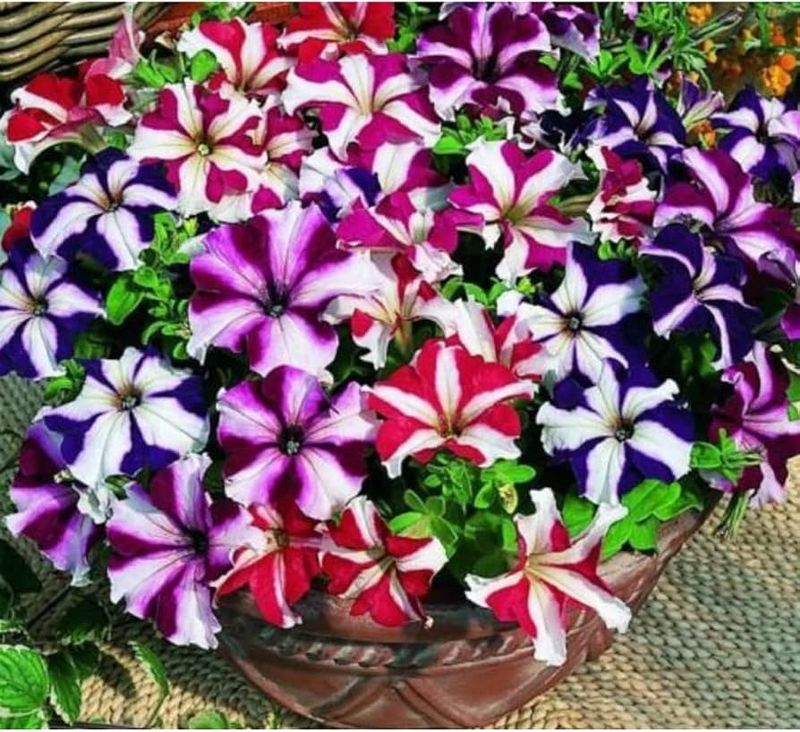
Quantity over size is the whole philosophy behind Multiflora petunias, and hummingbirds seem to approve. These plants churn out loads of smaller blooms that keep coming even after storms knock a few off.
Toughness is their signature trait. Because the flowers are compact, they resist wind and rain damage better than the giant Grandiflora types, so your beds stay full and inviting through rough weather in many US zones.
A mixed planting gives hummingbirds a buffet of colors to explore in one spot, and the constant bloom turnover means nectar is almost always on tap. They fill in garden gaps quickly, edging pathways or blanketing the front of a border with color.
For a low-maintenance option that keeps the food coming without demanding constant attention, a Multiflora mix pulls its weight. It is the dependable friend of the group, always showing up when you need it.
7. Trailing Purple Petunias
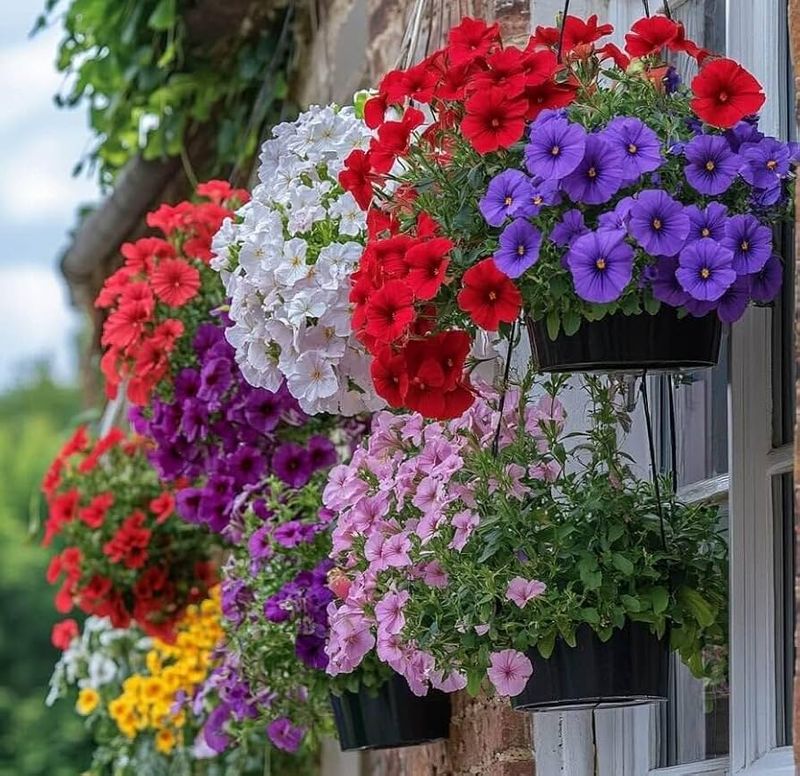
Deep violet blooms tumbling over a wall have a quiet, almost regal charm, and they happen to be a hummingbird favorite too. Purple flowers reflect light in a way these birds pick up on, so a trailing purple variety earns steady attention.
Where the red trailers shout for notice, purple ones draw birds in with a subtler pull that still works reliably. Planted along a fence line or spilling from a tall urn, they create a curtain of nectar sources at varying heights.
They tend to be fragrant in the evening, an extra bonus that makes sitting outside near them a treat for you as well. That mix of scent, color, and cascading form gives them a well-rounded appeal.
Round out your yard with a few of these and you cover the color spectrum hummingbirds respond to best. Combined with the reds and pinks above, trailing purples help turn a single planting into a genuine all-season destination.
Mix several of these varieties together and your yard can stay busy with visitors from the first warm days until fall cools things down.