
Your Hydrangeas Look Healthy And Green But Still Refuse To Flower – Here’s The Real Reason
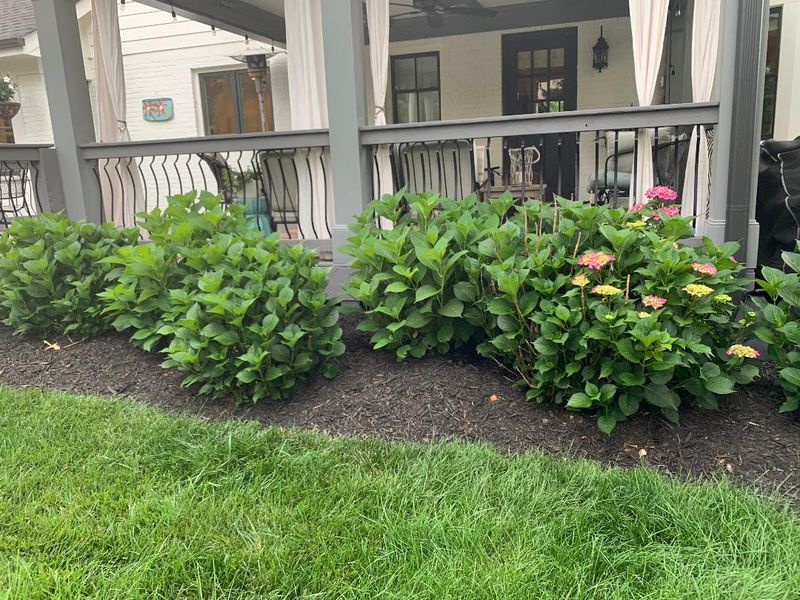
Your hydrangea is covered in lush green leaves, but the blooms just never show up, and that can be genuinely puzzling. The frustrating truth is there is no single culprit behind every flowerless hydrangea, even when the plant looks perfectly healthy from the outside. Several different problems can produce the exact same result, and figuring out which one applies to your plant is the real key to getting those flowers back.
Healthy Leaves Can Hide Lost Flower Buds
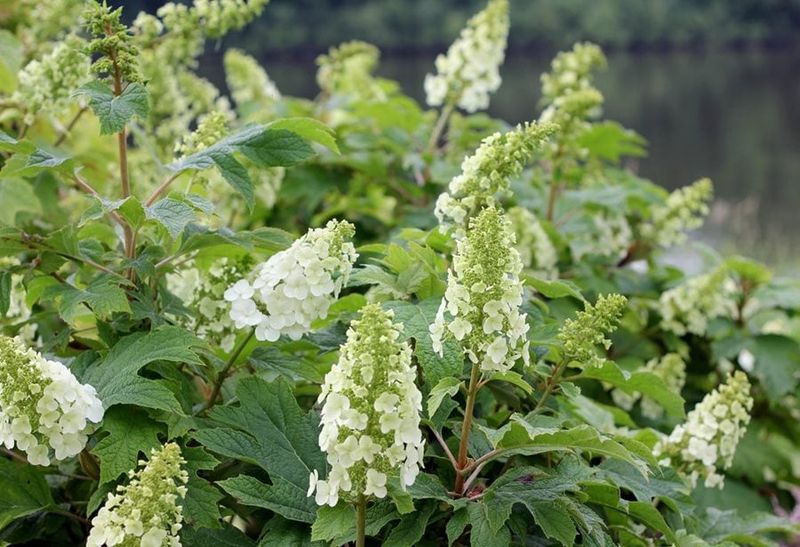
The title of this article promises one real reason your hydrangea refuses to flower, but the honest answer is more complicated than that. Multiple causes can produce a healthy-looking, flowerless plant, and no single universal diagnosis fits every situation. The best first move is to stop assuming the lush green growth in front of you tells the whole story.
Foliage and flower buds do not share the same survival requirements. For bigleaf hydrangeas (Hydrangea macrophylla) and oakleaf hydrangeas (H. quercifolia), flower buds form on old wood, meaning stems that grew during the previous season. Penn State Extension guidance on hydrangea blooming explains clearly that those buds can be removed by pruning at the wrong time or killed by winter injury, late freezes, or severe temperature swings, while the plant’s roots and lower stems stay healthy enough to push out a full flush of green leaves.
That distinction matters because it changes what you look for. A plant that dies back to the ground after a hard winter can regrow vigorously from its base yet produce zero flowers, because the flowering wood is simply gone. University of Illinois Extension notes that vegetative growth can survive well after flower buds are lost, which is exactly why green leaves do not prove a plant is ready to bloom.
Late spring freezes add another wrinkle. University of Georgia Extension on spring freezes and landscape plants points out that a freeze arriving after buds have started to swell can destroy that season’s flower display even on a plant that looks completely fine by early summer. One flowerless year after winter or freeze damage does not automatically mean the plant is diseased, starving, or dying. Species-specific diagnosis is the way to narrow down what actually happened.
First, Find Out Which Hydrangea You Own
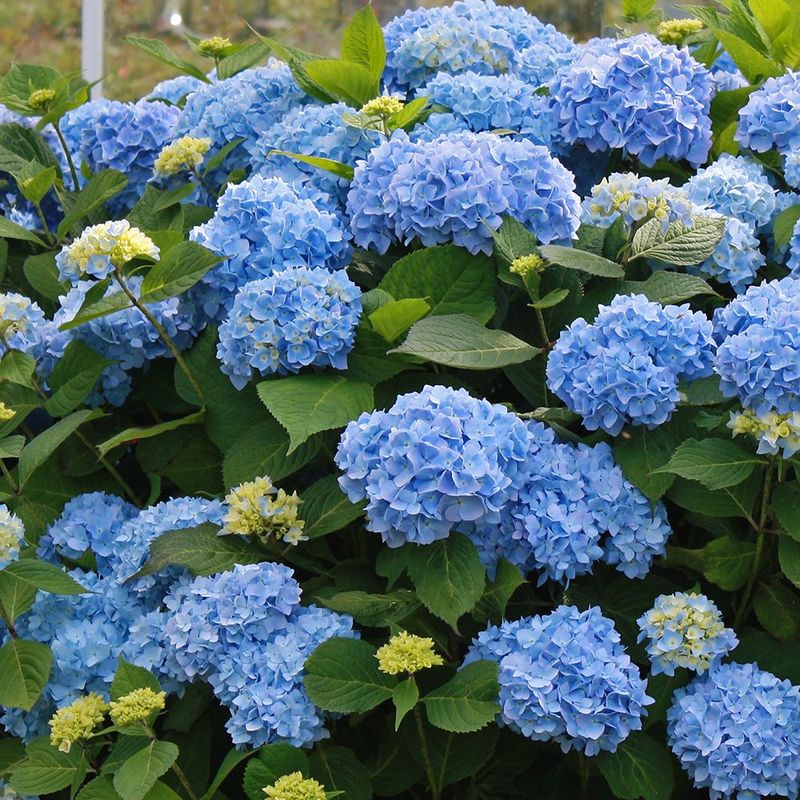
Before you change a single pruning habit or move your plant to a sunnier spot, you need to know what kind of hydrangea you are actually growing. Giving the right advice to the wrong plant can make the problem worse, not better, because what helps a panicle hydrangea can devastate a bigleaf one.
University of Minnesota Extension’s pruning guide for hydrangeas lays out the core difference clearly. Bigleaf hydrangeas (H. macrophylla), which include the familiar mophead and lacecap types, and oakleaf hydrangeas (H. quercifolia) generally bloom on old wood – those stems from the previous season. Smooth hydrangeas such as the popular ‘Annabelle’ (H. arborescens) and panicle hydrangeas such as ‘Limelight’ (H. paniculata) generally bloom on new wood produced during the current growing season. That distinction completely changes what you should do with your pruners and when.
Penn State Extension’s species-specific pruning resource reinforces that advice correct for one group is flat-out wrong for another. Cutting back a bigleaf hydrangea in fall or early spring the way you would treat an ‘Annabelle’ removes the very stems carrying next summer’s flower buds. The plant responds by growing beautifully green and producing nothing to show for it.
Cultivar labels matter too, especially if you bought a reblooming or remontant bigleaf variety. University of Georgia Extension’s identification guide for pruning timing notes that some newer bigleaf cultivars, including members of the Endless Summer series, can flower on both old and new wood. That gives them some ability to recover after losing old-wood buds, but their performance is not equally reliable in every climate or after every winter. Knowing your cultivar name, not just the species, is the most useful starting point before making any changes to how you manage the plant.
The Stems Reveal Whether Winter Took the Blooms
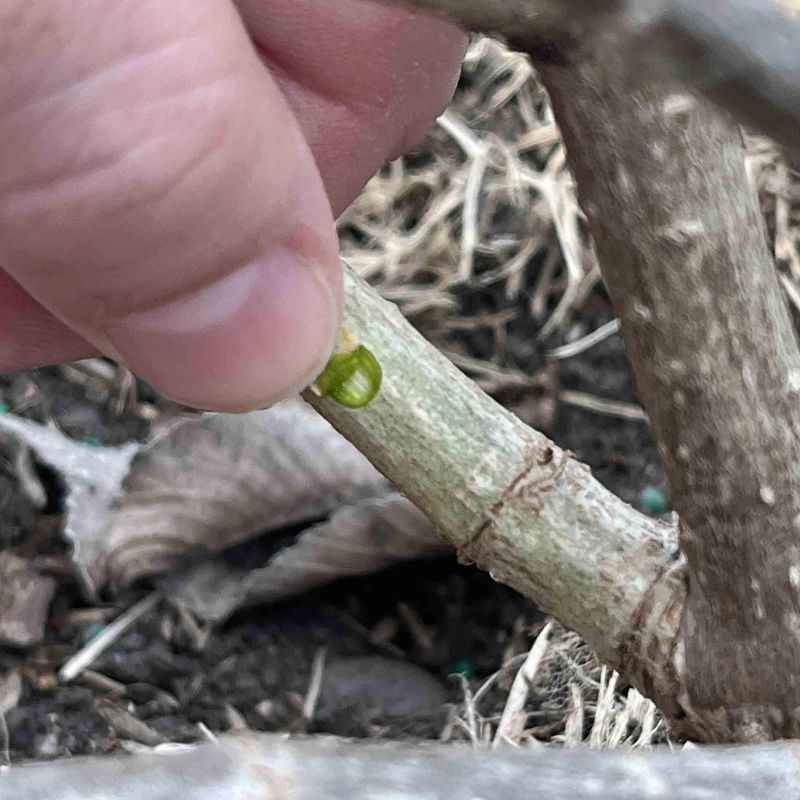
After a rough winter, the stems on your bigleaf hydrangea are the first place to look for answers. A stem that appears brown and brittle from the outside is not always dead all the way through, and cutting it down too quickly can cost you whatever flower buds survived the cold.
The scratch test is a simple way to check. Use your fingernail or a pocket knife to lightly scrape a small patch of bark near the middle of a stem. Green or white tissue underneath means that section is still alive; brown, dry tissue means it is dead. University of Minnesota Extension’s hydrangea pruning guide advises waiting until live growth is clearly visible in spring before removing stems that only look dead, because cutting into live old-wood stems removes any remaining flower buds along with them.
A plant that died back to the ground over winter can regrow vigorously from its root system and still produce no flowers that season. As Penn State Extension explains, when the top growth of a bigleaf hydrangea is lost entirely, so is the old wood that would have carried the blooms. The roots and lower crown survive, the leaves come back strong, and the plant looks fine – but without the flowering stems, there is nothing to bloom from.
Late spring freezes create a slightly different problem. A bigleaf hydrangea can come through winter with its old wood fully intact, push out buds in early spring, and then lose those buds to a single hard freeze in April or May. University of Georgia Extension’s guidance on spring freezes confirms that exposed flower buds are especially vulnerable once they begin to swell. The foliage that follows looks healthy because the freeze hit the buds specifically, not the whole plant.
Distinguishing between full winter dieback and late-freeze bud damage helps you decide whether to focus on winter protection, cultivar selection, or simply patience.
Pruning Timing Decides Which Flowers Remain
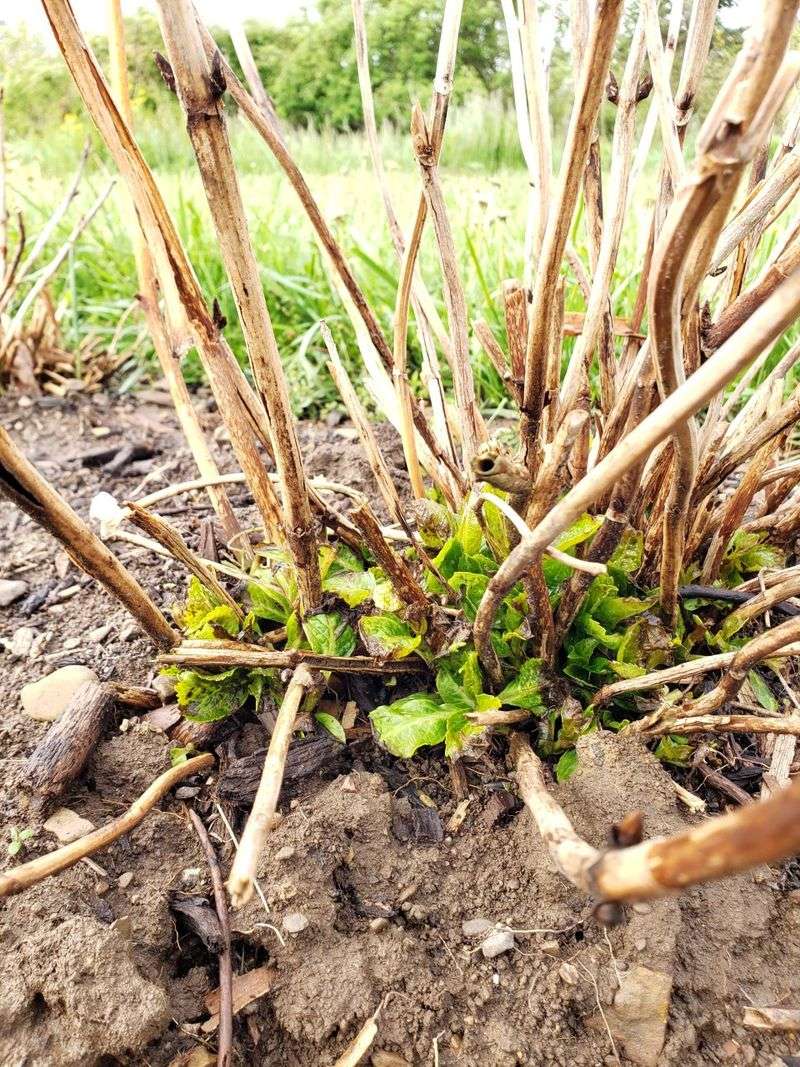
Pruning is where many gardeners accidentally cancel their own flower show, often without realizing it. The timing that works perfectly for one hydrangea type will strip the buds right off another, which is why understanding old wood versus new wood changes everything about when you reach for the pruners.
For bigleaf hydrangeas, the safest window for routine pruning is shortly after the plant finishes flowering, generally before late summer. University of Minnesota Extension’s hydrangea bloom guide recommends finishing any shaping before the plant begins setting next season’s buds on those same stems. Once fall arrives, the buds are either forming or already formed, and any pruning done in fall, winter, or early spring risks removing them. The only exception is removing wood that is clearly dead or damaged, which can be done carefully in spring once live growth makes the dead sections obvious.
Oakleaf hydrangeas follow the same old-wood logic. Missouri Botanical Garden’s pruning FAQ notes that oakleaf types should receive only light pruning after they finish blooming, because heavy dormant-season cuts can remove the following season’s flower buds just as reliably as mistimed cuts on a bigleaf variety. If your oakleaf hydrangea is in good shape, the best approach is often minimal intervention rather than a hard cutback.
Penn State Extension’s species pruning calendar draws a clear contrast with smooth and panicle types. Smooth hydrangeas such as ‘Annabelle’ and panicle hydrangeas such as ‘Limelight’ bloom on new wood produced in the current season, so late-winter or early-spring pruning before new growth begins is appropriate and will not reduce flowering. Colorado State University Extension’s flowering shrub guide supports that timing for new-wood bloomers as well. The practical takeaway: find out your hydrangea’s type before picking a pruning date, and resist the urge to tidy up old-wood types in fall just because the garden looks dormant.
Light and Nitrogen Can Favor Foliage Over Flowers
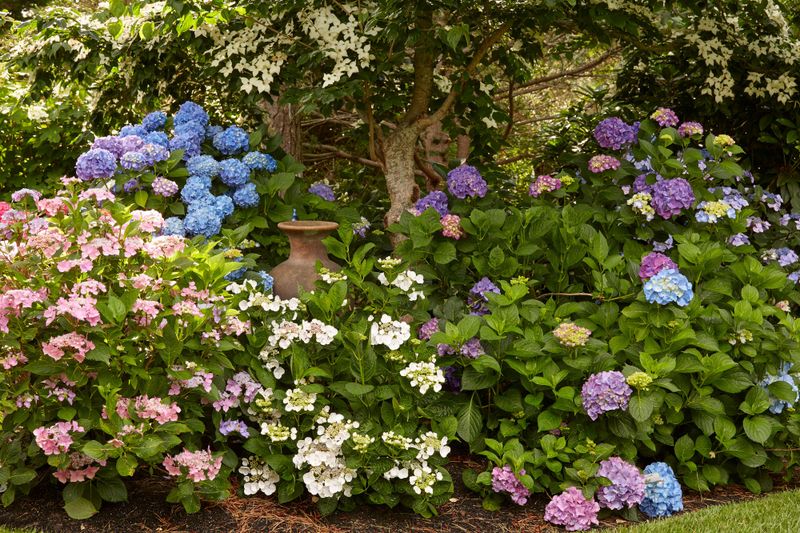
Not every flowerless hydrangea is a pruning problem. Placement and feeding habits can push a plant toward producing more leaves and fewer blooms, even when the stems are perfectly intact and the pruning schedule is right on target.
Light is the first non-pruning factor worth checking. University of Illinois Extension’s hydrangea care guide notes that too much shade can reduce flower-bud production, while too much harsh afternoon sun can stress or scorch some hydrangeas, particularly bigleaf types. Morning sun with afternoon shade is commonly recommended, but the ideal balance varies by species. A plant tucked under a dense canopy or against a north-facing wall may grow leafy and green while producing very few buds simply because it lacks enough light to trigger flowering.
Fertilizer history deserves a closer look as well. Oregon State University Extension’s hydrangea overview points out that excess nitrogen encourages lush vegetative growth at the expense of flowers. If a hydrangea has been fed repeatedly with a high-nitrogen lawn fertilizer or a general-purpose blend without any soil testing to back it up, the result can look exactly like a thriving plant that simply refuses to bloom.
University of Georgia Extension’s hydrangea publication recommends reviewing fertilizer use before adding more, and University of Minnesota Extension’s soil test interpretation guide makes the case for testing the soil before applying any fertilizer or nutrients. Guessing at a deficiency and correcting it with another product is rarely the right move and can make an already imbalanced situation worse. Neither light nor fertilizer is automatically the cause of missing flowers, but both are worth ruling out before assuming the problem lies elsewhere.
Use a Sequence Instead of Guessing at a Cure
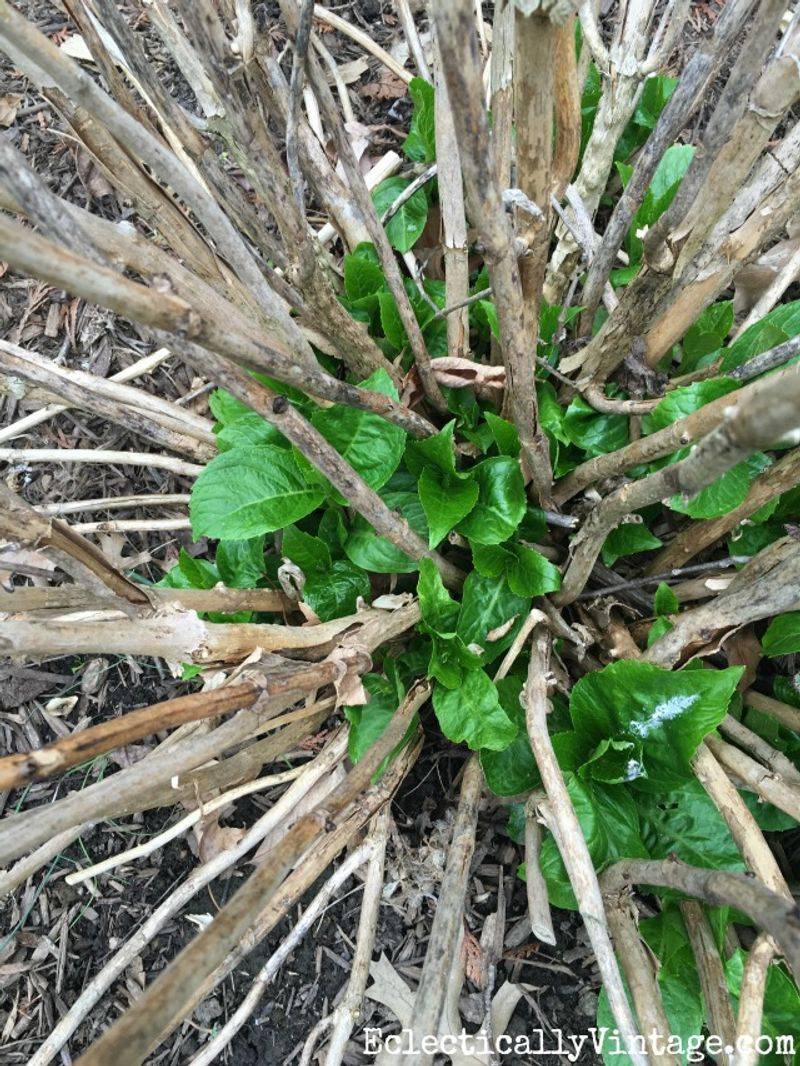
Random fixes rarely work on a flowerless hydrangea, and trying one thing at a time without a clear order can waste a full growing season. Working through a logical sequence of checks is more reliable than guessing, and it keeps you from applying a solution that does not match the actual problem.
Start with identification. Knowing whether you have a bigleaf, oakleaf, smooth, or panicle hydrangea determines every decision that follows. Once you know the type, check whether old wood survived the winter if you are growing an old-wood bloomer. The scratch test described earlier gives you a quick read on stem health.
Penn State Extension’s blooming troubleshooter and University of Minnesota Extension’s pruning guide both support moving through these checks in order rather than jumping straight to a fix.
After stem survival, review your pruning timing. If you pruned in fall or early spring, that is likely where the buds went. Then assess light, looking honestly at how many hours of direct sun the plant receives and whether afternoon shade is adequate. Follow that with a review of fertilizer history, and if there is any doubt about soil nutrition, run a soil test before adding anything.
University of Georgia Extension’s hydrangea guide supports this order as an evidence-based synthesis of extension recommendations, not an official diagnostic test.
For vulnerable bigleaf hydrangeas in colder or marginal climates, winter protection is worth including in the plan. UGA Extension’s shrub care cards describe sheltered placement and, where appropriate, cages filled with leaves or straw or burlap wrapping as ways to reduce bud loss in winter. Missouri Botanical Garden’s plant profile notes similar protective strategies for marginally hardy bigleaf types. Protection reduces risk but cannot guarantee blooms after an unusually harsh winter, a thaw-freeze cycle, or a late frost that catches exposed buds after they begin to swell.
Skip Unproven Shortcuts
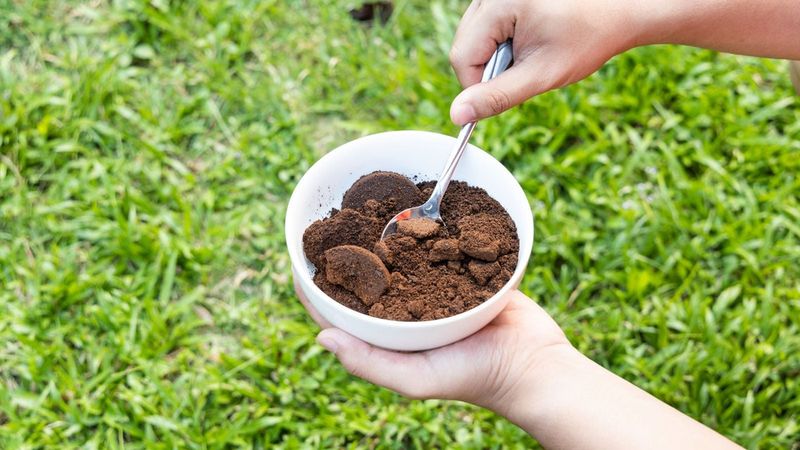
A few popular remedies get passed around in gardening groups every spring as guaranteed ways to force hydrangea blooms, but the reviewed extension sources do not establish them as dependable fixes. Applying them without a documented soil or nutrient need can do more harm than good.
Soil pH is one of the most commonly misapplied tools. Penn State Extension and Missouri Botanical Garden’s Midwest hydrangea guide are both clear that pH primarily affects flower color in susceptible bigleaf hydrangeas by changing aluminum availability. Acidic soil tends to push blooms toward blue; alkaline soil shifts them toward pink. White-flowered cultivars may not change color at all.
Adjusting pH does not reliably create flower buds on a plant that is not producing them, so chasing a pH target is not a substitute for understanding why the buds are missing in the first place.
Coffee grounds, Epsom salt, and phosphorus fertilizer are sometimes promoted as bloom boosters. None of the authoritative extension sources reviewed here establish them as reliable routine treatments for flowerless hydrangeas. UGA Extension’s hydrangea publication and Oregon State University Extension both caution against applying fertilizer without knowing what the soil actually needs, and University of Minnesota Extension’s soil testing resource reinforces that a soil test is the only reliable way to identify a real nutrient gap. Adding nitrogen-heavy fertilizer without testing can push foliage growth even further while suppressing flower production.
Winter wrapping is another remedy that can be oversold. As noted in the sequence section, protection reduces the risk of bud loss but cannot guarantee flowers. UGA Extension on spring freezes confirms that cultivar hardiness, severe cold, and late frosts can still cause bud loss even on a well-protected plant.
The Bloom Is Missing, Not Necessarily the Plant
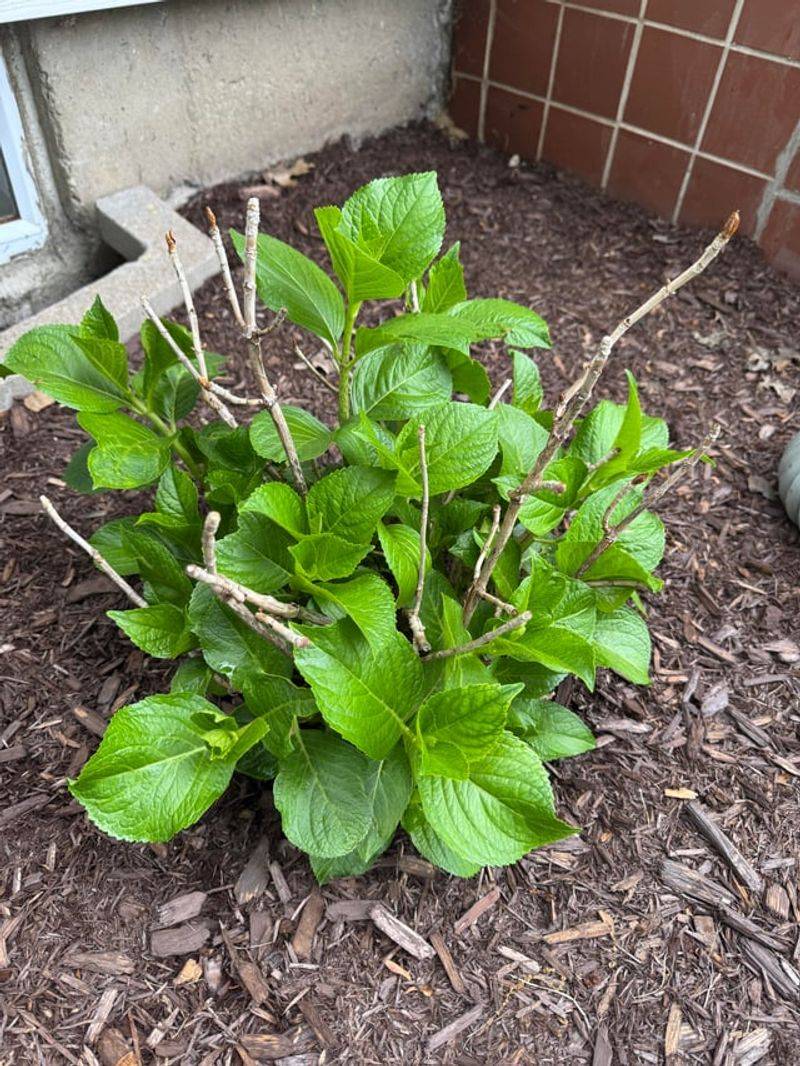
Green growth after a hard winter or a mistimed pruning session is actually encouraging news. It means the plant’s roots and crown survived, even when the flower-bearing wood did not make it through. Recovery is possible once you understand what the plant needs.
The path forward starts with knowing your hydrangea. Penn State Extension and University of Minnesota Extension both point to species and cultivar identification as the foundation for every other decision. Once you know the type, preserve the correct stems for old-wood bloomers, adjust pruning timing to match how the plant actually flowers, and change feeding or light conditions only after understanding what the soil and site genuinely need.
How quickly a plant returns to flowering depends on the cultivar, the climate, and whether it can develop new flower buds under current conditions. Some gardeners wait one season and see a full recovery; others find that a site change or a more cold-hardy cultivar is the more practical long-term answer. A flowerless hydrangea is a plant worth understanding, not giving up on.