
If Your Late-Summer Roses Keep Getting Chewed Ragged, These Fragrant Companions Send Beetles Elsewhere
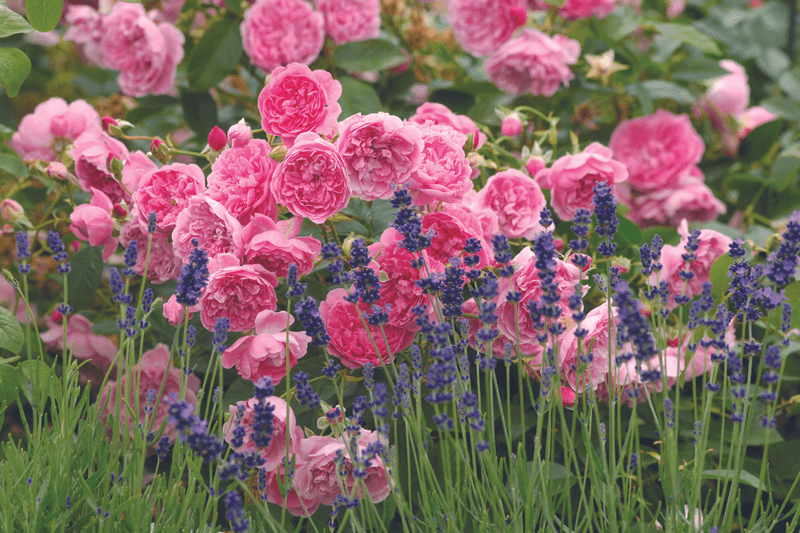
Late summer should be prime time for roses, but that is exactly when Japanese beetles show up and turn glossy petals into lacy scraps. The good news is that certain strongly scented plants can confuse or push these pests toward the edges of your yard, giving your roses a fighting chance. Tucking a few of these companions around your beds is cheap, pretty, and something you can do this weekend. Here are seven fragrant neighbors that help keep beetles from treating your roses like a buffet.
1. Garlic and Ornamental Alliums
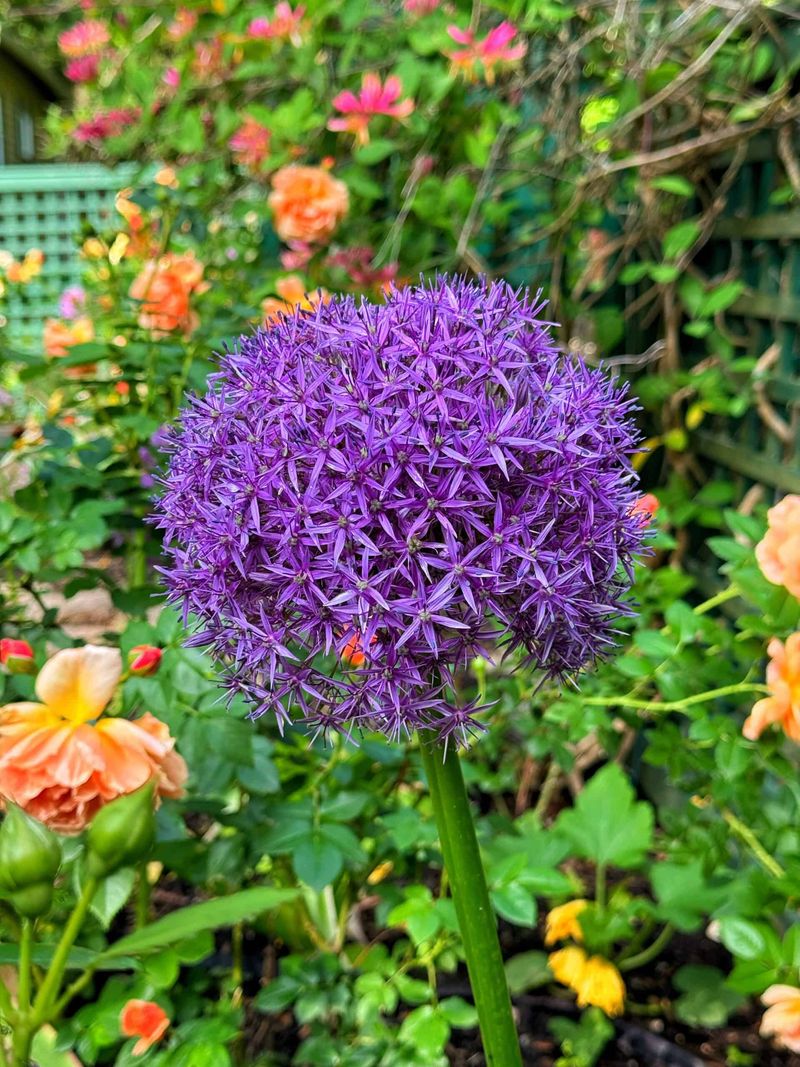
Nothing clears a room quite like garlic, and beetles seem to agree. The sulfur compounds packed into garlic bulbs and their taller ornamental cousins throw off a scent that many chewing insects find off-putting, which is why gardeners have circled rose beds with alliums for generations.
Plant a ring of garlic cloves or drumstick alliums a few inches out from your rose canes. As the leaves grow and release their oniony smell, they help mask the sweet rose scent that beetles home in on. Ornamental alliums also toss up cheerful purple globes in early summer, so you get looks and defense in one plant.
For US backyards, garlic is happiest in full sun with well-drained soil, and it asks for almost nothing once established. A quick tip: crush a stray leaf between your fingers every so often to freshen the scent barrier around your bushes.
2. Catmint
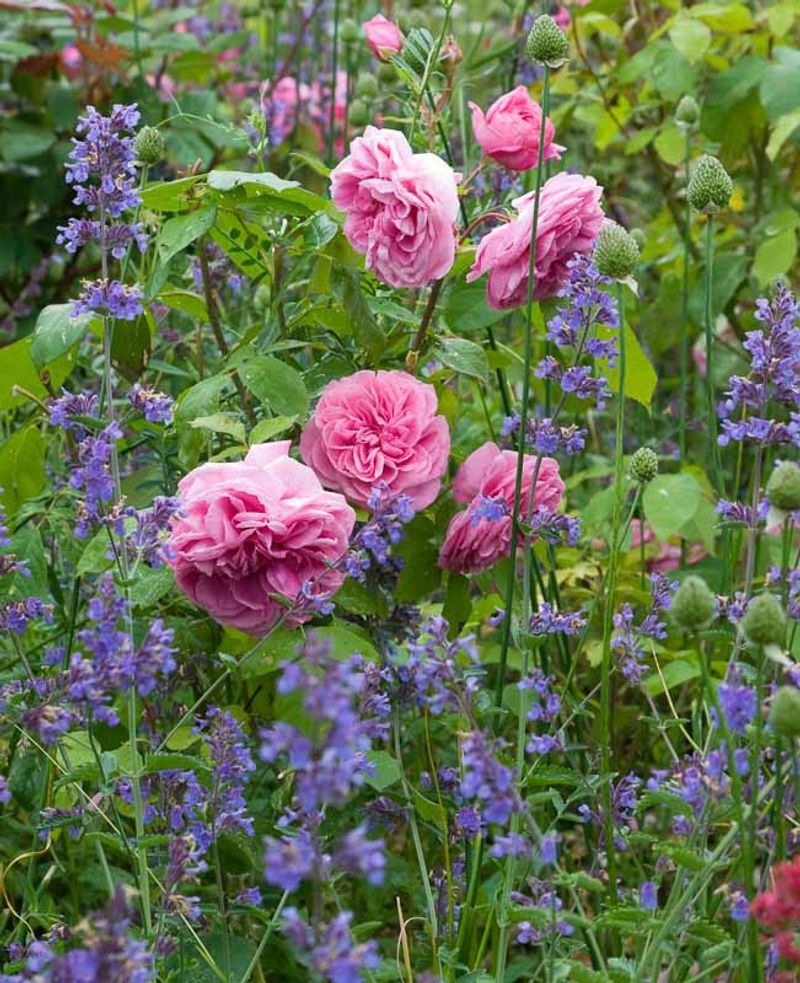
Catmint earns its keep by wrapping rose beds in a haze of soft blue-purple blooms and a minty, herbal fragrance that beetles tend to steer around. The plant that makes cats roll around in delight seems to have the opposite effect on many garden pests.
What makes it a standout companion is how forgiving it is. Catmint shrugs off heat, tolerates dry spells, and keeps flowering for weeks, spilling gently over bed edges to soften the base of leggy rose stems.
Bees and other pollinators adore the flowers, so you may notice more helpful visitors buzzing around while the beetle traffic thins out. Give it a full-sun spot and a light shear after the first flush, and it will bounce right back. Did you know catmint is a cousin of true catnip, just tidier and better behaved in a flower border?
3. Chives
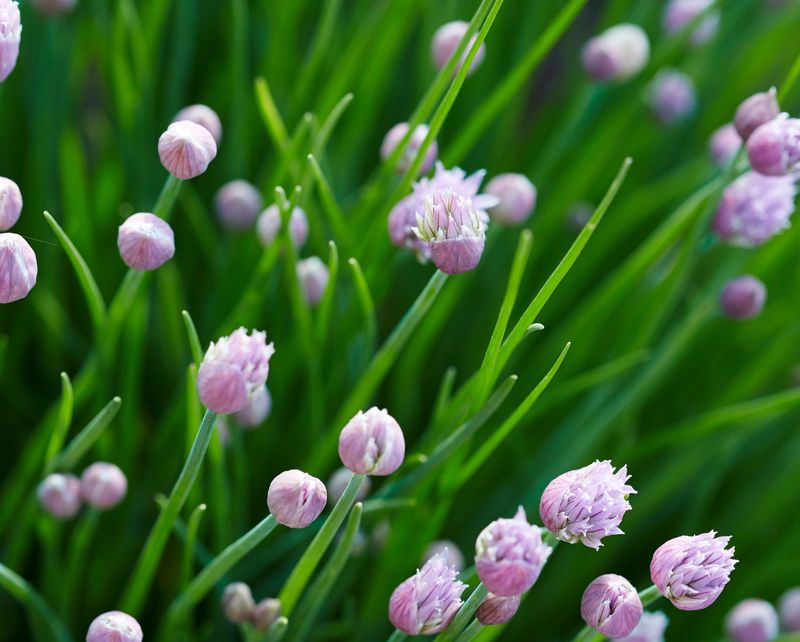
Humble chives punch well above their weight when it comes to guarding roses. Their slender green blades carry the same onion-family scent that beetles and aphids would rather avoid, and the little pom-pom flowers are honestly charming.
Set clumps of chives right along the front of a rose bed where their smell can drift up through the canes. Beyond the fragrance defense, chives may help discourage the aphids that often gang up on tender new rose growth, giving you a two-for-one benefit.
They thrive in containers too, so even patio rose growers can slip a pot nearby. Snip a few blades for the kitchen while you are out there, and the fresh cut releases another burst of that protective scent. Easygoing, edible, and pretty in bloom, chives are one of the simplest companions to try.
4. Lavender
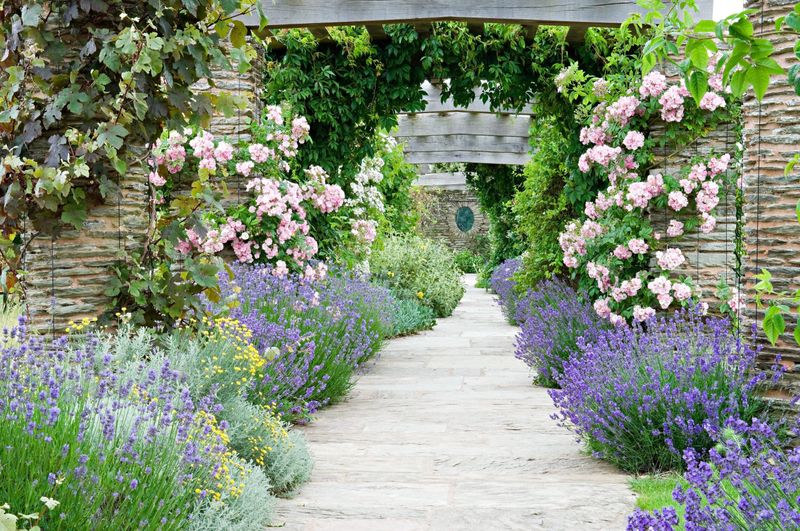
Few plants say summer garden like a row of silver-green lavender humming with bees. That famous perfume is more than pretty, because the strong oils in lavender foliage can help throw beetles off the scent trail leading to your roses.
Lavender and roses are old friends in cottage gardens, and they pair beautifully. The lavender fills the lower layer with color and fragrance while the roses reach higher, and together they create a scent curtain that pests find harder to navigate.
Choose a hardy type suited to your region, plant it in full sun with sharp drainage, and resist the urge to overwater. Once settled, lavender is drought-tough and low-fuss. Run your hand along a flowering stem as you walk by, and you will refresh both the fragrance and the invisible barrier around your bushes.
5. Marigolds
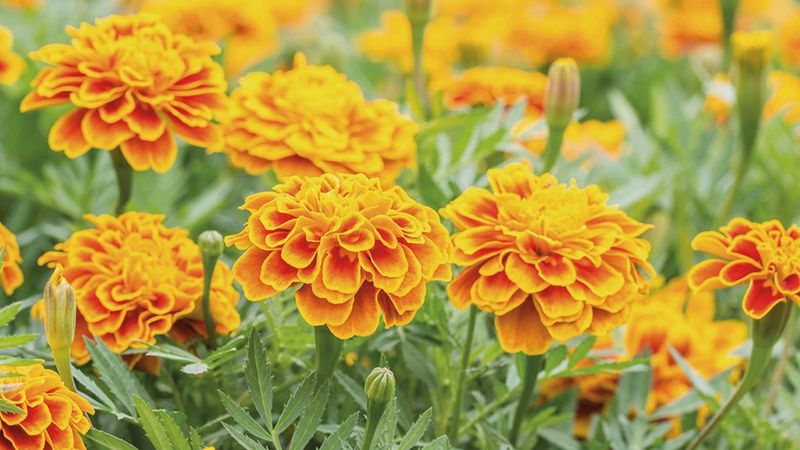
Bright, sunny, and a little bit pungent, marigolds are the classic pest-buster of American backyards for good reason. Their sharp, spicy smell can mask the aroma of nearby roses and make the area less inviting to browsing beetles.
French marigolds in particular pack a strong scent into a compact, cheerful plant. Tuck them in the gaps between rose bushes and along bed edges, and you get a nonstop parade of orange and gold blooms all through late summer.
They are famously easy from seed and quick to flower, so this is a low-cost experiment for any gardener. Deadhead spent blooms to keep new ones coming, and enjoy the fact that pollinators and beneficial insects like the marigold party too. A quirky bonus: their roots are also studied for discouraging certain soil-dwelling pests.
6. Tansy
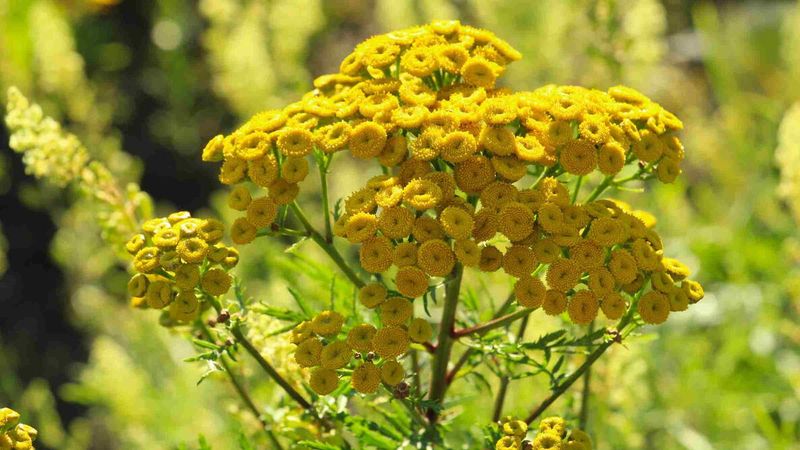
Meet the tough guy of the group. Tansy stands tall with fern-like leaves and button-yellow flowers, and it gives off a sharp, camphor-like scent that many beetles genuinely dislike, which is why old farmhouse gardens often kept a patch near prized plants.
Because it releases such a bold aroma, tansy can act like a scented fence line at the back of a rose bed. Just know that it spreads eagerly, so many gardeners grow it in a buried pot or a contained corner to keep it in check.
Site it toward the rear where its height works in your favor and its wandering roots stay corralled. A word of care: tansy can be toxic if eaten and is best kept away from pets and grazing areas. Handled with a little respect, it is one of the most powerfully fragrant deterrents you can grow.
7. Rue
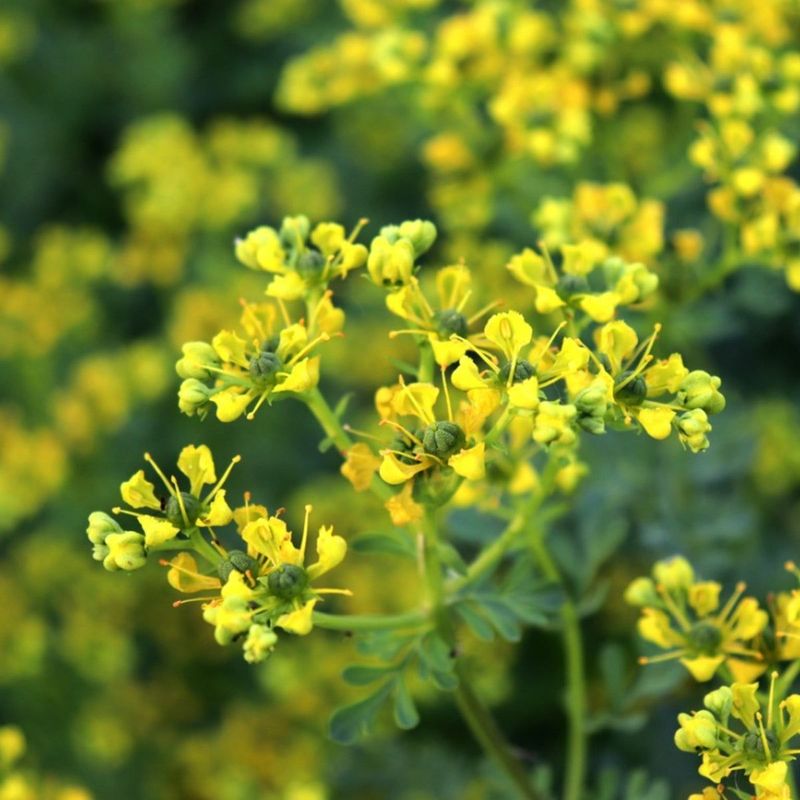
Rue is the mysterious old-world herb your grandmother might have grown without quite explaining why. Its blue-green, ferny foliage carries a bitter, musky odor that beetles and many other insects would rather skip, making it a striking and unusual rose guardian.
Set among roses, rue does double duty as a scent deterrent and a handsome foliage plant, its cool blue tones contrasting nicely with warm rose colors. It stays fairly compact and holds up well through late-summer heat in most US zones.
One important heads-up: rue can irritate skin, especially in sunlight, so wear gloves when you plant or trim it and keep it out of high-traffic touch zones. Give it a sunny, well-drained spot and it will reward you with quiet, reliable protection. For gardeners who want something a little different from the usual marigold-and-lavender crowd, rue is a conversation starter that pulls its weight.