
If Your Late-Summer Lawn Grows Fast But Thins Out, Your Mower Is Set To Quietly Weaken It
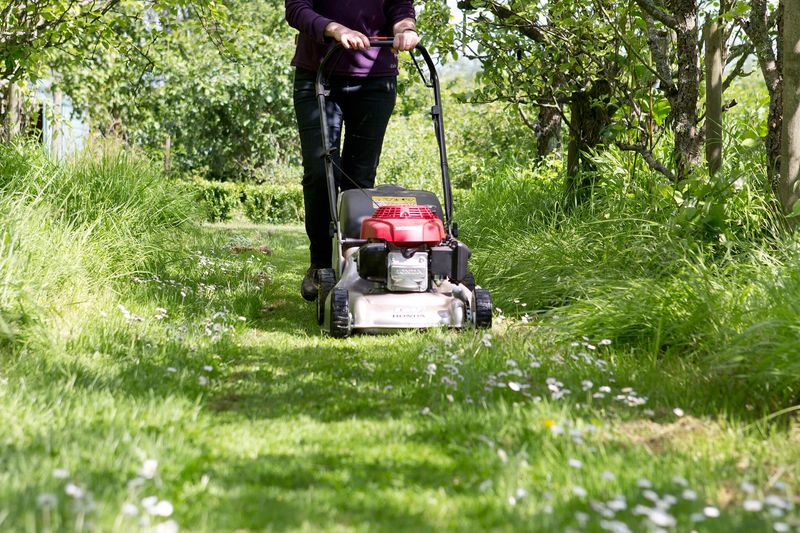
Your lawn is shooting up between mowings, but the grass keeps getting thinner and more patchy as August rolls on. That combination is frustrating, and it is tempting to point a finger straight at the mower deck. Cutting height can absolutely be a factor, but it is one piece of a bigger puzzle that includes drought, soil, shade, and the type of grass you are growing. Getting to the real cause starts with a clear-eyed look at what mowing height does and does not explain.
Fast growth and thinning do not prove the mower is at fault

Blaming the mower deck the moment a lawn thins out is an understandable reflex, but rapid top growth followed by thinning is not a pattern that points to one cause. University of Minnesota Extension mowing guidance is clear that cutting too much leaf tissue at once can leave actively growing grass with less surface area to capture sunlight and recover, especially when heat, drought, traffic, or poor soil are already limiting the plant. That is a real problem worth correcting. Still, the symptoms described in the title do not by themselves confirm that the deck is set too low.
Fast top growth is often driven by irrigation or a recent nitrogen application, not by the mower. Thinning, meanwhile, can come from shade creeping across the yard as trees mature, from a grass species that simply does not suit the site, from soil compacted by foot traffic or heavy equipment, from insects feeding on roots, from a fungal disease working through the stand, or from weed competition crowding out desirable grass. Colorado State University Extension’s turf management resource lists improper irrigation, soil conditions, pest pressure, and poor species selection alongside mowing height as common contributors to lawn decline.
Treating mower height as one factor to investigate rather than an identified cause leads to better decisions. If the deck is genuinely set too low for the grass species and conditions, raising it is a practical and low-cost adjustment. If other problems are driving the decline, raising the deck alone will not fix them. The sections that follow explain how to make a safe height adjustment and how to look beyond the mower when the adjustment is not enough.
Use the one-third rule before changing the deck
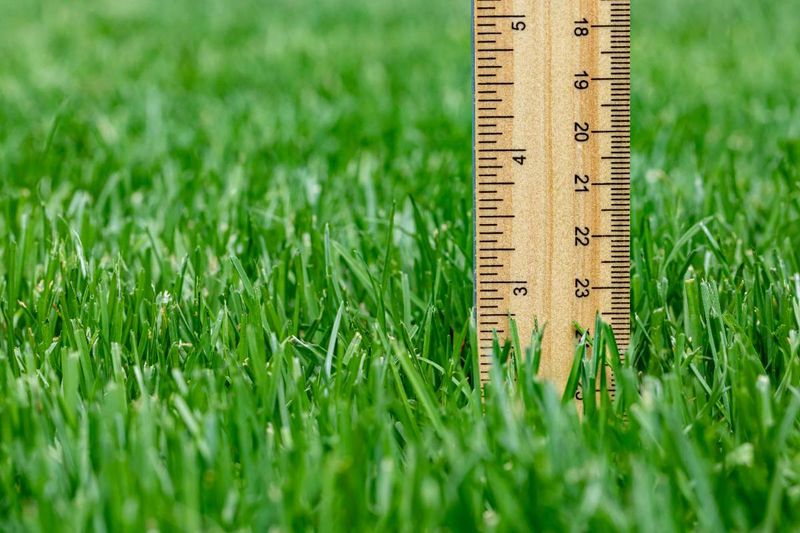
Before touching the deck adjustment lever, measure where things stand. Pull a few grass blades from different spots in the yard and lay them against a ruler. That average height tells you what the mower is currently removing and what a safe cut looks like. The one-third rule is straightforward: one mowing should remove no more than one-third of the current leaf blade length.
Minnesota Extension’s mowing guidance treats this as a foundational practice for maintaining healthy turf, and it applies regardless of the season.
For many cool-season residential lawns, such as Kentucky bluegrass, tall fescue, or perennial ryegrass, a mowing height in the range of roughly 2.5 to 3 inches is a common extension recommendation, with some northern guidance going higher. During hot or dry stretches, moving toward the upper portion of that species-appropriate range can help preserve leaf area and keep the soil surface a little cooler. A modest increase of roughly 0.5 to 1 inch is a reasonable starting point for many of these lawns when heat or dryness is a factor, though the right target depends on the grass and site conditions. Colorado State University Extension frames the goal as using the tallest height appropriate for that grass during stress periods, not simply cranking the deck as high as it will go.
If the lawn has been allowed to grow well beyond its target height, resist the urge to drop it back down in one pass. Scalping an overgrown lawn removes too much leaf tissue at once, which is exactly the kind of stress the one-third rule is designed to prevent. Raise the deck temporarily to take off the top third, then wait for the next mowing cycle and bring it down another notch. Repeating that process over several mowings gets the lawn back to the right height without the shock of a single deep cut.
Grass species determines the protective mowing range
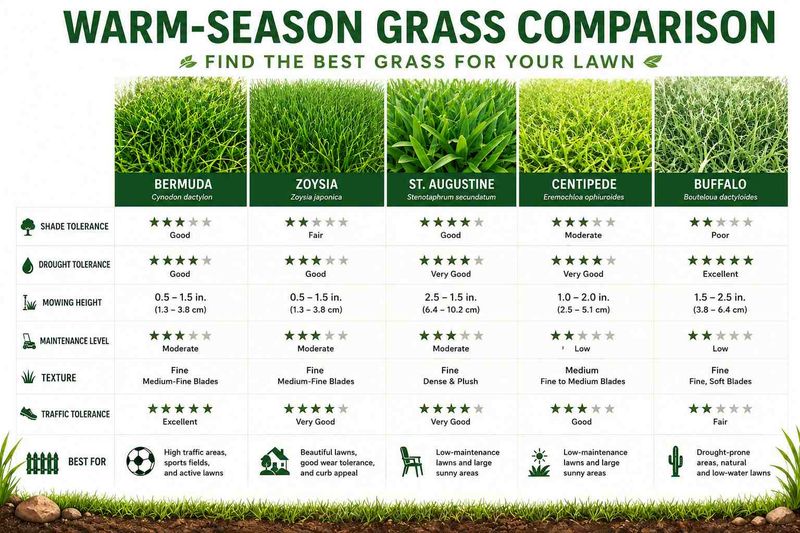
A neighbor with a bermudagrass lawn and a neighbor with tall fescue are working with completely different playbooks, even if they live on the same street. Applying a three-inch recommendation to a warm-season lawn that is normally maintained at one inch is not a harmless tweak. Knowing what grass you have is the first step before moving the deck in either direction.
Cool-season grasses such as Kentucky bluegrass, perennial ryegrass, and tall fescue are broadly maintained in a range that clusters around 2.5 to 3 inches or higher for many residential settings, with the upper end of that range being the target during heat or dryness. Warm-season grasses run lower. Bermudagrass and zoysiagrass are commonly maintained around 1 to 2 inches, while St. Augustinegrass is often kept around 2 to 3 inches. UGA Extension’s May lawn care update advises raising the mowing height by about half an inch during hot weather for warm-season grasses, which reflects the same general principle of using the upper portion of the appropriate range without abandoning species-specific limits.
UGA’s lawn species selection guide provides species-specific maintenance ranges that are useful for homeowners in the Southeast and beyond.
Cutting a tall fescue lawn to a bermudagrass height can cause serious damage. Conversely, letting a bermudagrass lawn grow to three inches or more can reduce its density and make it more prone to disease and thatch buildup. CSU Extension’s turf management guide reinforces that the correct height varies substantially by species, which is why a universal late-summer prescription does not hold up across regions. If you are unsure what grass you have, your local cooperative extension office can help you identify it from a sample or a photo, and most publish region-specific mowing height tables that take the guesswork out of the deck setting.
More leaf area helps in some conditions, but higher is not always better
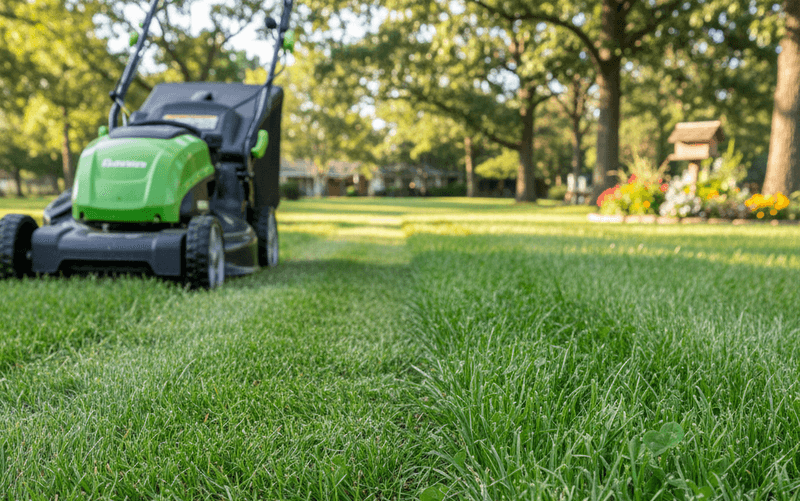
Keeping more leaf area on the plant has real benefits in many situations. A taller canopy shades the soil surface, which can slow moisture evaporation and keep the root zone a bit cooler during peak summer heat. Mowing below the suitable range for a given species can reduce the plant’s ability to photosynthesize, slow recovery after each cut, and open gaps in the canopy that weeds are quick to fill. Penn State Extension’s research on mowing and weed pressure notes that a denser, taller canopy can reduce light reaching weed seeds at the soil surface, making it harder for them to establish.
The relationship between mowing height, rooting depth, and drought response is directionally supported for several turfgrass species, but it is not a guarantee across the board. A 2002 study of creeping bentgrass found that mowing at 3 mm instead of 4 mm reduced root production and maximum rooting depth, with stronger negative effects during summer. That finding is meaningful for understanding how height affects root systems, but it should not be converted directly into a universal backyard prescription since bentgrass is a specialty turf maintained at much lower heights than typical residential lawns. A 2024 peer-reviewed study of centipedegrass found that increasing mowing height did not improve root growth or drought avoidance under its Louisiana test conditions, which shows that the height-to-roots relationship is species-dependent and not universal.
Oregon State University Extension notes that lower mowing can actually increase shoot density through lateral growth in some management systems, while higher mowing can reduce density in others. The practical takeaway is that the goal is an appropriate, seasonally sensible height within the species-recommended range, not simply the tallest setting the mower offers. Chasing maximum height regardless of species can cause its own problems, including reduced density, pest pressure, and disease.
Mow according to growth, and pause for drought-stressed cool-season turf
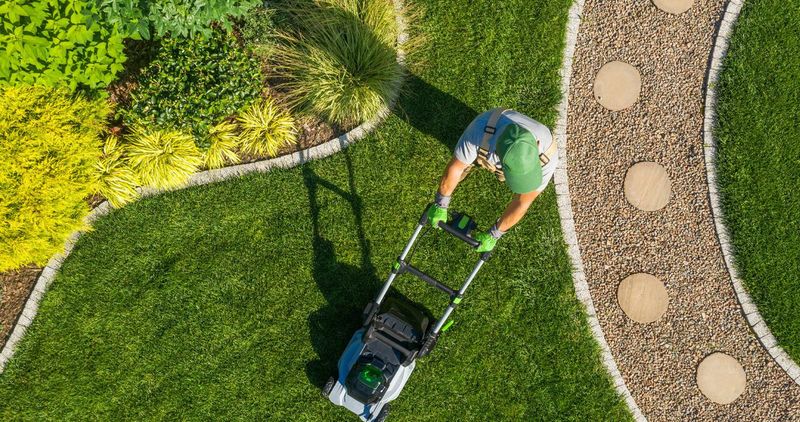
Mowing on a rigid schedule, say every Saturday regardless of what the grass is doing, is one of the most common ways homeowners accidentally stress their lawn. The one-third rule is more reliable than a fixed calendar because it responds to what the plant is actually doing. During a wet, warm spell, actively growing turf may need cutting twice a week to stay within the safe removal limit. During a hot, dry stretch when growth slows to a crawl, that same lawn may not need mowing for two weeks or more.
Colorado State University Extension frames growth-based mowing as a core practice for avoiding unnecessary stress.
Cool-season grasses deserve special attention here. When Kentucky bluegrass, fescue, or ryegrass enters drought-induced dormancy in late summer, the plant is conserving energy and resources. Running a mower over it adds physical damage on top of existing stress. University of Minnesota Extension’s drought lawn guidance specifically advises minimizing mower traffic on drought-stressed lawns and postponing mowing for roughly 7 to 10 days when growth is very slow.
The right move is to wait until moisture returns and active growth resumes before running the mower again. Warm-season grasses are a different story: bermudagrass, zoysiagrass, and St. Augustinegrass typically grow actively during hot weather, so pausing mowing is generally not appropriate for them. Those lawns need decisions based on species-specific guidance and current growth conditions.
Sharp blades matter more than most homeowners realize. Minnesota Extension explains that dull blades tear and shred leaf tips rather than cutting them cleanly, which creates ragged edges that turn tan or brown and make the lawn look worse while also increasing the plant’s vulnerability to disease during heat stress. Sharpening or replacing the blade once or twice per season is a low-effort step that pays off in cleaner cuts and a healthier appearance. Finally, clippings from properly timed mowings can stay on the lawn.
They break down and return nutrients to the soil. The exception is thick clumps left behind after a delayed mowing session, which should be dispersed or removed so they do not smother the grass beneath them or wash into storm drains.
Diagnose the whole site before blaming the deck
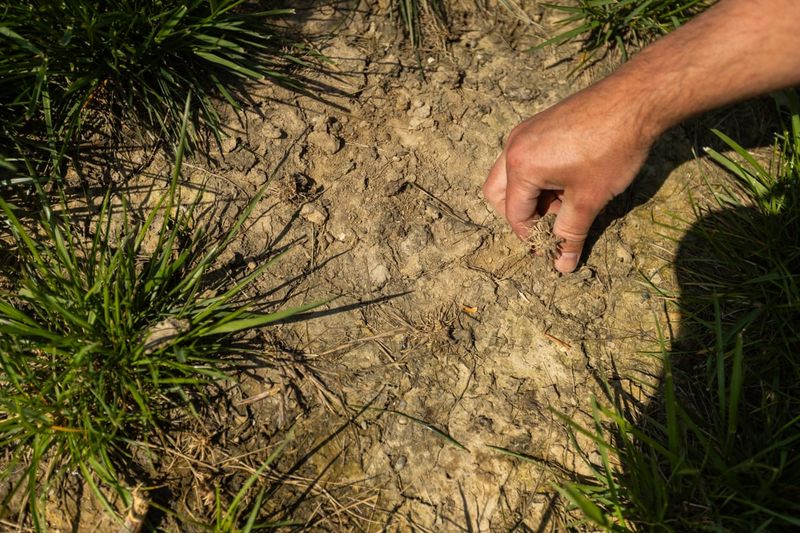
Raising the mower deck is a preventive strategy, not an emergency rescue. Penn State Extension notes that mowing height should be increased before heat stress causes the plant to stop growing. Once turf has gone dormant or stopped growing entirely, changing the deck setting does not restart growth, and running the mower over stressed turf can cause additional injury. That timing point matters because many homeowners raise the deck after the lawn has already declined, then wonder why it did not help.
A thorough site inspection often reveals causes that have nothing to do with the mower. Shade from a tree that has grown larger over the years can thin a lawn that thrived in full sun a decade ago. Soil compaction from regular foot traffic, a parked vehicle, or heavy clay can restrict root development regardless of how high the deck is set. Grub damage from white grubs or other soil insects can destroy root systems from below while the top of the lawn still looks acceptable for a few weeks.
Fungal diseases such as brown patch or dollar spot create thinning patterns that mowing height cannot fix. CSU Extension’s turf guide identifies all of these as potential contributors to lawn decline alongside mowing practices.
Understanding dormancy is also part of the diagnosis. Cool-season grasses can go tan and dormant during prolonged summer heat or drought as a survival mechanism, then green up again in fall. That is normal and reversible. Warm-season grasses, by contrast, are in their active growing season during summer heat, so browning or thinning in a bermudagrass or St. Augustine lawn during July or August signals an actual problem rather than dormancy.
Minnesota Extension’s drought lawn resource distinguishes between normal cool-season dormancy and active decline, which helps homeowners avoid overreacting with water or treatments when the grass simply needs time. Walk the yard, look for patterns, check for insects, test the soil if thinning is persistent, and match what you find to a likely cause before making any single adjustment the centerpiece of your response.
Make a species-specific late-summer adjustment
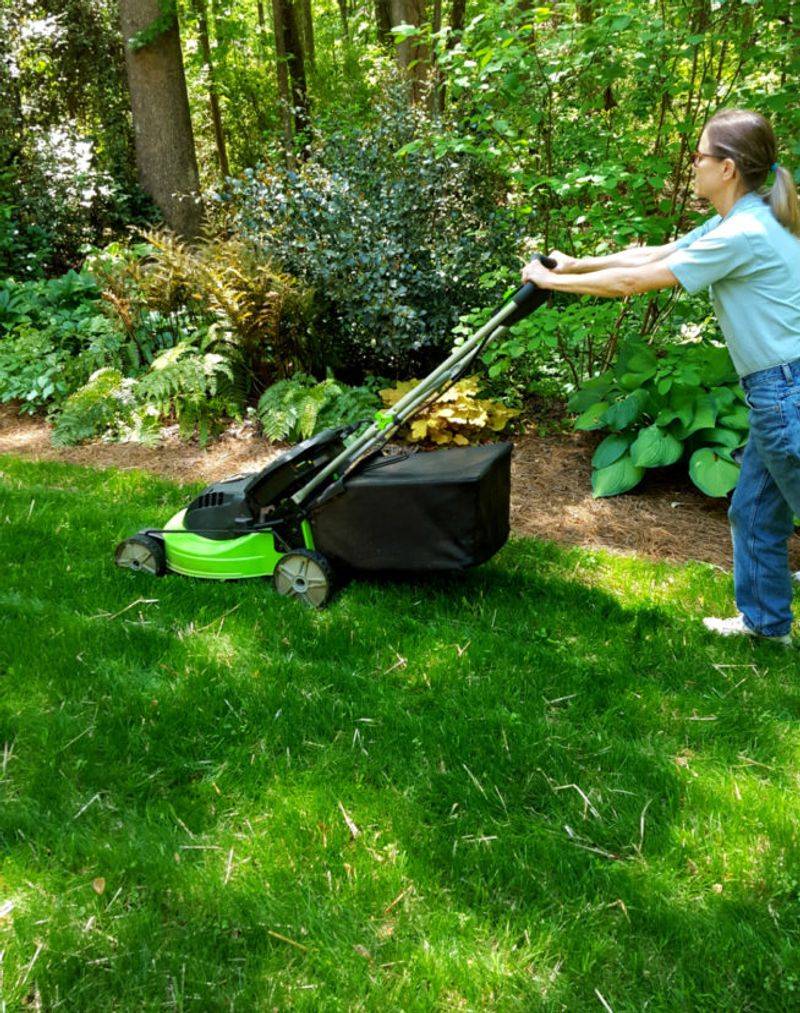
Putting it all together comes down to a short sequence of decisions. First, identify the grass growing in your yard. Your local cooperative extension office can confirm the species if you are unsure, and most publish mowing height tables for common regional grasses. Once you know the species, find its recommended mowing range and move toward the upper portion of that range during active late-summer heat or dryness, not the absolute maximum the mower will allow, but the higher end of what is right for that grass.
Apply the one-third rule every time you mow. If the lawn got away from you during a rainy stretch and is now taller than ideal, bring it down gradually over several mowings rather than cutting it all at once. Use a sharp blade, and let clippings fall back into the lawn unless they are forming thick clumps. If your cool-season grass has gone dormant under drought stress, hold off on mowing and minimize foot traffic until moisture returns and the grass starts growing again.
Minnesota Extension’s mowing practices guide, CSU Extension’s turf management resource, and Minnesota Extension’s drought lawn guidance all support this approach for cool-season turf. Warm-season grasses need separate, species-specific decisions based on current growth conditions.
If thinning continues after you have made a careful height adjustment, look at the rest of the site. Shade, compaction, pests, disease, nutrients, and species suitability are all worth investigating. The deck is a meaningful management control, but it works best as part of a broader plan that fits the grass, the soil, and the season. A well-set mower on a well-diagnosed lawn is the combination that actually delivers results.