
If Your Spider Plant Stays Full And Green But Never Sends Out A Single Baby Pup, Too-Rich Soil And Low Light Are Holding It Back
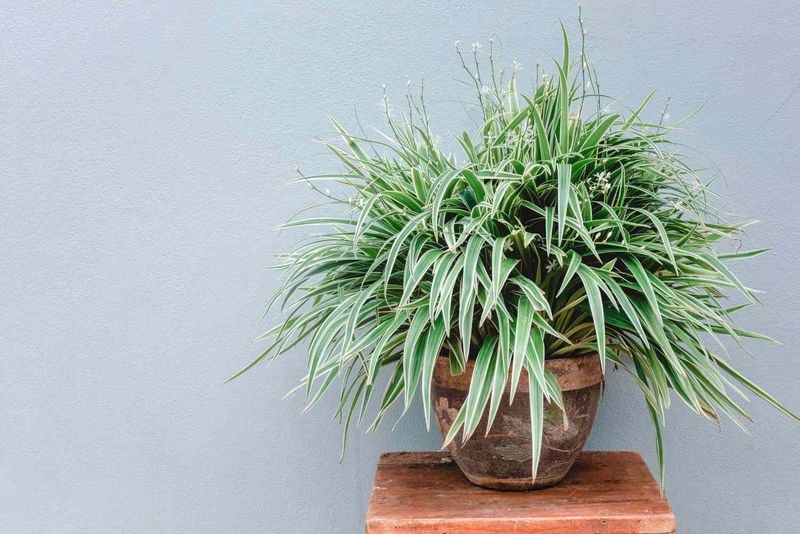
You water it, you admire it, and your spider plant rewards you with a thick, arching mound of striped leaves that looks genuinely healthy. But month after month, not a single runner appears, and no tiny plantlet dangles from the ends of those long stems. That gap between a thriving-looking plant and zero babies is one of the most common frustrations houseplant keepers run into, and the reasons behind it are more specific than simple neglect. Understanding what actually triggers those little offshoots can save you from making changes that look helpful on the surface but quietly work against the plant.
What counts as a spider plant pup?
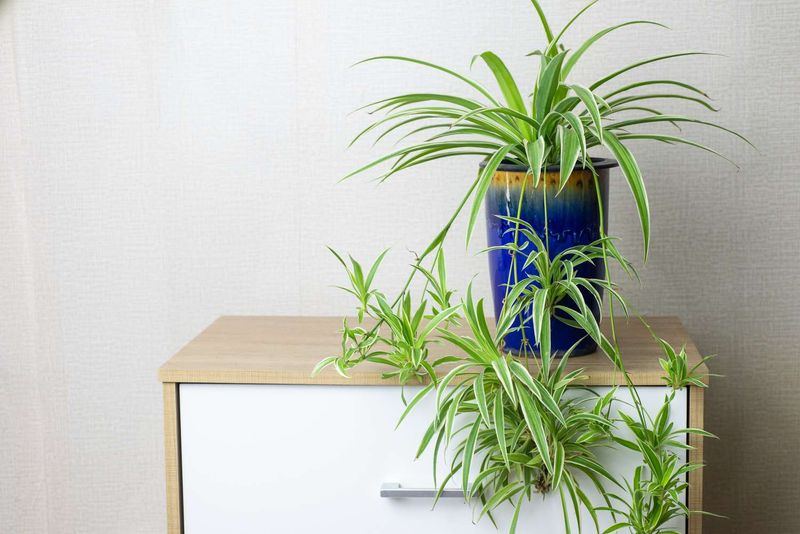
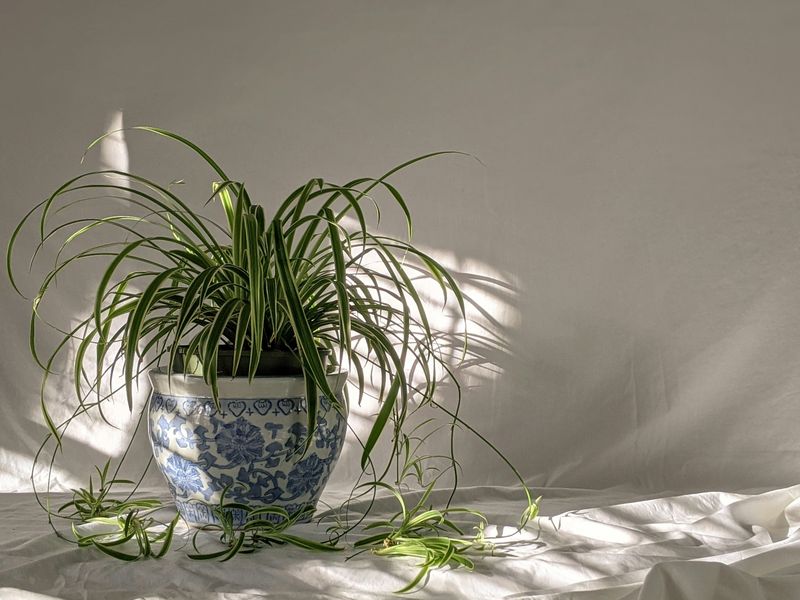
Before troubleshooting an absent runner, it helps to know exactly what you are waiting for. Spider plant plantlets, sometimes called pups or babies, are not ordinary new leaves or side shoots pushing up from the soil. Colorado State University Extension explains that plantlets form on long, arching stems called stolons, and those stolons typically appear only after the plant has produced its small, inconspicuous white flowers.
The flowers themselves are easy to miss. They are tiny and white, and many growers never notice them before the stolon continues growing and a miniature plantlet develops at its tip. University of Illinois Extension notes that these specialized structures are distinct from the regular foliage growth at the crown of the plant, which is why a full, leafy spider plant can look completely robust while producing no runners at all.
A young plant that has not yet reached reproductive maturity is one of the most overlooked explanations for a pup-free plant. University of Wisconsin Extension guidance describes plantlets as following flowering on mature plants, so a recently purchased or recently propagated specimen may simply be in a vegetative stage that is entirely normal for its age.
Knowing this distinction matters because it changes the diagnosis. A plant that has never flowered may not yet be ready to produce stolons regardless of soil quality or light placement. Rushing to change fertilizer, repot, or move the plant before confirming that it is actually mature enough to reproduce can introduce stress without addressing the real cause of the wait.
Short days matter more than a simple low-light diagnosis
The most common piece of advice floating around houseplant forums is to move a pup-free spider plant into brighter light, and while that is not harmful on its own, it misses the more specific trigger that extension researchers point to. Light intensity and day length are two separate variables, and the one most closely linked to stolon and plantlet formation is photoperiod, not brightness.
NC State Extension reports that shorter days with long, uninterrupted nights, roughly fewer than 12 hours of light per day sustained for at least three weeks, are associated with flowering, stolon formation, and plantlet production in common spider plant. A plant can receive perfectly bright light during a short day and still respond to the reduced photoperiod, while a plant sitting under dim light during a 16-hour day may receive a weaker reproductive signal regardless of how comfortable it looks.
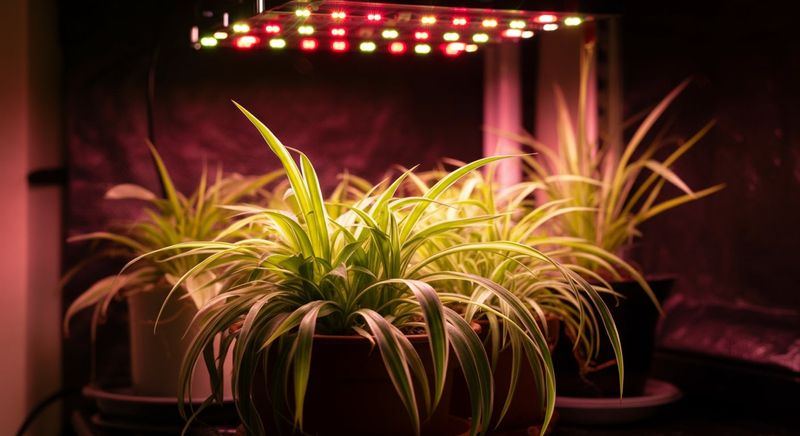
Evening lamps and overhead room lighting are often the overlooked culprit here. University of Maine Cooperative Extension notes that artificial lighting extending into the night can effectively lengthen the day from the plant’s perspective, interrupting the dark period that appears to support flowering and runner formation. A living room that stays lit until midnight may be giving your spider plant a perpetual midsummer signal even in November.
A 1978 floriculture study published in the Journal of the American Society for Horticultural Science found that photoperiod responses differed between variegated and all-green material, which is a reminder that not every cultivar responds to the same threshold in the same way. The benchmarks reported in extension literature, whether 12 hours or the 8-hour short day described by Kansas State Research and Extension, are useful orientation points rather than a formula that guarantees a runner from every plant in every home.
The practical takeaway is to think about where your plant spends its evenings as much as where it spends its days. A room that gets bright morning light but stays artificially lit until late at night may be working against the photoperiod cue your plant needs.
Choose bright indirect light without extending the day
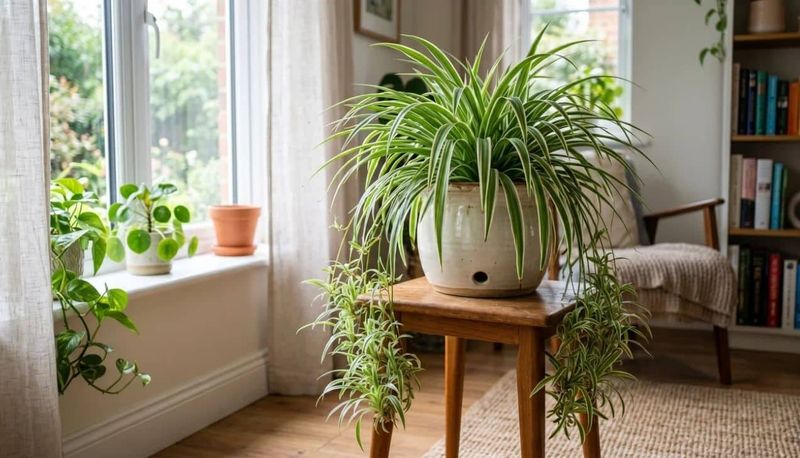
Translating the photoperiod science into a practical placement decision is simpler than it sounds. Bright, indirect daylight, the kind you get a few feet from a well-lit window or directly in front of one covered by a sheer curtain, supports strong leaf growth without the scorching risk that comes with direct midday sun. The Royal Horticultural Society recommends bright but indirect light for spider plants and warns that direct sunlight can scorch the foliage.
Clemson Cooperative Extension echoes that guidance, noting that spider plants perform well in bright indirect light and tolerate lower light, but that deeper shade can reduce overall vigor. The tolerance for low light is real, but tolerating a condition and thriving in it are different things. A plant sitting in a dim corner may stay alive and even look acceptable without having the energy to push out stolons and flowers.
The second half of the placement decision is what happens after the sun goes down. Colorado State University Extension and other sources point out that suitable daytime light supports the plant’s general health, but it is the uninterrupted dark period that carries the reproductive signal. If your plant sits near a bright window during the day but shares a room with lamps, a television, or grow lights that run into the late evening, consider moving it to a space that goes dark earlier or simply turning nearby lights off a few hours sooner.
A practical check: look at both the window’s quality during the day and the room’s lighting habits at night before deciding the placement needs a dramatic overhaul. Sometimes the fix is as low-effort as relocating the plant to a bedroom that goes dark at 10 p.m. rather than a living room that stays lit past midnight.
Excess fertilizer or nitrogen may produce lush growth without plantlets
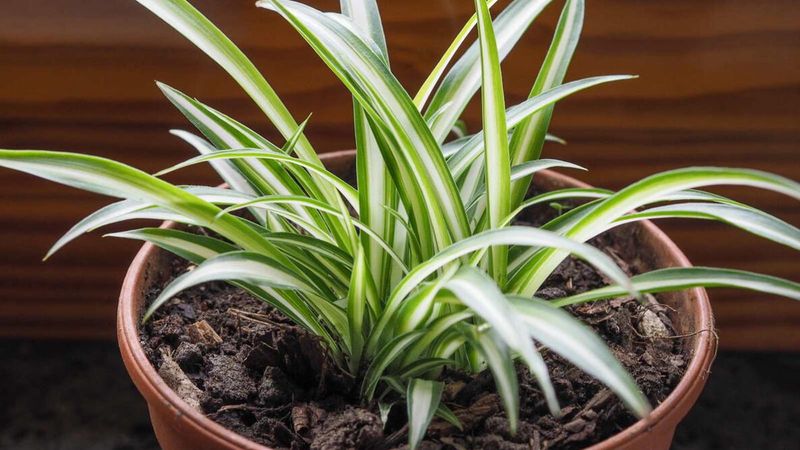
The phrase “too-rich soil” gets used loosely, but the more precise concern supported by extension sources is repeated overfertilization, particularly with high-nitrogen products, and the soluble-salt accumulation that can follow. A quality commercial potting mix that contains a starter charge of fertilizer is not the same thing as a plant that has been fed on a heavy weekly schedule all year.
University of California Agriculture and Natural Resources notes that high-nitrogen feeding can produce a lush mother plant that channels its energy into leaf production rather than plantlets. NC State Extension specifically warns that overfertilization decreases plantlet formation. Neither source frames this as a universal mechanism that applies to every plant in every situation, but the pattern is credible enough to take seriously if you have been feeding your plant frequently.
The practical response is not to switch to a high-phosphorus product or add extra fertilizer of any kind in hopes of forcing runners. That approach is not supported by the sources reviewed here, and adding more of any nutrient to a plant that may already be overfed is unlikely to help. University of Minnesota Extension recommends starting with a balanced fertilizer at half strength for general houseplant feeding and reducing fertilizer applications in low-light conditions.
Minnesota Extension’s guidance on container plant feeding reinforces that excess fertilizer can lead to weak growth or salt buildup over time, both of which create problems that are harder to reverse than simply cutting back on feeding. The safest approach during a period when you are trying to encourage stolons is to fertilize only during active growth, follow the product label rather than doubling the dose, and skip feeding altogether during the low-light months of winter when the plant’s uptake slows.
If you have been feeding your spider plant every week or every two weeks through the year, backing off to once a month or less during the growing season, and stopping entirely in winter, is a reasonable adjustment that costs nothing and removes one possible barrier to plantlet formation.
Check for salt buildup and drainage trouble
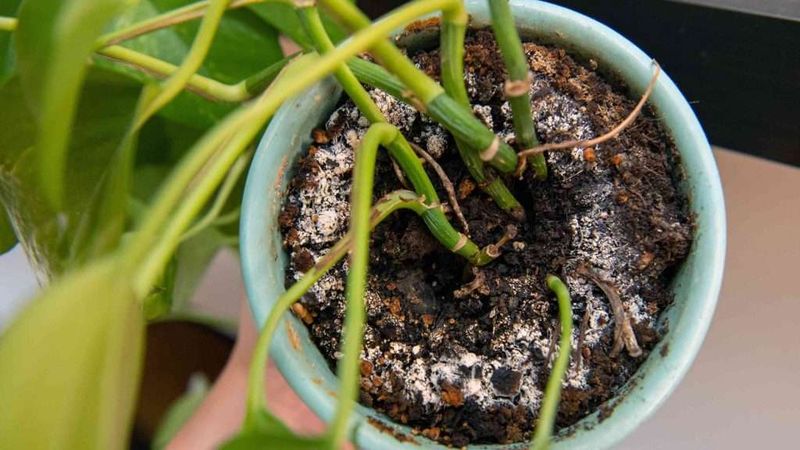
Repeated fertilizer applications leave behind soluble salts that accumulate in the potting mix over time, and the symptoms can be subtle enough that a plant still looks mostly green while its roots are under stress. Brown leaf margins that appear without any obvious cause, stunted new growth, or a plant that wilts even when the mix feels moist are all worth investigating if you have been feeding regularly. A white or yellowish crust on the surface of the potting mix or around the rim of the pot is a visible sign that salts have been building up.
Penn State Extension’s plant nutrition guidance explains that excess soluble salts can impair water uptake and damage roots even when the surrounding mix appears moist, which is why a salt-stressed plant can show wilting symptoms that look like underwatering. Penn State’s soluble salts guidance notes that high salt concentrations interfere with normal root function, and the same principle applies in container growing.
Poor drainage compounds the problem. A container without drainage holes, a saucer that regularly holds standing water, or a mix that has broken down and compacted over years can keep roots wet long enough to cause damage that does not show on the leaves right away. Checking that water flows freely through the pot and that the saucer is emptied after watering are basic steps that matter more than most growers give them credit for.
Penn State Extension’s repotting guidance advises repotting when roots are densely circling the inside of the pot, growing through drainage holes, or the mix dries out unusually fast. Those are genuine triggers for a fresh start in a well-drained soilless mix. If salt buildup is suspected and the container drains reliably, leaching the mix by watering slowly and thoroughly until water runs freely from the drainage holes can help flush accumulated salts, but that step should be conditional on good drainage rather than applied to every plant as a routine measure.
University of Minnesota Extension recommends keeping the potting mix moderately moist and emptying saucers so roots do not remain in standing water, which is a straightforward habit that protects root health regardless of whether salt buildup is present.
Use a measured reset instead of forcing reproduction
Once you have identified which care factors might be working against stolon formation, the most useful response is a calm, ordered adjustment rather than a stack of simultaneous changes. Piling on interventions at once makes it impossible to know what actually helped, and some popular suggestions, like deliberately keeping a plant severely root-bound or switching to a high-phosphorus fertilizer, are not backed by the strongest sources and carry their own risks.
A sensible reset looks like this: move the plant to a spot with bright indirect daytime light, confirm that the room goes dark at a reasonable evening hour without grow lights or lamps running late, stop any fertilizer applications that exceed label directions or that have been running through winter, and maintain a moderately moist mix without letting the pot sit in a saucer of standing water. University of Maine Cooperative Extension points out that protecting the dark period is a meaningful step, and that alone may be the simplest adjustment available to most growers.
Penn State Extension is clear that repotting should be driven by genuine root or drainage problems, not by a hope that a new container will trigger babies. Roots that are densely circling the pot, emerging from drainage holes, or causing the mix to dry unusually fast are real reasons to repot. A healthy plant that simply has no pups yet is not a candidate for an automatic container upgrade, and an oversized pot can hold excess moisture that creates new problems.
University of Minnesota Extension reinforces that a balanced fertilizer at reduced strength, used only during active growth and paused in low-light seasons, is the safer approach to feeding. The Royal Horticultural Society’s growing guide also recommends keeping watering consistent and avoiding waterlogged conditions, which aligns with the broader goal of reducing root stress without overcomplicating the care routine.
The reset is not a guarantee of pups, but it removes the most commonly cited barriers and gives the plant a stable foundation to work from over the coming weeks and months.
Season, maturity, and cultivar shape the timeline
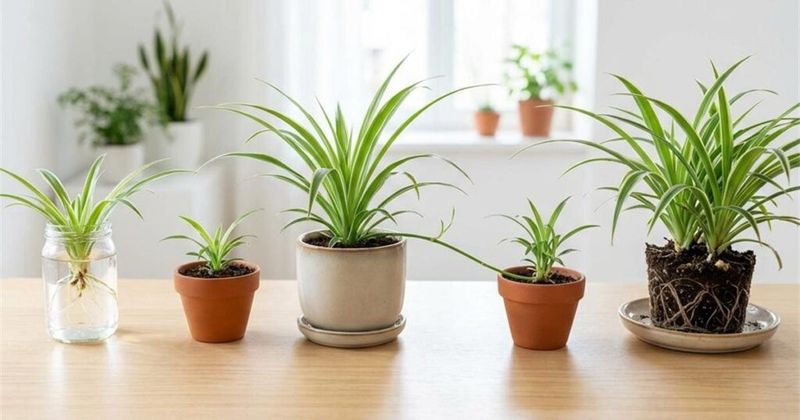
Even a spider plant receiving excellent care may not produce runners on your preferred schedule, and that is not necessarily a sign that something is wrong. Plantlet production in common spider plant tends to increase during the shorter-day seasons of fall and winter, when natural daylength drops and uninterrupted nights grow longer. Clemson Cooperative Extension notes this seasonal pattern, which means a plant that showed nothing through the long days of summer may begin sending out stolons as the calendar moves into autumn without any deliberate change on your part.
NC State floriculture records confirm that photoperiod plays a consistent role in stolon and plantlet timing across research and extension observations. A young plant that was propagated recently may simply not have reached the flowering stage yet, which is a maturity question rather than a care failure. Pushing it with extra fertilizer or repotting it into a larger container will not accelerate that developmental stage.
Cultivar differences add another layer of variability. The 1978 horticultural science study found that variegated and all-green material responded differently to photoperiod conditions, which is a reminder that the benchmarks reported for one type may not map perfectly onto every plant in your collection. Colorado State University Extension describes plantlets as appearing after flowering on mature plants, reinforcing that the sequence of events takes time and cannot always be forced.
The most realistic approach is to correct any clear care problems you have identified, protect the plant’s natural dark period in the evenings, provide suitable daytime light, and then watch for stolons over the next season rather than the next week. A spider plant that is healthy, mature, and allowed to experience natural day length changes is giving itself the best available chance to send out runners when the conditions align.