
12 Alternatives To Sugar Water That Actually Draw Hummingbirds In (And 6 You Should Never Use)
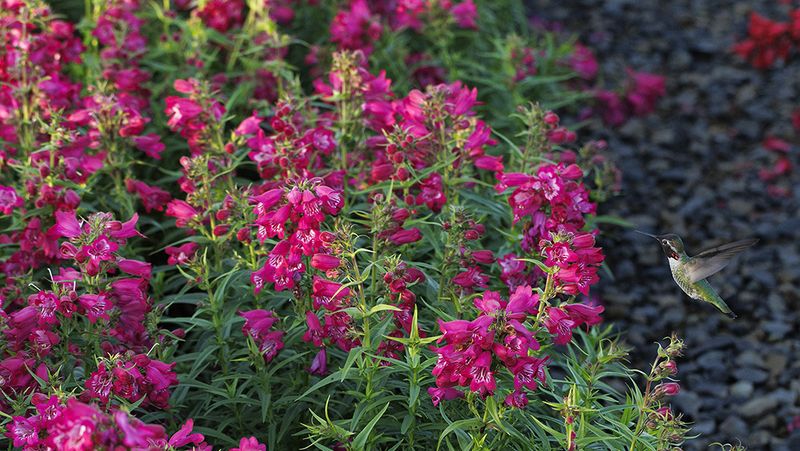
Hummingbirds bring a flash of color and a happy hum to any backyard, and you don’t need a sugar water feeder to bring them in. The truth is, a garden full of the right flowers can feed these tiny birds better than any bottle of syrup ever could.
Some plants pull hummingbirds in like magnets, while a few common feeder “recipes” can actually make these birds sick or worse. Here are twelve natural picks that really work, plus six things you should keep far away from your yard.
1. Cardinal Flower (Lobelia cardinalis)
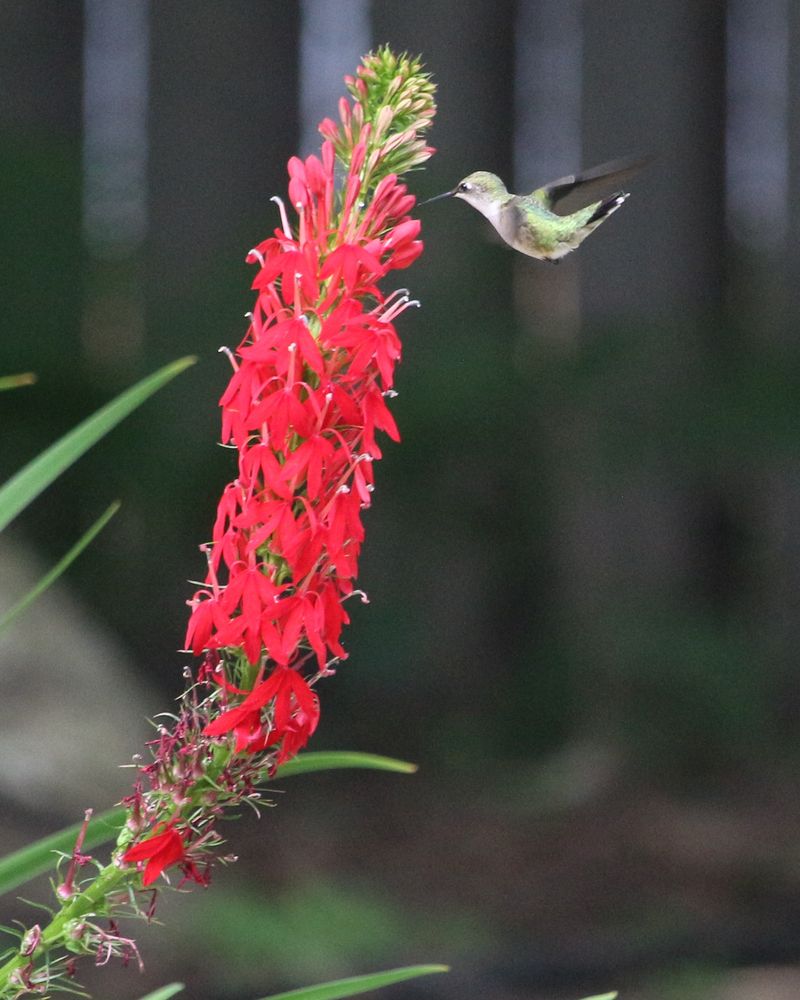
Picture a torch of fiery red rising out of a damp garden corner, and you’ve got the Cardinal Flower doing its thing. Those long, tubular blooms are practically built for a hummingbird’s slender bill, and the birds show up like clockwork from mid to late summer.
Beyond the color, this perennial earns its keep by being deer-resistant and happy to reseed itself, so one planting often turns into a growing patch year after year. It leans toward partial shade to full sun and asks for one thing above all: consistently moist soil.
If you have a soggy spot near a downspout or pond edge where other flowers sulk, this is your plant. Keep that ground from drying out and you’ll have a reliable red beacon that hummingbirds spot from across the yard.
2. Bee Balm (Monarda species)
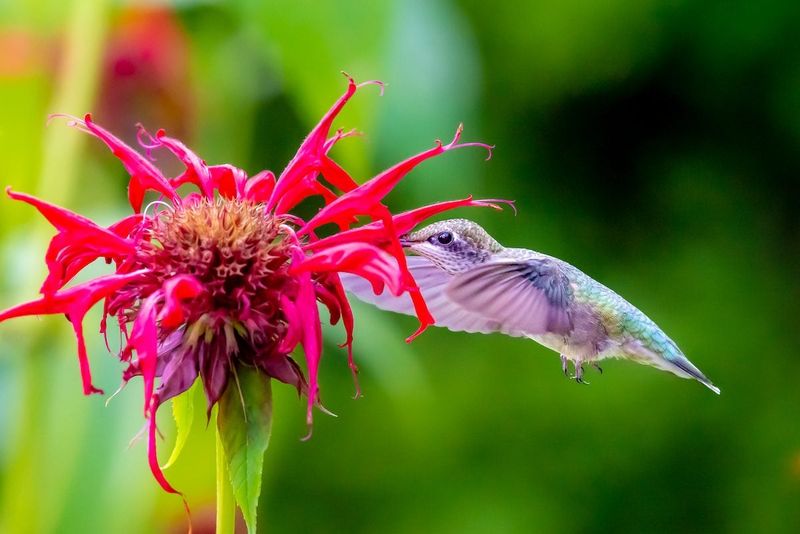
Ragged, shaggy, and impossible to ignore, Bee Balm looks like a firework frozen mid-burst. The vibrant red and pink tubular flowers open in midsummer, and hummingbirds treat them like an all-you-can-drink buffet.
Gardeners love that so many varieties exist, including newer ones bred to shrug off the powdery mildew that used to plague this plant. Give it full sun and a little breathing room for air to circulate, and it rewards you generously.
Fun bonus: the leaves smell wonderfully minty when you brush past them, since Monarda belongs to the mint family. So while the hummingbirds sip up top, you get a fragrant garden path down below.
3. Trumpet Honeysuckle (Lonicera sempervirens)
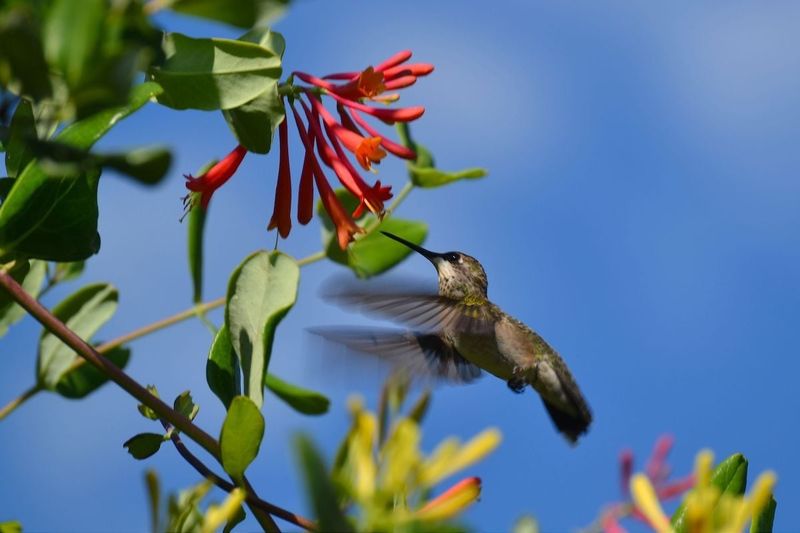
Want a food source that keeps giving instead of flashing for a couple weeks and quitting? Trumpet Honeysuckle is the marathon runner here, pushing out red-orange tubular flowers across much of the growing season.
As a native vine, it happily scrambles up a trellis, fence, or arbor, which means it feeds hummingbirds while doubling as living privacy screen. Unlike its invasive Japanese cousin, this well-behaved native won’t take over your whole yard.
The steady, drawn-out bloom time is really the selling point. A hummingbird that finds a dependable snack bar tends to stick around and defend it, so this vine can turn casual visitors into regulars.
4. Eastern Columbine (Aquilegia canadensis)
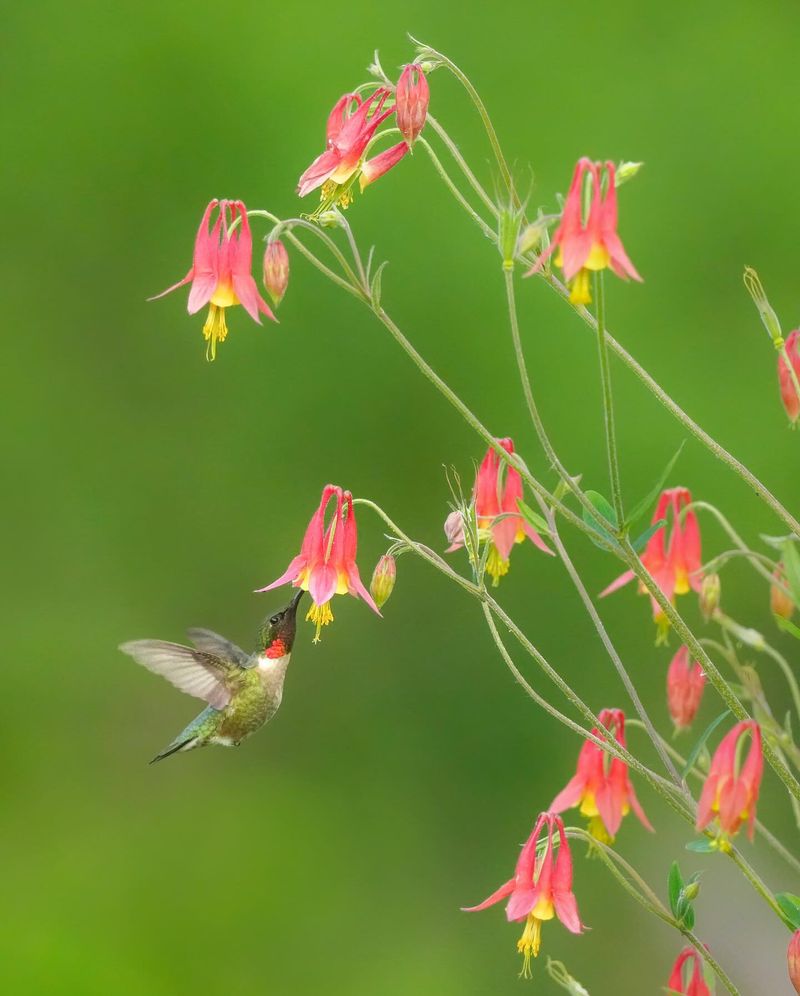
Early spring can be a hungry time for hummingbirds arriving from migration, and that’s exactly when Eastern Columbine steps up. Its nodding red-and-yellow bell-shaped flowers open when little else has, making it a lifesaver for the first birds back in the yard.
The dangling blooms look almost like tiny lanterns swaying in the breeze, and hummingbirds work them from below with easy grace. It settles nicely into dappled woodland edges and part-shade spots.
Because it flowers so early, this plant fills a gap most gardens miss entirely. Pair it with later bloomers and you extend your hummingbird welcome from the very start of the season.
5. Salvia (Salvia species)
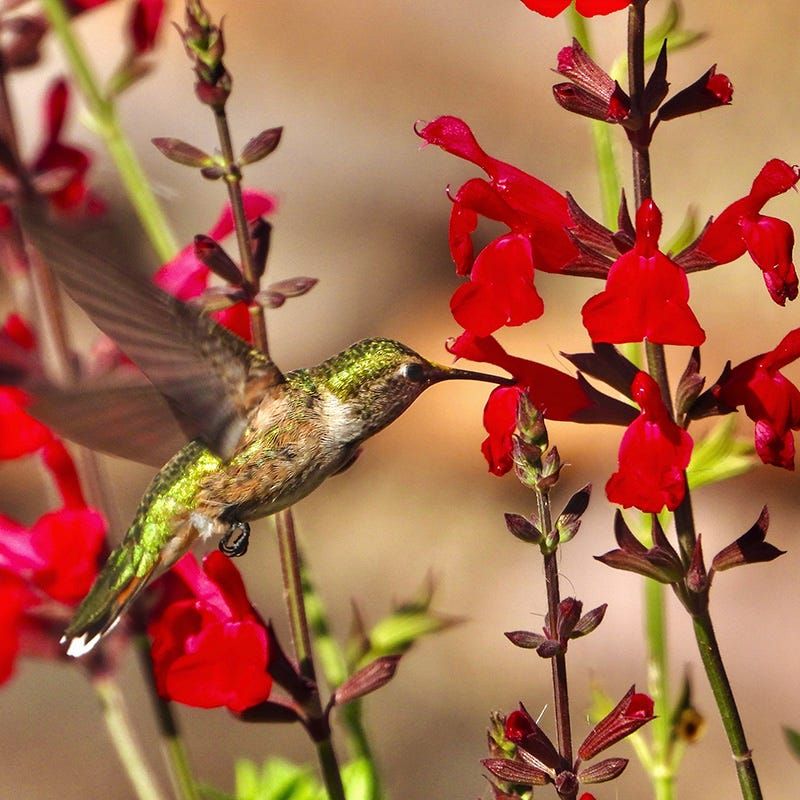
Ask longtime hummingbird gardeners for one can’t-miss plant and Salvia comes up again and again. The red varieties especially seem hardwired into a hummingbird’s brain, with slim tubular flowers packed full of nectar.
What sets Salvia apart is stamina. Many types bloom for weeks on end, and a quick deadheading often coaxes a fresh wave of flowers right back.
With so many species and colors out there, from towering perennials to tidy annuals, there’s a Salvia for nearly every sunny spot. Plant a few and you’ve built a nectar station that barely takes a break all summer.
6. Penstemon (Beardtongue)
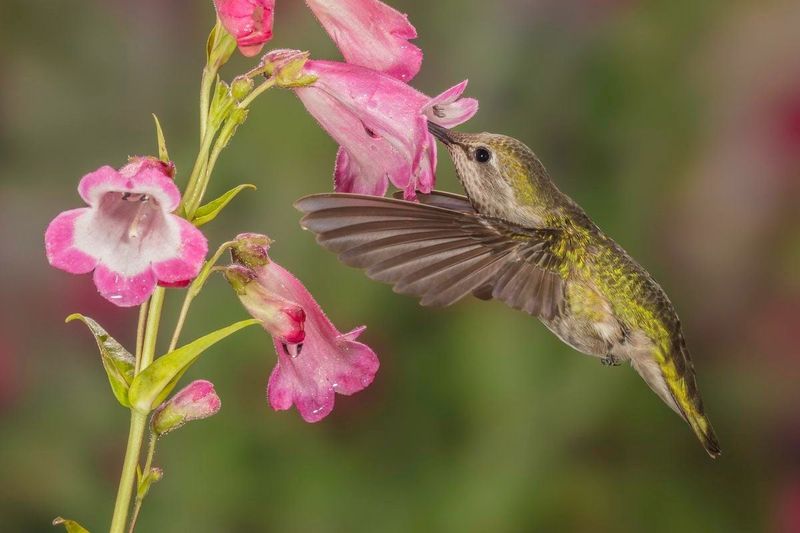
Penstemon carries a funny nickname, beardtongue, thanks to a fuzzy little stamen tucked inside each flower. Hummingbirds couldn’t care less about the name and everything about the nectar waiting in those showy tubular blooms.
The real strength of Penstemon is how adaptable it is. Many kinds tolerate lean, well-drained soil and dry spells that would sink fussier flowers, so they thrive where you might not expect much.
For gardeners in tougher, drier conditions, this plant delivers a rich nectar source without demanding constant babying. It proves you don’t need a lush, pampered bed to keep hummingbirds coming back.
7. Zinnia
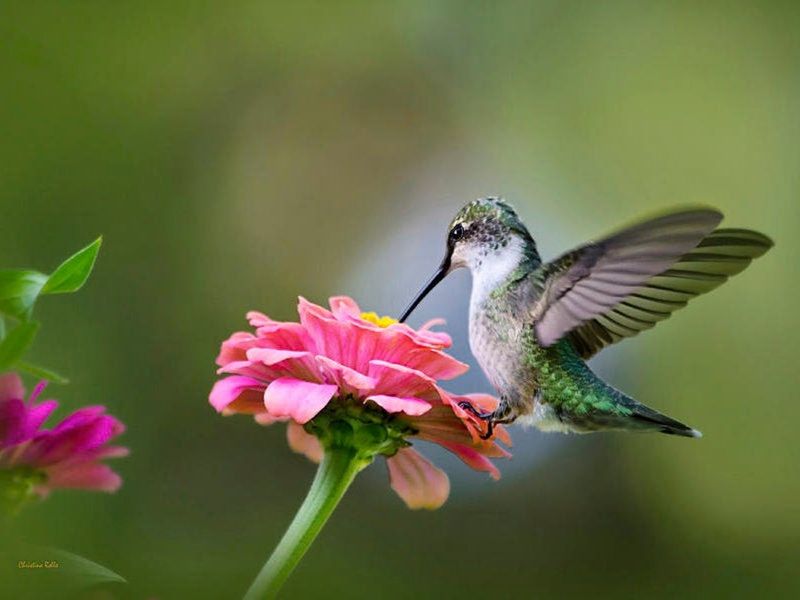
Few flowers are as forgiving for beginners as the humble Zinnia, and that’s great news for your local hummingbirds. Toss some seeds in warm spring soil and you’ll be rewarded with bright blooms from summer straight through the first frost.
Single-flowered types work best here, since their open centers make the nectar easy to reach. The more crowded, double-petaled varieties look pretty but hide the good stuff.
Keep snipping the spent blooms and the plant keeps cranking out new ones, giving you a nearly nonstop supply. It’s about the cheapest, easiest way to add color and hummingbird fuel in a single season.
8. Petunia
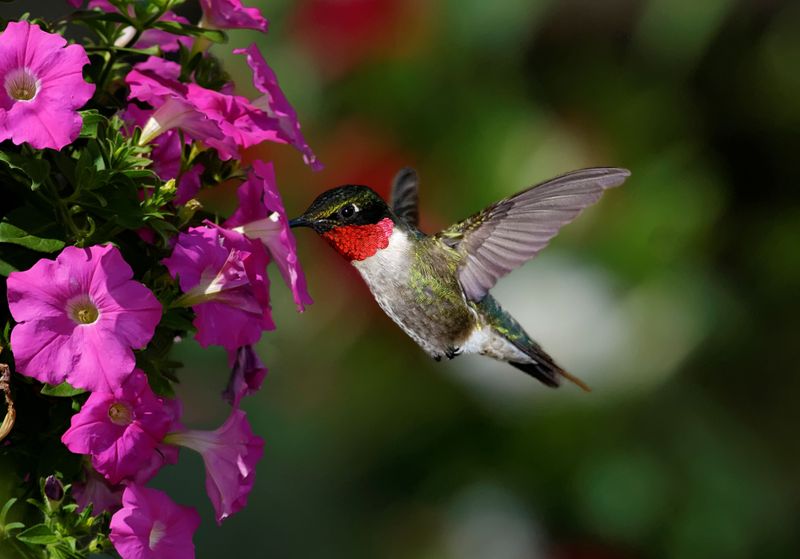
You’ll find Petunias at practically every garden center in spring, which makes them one of the easiest hummingbird draws to grab in a hurry. Their trumpet-shaped flowers pump out plenty of nectar all through the warm months.
Hanging baskets are a clever trick with these. Set one near a window and you can watch hummingbirds visit from the comfort of your kitchen chair.
Since Petunias handle heat and keep blooming with a little deadheading and feeding, they’re a low-drama choice for busy gardeners. Familiar, affordable, and genuinely effective, they punch above their weight.
9. Hibiscus
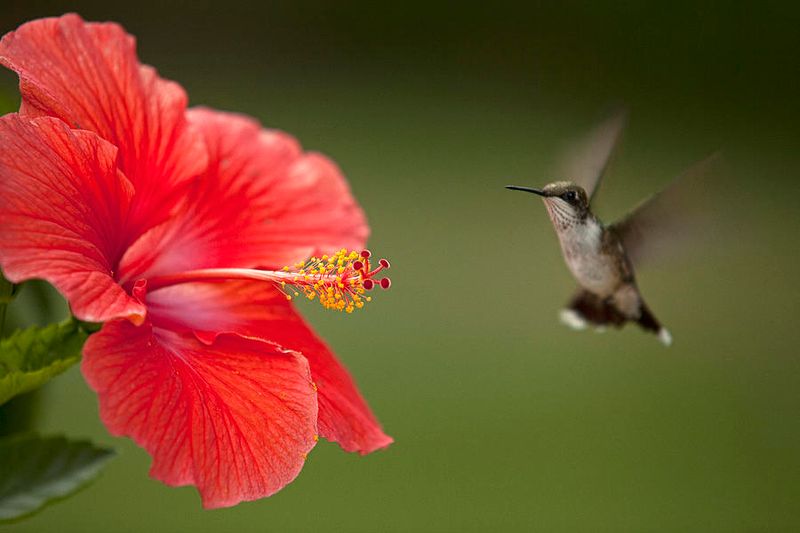
Nothing says drama quite like a Hibiscus bloom the size of a dinner plate. Those enormous, brightly colored flowers act like a billboard, catching a hummingbird’s eye from a long way off.
Both perennial and annual varieties will pull the birds in, and they truly shine in warmer climates where heat is a feature, not a problem. The bold reds and pinks are the ones hummingbirds tend to favor most.
Even though each flower may only last a day, the plant keeps producing new ones, so the show goes on. It’s a great pick if you want a tropical, showy centerpiece that earns its spot by feeding wildlife too.
10. Lantana
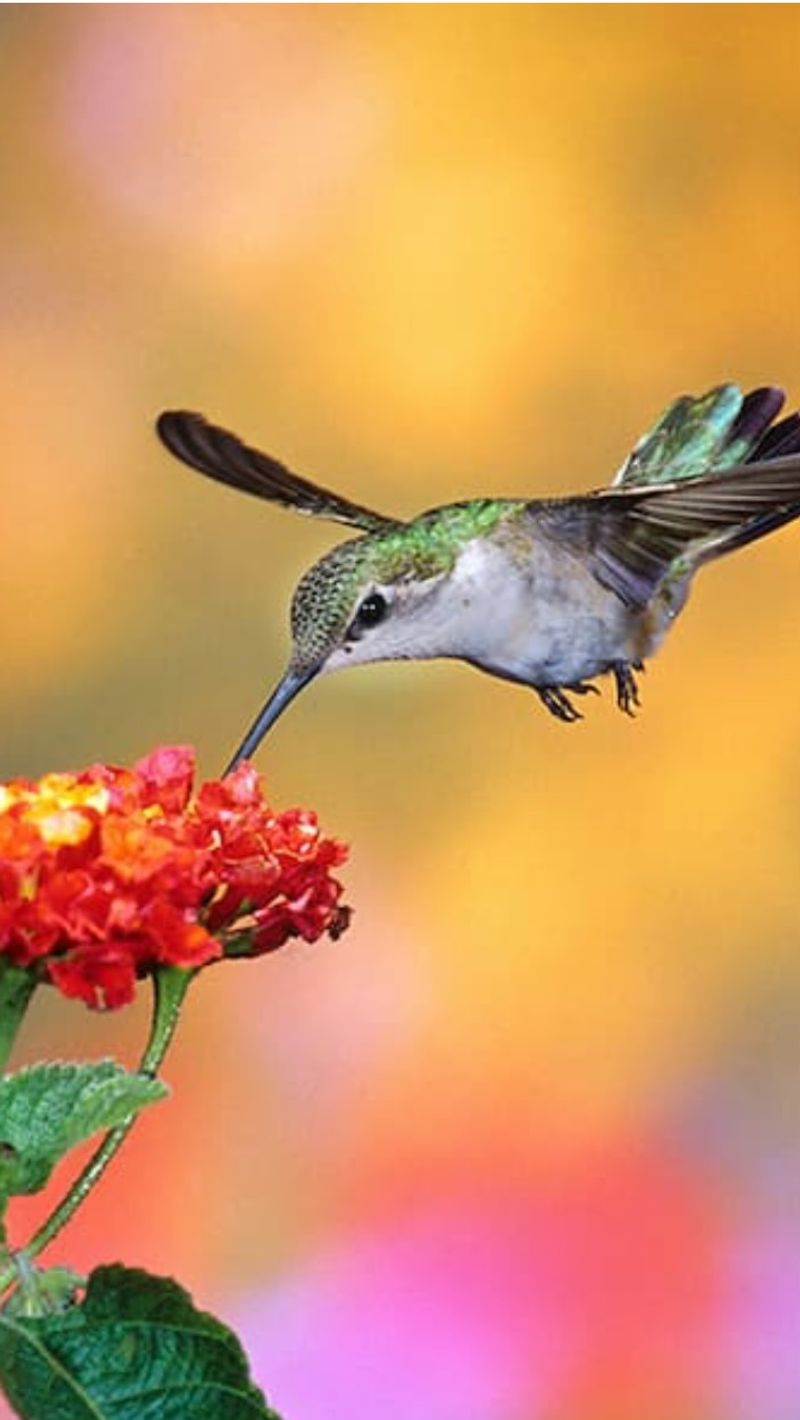
When summer turns brutal and other flowers start to fade, Lantana just shrugs and keeps blooming. This heat-tolerant, drought-resistant workhorse produces tight clusters of tiny nectar-filled flowers from spring all the way into fall.
The color-shifting clusters, often mixing orange, yellow, and pink in one bunch, give it a playful, patchwork look. Hummingbirds and butterflies alike find them irresistible.
If you’ve got a scorching hot spot where the hose rarely reaches, Lantana is your answer. It thrives on neglect and rewards you with months of blooms and steady hummingbird traffic.
11. Hosta (Flowering varieties)
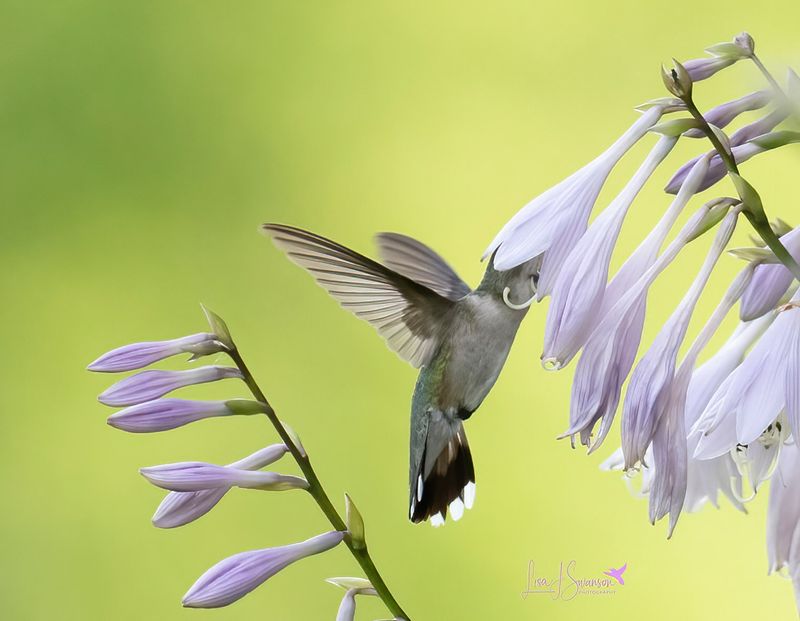
Most folks plant Hostas for their big, leafy foliage and completely overlook the flowers, but hummingbirds sure don’t. The tall stalks of tubular blooms, especially the purple ones, offer a surprising nectar source in the shadier parts of your yard.
Shade gardens often get left out of the hummingbird conversation, which is exactly why Hosta deserves a mention. It brings the birds to spots your sun-loving flowers can’t reach.
So the next time you’re tempted to snip off those flower stalks for a tidier look, consider leaving them. Those unassuming blooms quietly turn a dim corner into a hummingbird stopover.
12. Cypress Vine (Ipomoea quamoclit)
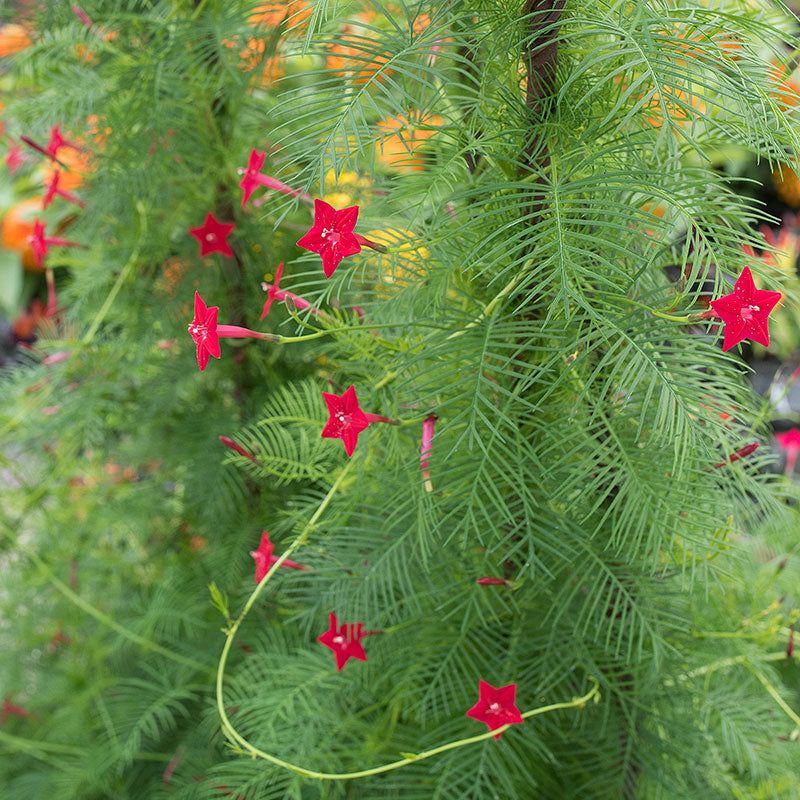
Delicate as lace and quick as a weed, Cypress Vine covers a trellis in feathery green and dots it with tiny red stars. Those star-shaped scarlet flowers are like little red flags waving hummingbirds down for a landing.
As a fast-growing annual, it fills in vertical space in no time, perfect for dressing up a plain fence or mailbox post in a single summer. The fern-like foliage adds a soft, airy texture you don’t get from most vines.
Because it grows so fast, you can start it from seed and enjoy blooms the same year without much fuss. Small flowers, big impact, and hummingbirds that keep circling back for more.