
12 Best Alternatives To Sugar Water That Actually Draw Hummingbirds In (And 6 To Never Use)
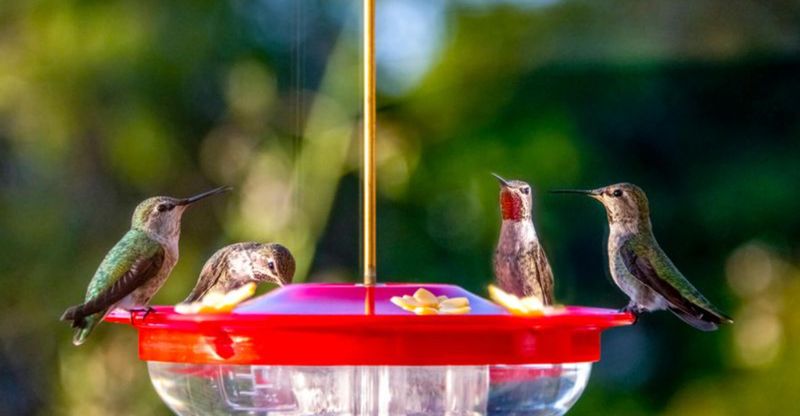
If you love watching hummingbirds zip around your backyard, a sugar-water feeder is only part of the story. These tiny birds get most of their food from real flower nectar and small bugs, so the plants you grow matter just as much as any feeder.
The good news is that a few well-chosen blooms can turn your yard into a hummingbird hangout without much extra work. And because some common kitchen sweeteners can actually harm these little visitors, it helps to know exactly what to plant and what to keep far away from your feeder.
1. Coral Honeysuckle (Lonicera sempervirens)
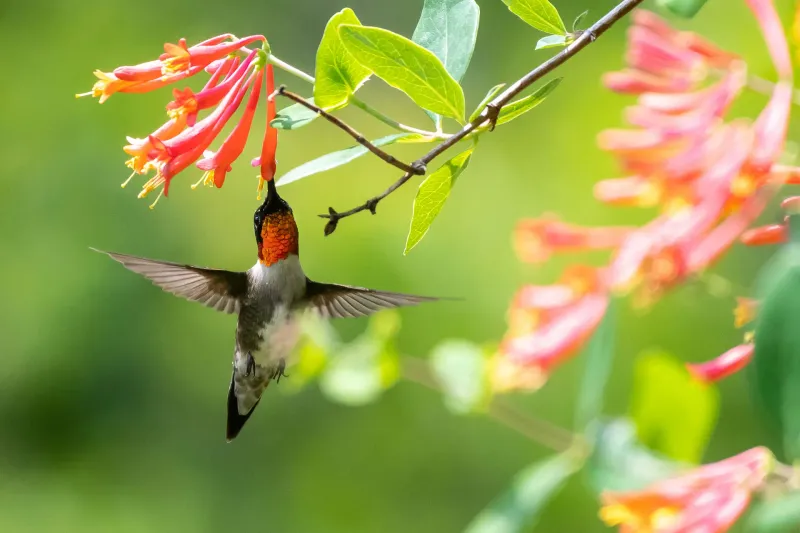
Picture a vine dripping with clusters of slender red-orange trumpets, and you have coral honeysuckle showing off in late spring. Native across much of the eastern and southern US, it climbs fences and trellises with almost no fuss once its roots settle in.
Hummingbirds love it because those tubular blooms are shaped for their long tongues, and the flowers keep coming for weeks. Unlike the invasive Japanese honeysuckle many gardeners battle, this well-behaved native stays put and plays nice with the rest of your beds.
Give it a sunny spot and something to climb, and you will likely see hummingbirds working the flowers from morning to dusk. Bonus for the fall crowd: the red berries that follow feed other backyard birds too.
2. Cardinal Flower (Lobelia cardinalis)
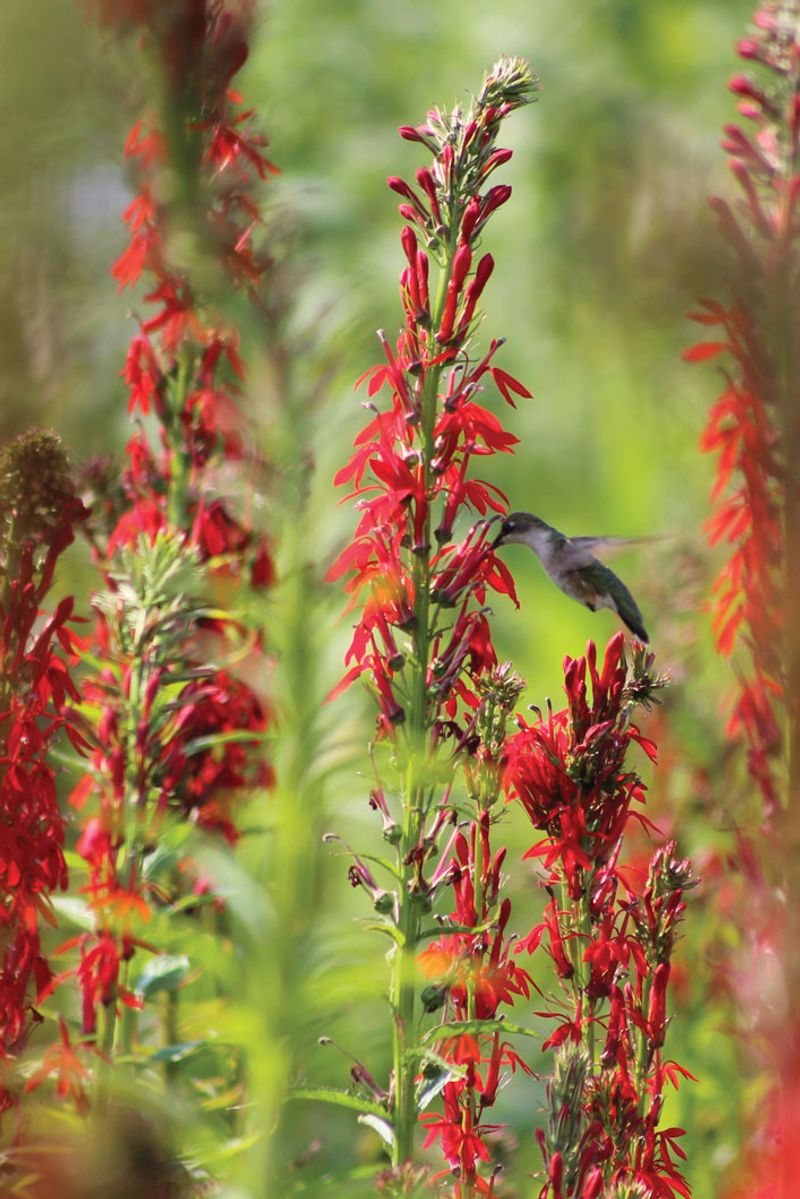
Few native plants stop you in your tracks like cardinal flower, with spikes of blazing red blooms that look almost too bright to be real. It thrives in damp soil, so that soggy corner of the yard where nothing else wants to grow could become its happy home.
The tall flower stalks are practically a neon sign for hummingbirds, and researchers note these birds are among its main pollinators. Bees often struggle to reach the deep nectar, which leaves more of the reward for your feathered guests.
Plant it near a pond edge, rain garden, or downspout runoff, and water it during dry spells. In return you get a summer show of scarlet spires that hums with activity.
3. Bee Balm (Monarda species)
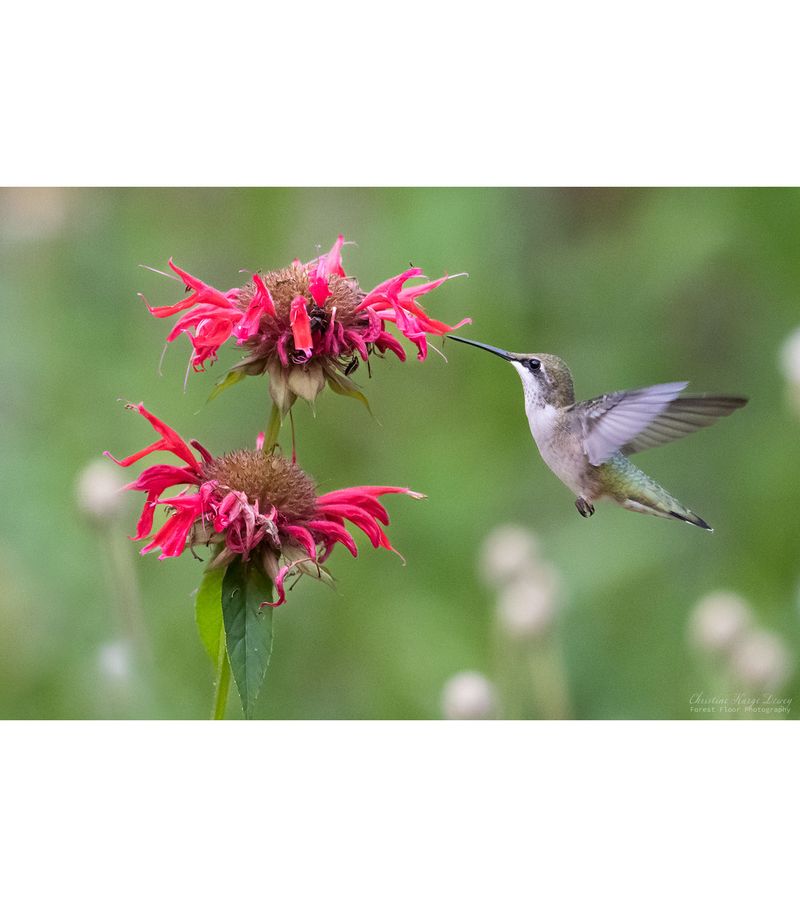
Crush a leaf of bee balm and you get a minty, herbal scent that hints at its history as a tea plant for Native Americans and early colonists. The shaggy, firework-shaped flowers open in reds, pinks, and purples right when summer hits its stride.
Hummingbirds gravitate to the red and pink varieties, dipping into each little tube while bees and butterflies crowd in too. Because the blooms sit up on sturdy stems, birds have easy landing space nearby.
Give this native plenty of air circulation to keep powdery mildew at bay, and deadhead spent flowers to coax a second round. It spreads by underground runners, so a yearly trim keeps it from wandering where you do not want it.
4. Salvia (Scarlet Sage and other species)
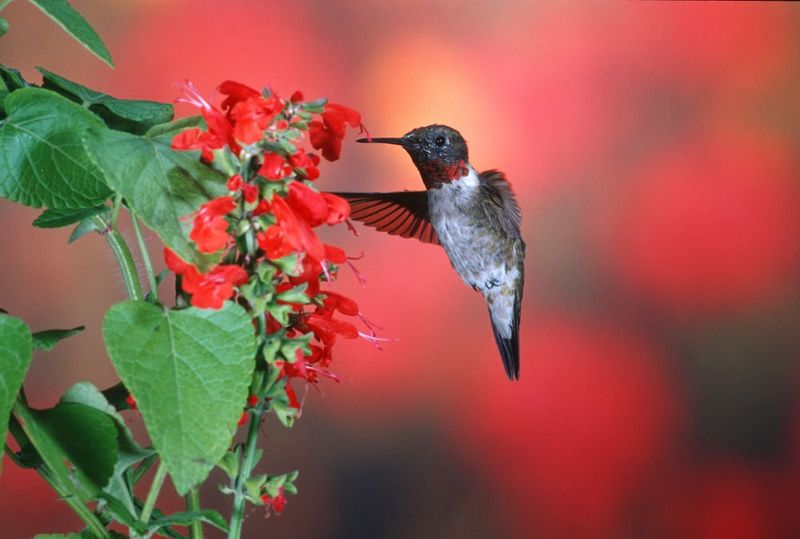
Ask any hummingbird gardener for a can’t-miss plant and salvia usually tops the list. With so many species, you can find one for nearly any climate, from heat-loving Scarlet Sage to the towering wands of Mexican bush sage.
The nectar-packed tubular flowers bloom for a long stretch, often from early summe until frost, giving hummingbirds a reliable buffet. Reds and hot pinks catch their eye fastest, though they will visit purple and blue varieties too.
Most salvias shrug off heat and drought once established, making them a smart pick for that scorching spot along a south-facing wall. Snip off faded flower spikes and you will usually be rewarded with fresh blooms in a couple of weeks.
5. Columbine (Aquilegia species)
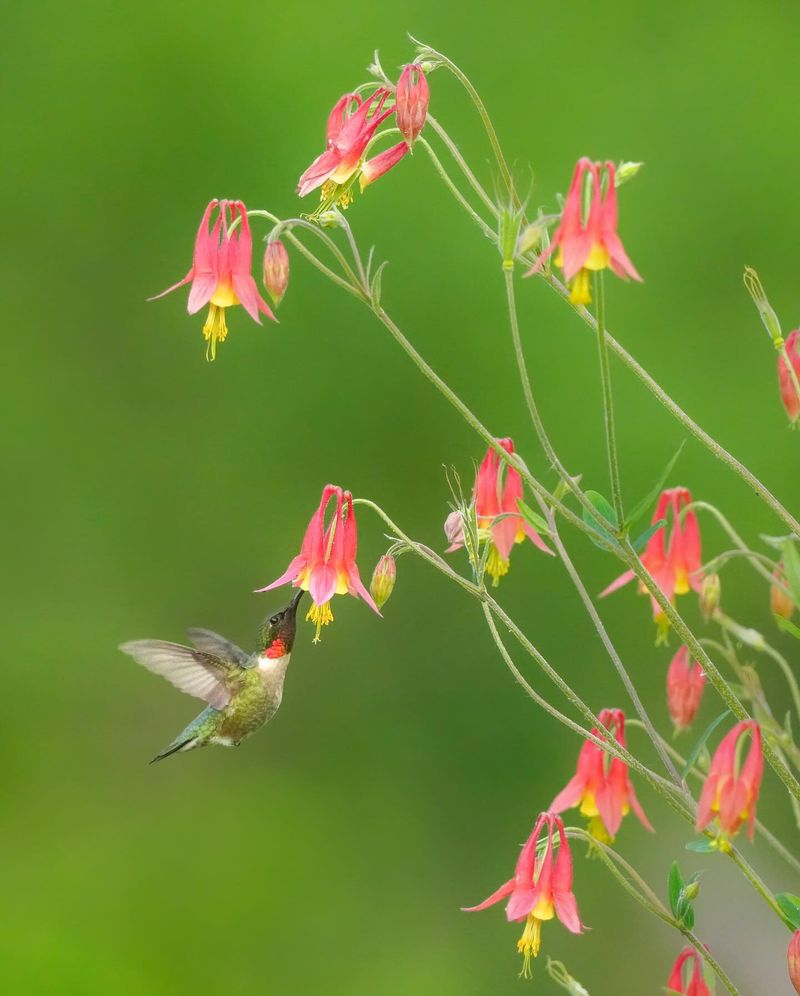
Columbine has a dainty, old-fashioned charm, with nodding bell-shaped flowers that dangle spurs full of nectar like little tucked-away treasure. Those spurs are exactly why hummingbirds adore it, since their long bills reach nectar most insects can’t touch.
It blooms early in the season, often right when migrating hummingbirds arrive hungry and looking for their first meals. Native species like the red-and-yellow eastern columbine feel especially at home in woodland-edge gardens.
Happy in part shade and forgiving of poor soil, it self-seeds gently, popping up in charming surprise spots year after year. Leave a few seed heads and you will grow a patch that fills in on its own.
6. Penstemon (Beardtongue)
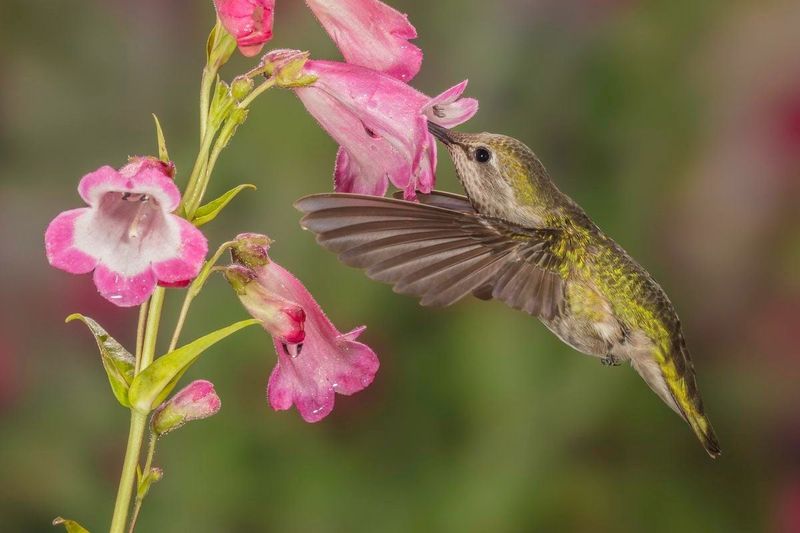
Beardtongue earns its odd nickname from the fuzzy little staminode inside each flower, but hummingbirds care more about the sweet reward packed into every tube. With native species scattered across nearly every US region, there is almost certainly a penstemon suited to your area.
The upright flower stalks come in reds, pinks, purples, and whites, and they bloom for weeks in early to midsummer. Prairie and Western gardeners especially love how these plants handle lean soil and bright sun without complaint.
Once established, most penstemons prefer to be left a little dry rather than pampered with too much water. That low-maintenance streak, paired with steady hummingbird traffic, makes it an easy plant to recommend to anyone nervous about keeping flowers alive.
7. Trumpet Creeper (Campsis radicans)
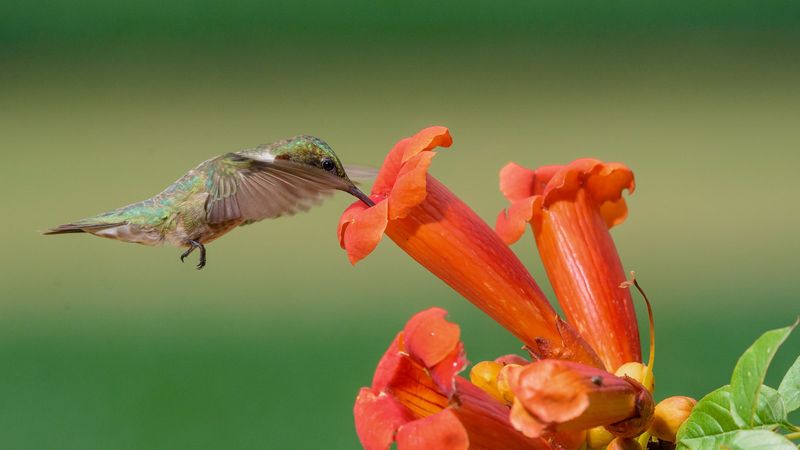
Bold and unstoppable, trumpet creeper throws out big orange-red horns of nectar that hummingbirds simply cannot resist. This is the plant for someone who wants maximum bird traffic and has a strong fence, arbor, or dead tree to sacrifice to its climbing ambitions.
Native to the southeastern US, it blooms heavily through the hottest part of summer when hummingbirds are feeding growing chicks. The sheer size of each flower means a hummingbird can practically climb inside to reach the nectar.
A word of caution: this vine is vigorous to the point of being pushy, so plant it where you can prune hard and keep it in bounds. Grown with a firm hand, it delivers one of the most dependable hummingbird shows around.
8. Zinnia
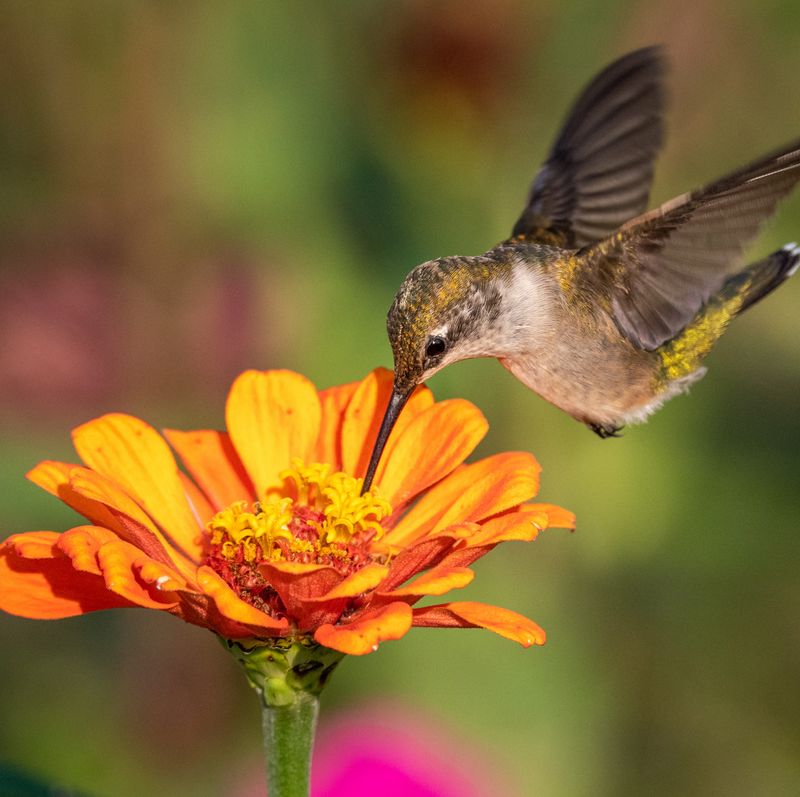
Cheerful, easy, and endlessly colorful, zinnias are the flower even brand-new gardeners can grow from a packet of seeds tossed into the soil. They do not have the deep tubes of some hummingbird favorites, yet the flat, nectar-rich centers still draw plenty of visitors.
Reds, oranges, and hot pinks tend to pull hummingbirds in the fastest, and the more you cut, the more the plants bloom. That cut-and-come-again habit means you can fill a vase and still leave a buffet outside.
Because they are annuals that flower from summer until the first frost, zinnias bridge the gap when other perennials fade. Butterflies pile on too, so a single zinnia patch keeps the whole yard buzzing and darting with life.
9. Hollyhocks (Alcea)
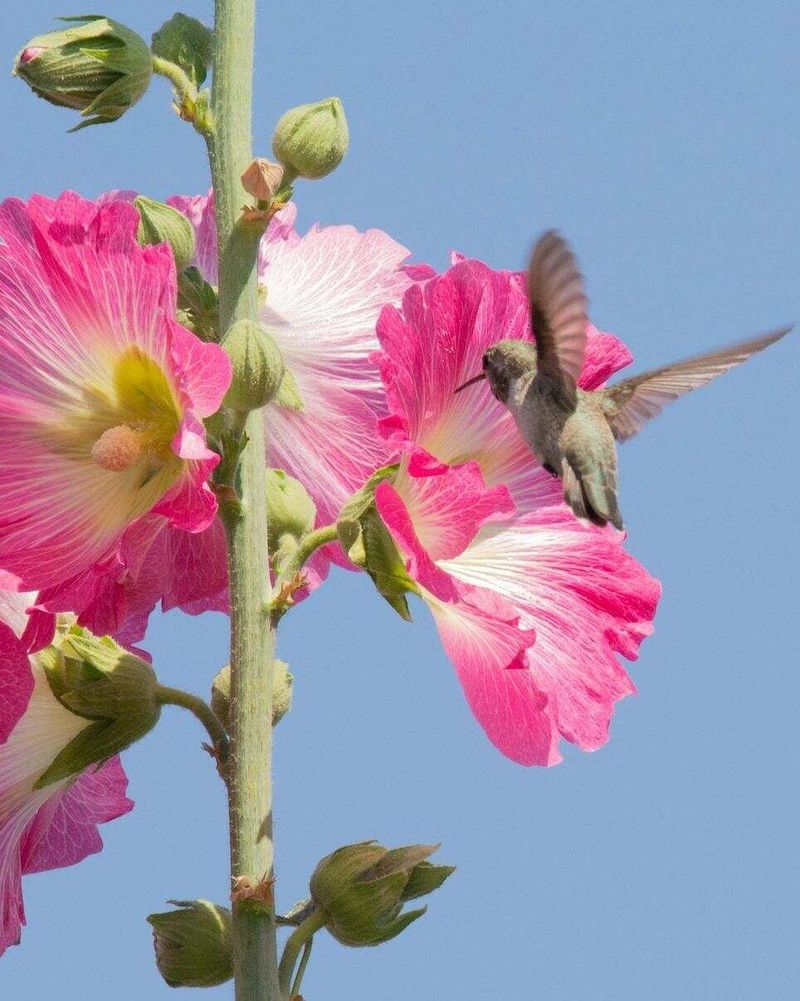
Standing tall against a fence or wall, hollyhocks bring a cottage-garden nostalgia along with a steady supply of summer nectar. Their towering spires of open, cup-shaped flowers give hummingbirds an easy target they can spot from across the yard.
Getting tall, colorful blooms like these really does come down to the basics: full sun, decent soil, and enough room for the stalks to shoot up. Stake them in windy spots so a summer storm does not topple all that height.
Old-fashioned single-flowered types tend to offer more accessible nectar than the frilly doubles, so lean that way if hummingbirds are your goal. Let a few pods dry on the stalk and you will have seeds to spread the show along the whole fence line next year.
10. Bleeding Hearts (Dicentra spectabilis)
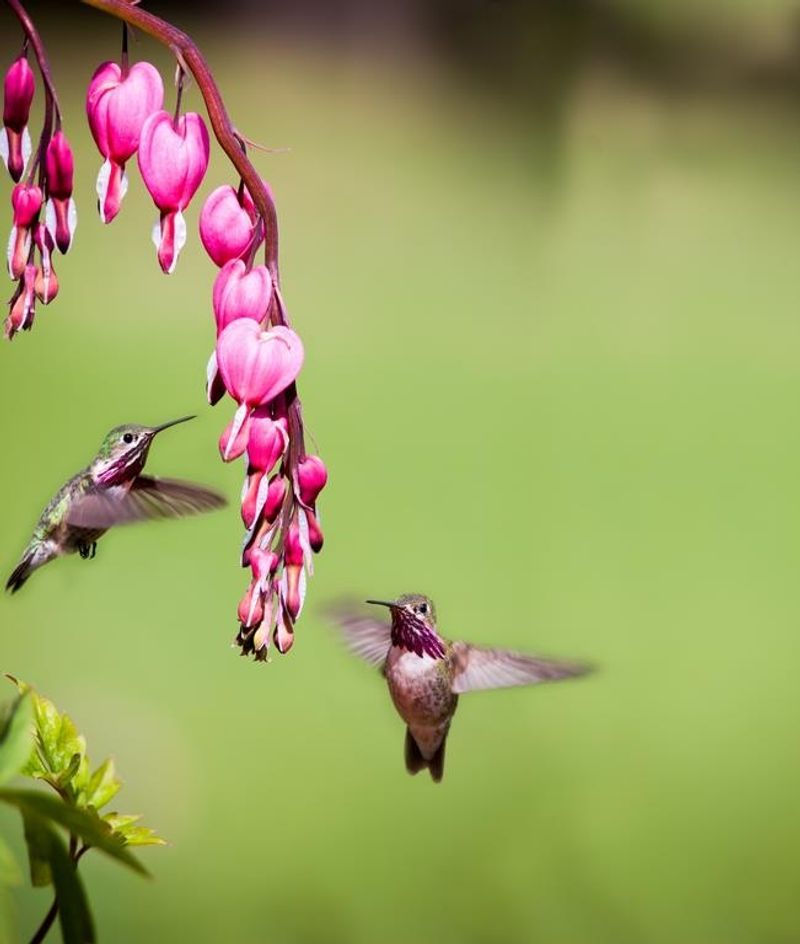
There is something almost storybook about bleeding hearts, with rows of pink, heart-shaped lockets dangling from arching stems. Blooming in spring shade, they offer nectar right when many other flowers are still waking up.
Early-arriving hummingbirds appreciate that timing, sipping from the little heart pouches while the rest of the garden catches up. The soft, ferny foliage adds a gentle texture to shady beds where sun-lovers refuse to grow.
Keep the soil cool and moist, and do not panic when the plant goes dormant and disappears in summer heat, that is completely normal. Tuck a hosta or fern nearby to fill the gap once the hearts fade for the season.
11. Fuchsia
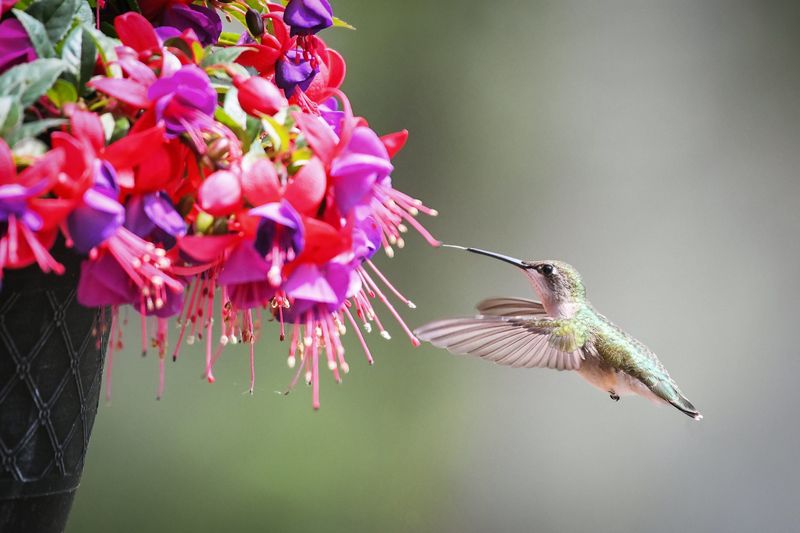
Dangling like tiny ballerinas in bold two-tone skirts, fuchsia flowers seem practically designed to hang from a porch and lure hummingbirds to eye level. Their pendulous, tubular shape fits a hovering bird perfectly, so you often get the best close-up views of any plant on this list.
They shine in hanging baskets and shaded containers, which makes them ideal for patios, balconies, and small-space gardeners. In much of the US they grow as summer annuals, blooming nonstop as long as you keep them watered and out of harsh afternoon sun.
Pinch back the stems early in the season for a fuller, flower-packed plant later on. Hang one right outside a window and you will have front-row seats to the hummingbird action all summer long.
12. Firebush (Hamelia patens)
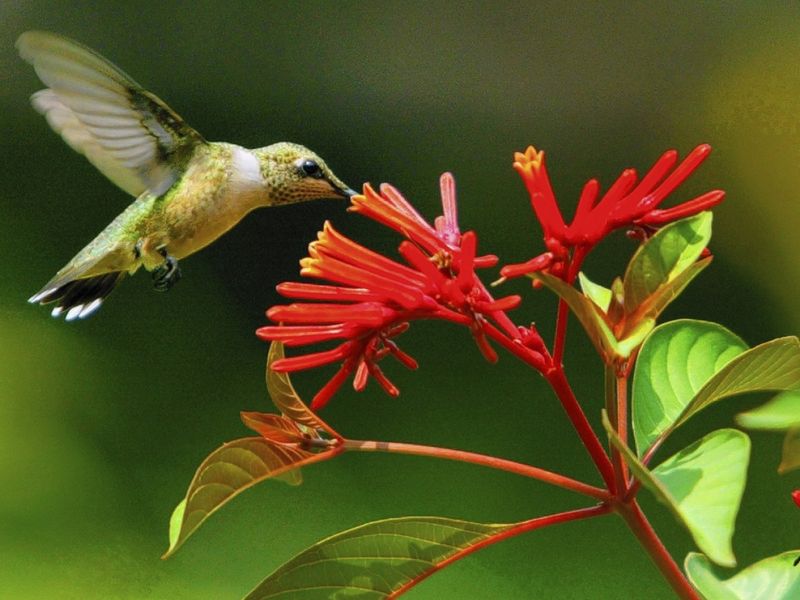
Warm-climate gardeners have a secret weapon in firebush, a shrub that lives up to its name with clusters of slender orange-red tubes glowing against dark green leaves. It flowers relentlessly through heat and humidity, exactly the conditions that make other plants throw in the towel.
Hummingbirds treat it like a favorite diner, returning again and again as fresh blooms keep opening from late spring into fall. In frost-free zones it grows into a large, dependable shrub, while colder-climate gardeners can enjoy it as a summer container plant.
Full sun and well-drained soil are all it really asks for once it gets going. As a Florida and Gulf Coast native, it also feeds butterflies and provides small berries for other birds, earning its keep several times over.