
12 Flowers Hummingbirds Simply Can’t Resist In Your Backyard
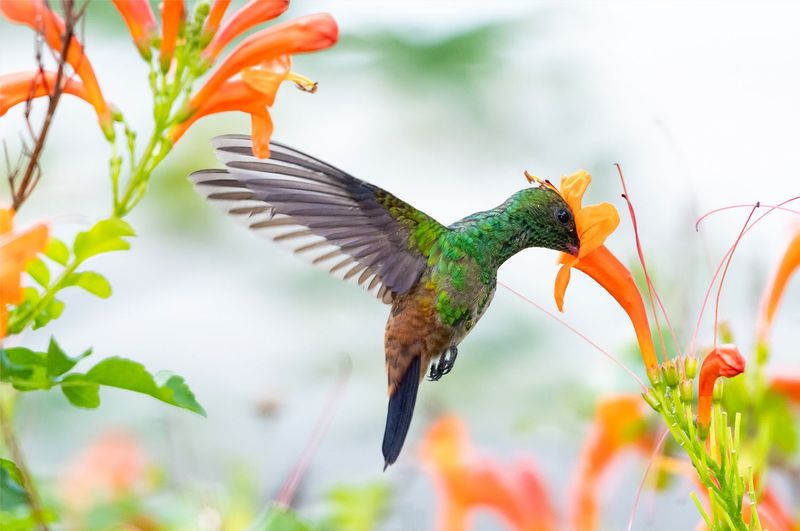
Few backyard moments beat the tiny blur of a hummingbird zipping past your window to sip from a bright bloom. The secret to keeping them coming back is planting the flowers they actually crave, especially the red, orange, and tubular kinds their long beaks love.
The good news is that most of these plants are easy to grow, and a mix of them keeps nectar flowing from spring all the way to fall. Here are 12 flowers that will turn your yard into a hummingbird hotspot without much fuss.
1. Cardinal Flower
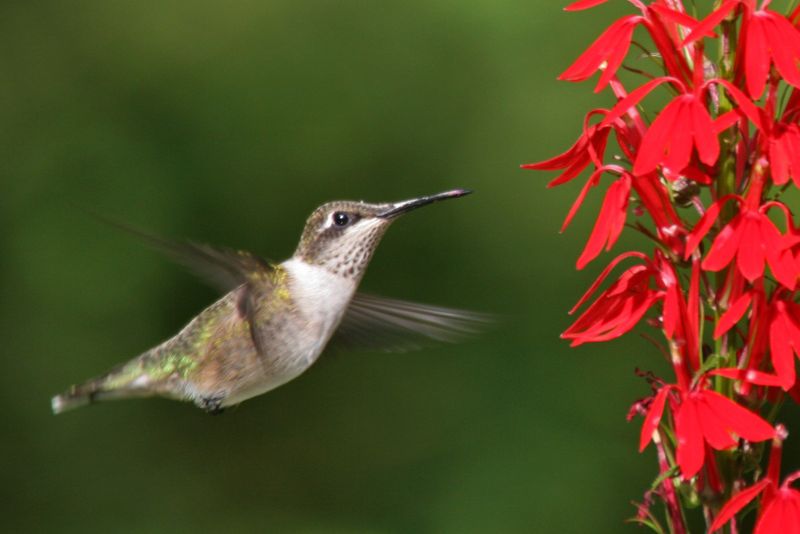
If you want a flower that practically shouts to passing hummingbirds, cardinal flower is the one. Its fiery red spikes are one of the strongest hummingbird magnets you can plant, and the birds spot that color from a distance.
Unlike many sun-loving nectar plants, this native handles partial shade beautifully, so that soggy low spot by your fence finally has a job. It wants consistently moist soil, which makes it a smart pick near ponds, rain gardens, or downspouts.
Here is a bonus for lazy gardeners: cardinal flower reseeds itself readily, so a single plant can quietly become a colony over a few seasons. Give it damp ground and a little patience, and it rewards you with tall crimson columns that hummingbirds work over all summer long.
2. Bee Balm
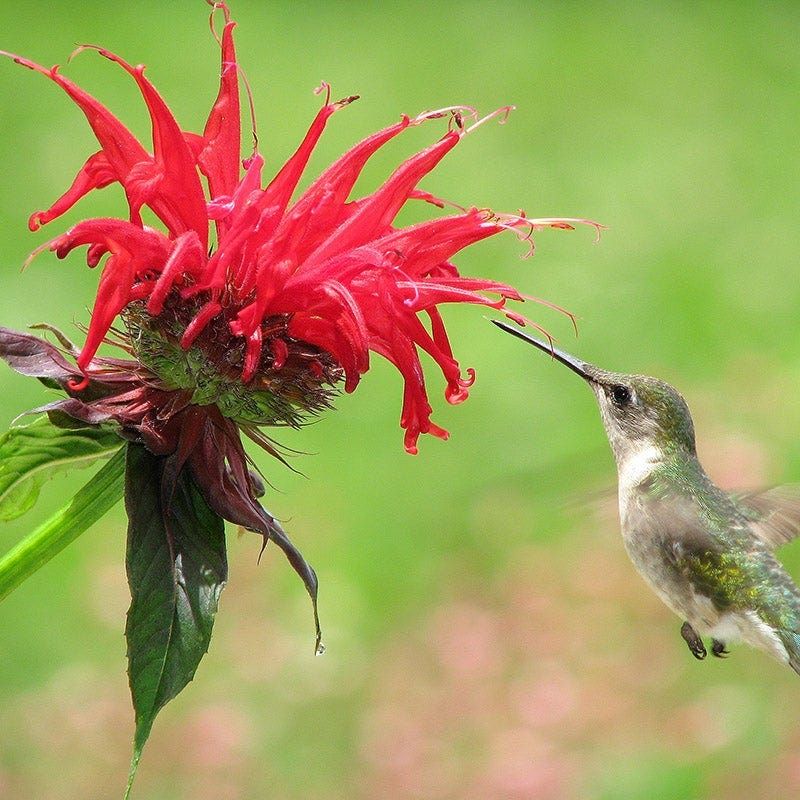
Shaggy, firework-shaped blooms make bee balm look like nothing else in the border, and hummingbirds treat it like an all-you-can-eat buffet. The nectar-rich flowers open in midsummer, right when hummingbird traffic really picks up.
Full sun and moist soil keep this plant happiest, and it spreads with cheerful enthusiasm once settled in. Reds and pinks tend to pull in the most birds, though the whole clan draws a crowd of pollinators.
One honest warning: older bee balm varieties can develop powdery mildew, that dusty white coating on the leaves. If yours has struggled before, look for mildew-resistant types and give the plants room to breathe with good air circulation.
Do that, and you get healthy foliage plus a steady parade of hummingbirds through the hottest weeks of the year.
3. Salvia
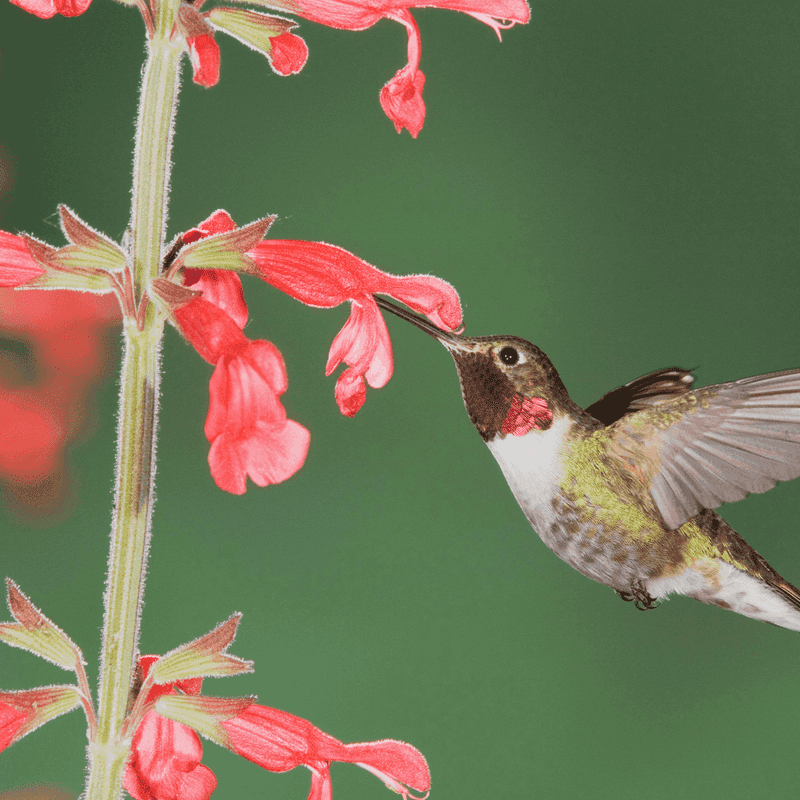
Ask any hummingbird gardener for their can’t-fail plant and salvia comes up again and again. The tubular blooms line up along tall spikes like little nectar cups, perfectly shaped for a hummingbird’s long beak and tongue.
What makes salvia so useful is its range. Some types top out around a foot, while others stretch to five feet, and you can find both annual and perennial versions to fill gaps all season.
Plant it in full sun to part shade and it asks for little in return. Reds and deep blues seem to get the most visits, and because salvia keeps pushing out fresh flowers for months, it becomes a reliable daily stop on a hummingbird’s feeding route.
Pair a few different heights together and you build a nectar wall that stays busy from early summer into fall.
4. Penstemon
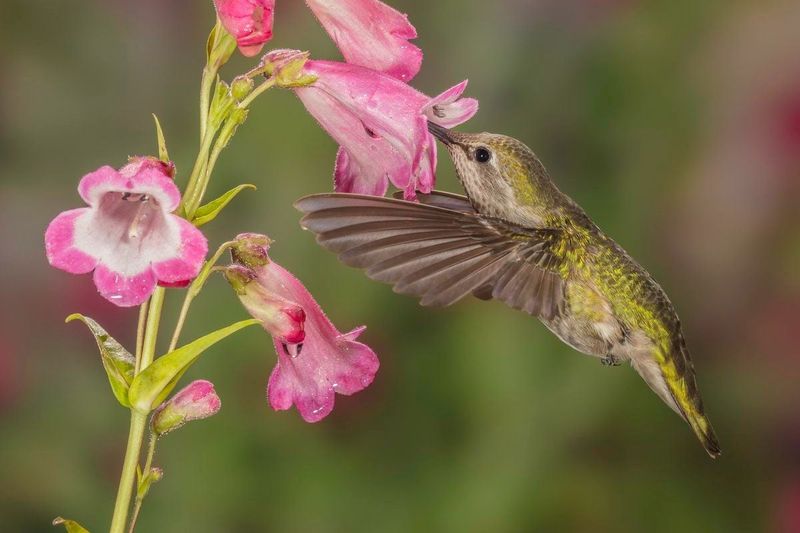
Also known as beardtongue, penstemon offers something hummingbirds find hard to pass up: easy access to nutritious nectar tucked inside neat tubular flowers. The shape almost seems designed with these birds in mind.
Gardeners appreciate how low-maintenance it is. Penstemon shrugs off dry spells better than many nectar plants, so it suits sunny spots where you would rather not fuss with constant watering.
Color options run from soft pinks to rich reds and purples, and the blooms show up in vibrant, eye-catching displays. Because it thrives with so little coddling, penstemon is a great choice if you have killed a thirstier flower or two and want a hummingbird favorite that forgives the occasional missed watering.
Tuck it into a well-drained bed and let it do its thing.
5. Trumpet Honeysuckle
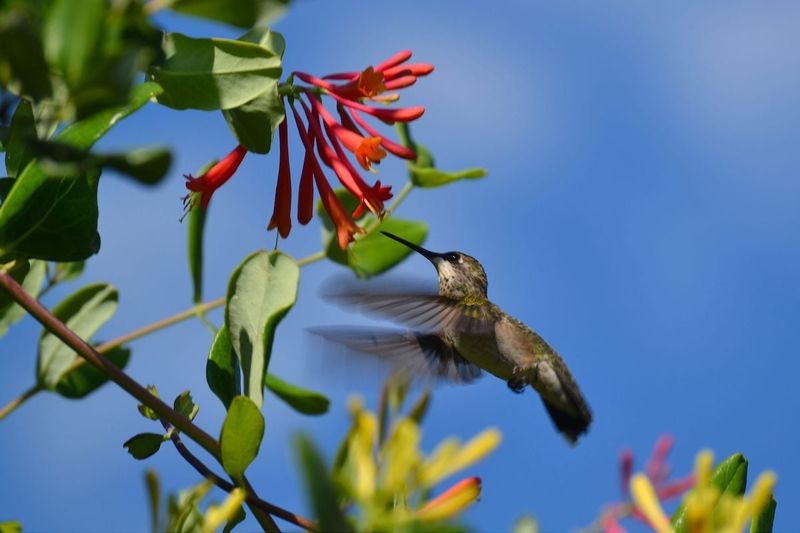
Native trumpet honeysuckle deserves a spot on any fence or trellis meant to draw hummingbirds. The long, tubular flowers hold generous amounts of nectar, and honestly, this native vine outperforms many showy hybrid honeysuckles when it comes to actually feeding the birds.
That distinction matters. Some flashy hybrids look pretty but skimp on nectar, while Lonicera sempervirens delivers the real reward hummingbirds are hunting for.
Train it up a post or along a railing and the coral-red blooms become a vertical feeding station the birds can visit again and again. As a native plant, it also plays nicely with local wildlife and tends to behave itself better than the invasive honeysuckles you may have heard warnings about.
Give it something to climb and a sunny wall, and hummingbirds will find it fast.
6. Agastache
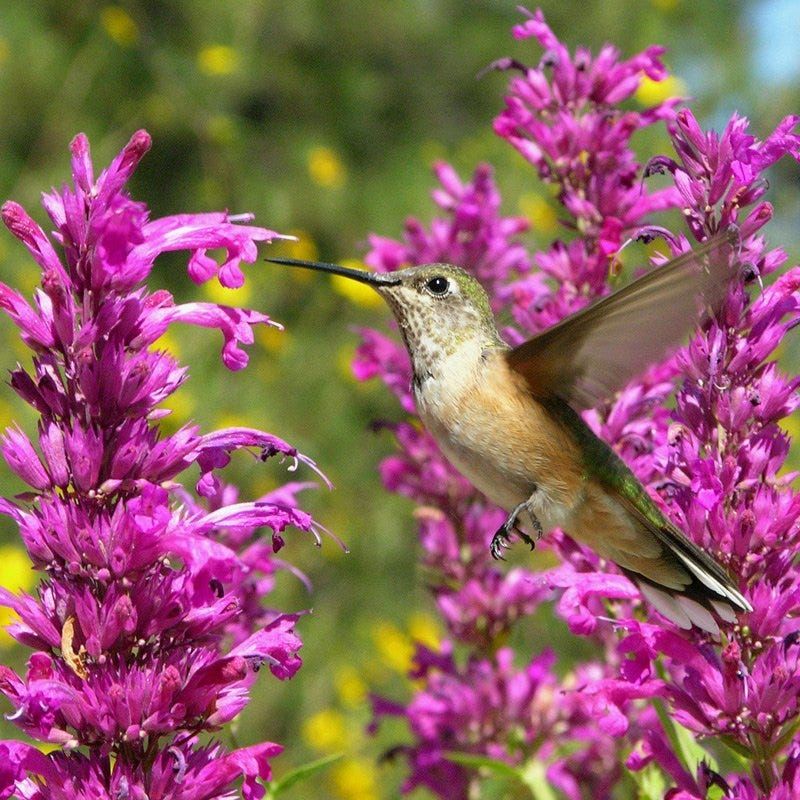
Nicknamed hummingbird mint for good reason, agastache seems to pull the birds in no matter what color you plant. They visit the blooms of every shade, working the tall flower spikes from bottom to top.
The upright spikes pack in loads of nectar, so a single plant offers dozens of tiny meals stacked one above the other. That vertical, nectar-rich shape is exactly what keeps a hummingbird lingering instead of moving on.
Many types carry a pleasant minty or licorice scent when you brush the foliage, a little bonus for you while the birds enjoy the flowers. Agastache loves sun and good drainage, and it tends to bloom for a long stretch, giving your yard a dependable nectar source right through the warm months.
Plant a few and enjoy the show.
7. Zinnia
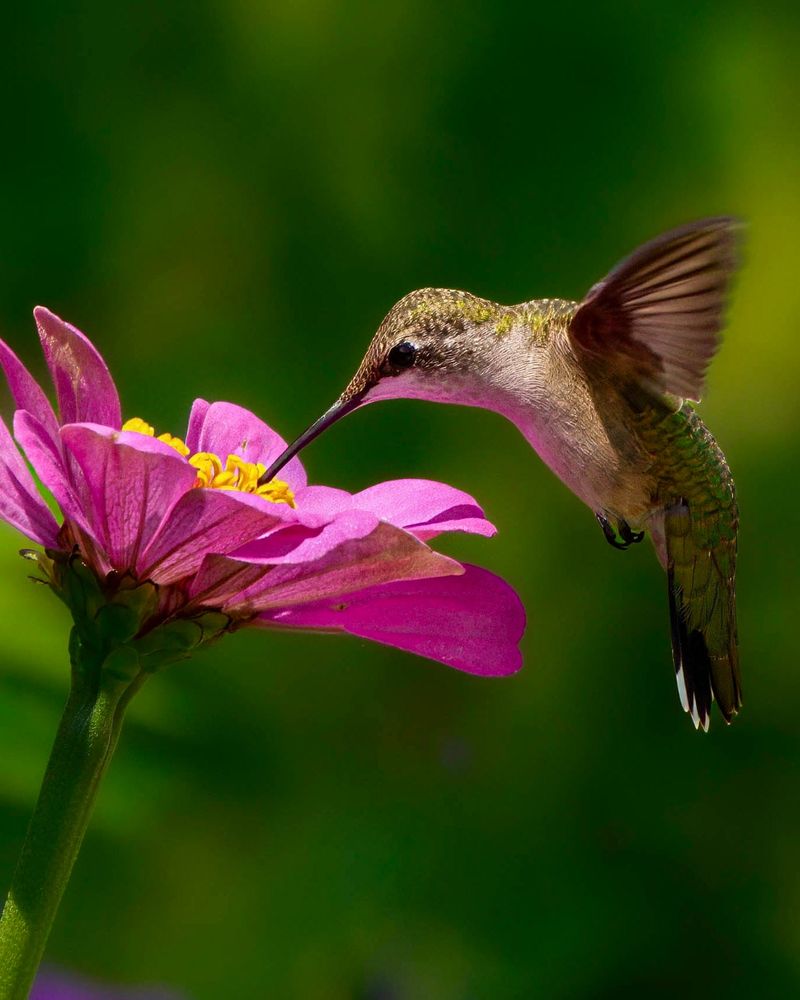
Cheerful and almost impossible to mess up, zinnias earn their place here by being both easy and irresistible. These popular annuals sprout quickly from seed, making them a fun project even if flowers usually intimidate you.
Hummingbirds drop by for the nectar, and butterflies join the party too, so a patch of zinnias buzzes with life all summer. The bold reds, oranges, and pinks are exactly the colors that catch a hummingbird’s eye.
Profusion zinnias stand out for stretching their color deep into fall, keeping the buffet open when many other blooms have faded. Snip a few for a vase and the plants respond by pushing out even more flowers.
For a beginner-friendly bloom that feeds hummingbirds and fills bouquets, zinnias are tough to beat.
8. Eastern Red Columbine
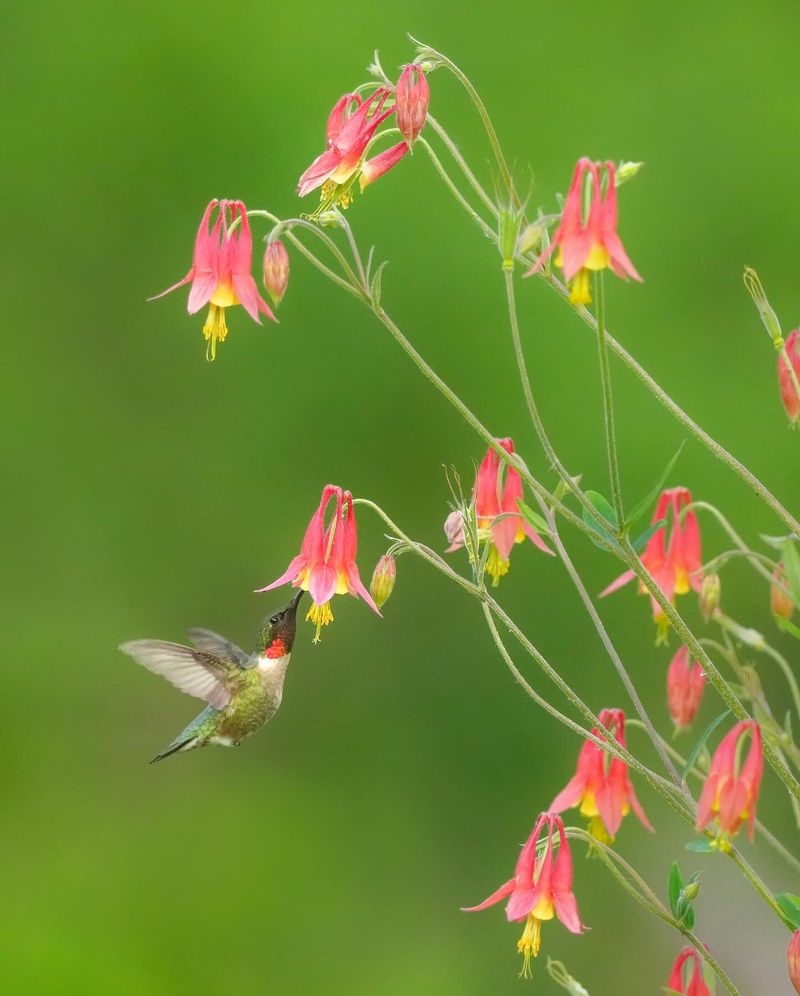
There is something charming about the nodding, lantern-like flowers of eastern red columbine, and hummingbirds clearly agree. They are drawn to the unusual spurred shape, which hides sweet nectar in the flower’s dangling tips.
Timing is this plant’s superpower. As a native, Aquilegia canadensis blooms early in the season, offering nectar when hummingbirds first arrive and few other flowers are open yet.
That early meal can be a lifesaver for birds returning from long migrations, making columbine more than just a pretty face. It tolerates part shade and woodland edges, so it fills spots where sun-hungry nectar plants sulk.
Plant it once and it often reseeds gently, dotting your shady corners with red-and-yellow blossoms that welcome the first hummingbirds of spring.
9. Red Hot Poker
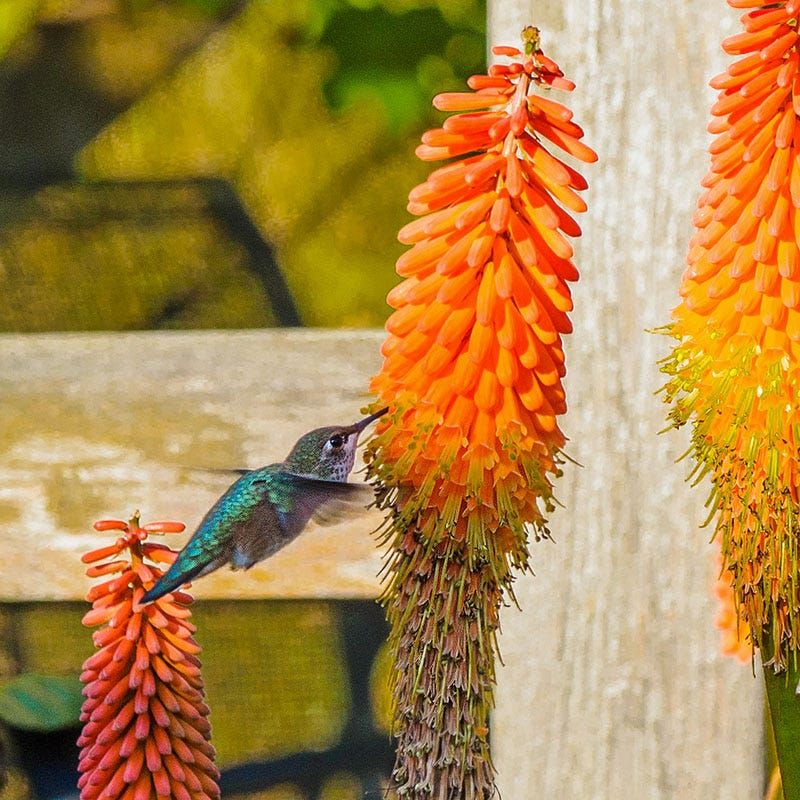
Few flowers command attention like red hot poker, and hummingbirds notice from across the yard. Its tall spikes glow in fiery blends of red, orange, and yellow, standing up like torches above the foliage.
That bold color acts as a beacon, essentially advertising a nectar-loaded landing pad to any hummingbird passing overhead. The birds work their way up the poker, sipping from the many small tubular flowers packed along each spike.
Kniphofia also brings dramatic vertical structure to a bed, so it earns its keep as a striking focal point on top of feeding your winged visitors. It likes full sun and well-drained soil, and once established it handles heat and dry spells with ease.
If you crave a plant that is equal parts eye candy and hummingbird cafeteria, this one delivers on both counts.
10. Trumpet Vine
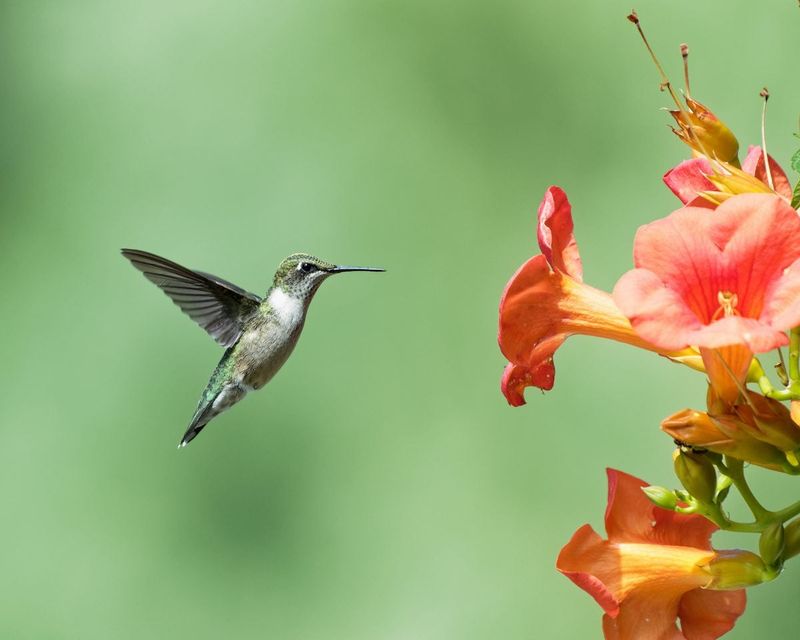
Big, bold, and unapologetic, trumpet vine is the heavyweight of hummingbird plants. Its abundant trumpet-shaped flowers practically overflow with nectar, and hummingbirds swarm it like clockwork every summer.
A quick heads-up, though: this vine grows with serious gusto. Campsis radicans climbs fast and spreads eagerly, so give it a sturdy support and be ready to prune, or it may try to take over the neighborhood.
Manage that vigor and you are rewarded with one of the most reliable hummingbird magnets around, blooming in showy orange-red clusters that never seem to run dry. It shines on fences, arbors, and old sheds where its rampant nature is more feature than flaw.
Plant it where you can keep it in check, and it becomes the busiest hummingbird corner in your yard.
11. Hosta
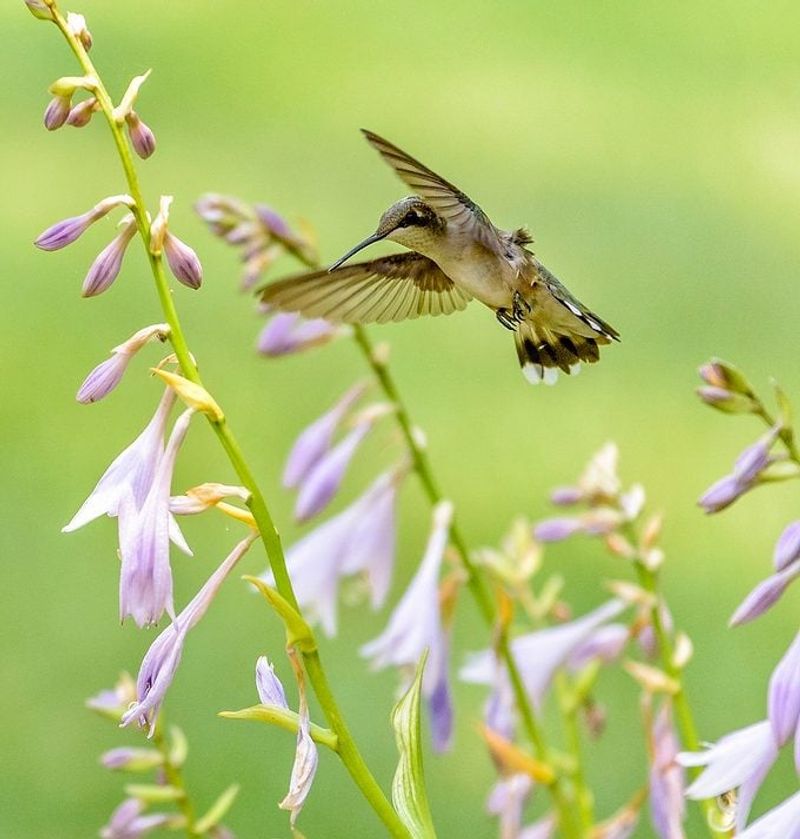
Here is a surprise most gardeners miss: hostas feed hummingbirds too. Grown mainly for their lush leaves in shady spots, hostas send up tall flower stalks in summer, and hummingbirds sneak in to sip nectar from those often-overlooked blooms.
What makes hosta special on this list is where it works. While nearly every other hummingbird flower demands sun, hosta thrives in the shade under trees and along the north side of the house.
That means the dim, tricky corners of your garden can finally pull their weight and offer nectar too. The lavender and white bell-shaped flowers are subtle, but the birds find them.
So before you snip off those flower stalks for a tidier look, consider leaving a few standing as a quiet snack station for your smallest visitors.
12. Catmint
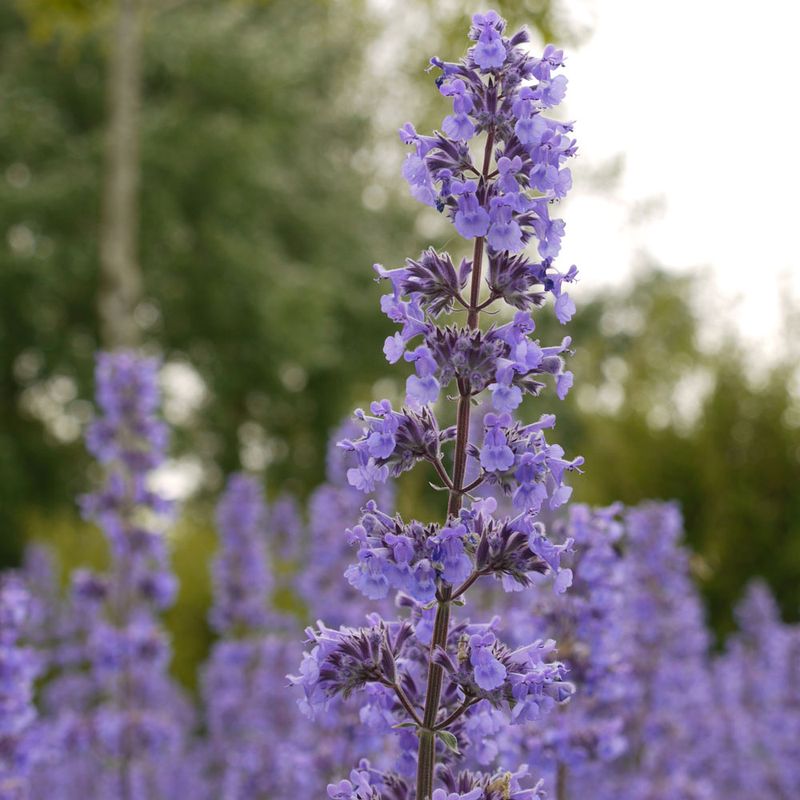
Rounding out the list is catmint, a tough, breezy plant that keeps good company with heavy hitters like bee balm and salvia as a hummingbird favorite. Its haze of small blue-purple flowers hums with activity from late spring onward.
Toughness is catmint’s calling card. Nepeta laughs off heat, drought, and poor soil, so it holds up in the hot, dry spots where fussier flowers wilt and disappoint you.
It also blooms for an unusually long stretch, and a quick shearing after the first flush brings on a fresh wave of flowers to keep hummingbirds fed. The soft, aromatic foliage tends to shrug off deer and rabbits too, which is a welcome perk.
For a low-effort edging plant that feeds hummingbirds while asking almost nothing of you, catmint is a smart way to finish the garden.