
The One Hydrangea Task To Finish In August For Way More Blooms Next Spring
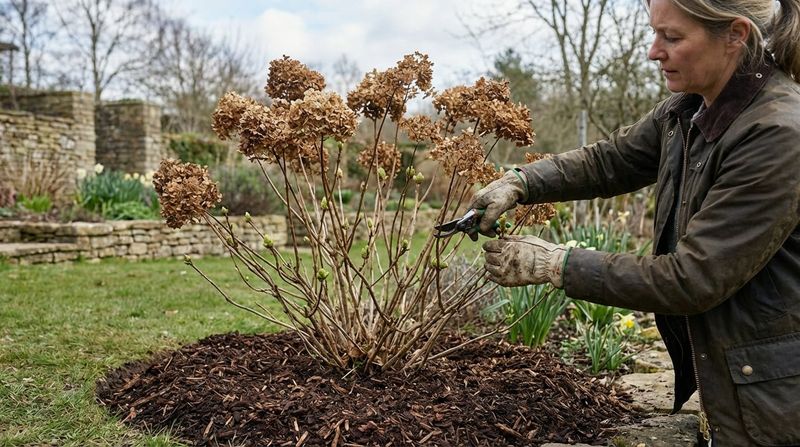
August is the month when a lot of gardeners start eyeing their faded hydrangea blooms and wondering if they should grab the pruners. The answer depends almost entirely on which type of hydrangea you have growing in your yard.
Cut the wrong stems at the wrong time, and you could accidentally remove the flower buds your plant has already started forming for next season. Knowing what to do, and just as importantly what not to do, is the real task this month.
There is no universal August cut for hydrangeas
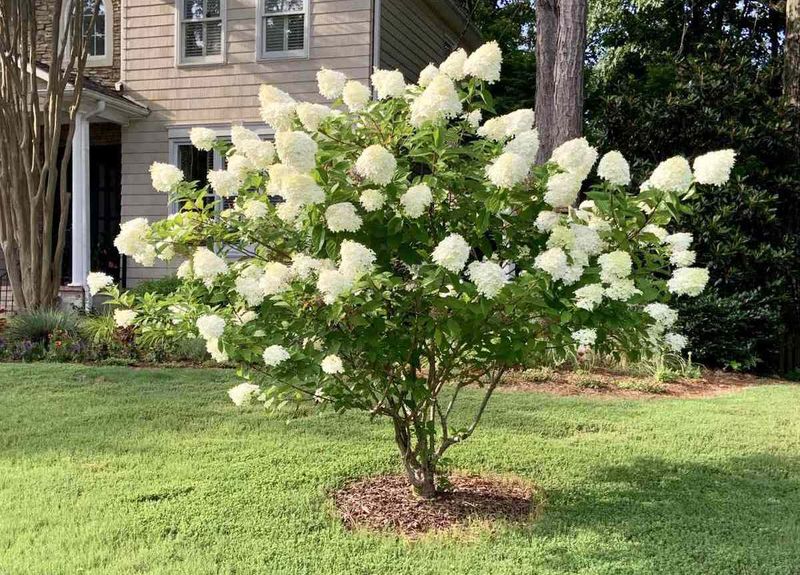
Most gardening advice about August pruning treats every hydrangea the same way, and that is where the trouble starts. Pruning timing depends on species, cultivar, the type of wood the plant flowers on, your local climate, and whether your shrub has already started forming buds for the following season.
Getting one of those factors wrong can mean a season with very few flowers, or none at all.
The genuinely useful August question is not how to force extra blooms. University of Illinois Extension guidance on pruning timing makes clear that the correct window varies by species, and that pruning at the wrong time is one of the most common reasons hydrangeas fail to flower.
The real decision this month is whether any light maintenance is even justified on the specific plant you have identified.
Panicle hydrangeas, smooth hydrangeas, and traditional old-wood types each follow a different schedule. Penn State Extension’s species-by-species pruning guide explains that applying a single August rule across all of them is a mistake that gardeners repeat every year.
If you are looking at a shrub right now and you are not certain what type it is, the conservative move is to remove only stems that are clearly dead, diseased, or visibly damaged. Healthy green stems with faded flowers on them should stay where they are until you know what you are working with.
An identified old-wood hydrangea that has recently finished blooming may allow for light maintenance, but even then the window is narrow and the cuts should be minimal.
Identify the hydrangea before cutting healthy stems
Before any pruner touches a healthy stem, the single most important step is knowing what type of hydrangea you have. The whole question of August timing hangs on one biological fact: some hydrangeas form next season’s flower buds on stems grown the previous year, while others produce buds on stems that grow in the current season.
Illinois Extension’s hydrangea pruning explainer defines old wood as stems produced during the previous growing season and new wood as growth produced during the current season. Cut old wood at the wrong time, and the flower buds that were quietly forming on those stems disappear with them.
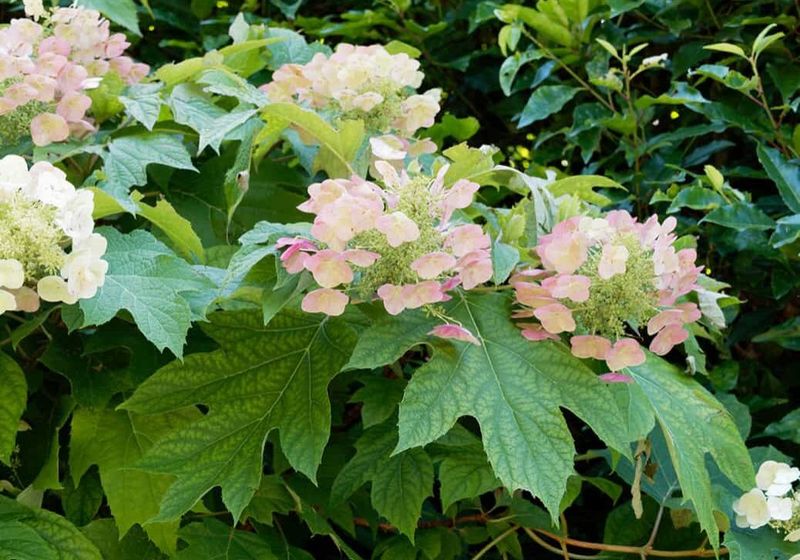
Traditional bigleaf hydrangeas, which include the familiar mophead and lacecap types (Hydrangea macrophylla), mountain hydrangeas (H. serrata), and oakleaf hydrangeas (H. quercifolia) all generally bloom on old wood. These are the plants where August timing matters most, and where an ill-timed cut causes the most damage to the following year’s flowers.
Checking the plant label or looking up the cultivar name is the most reliable way to confirm what you have. UGA Extension’s hydrangea identification guide points out that leaf shape and flower form can offer clues but should not be treated as definitive proof.
Cone-shaped blooms are a common signal of panicle hydrangea, and large rounded mopheads or flat lacecap flowers often suggest a bigleaf type, but those visual cues can be misleading without a confirmed cultivar name.
Penn State Extension recommends verifying the species before making any cuts, and that advice is especially relevant if the plant came with the house, was a gift, or was purchased without documentation. Contact a local cooperative extension office if you cannot confirm the type on your own.
For an identified old-wood plant, keep maintenance light
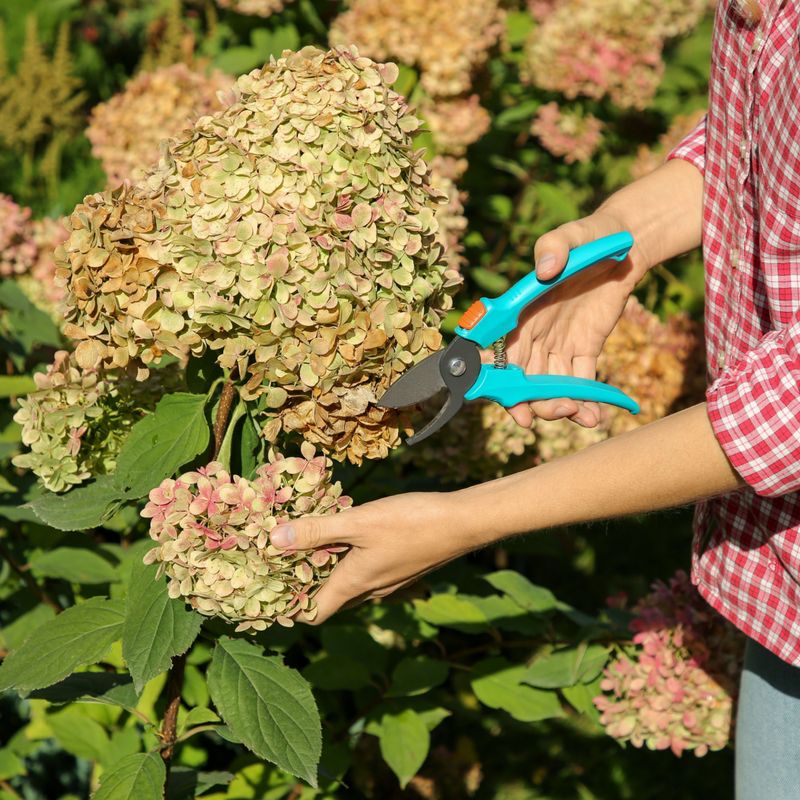
When you have confirmed that your hydrangea is a traditional old-wood type and it has recently finished flowering, a small amount of maintenance may be appropriate, provided the timing still allows for it. The emphasis here belongs on the word small.
University of Georgia Cooperative Extension pruning guidance recommends removing only a limited portion of older stems rather than shearing the plant, and advises against cutting the entire shrub back. The practical work at this point is removing stems that are clearly dead or visibly damaged, and nothing more unless you have a specific reason to shape the plant.
Deadheading, which means removing the spent flower heads, is optional rather than required. Penn State Extension’s deadheading guidance notes that removing a faded flower head is a small cosmetic cut and does not guarantee more flowers the following year.
On old-wood hydrangeas, the main goal is preserving the buds that are already forming lower on the same stems, not triggering new bud production by removing old flowers.
Some gardeners choose to leave faded mophead flowers on the plant through winter. RHS hydrangea pruning guidance acknowledges that dried flower heads can provide visual interest and may offer a small degree of frost protection to the buds beneath them in colder climates.
Whether to deadhead now or leave the heads until spring is a judgment call that depends on your climate and personal preference, not a requirement for next season’s blooms.
Oakleaf hydrangea deserves special mention here. UGA Extension’s identification guide favors especially minimal pruning for oakleaf types after flowering, with plenty of stem left intact for the plant’s structure, fall color, and winter interest.
If you have an oakleaf hydrangea, remove only what is clearly dead or broken and leave the rest alone.
Place each cut above healthy growth
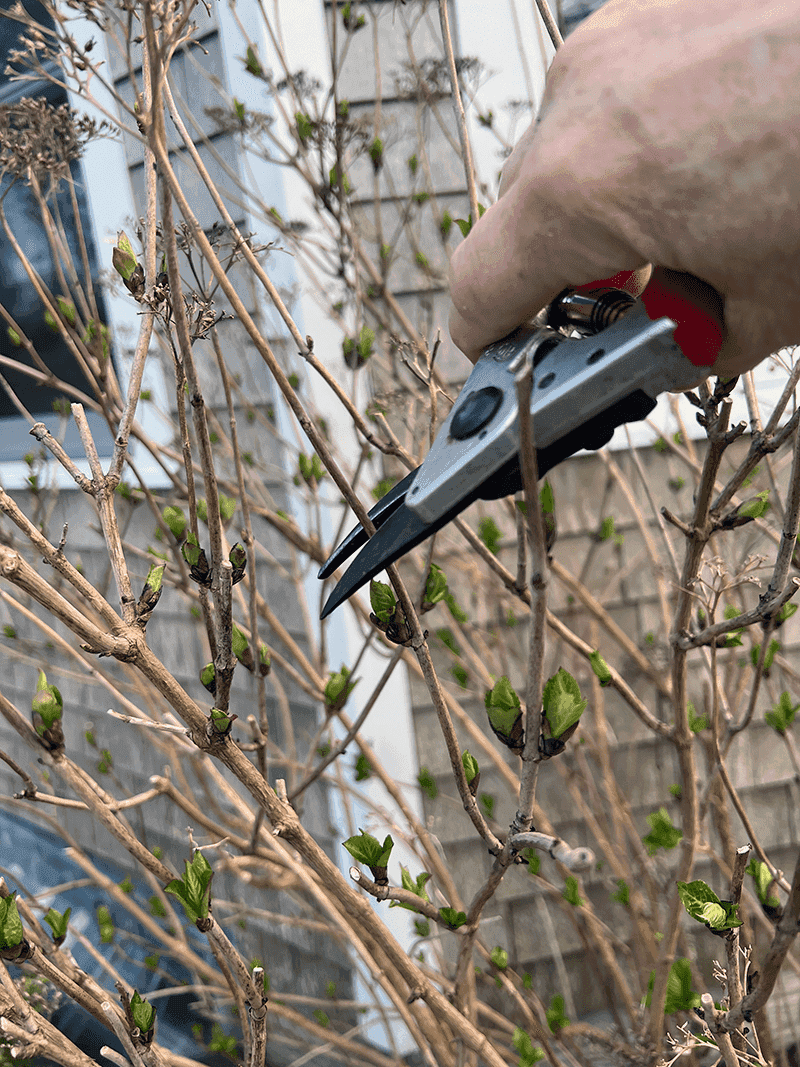
The number of cuts you make on an old-wood hydrangea in August should be small, but every cut still benefits from being made correctly. A careless cut in the wrong spot can damage the bud you were trying to protect, or leave a stub that dies back and invites disease.
Oregon State University Extension’s hydrangea care guide recommends making cuts just above a healthy bud or lateral branch, using sharp, clean tools. Dull blades crush stem tissue rather than cutting cleanly, which slows healing and creates an entry point for pathogens.
When shortening a selected live stem for shape, look for an outward-facing bud, one that points away from the center of the shrub rather than toward it. Cutting just above that bud encourages new growth to move outward, which helps keep the interior of the plant open and reduces crowding over time.
Illinois Extension’s pruning technique guidance supports this approach for directing new growth in a healthy direction.
For dead wood, cut back to where the stem shows live tissue, which usually appears green or cream-colored just under the bark when you nick it lightly. If an entire stem is dead all the way to the base, remove it cleanly at ground level.
Wipe or dip your blades with a diluted bleach solution or rubbing alcohol between cuts if you suspect any disease, and wipe them dry before moving to the next stem.
Keep the total number of cuts low. A hydrangea that needed only dead-wood removal and perhaps one or two cosmetic snips is in a better position heading into bud-set season than one that received an enthusiastic shaping session that removed several healthy stems.
After August 1, uncertainty calls for restraint
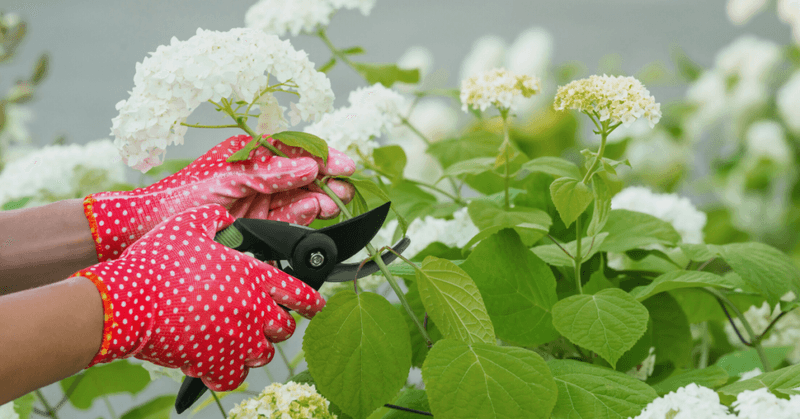
August 6 is a specific date, and that specificity matters here. Illinois Extension uses August 1 as a conservative cutoff for pruning traditional old-wood bigleaf hydrangeas, because those plants can begin forming next season’s flower buds in late summer, often described as the August-to-September window.
Once bud formation has started, cuts that remove healthy stems can take next year’s flowers with them.
Gardeners acting on August 6 with an unidentified shrub should not remove healthy stems simply because the flowers have faded and the plant looks tired. Faded flowers on living green stems are not a reason to cut.
The only safe action on an unknown plant at this point is to remove wood that is clearly dead, diseased, or physically damaged.
Cultivar-specific or locally verified guidance may support limited maintenance beyond that baseline. If you know the cultivar name, your local cooperative extension office or a reliable regional source may be able to confirm whether your specific plant and your specific location allow for post-bloom shaping after August 1.
Without that confirmation, the conservative approach protects next season’s potential flowering more reliably than a well-intentioned guess.
Regional climate also plays a role in where the line falls. University of New Hampshire Extension recommends waiting until spring to prune in colder climates, because fall cuts can increase the risk of winter injury to tender tissue near the cut site.
Oregon State Extension notes that some gardeners prune successfully in fall or spring in milder climates, but still observes that later and more substantial cuts tend to reduce subsequent flowering. Your hardiness zone and typical winter conditions should factor into any decision made after the conservative early-August window has passed.
Panicle and smooth hydrangeas wait for late winter
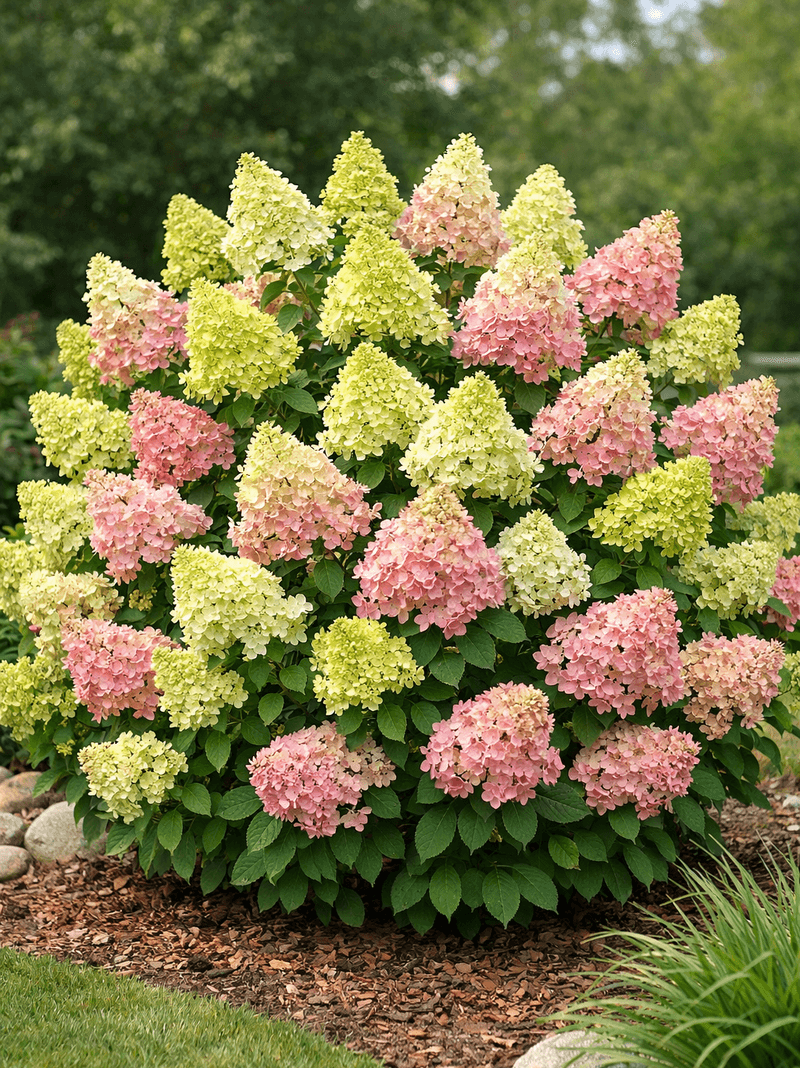
Panicle hydrangeas and smooth hydrangeas follow a completely different schedule, and applying old-wood advice to them causes unnecessary caution at the wrong time of year. Both types bloom on new wood, meaning they produce their flower buds on stems that grow during the current season, not on stems carried over from the previous year.
Penn State Extension’s pruning guide by species explains that panicle hydrangeas, including well-known cultivars such as Limelight and Bobo, and smooth hydrangeas, including the popular Annabelle, generally tolerate more substantial pruning without sacrificing the following season’s flowers. The reason is straightforward: because they bloom on new wood, cutting back old stems does not remove next year’s buds.
The right time for that pruning is late winter or early spring, before new growth begins. Cutting these plants back during dormancy allows the plant to direct energy into vigorous new stems when growth resumes, which is where the flowers will form.
An August cut is not the appropriate moment for a major reduction on either type.
University of Minnesota Extension’s pruning guide reinforces this timing and notes that panicle hydrangeas are among the most adaptable and forgiving types, but that adaptability applies to the late-winter pruning window, not to late-summer cuts made for the wrong reasons.
If you are not certain whether your plant is a panicle or smooth type, check the cultivar name before doing anything beyond removing dead or damaged wood. Cone-shaped flowers that age from white or cream to pink are a common visual indicator of panicle hydrangea, but visual confirmation alone is not a substitute for knowing the cultivar name and verifying the appropriate pruning schedule.
Reblooming cultivars need a separate expectation
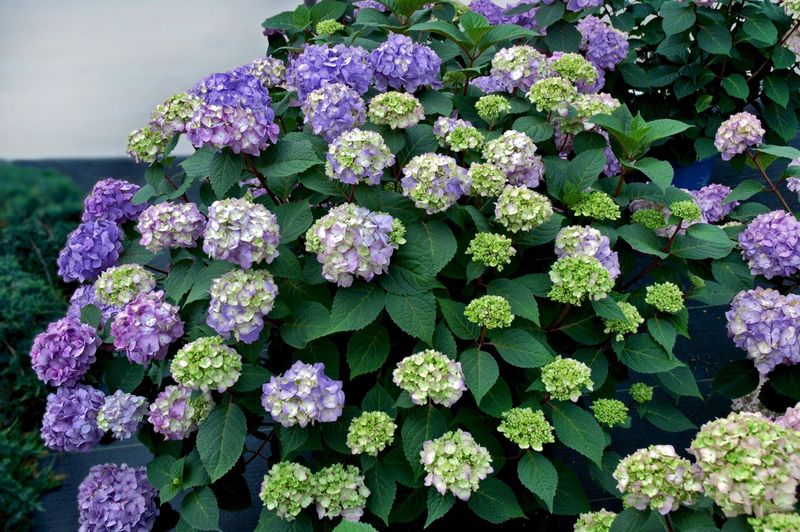
Reblooming or remontant bigleaf hydrangea cultivars occupy a different category from traditional old-wood types, and treating them identically leads to mismatched expectations. Cultivars in the Endless Summer group, along with other remontant bigleaf selections, can produce flower buds on both old wood and new wood.
That dual capacity makes them more forgiving when old-wood buds are lost to pruning, cold damage, or a mistimed cut.
University of Minnesota Extension notes that reblooming bigleaf types can flower on current-season growth, which means losing old-wood buds does not necessarily eliminate all flowering the way it would on a traditional bigleaf hydrangea. However, the early flush of blooms, which comes from old-wood buds, can still be affected by pruning, and the plant’s overall shape may change depending on how much is removed.
This exception is worth knowing, but it should reinforce the identification step rather than replace it. Penn State Extension points out that confirming the cultivar name is still the most reliable way to know what your specific plant can tolerate.
A shrub labeled Endless Summer or another named rebloomer can handle more flexibility than an unidentified traditional bigleaf, but that flexibility has limits and does not mean unlimited pruning is safe at any time of year.
Reblooming cultivars do not eliminate the need for careful timing. They simply widen the margin of error slightly, which is useful to know if you have already made a cut and are wondering whether next season’s flowers are gone entirely.
Poor flowering has causes beyond pruning
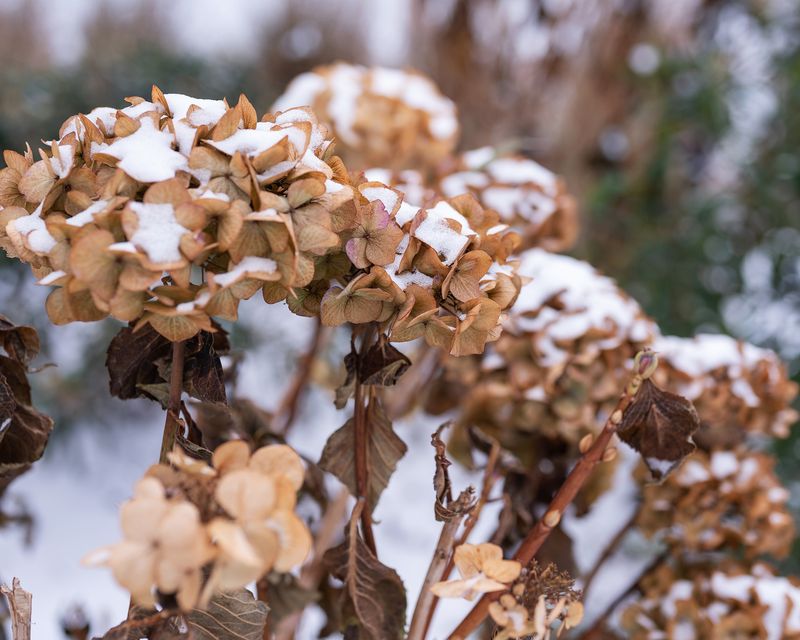
Pruning at the wrong time is one reason a hydrangea may not bloom well, but it is far from the only one. Gardeners who have been careful with their pruning schedule and still see few flowers should look at other factors before assuming the timing was the problem.
Winter or spring freeze damage is among the most common causes of bloom failure in bigleaf hydrangeas. The flower buds on traditional old-wood types are tender and can be killed by a late frost or a harsh winter, even when the stems themselves survive.
Penn State Extension’s guide to hydrangea bloom failure lists freeze damage to buds, insufficient light, heat and drought stress, unsuitable hardiness for the local climate, and deer or rabbit browsing as documented causes of poor flowering that have nothing to do with pruning.
Low light is a frequently overlooked factor. Hydrangeas grown in heavy shade may produce lush foliage but very few flowers.
If a plant has been healthy and well-timed in terms of pruning but consistently underperforms, consider whether it is receiving enough direct sun for its type.
Heat-stressed hydrangeas deserve particular care. Wilting or scorched leaves in summer do not automatically mean the plant needs to be cut back.
Oregon State Extension’s heat wave guidance for hydrangeas recommends shade and consistent moisture for plants showing heat stress, not reflexive pruning. Cutting a plant that is already struggling adds stress rather than relieving it.
Oregon State Extension’s general hydrangea care resource also notes that bigleaf types are generally less tolerant of heat and drought than panicle hydrangeas, which is worth keeping in mind when diagnosing a struggling plant in a hot summer.
The practical rule for August is straightforward: identify the plant, respect the timing window for its type, remove only what the evidence clearly supports removing, and protect healthy stems rather than cutting based on a promised bloom increase. A hydrangea that holds onto its old-wood buds through late summer is already doing exactly what it needs to do for next season.