
Skip The Weed Killer—Here’s How Plain Vinegar Clears Weeds Fast Without The Chemicals
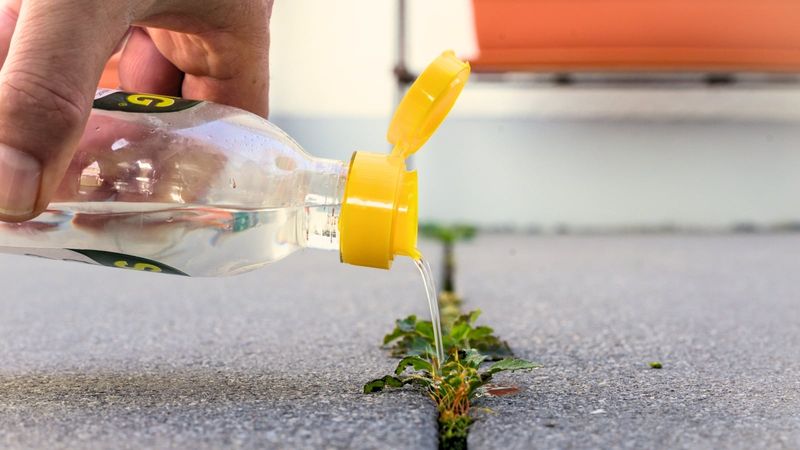
Plenty of gardeners have spotted a video or post claiming that a splash of kitchen vinegar wipes out weeds in minutes, no sprayer or safety gear required. The idea is appealing: something already in the pantry, cheap, and familiar.
But the full story is a bit more complicated, and knowing the difference between what vinegar actually does and what it gets credit for can save your tomatoes, your flower bed, and a lot of wasted effort.
Vinegar burns weeds quickly without clearing them permanently
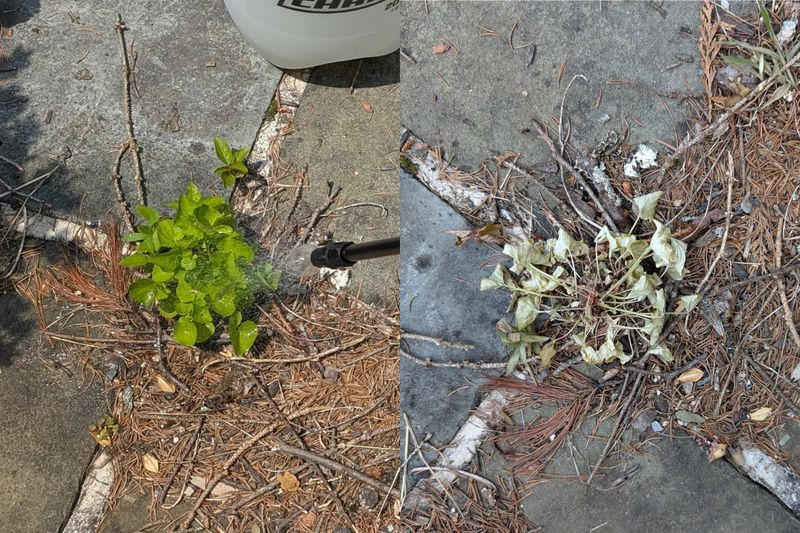
Gardeners often reach for vinegar after seeing weeds brown up within hours of a midday application, and that quick visible change is real. What is happening is that acetic acid, the active ingredient in vinegar, attacks plant-cell membranes on contact and rapidly pulls moisture out of the foliage it touches.
The result is that wilted, scorched appearance that looks like the job is done.
The catch is that a brown top does not mean a dead plant. University of Maryland Extension research on vinegar as an herbicide alternative makes clear that acetic acid works as a nonselective contact herbicide: it damages only the tissue it physically reaches and does not travel down through the plant stem to the root system.
The roots, crown, and underground stems remain largely untouched.
Because the kill zone stops at the soil line, any weed with a living root can send up new growth within days. The browning you see is foliage damage, not plant death.
This matters most for perennial weeds and anything with a taproot or a dense underground structure, but even some annuals can push out replacement leaves if the roots survived.
Vinegar is also not a selective tool. It burns whatever green tissue it contacts, which means a careless application near a vegetable bed or flower border can damage the very plants you are trying to protect.
The article that follows explains exactly which weeds are realistic targets, which ones will simply grow back, and where vinegar fits as a carefully limited spot-treatment option rather than a broad garden solution.
Target tiny annual weeds, not every weed in the yard
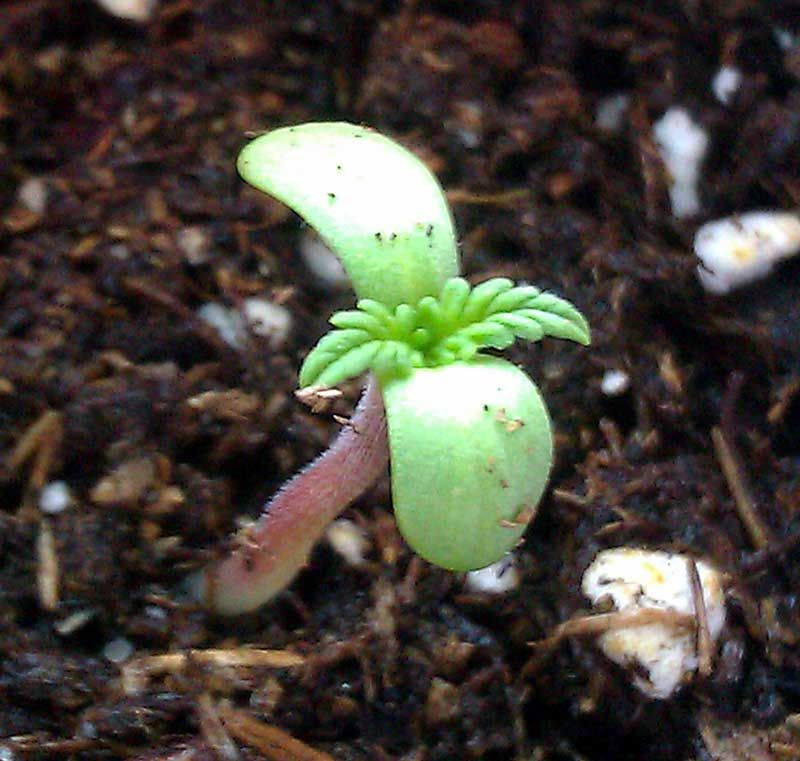
Household vinegar has its best chance on weeds that are very small, very young, and growing somewhere they have no protection from the sun. Specifically, newly emerged annual broadleaf weeds at the cotyledon stage, which is when just the first pair of seed leaves has appeared, or at the first-true-leaf stage, are the most susceptible targets.
At that size, the entire above-ground plant can be contacted in a single application, and there is almost no root mass stored up to fuel regrowth.
University of Maryland Extension identifies these seedling-stage annual broadleaf weeds as the most realistic targets for household acetic acid. Warm temperatures, bright sunlight, and dry air all accelerate the desiccation process, so an application on a hot, sunny afternoon is more likely to produce visible browning than one on a cool, overcast morning.
Before reaching for the bottle, run a quick assessment. Ask yourself: Is this weed annual or perennial?
Is it smaller than a few inches across, or does it already have a thick stem and established leaves? Is it growing in a crack, gravel path, or patio joint where there are no desirable plants nearby?
If the answers are “annual,” “tiny,” and “isolated non-planted area,” you have a reasonable candidate. If the weed is already several inches tall, has a visible taproot, or is growing through a lawn or garden bed, the odds of lasting control drop sharply.
Oregon State University Extension reinforces this point: results vary substantially with weed species, age, concentration, and weather, so the same bottle of vinegar can look impressive on one weed and accomplish almost nothing on a neighbor a foot away.
Established weeds can recover from the brown top
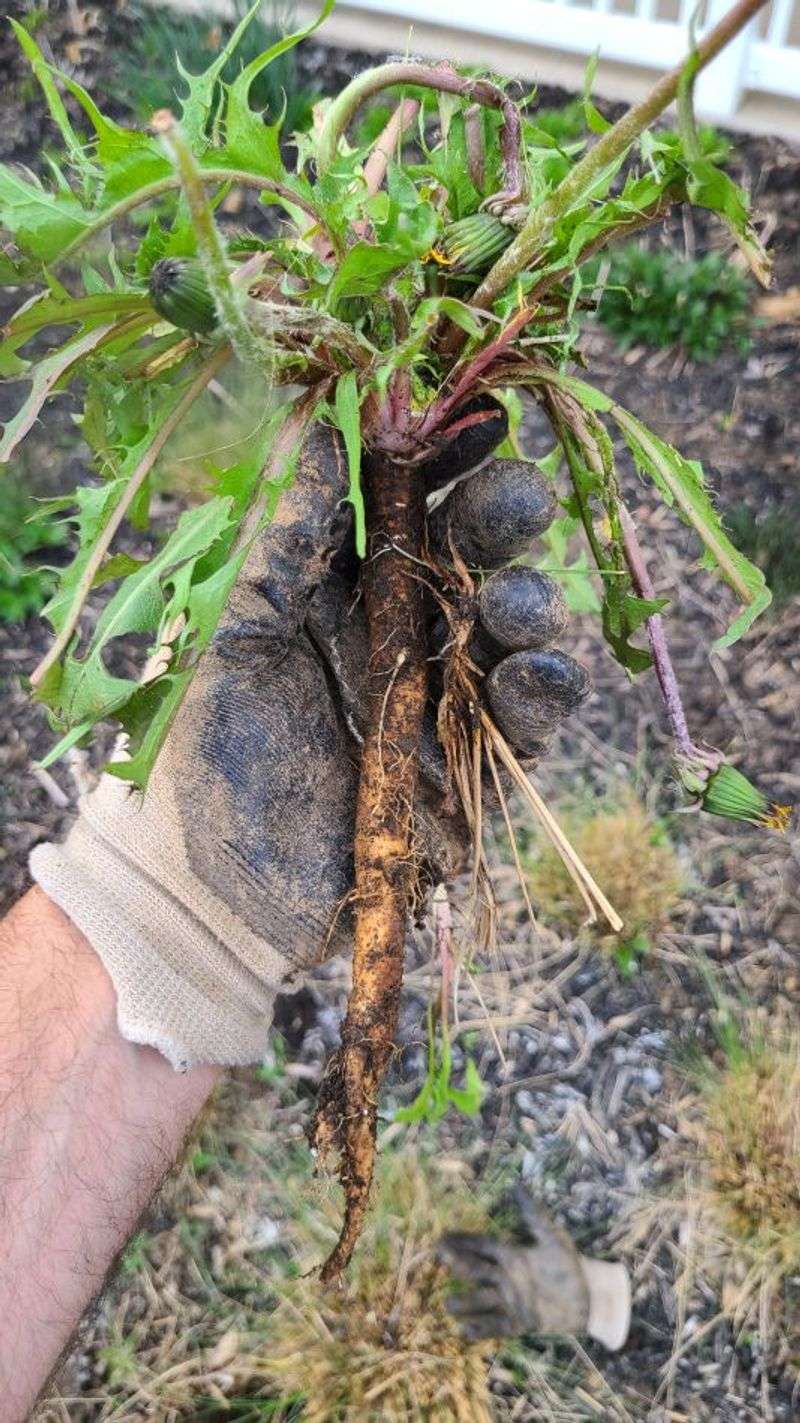
Once a weed gets past its seedling stage, the odds shift against vinegar in a meaningful way. Larger annual weeds have more stored energy, more leaf surface to replace, and a root system that acetic acid simply never reaches.
Perennial weeds, tap-rooted plants, and those with underground rhizomes or stolons are in an even better position to survive, because the entire food-storage system sits below the spray zone.
Dandelions are a useful example. The taproot on a mature dandelion can reach six inches or more into the soil, and University of Maryland Extension notes that acetic acid does not move systemically through the plant.
Burning off the rosette of leaves looks satisfying, but the root stays alive and sends up fresh growth within a week or two. Repeat applications keep the weed from photosynthesizing efficiently, but they rarely deliver a permanent result on an established plant.
Poison ivy is another plant gardeners sometimes ask about. Oregon State University Extension is straightforward on this: contact herbicides that only affect foliage are not a reliable treatment for established vines or deeply rooted perennial plants.
Poison ivy in particular requires careful, repeated management, and handling any part of the plant without proper protection creates a serious skin and eye hazard regardless of what you spray.
Many grasses also fall into the “likely to recover” category. Grass plants store carbohydrates in their crown and root zone, so burning the blades back rarely eliminates the plant.
If you are dealing with a grassy weed inside a lawn, spraying vinegar creates an additional problem: it will brown the surrounding turf at the same time, leaving a dead patch that new weeds can colonize. Repeated top-burning without root kill is not a substitute for actual weed removal.
Household vinegar differs from horticultural vinegar

The label on a standard bottle of white distilled vinegar typically reads 5% acidity, which corresponds to roughly 5% acetic acid by weight. That is the concentration designed for food use, and it is what most people have in the cupboard.
Commercial horticultural vinegar products marketed specifically for weed control are a different category: they commonly contain 10%, 15%, or 20% acetic acid, and some formulations go higher still.
Concentration matters enormously for both performance and safety. The National Pesticide Information Center explains that stronger acetic-acid formulations may produce faster or more complete top-burn on young weeds, but they also carry substantially greater hazards to eyes, skin, and the respiratory tract.
Registered horticultural acetic-acid herbicides can carry a “DANGER” signal word specifically because of these risks. A product at 20% is roughly four times the concentration of typical kitchen vinegar and should not be treated as a kitchen-cupboard item.
Oregon State University Extension cautions that the two products are not interchangeable. Buying a jug of horticultural vinegar and using it the way you would use food-grade vinegar underestimates the exposure risk.
Eye protection, chemical-resistant gloves, and careful attention to drift are genuinely necessary with high-concentration products, not optional extras.
For most backyard situations involving tiny weeds in cracks or gravel, ordinary household vinegar at 4-6% is the appropriate starting point, used carefully with label guidance. If you are considering a commercial horticultural product, read the full label before purchasing, confirm it carries an EPA registration number, and follow every precaution listed, including reentry intervals and disposal instructions.
Stronger is not automatically better when the target is a seedling in a patio joint.
Protect every green plant from spray and drift
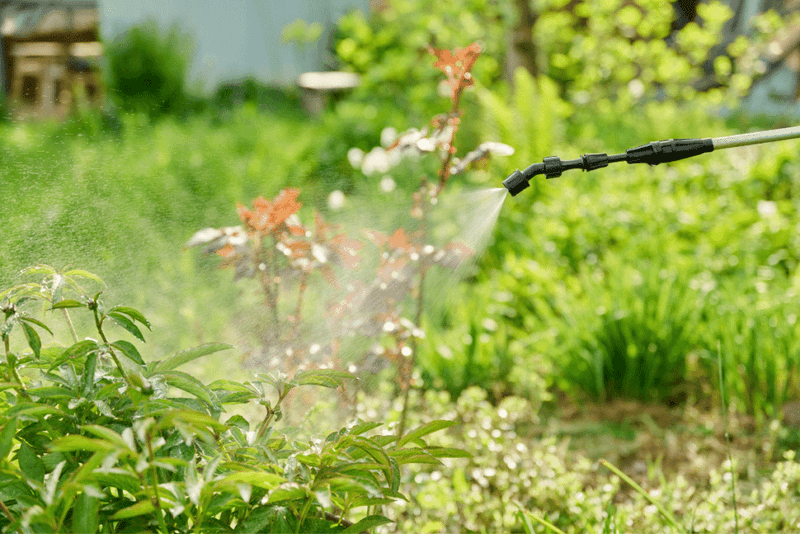
Acetic acid does not read a plant’s name tag before it burns. Any green tissue it contacts is at risk, which makes drift and overspray the most common ways a vinegar application goes wrong in a garden setting.
A light breeze during spraying can carry fine droplets several feet, and a slight misjudgment of angle can wet a nearby stem or leaf.
The plants most likely to be in harm’s way in a typical backyard include tomatoes, hydrangeas, petunias, clematis, geraniums, turfgrass, and garden shrubs. University of Maryland Extension warns that vinegar is nonselective, meaning damage to desirable plants is not a rare accident but a predictable outcome of careless application.
Even a small amount of overspray on tomato foliage can cause visible leaf burn within hours.
Turfgrass deserves a specific note. University of Maryland Extension’s guidance on lawn weed management is direct: acetic acid is not a selective lawn herbicide.
Spraying a lawn weed with vinegar also burns the surrounding grass blades, leaving a dead patch that can become an open invitation for new weed germination.
Safe application requires several practical steps. Spray only on calm days when wind speed is low enough that a tissue held at arm’s length does not flutter.
Use a small, targeted sprayer or a squeeze bottle rather than a pump sprayer set to a wide fan. Protect nearby plants with a physical barrier like a piece of cardboard held between the weed and the plant while you spray.
NPIC advises following the product label for required protective equipment, reentry intervals for people and pets, and lawful disposal. Wear chemical-resistant gloves and eye protection even with household-strength vinegar, because repeated skin exposure and eye contact can cause irritation.
Avoid salt and unproven vinegar mixtures
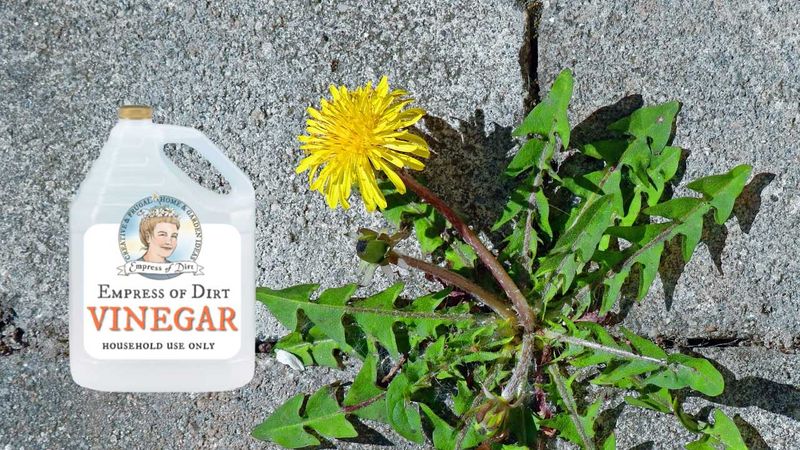
Search for vinegar weed killer online and you will quickly find recipes calling for table salt, dish soap, or both. These additions sound logical, but the reasoning behind them does not hold up when you look at what each ingredient actually does to soil and plants over time.
Salt is the bigger concern. Sodium chloride can suppress plant growth on contact, but it does not stay where you put it.
Penn State Extension notes that salt can accumulate in soil, damage nearby plants and tree roots, impair future plant growth in treated areas, and move with rainwater runoff into adjacent garden beds or lawn areas. Using a salt-and-vinegar mixture near a vegetable garden, flower border, or lawn edge risks creating a zone where nothing grows well for a season or longer.
That is a steep price for killing a few weeds in a patio crack.
Dish soap is presented in many recipes as a surfactant that helps vinegar stick to waxy weed leaves. Oregon State University Extension does not endorse soap-and-vinegar mixtures as a proven, broadly effective weed control method.
Soap can help acetic acid contact leaf surfaces more completely in some situations, but it does not make the mixture selective, and it does not prevent injury to surrounding plants. In hot, sunny conditions, soapy spray can increase the risk of burn to desirable foliage.
Plain household vinegar, used carefully within its actual limitations, is a more defensible approach than an improvised recipe. Adding ingredients that can harm soil or nearby plants does not make the treatment stronger in any reliable way, and it introduces new problems that are harder to undo than a single burned weed.
Use hand removal and mulch in garden beds
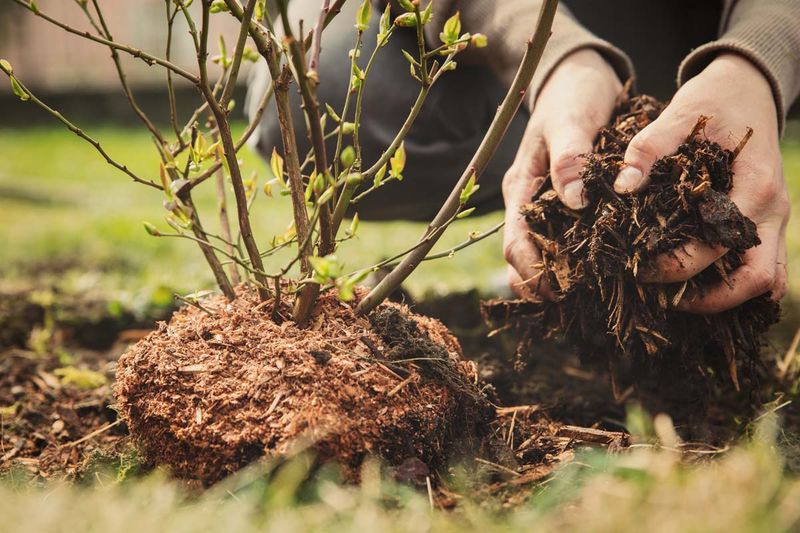
For weeds growing among vegetables, flowers, or shrubs, the most reliable strategy is not a spray of any kind. Hand removal followed by a layer of mulch addresses the existing weed, reduces the conditions that let new weeds establish, and does not put nearby plants at risk of chemical contact.
Pull or dig weeds before they set seed, getting as much of the root as possible. For tap-rooted weeds like dandelions, a narrow weeding tool that reaches several inches into the soil is more effective than pulling by hand, which often leaves root fragments behind.
Once the area is clear, apply 2 to 4 inches of organic mulch such as wood chips, shredded bark, or straw. University of Minnesota Extension explains that mulch works by blocking the light that weed seeds need to germinate, making it a genuinely preventive tool rather than just a cosmetic one.
Keep mulch pulled back an inch or two from plant stems and trunks to avoid moisture-related rot.
Vinegar, by contrast, offers almost no residual weed-prevention benefit. Oregon State University Extension confirms that acetic acid breaks down relatively quickly and has little effect on seeds that germinate after application.
Burning weeds repeatedly without mulching simply resets the competition each time new seedlings emerge.
If you do use a vinegar-based product and want to compost the treated plant material, Oregon State University Extension notes that organic acids generally break down during active composting. Still, follow any instructions on the product label and check local guidelines before adding treated material to a compost pile.
Hand removal and mulch together give you a weed-management approach that actually improves the garden over time rather than just knocking tops back.
Match the method to the weed and the location
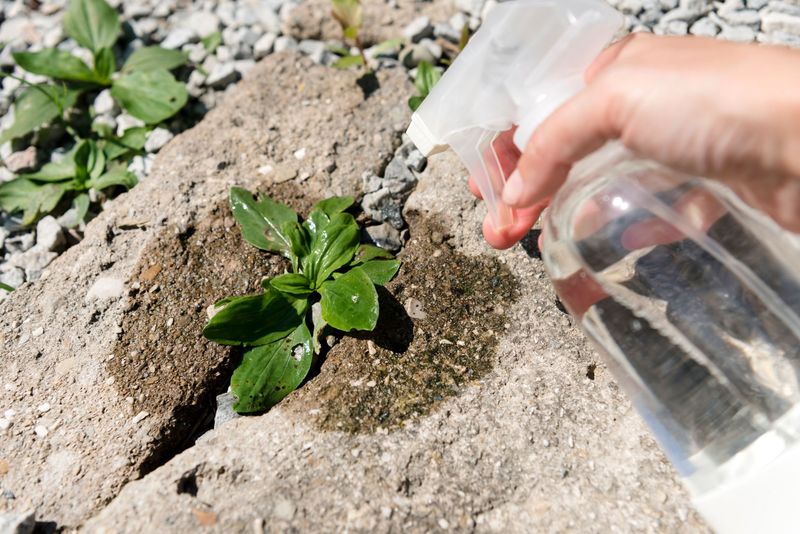
A simple location test goes a long way toward deciding whether vinegar is the right tool. Tiny annual weeds sprouting in a patio crack, gravel path, or driveway joint are reasonable candidates for careful, label-permitted spot treatment with household vinegar.
Weeds growing in a lawn, a vegetable bed, or among flowers are not, because the nonselective nature of acetic acid puts every green neighbor at risk.
University of Maryland Extension and the National Pesticide Information Center both frame vinegar as a contact herbicide, not a cure-all. For garden beds, the durable answer is still hand removal of existing weeds paired with 2 to 4 inches of mulch to slow the next round of germination.
Rapid browning after a vinegar application is a foliage response, not confirmation that the root is gone. Treat it as a signal to watch the spot for regrowth rather than a reason to move on.
The gardeners who get the most out of vinegar are the ones who use it narrowly, carefully, and with realistic expectations about what a kitchen-cupboard acid can and cannot do to a living root system.