
What It Really Means When A Fox Starts Crossing Your North Carolina Yard At Dusk

Catching a fox slipping through your yard as the sun goes down can stop you in your tracks. Most North Carolina homeowners wonder what it means, whether something is wrong, and what they should do next.
The honest answer is usually simpler than you might expect, and knowing it can help you respond calmly, protect your animals, and make smarter choices about your yard.
The crossing usually marks a route, not a warning
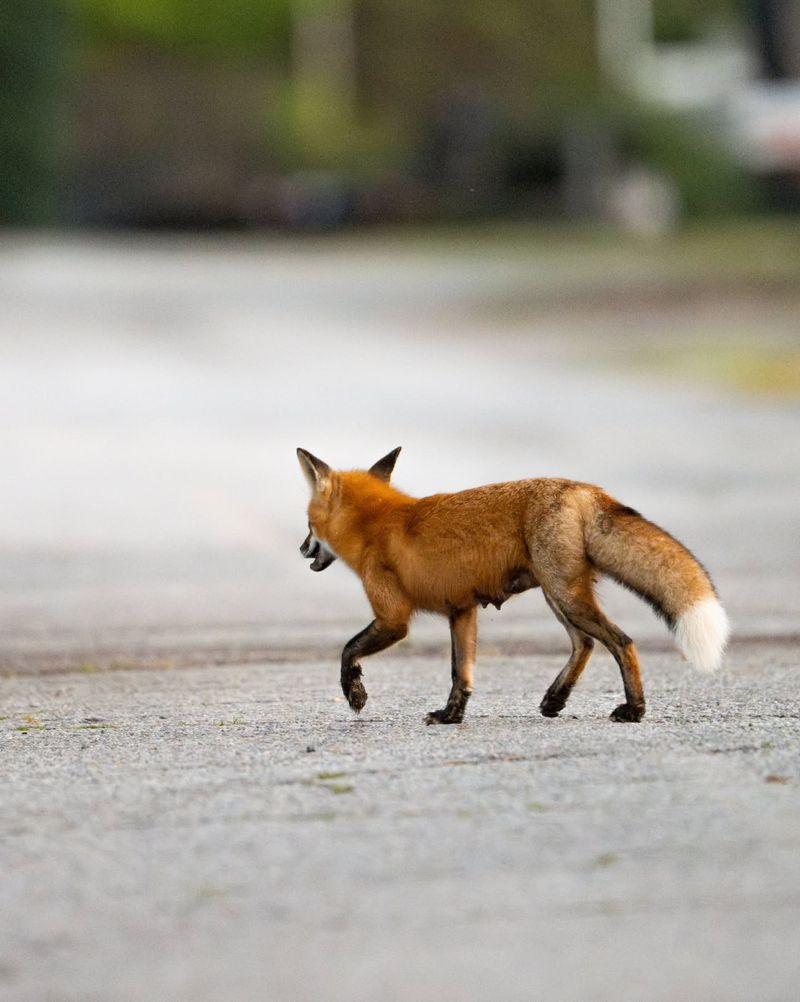
Watching a fox trot across the yard and disappear into the neighbor’s hedgerow is one of those sightings that sticks with you. Most of the time, that animal is simply moving through territory it has used before.
NC Wildlife’s red fox profile notes that neighborhoods can supply both food and denning cover, which means residential yards often fall right inside a fox’s regular travel corridor.
Foxes cover a lot of ground each night. A single animal may range across many acres, checking familiar spots for prey, water, or shelter in a loose loop it repeats on its own schedule.
Your yard is one stop among many, not a chosen destination with a specific message attached.
What draws a fox to a particular yard is usually a combination of things: small prey animals, insects, fallen fruit, spilled bird seed, unsecured garbage, outdoor pet food, or good cover beneath a deck or shed. Research on residential yard wildlife shows that predator presence, prey abundance, and human-provided resources can all shape where wild animals spend their time, sometimes independently of each other.
A single crossing is not a sign that something dangerous is happening. The fox is not sounding an alarm about a pest infestation, and its presence alone does not confirm that the yard has a health problem or an unusually large rodent population.
Think of the sighting as a piece of information worth examining, not a verdict about the yard.
The rest of this article walks through what the timing of the visit means, what the fox may be finding in the yard, and how to respond in a way that protects your household without unnecessarily driving off a native animal.
Why dusk is ordinary fox time
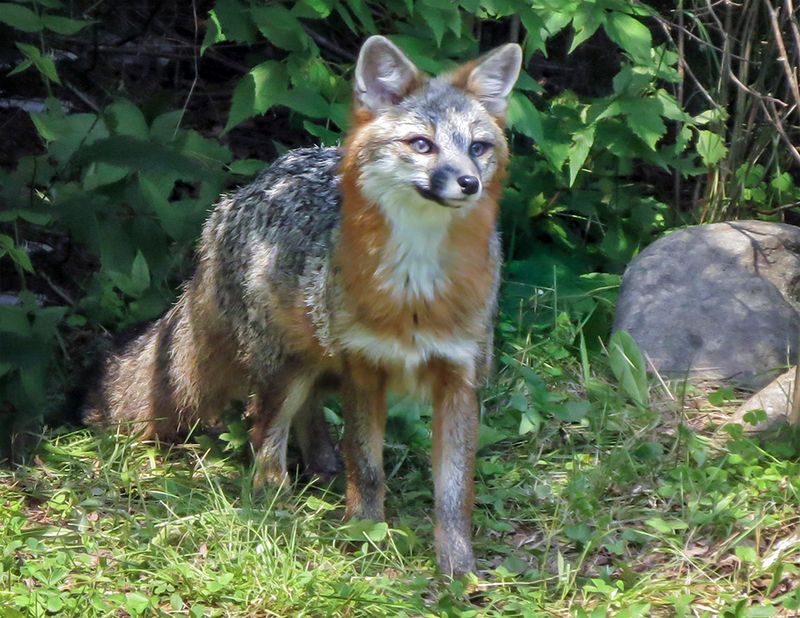
Foxes are primarily nocturnal animals, and dusk is simply the start of their active window. Seeing one at that hour is roughly as ordinary as seeing a deer at dawn or a squirrel at midday.
The timing alone carries no warning.
North Carolina is home to two fox species, and each has its own habits. NC Wildlife describes the red fox as an animal that favors open edges, old fields, and suburban areas where forest meets lawn.
The gray fox, covered separately in the NC Wildlife gray fox profile, tends to stay closer to wooded or brushy habitat and is notably comfortable moving during daylight as well as after dark. A brief glimpse at dusk usually will not tell you which species you saw, and that distinction matters less than understanding the behavior.
Both species are well established across the state. Their activity patterns shift somewhat with season, denning obligations, and prey availability, but neither animal is behaving strangely by moving at dusk or even in the early afternoon.
NC Wildlife explicitly notes that daytime sightings are not unusual and are not, by themselves, a sign of disease.
The rabies question comes up often when people see a fox during daylight or at an unexpected hour. Timing alone is not a reliable indicator.
What matters more is behavior: a fox that is stumbling, circling, acting aggressively without provocation, or approaching people without hesitation is worth reporting to animal control. A fox that trots through the yard, glances around, and moves on is doing exactly what foxes do.
A fox can point to food availability without proving rodents

Mice, voles, rats, and rabbits are real and important parts of a fox’s diet in North Carolina. If a fox keeps crossing the same yard, small prey animals may well be part of the reason.
That said, one fox cannot measure how many rodents are living in the grass, and its presence does not prove a serious infestation or even a large population.
NC Wildlife’s fox resources list a wide range of foods beyond rodents: insects, birds, rabbits, fruit, and carrion all appear regularly in a fox’s diet. Add to that list the human-provided resources that accumulate in residential yards, including spilled seed beneath bird feeders, unsecured trash, outdoor pet food left overnight, and fallen apples or persimmons from backyard trees.
Any one of these can attract a fox independently of rodent availability.
A Frontiers in Ecology and Evolution study on urban wildlife and backyard resources found that supplemental feeding and other human-provided food sources can strongly influence where wild animals concentrate, sometimes as much as or more than natural prey. A fox drawn to a yard by a full compost bin or a messy bird feeder is not tracking a rodent problem; it is tracking calories.
Dense ornamental shrubs, brush piles, and gaps beneath structures can also attract a fox for shelter rather than food. The animal may be using the yard as a rest spot or a travel corridor with no particular prey target in mind at all.
The practical takeaway is to treat the fox as a prompt to inspect the yard for multiple possible attractants, not as a diagnostic tool that has already identified the problem for you.
What the fox does—and does not—say about ecosystem balance
Foxes are native predators in North Carolina, and they participate in a food web that includes rodents, rabbits, birds, insects, and a range of other species. Seeing one on your property is consistent with having functional habitat nearby.
That is worth appreciating, but it is not the same as having a perfectly balanced or certified-healthy ecosystem.
NC Wildlife’s fox resources make clear that foxes eat birds and rabbits alongside rodents, and they can also be drawn in by garbage or pet food rather than natural prey. One animal passing through a yard cannot tell you much about the overall health of the surrounding habitat, especially when human-provided food may be part of its route.
Tick control is a separate question that sometimes gets attached to fox sightings, and it deserves an honest answer. A peer-reviewed study on rodent behavioral responses to predation risk found that red-fox activity reduced rodent occurrence and movement in that particular study system, with possible implications for tick-borne disease ecology.
That finding is real and interesting. It does not mean, however, that a fox in your North Carolina yard will measurably reduce your local tick population or your Lyme disease risk.
The study reflects conditions in a specific research setting, not a guarantee that applies yard by yard.
Foxes eat ticks occasionally as part of grooming or while consuming prey, but they are not tick-control specialists, and no responsible source frames them that way. Maintaining a tick-safe yard still requires its own set of practices: mowing edges, managing leaf litter, treating pets, and using appropriate barriers.
A fox does not replace any of those steps.
A quick yard audit reveals what may be drawing it in

Before assuming the fox has found a rodent problem, take a walk around the yard with fresh eyes. Several common yard features attract foxes reliably, and checking them costs nothing.
Think of it as gathering evidence rather than confirming a theory.
Start beneath any bird feeders. Spilled sunflower seeds and millet attract mice and sparrows, which in turn attract foxes.
A feeder that spills generously onto the ground can create a small feeding station for multiple species stacked on top of each other. NC Wildlife’s fox guidance specifically names unsecured food sources as a key draw for foxes in residential areas.
Check garbage cans and compost bins for loose lids or gaps. Even a small amount of accessible food waste can be enough to bring a fox back to the same spot repeatedly.
Outdoor pet food is another frequent culprit; a bowl left on the porch after dark is essentially an open invitation.
Walk the yard’s edges and look for fruit on the ground beneath trees. Fallen apples, pears, figs, or berries are high-calorie food that foxes will eat directly.
Brush piles, dense ornamental shrubs, and stacked firewood can provide cover that makes the yard feel safer for resting or moving through.
Finally, check gaps beneath decks, sheds, porches, and crawl spaces. NC Wildlife’s wildlife problem FAQs identify these enclosed spaces as common denning or sheltering locations.
A gap as small as four inches can be enough for a fox to squeeze through. Finding an opening does not mean a fox is living there, but it is worth noting before you decide on next steps.
Remove the invitation while leaving a passing fox alone

Once the yard audit is done, the response is straightforward: remove or secure whatever is drawing the fox in, and give a merely passing animal room to leave on its own. Chasing, cornering, or harassing a fox that is simply moving through the yard is unnecessary and can stress the animal or provoke defensive behavior.
Clean beneath bird feeders every few days, or switch to a tray-style feeder that catches spilled seed. Bring outdoor pet food inside before dark.
Use trash cans with locking or weighted lids, and keep compost in a sealed bin rather than an open pile. Pick up fallen fruit regularly, especially during late summer and fall when fruit trees drop heavily.
CDC guidance on wildlife and healthy pets advises against feeding wildlife of any kind, because habituation can reduce wariness and increase the chance of conflict over time.
Do not feed the fox intentionally, even with the idea that a well-fed fox will stay around and hunt rodents. Feeding shortens the distance a fox keeps between itself and people, which raises conflict risk and can make the animal harder to discourage later.
If the fox has been using a specific spot in the yard that is not a suspected den, and you have confirmed the area is unoccupied, Humane World for Animals recommends light deterrents such as motion-activated sprinklers, temporary noise, or increased human activity near that area. These work best as short-term discouragement when combined with removing whatever originally attracted the fox.
Suspected dens need a different approach entirely. NC Wildlife’s spring encounter guidance identifies late February through early summer as the period when fox kits are born and begin exploring outside the den.
Sealing or blocking an entrance during that window can trap adults or young animals inside. If you suspect a fox is denning beneath a structure, contact a licensed wildlife-control operator or NC Wildlife before taking any action.
Protect pets, poultry, and occupied dens before taking stronger action

Routine coexistence with a passing fox looks different from managing a fox that has settled near vulnerable animals or is causing real property damage. Knowing which situation you are in changes what you should do next.
Dogs should be leashed or directly supervised when outside, particularly at dawn and dusk. Cats and small pets are safest kept indoors after dark.
Poultry, rabbits, and other small livestock need predator-resistant housing, meaning a fully enclosed coop or pen with hardware cloth rather than standard chicken wire, a secure latch, and no gaps at ground level. NC DPH rabies control guidance reinforces the importance of keeping pets and livestock protected from contact with wildlife, which reduces both injury risk and potential rabies exposure at the same time.
If you find a gap beneath a shed, deck, or crawl space that a fox may be using, resist the urge to seal it immediately. NC Wildlife’s spring encounter guidance is clear that closing an occupied den can trap animals inside, causing harm to the fox and creating a worse problem for the homeowner.
Loosely stuffing the opening with newspaper or leaves and checking whether it has been disturbed after a day or two can help you determine whether the space is actively in use before any permanent closure.
North Carolina prohibits relocating foxes and many other wildlife species. Trapping and releasing a fox elsewhere is not a legal option and can spread disease or create serious survival problems for the animal in unfamiliar territory.
NC Wildlife’s wildlife problem FAQs direct homeowners dealing with genuine conflicts, occupied dens, or property damage to contact a licensed wildlife-control operator or the NC Wildlife Helpline. That is the appropriate path when the situation goes beyond simple deterrence.
Know which encounters require prompt advice
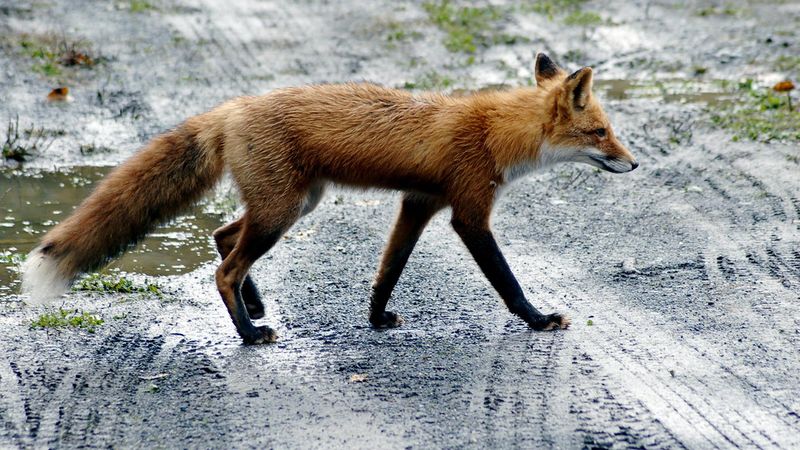
Most fox sightings in a North Carolina yard require nothing more than observation from a distance. A few situations, though, call for faster action, and being able to tell them apart matters.
Patchy fur on a fox in late winter or spring often reflects seasonal coat shedding rather than disease. The same animal showing lethargy, stumbling, unprovoked aggression, or self-mutilation is a different story.
NC Wildlife advises reporting animals with abnormal behavior to animal control rather than attempting to handle or medicate them. Do not touch a sick, injured, or dead fox.
Contact with saliva, nervous tissue, or broken skin can constitute a rabies exposure even without a visible bite.
If a fox bites or scratches a person, or if saliva contacts broken skin, the eyes, the mouth, or another mucous membrane, act immediately. Wash the wound thoroughly with soap and running water for a full 15 minutes.
Do not try to catch or follow the fox. Then contact a physician or your local health department without delay.
NC DPH rabies control guidance treats foxes as high-risk wildlife for rabies; unlike a healthy dog, cat, or ferret, a fox cannot be observed for 10 days as an alternative to post-exposure evaluation.
For a pet that has been bitten or scratched, or exposed to fox saliva through broken skin, wash the area gently if it is safe to do so, then contact a veterinarian promptly. Your vet may direct you to also notify animal control or public health, depending on your pet’s vaccination status.
CDC guidance for veterinarians and the CDC clinical overview of rabies both emphasize that prompt assessment after a genuine exposure is the standard of care.
Putting this in perspective: NC Wildlife’s 2026 furbearer newsletter reported 39 confirmed fox rabies cases in North Carolina in 2025, compared with 89 raccoons and 61 skunks. Those numbers support taking a real exposure seriously.
They do not make a distant fox crossing at dusk a medical event. A sighting from the back porch or contact with a fox’s intact fur is not an exposure, and it does not require emergency action.
Read the sighting as information, not an alarm
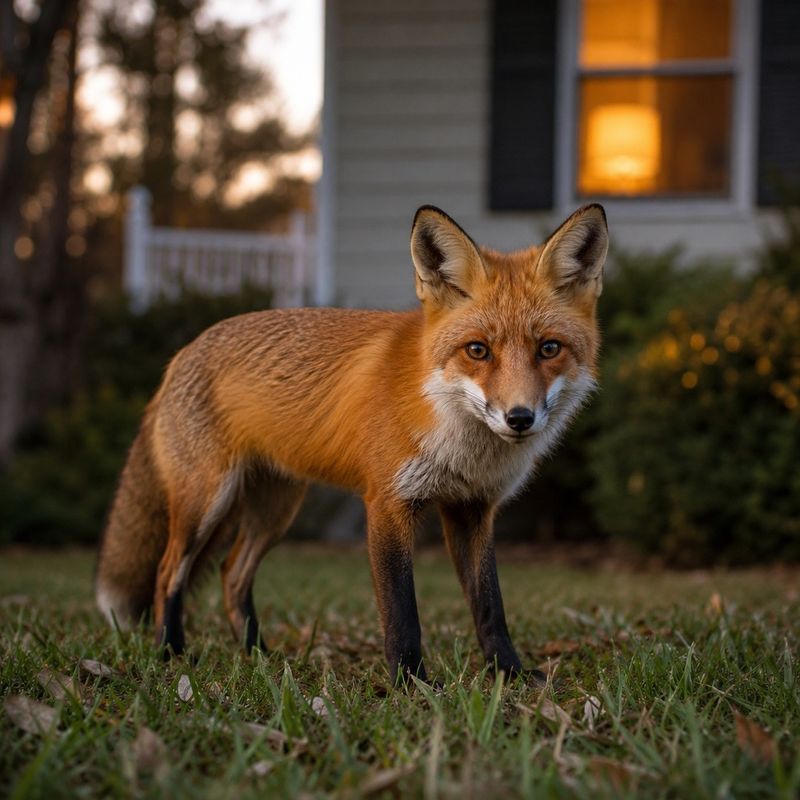
A fox crossing the yard at dusk is carrying information, not a verdict. NC Wildlife’s fox resources frame the animal as a native species moving through habitat that happens to include residential land, responding to whatever combination of food, cover, and familiar routes the neighborhood offers.
Rodents may be part of that picture, or the draw may be a messy feeder, a fruit tree, or a gap beneath the back steps.
The proportionate response has a short list: watch from a distance, audit the yard for attractants and remove them, protect pets and poultry with supervision and proper housing, and avoid feeding or handling the fox under any circumstances. Seek prompt guidance if a bite, scratch, or saliva exposure to broken skin or a mucous membrane occurs, if the fox is behaving abnormally, if a den beneath a structure creates a real conflict, or if property damage is ongoing.
NC DPH’s rabies control page and NC Wildlife’s helpline are the right starting points for those situations.
For everything else, a fox slipping through the yard at dusk is a reminder that North Carolina’s native wildlife is still out there navigating a landscape that now includes backyards, bird feeders, and back porches. Knowing what to look for, what to secure, and when to call for help puts you in a far better position than either ignoring the sighting or treating it as a crisis.