
Your Tomatoes Split Open Right As They Ripen – Here’s The Watering Fix That Stops It
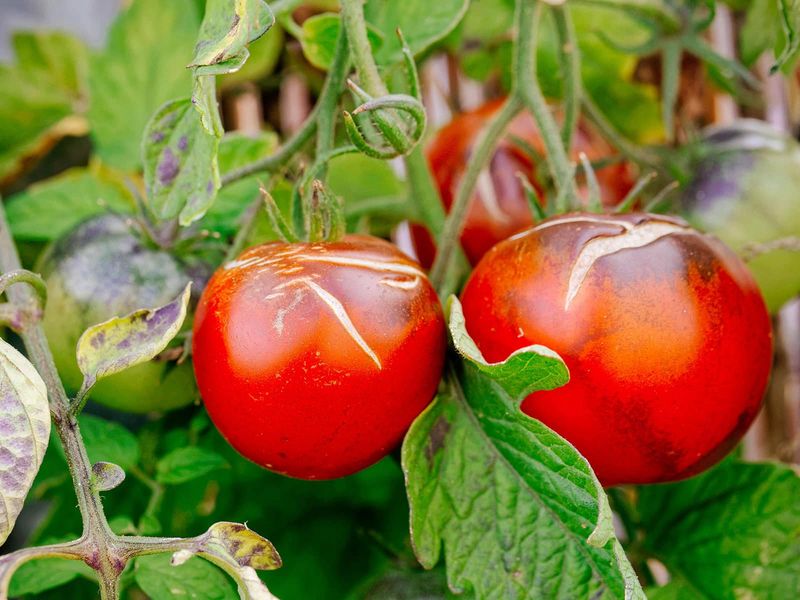
Walking out to your garden and finding a nearly ripe tomato split wide open is genuinely frustrating, especially when it happens to your best-looking fruit. The good news is that this problem, called a growth crack, is usually tied to a watering pattern you can adjust starting today.
Understanding why it happens puts you back in control, even if no single fix makes every tomato perfect.
The Split Tells You Where to Look
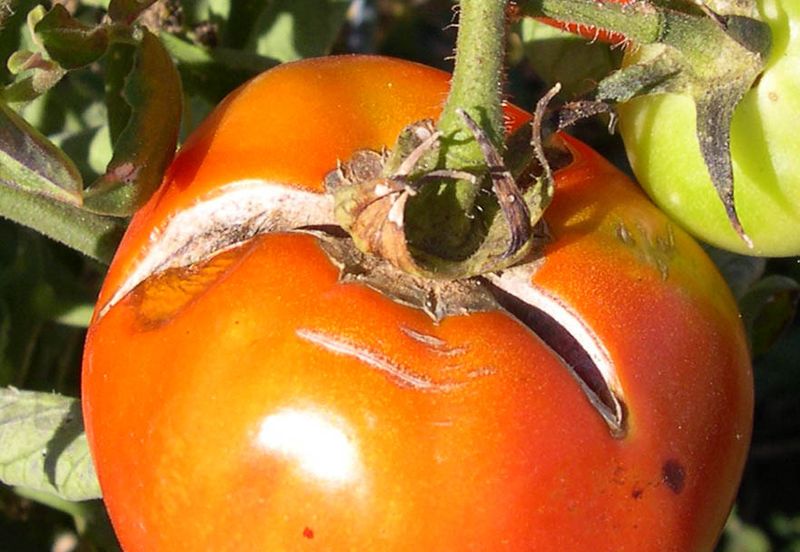
A cracked tomato near the top of the fruit is almost always showing you a growth crack, one of the most common physiological disorders in home gardens. University of Minnesota Extension describes two distinct patterns: radial cracks that extend outward like spokes from the stem scar, and concentric cracks that wrap around the shoulders of the fruit in rough rings.
Both patterns tend to appear on fruit that is actively growing or approaching ripeness, and both point toward the same underlying cause.
Knowing what type of crack you are looking at matters because other tomato problems can look similar at a glance. Blossom-end rot appears as a dark, sunken, leathery patch at the bottom of the fruit, the end farthest from the stem.
Sunscald typically shows up as a pale, flattened, papery area on whichever side of the tomato faces the sun directly. Catfacing causes bumpy, distorted fruit with corky scars and irregular shapes, usually the result of cold temperatures during fruit set.
Insect feeding and certain diseases can also leave marks on tomato skin, but those wounds tend to look irregular, pitted, or discolored in ways that differ from the clean, radiating or ring-shaped lines of a growth crack. Penn State Extension notes that correctly identifying the disorder is the first step, since the management approach for growth cracks differs from what you would do for a nutrient deficiency or a disease problem.
If the cracks are near the stem end and the rest of the fruit looks healthy, a watering-rhythm adjustment is the right place to start.
Dry-to-Wet Swings Stretch Ripening Fruit
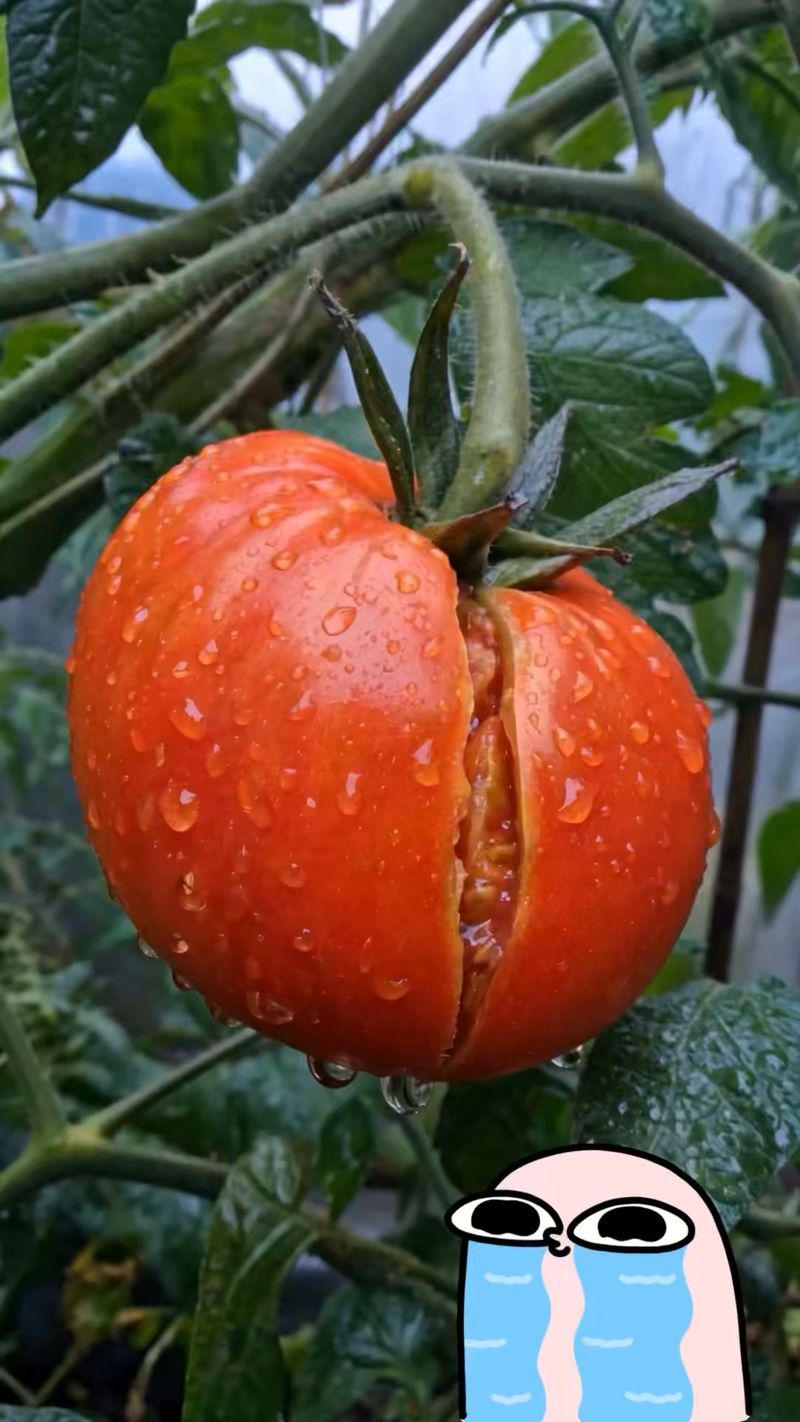
Tomatoes crack because the fruit expands faster than the skin can stretch to keep up. The trigger most commonly responsible is a sharp swing in the moisture available to the roots, going from dry conditions to a sudden flush of water through heavy rain or irrigation.
When the root zone has been dry for a stretch and then receives a large dose of water, the plant moves that water into the fruit rapidly, causing the interior to swell. Research published in HortScience has documented this rapid expansion as a primary driver of radial and concentric cracking in tomatoes.
Ripening makes the problem worse because the skin loses elasticity as fruit matures. A young green tomato can absorb a moisture surge and stretch without splitting; a tomato that is already turning pink or red has skin that is far less forgiving.
Warm temperatures speed up fruit development and can also thin the skin further, leaving ripening tomatoes especially vulnerable during hot spells that follow a dry period.
The common assumption that cracking means you watered too much is not quite right. Penn State Extension emphasizes that the central issue is the sharp change in water availability, not the total volume of water the plant receives over a season.
A garden receiving generous but steady moisture is much less likely to produce cracked fruit than one that cycles through drought and flood, even if the total water amounts are similar. Genetics, fruit size, canopy cover, and local rainfall all interact with moisture fluctuation, which is why a steadier routine lowers risk without guaranteeing that every tomato comes off the vine uncracked.
Reset the Root Zone Before You Reach for the Hose
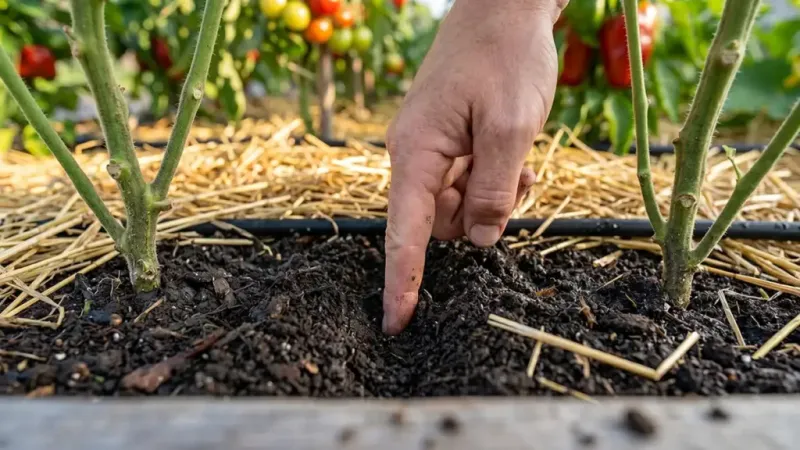
Before adding any water, take thirty seconds to check what is actually happening in the soil. Push a finger two to three inches into the ground near the base of the plant, or use a small trowel to dig a quick test hole.
If the soil feels moist at that depth, the roots are not thirsty yet, and watering now would add to the moisture without addressing the dry-to-wet swing problem. University of Minnesota Extension recommends soaking the soil thoroughly when you do water and then checking the wet depth rather than watering on a fixed calendar, because a rigid schedule ignores what the soil and weather are actually doing on any given day.
A commonly cited starting point for garden tomatoes is roughly one inch of water per week from rain and irrigation combined. Oregon State Extension guidance treats that figure as a flexible baseline, not a prescription, because local conditions change the math considerably.
Sandy soil drains quickly and may need water more often than a weekly schedule provides. Heavy clay holds moisture longer and can stay wet for days after a good rain.
Containers dry out faster than in-ground beds and may need attention every day during hot weather.
Heat, plant size, and canopy cover also shift the calculation. A large, full-grown plant in midsummer pulls far more water than a young transplant in spring.
University of Arizona Extension specifically advises waiting after a hard rain before irrigating again, since adding a scheduled dose on top of already-wet soil creates exactly the kind of sharp moisture spike that stresses ripening fruit. The goal is to keep the root zone evenly moist, not permanently soggy, and not cycling between bone-dry and flooded.
Utah State University Extension notes that consistent soil moisture throughout the growing season is one of the most reliable ways to reduce physiological disorders in tomatoes, including cracking. Adjusting how often you check the soil, rather than how often you automatically water, is the practical reset that makes the most difference.
Water Deeply at the Soil Line
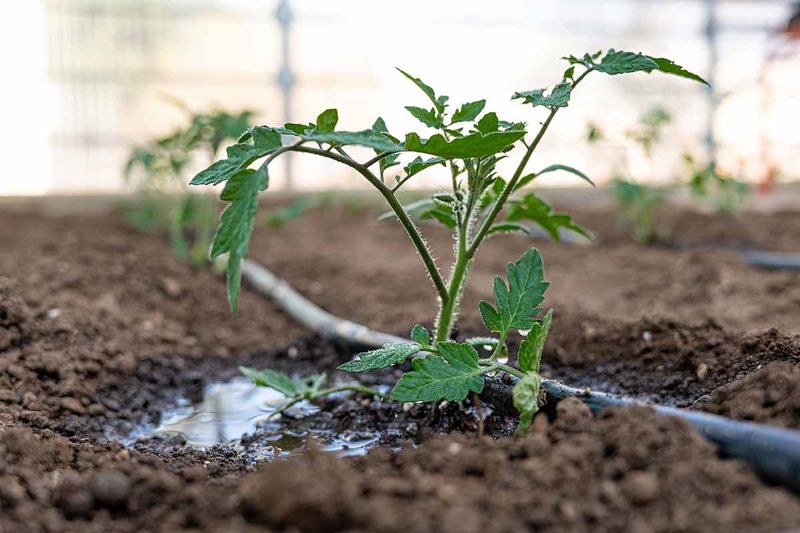
Once you have confirmed the soil actually needs water, how you deliver it matters almost as much as how much you give. A thorough, slow soak at the base of the plant is far more effective than a quick sprinkle from above.
University of Minnesota Extension recommends watering at the soil line and soaking deeply enough that moisture reaches the full root zone, noting that shallow, frequent sprinkling encourages shallow roots and can reduce fruit quality over time.
Soaker hoses and drip systems are the most practical tools for this job because they release water slowly directly onto the soil, giving it time to soak in rather than run off. A low emitter or a hose with the flow turned down low and directed at the base of the plant works well for hand watering.
Oregon State Extension highlights ground-level watering as a way to reduce evaporation and keep foliage and fruit surfaces drier between watering events.
Overhead irrigation, such as sprinklers or watering from above with a wand, increases the risk of fungal leaf diseases by keeping foliage wet. It can also add water directly to ripening fruit near the stem area.
That said, overhead watering is not the sole cause of cracking, and rainfall from above is unavoidable. The practical recommendation is to use ground-level methods when you have the choice, both to protect the leaves and to direct moisture where the roots can actually use it, rather than letting it sit on fruit skin.
Deep, infrequent watering at the soil line trains roots to grow deeper, which helps plants access more stored moisture between irrigation events and makes them somewhat more resilient to short dry spells.
Mulch and Weather Checks Smooth the Rhythm
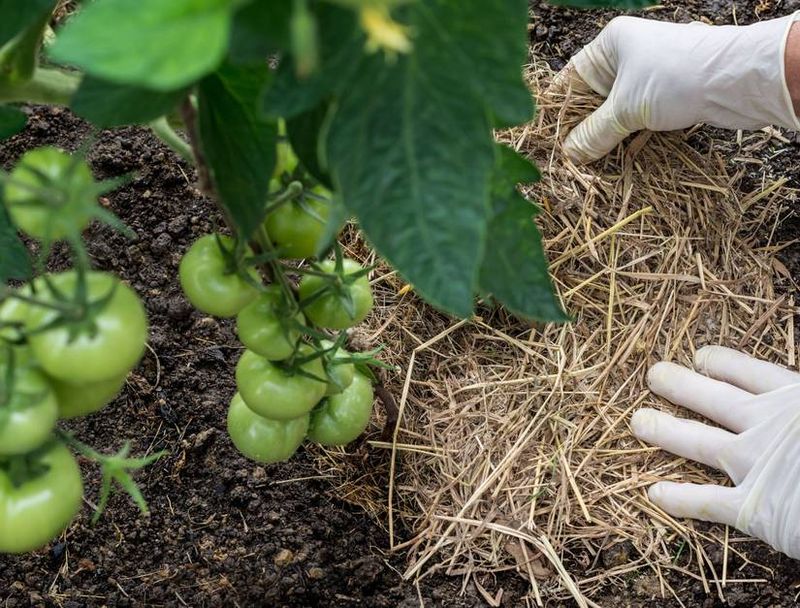
Mulch is one of the simplest tools available for reducing moisture swings between watering events. A two-to-three-inch layer of straw, shredded leaves, or wood chips spread around the base of each plant slows evaporation from the soil surface, which means the root zone stays moist longer after a good watering.
University of Minnesota Extension lists mulching as a practical step for reducing growth cracking in tomatoes. Keep the mulch pulled back an inch or two from the stem itself so moisture does not collect against the base of the plant and encourage rot.
Weather responsiveness is the other half of a smoother moisture routine. After a substantial rain, skip the scheduled watering and check the soil first.
Penn State Extension points out that rain contributes to cracking in two ways: it can suddenly refill a dry root zone, and it can also allow water to enter ripening fruit directly through small openings near the stem scar. A heavy downpour after a dry stretch is one of the highest-risk events for near-ripe tomatoes, precisely because both pathways are active at the same time.
During heat waves or extended dry weather, check the soil more often rather than waiting for the usual watering day to arrive. High temperatures accelerate evaporation from both the soil and the plant, so a schedule that worked fine in mild spring weather may leave the root zone too dry by midsummer.
The goal is not to follow a fixed interval but to respond to what the soil and the weather are actually doing, using mulch to reduce how quickly things change between your checks.
Some Tomatoes Need Extra Protection
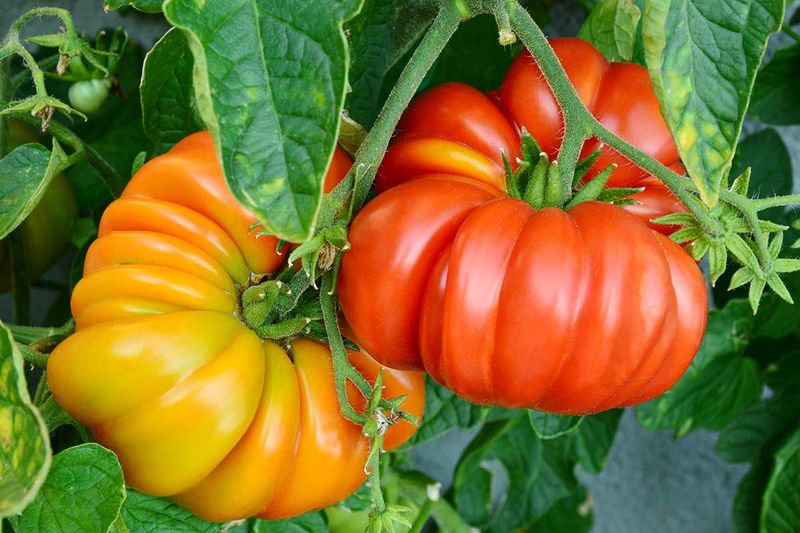
Consistent watering reduces cracking risk across the board, but certain tomatoes are more prone to splitting no matter how carefully you manage moisture. Large-fruited varieties and many heirlooms tend to have thinner, less elastic skin at ripeness, which makes them more vulnerable to the rapid expansion that causes cracks.
University of Minnesota Extension notes that susceptibility varies considerably by cultivar and growing conditions, so a variety that splits badly in one garden may perform differently in another with different soil or climate.
If cracking has been a recurring problem season after season, looking for crack-tolerant cultivars when choosing seeds or transplants next year is a practical step. Many modern hybrid tomatoes have been bred with firmer skin that holds up better through moisture fluctuations.
University of Arizona Extension recommends selecting crack-resistant varieties as one option for gardeners who consistently struggle with splitting, particularly in climates with irregular rainfall.
For vulnerable fruit already on the vine, harvesting at the breaker-to-pink stage before a forecast of heavy rain can reduce late-development cracking. At that stage, the tomato will continue to ripen indoors and is less likely to split than if it stays on the vine through a downpour.
Penn State Extension frames early harvest as a loss-reduction tactic, not a replacement for steady watering, since pulling fruit early every time is not practical for most gardeners.
One approach that can backfire is heavy pruning to increase airflow or reduce crop load. Penn State Extension warns that excessive pruning can expose fruit to direct sun and alter how the plant distributes water and energy, potentially increasing cracking risk rather than reducing it.
Light, careful pruning for airflow is generally fine, but aggressive canopy removal is not a reliable fix for growth cracks.
Cracks Need Triage, Not Panic
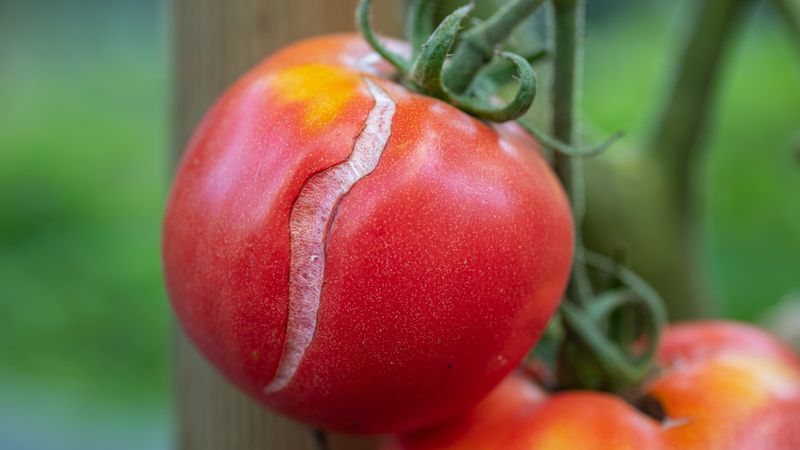
Finding a split tomato does not automatically mean a wasted harvest. Cracks will not close or heal on their own once they form, so the first step is to pick the fruit promptly rather than leaving it on the vine.
A cracked tomato left outside is an open invitation for insects, mold, and bacteria to move in quickly, especially in warm weather.
For fruit with a fresh, clean crack and no signs of mold, decay, or foul smell, University of Arizona Extension advises washing the tomato thoroughly under running water and cutting away the damaged tissue before eating. A small radial crack with healthy flesh on either side is a manageable situation for fresh eating.
FoodSafety.gov guidance on fruit and vegetable safety supports removing damaged areas and consuming the rest when the fruit is otherwise sound.
Discard any tomato that shows mold growing into the flesh, extensive decay, a foul or fermented odor, or deep contamination reaching well below the surface. A small surface blemish is different from a tomato that has been sitting cracked in the heat for two days with soft, discolored flesh spreading inward.
One firm rule worth keeping in mind: cracked or diseased tomatoes should not be used for home canning. University of Minnesota Extension canning guidance specifies that only firm, disease-free tomatoes are appropriate for canning because damaged or decaying fruit can harbor bacteria and alter the acidity needed for safe preservation.
Fresh eating with damaged areas removed is a reasonable option; putting cracked fruit into a canning jar is not.
An Even Moisture Routine Lowers the Risk
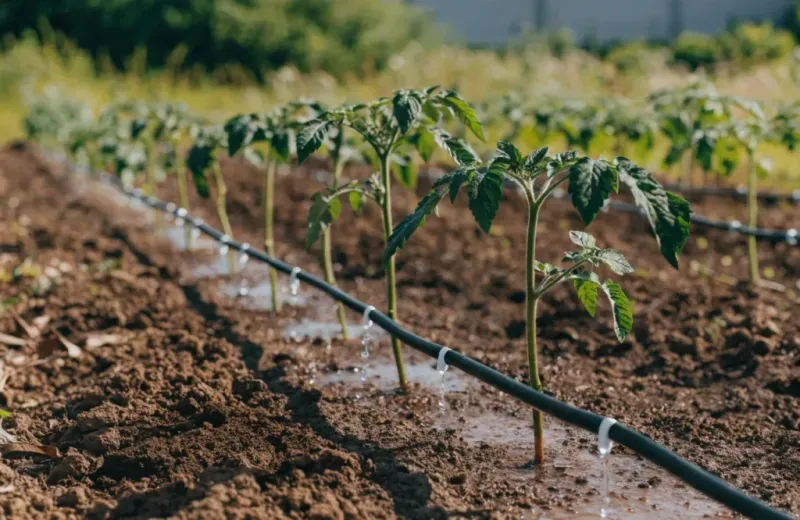
Pulling together everything above into a repeatable habit is simpler than it sounds. Check the soil before watering, account for recent rain and current heat, water deeply at the base when the root zone actually needs it, and keep a layer of mulch in place to slow evaporation between sessions.
University of Minnesota Extension and Penn State Extension both frame this kind of steady, responsive approach as the most practical way to reduce growth cracking over the course of a season.
No routine eliminates every split because cultivar, fruit size, ripeness, temperature, and rainfall all play a role that watering alone cannot override. The goal is to protect the next tomato approaching ripeness, not to achieve a perfect record.
Gardeners who crack this problem are not those who water on a rigid schedule – they are the ones who pay attention to what the soil is telling them.