
American Beautyberry for Your NC Wooded Edge: Wildlife Value, Tick Research, and What the Evidence Actually Shows
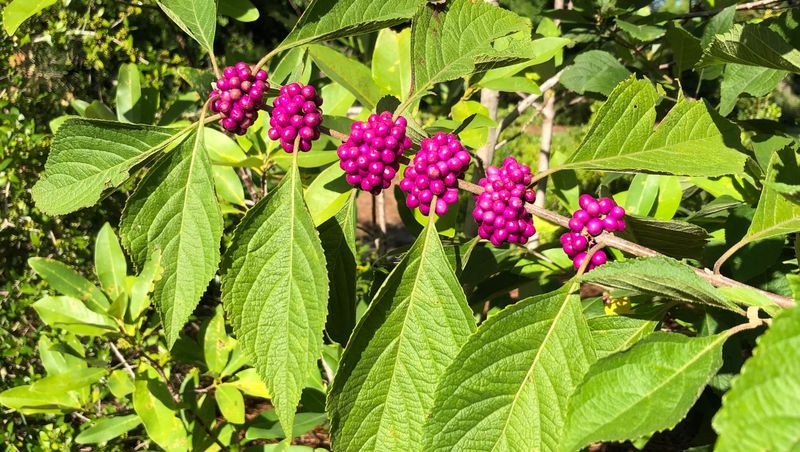
A shrub with clusters of vivid purple berries lining every stem is hard to miss at the edge of a North Carolina wood line, and American beautyberry has earned real attention from researchers studying tick-repellent plant compounds. The excitement is understandable, but the story is more careful than the headlines suggest.
Understanding what the science actually found, and what it did not find, helps you make a smarter planting decision for your yard and your family.
Meet American beautyberry before you buy
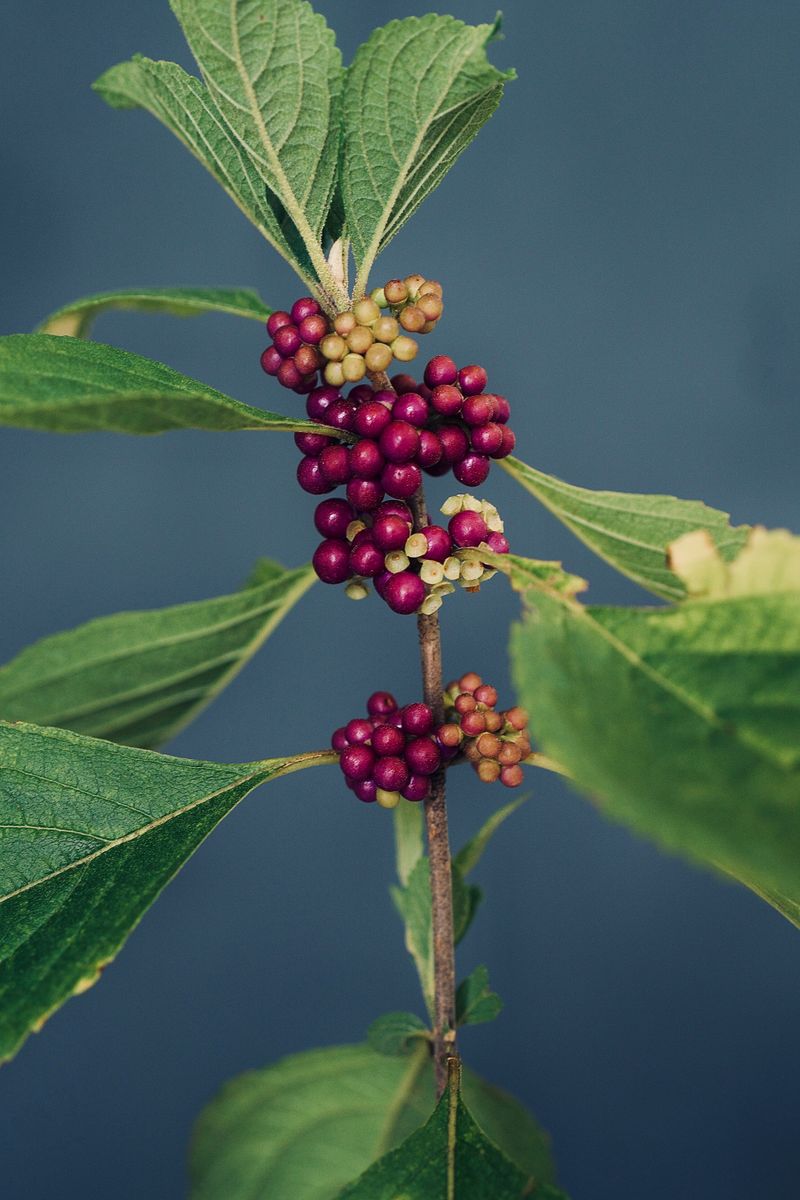
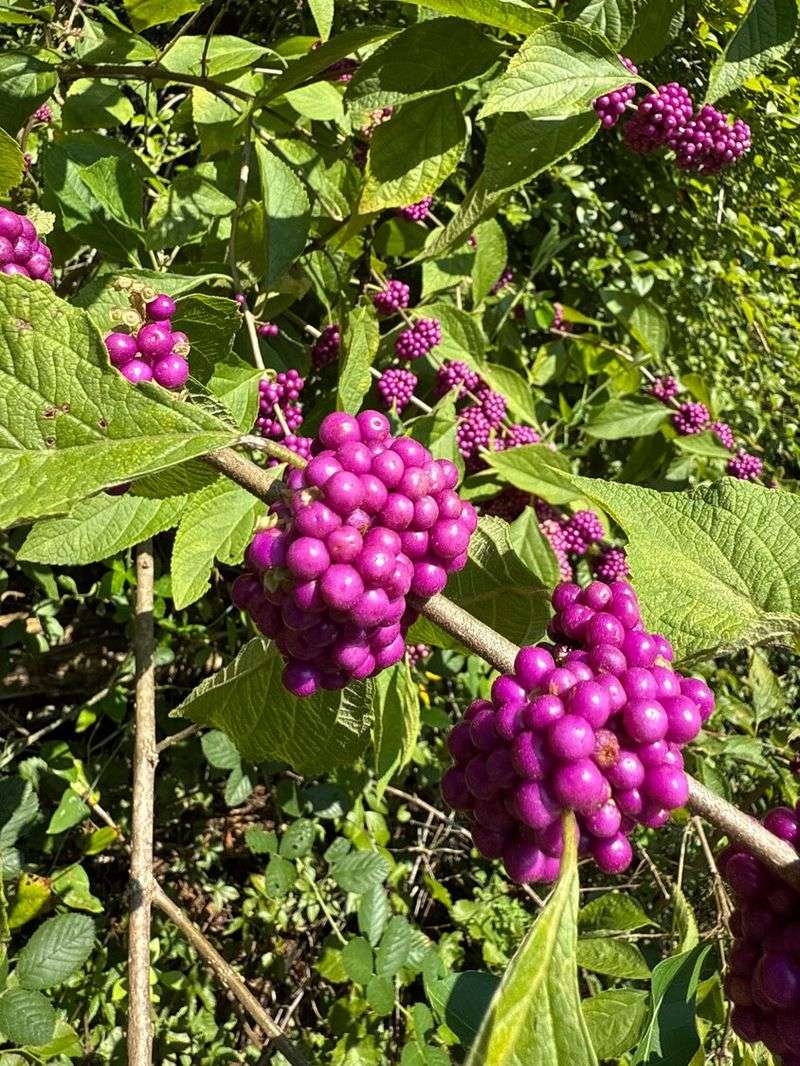
Wander through a Carolina wood line in late summer or fall and you may spot clusters of jewel-bright purple berries wrapped tightly around arching stems at eye level. That is American beautyberry, known to botanists as Callicarpa americana, and the name on the label matters more than you might think.
Several other beautyberry species, including Asian ornamentals sold widely at garden centers, share the common name but are different plants with different ecologies. Before you buy, check the tag or ask the nursery for the scientific name so you know you are getting the genuine North American species.
According to the NC State Extension plant profile, American beautyberry is a deciduous woody perennial that commonly reaches 3 to 8 feet tall and 3 to 6 feet wide, with a loose, arching habit that spreads generously under good growing conditions. NC State lists it as a landscape option for the Coastal Plain, Piedmont, and Mountains, which covers most of the state.
That is useful information, but it is not the same as saying the shrub is equally native to every corner of North Carolina.
The NC Natural Heritage Program flora database shows that the shrub’s naturally occurring native range is concentrated in the Coastal Plain and southeastern Piedmont, with limited or absent native distribution in parts of the western and northern mountains. If you garden in the Blue Ridge, a local native-plant nursery or your county extension office can tell you whether American beautyberry is genuinely native to your specific area or simply a plant that can tolerate your conditions.
That distinction matters for gardeners who want their yard to reflect the local ecosystem rather than just grow successfully. Either way, Clemson Extension’s beautyberry factsheet notes that verifying the scientific name protects you from accidentally planting a nonnative lookalike.
The tick evidence starts in a laboratory, not at the yard edge
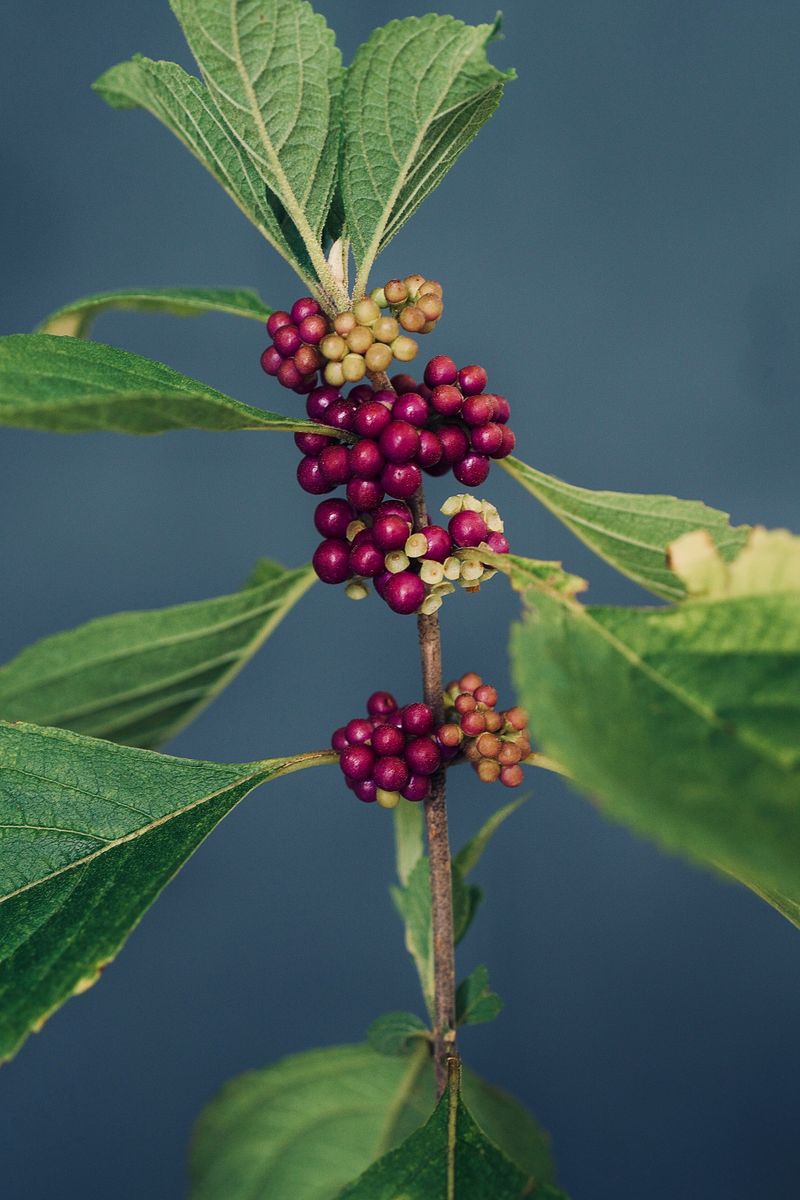
The reason American beautyberry shows up in conversations about tick control traces back to real science, but that science was conducted under conditions very different from your backyard. USDA Agricultural Research Service scientists isolated specific chemical compounds from beautyberry leaves, primarily callicarpenal and intermedeol, and tested whether those extracted substances repelled ticks in controlled laboratory bioassays.
The researchers were not planting shrubs along a fence line and counting ticks on the other side.
The USDA ARS peer-reviewed publication on beautyberry tick repellency reports that isolated callicarpenal and intermedeol showed strong repellent activity against blacklegged tick nymphs, with repellency exceeding 95 percent on treated cloth at the tested doses in some assays. Activity against lone star ticks was weaker.
North Carolina also has American dog ticks and other species, so results for one or two tick species in a laboratory do not tell you how a planted shrub would perform against the full range of ticks you might encounter along your wood line.
A USDA research news release describing the same work helps explain what the findings mean and what they do not mean. The studies confirmed that specific chemicals extracted from the plant have repellent properties in a controlled setting.
They did not measure whether intact leaves on a living shrub release enough of those compounds, over enough area, or for enough time, to push ticks away from a planted border.
Extension specialists reviewing this research specifically caution that laboratory repellency from extracted plant chemicals should not be confused with the effect of having the plant growing in a landscape. A shrub does not function like a bottle of extracted compound applied to a surface.
Until field studies measure actual tick abundance near planted beautyberry hedges on residential properties, the gap between the laboratory finding and the yard-wide protection claim remains wide and unfilled.
Give the shrub room at a wooded yard edge
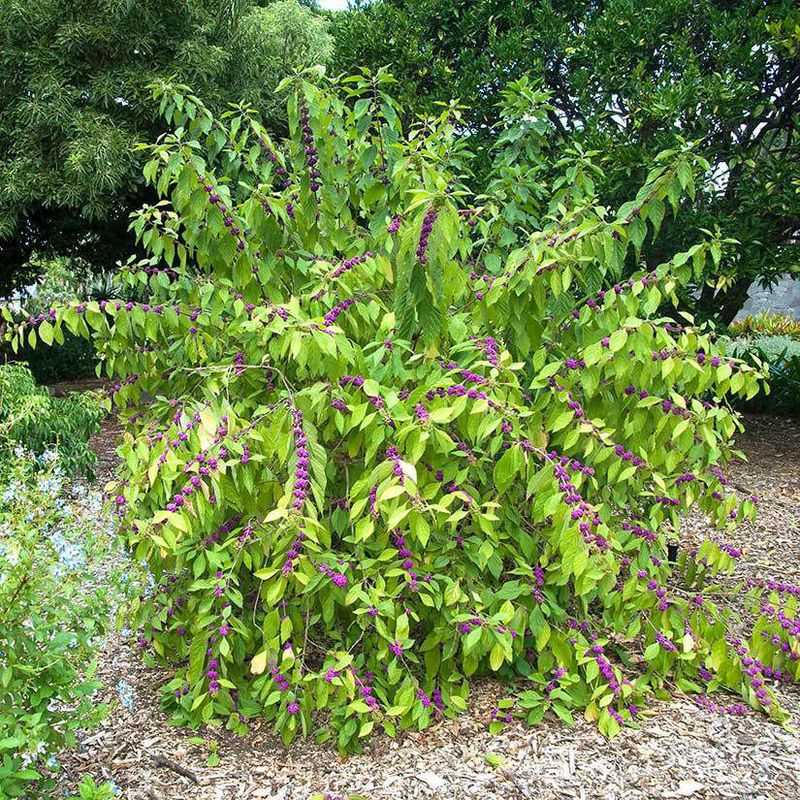
Planting American beautyberry well starts with understanding its natural growth habit rather than forcing it into a role it was not shaped for. This is not a tight formal hedge plant.
Its stems arch broadly outward, and a mature shrub can push well past the 3-to-6-foot width listed on many tags when given adequate light and moisture. Crowding it into a narrow strip or shearing it into a box will work against the plant and produce fewer of the berry clusters that make it worth growing in the first place.
The NC State Extension plant profile confirms that American beautyberry performs in full sun to part shade but is intolerant of deep shade. At the edge of a wooded yard, where the tree canopy begins to thin, it typically gets enough light to flower and fruit well.
Full sun with adequate moisture generally produces the heaviest berry set, while heavy shade suppresses both bloom and fruit production. If the area you have in mind stays deeply shaded for most of the day, the shrub will struggle and produce little of the wildlife value that makes it a worthwhile addition.
For spacing, the University of Florida IFAS beautyberry publication and Clemson Extension’s factsheet both suggest roughly 3 to 5 feet between plants, depending on whether you want a loose visual screen or individual specimens with room to show off their form. Because a well-grown plant can spread 6 to 8 feet wide under favorable conditions, the closer end of that range works for a denser planting while the wider end lets each shrub develop its characteristic arching silhouette.
Plan the layout before you dig so you are not transplanting overgrown shrubs two years later. Give each plant enough room now, and the edge will fill in naturally without becoming a tangled thicket that creates the very tick habitat you are trying to reduce.
Build practical tick-risk reduction around the planting
American beautyberry can add real ecological value to a wooded yard edge, but it cannot substitute for the habitat management that actually lowers tick exposure around the places your family uses. Ticks are most abundant where leaf litter, tall grass, dense brush, and shaded humid conditions meet, which is exactly the kind of environment that forms when a yard edge goes unmanaged.
CDC tick prevention guidance recommends removing leaf litter, clearing tall grasses and brush near patios and play areas, trimming vegetation to increase sunlight, and mowing regularly to reduce the humid microhabitat ticks prefer.
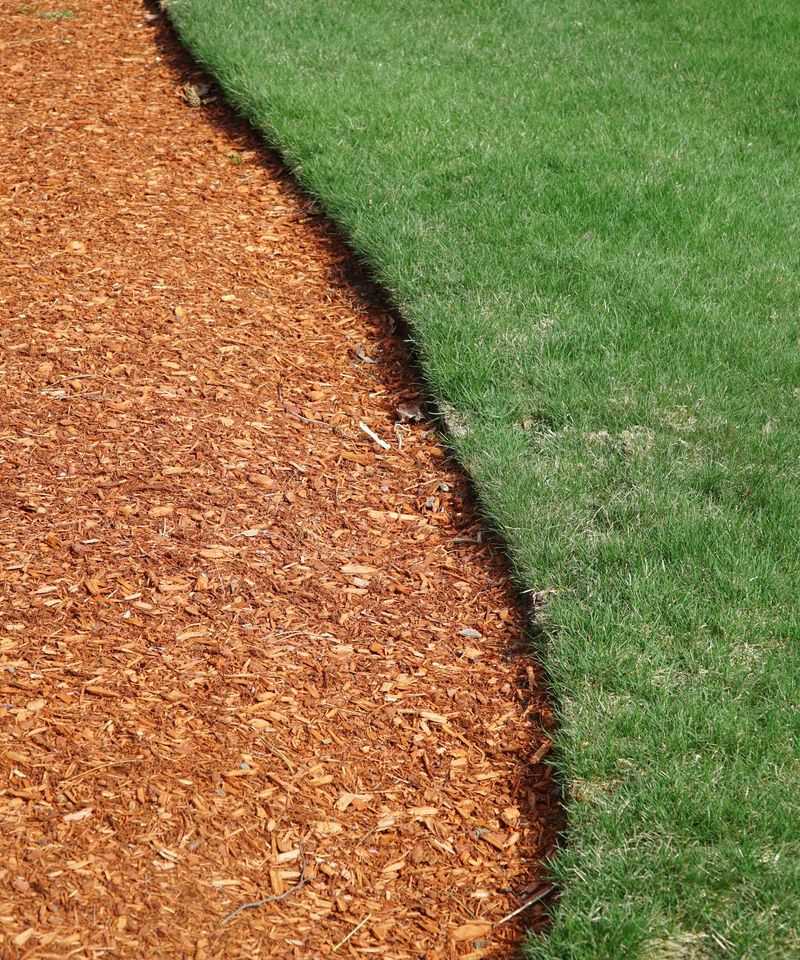
One specific measure the CDC highlights is placing a roughly 3-foot-wide wood-chip or gravel buffer between your maintained lawn and the wooded edge. This physical transition zone can slow tick movement from woods to lawn.
That said, a published residential yard study found mixed or statistically uncertain support for individual landscape measures, including barriers, partly because few study properties had them. Describe the buffer as a sensible risk-reduction step, not a guaranteed tick-free wall, and combine it with other practices rather than relying on it alone.
Personal protection matters at least as much as yard management. EPA-registered repellents applied according to their labels remain the most reliable personal defense against tick bites.
Products containing DEET, picaridin, IR3535, oil of lemon eucalyptus, para-menthane-diol, or 2-undecanone have been evaluated for safety and effectiveness. Treat pets with veterinarian-recommended tick prevention products, because pets carry ticks into the home from wooded edges far more efficiently than any shrub can intercept them.
After spending time near the wood line, do a full-body tick check on yourself, your children, and your pets. Remove any attached ticks promptly using fine-tipped tweezers, pulling steadily upward without twisting.
CDC guidance on Lyme and tick-borne illness prevention advises monitoring for symptoms such as rash, fever, fatigue, or muscle aches in the days and weeks following a tick bite. Contact a healthcare provider if you develop symptoms, if a tick was embedded for an extended period, if you notice an unusual skin reaction, or if a clinician advises evaluation.
Not every tick encounter requires an urgent visit, but symptoms that develop after a bite deserve prompt attention from a medical professional. The NC DHHS tick surveillance program tracks ehrlichiosis, Lyme disease, spotted-fever illnesses, and STARI across the state, a reminder that tick-borne disease risk in North Carolina is real and spread across all regions.
Plan for pruning, reseeding, and an uncertain lifespan
Part of what makes American beautyberry appealing is its reputation as an easy-care plant, and that reputation is mostly earned. Serious pest problems are uncommon, and the shrub does not demand rich soil or frequent fertilizing.
What it does need is enough space to grow naturally and an occasional hard cutback to keep it productive and tidy rather than a sprawling thicket.
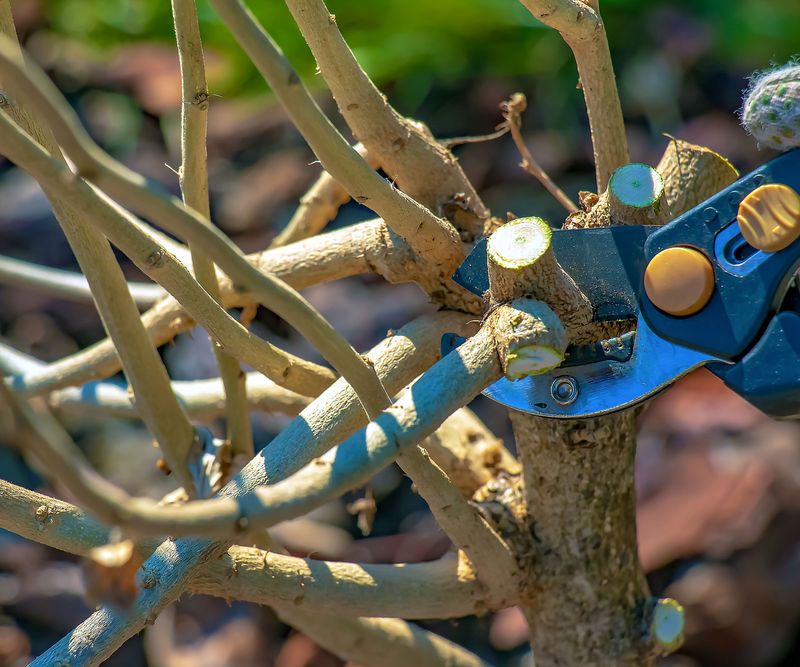
Beautyberry flowers and fruits on new growth produced each season, which means late-winter pruning actually encourages a better berry display later in the year. The NC State Extension plant profile notes that the shrub can be cut back to about 1 foot from the ground when size control is needed, and NC State’s general pruning guidance supports late winter as the right window for this kind of hard rejuvenation on shrubs that bloom on new wood.
One trade-off worth knowing: if you prune heavily in fall or early winter before the birds have finished feeding, you remove some of the berry crop that makes the shrub ecologically useful. Waiting until late winter, after most berries have been eaten or dropped, captures both the wildlife benefit and the pruning benefit.
The shrub can also self-seed, sometimes generously, so seedlings may appear nearby over time. That self-seeding capacity is part of why some gardeners describe beautyberry as a long-lived presence in the landscape.
However, seedlings replacing a parent plant are not the same thing as one original shrub persisting indefinitely. Mississippi State Extension’s beautyberry article notes that the shrub may live for as few as 10 years, and University of Florida IFAS guidance describes it as a perennial without committing to a specific multi-decade lifespan.
No extension source reviewed for this article establishes a universal long-lived guarantee. Plan for the possibility of replacement plants or seedlings filling the gap rather than expecting a single shrub to anchor the same spot for 30 or 40 years without any change.
That honest expectation helps you budget time and space for the edge over the long term, instead of being caught off guard when a plant declines earlier than hoped.
Its clearest benefit is wildlife value, not proven repellency
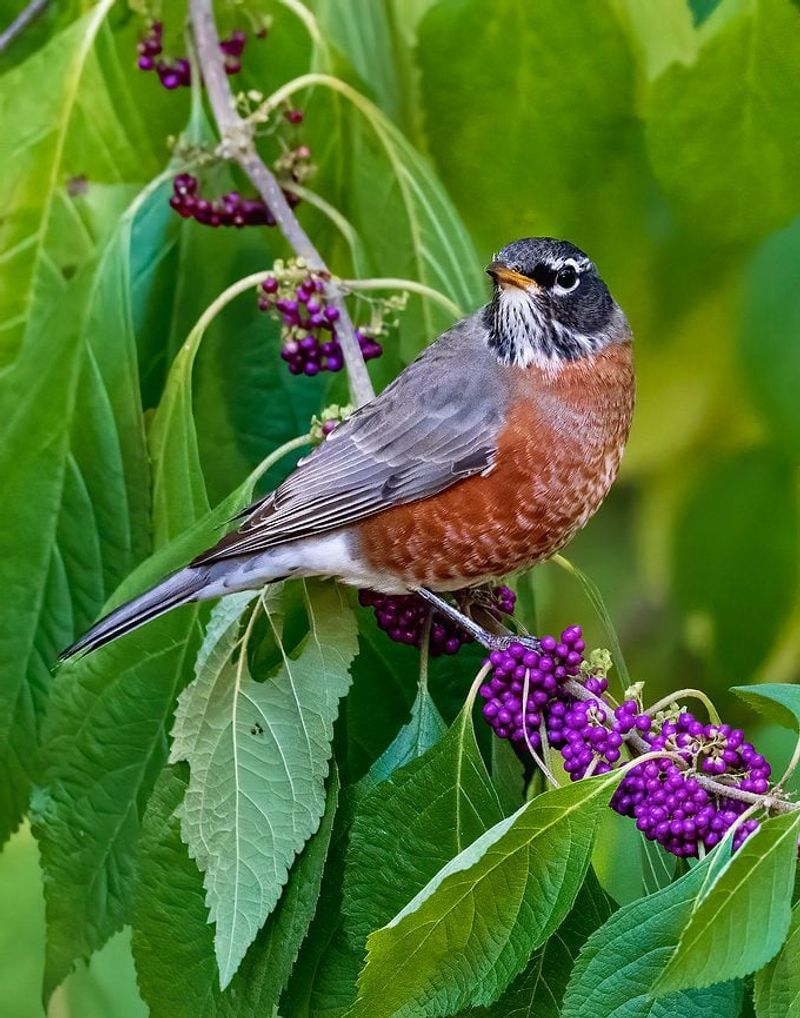
Strip away the tick-barrier claims and American beautyberry still has plenty of reasons to earn a spot at a North Carolina yard edge. The berries are a reliable food source for songbirds including brown thrashers, mockingbirds, and robins, as well as small mammals like white-footed mice and raccoons.
The USDA Forest Service species review for Callicarpa americana documents its value as wildlife food, and the NC State Extension profile places it squarely in wildlife, native, pollinator, and naturalized garden designs. For a North Carolina homeowner who wants to support the yard’s ecosystem rather than just manage it, that ecological contribution is genuine and well-documented.
Gardeners in the Blue Ridge or northern Piedmont should take one extra step before buying. The NC Natural Heritage Program flora records show that American beautyberry’s naturally occurring native range is concentrated in the Coastal Plain and southeastern Piedmont.
If you garden in the mountains or the northern reaches of the Piedmont, talk to a local native-plant nursery or your county extension office about regional provenance before purchasing. A plant grown from local seed stock is more likely to be well-suited to your specific conditions and more meaningful as a native planting than one of uncertain origin.
One clarification is worth stating plainly: the wildlife value of American beautyberry does not mean the shrub protects birds or mammals from ticks, and it does not justify leaving dense leaf litter and brush piled against the shrub near your patio or children’s play area. CDC tick prevention guidance is consistent on this point: the habitat immediately surrounding human activity areas should be kept clear of the conditions that shelter ticks, regardless of what plants grow nearby.
The wildlife value and the habitat management are separate goals that can coexist, but one does not cancel out the need for the other.
Make the evidence-based planting decision
American beautyberry, correctly identified as Callicarpa americana, is a worthwhile native shrub for a North Carolina wooded yard edge because of its genuine ecological contributions, its regional adaptability across much of the state, and the real but limited laboratory evidence showing that compounds isolated from its leaves repelled some ticks under controlled conditions. Extension specialists reviewing that research are clear that those findings do not translate into a living hedge that guards a yard from ticks.
Plant it for the right reasons and it will reward you; expect it to do a job it has never been shown to do and you will be unprotected where it matters most.
Site it where it gets at least partial sun, space plants 3 to 5 feet apart to allow for their broad mature form, and prune in late winter when the birds have had their share of the berries. Pair the planting with leaf-litter removal, brush clearing, regular mowing, and a wood-chip or gravel buffer at the lawn-to-woods transition.
Use CDC-recommended tick-prevention practices, including EPA-registered repellents, pet protection, and full-body tick checks after time outdoors. As Mississippi State Extension notes, the shrub may not last for decades without reseeding or replacement, so plan the edge as a living, managed system rather than a one-time installation.
Plant beautyberry because it improves the edge ecologically. Manage the edge because that is where your real tick-risk reduction lives.